
Picture this: you wake up before dawn, walk to your tubewell, and pull the starter rope. The engine coughs, sputters, and falls silent. You try again. Nothing. Another liter of expensive diesel burned for nothing while your crops wait thirsty. Or imagine opening your electricity bill and feeling your stomach drop—a figure so high it could have paid a laborer’s wages for an entire month.
This is the reality for hundreds of thousands of Punjab farmers, year after year. The Punjab Solar Tubewell Scheme arrives as the permanent solution to this exhausting cycle, offering an 80% government subsidy that transforms your irrigation system into a self-powered asset running on free sunlight. This comprehensive guide walks you through everything: who qualifies, how to apply through the official portal, the exact costs you’ll pay, and the life-changing benefits of making the switch.
Key Takeaways
- Eighty Percent Government Grant: The Punjab government provides a non-refundable 80% subsidy on complete solar system costs, leaving farmers responsible for only 20%.
- One Acre Minimum Threshold: Applicants must own at least one acre of agricultural land within Punjab and possess a valid computerized national identity card.
- Official Online Portal Only: Registration is exclusively through cmstp.punjab.gov.pk—no agents or middlemen are authorized to process applications.
- Eight Thousand Systems Available: Phase 1 targets 8,000 tubewells with district-specific quotas ensuring fair geographic distribution across the province.
- Kissan Card Integration: Active Nawaz Sharif Kissan Card holders receive priority consideration, and the card can finance the farmer’s 20% contribution through interest-free facilities.
- Diesel Savings Exceed Investment: Farmers typically recover their 20% share within 3-6 months through eliminated diesel costs, after which every rupee becomes pure profit.
- Read More: Clinic On Wheels: Free Medicines & Ambulance By CM Punjab
- Read More: How To Get Rs10,000 Through Nigehban Ramadan Package
- Read More: Prime Minister Ramzan Package | 9999 Official Portal (For PKR 13K)
Punjab Solar Tubewell Scheme – Online Apply & Eligibility

Table of Contents
Understanding the Punjab Solar Tubewell Scheme and Its Core Benefits
The Punjab Solar Tubewell Scheme represents the provincial government’s flagship intervention to address agricultural energy costs, officially operating under the Chief Minister Punjab Solarization for Agricultural Tubewells Programme. This initiative commits substantial public funds—amounting to billions of rupees—to convert existing irrigation infrastructure from expensive diesel and grid electricity to free solar energy. The program recognizes that irrigation pumping accounts for the largest single operational expense in farming, often consuming 40% to 60% of total production costs depending on crop type and water table depth. By eliminating this expense permanently, the scheme aims to transform farm economics and put more money directly into farmers’ pockets.
What makes this solar scheme different from previous government programs?
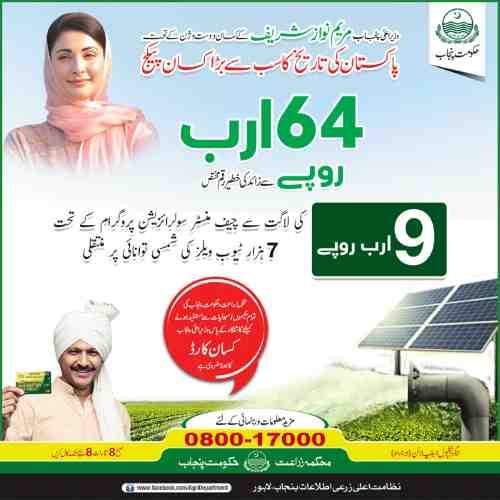
Previous agricultural support programs typically offered temporary relief: a subsidy on one diesel purchase, a discount on one electricity bill, or a partial grant for inputs like fertilizer. Farmers received help for a single season and then returned to facing the same high costs the next year. This solar scheme fundamentally differs by providing a permanent capital asset that continues delivering savings indefinitely. A solar installation installed today will still pump water free of charge twenty years from now, long after the initial subsidy amount has been recovered many times over. The program also represents a shift from reactive crisis management to proactive infrastructure building, treating solarization as an investment in Punjab’s agricultural future rather than merely a response to rising fuel prices.
What specific problems does the scheme solve for farmers?
Diesel price volatility has plagued farmers for decades, with rates fluctuating unpredictably based on international markets, currency exchange rates, and government tax decisions. A farmer budgeting for the wheat season cannot predict what diesel will cost three months later, making financial planning nearly impossible. Solar energy eliminates this uncertainty completely because sunlight carries no variable cost and its price never changes.
Electricity supply unreliability forces farmers to irrigate at night during off-peak hours, disrupting sleep patterns and creating safety concerns for those working alone in remote fields. Even when power is available, voltage fluctuations can damage pump motors, leading to expensive repairs and downtime during critical crop growth stages. Solar systems generate power during daylight hours when farmers are already awake and working, aligning perfectly with natural work schedules.
Recurring billing disputes with electricity distribution companies consume countless hours of farmer time, requiring visits to offices, payments to middlemen, and endless paperwork to resolve incorrect charges. Solar users sever this relationship entirely, eliminating bills, disputes, and the stress of dealing with utility bureaucracy forever.
How does the scheme align with Pakistan’s broader energy goals?
Pakistan spends billions of dollars annually importing petroleum products, a significant portion of which powers agricultural pumps across the country. Every diesel tubewell converted to solar reduces this import bill, improves the national trade balance, and decreases dependence on politically volatile international energy markets. The program also supports Pakistan’s commitments under international climate agreements by reducing carbon emissions from the agricultural sector. A typical diesel tubewell emits several tons of carbon dioxide annually, and the 8,000 conversions planned for Phase 1 alone will eliminate thousands of tons of greenhouse gases each year while also reducing local air pollution that affects farm workers’ health.
Complete Eligibility Criteria for the Punjab Solar Tubewell Scheme
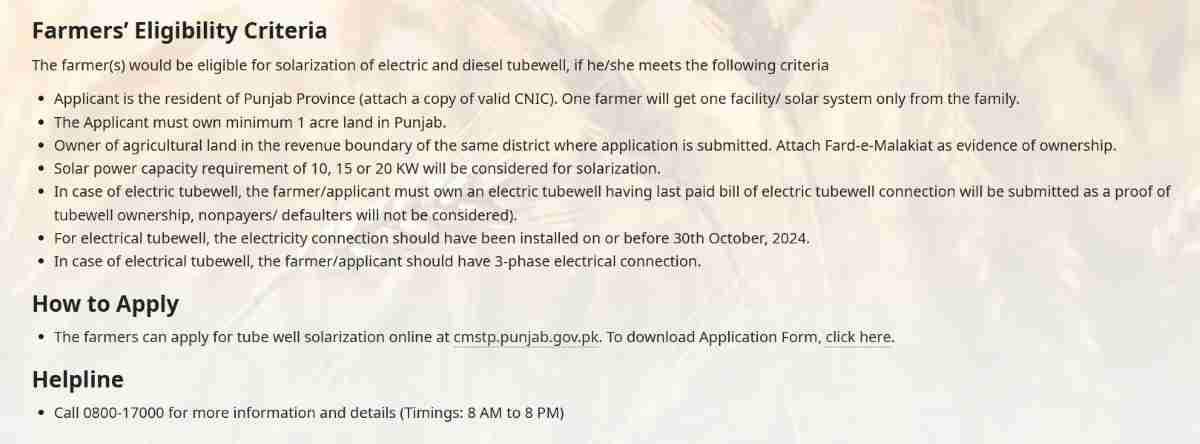
Eligibility for the Punjab Solar Tubewell Scheme rests on four foundational requirements that every applicant must satisfy before their application proceeds to consideration. These criteria ensure the program reaches genuine farmers while preventing fraudulent claims and multiple benefits flowing to the same household. Understanding each requirement in detail before starting your application saves time, prevents rejection, and positions you for success in the selection process.
Who qualifies as an eligible farmer under this scheme?
An eligible farmer is any Pakistani citizen residing in Punjab who actively cultivates agricultural land within the province, regardless of whether they own that land outright or work it under a legal tenancy arrangement. The scheme defines “farmer” broadly to include landowners, tenant cultivators, and sharecroppers, recognizing that agricultural production depends on all these categories working together. The key distinction lies in the relationship to the land: the applicant must be the person who makes farming decisions, bears the costs of cultivation, and receives the proceeds from harvests. A passive landowner who rents out their land to an actual cultivator does not qualify unless they themselves farm the land.
What is the minimum land ownership required for eligibility?
The applicant must own a minimum of one acre of agricultural land within Punjab, as verified through the official land record system maintained by the Board of Revenue. This one-acre threshold deliberately includes the smallest operational farms while excluding urban residents who might own tiny plots without genuine farming activity. Farmers with less than one acre cannot apply, even if they cultivate their small holding intensively for high-value crops. The land must be located within Punjab’s provincial boundaries—land in other provinces does not count toward eligibility, even if the applicant resides in Punjab.
Can farmers with less than one acre ever qualify?
No exception exists for the one-acre minimum requirement, regardless of how intensively a smaller plot is cultivated or what crops are grown. The government established this threshold based on technical assessments of solar system economics: a system sized for a tubewell requires a certain minimum land area to justify the investment and generate sufficient savings to make the program worthwhile. Farmers with less than one acre may benefit indirectly if they share water from a neighbor’s converted tubewell, but they cannot receive their own system under current rules.
What documentation proves land ownership?
The primary document proving land ownership is the Fard-e-Malakiat, also known as the jamabandi or land record certificate, issued by the Patwari or the relevant revenue office. This document must be recent—typically issued within the last six months—and must clearly show the applicant’s name, father’s name, and the specific khasra numbers and acreage of the land. Any discrepancy between the name on the Fard and the name on the applicant’s CNIC causes automatic rejection, so farmers with mismatched records should correct them through the revenue department before applying.
Can tenants or sharecroppers apply without owning land?
Yes, tenants and sharecroppers who do not own land can apply, but they face stricter documentation requirements to prove their legitimate farming status. Acceptable tenancy arrangements include formal lease agreements registered with the revenue department, long-term oral tenancies verified by the Patwari, and sharecropping arrangements documented through affidavits from both landowner and tenant. The tenant must provide proof that they actually cultivate the land and bear the costs of irrigation, typically shown through receipts for inputs, photographs showing crops, and statements from neighboring farmers. The landowner must also provide a no-objection certificate confirming they are not applying for the same land themselves.
What documents do tenant applicants need specifically?
Tenant applicants must assemble a comprehensive documentation package including:
- A certified copy of their lease agreement, if written, showing the land’s location, duration of tenancy, and terms of cultivation.
- A verification certificate from the Patwari confirming the tenant actively cultivates the specified land and has done so for at least one full crop season.
- An affidavit from the landowner stating they are not applying for the scheme using this same land and consent to the tenant’s application.
- Photographs of the tenant working on the land and of the standing crops, if applicable, to demonstrate active cultivation.
- Receipts for any agricultural inputs purchased (seed, fertilizer, pesticide) showing the tenant’s name and the land’s location.
Can multiple family members apply for separate systems?
No, the policy explicitly limits each family to one solar system regardless of how many separate landholdings family members own or how many tubewells they operate. The government defines “family” broadly to include parents, children, and siblings living in the same household or operating farms together. This rule prevents wealthy families from capturing multiple subsidies while smaller farmers receive none. The only exception applies when family members operate genuinely separate farms in different districts with independent operations and no shared resources.
Does the applicant’s residence location matter for eligibility?
Yes, the applicant must reside in the same district where their agricultural land is located, as confirmed by the address on their CNIC matching the district of application. This requirement ensures that local agriculture department staff can conduct physical verification visits without traveling across district boundaries. A farmer owning land in Multan but residing in Lahore must apply through Multan’s district quota and be available for verification visits to the Multan location. The program considers the farm’s location primary for eligibility determination, not the farmer’s residential address.
Detailed Breakdown of Subsidy Amounts and Farmer Contributions
The financial structure of the Punjab Solar Tubewell Scheme offers one of the most generous subsidy packages ever provided to Pakistani farmers, covering 80% of total system costs while requiring only 20% from the beneficiary. Understanding exactly how this works, what amounts are involved, and what the farmer actually pays helps eliminate confusion and builds confidence in the program’s value.
How exactly does the 80% subsidy work in practice?
The 80% subsidy means the government pays for 80% of the complete solar system cost directly to the approved vendor, while the farmer pays the remaining 20% to the same vendor upon installation. Farmers never receive cash payments—the subsidy transfers directly to the company installing the equipment, ensuring funds are used exactly for their intended purpose. This arrangement also protects farmers from having to arrange the full system cost upfront while waiting for government reimbursement. The process flows smoothly: vendor installs system, farmer pays 20%, vendor claims 80% from government, government pays vendor after verification.
What are the fixed subsidy amounts by system size?
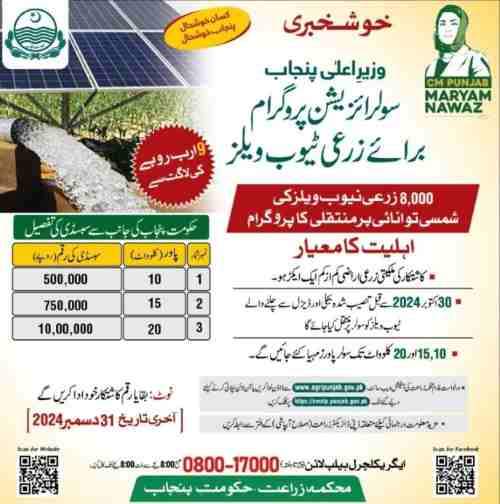
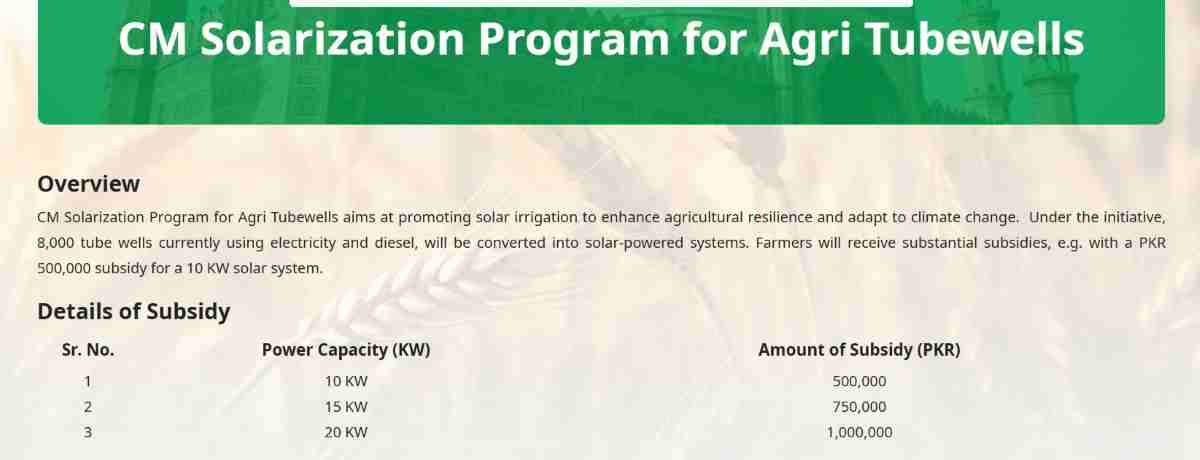
The government has established fixed subsidy amounts for three standard system sizes rather than calculating percentages based on varying vendor prices. This approach simplifies administration and ensures all farmers receive equal treatment regardless of which vendor installs their system.
Ten kilowatt systems receive a government subsidy of five hundred thousand rupees. This size suits farms with shallower water tables, smaller landholdings, or less intensive irrigation requirements. The total system cost typically ranges between six hundred thousand and six hundred fifty thousand rupees, meaning the farmer pays approximately one hundred thousand to one hundred fifty thousand rupees.
Fifteen kilowatt systems receive a government subsidy of seven hundred fifty thousand rupees. This medium capacity works well for average Punjab farms with moderate water depths and typical crop rotations. Total system costs fall between nine hundred thousand and nine hundred fifty thousand rupees, leaving the farmer responsible for roughly one hundred fifty thousand to two hundred thousand rupees.
Twenty kilowatt systems receive a government subsidy of one million rupees. This largest eligible size serves extensive landholdings, deep wells, or farms with high-value crops requiring frequent irrigation. Total costs approach one million two hundred thousand rupees, making the farmer’s share approximately two hundred thousand rupees.
Why does the farmer’s share vary if subsidies are fixed?
The farmer’s share varies because different vendors offer different total prices for complete installations, even for the same nominal system size. One company might charge six hundred thousand rupees for a ten kilowatt system while another charges six hundred fifty thousand, reflecting differences in panel brand, inverter quality, pump efficiency, and installation complexity. The government pays the same fixed subsidy regardless of vendor pricing, so farmers choosing higher-priced vendors pay larger shares. Farmers cannot choose their vendor freely—the agriculture department assigns vendors based on geographic zones—but prices within each zone are standardized through the vendor approval process.
What does the farmer’s 20% share actually cover?
The farmer’s 20% share covers the portion of system cost not paid by government subsidy, but farmers should understand this payment purchases ownership of a complete, installed, warrantied system. The payment covers the physical equipment, professional installation, wiring, mounting structures, and commissioning. Vendors must provide comprehensive warranties on all components, typically twenty-five years on solar panels, five to ten years on inverters, and two to five years on pumps. The farmer’s payment also covers any site preparation needed, such as clearing space for panels or reinforcing the pump house structure.
How quickly do farmers recover their investment through savings?
Financial analysis shows farmers recover their entire 20% investment within three to six months of system operation, depending on previous energy costs. A farmer who spent four hundred thousand rupees annually on diesel will save approximately thirty-three thousand rupees monthly after conversion. With a farmer share of one hundred fifty thousand rupees, breakeven occurs in less than five months. Every month after that, the thirty-three thousand monthly savings becomes pure additional income. Over the system’s twenty-five year lifespan, total savings exceed eight million rupees—a return on investment of more than five thousand percent.
What payment methods can farmers use for their share?
Farmers can pay their 20% share through several convenient methods designed to minimize financial burden. Cash payment directly to the vendor at installation remains the simplest option for those with available funds. The Nawaz Sharif Kissan Card provides an interest-free financing facility specifically for this purpose, allowing farmers to pay their share in installments over multiple months without additional cost. Some banks participating in agricultural lending programs also offer dedicated loans for the farmer share, though these carry standard interest rates and require credit approval.
Is the subsidy really free money or does it require repayment?
The government subsidy is a true grant requiring absolutely no repayment under any circumstances. Farmers never owe the government anything for the 80% contribution, regardless of how long they use the system or whether they eventually sell their land. The only financial obligation is the upfront 20% share paid at installation. Some farmers initially express skepticism, having encountered fraudulent schemes promising free equipment that later revealed hidden costs. This program carries no hidden fees, no future payments, and no clawback provisions.
Step-by-Step Online Application Process for the Punjab Solar Tubewell Scheme
Applying for the Punjab Solar Tubewell Scheme requires navigating the official online portal, uploading documents correctly, and following through each stage until submission confirmation. The process has been designed for accessibility, but farmers who prepare properly before starting save time and avoid the frustration of incomplete submissions.
What is the official website for registration?
The exclusive official website for registration is cmstp.punjab.gov.pk, a secure government domain specifically created for this program. Farmers should type this address directly into their browser rather than clicking links from emails or social media, as fraudulent sites sometimes attempt to mimic government portals. The website uses encryption to protect personal information and displays clear indicators of secure connection, including the padlock icon in the address bar. The Punjab Agriculture Department maintains a separate informational website at agripunjab.gov.pk where farmers can download application forms, read policy documents, and access department contact information.
What preparation should farmers complete before starting?
Successful applicants prepare thoroughly before touching the online portal, gathering all required documents and information in one place. This preparation prevents the frustration of reaching the document upload stage only to realize a critical file is missing or unclear. Farmers should assemble:
- Their original CNIC and a scanned copy of both sides saved as separate image files.
- Their Fard-e-Malakiat or land record certificate, ideally scanned at high resolution so all text remains readable.
- Their most recent paid electricity bill if applying for an electric tubewell conversion.
- Photographs of their tubewell showing the pump, the bore, and the surrounding area.
- Their Kissan Card details including the card number and a copy of the card front.
- Their bank account details, typically the first page of their bank passbook or a cancelled cheque.
How does the online registration process work step by step?
Step one: portal access. Farmers navigate to cmstp.punjab.gov.pk using any internet-connected device. The site works on smartphones, tablets, and computers, though larger screens make document upload easier. Farmers should ensure they have a stable internet connection before beginning, as interrupted submissions sometimes lose data.
Step two: account creation. First-time users click the registration link and enter their CNIC number without dashes, their mobile phone number registered in their name, and create a password meeting the site’s security requirements. The system immediately sends a verification code via SMS to the provided number. Entering this code confirms mobile ownership and activates the account.
Step three: login and form completion. Registered users log in with CNIC and password, then access the application form. The form requests personal information exactly matching CNIC details, land information exactly matching Fard-e-Malakiat entries, and tubewell specifications including type, horsepower, and approximate depth. Every field must be completed accurately, as later verification checks every detail against official records.
Step four: document upload. The system prompts users to upload each required document in the specified format. File sizes are limited, typically to one or two megabytes per document, so farmers may need to compress very large files. The system accepts JPEG images and PDF documents. Uploaded files should be clearly named and organized.
Step five: review and submission. Before final submission, farmers should review every entered detail against their source documents, checking for spelling errors, number transpositions, or mismatched information. The system provides a final declaration checkbox confirming all information is true and accurate. Checking this box and clicking submit generates a unique tracking ID displayed on screen and sent via SMS. This tracking ID must be saved for all future correspondence.
What happens after successful submission?
After submission, the application enters a processing queue where it undergoes several verification stages. First, the system automatically validates CNIC details against NADRA records, rejecting any application where name, father’s name, or CNIC number shows discrepancies. Next, the system checks the electricity bill reference number against DISCO databases to confirm no outstanding dues exist. Applications passing these automated checks proceed to district-level review where agriculture department staff examine uploaded documents for completeness and clarity. Finally, approved applications enter the pool for physical verification and balloting.
Can applicants check their status after submission?
Yes, farmers can check their application status at any time by logging into the portal with their CNIC and password and navigating to the status check section. The system displays current status using clear language: Application Received, Under Verification, Verification Complete, Eligible for Balloting, Selected, or Rejected. Farmers receiving rejection notices can sometimes correct issues and reapply if the application window remains open, though rejections for fraud or document forgery are permanent.
What common mistakes cause application rejection?
Name mismatches between CNIC and land records rank as the most frequent rejection cause. A farmer named Muhammad Ali on CNIC but Muhammad Ali Khan on land records will be rejected unless documents are corrected first.
Blurry or incomplete document uploads prevent verification staff from reading critical information. Photographs taken in poor lighting or from too far away show insufficient detail for confirmation.
Outstanding electricity bills on the tubewell connection or any other connection associated with the applicant’s CNIC cause automatic rejection, even if the amount is small or disputed.
Applying from the wrong district occurs when farmers own land in one district but mistakenly apply through another where they reside. Applications must match the land’s location.
Duplicate applications from the same family using different land parcels trigger system alerts and result in all related applications being rejected.
Technical Specifications and System Components
Understanding what equipment you will receive, how it works, and what to expect after installation helps farmers prepare for the transition and maximize their system’s performance. The Punjab Solar Tubewell Scheme specifies minimum technical standards that all approved vendors must meet, ensuring quality and reliability across all installations.
What components make up a complete solar tubewell system?
A complete solar pumping system consists of several interconnected components working together to convert sunlight into usable water flow. Solar panels, also called photovoltaic modules, capture sunlight and convert it into direct current electricity. These panels mount on galvanized steel structures angled optimally for Punjab’s latitude to maximize year-round energy capture. The mounting structures must withstand wind loads up to specific speeds and resist corrosion from agricultural chemicals.
The inverter or controller receives DC electricity from the panels and converts it to alternating current suitable for the pump motor. Modern systems use variable frequency drives that adjust pump speed based on available sunlight, ensuring optimal water output throughout the day. The controller also provides protection functions, shutting down the system during faults and preventing damage from voltage spikes.
The pump itself may be either surface-mounted for shallow wells or submersible for deeper installations. Surface pumps sit above ground and draw water through suction pipes, suitable for water tables within approximately twenty-five feet. Submersible pumps sit inside the well bore, pushing water upward, and work for any depth though they cost more and require more complex installation.
How are system sizes matched to specific farm needs?
System sizing depends primarily on three factors: water table depth, daily irrigation requirement, and total land area cultivated. A farm with shallow water tables can use a smaller pump and fewer panels to deliver the same water volume as a deeper well requiring more powerful equipment. The agriculture department’s technical staff provide sizing guidance during verification, but farmers should understand general principles before applying.
A ten kilowatt system typically powers pumps in the seven to ten horsepower range, delivering approximately thirty to forty thousand liters per hour from moderate depths. This size suits farms up to twelve acres with typical water requirements.
A fifteen kilowatt system runs pumps from twelve to fifteen horsepower, delivering fifty to sixty thousand liters hourly. Farms between twelve and twenty-five acres generally require this capacity, especially for water-intensive crops like rice or sugarcane.
A twenty kilowatt system handles pumps up to twenty horsepower, delivering over seventy thousand liters per hour. Large farms exceeding twenty-five acres, farms with very deep wells, or operations running multiple irrigation channels simultaneously need this top capacity.
How many solar panels will be installed on your farm?
The number of panels depends on individual panel wattage and total system size. Modern solar panels produce between five hundred and six hundred watts each, with higher wattage panels requiring fewer total units. A ten kilowatt system using five hundred fifty watt panels requires approximately eighteen panels. A fifteen kilowatt system needs twenty-seven to twenty-eight panels. A twenty kilowatt installation requires thirty-six to thirty-seven panels.
These panels occupy significant ground area. A ten kilowatt array covers roughly three hundred to three hundred fifty square feet. Fifteen kilowatt arrays need about five hundred square feet. Twenty kilowatt installations occupy seven hundred square feet or more. Farmers must have sufficient unshaded land near their tubewell to accommodate the array, as shading from trees or buildings dramatically reduces system output.
What warranties protect your investment?
Approved vendors provide comprehensive warranties covering all system components against defects and performance degradation. Solar panels carry a twenty-five year performance warranty guaranteeing output remains above eighty percent of rated capacity even after twenty-five years of operation. Most panels also include a ten to twelve year product warranty covering manufacturing defects, premature failure, and workmanship issues.
Inverters typically carry warranties ranging from five to ten years depending on manufacturer and model. Some vendors offer extended warranty options for additional cost, though the standard warranty covers the most common failure period. Pumps and motors receive warranties of two to five years, with longer warranties available on premium models.
Installation workmanship carries a one-year warranty covering improper mounting, wiring faults, or other issues caused by installer error. The agriculture department maintains oversight of vendors and can compel warranty fulfillment if companies resist legitimate claims.
What maintenance do solar tubewells require?
Solar pumping systems require remarkably little maintenance compared to diesel engines, which need regular oil changes, filter replacements, and mechanical repairs. The primary maintenance task is keeping panels clean, as dust accumulation can reduce output by fifteen to twenty percent within weeks. Panels should be cleaned monthly with water and a soft cloth or sponge, avoiding abrasive materials that might scratch the glass surface. In dusty areas or during dry seasons, more frequent cleaning may be necessary.
Vegetation management around the array prevents shading that reduces output. Trees or tall crops growing to shade panels should be trimmed or relocated. The area under panels can be used for grazing or left fallow, but nothing should grow tall enough to cast shadows.
The pump and motor should be inspected annually by a qualified technician who checks electrical connections, measures insulation resistance, and verifies performance matches specifications. These annual inspections cost approximately five to ten thousand rupees and prevent minor issues from becoming major failures.
Selection Process, Balloting, and Installation Timeline
Understanding what happens after application submission helps farmers plan their upcoming crop cycles and manage expectations about when they will receive their system. The selection process follows transparent procedures designed to eliminate favoritism and ensure fair distribution.
How are successful applicants selected when applications exceed available systems?
When applications in any district exceed the allocated quota—which occurred in every district within days of portal opening—successful applicants are chosen through computerized random balloting observed by independent monitors. The system first filters applications for eligibility, removing those with incomplete documentation or failed verification. Each remaining application receives a unique ballot number. A certified random number generator selects winners from this pool, with the process recorded on video and witnessed by district administration officials, agriculture department representatives, and farmer organization members.
The balloting system uses cryptographic techniques ensuring no one can predict or influence outcomes. Results publish immediately on the portal and through SMS to all applicants, not just winners. Selected applicants receive congratulations messages with next-step instructions. Unsuccessful applicants go onto waiting lists ranked by ballot order, and if selected farmers fail verification or withdraw, waiting list candidates move up.
What district quotas determine how many systems each area receives?
The government allocated specific numbers of systems to each division and district based on agricultural land area, existing tubewell density, and proportion of diesel versus electric installations. These quotas ensure farmers in less developed districts receive fair opportunities despite having fewer resources to advocate for their interests. The quota system recognizes that agricultural productivity matters across all of Punjab, not just in traditionally prosperous areas.
Gujranwala Division received the largest allocation with nearly two thousand systems, reflecting its intense agricultural activity and high concentration of irrigation needs. Bahawalpur Division received over eleven hundred systems, acknowledging its importance as a major agricultural region despite lower rainfall. Rawalpindi Division received the smallest allocation, consistent with its different agricultural character and fewer tubewells overall.
What happens during physical verification for selected farmers?
Selected farmers undergo physical verification by agriculture department teams before final approval and installation scheduling. This verification visit is not a formality—it represents the government’s last check to ensure all information provided was accurate and the installation is feasible. The verification team typically includes an agriculture officer, a technical expert who understands solar systems, and a revenue official who can confirm land records.
The team visits the farm during daytime hours, inspects the tubewell, and confirms it is operational. They take fresh GPS coordinates and photographs with timestamps. They measure the distance from the proposed panel location to the pump, assess shading risks, and evaluate site accessibility for installation vehicles. They interview the farmer to confirm they understand their obligations and have arranged the 20% payment.
If verification reveals discrepancies—a non-functional bore, significantly different land area, evidence of falsified documents—the selection is immediately canceled and the next waiting list candidate notified. Farmers who pass verification receive confirmation and proceed to vendor assignment.
How are vendors assigned to install systems?
The agriculture department maintains a panel of pre-qualified vendors meeting stringent technical and financial requirements. When farmers pass verification, the system automatically assigns a vendor from this panel based on geographic proximity and current workload balance. Farmers cannot request specific vendors or switch assignments, as this would create opportunities for favoritism and disrupt the fair distribution system.
Assigned vendors contact farmers within days of assignment to schedule a site survey. During this survey, vendor technicians take precise measurements, finalize equipment specifications, and confirm the installation plan. They also discuss the farmer’s 20% payment and provide banking details for deposit.
How long does installation take after vendor assignment?
The complete installation timeline from vendor assignment to operational system typically ranges from thirty to sixty days, depending on equipment availability, weather conditions, and farmer responsiveness. The site survey occurs within one to two weeks of assignment. Equipment delivery follows within two to three weeks after survey completion. Actual installation takes three to seven days depending on system size and site complexity. Commissioning and final testing occur immediately after installation, and farmers begin pumping with solar power the same day.
Farmers who delay their 20% payment delay their entire installation, as vendors cannot proceed without confirmation of funds. The agriculture department monitors payment timelines and may cancel assignments if farmers fail to pay within specified periods.
Frequently Asked Questions About the Punjab Solar Tubewell Scheme
Can I apply if my tubewell connection is in my father’s name but I farm the land?
You can apply, but you must provide additional documentation showing your relationship to the tubewell. Submit your father’s CNIC, an affidavit from him confirming you operate the tubewell, and proof that you pay the electricity bills. The verification team will assess your actual farming activity during the site visit.
What is the official helpline number for assistance with this scheme?
The Punjab government operates a dedicated helpline at 0800-17000, available daily from 8 AM to 8 PM. Operators speak Urdu, English, and Punjabi and can answer questions about eligibility, application status, document requirements, and technical issues. Farmers should use this helpline for accurate information rather than relying on rumors or unauthorized sources.
Where can I download the official application form and scheme documents?
The Punjab Agriculture Department website at agripunjab.gov.pk hosts downloadable PDF versions of the application form, scheme policy documents, eligibility criteria summaries, and frequently asked questions. These documents help farmers prepare before starting the online application process.
Is the 80% government contribution a loan that must be repaid?
No, the 80% government contribution is a true grant requiring absolutely no repayment under any circumstances. Farmers never owe the government anything for this portion, regardless of how long they use the system or whether they eventually sell their land. The only financial obligation is the upfront 20% share paid at installation.
Can farmers who already have solar systems apply for another subsidized system?
No, the policy explicitly limits each family to one solar system regardless of how many separate landholdings they own. If you already received a subsidized system under this or any similar government program, you cannot apply again using different land. The one-facility-per-family rule ensures wider distribution across the farming community.
Does the subsidy include the cost of the pump or only the solar panels?
The complete subsidy covers the entire solar pumping system including panels, mounting structures, inverter or controller, wiring, and the pump itself. Whether you need a surface pump or submersible pump, the system includes the appropriate type sized for your specific well depth and flow requirements.
What happens if my selected vendor does poor quality work or the system fails?
You must immediately report any issues to the helpline at 0800-17000 and your district agriculture officer. Vendors are contractually obligated to fulfill warranty obligations and correct faulty workmanship. The agriculture department monitors vendor performance and can blacklist companies that fail to meet quality standards.
Can widowed or divorced women farmers apply for this scheme?
Absolutely. Female farmers who own land and meet all other eligibility criteria are encouraged to apply. The scheme includes provisions to support women in agriculture, and agriculture department staff provide additional assistance to female applicants who need help with the application process.
Will my existing electricity connection be removed after solar installation?
You may retain your electricity connection for backup purposes if you wish, though using grid power defeats the primary purpose of the scheme. Some farmers keep the connection as a contingency but disconnect internally to avoid phantom bills. If you choose complete disconnection, you must follow your DISCO’s formal procedure for meter removal and account closure.

Add a Comment