
A family facing the devastating news of a loved one’s organ failure often discovers that the cure, a transplant, carries a price tag of up to two million rupees, an impossible sum for ordinary households. The Punjab Government’s Free Transplant Program, officially the Chief Minister’s Special Initiative for Transplant Program (CMSITP), eliminates this financial nightmare entirely by providing comprehensive, no-cost organ transplants to eligible residents across the province.
This definitive guide walks you through every aspect of the program, from understanding which procedures are covered to navigating the registration process with PHOTA and accessing treatment at empaneled hospitals, ensuring you have all the information needed to benefit from this revolutionary healthcare initiative.
Key Takeaways
- Five fully covered procedures – Kidney, liver, bone marrow, corneal transplants, and cochlear implants are all provided completely free of charge, with the government bearing costs up to Rs. 2 million per patient.
- PHOTA registration is mandatory – Every patient must register with the Punjab Human Organ Transplantation Authority to ensure ethical, legal compliance and prevent organ trafficking.
- One year of free medication – Liver and kidney transplant recipients receive essential post-surgery immunosuppressant medicines at no cost for twelve months following their procedure.
- Over 1,150 transplants completed – The program has already performed more than 1,151 organ transplants, including 613 kidney procedures and 315 cochlear implants for children.
- 24/7 helpline available – Citizens can call 0800-09009 anytime for guidance on eligibility, required documents, and finding the nearest empaneled hospital.
- Read More: PEF Phase 3 Online Apply | School List, Last Date to Apply
- Read More: Green Tractor Scheme Online Apply (by CM Punjab- Phase 4)
- Read More: Maryam Nawaz 3 Marla Scheme | Apni Zameen Apna Ghar 3 Marla Scheme
- Read More: CM Punjab All Schemes List | Maryam Nawaz Programs
CM Punjab Transplant Program (Free Liver, Kidney, & Heart Transplant)
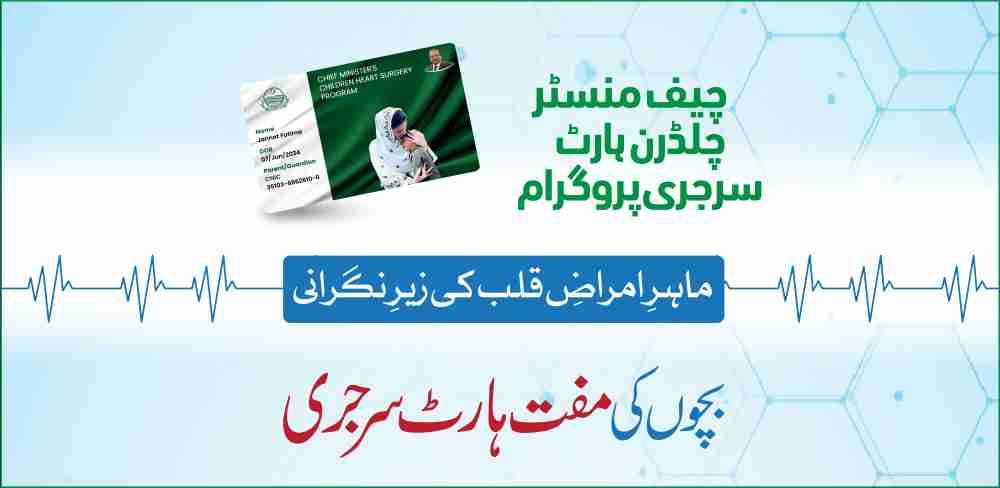
Table of Contents
Understanding the Punjab Government’s Free Transplant Program
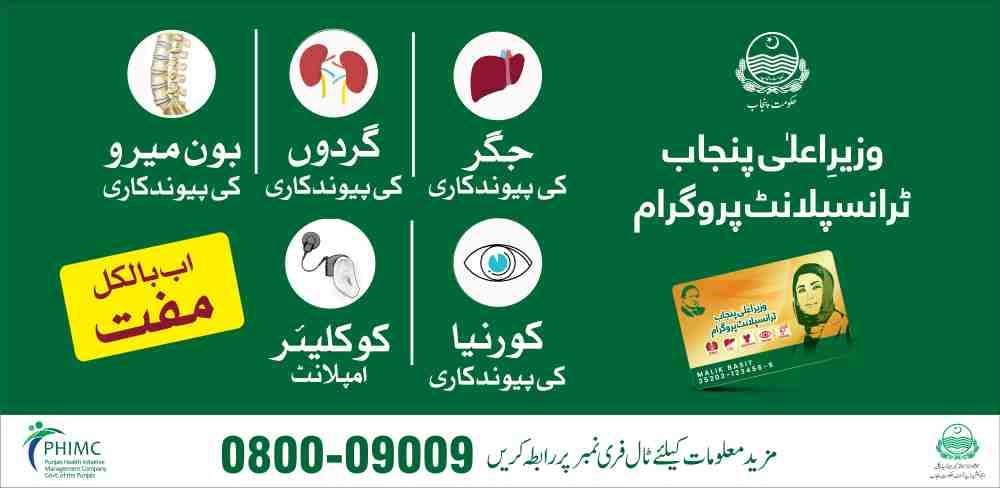
The Punjab Government’s Free Transplant Program represents a fundamental shift in how the province approaches complex, life-saving healthcare. Launched under the leadership of Chief Minister Maryam Nawaz Sharif, this initiative removes the prohibitive costs that have historically prevented low-income families from accessing organ transplantation, transforming what was once a privilege of the wealthy into a right for every deserving citizen.
The program operates under the administrative umbrella of the Punjab Health Initiative Management Company (PHIMC), which handles financial management, hospital empanelment, and quality monitoring. Clinical services are delivered through a network of accredited public and private hospitals that have met stringent infrastructure and expertise requirements. The Punjab Human Organ Transplantation Authority (PHOTA) provides the essential regulatory oversight, ensuring every transplant conducted under the program adheres to the highest ethical and legal standards.
What makes this initiative different from previous healthcare efforts?
Previous healthcare schemes often provided partial coverage or required patients to navigate complex reimbursement processes. This program eliminates those barriers entirely by offering completely cashless treatment. When a patient is registered and approved, the government pays the hospital directly for all covered services. The patient never sees a bill, never submits a reimbursement claim, and never faces the stress of arranging funds for life-saving surgery.
Another distinguishing feature is the program’s comprehensive scope. Rather than focusing on a single procedure, it covers five distinct types of transplants, addressing a wide range of medical conditions from kidney failure to congenital deafness. This breadth reflects a sophisticated understanding of the province’s healthcare needs and a commitment to serving patients across multiple disease categories.
The inclusion of both public and private hospitals represents another innovative aspect. By partnering with private sector institutions, the program leverages existing infrastructure and expertise, significantly expanding capacity without requiring the government to build new facilities from scratch. This public-private partnership model has proven highly effective in accelerating service delivery and reducing waiting times for patients.
When was the free transplant initiative officially launched?
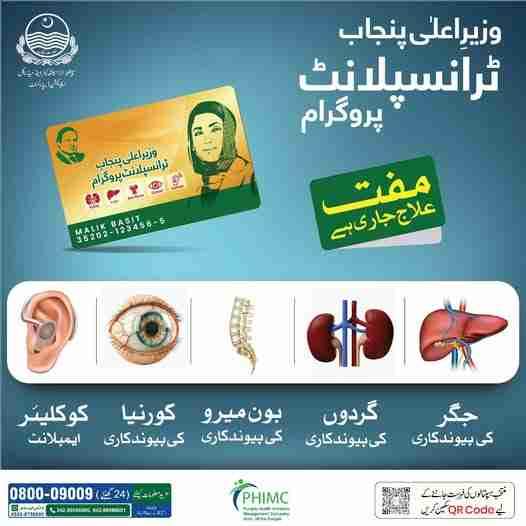
The free transplant initiative was officially launched in early 2025 as a flagship project of the Punjab government’s healthcare reform agenda. The launch followed extensive planning and consultation with medical experts, hospital administrators, and legal authorities to ensure the program would be implemented smoothly and effectively from day one.
Since its launch, the program has experienced rapid expansion. What began as a pilot initiative in major cities has now extended to multiple districts across Punjab, with new hospitals being added to the empaneled network regularly. This growth trajectory demonstrates the government’s commitment to reaching patients in every corner of the province, not just those living near urban centers.
Who spearheaded this groundbreaking healthcare initiative?
The program was championed by Chief Minister Maryam Nawaz Sharif, who has made healthcare accessibility a cornerstone of her administration’s agenda. Her personal involvement has been instrumental in cutting through bureaucratic red tape, securing necessary funding, and maintaining momentum for the program’s expansion.
The Chief Minister’s vision extends beyond simply funding transplants. She has emphasized the importance of creating a comprehensive healthcare ecosystem where prevention, treatment, and post-operative care work together seamlessly. The transplant program represents one component of this larger vision, which also includes initiatives like the free dialysis program and the expansion of Sehat Card coverage.
How does the program relate to the existing Sehat Health Card?
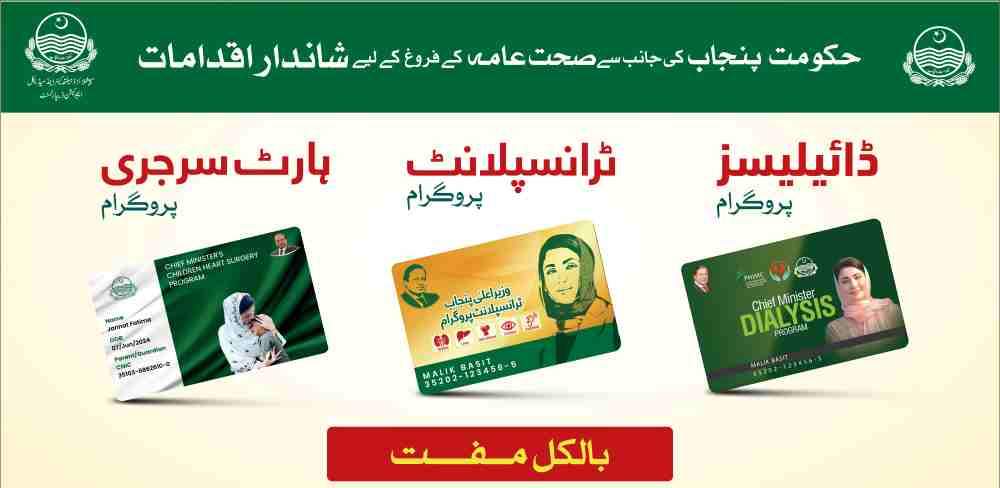
Many citizens wonder whether this transplant program replaces or duplicates the Sehat Health Card. The answer is that these are complementary initiatives serving different purposes within the province’s healthcare landscape.
The Sehat Health Card provides comprehensive health insurance coverage for a broad range of medical conditions, including hospitalizations, surgeries, and treatments across numerous disease categories. It functions as a safety net for families facing unexpected medical expenses.
The Punjab Government’s Free Transplant Program, by contrast, is a specialized initiative focused exclusively on five high-complexity transplant procedures. While some transplants might technically be covered under Sehat Card policies with certain limits, this program provides dedicated, full-coverage funding specifically for these life-saving procedures. Patients with Sehat Cards who need transplants are still encouraged to apply for this program, as it offers more comprehensive coverage for transplant-specific costs.
What role does PHIMC play in program implementation?
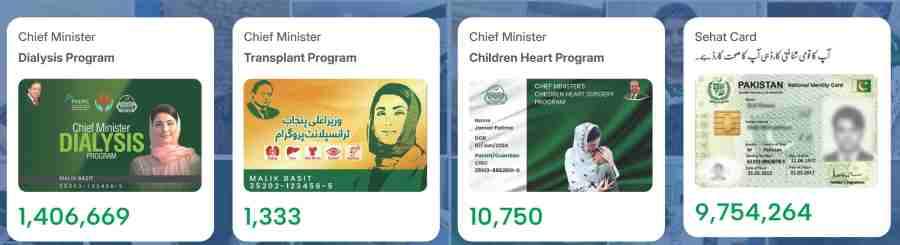
The Punjab Health Initiative Management Company (PHIMC) serves as the operational backbone of the entire transplant initiative. As a specialized healthcare management organization, PHIMC brings expertise in hospital empanelment, quality assurance, and financial management that would be difficult for traditional government departments to match.
PHIMC’s responsibilities begin with the careful selection and accreditation of hospitals eligible to perform transplants under the program. This empanelment process involves rigorous inspections of facilities, verification of surgical teams’ qualifications, and assessment of patient care protocols. Only hospitals meeting PHIMC’s exacting standards are authorized to participate.
Once hospitals are empaneled, PHIMC manages the financial flows that make the program work. When an approved patient undergoes surgery, PHIMC processes payments directly to the hospital, eliminating any need for the patient to handle money. This cashless system protects patients from financial stress and ensures hospitals receive timely reimbursement for their services.
PHIMC also maintains the centralized data systems that track patient registrations, monitor surgical outcomes, and generate reports on program performance. This data-driven approach enables continuous improvement, as administrators can identify bottlenecks, celebrate successes, and allocate resources where they are most needed.
CM Punjab Transplant Program Hospital List
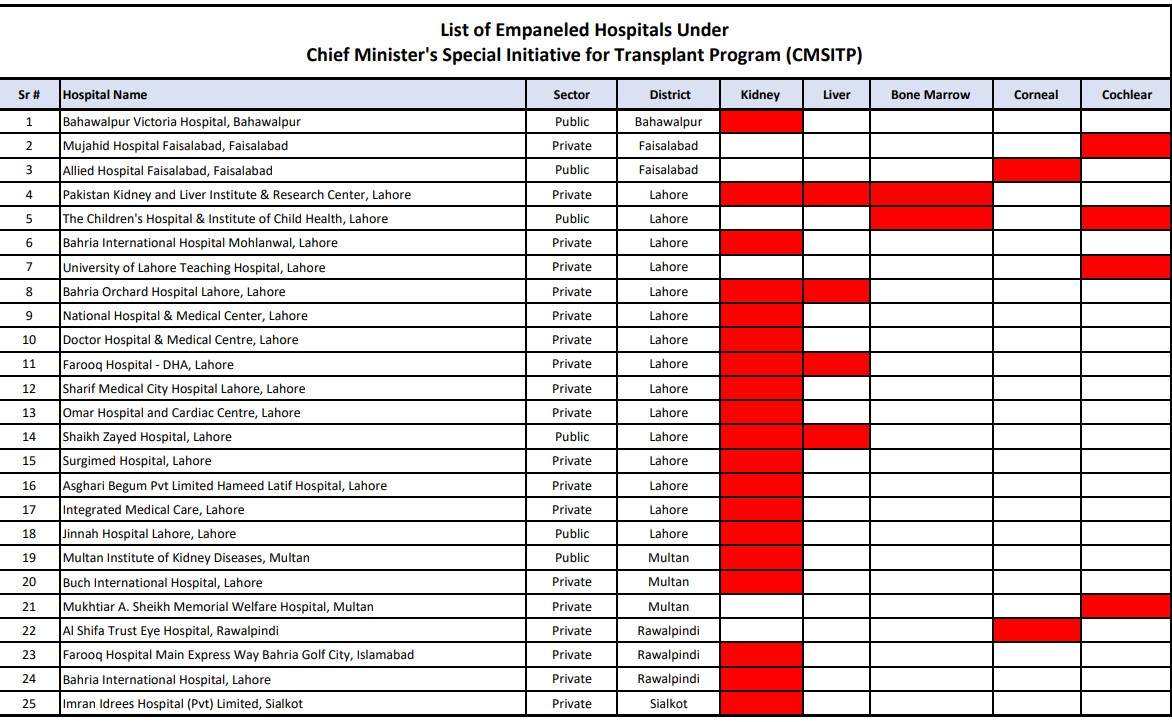
| Sr # | Hospital Name | Sector | District | Kidney | Liver | Bone Marrow | Corneal | Cochlear |
|---|---|---|---|---|---|---|---|---|
| 1 | Bahawalpur Victoria Hospital | Public | Bahawalpur | Yes | No | No | No | No |
| 2 | Mujahid Hospital Faisalabad | Private | Faisalabad | No | No | No | Yes | Yes |
| 3 | Allied Hospital Faisalabad | Public | Faisalabad | No | No | Yes | No | No |
| 4 | Pakistan Kidney and Liver Institute & Research Center | Private | Lahore | Yes | Yes | Yes | No | No |
| 5 | The Children’s Hospital & Institute of Child Health | Public | Lahore | No | No | Yes | Yes | Yes |
| 6 | Bahria International Hospital Mohlanwal | Private | Lahore | Yes | No | No | No | No |
| 7 | University of Lahore Teaching Hospital | Private | Lahore | No | No | No | Yes | Yes |
| 8 | Bahria Orchard Hospital Lahore | Private | Lahore | Yes | Yes | No | No | No |
| 9 | National Hospital & Medical Center | Private | Lahore | Yes | No | No | No | No |
| 10 | Doctor Hospital & Medical Centre | Private | Lahore | Yes | No | No | No | No |
| 11 | Farooq Hospital – DHA | Private | Lahore | Yes | Yes | No | No | No |
| 12 | Sharif Medical City Hospital Lahore | Private | Lahore | Yes | No | No | No | No |
| 13 | Omar Hospital and Cardiac Centre | Private | Lahore | Yes | No | No | No | No |
| 14 | Shaikh Zayed Hospital | Public | Lahore | Yes | Yes | No | No | No |
| 15 | Surgimed Hospital | Private | Lahore | Yes | No | No | No | No |
| 16 | Asghari Begum Pvt Limited Hameed Latif Hospital | Private | Lahore | Yes | No | No | No | No |
| 17 | Integrated Medical Care | Private | Lahore | Yes | No | No | No | No |
| 18 | Jinnah Hospital Lahore | Public | Lahore | Yes | No | No | No | No |
| 19 | Multan Institute of Kidney Diseases | Public | Multan | Yes | No | No | No | No |
| 20 | Buch International Hospital | Private | Multan | Yes | No | No | No | Yes |
| 21 | Mukhtiar A. Sheikh Memorial Welfare Hospital | Private | Multan | No | No | No | Yes | Yes |
| 22 | Al Shifa Trust Eye Hospital | Private | Rawalpindi | No | No | No | Yes | No |
| 23 | Farooq Hospital Main Express Way Bahria Golf City | Private | Rawalpindi | Yes | No | No | No | No |
| 24 | Bahria International Hospital | Private | Rawalpindi | Yes | No | No | No | No |
| 25 | Imran Idrees Hospital (Pvt) Limited | Private | Sialkot | Yes | No | No | No | No |
Public / Government Hospitals Empaneled Under CM Punjab Transplant Program
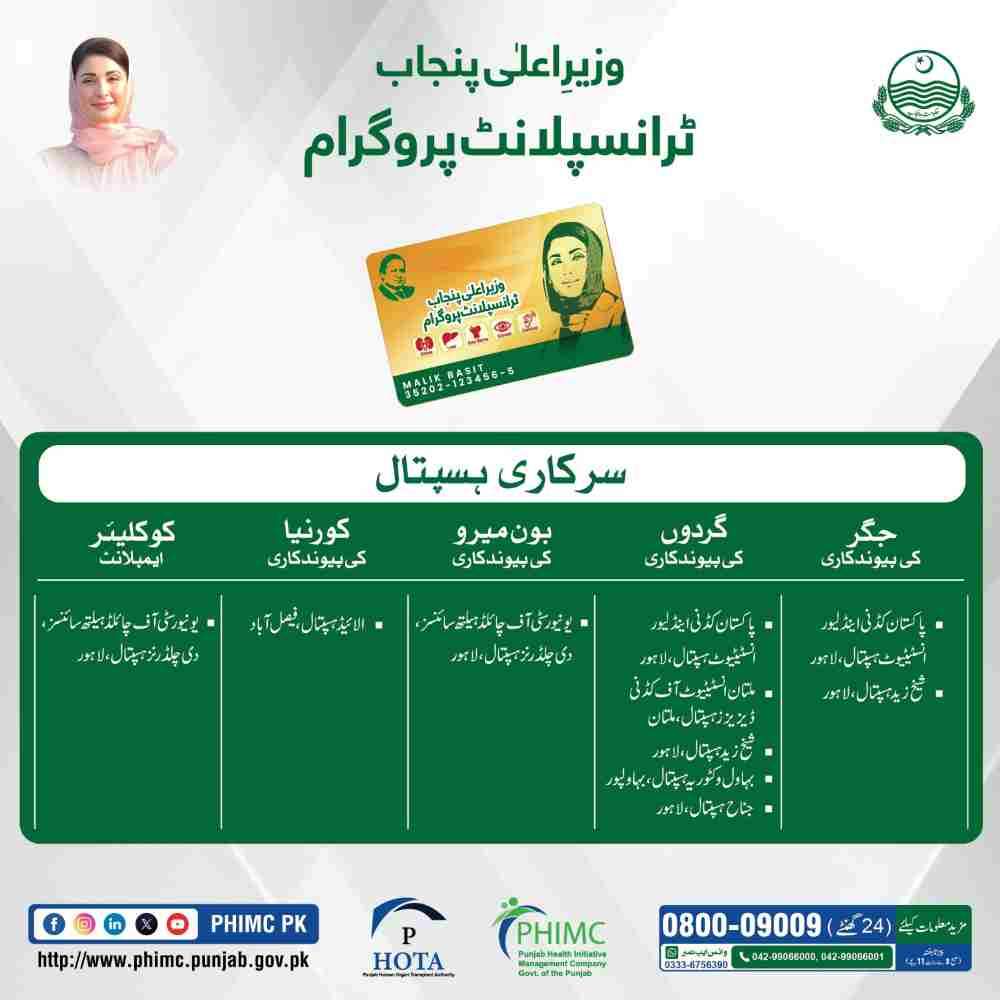
| Sr # | Hospital Name | District | Kidney | Liver | Bone Marrow | Corneal | Cochlear |
|---|---|---|---|---|---|---|---|
| 1 | Bahawalpur Victoria Hospital, Bahawalpur | Bahawalpur | Yes | No | No | No | No |
| 2 | Allied Hospital Faisalabad | Faisalabad | No | No | Yes | No | No |
| 3 | The Children’s Hospital & Institute of Child Health, Lahore | Lahore | No | No | Yes | Yes | Yes |
| 4 | Shaikh Zayed Hospital, Lahore | Lahore | Yes | Yes | No | No | No |
| 5 | Jinnah Hospital Lahore | Lahore | Yes | No | No | No | No |
| 6 | Multan Institute of Kidney Diseases | Multan | Yes | No | No | No | No |
Total Public Hospitals: 6 Key Observation: Public hospitals tend to focus more on kidney, bone marrow, corneal, and cochlear procedures, with strong pediatric and specialized institute presence (e.g., Children’s Hospital Lahore and Shaikh Zayed).
Private Hospitals Empaneled Under CM Punjab Transplant Program
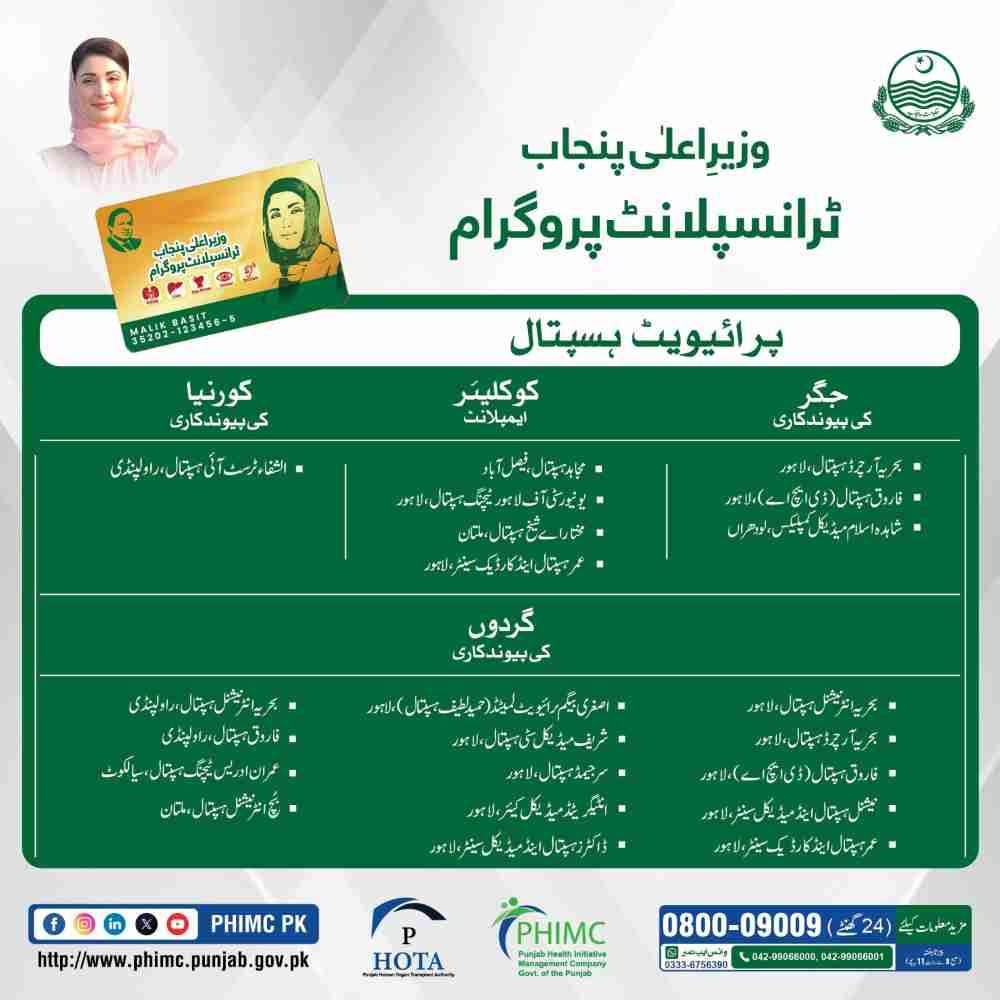
| Sr # | Hospital Name | District | Kidney | Liver | Bone Marrow | Corneal | Cochlear |
|---|---|---|---|---|---|---|---|
| 1 | Mujahid Hospital Faisalabad | Faisalabad | No | No | No | Yes | Yes |
| 2 | Pakistan Kidney and Liver Institute & Research Center, Lahore | Lahore | Yes | Yes | Yes | No | No |
| 3 | Bahria International Hospital Mohlanwal, Lahore | Lahore | Yes | No | No | No | No |
| 4 | University of Lahore Teaching Hospital, Lahore | Lahore | No | No | No | Yes | Yes |
| 5 | Bahria Orchard Hospital Lahore | Lahore | Yes | Yes | No | No | No |
| 6 | National Hospital & Medical Center, Lahore | Lahore | Yes | No | No | No | No |
| 7 | Doctor Hospital & Medical Centre, Lahore | Lahore | Yes | No | No | No | No |
| 8 | Farooq Hospital – DHA, Lahore | Lahore | Yes | Yes | No | No | No |
| 9 | Sharif Medical City Hospital Lahore | Lahore | Yes | No | No | No | No |
| 10 | Omar Hospital and Cardiac Centre, Lahore | Lahore | Yes | No | No | No | No |
| 11 | Surgimed Hospital, Lahore | Lahore | Yes | No | No | No | No |
| 12 | Asghari Begum Pvt Limited Hameed Latif Hospital | Lahore | Yes | No | No | No | No |
| 13 | Integrated Medical Care, Lahore | Lahore | Yes | No | No | No | No |
| 14 | Buch International Hospital | Multan | Yes | No | No | No | Yes |
| 15 | Mukhtiar A. Sheikh Memorial Welfare Hospital | Multan | No | No | No | Yes | Yes |
| 16 | Al Shifa Trust Eye Hospital | Rawalpindi | No | No | No | Yes | No |
| 17 | Farooq Hospital Main Express Way Bahria Golf City | Rawalpindi | Yes | No | No | No | No |
| 18 | Bahria International Hospital | Rawalpindi | Yes | No | No | No | No |
| 19 | Imran Idrees Hospital (Pvt) Limited | Sialkot | Yes | No | No | No | No |
Total Private Hospitals: 19 Key Observation: Private hospitals dominate the list (especially in Lahore), providing the majority of kidney, liver, corneal, and cochlear services. This public-private partnership significantly expands capacity and geographic reach under the free transplant scheme.
Why is PHOTA registration absolutely mandatory?
The Punjab Human Organ Transplantation Authority (PHOTA) exists to prevent the dark side of transplant medicine: organ trafficking, coercion of donors, and unethical medical practices. Its mandatory registration requirement is the primary mechanism for maintaining ethical standards across all transplant activities in the province.
PHOTA’s role begins with verifying the relationship between organ recipients and living donors. Under Pakistani law and international ethical guidelines, organ donation must be voluntary and altruistic. PHOTA investigators review documentation, conduct interviews when necessary, and ensure that no financial transactions have occurred between donor and recipient. This verification process protects vulnerable individuals from being exploited or pressured into donating organs against their will.
For deceased donor transplants, PHOTA maintains registries that ensure fair allocation of available organs based on medical need rather than wealth or social connections. This system maximizes the life-saving potential of every donated organ while maintaining public trust in the fairness of the allocation process.
PHOTA also inspects and accredits transplant centers, ensuring they maintain the infrastructure, staff qualifications, and protocols necessary to perform transplants safely. Regular inspections verify that standards remain high and that any deficiencies are promptly addressed.
Without PHOTA registration and approval, no transplant can legally occur in Punjab. This requirement applies equally to patients in the government program and those paying for treatment privately, ensuring uniform ethical standards across the entire healthcare system.
The Five Life-Saving Procedures Covered by the Program
The Punjab Government’s Free Transplant Program covers five distinct transplant procedures, each addressing a different category of medical condition. This comprehensive approach ensures that patients suffering from various forms of organ failure or tissue dysfunction can access the specific treatment they need.
Which five transplant procedures are provided completely free?
The program’s scope encompasses kidney transplantation for patients with end-stage renal disease, liver transplantation for those suffering from irreversible liver failure, bone marrow transplantation for individuals with blood cancers and hematological disorders, corneal transplantation to restore sight in patients with corneal blindness, and cochlear implantation for children born with profound hearing loss.
This selection of procedures reflects careful analysis of Punjab’s disease burden and healthcare needs. Kidney and liver diseases affect millions of Pakistanis, with hepatitis-related liver failure and diabetes-related kidney disease representing major public health challenges. Blood cancers and severe blood disorders claim thousands of lives annually, many of them children who could be cured with bone marrow transplantation. Corneal diseases blind hundreds of thousands, while congenital deafness robs children of the ability to develop speech and language.
By covering all five procedures, the program addresses a significant portion of the province’s transplant needs while establishing infrastructure and expertise that can potentially expand to cover additional procedures in the future.
Kidney Transplantation: A Second Chance at Normal Life
Kidney failure, medically termed end-stage renal disease, occurs when the kidneys lose their ability to filter waste products from the blood. Patients with this condition face two treatment options: lifelong dialysis, which artificially performs the kidneys’ filtering function, or kidney transplantation, which replaces the failed organ with a healthy one from a living or deceased donor.
Dialysis, while life-sustaining, imposes severe limitations on patients’ quality of life. Most require treatment three times weekly, with each session lasting several hours. The procedure leaves many patients exhausted, limits their ability to work or travel, and carries significant long-term health risks including infection and cardiovascular complications.
Kidney transplantation offers liberation from this cycle. A successful transplant frees patients from dialysis, allowing them to return to work, care for their families, and enjoy activities that dialysis made impossible. The transplanted kidney, with proper care and medication, can function for many years, providing sustained quality of life that dialysis cannot match.
The Punjab government’s program covers the entire kidney transplantation process. Pre-transplant evaluation includes blood tests, imaging studies, cardiac assessment, and tissue typing to ensure compatibility between donor and recipient. The surgical procedure itself, whether living donor nephrectomy or transplant surgery, is performed by experienced surgical teams at empaneled hospitals. Post-operative care includes hospital recovery, regular follow-up appointments, and the crucial immunosuppressive medications that prevent organ rejection.
For living donors, typically close relatives of the recipient, the program covers all medical expenses related to donation. This includes pre-donation evaluation, the donor surgery itself, and post-operative care. Donors receive the same high-quality medical attention as recipients, ensuring their health and safety are protected throughout the process.
Liver Transplantation: Hope for Hepatitis Patients
Pakistan bears one of the world’s highest burdens of hepatitis, with millions of citizens infected with hepatitis B or C. These chronic infections progressively damage the liver, leading to cirrhosis, liver failure, and liver cancer. For patients whose livers have failed completely, transplantation represents the only definitive treatment.
Liver transplantation is among the most complex surgical procedures in medicine. The liver performs hundreds of essential functions, including detoxifying blood, producing proteins necessary for clotting, and metabolizing nutrients. Replacing this vital organ requires extraordinary surgical skill, sophisticated intensive care, and meticulous post-operative management.
The Punjab program’s coverage of liver transplantation addresses a critical gap in healthcare access. Private sector liver transplants can cost millions of rupees, placing them far beyond the reach of ordinary families. By making this procedure available free of charge, the government offers hope to patients who previously faced certain death from liver failure.
The program supports both living donor and deceased donor liver transplantation. Living donor transplantation, where a portion of a healthy person’s liver is removed and transplanted into the recipient, is more common in Pakistan due to the limited availability of deceased donor organs. The liver’s remarkable ability to regenerate means both donor and recipient can ultimately have fully functioning livers.
Recovery from liver transplantation requires careful attention to medication, diet, and follow-up care. The program’s provision of one year of free immunosuppressive medications addresses the critical period when rejection risk is highest, giving patients the best possible chance for long-term transplant success.
Bone Marrow Transplantation: Curing Blood Cancer and Related Disorders
Bone marrow, the spongy tissue inside bones, produces the blood cells that carry oxygen, fight infection, and enable clotting. When this system fails due to cancer or other disorders, patients face life-threatening consequences including severe anemia, overwhelming infections, and uncontrolled bleeding.
Bone marrow transplantation, also called hematopoietic stem cell transplantation, replaces the patient’s diseased marrow with healthy stem cells from a donor. These infused cells travel to the patient’s bone cavities and begin producing healthy blood cells, effectively curing the underlying disorder.
The program’s inclusion of bone marrow transplantation represents a major advance in cancer care accessibility. Leukemia, the most common childhood cancer, can often be cured with transplantation, but the procedure’s complexity and cost have historically limited access to wealthy families or those able to raise substantial funds through charity.
Patients with thalassemia major, a genetic blood disorder requiring lifelong blood transfusions, also benefit from this coverage. Thalassemia patients who receive successful bone marrow transplants can be completely cured, freed from the burden of regular transfusions and the associated risks of iron overload and infection.
The transplantation process begins with chemotherapy or radiation to eliminate the patient’s diseased marrow, creating space for the donor cells to establish themselves. This conditioning phase carries significant risks, including infection and organ damage, requiring intensive medical support. The transplant itself, resembling a blood transfusion, infuses the donor stem cells into the patient’s bloodstream. Recovery takes weeks to months, with careful monitoring for complications including graft-versus-host disease, where donor immune cells attack the recipient’s tissues.
Corneal Transplantation: Restoring Sight
The cornea, the transparent front surface of the eye, focuses light entering the eye and protects internal structures. Disease, infection, or injury can scar the cornea, turning it opaque and blocking light from reaching the retina. This condition, corneal blindness, affects hundreds of thousands of Pakistanis, many of them young and otherwise healthy.
Corneal transplantation replaces the damaged cornea with healthy tissue from a deceased donor. Unlike other organ transplants, corneal transplantation does not require blood type matching or intensive immunosuppression, as the cornea lacks blood vessels that would trigger rejection. This simplicity makes corneal transplantation highly successful, with most recipients experiencing significant vision improvement.
The Punjab program’s coverage of corneal transplantation opens the door to restored vision for thousands of blind citizens. The procedure, typically lasting one to two hours, can be performed under local or general anesthesia. Recovery involves eye drops, a protective shield, and gradual visual improvement over weeks to months.
Corneal transplants depend entirely on eye banks that recover, evaluate, and distribute donor tissue. The program’s expansion has stimulated increased attention to eye banking infrastructure, encouraging more hospitals to develop the capacity to recover and store corneal tissue. This infrastructure benefits not only program patients but all Pakistanis needing corneal transplantation.
For patients blind from corneal disease, successful transplantation represents transformation beyond measure. The ability to see loved ones’ faces, read, work, and navigate independently restores not just vision but dignity, productivity, and quality of life.
Cochlear Implantation: Opening the World of Sound to Deaf Children
Profound hearing loss in children, whether present at birth or developing early in life, profoundly impacts language development. Children who cannot hear spoken language face immense challenges learning to speak themselves, potentially leading to lifelong communication difficulties, educational limitations, and social isolation.
Cochlear implants bypass damaged portions of the inner ear to directly stimulate the auditory nerve, creating a sensation of hearing. Unlike hearing aids, which amplify sound, cochlear implants use an external processor to capture and digitize sound, transmitting signals to an internal receiver that stimulates the nerve electrically.
The program’s cochlear implant coverage specifically targets children, recognizing that early intervention is critical for language development. Children implanted before age three or four have the best chance of developing spoken language comparable to their hearing peers. Older children and even adults can benefit, but the window for optimal language acquisition is narrow.
The implantation process begins with comprehensive evaluation to confirm candidacy. Candidates must have profound hearing loss that does not benefit from hearing aids, normal auditory nerve function, and supportive family environments committed to post-implantation therapy. Surgery places the internal receiver under the skin behind the ear, with electrodes inserted into the cochlea.
Post-implantation care extends far beyond the surgical procedure. The external processor must be programmed and adjusted as the child learns to interpret new sound signals. Auditory-verbal therapy teaches the child and family to use the implant for developing listening and spoken language skills. This therapy, intensive and ongoing, is essential for achieving optimal outcomes.
The program’s commitment to cochlear implantation recognizes that hearing loss, while not life-threatening, can be life-limiting in profound ways. By opening the world of sound to deaf children, the program enables them to attend mainstream schools, communicate freely with family and friends, and pursue opportunities that hearing loss would otherwise foreclose.
Eligibility Criteria: Who Can Receive Free Treatment?
Understanding eligibility requirements is essential for patients hoping to benefit from the Punjab Government’s Free Transplant Program. The program’s designers established clear criteria to ensure resources reach those most in need while maintaining ethical and legal standards.
Who qualifies for free transplants under this initiative?
Eligibility for the program rests on three pillars: residency, financial need, and medical necessity. Patients must be permanent residents of Punjab province, must demonstrate inability to afford transplant costs independently, and must have a diagnosed medical condition requiring one of the five covered transplant procedures.
Residency verification relies primarily on the Computerized National Identity Card (CNIC), which must show a permanent address within Punjab’s geographical boundaries. For children too young to possess CNICs, the parent’s CNIC with Punjab address or the child’s B-Form establishes residency.
Financial need determination considers household income, assets, and overall economic circumstances. The program targets underprivileged individuals who cannot afford transplant costs through personal resources or family support. Patients receiving benefits from other social welfare programs, such as the Benazir Income Support Programme, typically qualify automatically.
Medical necessity requires diagnosis by a qualified specialist at an empaneled hospital. The diagnosing physician must confirm that the patient’s condition meets established criteria for transplantation and that the procedure offers reasonable expectation of benefit. This medical verification ensures program resources support patients most likely to achieve successful outcomes.
Is there an age restriction for transplant recipients?
Age considerations vary by procedure type rather than following a single universal rule. For solid organ transplants including kidney and liver, patients typically fall within the 18 to 60 age range, though exceptions accommodate younger and older patients based on overall health and surgical fitness.
For cochlear implantation, age restrictions reflect the critical window for language development. Children generally qualify up to age five or six, with younger children prioritized to maximize speech and language outcomes. Some flexibility may exist for older children with particular circumstances, but early implantation remains strongly preferred.
Bone marrow transplantation age limits depend on the specific condition being treated and the type of transplant planned. Children and younger adults generally face fewer age-related restrictions, while older adults undergo more rigorous evaluation to ensure they can tolerate the intensive conditioning regimens required.
Corneal transplantation has the most flexible age criteria, as the procedure’s lower intensity and minimal immunosuppression make it suitable for patients across the lifespan, including elderly individuals who might not tolerate more invasive procedures.
Can residents of other provinces apply for this Punjab program?
The program is funded by Punjab taxpayers and prioritized for Punjab residents. Applicants from other provinces, including Sindh, Khyber Pakhtunkhwa, Balochistan, and Islamabad Capital Territory, are generally not eligible.
This restriction reflects the provincial nature of healthcare funding in Pakistan’s constitutional framework. Each province bears primary responsibility for healthcare delivery to its residents and funds services through provincial revenues. Punjab’s program, while groundbreaking, cannot substitute for similar initiatives in other provinces.
Patients from other provinces should explore comparable programs in their home regions. Khyber Pakhtunkhwa has developed health insurance initiatives, Sindh operates various healthcare schemes, and federal programs may provide coverage in Islamabad. Advocacy for expanded transplant access in other provinces continues, with Punjab’s program serving as a model for replication nationwide.
Why is PHOTA registration non-negotiable?
PHOTA registration serves multiple critical functions that make it absolutely essential for every transplant patient. First and foremost, it prevents illegal organ trafficking by verifying that all donations are voluntary and altruistic rather than commercially motivated.
The verification process requires documentation of relationship between living donors and recipients, typically through NADRA-issued Family Registration Certificates. This documentation establishes that donors are close relatives, as required by law, and that no financial transactions have occurred.
PHOTA also maintains waiting lists for deceased donor organs, ensuring fair allocation based on medical urgency rather than wealth or connections. This registry system maximizes the life-saving potential of every donated organ while maintaining public confidence in allocation fairness.
For transplant centers, PHOTA accreditation confirms they possess the infrastructure, staff qualifications, and protocols necessary to perform transplants safely. Regular inspections verify ongoing compliance with standards, protecting patients from substandard care.
Without PHOTA registration, no transplant can legally occur in Pakistan. Patients attempting to proceed without PHOTA approval risk legal consequences and medical complications from unregulated procedures. The Punjab program’s mandatory registration requirement simply enforces what the law already demands.
What financial documentation demonstrates need?
Patients must provide evidence supporting their inability to afford transplant costs independently. Acceptable documentation includes low-income certificates issued by union councils, proof of enrollment in social welfare programs, affidavits of financial circumstances, and documentation of household income and expenses.
The program recognizes that financial need manifests differently across communities. Urban families may have different income levels and expenses than rural families, and the evaluation process considers these contextual factors. Patients unable to document formal income, such as daily wage laborers or subsistence farmers, can provide alternative evidence of economic circumstances.
Hospital social welfare officers assist patients in assembling required documentation and presenting their cases appropriately. These professionals understand what information program administrators need and can guide patients through the documentation process.
Step-by-Step Registration and Application Process
Navigating the registration process for a free transplant requires understanding the sequential steps involved. The process, while thorough, is designed to be navigable with hospital staff assistance.
How do patients begin the registration journey?
The registration process cannot be completed online from home. It begins with a visit to an empaneled hospital where specialists can evaluate the patient’s condition and confirm transplant candidacy. Patients should bring existing medical records, identification documents, and any previous test results to this initial consultation.
At the hospital, the relevant specialist—nephrologist for kidney patients, hepatologist for liver patients, hematologist for bone marrow candidates, ophthalmologist for corneal patients, or audiologist for cochlear implant candidates—conducts a thorough evaluation. This examination determines whether transplantation offers appropriate treatment and whether the patient meets medical criteria for the procedure.
If the specialist confirms transplant candidacy, the hospital’s patient affairs or social welfare department becomes involved. These staff members guide patients through the documentation and registration process, explaining requirements and assisting with form completion.
What documents must patients prepare?
Successful registration requires assembling a comprehensive documentation package. Patients should prepare:
Computerized National Identity Cards (CNICs) for both patient and any living donor, with clear copies of both front and back. For child patients without CNICs, the child’s B-Form and parent’s CNIC with Punjab address establish identity and residency.
Proof of Punjab residency, typically established through the CNIC’s permanent address field. Patients with CNICs showing addresses outside Punjab may need additional documentation explaining their connection to the province.
Medical records documenting the condition requiring transplantation. These include diagnostic test results, biopsy reports, imaging studies, and a detailed referral letter from the treating specialist clearly indicating transplant necessity.
Financial documentation demonstrating inability to afford treatment. Union council certificates, welfare program enrollment proof, or affidavits of financial circumstances fulfill this requirement.
For living donor cases, a Family Registration Certificate (FRC) from NADRA establishes the legally required relationship between donor and recipient. This certificate documents family connections essential for PHOTA approval.
Recent passport-sized photographs for both patient and donor appear on registration forms and identification cards issued through the program.
How does PHOTA online registration work?
Once the hospital confirms medical candidacy and assembles documentation, staff initiate PHOTA registration through the authority’s online portal. This digital submission includes all required information and documents for both recipient and donor.
The PHOTA review process examines medical records to confirm transplant necessity, verifies relationship documentation to ensure legal compliance, and evaluates donor suitability to protect donor health. This review typically takes days to weeks depending on case complexity and current workload.
During review, PHOTA may request additional information or clarification. Hospital staff manage these requests, communicating with PHOTA and submitting supplementary documentation as needed. Patients remain informed of progress through their hospital contacts.
When PHOTA approves the case, it issues a No-Objection Certificate authorizing the transplant to proceed. This certificate represents final regulatory clearance and triggers scheduling of the surgical procedure.
Can patients check application status online?
Currently, direct online status checking through patient portals is limited. The most reliable status updates come through hospital social welfare departments, which maintain communication with PHOTA and PHIMC throughout the review process.
Patients should maintain regular contact with their assigned hospital contact person, who can provide updates on progress and alert them to any additional requirements. The hospital helpline, 0800-09009, can also provide general guidance on application status.
As program digital infrastructure evolves, expanded online status checking capabilities may become available. For now, personal communication with hospital staff remains the most effective monitoring approach.
What happens if an application shows ineligible status?
Applications showing ineligible status require investigation to identify and address the underlying cause. Common issues include address mismatches where CNIC doesn’t clearly show Punjab residency, incomplete documentation missing required elements, or information discrepancies between submitted documents.
The first step for affected patients is contacting their hospital social welfare officer. These professionals can access application details, identify specific reasons for ineligibility, and advise on corrective actions. In many cases, submitting additional documentation or correcting information resolves the issue.
Some ineligibility determinations reflect substantive issues that cannot be easily corrected. Patients whose CNICs show permanent addresses outside Punjab, for example, may genuinely fall outside program scope. These patients should explore alternative resources including home province programs or charitable hospital options.
Treatment Locations: Complete Hospital Network
The Punjab Government’s Free Transplant Program operates through a carefully selected network of hospitals across the province. This distribution ensures patients can access care relatively close to home while receiving services from highly qualified medical teams.
Where are empaneled hospitals located?
Empaneled hospitals are distributed across Punjab’s major cities and regional centers. Lahore, as the provincial capital and largest city, hosts the highest concentration of transplant centers. Rawalpindi serves the northern region, Multan covers southern Punjab, and Faisalabad, Bahawalpur, and Sialkot provide additional geographic coverage.
This distribution recognizes that requiring patients to travel extreme distances for care creates hardship. While some centralization of specialized services is inevitable—complex procedures require concentrated expertise—the network design minimizes travel burden wherever possible.
Does the program include both government and private hospitals?
The program successfully integrates both public and private sector hospitals, leveraging the strengths of each. Government hospitals including Jinnah Hospital Lahore, Services Hospital, and Nishtar Hospital Multan bring decades of experience serving large patient populations and training medical professionals.
Private hospitals contribute specialized infrastructure, efficient service delivery models, and additional capacity that expands overall program reach. Institutions including Pakistan Kidney and Liver Institute (PKLI), Sharif Medical City, Farooq Hospital, and Omar Hospital & Cardiac Centre participate as empaneled providers.
This public-private partnership model maximizes available resources while maintaining consistent quality standards across all participating institutions. Patients can choose among empaneled hospitals based on location, specific services offered, and personal preference.
Which Lahore hospitals perform kidney and liver transplants?
Lahore’s concentration of medical expertise makes it the primary center for complex transplant procedures. Key institutions include:
Pakistan Kidney and Liver Institute (PKLI) stands as a purpose-built facility dedicated to hepatology and nephrology. Its specialized focus, advanced infrastructure, and experienced teams make it a premier destination for liver and kidney transplantation.
Shaikh Zayed Hospital, a major public sector teaching institution, offers comprehensive transplant services supported by extensive clinical experience and academic resources. Its long-standing transplant programs have trained generations of specialists.
Jinnah Hospital Lahore, another public sector giant, provides transplant services alongside its full range of medical and surgical care. Its large capacity serves patients from across the province.
The Children’s Hospital & Institute of Child Health specializes in pediatric care, making it the primary center for children needing kidney or liver transplants. Its child-focused approach addresses young patients’ unique needs.
Several private hospitals including Sharif Medical City, Farooq Hospital, Doctors Hospital, and Omar Hospital & Cardiac Centre offer transplant services with the efficiency and amenities associated with private healthcare.
What hospitals serve Rawalpindi and northern Punjab?
Rawalpindi’s hospitals serve patients from the Potohar region and northern Punjab districts. Key institutions include:
Al Shifa Trust Eye Hospital specializes in corneal transplantation, combining ophthalmic expertise with extensive experience serving patients with corneal diseases. Its eye bank infrastructure supports corneal tissue availability.
Farooq Hospital on Main Express Way near Bahria Golf City serves patients from both Rawalpindi and Islamabad, offering multi-organ transplant capabilities.
Holy Family Hospital, a major public sector institution, provides transplant services as part of its comprehensive care offerings.
Which hospitals cover Multan and southern Punjab?
Multan serves as the healthcare hub for southern Punjab, with several institutions providing transplant services:
Multan Institute of Kidney Diseases (MIKD) specializes in nephrology and kidney transplantation, offering focused expertise for kidney patients throughout the region.
Nishtar Hospital, the largest public sector teaching hospital in South Punjab, provides multiple transplant services including kidney and potentially other procedures as its capabilities expand.
Bakhtawar Amin Memorial Trust Hospital, a major philanthropic institution, combines charitable mission with clinical excellence in serving patients.
Can patients choose their preferred hospital?
Patients generally have choice among empaneled hospitals, subject to capacity and medical suitability considerations. A patient registered at a public hospital might express preference for treatment at a particular private facility, and this preference can often be accommodated.
Choice may be limited by hospital capacity—popular centers may have waiting lists—and by specific medical requirements. Some procedures may only be available at certain hospitals with specialized expertise or infrastructure. Hospital social welfare officers explain available options and help patients make informed choices.
Financial Coverage and Post-Transplant Support
Understanding what costs the program covers helps patients plan their care with confidence. The coverage extends beyond the surgical procedure itself to include comprehensive support.
What is the maximum financial coverage per patient?
The program covers transplant costs up to approximately Rs. 2 million per patient. This substantial coverage encompasses the entire treatment journey from initial evaluation through post-operative recovery.
Covered expenses include all pre-transplant diagnostic testing and medical workups, ensuring patients receive thorough evaluation without out-of-pocket costs. The transplant surgery itself, typically the largest single expense, is fully covered including surgeon fees, anesthesia, operating room costs, and all required medical supplies.
Hospital stay expenses, including room charges, nursing care, and necessary medications during admission, fall within program coverage. Intensive care unit stays, often required after major transplant surgery, are similarly covered.
Does coverage extend to living donors?
Living donors receive complete coverage for all medical expenses related to donation. This includes pre-donation evaluation to confirm donor suitability, the donor surgery itself, and post-operative care during recovery.
This donor coverage recognizes that living donors perform an invaluable service, saving lives through their voluntary gift. Ensuring donors receive excellent care without financial burden encourages voluntary donation while protecting donor health and safety.
The program does not, however, provide financial compensation for donation itself. This prohibition reflects ethical principles and legal requirements against organ commercialization. Donation must remain purely altruistic.
Are post-transplant medications provided?
Post-transplant medications, particularly immunosuppressive drugs that prevent organ rejection, are critically important for transplant success. Without these medications, the recipient’s immune system would attack and destroy the transplanted organ.
The program provides one year of free post-transplant medications for kidney and liver transplant recipients. This coverage includes the immunosuppressive drugs that must be taken regularly to maintain organ function and prevent rejection.
This medication support addresses a major barrier to transplant success. Many patients who receive transplants through charitable programs later struggle to afford lifelong medications, potentially losing their transplanted organs to rejection. By providing this crucial first year of coverage, the program gives patients the best possible start to their post-transplant lives.
What about diagnostic tests and pre-surgery screenings?
All required diagnostic tests and pre-surgery screenings are fully covered. This includes blood work, tissue typing, imaging studies such as CT scans and MRIs, cardiac evaluations, and any specialist consultations needed to complete the pre-transplant workup.
Comprehensive pre-transplant evaluation ensures patients are optimally prepared for surgery and any underlying health issues are identified and addressed before transplantation. This thorough approach contributes to better surgical outcomes and reduced complication risks.
Does the program cover follow-up care?
Post-transplant follow-up care, including scheduled clinic visits, routine blood tests to monitor organ function and medication levels, and management of any complications, is covered during the initial post-transplant period. The specific duration and scope of follow-up coverage varies by procedure and individual circumstances.
Patients should discuss follow-up care expectations with their transplant team before surgery, ensuring they understand what monitoring will occur and for how long coverage continues.
Program Achievements and Current Statistics
The Punjab Government’s Free Transplant Program has achieved remarkable results since its launch, with thousands of patients receiving life-saving treatment.
How many transplants has the program performed?
According to official data, the program has successfully completed over 1,366 transplants since its inception. This impressive total represents thousands of lives saved and families preserved through government investment in healthcare access.
The breakdown by procedure type reveals the program’s comprehensive reach. Kidney transplants, addressing the most common organ failure indication, number over 700 successful procedures. Liver transplants exceed 220, providing hope to patients with end-stage liver disease.
Cochlear implants for deaf children approach 400 procedures, transforming the futures of children who can now hear and develop spoken language. Corneal transplants, numbering over 30, have restored sight to blind individuals. Bone marrow transplants, while fewer in number due to procedure complexity, exceed 15 and continue to increase as program capacity expands.
What impact has the program had on pediatric care?
Children have been major beneficiaries of the program’s comprehensive coverage. Cochlear implants have enabled hundreds of deaf children to hear for the first time, with early intervention maximizing language development potential.
Pediatric bone marrow transplants have cured children with leukemia and thalassemia, conditions that previously offered limited treatment options for low-income families. These cures free children from years of chemotherapy, transfusions, and medical uncertainty.
Children needing kidney or liver transplants have received care at specialized pediatric centers including The Children’s Hospital Lahore, with surgical teams experienced in meeting young patients’ unique needs.
How many patients receive dialysis while awaiting transplant?
The program’s companion initiative, the CM Punjab Dialysis Program, provides free dialysis to thousands of kidney failure patients. This support sustains patients while they await transplantation, preventing the deterioration that would otherwise occur without treatment.
Dialysis coverage ensures that patients who cannot yet receive transplants remain healthy enough to undergo surgery when organs become available. This integrated approach maximizes the number of patients who can ultimately benefit from transplantation.
Frequently Asked Questions
What is the official helpline number for the transplant program?
The official 24-hour toll-free helpline number is 0800-09009. Trained operators can answer questions about eligibility, required documents, empaneled hospitals, and the registration process. Calls are free from anywhere in Punjab.
What is the CM Punjab Transplant Card?
The CM Punjab Transplant Card is an official identification document issued to registered patients. It contains patient information and a unique identification number that hospital staff use to verify program coverage and authorize treatment. The card enables cashless treatment at any empaneled hospital.
How do I obtain the complete list of empaneled hospitals?
The complete and current list of empaneled hospitals is available through multiple official channels. Callers to the 0800-09009 helpline can request the list by district or procedure type. The official PHIMC website at phimc.punjab.gov.pk maintains an updated hospital directory. PHOTA’s website at phota.punjab.gov.pk also lists authorized transplant centers. Patients can also inquire at any major government hospital, where staff typically maintain current empanelment information.
Are OPD visits covered before and after transplant?
Initial consultations to determine transplant candidacy are covered as part of the pre-transplant evaluation process. Post-transplant follow-up visits are covered during the initial recovery period. Patients should confirm the specific duration of follow-up coverage with their transplant team before surgery.
What is the difference between the Dialysis Card and Transplant Program?
The CM Punjab Dialysis Card provides free dialysis sessions to kidney failure patients who need ongoing treatment to survive. It is a life-sustaining measure that maintains patients while they await transplantation or for those who cannot undergo transplant.
The CM Punjab Transplant Program provides the curative procedure itself—the transplant surgery that can free patients from dialysis entirely. A patient might use the Dialysis Card to receive free dialysis while waiting for a transplant, then receive the transplant through this program, potentially eliminating the need for further dialysis.
What conditions are not covered by the program?
The program specifically covers the five transplant procedures described throughout this guide. It does not cover treatments for other conditions including heart disease requiring bypass surgery or angioplasty, cancer treatments other than bone marrow transplantation for blood cancers, general medical or surgical procedures unrelated to covered transplants, or treatment for accidents and trauma.
Patients needing care for other conditions should explore coverage through the Sehat Health Card or other government health initiatives.
How do I apply for the CM Punjab Dialysis Card?
Patients needing dialysis should visit the nearest empaneled dialysis center or major government hospital. The hospital’s dialysis unit or patient facilitation center provides registration guidance. Required documents typically include CNIC, medical reports confirming kidney failure, and proof of Punjab residency. Approved patients receive a Dialysis Card enabling free dialysis at empaneled centers.

Add a Comment