
Rocketing petrol costs have transformed the daily commute into a serious financial burden for millions across Pakistan, yet the Sindh government has responded with a targeted lifeline: the Motorcycle Fuel Subsidy Programme delivers a monthly cash injection of Rs. 2,000 straight into the bank accounts of eligible bikers. This initiative, officially branded as the People’s Motorcycle Fuel Subsidy Programme, operates as a digital-first safety net, ensuring that the province’s massive network of two-wheeler owners can keep moving without emptying their wallets.
Key Takeaways
- Digital Registration Is the Only Gateway: Applicants must complete the process exclusively through the taxportal.excise.gos.pk website or the official mobile app; there are no paper forms or offline submission centers for this program.
- Triple-Match Verification Is Non-Negotiable: The name on your CNIC, motorcycle registration document, and bank account IBAN must be identical in spelling and sequence; any deviation will trigger an automatic system rejection.
- Free Ownership Transfer Window Is Open Now: The government has temporarily waived the standard Rs. 500 transfer fee to allow individuals using bikes registered in someone else’s name to legally update their ownership records at no cost.
- Payment Speed Depends on Your Banking Partner: Sindh Bank account holders receive the Rs. 2,000 credit within a single business day, while customers of other scheduled banks may wait up to three working days for the transaction to clear.
- Strict One-Subsidy-Per-CNIC Rule Applies: Regardless of whether you possess a garage full of multiple registered motorcycles, the system will disburse only a single monthly payment of Rs. 2,000 per verified Computerized National Identity Card.
- Read More: Sindh Government Petrol Subsidy App (Rs. 2K Apply Online) | Sindh Fuel Relief App
- Read More: Sindh Govt Petrol Subsidy Scheme – Petrol Subsidy App
- Read More: Sasta Petrol Subsidy Scheme – Petrol Subsidy For Bikers
Motorcycle Fuel Subsidy Program (By Sindh Govt Rs.2K)
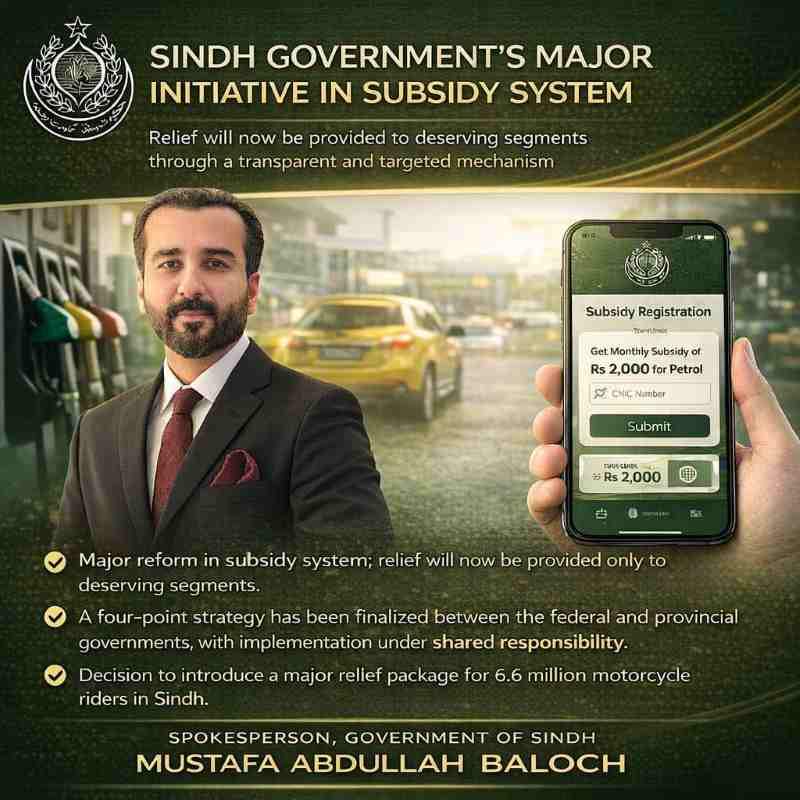
Table of Contents
What Exactly Is the Sindh Motorcycle Fuel Subsidy Programme and What Relief Does It Actually Provide?
The Sindh Motorcycle Fuel Subsidy Programme is a direct benefit transfer scheme initiated by the provincial government to provide monthly financial assistance of Rs. 2,000 to verified owners of petrol-powered motorcycles registered within the province. This initiative is designed to neutralize the impact of volatile global oil prices on household transportation budgets by subsidizing the equivalent cost of approximately 20 liters of fuel at a predefined rate, thereby offering predictable, recurring support rather than a one-off payment.
Why Did the Provincial Administration Roll Out This Specific Financial Intervention Now?
The introduction of this targeted subsidy stems directly from a perfect storm of escalating global energy costs and domestic inflationary pressures that have made even a short motorcycle trip a significant household expense. As international crude oil benchmarks soared due to geopolitical instability, the trickle-down effect at the local petrol pump became unsustainable for the average wage earner, daily commuter, and student population.
- The immediate catalyst was the unprecedented surge in petrol prices, which threatened to disrupt the daily economic activity of the province’s workforce.
- Motorcycles constitute the backbone of private transportation in Sindh, with official data indicating approximately 6.7 million registered units traversing the province’s roads.
- The government recognized that broad, untargeted subsidies often benefit wealthier segments of society more than the intended lower-income groups; hence, this scheme focuses exclusively on two-wheeler owners.
- The program aligns with a broader fiscal strategy to encourage financial inclusion by requiring beneficiaries to possess an active bank account for direct credit transfers.
- Unlike temporary price freezes, this cash transfer model empowers the recipient to manage their own fuel budget while preserving the market mechanism of petrol pricing.
How Does the Direct Benefit Transfer Mechanism Actually Function Technically?
The operational backbone of this relief measure relies on a sophisticated digital ecosystem that cross-references multiple government and financial databases in real time. When an individual initiates an application, the system conducts an instantaneous audit of the Excise and Taxation Department’s vehicle registry against the National Database and Registration Authority (NADRA) records.
- Data Ingestion: The applicant submits their 13-digit CNIC number and the unique motorcycle registration identifier.
- Ownership Verification: The portal queries the Sindh Excise database to confirm that the vehicle exists, is active, and is legally titled in the name of the CNIC holder.
- Financial Authentication: The provided International Bank Account Number (IBAN) is validated to ensure the account is active and the title of the account matches the CNIC and vehicle registration records perfectly.
- Consent and Confirmation: The applicant receives a One-Time Password (OTP) on their registered mobile number to confirm their intent and authenticate the digital submission.
- Disbursement Queue: Once approved, the application enters a monthly payment cycle where funds are electronically transferred from the provincial treasury to the beneficiary’s designated bank account.
Read More: Bike Petrol Subsidy App – Apply via SMS | Get 20L Fuel
Does This Represent a One-Off Payout or an Ongoing Monthly Financial Commitment?
The Motorcycle Fuel Subsidy Programme is structured explicitly as a recurring monthly disbursement rather than a single lump-sum grant. Beneficiaries who successfully complete the verification process and maintain their eligibility status can anticipate the arrival of Rs. 2,000 in their bank account during each month that the program remains active and funded by the provincial budget.
- Predictability: This recurring model allows households to factor the incoming Rs. 2,000 into their monthly expense planning, providing a consistent buffer against fuel costs.
- Sustained Relief: Since the act of filling up a petrol tank is a recurring necessity, the government’s response mirrors this pattern with a recurring cash injection.
- Automatic Renewal: Once approved, the applicant does not need to reapply every month; the system automatically processes the payment unless a discrepancy is flagged during periodic re-verification.
- Budgetary Allocation: The government has allocated a substantial sum of Rs. 13.4 billion specifically for this motorcycle subsidy component within the broader relief framework, signaling an intent for sustained support beyond the initial rollout period.
Precisely How Much Fuel Volume Does the Rs. 2,000 Subsidy Equate To?
The monthly disbursement of Rs. 2,000 has been carefully calibrated to subsidize the cost of approximately 20 liters of petrol. The provincial administration has articulated that this amount represents the government shouldering a significant portion of the per-liter cost, effectively capping the price at a relief rate of Rs. 100 per liter for the subsidized volume.
- Commute Coverage: For an average motorcycle achieving fuel efficiency between 40 and 50 kilometers per liter, 20 liters translates to an operational range of roughly 800 to 1,000 kilometers per month.
- Practical Application: This mileage comfortably covers the round-trip daily commute for the vast majority of urban residents in Karachi, Hyderabad, Sukkur, and other district capitals.
- Fixed Benefit: It is critical to understand that the beneficiary receives a fixed cash sum of Rs. 2,000. The actual price of petrol at the pump may fluctuate above or below the Rs. 100 subsidized benchmark, but the amount transferred to the bank account remains constant.
- Transparency: This clear linkage to a specific fuel volume helps citizens understand the tangible value of the relief being provided relative to their actual consumption.
If Petrol Costs Climb Even Higher, Will the Subsidy Payout Increase Accordingly?
The current design of the Motorcycle Fuel Subsidy Programme stipulates a fixed monthly transfer of Rs. 2,000, and this amount is not subject to automatic adjustments based on real-time volatility in the global petroleum market. The program is a fixed cash transfer initiative, not a variable floating subsidy tied to a daily or weekly fuel pricing index.
- Policy Stability: While the fixed nature of the payment provides certainty for government fiscal planning, it means the purchasing power of the subsidy may erode if petrol prices experience further significant and sustained increases.
- Review Mechanism: The government retains the prerogative to review the quantum of the subsidy based on prevailing economic conditions and available fiscal space. Any such enhancement would require a formal cabinet decision and public announcement.
- Primary Objective: The core intent is to provide immediate, tangible relief against the current price shock, with the understanding that future adjustments to the amount can be considered as part of ongoing budget reviews.
- Beneficiary Awareness: Recipients should not expect the amount credited to their account to magically increase if they see a news ticker showing a spike in crude oil prices.
What Is the Role and Responsibility of the Sindh Excise and Taxation Department in This Scheme?
The Excise and Taxation Department functions as the operational nerve center and the primary custodian of data integrity for the entire subsidy disbursement lifecycle. Without the robust vehicle registry maintained by this department, the government would have no reliable mechanism to differentiate between a genuine motorcycle owner and an ineligible claimant.
- Master Database Management: The department is responsible for the maintenance and accuracy of the provincial vehicle registration database, which serves as the single source of truth for ownership verification.
- Portal Operation: The taxportal.excise.gos.pk domain is managed by this department, serving as the exclusive digital gateway for subsidy applications and status tracking.
- Facilitating Compliance: To maximize participation, the department has extended its office hours dramatically, keeping counters open from 8:00 AM until midnight, seven days a week, for a limited period.
- Enabling Ownership Corrections: The department is executing the government’s directive to waive the Rs. 500 motorcycle ownership transfer fee, thereby removing a significant financial barrier for citizens seeking to update their registration records.
- Grievance Redressal: The department operates the official helpline (021-111-374-634) to provide technical support and resolve disputes related to registration data mismatches.
How Does the Sindh Model of Relief Differ From the Approaches Taken by Other Provinces?
The Sindh government’s strategy is distinct in its exclusive focus on individual motorcycle owners coupled with a direct-to-account cash transfer mechanism. While other provincial or federal interventions may focus on broader price stabilization at the pump or support for larger public transport vehicles, the Sindh scheme specifically targets the most ubiquitous form of private mobility.
- Targeting Precision: Unlike a universal reduction in the per-liter price of petrol—which benefits large car owners disproportionately more than bikers—this scheme is precisely aimed at the two-wheeler demographic.
- Financial Inclusion Push: By mandating a bank account for receipt of funds, the program actively promotes the opening of new accounts and integration into the formal banking sector, a policy objective not always present in other subsidy designs.
- Complementary Sector Support: The Sindh framework is not limited to bikers; it is part of a multi-pronged approach that includes parallel subsidies for farmers (Rs. 1,500 per acre for small landholders) and significant financial support for public transport operators to keep bus and wagon fares stable.
- Digital-First Infrastructure: The reliance on an exclusively online portal and mobile app for registration sets a precedent for transparency and efficiency, reducing the potential for ghost beneficiaries or manual processing errors.
Does the Eligibility Assessment Involve a Formal Evaluation of Household Income?
There is no formal means-testing or income verification requirement built into the eligibility criteria for the Motorcycle Fuel Subsidy Programme. The government has opted for a proxy targeting mechanism, operating under the sound assumption that the vast majority of motorcycle owners in Sindh belong to the middle and lower-middle income strata.
- No Tax Return Needed: Applicants are not asked to upload salary slips, income tax returns, or wealth statements. The eligibility engine relies solely on the triad of CNIC, registration, and bank account.
- Implicit Targeting: The focus on motorcycles inherently screens out the most affluent segments of the population who typically rely on private cars. This makes the program administratively lean while still effectively reaching the intended demographic of students, delivery personnel, and wage earners.
- Efficiency Gains: By skipping the complex and often contentious process of income verification, the government has significantly accelerated the application processing time and reduced the bureaucratic burden on both citizens and state machinery.
Are Owners of Electric Motorcycles or Scooters Permitted to Apply for This Petrol Relief?
Owners of electric bikes are not eligible for benefits under this specific Petrol Subsidy scheme. The program’s nomenclature and its underlying economic rationale are intrinsically linked to the consumption of fossil fuels—specifically, the purchase of petrol.
- Fuel-Centric Mandate: The subsidy was created to mitigate the financial distress caused by rising petrol prices. Since electric motorcycles do not incur petrol expenses, the economic injury the program seeks to heal does not apply.
- Registration Classification: The Excise database may categorize electric two-wheelers differently. An application linked to an electric vehicle registration number will likely be flagged as ineligible during the initial verification screen.
- Future Green Policies: This exclusion should not be interpreted as a lack of support for green mobility. The government may, in future budget cycles, introduce separate and distinct incentives—such as tax breaks or purchase rebates—to encourage the adoption of electric vehicles as part of a long-term environmental strategy.
For How Long Can Beneficiaries Expect This Monthly Financial Support to Continue?
The Motorcycle Fuel Subsidy Programme is currently an active and ongoing provincial initiative, but it operates within the confines of annual fiscal budgeting. There is no legislative guarantee of permanence, and the continuation of the program beyond the current fiscal cycle will depend on a combination of economic factors and political will.
- Fiscal Sustainability: The program represents a recurring expenditure of billions of rupees. The provincial government will need to assess its revenue performance and overall expenditure priorities when planning future budgets.
- Economic Barometer: If global petrol prices were to retreat significantly and stabilize at a lower threshold for a prolonged period, the political and economic urgency for the subsidy would naturally diminish.
- Public Communication: Beneficiaries should remain vigilant and rely on official pronouncements from the Chief Minister’s Office or the Excise and Taxation Department rather than social media rumors for any news regarding program extensions, modifications, or terminations.
What Are the Exact Steps to Register for the Motorcycle Fuel Subsidy Programme Online?
Registration for the Sindh Motorcycle Fuel Subsidy Programme is conducted exclusively through the digital interface provided by the Excise and Taxation Department, accessible via the taxportal.excise.gos.pk website or the associated mobile application. The process requires applicants to input their Computerized National Identity Card number, verify their mobile device, submit their motorcycle registration details, and provide a valid International Bank Account Number for the direct deposit of funds.
What Is the Official Web Address for Accessing the Subsidy Application Portal?
The sole authoritative web address for submitting an application for the People’s Motorcycle Fuel Subsidy Programme is taxportal.excise.gos.pk. Citizens must exercise extreme caution to ensure they are navigating to this exact government domain and not a fraudulent look-alike site designed to harvest personal and financial information.
- Domain Verification: Always check the address bar for “taxportal.excise.gos.pk”. The presence of “.gos.pk” (Government of Sindh) is a critical indicator of authenticity.
- Security Protocol: The website employs HTTPS encryption, indicated by a padlock symbol in the browser bar. This ensures that data transmitted between your device and the government server is scrambled and protected from interception.
- Accessibility: The portal is designed to be responsive, meaning it can be accessed from desktop computers, laptops, tablets, and smartphone browsers.
- Fraud Prevention: Be extremely suspicious of any SMS message, WhatsApp forward, or social media post that directs you to a different URL or requests that you pay a fee to “fast track” your application.
How Can I Locate and Download the Legitimate Petrol Subsidy Mobile Application?
In addition to the web portal, the Sindh government has launched a dedicated mobile application to streamline the registration experience for smartphone users. The official application can be downloaded from the authorized app marketplaces—specifically, the Google Play Store for Android devices and the Apple App Store for iOS devices.
- Authentic Publisher: When searching for the app, verify that the publisher or developer is listed as the “Government of Sindh” or the “Excise and Taxation Department, Sindh.” Avoid any third-party developer apps.
- App Functionality: The mobile app mirrors the functionality of the web portal, allowing users to check eligibility, complete the registration form, receive status notifications, and, in some cases, use the camera for document scanning if required by future updates.
- Security Advisory: Never download the application in the form of an APK file from a website link or a shared WhatsApp message. Installing software from outside the official stores exposes your device and personal data to significant security risks.
What Is the Step-by-Step Walkthrough for Completing the Online Application?
Navigating the online application requires careful attention to detail, particularly regarding the exact spelling of names and the entry of numerical data. The system is automated and will reject entries that fail the rigorous cross-verification checks.
Step 1: Navigate to the Portal
Launch your web browser and enter the exact URL: taxportal.excise.gos.pk. Alternatively, open the official mobile app installed from the authorized store.
Step 2: Initiate the Eligibility Pre-Check
Locate the section labeled “Motorcycle Fuel Subsidy” or “People’s Subsidy Programme.” Enter your 13-digit CNIC number (without dashes) and your motorcycle registration number. The system will immediately inform you if the initial database cross-reference is successful.
Step 3: Complete Mobile Number Authentication
Enter an active mobile phone number that is accessible to you. The system will transmit a unique, time-sensitive One-Time Password (OTP) to this number. Enter this code precisely to prove possession of the device.
Step 4: Validate Personal Demographic Details
The system will automatically populate fields such as your full name and father’s name based on the CNIC record. Verify that this information appears exactly as it does on your CNIC card.
Step 5: Enter Financial Disbursement Information
This is a critical step. You must enter your complete 24-character International Bank Account Number (IBAN). Ensure the account is active and, crucially, that the account title matches the name verified in the previous step.
Step 6: Submit and Document
After reviewing all entries for accuracy, click the final submission button. The portal will generate a unique Tracking ID or Reference Number. Write this down, take a screenshot, or otherwise save this number securely. This number is your only key to checking the status of your application.
How Can I Pre-Verify My Eligibility Before Attempting the Full Registration?
The tax portal offers a dedicated pre-check module that allows potential applicants to test their eligibility without committing to the full application workflow. This feature saves time for those who are clearly ineligible due to registration mismatches and reduces unnecessary load on the government’s verification servers.
- Input Requirements: The pre-check requires only two data points: the 13-digit CNIC and the alphanumeric motorcycle registration plate number.
- Instantaneous Response: The system performs a rapid query to determine if the vehicle is registered in Sindh and if the owner’s name on file matches the name associated with the CNIC.
- Error Diagnosis: If the pre-check returns a “Not Eligible” result, it may provide a generic reason code. While it might not give granular detail, it signals the user that a deeper issue exists—most commonly a registration name mismatch—that requires attention at an Excise office before proceeding.
What Are the Specific Requirements for the Bank Account and IBAN Format?
The financial component of the application is strictly regulated to prevent fraud and ensure that funds reach the intended recipient. The IBAN provided must meet specific formatting and ownership criteria to be accepted by the payment gateway.
- IBAN Structure: The IBAN must consist of exactly 24 characters, beginning with the country code “PK”, followed by two check digits, and then the standard bank account number padded with leading zeros if necessary.
- Account Ownership: The title of the bank account must be a precise match to the name printed on the applicant’s CNIC. Joint accounts, business accounts, or accounts belonging to a spouse or parent are not accepted.
- Account Status: The account must be in an active state, capable of receiving electronic credits. Dormant or frozen accounts will result in a payment failure.
- Banking Partners: While funds may be processed slightly faster for customers of Sindh Bank, the system accepts IBANs from any scheduled commercial bank operating in Pakistan.
What Should I Do If the OTP Verification Code Fails to Arrive on My Phone?
Failure to receive the OTP is a common technical hurdle often attributable to network congestion or temporary carrier issues. It rarely indicates a problem with the application data itself and can usually be resolved with a few simple troubleshooting steps.
- Wait and Retry: Network latency can delay SMS delivery. Wait for a full 60 to 90 seconds before assuming the code is lost.
- Check Connectivity: Toggle your phone’s Airplane Mode on and then off. This forces the device to re-establish a fresh connection with the nearest cell tower, which can sometimes dislodge queued SMS messages.
- Use Resend Function: Locate the “Resend OTP” button on the portal. Be mindful that there is usually a short cooldown timer between resend requests to prevent system abuse.
- Alternative Environment: If you are in a basement or a building with thick walls, move to an area with better signal reception.
- Escalate to Helpline: If the issue persists across multiple attempts over an extended period, contact the official helpline. They may be able to verify if the system is experiencing a wider outage affecting OTP delivery.
How Do I Remedy a Situation Where I Mistakenly Entered Incorrect Bank Details?
Entering an erroneous IBAN or selecting the wrong bank from the dropdown menu can have serious consequences for receiving the subsidy. The system performs an initial format check, but it may not immediately detect an ownership mismatch or a closed account until the actual transfer is attempted.
- Immediate Action: If you realize the mistake immediately after submission, contact the helpline without delay. Provide your Tracking ID and explain the error. The support staff may have the ability to flag the application for correction before it enters the final payment queue.
- System Rejection: If the error is not caught in time, the payment transaction will eventually fail. The portal status for your application will likely update to “Payment Failed” or “Rejected.”
- Re-Application: In most cases of incorrect bank details, the only resolution is to wait for the application to be formally rejected by the system and then submit a fresh, corrected application.
What Are the Common Reasons for the Portal to Reject a Submitted IBAN?
When the portal immediately rejects an IBAN during the form submission process, it is usually due to a violation of the system’s strict validation rules. This is a preventative measure designed to stop flawed applications from progressing further.
- Invalid Length: The most frequent cause is entering fewer or more than the required 24 characters.
- Incorrect Prefix: The IBAN must begin with “PK”. Entering an account number without this prefix will trigger a rejection.
- Special Characters: The IBAN field should contain only alphanumeric characters (letters and numbers). Spaces, dashes, periods, or other symbols will cause the validation to fail.
- Incorrect Checksum: The two digits immediately following the “PK” prefix are a mathematical checksum. If these digits are entered incorrectly, the system’s algorithm will determine that the IBAN is structurally invalid.
What Security Precautions Should I Take When Submitting My Financial Information?
Protecting your financial data during the online registration process is a shared responsibility between the government’s secure infrastructure and the individual user’s vigilance. Cybercriminals often exploit high-volume government programs to launch phishing campaigns.
- Avoid Public Wi-Fi: Never submit your application or enter your banking details while connected to an unsecured public Wi-Fi network, such as those found in cafes or shopping malls. Use your mobile data connection instead.
- Verify the Connection: Before typing any sensitive data, look at the address bar. Ensure the URL begins with “https” and that the browser displays a closed padlock icon.
- Guard the OTP: Government officials will never call you and ask you to read back the OTP you just received. Anyone asking for this code is attempting to hijack your application or gain access to your account.
- Report Suspicious Activity: If you receive unsolicited messages on WhatsApp offering “guaranteed subsidy approval” for a small fee, report the number and do not engage.
Is It Possible to Edit or Amend an Application After It Has Been Finalized?
Once the final submission button is clicked, the application is locked into the government’s workflow system. There is no self-service “Edit” button available to the public to make changes or corrections to a pending application.
- Pending Status: While an application is in “Pending” or “Under Review” status, you cannot modify it yourself. You must contact the helpline and request that the support team either cancel the application or make a note of the required correction.
- Rejected Applications: The most efficient path for a flawed application is often to simply wait for it to be rejected. Once the status updates to “Rejected,” you are free to start a brand-new application with the correct information.
Does the Taxportal Domain Provide a Secure Environment for Entering My CNIC?
Yes, the taxportal.excise.gos.pk portal is a secured government platform. It utilizes robust encryption standards to safeguard personal identifiable information such as CNIC numbers and banking data from interception by unauthorized third parties.
- Government-Grade Security: The servers are maintained by the Sindh government’s IT infrastructure team, adhering to protocols designed to protect citizen data.
- Encryption in Transit: The use of HTTPS ensures that the data you type into the form is encrypted into an unreadable code while it travels across the internet to the government server.
- Vigilance Against Impostors: The security of the portal is only as good as the user’s ability to find the real one. A common scam involves creating a visually similar website (e.g., “taxportal-excise-gov.com”) to steal information. Always verify the exact spelling of the domain name.
What Should I Do If the Registration Website Crashes or Fails to Load?
High traffic volumes, particularly in the first few days following a program announcement, can sometimes overwhelm the server capacity of the tax portal, leading to slow loading times or temporary unavailability.
- Time Your Attempt: Try accessing the portal during off-peak hours, such as late at night or very early in the morning. Server load is typically lower during these windows.
- Clear Browser Data: Accumulated cookies and cached files can sometimes interfere with how a website loads. Clear your browser’s cache and cookies and try again.
- Switch Channels: If the website is unresponsive, try using the official mobile application. The app may rely on a different content delivery network or server instance.
- Patience: The government monitors server performance and usually scales up capacity quickly in response to high demand. Waiting a few hours is often the simplest and most effective solution.
Are Physical Help Desks or Offline Centers Available for People Without Internet Access?
While the application process is fundamentally digital, the government has recognized the digital divide and established facilitation mechanisms to assist citizens who lack access to smartphones or internet connectivity.
- Excise Office Facilitation: All major Excise and Taxation offices across Sindh are operating with extended hours (8:00 AM to Midnight) and have staff available to assist citizens with the online form submission.
- Assisted Registration: You can visit an Excise office with your CNIC and registration documents, and a staff member can help you navigate the online portal using their facility’s computers.
- Helpline Guidance: The toll-free helpline can provide step-by-step verbal instructions for those who have a basic phone but are unfamiliar with web forms.
Which Individuals and Motorcycles Qualify for the Sindh Fuel Relief Programme?
To qualify for the Rs. 2,000 monthly disbursement under the People’s Motorcycle Fuel Subsidy Programme, an applicant must be a permanent resident of Sindh possessing a valid Computerized National Identity Card and a petrol-powered motorcycle that is legally registered in their own name with the provincial Excise and Taxation Department. Furthermore, the financial account designated to receive the funds must also be held in the identical name of the applicant.
What Are the Specific Residency Obligations for an Applicant?
The scheme is funded by the provincial treasury of Sindh, and consequently, the benefits are geographically restricted to residents of that province. Residency is primarily validated through the address and domicile information encoded within the NADRA CNIC record.
- CNIC Address Verification: The portal’s algorithm scans the CNIC data for a registered permanent address within the territorial limits of Sindh province.
- Domicile Implications: In cases where the CNIC address is ambiguous or from another province, the applicant may be required to update their CNIC details with NADRA to reflect their true Sindh residence before eligibility can be confirmed.
- No Duration Specified: The policy does not stipulate a minimum number of years of residency; it simply requires that the applicant is a current, verified resident of the province.
What Is the Procedure If the Motorcycle Is Not Currently Registered in My Name?
If the Excise database shows a different individual as the registered owner, the application will be unequivocally rejected. The subsidy payment is legally and programmatically tied to the vehicle’s registered owner. To qualify, the registration certificate must be transferred into the applicant’s name.
- The Free Transfer Window: Recognizing this common scenario, the government has temporarily waived the Rs. 500 ownership transfer fee. This is a time-sensitive opportunity to correct the record at no cost.
- Required Documentation: To initiate the transfer, both the current registered owner and the new owner (the applicant) should visit an Excise office with their original CNICs and the original registration book.
- Legal Mandate: Continuing to operate a vehicle without updating the registration records is a legal infraction. The subsidy program provides a strong financial incentive to become compliant.
Why Does My CNIC Return an Error Stating “Not Eligible” on the Verification Portal?
An immediate “Not Eligible” status during the pre-check or application phase is a clear signal from the system that one of the critical data points has failed the automated verification test. This is not a random error but a specific rejection based on the cross-referenced data.
- The Mismatch Problem: The most prevalent cause is a discrepancy between the name on the CNIC and the name on the motorcycle registration. Even a slight difference—such as “Muhammad” vs. “Mohammad” or the inclusion of a middle initial—can cause a failure.
- Data Latency: If you have recently completed a vehicle transfer or updated your CNIC, there may be a delay before that updated information propagates to the subsidy portal’s verification engine.
- Registration Expiry: If the motorcycle’s registration has lapsed and not been renewed, the vehicle may be flagged as “inactive” in the database, rendering it ineligible for the subsidy.
How Can I Verify That My Motorcycle Registration Details Are Current and Correct?
Before even beginning the subsidy application, it is prudent to conduct an independent audit of your vehicle’s standing in the Excise database. The same taxportal.excise.gos.pk portal offers a “Vehicle Verification” utility that does not require a login or application submission.
- Navigate to Verification: On the portal homepage, find the section labeled “Vehicle Verification” or “Check Registration.”
- Input Registration Number: Enter your complete alphanumeric motorcycle registration plate number.
- Analyze the Output: The system will display the following critical fields: Owner Name, Vehicle Make/Model, Registration Date, and Registration Expiry Date.
- Match Check: Compare the Owner Name displayed on the screen with the name on your CNIC. If there is any difference, you must visit an Excise office to correct it before applying for the subsidy.
Are Students and Gig Economy Delivery Riders Eligible for This Relief?
Yes, students and delivery riders constitute a primary target demographic for this financial relief initiative. The program’s design intentionally avoids complex income verification, making it easily accessible to these groups who rely heavily on motorcycles for daily mobility and livelihood generation.
- Students: A university student commuting daily from a suburban home to a city campus is a perfect example of the intended beneficiary. The only requirement is that the motorcycle they ride is registered in their name (or properly transferred from a parent).
- Delivery Riders: For food delivery and courier service riders, fuel is a direct cost of business. The Rs. 2,000 monthly subsidy directly improves their net take-home earnings. Riders using personal bikes are eligible; those using company-owned fleets would not be unless the bike is registered in the rider’s personal name.
If I Own More Than One Motorcycle, Can I Claim Multiple Subsidies?
The policy is unequivocal in this regard: a limit of one subsidy per unique Computerized National Identity Card is strictly enforced. Regardless of whether you have two, three, or even five motorcycles registered under your single CNIC, you will receive only one monthly payment of Rs. 2,000.
- System Enforcement: The portal’s algorithm is configured to check for duplicate CNIC submissions. Any attempt to register a second motorcycle under the same CNIC will be automatically blocked by the system.
- Strategic Choice: If you own multiple bikes, you should register the one you use most frequently for commuting or essential travel.
Are Public Sector Employees Allowed to Benefit From the Motorcycle Fuel Subsidy?
Government employees are not barred from participating in the subsidy program. Employment status—whether in the public or private sector—is not a criterion evaluated by the verification system. The eligibility assessment is based solely on residency, vehicle ownership, and the matching of financial account credentials.
- No Pay Scale Cap: There is no maximum salary threshold that would disqualify a government servant.
- Personal Vehicle Requirement: The subsidy applies only to privately owned motorcycles. A government official assigned a state-owned motorcycle for official duties would not be eligible for this personal subsidy on that specific vehicle.
Can Women Who Own and Ride Motorcycles Apply for This Programme?
Absolutely. The Motorcycle Fuel Subsidy Programme is entirely gender-neutral in its application. Women who own and operate motorcycles in Sindh have the same right to apply and receive the Rs. 2,000 monthly relief as their male counterparts.
- Documentation Standard: The requirements are identical: a valid CNIC, a motorcycle registered in the applicant’s name, and a matching bank account.
- Encouraging Mobility: The program implicitly supports the increasing number of women in Sindh who use two-wheelers for independent transportation, whether for work, education, or family responsibilities.
What Is the Minimum Age Threshold for Participation in the Programme?
The eligibility age is implicitly set at eighteen years, as this is the minimum age at which NADRA issues a full Computerized National Identity Card. An individual must possess a valid CNIC to open a bank account and to be recognized as a legal vehicle owner by the Excise department.
- Minor Owners: A motorcycle registered in the name of a minor cannot be used to claim the subsidy. The legal guardian would need to transfer the vehicle into their own name to apply for the relief.
- No Upper Limit: There is no maximum age limit; senior citizens who own and ride motorcycles are fully eligible.
Is a Valid Motorcycle Driving License Required to Register for the Subsidy?
The subsidy application process does not include a field for entering driving license information, nor does the verification engine cross-reference the Sindh Driving License Authority database. The program focuses exclusively on the financial and ownership aspects of the vehicle.
- Legal Separation: The act of owning a vehicle (subsidized here) is legally distinct from the act of operating it on a public road (which requires a license).
- Compliance Advisory: While the subsidy can be received without a license, it is a legal requirement to possess a valid driving permit whenever you are in control of the motorcycle on public roads.
Does an Applicant Need to Be Listed on the Active Taxpayer Roll to Qualify?
No. Being a registered filer with the Federal Board of Revenue (FBR) is not a prerequisite for participation in the Motorcycle Fuel Subsidy Programme. The system does not query the Active Taxpayer List (ATL) during the eligibility verification process.
- Broad Inclusion: This decision ensures that the widest possible net is cast to include daily wage earners, informal sector workers, and students who may not be part of the formal tax ecosystem.
Is the Benefit Restricted Solely to Residents of Karachi, or Does It Cover All Sindh?
The benefit is a province-wide initiative covering all twenty-nine districts of Sindh. From the northern boundaries of Jacobabad and Kashmore to the eastern stretches of Tharparkar and the western coastline of Karachi, all eligible residents are entitled to apply.
- Urban and Rural Equity: Whether you live in a densely populated urban center or a remote rural village, the criteria and the application process remain exactly the same. The digital nature of the portal ensures equal access across all geographies.
Does This Specific Subsidy Apply to Owners of Rickshaws?
No, the Motorcycle Fuel Subsidy Programme is exclusive to two-wheeled, petrol-powered motorcycles. Rickshaws fall under a different vehicle classification and are addressed through a separate stream of financial support announced as part of the broader relief package.
- Public Transport Support: The provincial government has allocated significant funds to subsidize public transport operators, including rickshaws, buses, and wagons, with monthly amounts ranging from Rs. 60,000 to over Rs. 1 million depending on the vehicle category. Rickshaw drivers should inquire with the Transport Department about the specific mechanism for that relief.
Which Categories of Two-Wheelers Are Explicitly Excluded From Eligibility?
Several categories of two-wheeled vehicles do not meet the strict criteria for this particular fuel subsidy program.
- Electric Bikes: As previously noted, these do not consume petrol and are thus outside the scope of a petrol subsidy.
- Unregistered Bikes: Any motorcycle without a valid, current registration plate is ineligible. The system cannot verify a vehicle that does not exist in the database.
- Out-of-Province Registration: Motorcycles registered with the Excise departments of Punjab, Khyber Pakhtunkhwa, or Balochistan cannot receive the Sindh subsidy, even if they are currently being operated within Sindh.
- Engine Capacity Restrictions: The program does not explicitly exclude larger engine capacity “heavy bikes,” but the economic and social targeting of the scheme is aimed at standard commuter motorcycles.
What Is the Strict Limit on How Many Payments One Household Can Legally Receive?
There is no fixed “per household” cap, as the program operates on a strict “per individual/CNIC” basis. This means that a household could potentially receive multiple monthly payments, but only if multiple individual adults within that household each meet the independent eligibility criteria.
- Example Scenario: A father, a mother, and an adult son living in the same home can each apply for and receive Rs. 2,000, provided that each of them has their own CNIC, their own motorcycle registered in their own name, and their own individual bank account.
- Prevention of Abuse: The system’s reliance on the unique CNIC number prevents a single individual from monopolizing the benefit across multiple vehicles.
What Documentation Is Required and How Should I Prepare for the Application?
While the application process is entirely paperless and digital, the information you enter must be derived from a specific set of official physical documents. The three critical components required for a successful application are a valid Computerized National Identity Card, an updated Motorcycle Registration Certificate (Book or Smart Card), and a personal International Bank Account Number from an active bank account held in the applicant’s name.
What Specific Formatting Rules Apply to the CNIC Number Entry?
The CNIC number must be entered as a continuous 13-digit string without any hyphens, spaces, or special characters. The system expects a numeric sequence only.
- Example Format: Enter “4220112345678” not “42201-1234567-8”.
- Validity Period: Ensure that the CNIC has not passed its expiration date. An expired CNIC may cause a mismatch in the NADRA verification process.
What Should I Do If I Have Misplaced or Damaged My Original Registration Book?
The online application does not require you to upload a scanned copy of the registration book. However, you need the exact registration number printed on the plate and in the book. If you cannot recall this number, you must retrieve it from official sources.
- Visit Excise Office: You can visit an Excise and Taxation office with your CNIC. The staff can search the database using your CNIC to retrieve the registration number of vehicles linked to your name.
- Duplicate Book Application: While you can apply for the subsidy using just the number, it is highly advisable to apply for a duplicate registration book from the Excise department for future reference and legal compliance.
How Can I Obtain a Duplicate Registration Book to Ensure My Records Are Clean?
If your original registration book is lost, stolen, or illegible, you can apply for a duplicate at any Excise and Taxation office in Sindh. The process has been expedited in light of the subsidy program.
- Visit an Excise Office: Go to your nearest office during the extended operating hours (8 AM to Midnight).
- File an Application: Complete the prescribed form for a duplicate registration book.
- Pay the Prescribed Fee: There is a standard government fee for issuing a duplicate book (this is separate from the ownership transfer fee waiver).
- Collect Your Document: You will be given a receipt and a date to collect your new registration book.
Is It Mandatory to Hold an Account With Sindh Bank to Receive the Funds?
It is absolutely not mandatory to have a Sindh Bank account. The subsidy disbursement system is integrated with the broader national banking network. You may provide an IBAN from any scheduled bank in Pakistan.
- Processing Speed Difference: The only difference is the crediting speed. Sindh Bank account holders benefit from an intra-bank transfer, which is instantaneous (within 24 hours). Transfers to other banks require inter-bank settlement, which takes up to three working days.
Can I Submit the IBAN of a Shared Joint Account or a Relative’s Account?
No. The submission of a joint account or a third-party account is strictly prohibited and will result in the rejection of the application. The banking system’s automated verification checks the account title against the CNIC name provided.
- Name Match Precision: The account title must read exactly as your name appears on the CNIC. If your CNIC says “Ali Raza,” the account title must be “Ali Raza,” not “Ali Raza and Sons” or “Fatima Ali Raza.”
Why Is the Exact Match Between CNIC, Registration, and Bank Account So Critical?
This rigorous three-way matching requirement is the cornerstone of the program’s anti-fraud and transparency mechanism. It ensures that the subsidy funds reach the intended, verified individual and prevent siphoning of government money to ineligible parties.
- Automated Verification: The system does not rely on human judgment to overlook a minor spelling discrepancy. The algorithm compares strings of text. If they are not identical, the transaction is flagged and halted.
- Common Pitfalls: Watch out for:
- Spelling Variants: “Muhammad” vs. “Mohammad.”
- Name Order: “Ali Raza” vs. “Raza Ali.”
- Initials vs. Full Names: “M. Ali Raza” vs. “Muhammad Ali Raza.”
Do I Need to Scan and Upload Digital Copies of My Documents?
No. The current version of the application process is designed to be entirely data-driven. You are not required to attach any JPG or PDF files of your CNIC or registration book.
- Database Integration: The verification occurs behind the scenes through secure government APIs (Application Programming Interfaces) that connect the Excise portal to NADRA and bank servers.
What If the Address Printed on My CNIC Does Not Reflect My Current Home?
If your CNIC shows an address from outside Sindh—for example, if you were born in Punjab but have lived and worked in Karachi for ten years—you will likely be flagged as ineligible. You must update your permanent address in the NADRA database.
- NADRA Update: Visit a NADRA Registration Center (NRC) to apply for a CNIC modification. You will need to provide proof of your current Sindh residence, such as a utility bill or rental agreement.
Is a Domicile Certificate Required for the Application Process?
No, the submission of a separate Domicile Certificate is not a required field in the online application form. The system uses the CNIC address field as the primary proxy for residency verification.
How Long Does It Take to Get the Cash and How Do I Track My Application?
Following the successful approval of an application, the timeline for the Rs. 2,000 credit to appear in a beneficiary’s account varies based on the recipient’s banking institution. Holders of Sindh Bank accounts typically see the funds deposited within a single business day, while customers of other commercial banks can expect the transaction to be finalized and visible in their account balance within a maximum of three working days.
What Is the Precise Timeline for the Money to Reflect in My Account?
The disbursement timeline is directly correlated with the efficiency of the banking channel used.
- Sindh Bank (Intra-Bank): Within 24 hours. Because both the originating government treasury and the receiving account are within the same financial institution, the transfer is processed in real-time or near real-time.
- Other Banks (Inter-Bank): Up to three working days. The funds must pass through the State Bank of Pakistan’s clearing and settlement systems. This process is not instantaneous and may be delayed by weekends or public holidays.
What Is the Process for Checking the Real-Time Status of My Application?
Applicants can monitor the progress of their submission using the same taxportal.excise.gos.pk website or the official mobile app. A tracking feature allows users to see exactly where their application stands in the verification queue.
- Locate the Tracker: On the portal’s main page, find the “Track Application” or “Check Status” link.
- Input Credentials: Enter either your 13-digit CNIC or the unique Tracking ID that was generated at the time of submission.
- Interpret Status Codes: Common statuses include:
- Pending Verification: The system has received the application but has not yet completed the cross-check.
- Under Review: Data is being validated against NADRA and bank records.
- Approved: All checks have passed, and the application has been queued for payment.
- Rejected: The application failed one or more verification checks.
- Payment Disbursed: Funds have been released to the bank.
What Exactly Is the Tracking ID and Where Can I Locate It?
The Tracking ID is a unique alphanumeric code generated by the system upon the successful submission of the online form. It serves as the official reference number for that specific application.
- Critical Importance: You must safeguard this number. Without it, tracking the application or raising a complaint with the helpline becomes significantly more cumbersome.
- Location: The ID is displayed on the final confirmation screen immediately after clicking “Submit.” It may also be sent via SMS to the registered mobile number.
How Can I Perform a Thorough Check of My Payment History?
Once you have received at least one payment, you can log into the portal to view your payment history. This feature provides a clear audit trail of the monthly credits.
- Beneficiary Dashboard: After logging in (or entering your CNIC), navigate to a section typically labeled “Payment History” or “Transaction Ledger.”
- Record Keeping: This section will display a list of dates on which the Rs. 2,000 subsidy was credited to your account. This is useful for reconciling your bank statement.
Will I Get a Text Message Notification When the Money Is Credited?
While the government portal may update its status to “Paid,” the receipt of an SMS alert regarding the actual bank credit is entirely dependent on the notification settings and services provided by your individual bank. The government does not directly send SMS alerts for bank credits.
- Bank Dependency: If you have activated SMS alerts with your bank, you will receive a notification when the interbank credit hits your account. If you have not subscribed to this service, you will need to check your balance via an ATM or mobile banking app.
What Steps Should I Take If the Payment Fails to Arrive After Three Days?
If three full working days have passed since your application status changed to “Approved” (or “Payment Disbursed”) and the funds are not visible in your account, you should initiate a follow-up.
- Verify Bank Statement: Log into your bank’s mobile app or check a mini-statement. Sometimes the transaction description is cryptic and easy to miss.
- Contact Helpline: Call 021-111-374-634. Have your Tracking ID ready. The agent can confirm if the payment was successfully transmitted from the government’s end. If the government shows a successful transfer but the bank does not, you will be advised to contact your bank’s branch manager.
Why Would an Application Be Rejected Even After It Was Initially Approved?
A post-approval rejection, while frustrating, is a safeguard built into the system. It usually occurs when a deeper, periodic verification check uncovers an issue that the initial rapid check missed.
- Name Mismatch on Account: The initial check may validate the IBAN structure, but the actual payment transfer might fail if the bank’s internal system flags a name mismatch between the account title and the CNIC name.
- Change in Registration Status: If the Excise database is updated after approval (e.g., the vehicle is reported sold or stolen), a subsequent check could revoke the eligibility.
How Do I Troubleshoot a “Payment Failed” Notification on the Portal?
A “Payment Failed” status is a specific technical indicator that the electronic transfer of funds was unsuccessful. This is almost always due to an issue with the designated bank account.
- Account Dormancy: Has the account been inactive for a long period? Banks sometimes classify unused accounts as dormant, blocking credits.
- Account Closure: Was the account closed without you realizing it?
- Corrective Action: Contact the helpline to confirm the reason for failure. You will likely need to submit a new application with a verified, active bank account.
What Should I Do If I Encounter Technical Problems or Need Helpline Assistance?
For any technical difficulties encountered during the registration process or for queries related to eligibility status, applicants can seek assistance via the official toll-free helpline at 021-111-374-634 or by visiting the nearest Excise and Taxation office during the extended operational hours. The government has also established a digital complaint resolution mechanism accessible through the tax portal.
What Is the Official Helpline Number and What Are Its Operating Hours?
The designated contact number for the People’s Motorcycle Fuel Subsidy Programme is 021-111-374-634. This helpline has been established to provide direct support to citizens navigating the digital registration process.
- Accessibility: The line is toll-free, meaning callers are not charged for the duration of the call.
- Operating Hours: The helpline operates during extended hours to manage the high volume of inquiries, particularly in the early days of the program. Specific hours may vary, but support is generally available throughout standard business hours and often into the evening.
How Do I Report a Technical Error or Bug Encountered on the Web Portal?
When reporting a portal error, providing detailed information to the support team is essential for a swift resolution.
- Document the Error: Write down the exact wording of any error message that appears on the screen. “An error has occurred” is less helpful than “Error Code 500: Internal Server Error.”
- Capture the Context: Note the specific page you were on (e.g., “IBAN Entry Page”) and the action you just took (e.g., “Clicked Submit”).
- Include Environment Details: Be ready to tell the helpline agent which browser you are using (Chrome, Safari) and whether you are on a phone or a computer.
Why Is the Portal Loading Slowly or Appearing Distorted on My Smartphone?
Mobile rendering issues are often caused by cached data or browser incompatibility.
- Clear the Cache: Clearing your browser’s cache forces it to download a fresh version of the webpage, often fixing layout problems.
- Update Browser: Ensure you are using the latest version of your mobile browser.
- Switch to Desktop View: On some phones, switching to “Desktop Site” mode in the browser settings can improve compatibility with government web forms.
What Is the Procedure If I Discover Someone Else Has Registered My Motorcycle?
This is a serious issue that constitutes potential fraud. You must report it immediately to protect your own eligibility.
- Contact Helpline Immediately: Call 021-111-374-634 and explain the situation. Provide your CNIC and motorcycle registration number.
- File a Formal Complaint: You may be directed to file a written complaint at an Excise office to document the dispute officially.
How Can I Lodge a Formal Complaint About the Subsidy Programme?
For issues that cannot be resolved by the first-level helpline support, a formal grievance mechanism exists.
- Written Complaint: Submit a written application detailing your issue at the nearest Excise and Taxation office.
- Online Portal: Check the tax portal for a “Grievance” or “Complaint” section where you may be able to submit an online form.
- Documentation: Keep a copy of any complaint you file, along with a dated acknowledgment receipt.
Can I Walk Into an Excise Office to Get Help With a Subsidy Problem?
Yes, in-person assistance is actively encouraged. The Excise and Taxation offices across Sindh are the physical touchpoints for the program.
- Extended Hours: Offices are open from 8:00 AM to Midnight, including Saturdays and Sundays, specifically to handle subsidy-related queries and transfers.
- What to Bring: Always bring your original CNIC, motorcycle registration book, and any relevant bank account details.
What Information Should I Have Ready Before Calling the Helpline?
To make the helpline interaction efficient, prepare the following data before dialing:
- CNIC Number: 13-digit number.
- Tracking ID: (If available).
- Motorcycle Registration Number.
- Specific Error Message: Be prepared to read the exact error text.
How Do I Identify and Report Potential Scams Related to This Programme?
Scammers often prey on the urgency and confusion surrounding new government programs.
- Red Flags:
- Anyone asking for payment to “approve” your application.
- Anyone requesting your OTP code.
- Links sent via SMS or WhatsApp that do not end in “taxportal.excise.gos.pk.”
- Reporting: Report suspicious activity to the helpline and the FIA Cyber Crime Wing.
What Other Relief Measures Has the Sindh Government Introduced Alongside the Motorcycle Subsidy?
The Motorcycle Fuel Subsidy Programme is one component of a comprehensive, multi-billion rupee fiscal package designed to shield the population of Sindh from the full force of the energy crisis. In parallel, the government has rolled out substantial financial support for the agricultural sector and for the public transport network to ensure price stability across essential services.
What Is the Specific Financial Assistance Being Provided to the Farming Community?
Recognizing that rising diesel prices directly impact the cost of agricultural production, the Sindh government has initiated a farmer subsidy programme valued at Rs. 3 billion.
- Per-Acre Payment: Small growers cultivating up to 25 acres of land are eligible to receive a financial assistance payment of Rs. 1,500 per acre.
- Disbursement Commencement: The farmer subsidy payments are scheduled to begin disbursement in early April, following the verification of land records.
- Economic Impact: This injection of cash helps offset the increased cost of running tube wells and tractors, ensuring that food production costs do not spiral out of control.
How Is the Government Ensuring That Bus and Wagon Fares Do Not Increase?
To protect millions of daily commuters who rely on buses, wagons, and coaches, the government has entered into an agreement with transport associations to freeze fares at their existing levels. In exchange, the government is providing substantial financial subsidies directly to the transport operators.
- Fare Freeze Date: Fares have been locked at the rates effective as of a specific reference date, ensuring that commuters do not bear the burden of recent fuel price hikes.
- Subsidy Quantums: The financial support for transport operators is significant, ranging from Rs. 60,000 per month for smaller pick-up vans to over Rs. 1 million per month for larger buses.
- Enforcement Warning: The government has issued strict warnings that any operator caught overcharging passengers will face legal consequences and potential fines.
How Much Has the Government Budgeted for This Entire Relief Package?
The fiscal commitment to these targeted subsidies is substantial, reflecting the severity of the economic challenge.
- Motorcycle Subsidy Allocation: Rs. 13.4 billion has been earmarked for the biker relief component.
- Transport Sector Support: A massive allocation of Rs. 14.3 billion per month has been set aside for public transport subsidies, coordinated in part with federal government contributions.
- Total Package Size: When combined with farmer support and fare stabilization efforts, the total package represents a multi-billion rupee intervention into the provincial economy.
What Is the Broader Economic Rationale Behind Direct Cash Transfers?
The government’s strategy of sending money directly to citizens’ bank accounts is a deliberate shift away from older, less efficient models of subsidizing the commodity itself.
- Financial Inclusion: By making a bank account a prerequisite, the government is pulling millions of unbanked citizens into the formal financial system, which has long-term benefits for credit history and savings.
- Market Efficiency: Unlike a fuel price cap, which distorts the market and encourages smuggling, a direct cash transfer allows the market price of petrol to remain at its true level while providing relief to the consumer’s wallet.
- Transparency: Digital transfers create a clear, auditable trail of every single rupee spent, significantly reducing the leakage and corruption associated with physical distribution of subsidized goods.
How Can I Distinguish Between Authentic Government News and Misinformation on Social Media?
In an age of viral social media, it is crucial to verify information before acting on it or sharing it.
- Trust Only Official Sources: Rely solely on announcements posted on the official websites of the Sindh Excise and Taxation Department or the Chief Minister’s Office.
- Cross-Check with Helpline: If a social media post claims the deadline has been extended or the amount has been increased, call the official helpline at 021-111-374-634 to confirm.
- Beware of WhatsApp University: Be highly skeptical of information that arrives as a forwarded message without a link to an official government press release.
What Is the Final Checklist to Ensure My Application Is Ready for Approval?
Before clicking the final submit button, review this critical checklist:
- CNIC Status: Is your CNIC valid and does it reflect a Sindh address?
- Registration Status: Is the motorcycle registered in your name? Is the registration valid (not expired)?
- Bank Account Match: Is the bank account in your exact name, and do you have the correct 24-character IBAN?
- Mobile Number: Is the mobile number you entered active and in your possession to receive the OTP?
- Data Review: Have you compared the spelling of your name across all three documents to ensure they are identical?
Frequently Asked Questions
How do I apply for the Sindh motorcycle fuel subsidy online?
You must apply exclusively through the digital portal at taxportal.excise.gos.pk or via the official mobile application. The process requires you to enter your CNIC number, verify your mobile number with an OTP, input your motorcycle registration number, and provide a valid IBAN from a bank account held in your name.
What is the official website for the Rs. 2,000 petrol subsidy registration?
The sole official website for registration is taxportal.excise.gos.pk. Applicants should exercise extreme caution to ensure they are on this exact domain to avoid phishing scams. No other websites are authorized to collect applications.
Who is eligible for the Sindh government’s motorcycle fuel relief?
Eligible individuals must be permanent residents of Sindh with a valid CNIC. They must own a petrol-powered motorcycle that is legally registered in their name with the Sindh Excise and Taxation Department. Additionally, the bank account used to receive funds must be in the applicant’s identical name.
What documents are required for the Rs. 2,000 fuel program application?
The process is paperless. You need information from three documents: a valid CNIC, a motorcycle registration book (or smart card) showing you as the owner, and a personal bank statement or cheque book containing your 24-character IBAN. No physical uploads are typically required.
How long does it take to receive the money in my bank account after approval?
The timeline depends on your bank. Beneficiaries with accounts at Sindh Bank typically receive the Rs. 2,000 credit within 24 hours of approval. For account holders with other commercial banks, the funds usually appear in the account within three working days.
Is the Rs. 2,000 subsidy a one-time payment or a recurring monthly benefit?
This is a recurring monthly subsidy. Eligible applicants who successfully register and are approved will receive Rs. 2,000 each month for the duration of the program. It is not a one-time lump sum grant.
What is the helpline number for the Sindh fuel subsidy complaints and support?
The official toll-free helpline number for assistance with the People’s Motorcycle Fuel Subsidy Programme is 021-111-374-634. This line can be used for technical support, status inquiries, and reporting registration errors.

Add a Comment