
Imagine being a new mother in rural Punjab, unsure how you will afford the next medical checkup for your baby or the nutritious food you both desperately need. For thousands of women across the province, this financial anxiety is now being alleviated by the Aghosh Program, a pioneering health and nutrition initiative that puts much-needed cash directly into the hands of mothers. This definitive guide provides you with everything you need to navigate the Aghosh Program, from understanding the complete Rs. 38,000 payment structure and checking your balance online via the official PSPA portal to ensuring a smooth registration process at your local health facility and knowing exactly who to call on the 1221 helpline if problems arise.
Key Takeaways
- Financial Support is Milestone-Based: Eligible mothers can receive up to Rs. 38,000, but this total is paid in installments only after completing specific, verified health actions like antenatal visits and vaccinations.
- Online CNIC Check is the Primary Tool: Your 13-digit CNIC number is your key to the system. Use the official payment.pspa.gop.pk website anytime, anywhere, to see exactly which payments you have received and your current balance.
- Registration is In-Person, Not Online: You cannot sign up for Aghosh through a website. Registration must be done face-to-face with a Lady Health Visitor at a designated Basic Health Unit (BHU) or Rural Health Center (RHC) in one of the 13 eligible districts.
- The 1221 Helpline is Your Safety Net: If you face payment delays, demands for bribes, or uncooperative staff, the Social Protection Helpline (1221) is your direct line to government support, available 24/7 in multiple languages.
- Valid Documents are Non-Negotiable: A valid, original CNIC registered in your name and an active SIM card are essential for registration and for receiving payment confirmation SMS messages.
- Read More: Ramzan Bazar: Free Home Delivery (By CM Punjab) | Order Online
- Read More: CM Punjab Bewa Sahara Card Registration | Punjab Portal
- Read More: CM Punjab Rehmat Card (Apply Now) | 25K to 1 Lakh For Widow & orphans
- Read More: Maryam Nawaz 3 Marla Scheme | Apni Zameen Apna Ghar 3 Marla Scheme
Aghosh Program Payment Check Online | Balance Check (Apply Now)
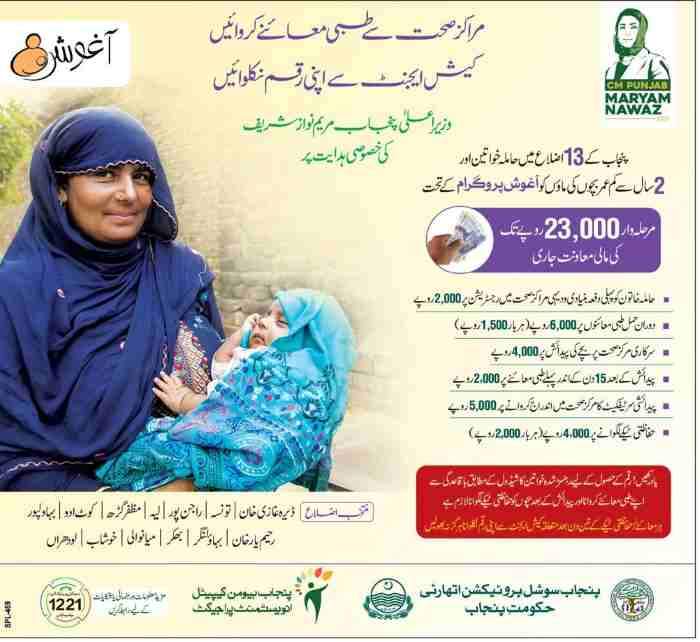
Table of Contents
Understanding the Aghosh Program: A Lifeline for Punjab’s Mothers and Children
The Aghosh Program represents a significant shift in how the Government of Punjab approaches social welfare, moving from simple handouts to a model of investment in human capital. It is a conditional cash transfer (CCT) program meticulously designed to improve maternal and neonatal health outcomes by incentivizing low-income families to adopt healthier behaviors. By linking financial assistance directly to the completion of essential healthcare milestones, Aghosh ensures that monetary support translates into tangible, life-saving actions for both mother and child.
What is the core purpose of the Aghosh Program?
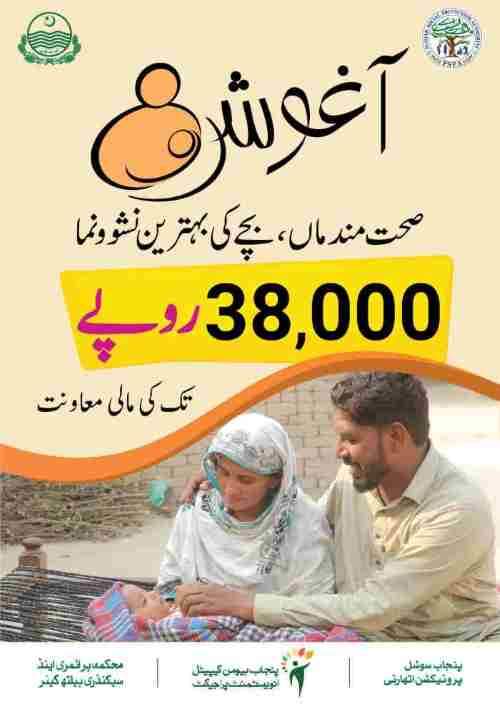
The fundamental purpose of the Aghosh Program is to break the cycle of poverty and poor health by intervening during the most critical 1,000-day window, from a woman’s pregnancy to her child’s second birthday. It provides pregnant women, lactating mothers, and mothers of children under two with a total of up to Rs. 38,000 in phased cash transfers. This money is intended to cover expenses related to improved nutrition, travel to healthcare facilities, and other costs associated with pregnancy and childcare, thereby removing financial barriers that often prevent women from seeking proper medical attention.
Which government body is responsible for managing Aghosh?
The Punjab Social Protection Authority (PSPA) is the government entity tasked with the end-to-end management of the Aghosh Program. Working in close collaboration with the Primary and Secondary Healthcare Department, PSPA oversees everything from policy-making and beneficiary enrollment to the digital disbursement of funds. On the ground, the program is delivered through a network of public health facilities, where Lady Health Visitors (LHVs) play the most crucial role in registering beneficiaries and tracking their progress using the Electronic Medical Record (EMR) system.
How does the Aghosh Program differ from other financial aid schemes?
Unlike general stipend programs such as the BISP Kafalat, which provides unconditional cash support to low-income families, Aghosh is a conditional program. This distinction is vital. While BISP helps alleviate overall poverty, Aghosh specifically targets health behaviors. A woman enrolled in BISP is eligible for Aghosh, but she will only receive the Aghosh payments if she actively participates in scheduled antenatal checkups, delivers at a government hospital, and ensures her child receives timely vaccinations and birth registration. This “quid pro quo” structure is designed to produce measurable improvements in public health statistics, particularly maternal and infant mortality rates in the province’s most underdeveloped districts.
Determining Your Eligibility for the Aghosh Program
Before you begin the registration process, it is essential to confirm that you meet the program’s specific criteria. The Aghosh Program is designed to be highly targeted, focusing its resources on the women and children who are most vulnerable and stand to benefit the greatest from the intervention. Eligibility is determined by a combination of geographic location, health status, and socio-economic standing.
What are the fundamental requirements for Aghosh eligibility?
To be considered for enrollment in the Aghosh Program, you must satisfy several core conditions. You must be a resident of Punjab, currently pregnant, a lactating mother, or a mother with a child under the age of two years. You are required to possess a valid Computerized National Identity Card (CNIC) issued by the National Database and Registration Authority (NADRA). Furthermore, your household should ideally be registered in the National Socio-Economic Registry (NSER) with a Proxy Means Test (PMT) poverty score below 32, which classifies your family as being in a low-income bracket. An active mobile phone SIM card registered in your own name is also mandatory to receive payment notifications via SMS.
Which specific districts are currently covered by the program?
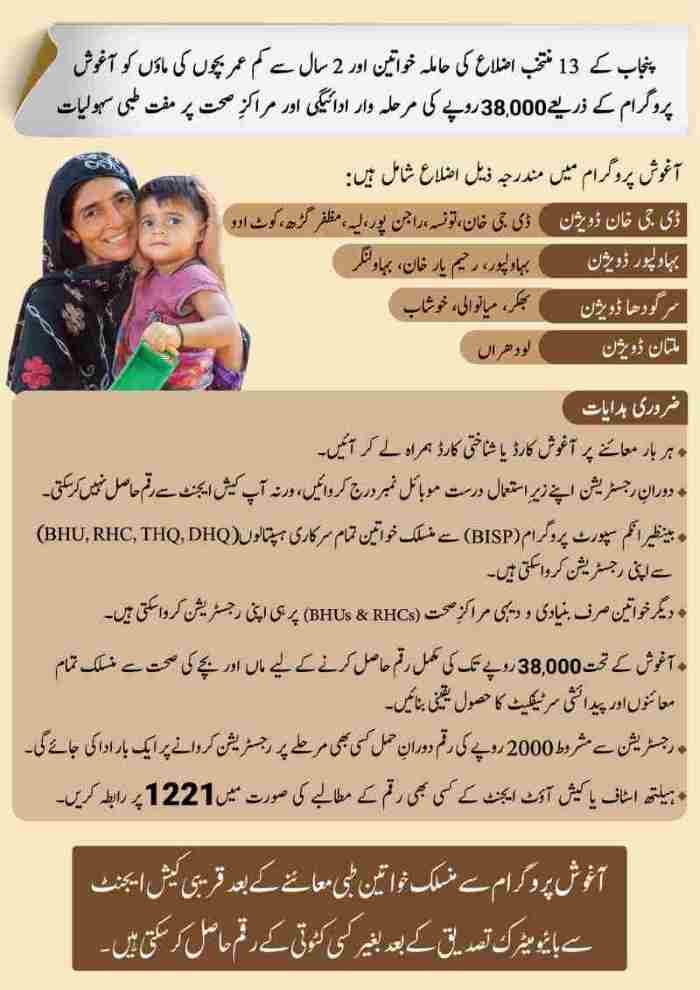
The Aghosh Program is currently operational in 13 districts of Punjab, primarily focused on regions with higher poverty rates and greater need for maternal and child health services. These districts are organized by division as follows:
DG Khan Division: Dera Ghazi Khan, Taunsa Sharif, Rajanpur, Layyah, Muzaffargarh, and Kot Addu.
Bahawalpur Division: Bahawalpur, Rahim Yar Khan, and Bahawalnagar.
Sargodha Division: Bhakkar, Mianwali, and Khushab.
Multan Division: Lodhran.
My family is not in the NSER database. Can I still qualify for Aghosh?
Registration in the NSER is a standard pathway to verifying low-income status, but it is not an absolute barrier for all applicants. If you are a pregnant woman in one of the covered districts but your family is not yet registered with NSER, you should not be discouraged. The first step would be to visit your nearest BISP tehsil office to complete the NSER survey. However, for the Aghosh Program specifically, women who are already active beneficiaries of the Benazir Income Support Programme (BISP) are often automatically prioritized and can register at a wider range of health facilities, including Tehsil Headquarters (THQ) and District Headquarters (DHQ) hospitals. For other women, registration is typically confined to Basic Health Units (BHUs) and Rural Health Centers (RHCs), where your information will be checked against available databases.
A Step-by-Step Guide to Aghosh Program Registration
Successfully registering for the Aghosh Program is the first and most critical step toward receiving its benefits. The process is intentionally designed to be in-person, ensuring that health workers can personally verify a woman’s status and provide immediate counseling. Understanding the process beforehand can help you navigate it smoothly and avoid common pitfalls.
How and where can I get myself registered for Aghosh?
You cannot register for the Aghosh Program online or over the phone. All registrations must be conducted in person at a designated government health facility within your district. The primary registration points are Basic Health Units (BHUs) and Rural Health Centers (RHCs), which are staffed by Lady Health Visitors (LHVs) trained to handle the enrollment process. If you are a registered BISP beneficiary, you have the additional option of registering at larger hospitals, including Tehsil Headquarters (THQ) and District Headquarters (DHQ) hospitals.
What documents and items should I bring to my registration appointment?
Arriving prepared will make your registration visit quick and efficient. You must bring your original valid CNIC, as photocopies will not be accepted. Ensure you have an active mobile phone SIM card registered in your name, as all future communication and payment alerts will be sent to this number. If you have a pregnancy card or any medical records from your doctor, bring them along as they can provide useful information for the LHV. For lactating mothers, carrying your child’s birth certificate (B-Form) is advisable. If you are a BISP beneficiary, it may also be helpful to note your BISP registration number.
What happens during the registration process at the health facility?
Upon arrival at the BHU or RHC, you will meet with a Lady Health Visitor. The LHV will first verify your identity using your CNIC. She will then ask you questions about your pregnancy (or your child’s age) and enter all your information into the official Electronic Medical Record (EMR) application on a government-provided tablet or computer. This digital record becomes your file for the entire program. During this process, you will likely undergo biometric verification, where your fingerprints are scanned to confirm your identity against the NADRA database, a crucial step to prevent fraud. Once the data is submitted, it undergoes a verification process against NSER and NADRA records. Upon successful verification, you will receive a confirmation SMS on your mobile phone.
Is there any fee or cost associated with registration?
No, registration for the Aghosh Program is completely free of charge. The government covers all administrative costs. Be extremely wary of any individual—whether they claim to be a government agent, a health worker, or a facilitator—who asks you for money in exchange for registration or to “speed up” the process. Such demands are illegal and should be reported immediately to the helpline 1221.
The Complete Aghosh Program Payment Breakdown (Up to Rs. 38,000)
The total financial assistance of Rs. 38,000 is a headline figure, but understanding how this sum is accumulated is key to maximizing your benefits. The money is not given as a lump sum; instead, it is distributed in stages, or installments, each tied to a specific health milestone. This structured approach ensures continuous engagement with the healthcare system throughout pregnancy and a child’s early years.
How is the Rs. 38,000 financial assistance structured?
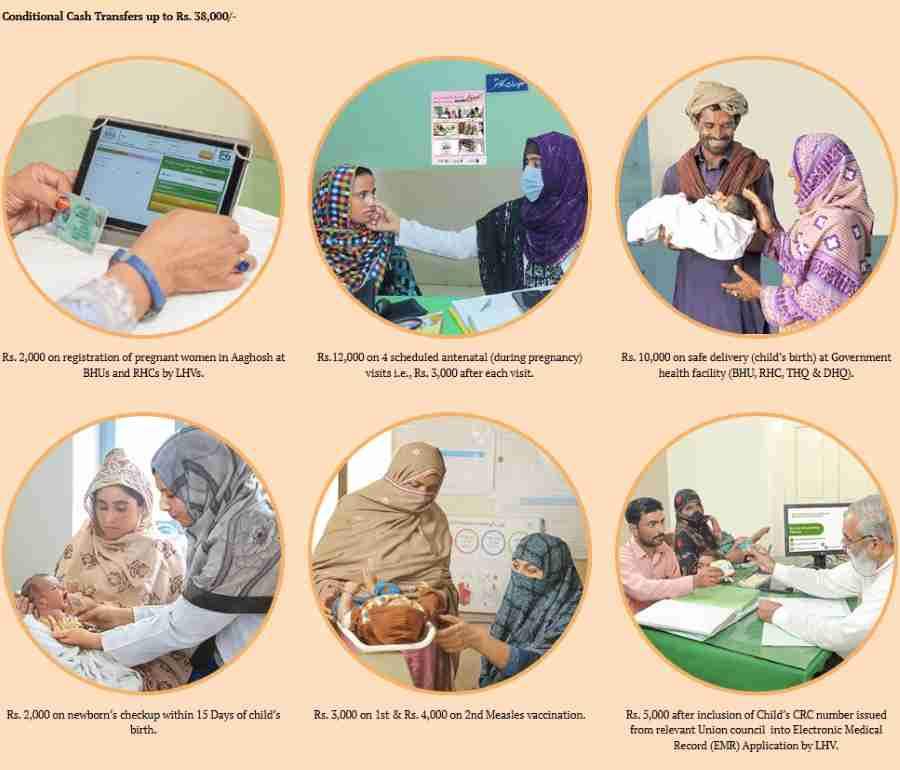
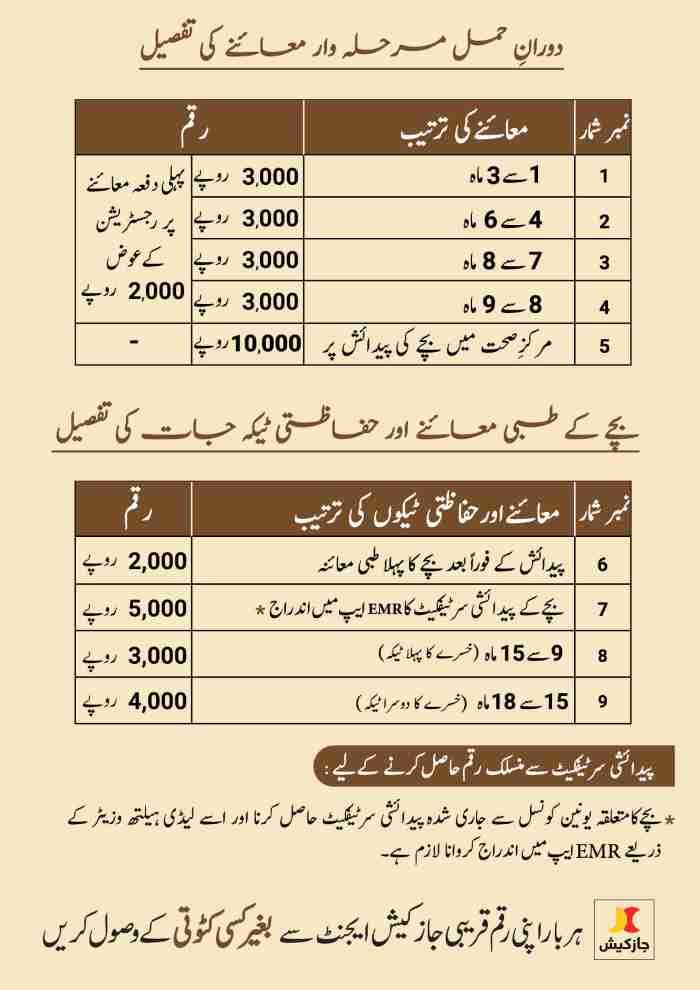
The Aghosh payment schedule is divided into three main phases: antenatal (pregnancy) care, delivery and newborn care, and post-natal child health support. Each phase contains multiple payments that are released upon verification of the corresponding milestone by the Lady Health Visitor through the EMR system. Below is a detailed breakdown of the nine potential payments that make up the total.
Pregnancy and Antenatal Care Payments
The first set of payments begins as soon as you register and continues throughout your pregnancy.
- Registration Payment: You receive an initial Rs. 2,000 upon successful registration at the BHU or RHC. This is a one-time payment meant to cover early pregnancy expenses.
- Four Antenatal Visit Payments: You are encouraged to attend four scheduled checkups during your pregnancy. After each visit, you receive Rs. 3,000, totaling Rs. 12,000 for completing all four. These visits are typically scheduled at 1-3 months, 4-6 months, 7-8 months, and during the 9th month of pregnancy.
Delivery and Newborn Care Payments
The next set of payments is focused on ensuring a safe birth and a healthy start for the newborn.
- Safe Delivery Payment: You receive a significant payment of Rs. 10,000 for delivering your baby at a government health facility, such as a BHU, RHC, THQ, or DHQ hospital. This powerful incentive is designed to reduce the risks associated with home births.
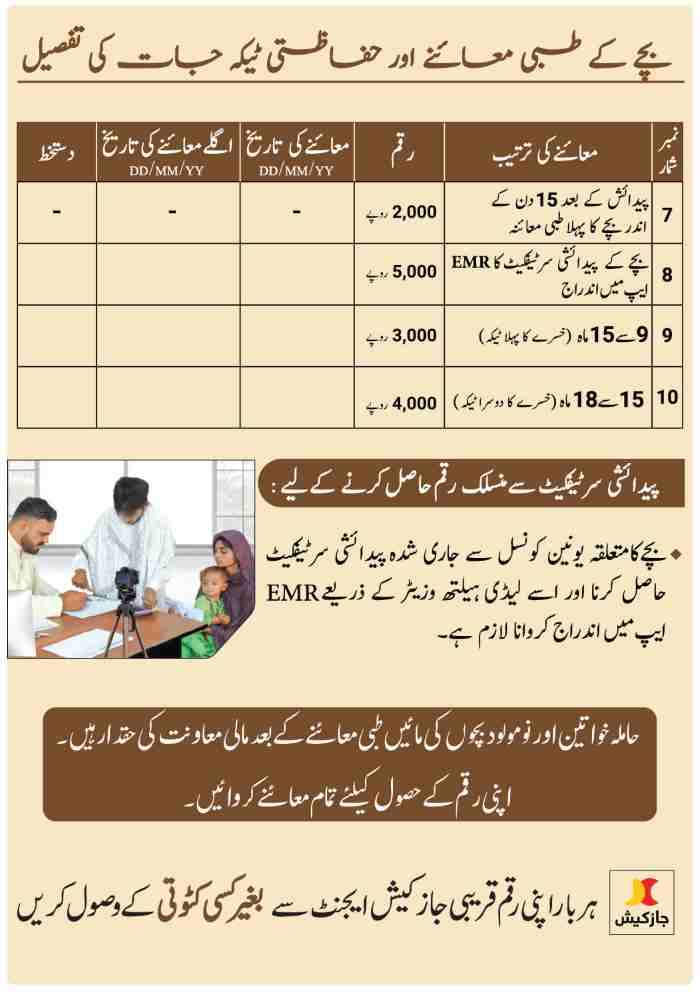
- Newborn Checkup Payment: Within the first 15 days after your child’s birth, a medical checkup is crucial. Completing this checkup earns you another Rs. 2,000.
Child Health, Immunization, and Birth Registration Payments
The final phase of payments supports your child’s health and legal identity up to the age of two.
- Measles Vaccination Payments: To encourage full immunization, the program pays Rs. 3,000 for the first measles vaccination (typically at 9-15 months) and Rs. 4,000 for the second dose (typically at 15-18 months), totaling Rs. 7,000 for complete measles immunization.
- Child Birth Registration Payment: A final payment of Rs. 5,000 is provided once you have obtained your child’s official birth registration certificate (B-Form with a CRC number) from the Union Council and the Lady Health Visitor has entered this number into the EMR application. This incentivizes the official documentation of the child, which is essential for future access to education and other services.
How much is the total amount provided for hospital delivery?
The Aghosh Program specifically allocates Rs. 10,000 for a safe delivery at a government health facility. This is a substantial part of the total package, reflecting the government’s priority to make hospital births the norm, thereby ensuring access to skilled birth attendants and emergency obstetric care if complications arise. Home deliveries do not qualify for this specific payment.
How to Perform an Aghosh Program Payment Check Online
One of the most empowering features of the Aghosh Program is the transparency it offers through its online payment portal. You no longer have to wait passively or travel to an office to find out if your payment has been processed. With just your CNIC and an internet connection, you can view your complete payment history and current balance from the privacy of your home.
What is the official website to check my Aghosh payment?
The sole, official web portal for checking your Aghosh Program payment status is managed by the Punjab Social Protection Authority and can be accessed at https://payment.pspa.gop.pk. It is critical to only use this address. Be cautious of fake websites that may appear in online searches, especially those that do not end in the official “.gov.pk” domain.
What is the step-by-step process for checking my balance online?
Checking your balance is a straightforward process designed to be accessible to anyone with a basic smartphone.
- Using any web browser on your phone or computer, navigate to https://payment.pspa.gop.pk.
- On the main page, you will see a field asking for your CNIC number. Carefully enter your 13-digit CNIC number without any dashes or spaces (e.g., 6110112345678).
- Some versions of the portal may also ask for the mobile number you provided during registration to further verify your identity.
- Complete the simple security check, often a captcha or a basic math question, to prove you are a human user.
- Click the “Submit” or “Find out details” button. Your current payment balance, along with a history of past payments, will be displayed on the screen instantly.
Is the payment.pspa.gop.pk portal secure and free to use?
Yes, the portal is completely secure and free of charge. The .gov.pk domain extension confirms it is an official government website, and the connection is encrypted (HTTPS) to protect your data. The site does not ask for sensitive information like bank account details, PIN codes, or passwords. It only requires your publicly available CNIC number. Its purpose is purely informational, allowing you to view data already associated with your identity. You should never pay anyone to check your balance, as the service is freely provided by the government.
Withdrawing Your Cash: From Verification to Payment in Hand
After confirming that a payment has been credited to your account via the online portal or an SMS alert, the next step is to physically collect the money. The Aghosh Program utilizes a secure, biometric-enabled disbursement system to ensure that the cash reaches the intended beneficiary safely and without unauthorized deductions.
How and where do I physically collect my Aghosh Program payment?
Once a payment installment is processed and released, you will receive a confirmation SMS on your registered mobile number. To withdraw the cash, you must visit a designated cash distribution point. The primary partner for disbursing Aghosh funds is HBL Konnect, a branchless banking service. You can visit any HBL Konnect agent location or designated PSPA cash point in your area.
What is the process for withdrawing my cash?
At the cash agent’s location, you will need to present your original CNIC. The agent will then facilitate the withdrawal process, which centers on biometric verification. You will place your finger on a biometric scanner, which matches your fingerprint against the data stored on your CNIC chip and verified by NADRA. Only after this identity confirmation is successful will the agent hand you your cash. This process is repeated for every single withdrawal to guarantee that only you can access the funds.
What should I do if an agent demands money or tries to deduct a fee?
The Aghosh Program explicitly states that payments are to be made in full, with absolutely no deductions for fees, commissions, or “processing charges.” The amount you see on the portal and the SMS is the amount you are entitled to receive. If any cash agent, health worker, or any other individual demands a portion of your payment or asks for a bribe, you must refuse. This is a serious offense. Immediately report the incident to the Social Protection Helpline at 1221. Provide as many details as you can, such as the agent’s name, shop location, date, and the amount demanded.
Aghosh Program Helpline 1221: Your Direct Channel for Support
Navigating any government program can sometimes raise questions or present challenges. For beneficiaries of the Aghosh Program, the dedicated 1221 helpline serves as a direct, accessible, and responsive channel for support, information, and complaint resolution.
What is the official helpline number and when can I call it?
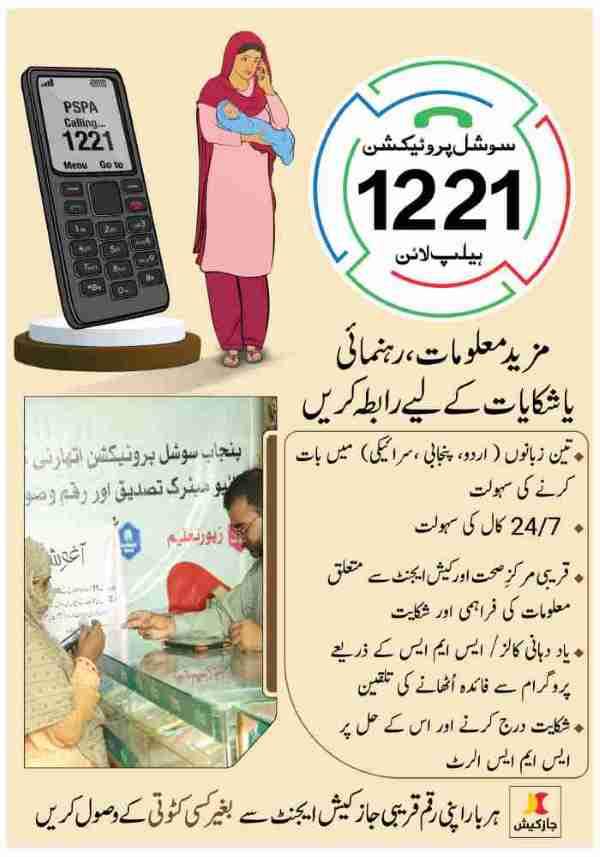
The official Social Protection Helpline for the Aghosh Program is 1221. This service is designed to be highly accessible and is available 24 hours a day, 7 days a week, including public holidays. Whether you have a query in the middle of the night or need to report an issue on a weekend, the helpline is staffed and ready to assist you.
What kind of assistance can I get by calling 1221?
The helpline is a multi-purpose resource for all program-related matters. You can call 1221 for a wide range of reasons, including:
- Eligibility Inquiries: To confirm if you are registered in the system and meet the basic criteria.
- Payment Status: To inquire about the reason for a delayed or missing payment.
- Registration Guidance: To get help on where and how to register if you are unsure.
- Complaint Registration: To officially lodge a complaint about issues such as a cash agent demanding money, uncooperative behavior from health facility staff, or problems with biometric verification.
- General Information: To ask any other questions you might have about the program’s rules and processes.
What languages are spoken by the helpline representatives?
Recognizing the linguistic diversity of its beneficiaries, the 1221 helpline provides support in multiple languages. Representatives are available to speak in Urdu, Punjabi, and Saraiki. This ensures that language barriers do not prevent any woman from effectively communicating her issue and receiving the help she needs.
Frequently Asked Questions About the Aghosh Program
What is the Aghosh Program in simple terms?
The Aghosh Program is a Punjab government initiative that gives cash payments, up to Rs. 38,000 in total, to pregnant women and new mothers when they go for medical checkups, deliver in a government hospital, and get their children vaccinated and registered.
How can I check my Aghosh Program payment online?
You can check your payment online by visiting the official PSPA portal at payment.pspa.gop.pk. Just enter your 13-digit CNIC number without dashes, complete the security check, and your balance will appear.
Who is eligible for the Aghosh Program?
Pregnant women, lactating mothers, or mothers with children under two years old are eligible if they live in one of 13 designated districts of Punjab, have a valid CNIC, and are from a low-income family (often verified through BISP or NSER).
How much money can I get from the Aghosh Program?
Eligible women can receive up to Rs. 38,000 in total, which is paid in installments. This includes payments for registration (Rs. 2,000), four antenatal checkups (Rs. 12,000), safe hospital delivery (Rs. 10,000), a newborn checkup (Rs. 2,000), child vaccinations (Rs. 7,000), and child birth registration (Rs. 5,000).
What documents are required for Aghosh Program registration?
You will need your original valid CNIC and an active mobile phone number registered in your name. It is also helpful to bring any pregnancy card or medical records. If you are a lactating mother, you should bring your child’s B-Form.
How do I withdraw my Aghosh payment?
After receiving a confirmation SMS, visit any HBL Konnect branch or designated PSPA cash point with your original CNIC. You must complete biometric fingerprint verification to receive your cash in full, with no deductions.
What is the helpline number for the Aghosh Program?
The official helpline number is 1221. It is available 24/7, and you can call for help with registration, payment issues, or to file a complaint in Urdu, Punjabi, or Saraiki.
Why haven’t I received my Aghosh payment yet?
There could be several reasons, including a delay in system verification after your health visit, an incorrect mobile number in your file, an issue with your CNIC, or a temporary processing backlog. You should first check your status online and then call 1221 for assistance.
Is the Aghosh Program part of BISP?
The Aghosh Program is managed by the PSPA, but it works closely with BISP. It uses BISP’s NSER database to verify the low-income status of applicants, and women already in BISP are often prioritized for registration.
Which districts are covered by the Aghosh Program?
The program covers 13 districts: Bahawalpur, Muzaffargarh, Kot Addu, Bhakkar, Dera Ghazi Khan, Taunsa Sharif, Mianwali, Rahim Yar Khan, Rajanpur, Khushab, Layyah, Bahawalnagar, and Lodhran.

Add a Comment