
Millions of Pakistani families depend on the Benazir Income Support Programme (BISP) for their survival, yet many still struggle to access their payments because they do not know how to properly check their eligibility through the 8171 system. If you have ever sent your CNIC to 8171 and received no reply, or if you have visited a payment center only to be told your name is not in the system, this guide will walk you through every step of the process with clarity and precision. From understanding the updated eligibility rules for 2026 to collecting your Rs. 13,500 installment safely, you will find everything you need to know here.
Key Takeaways:
- Only 8171 is Official: All legitimate BISP communications come exclusively from the shortcode 8171 or the official web portal. Any message from a personal mobile number is fraudulent.
- PMT Score Below 32 Required: Your Proxy Means Test score must be 32 or lower to qualify for the Benazir Kafalat program in 2026.
- SIM Must Be in Your Name: The new Digital Wallet system requires that your mobile SIM be registered under your own CNIC to receive payments.
- Biometric Verification is Mandatory: You must use your original CNIC and thumb scanning at authorized centers to collect cash.
- Registration is Always Free: No agent, middleman, or online service can charge you for BISP registration or eligibility checks.
- Payments Released in Phases: Installments are distributed district-wise to prevent overcrowding at payment centers.
- Read More:BISP 13500 Payment Status Check | BISP New Payment [March]
- Read More: BISP 8171 Online Check Balance | February
- Read More: 8171 Ramzan Package Check | February Apply Online
BISP 8171 Eligibility Check (CNIC Check by SMS) | March
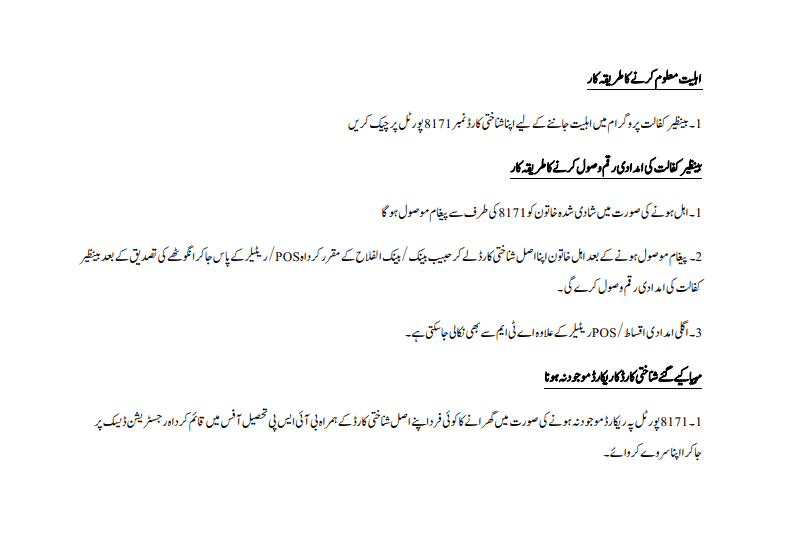
Table of Contents
Understanding BISP 8171 and Its Critical Role
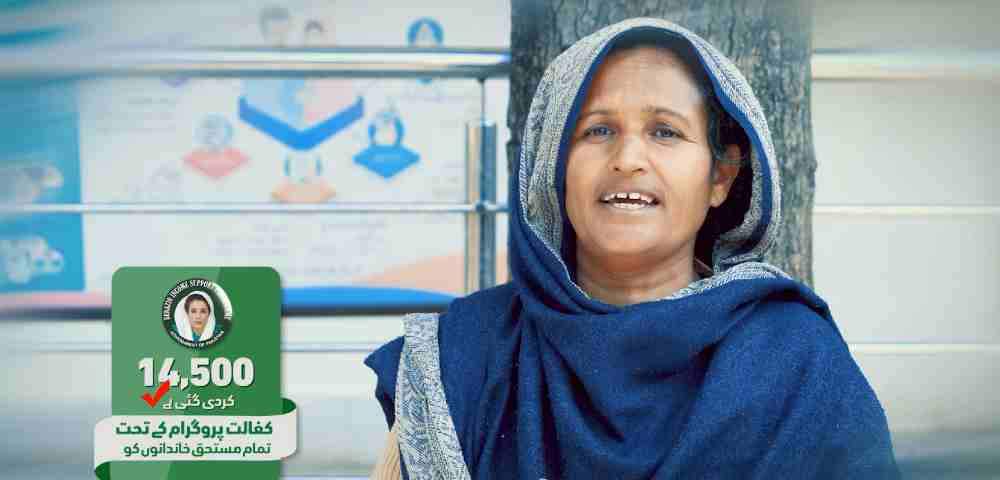
The Benazir Income Support Programme remains Pakistan’s largest and most impactful social safety net initiative, providing quarterly cash transfers to millions of low-income families across the country. The 8171 platform serves as the digital backbone of this entire system, connecting beneficiaries with the program through their CNIC numbers and enabling transparent, efficient service delivery without the need for intermediaries.
What Exactly Is the BISP 8171 System?
BISP 8171 is not a separate program but rather the official verification and communication channel for all Benazir Income Support Programme initiatives. When you send your CNIC to 8171 or visit the web portal, you are accessing a centralized database that contains your household’s socioeconomic information collected through the National Socio-Economic Registry (NSER) survey. This system instantly cross-references your identity with NADRA records, your PMT score, and your payment history to provide you with accurate, real-time information about your status.
Why BISP Matters More Than Ever in 2026
The economic pressures facing Pakistani families have intensified, making BISP assistance more crucial than ever. Rising inflation, increasing utility costs, and unstable employment opportunities mean that the quarterly stipend often makes the difference between families affording basic necessities or going without.
Current economic realities affecting beneficiaries:
- Food prices have increased substantially, making the Rs. 13,500 installment essential for grocery purchases
- School fees and educational expenses continue to rise, making Taleemi Wazaif stipends vital for keeping children in school
- Healthcare costs remain a significant burden, and BISP payments help families access medical treatment
- Utility bills consume larger portions of household income, and the cash transfer provides necessary relief
How the 8171 System Has Evolved
The government has continuously upgraded the 8171 platform to enhance transparency and reduce fraud. In 2026, the system incorporates several improvements designed to protect beneficiaries and ensure funds reach only deserving households.
Key improvements in the 2026 system:
- Real-time CNIC verification through direct NADRA integration eliminates identity fraud
- Automated PMT score recalculation ensures eligibility decisions reflect current household conditions
- Biometric confirmation at payment points guarantees that only registered beneficiaries collect funds
- Digital Wallet integration reduces cash handling and eliminates illegal deductions by agents
Complete Eligibility Criteria for BISP 8171 in 2026
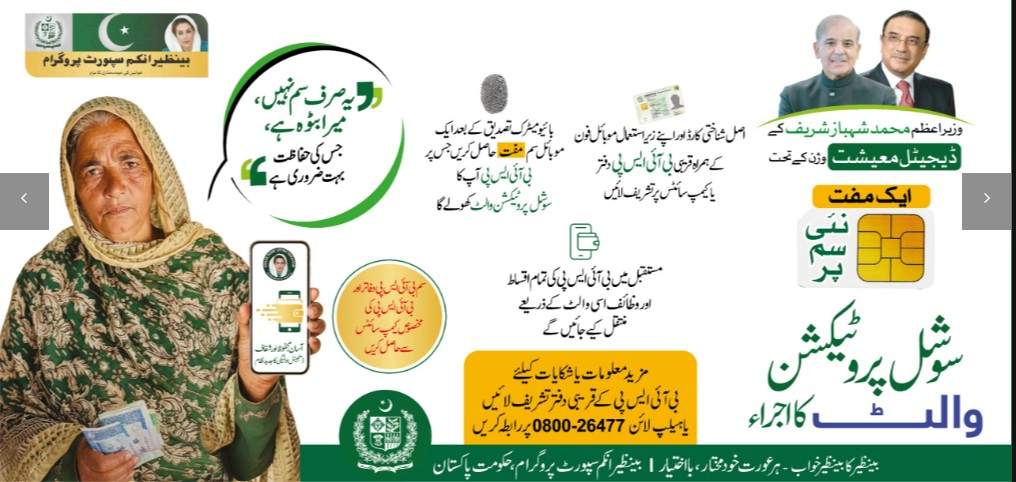
Understanding whether you qualify for BISP assistance requires knowledge of the specific criteria used by the system to evaluate households. The government has strengthened verification processes in 2026 to ensure that resources reach only the most deserving families.
Core Eligibility Requirements
The foundation of BISP eligibility rests on several non-negotiable criteria that every applicant must meet. These requirements are checked automatically when you verify your CNIC through the 8171 system.
Mandatory eligibility conditions:
- Valid CNIC: Your Computerized National Identity Card must be current and verified by NADRA. Expired CNICs automatically trigger ineligibility until renewed.
- Poverty Score Threshold: Your PMT score must fall at or below 32. This score is calculated from your NSER survey data and reflects your household’s economic condition.
- Income Limitations: Total monthly household income must generally remain below Rs. 40,000, though this threshold can vary slightly based on family size and location.
- Employment Status: No household member can be a regular government employee or receive a government pension.
- Asset Restrictions: Families owning more than three acres of agricultural land, residential plots exceeding 80 square yards, or registered vehicles are typically disqualified.
Priority Groups Given Preference
While meeting the core criteria is essential, BISP prioritizes certain vulnerable demographics to ensure assistance reaches those with the greatest need.
Groups receiving priority consideration:
- Women-headed households where females serve as primary breadwinners
- Widows who have lost their spouses and lack stable income sources
- Divorced women with dependent children and no financial support
- Persons with disabilities who cannot work or earn livelihoods
- Families caring for orphaned children without other support systems
- Daily wage laborers with unpredictable income and no savings
- Elderly citizens living alone without family support or pensions
Automatic Disqualification Factors
The 8171 system automatically flags and disqualifies households that show indicators of better financial standing, regardless of their PMT score.
Red flags that trigger disqualification:
- International travel history showing one or more family members hold valid passports
- High electricity consumption bills indicating better living standards
- Ownership of any registered vehicle, including motorcycles above 70cc
- Multiple CNIC registrations for the same household attempting dual enrollment
- Utility connections registered in the name of household members
- Private school enrollment for children indicating ability to pay fees
Updated Eligibility Changes for 2026
The government has introduced several modifications to eligibility rules in 2026 to improve targeting and reduce leakage.
Notable changes implemented this year:
- Stricter verification of household composition through NADRA family tree integration
- Mandatory re-survey for beneficiaries whose data is more than three years old
- Enhanced cross-checking with utility companies and tax databases
- Real-time employment status monitoring through government databases
- Elimination of proxy registrations where SIM cards are not in beneficiaries’ names
How to Check BISP 8171 Eligibility by CNIC: Step-by-Step Methods
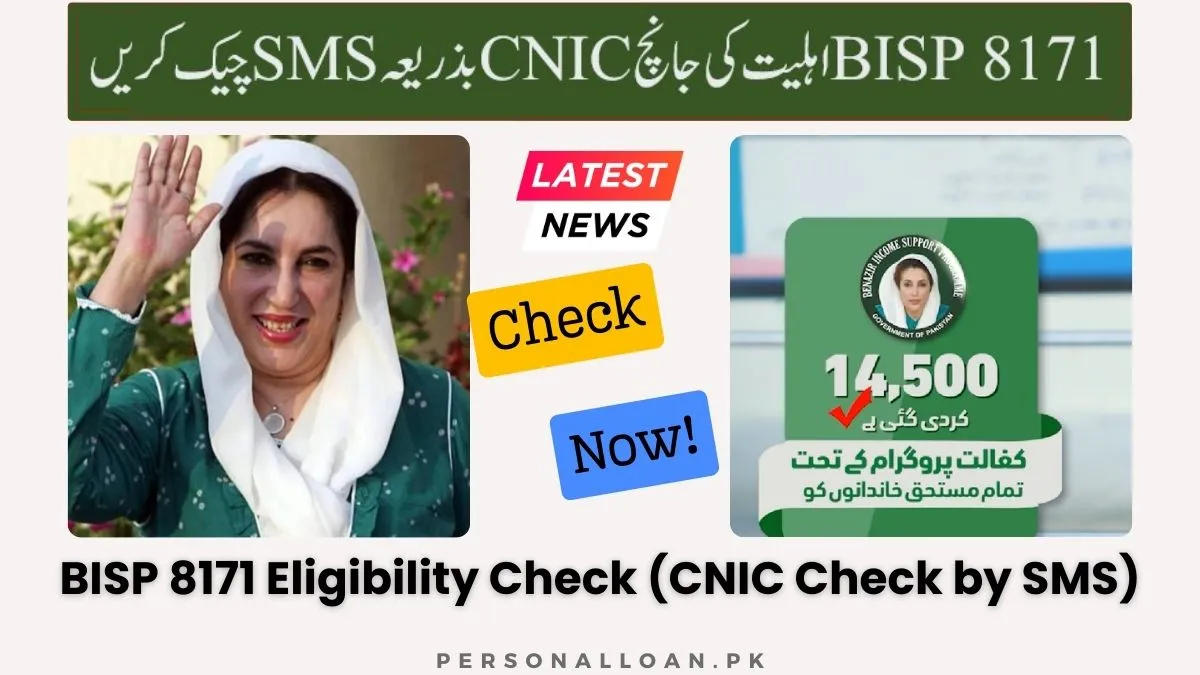
The 8171 system offers two primary methods for checking your eligibility and payment status. Both are free, official, and accessible to all Pakistani citizens regardless of their location or technological access.
Online Web Portal Method
The official 8171 web portal provides the most comprehensive view of your BISP status, showing detailed information about eligibility, payment amounts, and any required actions.
Step-by-step online checking process:
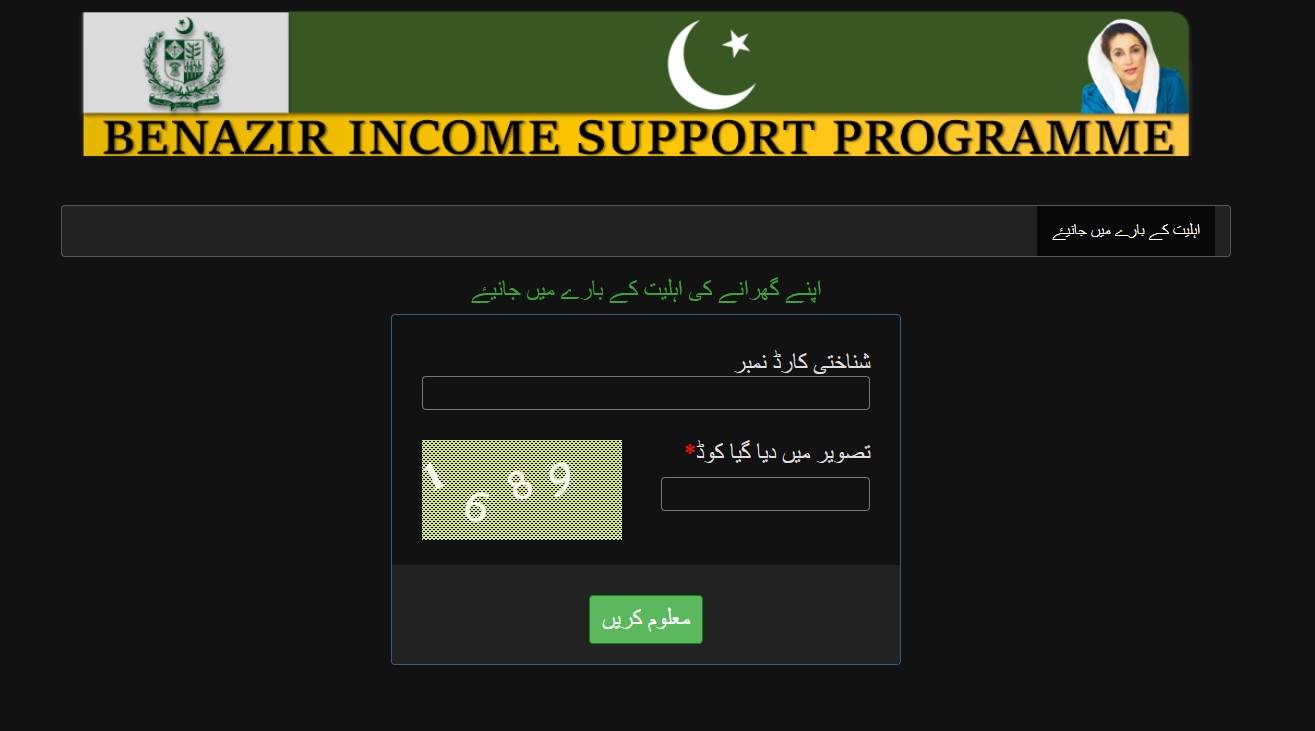
- Open your mobile browser or computer and navigate to the official BISP 8171 web portal at https://8171.bisp.gov.pk
- Locate the eligibility check section prominently displayed on the homepage
- Carefully enter your 13-digit CNIC number without any spaces or dashes. Double-check that every digit is correct.
- Type the captcha code exactly as shown in the image. This verifies you are a human user and prevents automated attacks.
- Click the submit button and wait a few seconds for the system to retrieve your records
- Review your status carefully. The screen will display one of several possible messages:
- Eligible with payment released
- Eligible but payment pending
- Not eligible based on current data
- Survey required to update information
- Under verification processing
- Blocked due to CNIC or biometric issues
SMS Method for Users Without Internet
The SMS service remains invaluable for beneficiaries in remote areas or those without smartphones. It works on even the most basic mobile phones.
Complete SMS verification guide:
- Open the messaging app on your mobile phone
- In the recipient field, type 8171 exactly. No other number is authorized for BISP communications.
- In the message body, type only your 13-digit CNIC number. Do not add any words, spaces, punctuation, or dashes.
- Send the message and wait for a response. Replies typically arrive within seconds to a few minutes.
- Read the response carefully. The SMS will clearly state:
- Your eligibility status
- Whether your payment is released
- Any instructions about visiting centers or updating data
Sample response interpretations:
- “Congratulations! You are eligible for Benazir Kafalat. Your Rs. 13,500 payment has been released.” – You can proceed to collection
- “Your CNIC is not found in eligible beneficiary list.” – You are currently ineligible
- “Your record requires survey update. Visit nearest BISP Tehsil Office.” – Your NSER data needs refreshing
- “Your payment is pending. Check again after 15 days.” – Payment processing in your district not yet complete
BISP Tehsil Office Verification
For beneficiaries who prefer in-person assistance or whose online status requires clarification, visiting a BISP Tehsil Office provides direct support.
What to expect at a Tehsil Office:
When you arrive at your nearest BISP Tehsil Office, you will find dedicated counters for different services. Approach the information desk first and explain your purpose. Staff will guide you to the appropriate queue. Bring your original CNIC and any previous SMS messages from 8171. The staff will check your record in their system, explain your status, and advise on next steps.
BISP Camp Centers for Remote Areas
The government has established temporary camp centers across Pakistan, particularly in rural and underserved areas, to bring services closer to beneficiaries.
Services available at camp centers:
- On-the-spot eligibility verification
- CNIC data correction assistance
- NSER survey completion for new applicants
- Payment collection for current installments
- Complaint registration and resolution
The BISP Digital Wallet: Mandatory Registration for 2026 Payments
One of the most significant reforms in BISP history is the introduction of the Digital Wallet system, which fundamentally changes how beneficiaries receive their payments. Understanding this system is essential for accessing your funds in 2026.
What Is the BISP Digital Wallet?
The BISP Digital Wallet is a secure, electronic account created for every eligible beneficiary. Rather than distributing cash through campsites and agents, the government now deposits the full quarterly stipend directly into this wallet. Beneficiaries can then withdraw their money from authorized agents, bank branches, or ATMs using biometric verification.
Key features of the Digital Wallet:
- Funds deposited directly into your wallet before you even visit a payment center
- No cash handling by agents means no opportunity for illegal deductions
- Biometric security ensures only you can access your money
- Instant SMS confirmation when deposits are made and when withdrawals occur
- Balance inquiry available through 8171 or partner apps
Why SIM Verification Is Absolutely Mandatory
The Digital Wallet system links your CNIC, your mobile SIM card, and your payment account into a single, secure chain. This linkage is why SIM verification has become non-negotiable.
The SIM mapping explained:
When you registered for BISP, you provided your mobile number. The system now requires that this number be registered in your name with NADRA. This creates a three-way verification: your CNIC proves who you are, your SIM confirms you own that phone number, and your biometrics ensure only you can access the wallet. If your SIM is registered to your husband, son, or anyone else, the chain breaks and your payments will be blocked.
How to check your SIM ownership:
- Dial 668 on your mobile phone and follow the prompts
- You will receive an SMS showing the name on your SIM registration
- If the name does not match your CNIC, visit your mobile network operator’s customer service center
- Request a free SIM swap into your own name. This process requires your original CNIC and biometric verification.
Complete Digital Wallet Registration Process
Registration for the Digital Wallet is not a separate application but an automatic process triggered when you meet all requirements.
Step-by-step wallet activation:
- Ensure your CNIC is valid and your SIM is registered in your name
- Wait for an official SMS from 8171 confirming your wallet registration eligibility
- Visit any authorized wallet partner location, including:
- JazzCash agents
- Easypaisa shops
- HBL Konnect branches
- Bank Alfalah banking centers
- Designated BISP payment centers
- Present your original CNIC to the authorized agent
- Complete biometric verification by placing your thumb on the scanning device
- Create a secure 4-digit PIN that you will use for future transactions. Memorize this PIN and never share it.
- Receive confirmation SMS that your wallet is now active
Payment Partners and Withdrawal Channels
The Digital Wallet system works through multiple partner organizations to ensure beneficiaries have convenient access to their funds.
Authorized withdrawal channels:
| Channel Type | Partners | Requirements |
|---|---|---|
| Mobile Wallet Agents | JazzCash, Easypaisa | CNIC + Biometric + PIN |
| Bank Branches | HBL, Bank Alfalah, Bank of Punjab | CNIC + Biometric |
| ATMs | HBL, Bank Alfalah biometric ATMs | CNIC + Biometric |
| BISP Campsites | Temporary centers | CNIC + Biometric |
Safety Rules for Digital Wallet Users
Protecting your wallet requires vigilance and adherence to basic security practices.
Essential safety guidelines:
- Never share your 4-digit PIN with anyone, including family members or agents
- Do not let anyone else handle your CNIC or attempt verification on your behalf
- Ignore any messages asking you to pay for wallet registration or activation
- Report lost or stolen phones immediately to your network operator
- If you suspect unauthorized activity, call the BISP helpline at 0800-26477
BISP Payment Amounts and Collection Methods for March 2026
Understanding exactly how much money you will receive and where to collect it ensures a smooth, stress-free experience during payment cycles.
Current Payment Amounts for 2026
The government has set clear payment amounts for different BISP programs in 2026. All figures are verified through the 8171 system before disbursement.
Payment breakdown by program:
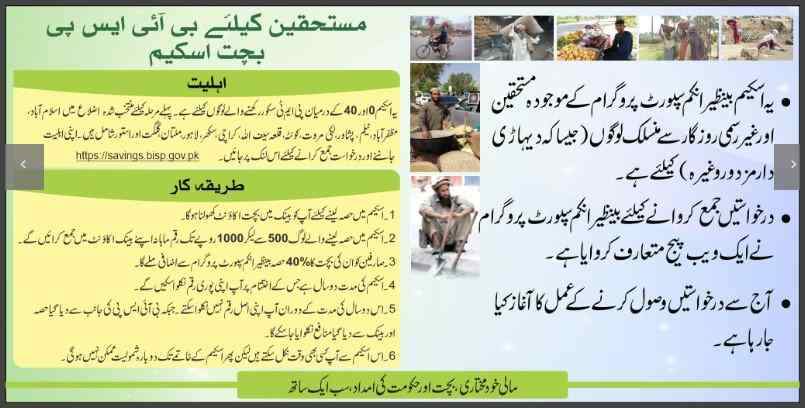
- Benazir Kafalat: Rs. 13,500 per eligible family per quarter
- Benazir Taleemi Wazaif: Additional stipends for school-going children
- Primary level: Rs. 2,000 per child
- Secondary level: Rs. 3,000 per child
- Higher secondary: Rs. 4,000 per child
- Benazir Nashonuma: Rs. 2,500 additional for pregnant and lactating women
Total possible payment range:
Families with multiple eligible children can receive total quarterly payments ranging from Rs. 13,500 up to Rs. 25,000 or more, depending on their specific circumstances.
How to Check Your Exact Payment Amount
Before visiting any collection point, always verify your exact entitled amount through official channels.
Payment verification methods:
- 8171 Web Portal: After entering your CNIC, the portal displays your total eligible amount for the current quarter, broken down by program component
- SMS to 8171: The response message will state your total payment amount and confirm it is ready for collection
- BISP Helpline: Call 0800-26477 and follow the prompts to hear your payment status
Where to Collect Your Payment
BISP offers multiple collection channels to accommodate beneficiaries in all areas of Pakistan.
Detailed collection options:
Bank ATMs with Biometric Capability:
HBL and Bank Alfalah have deployed biometric-enabled ATMs across major cities and towns. These machines allow you to withdraw your payment 24/7 without interacting with any agent. Simply insert your CNIC when prompted, place your thumb on the scanner, and follow the on-screen instructions to receive your cash.
Authorized Retail Agents:
Thousands of HBL Konnect and Bank Alfalah retail shops nationwide serve as payment points. These are local businesses authorized to disburse BISP payments. Look for official signage indicating they are BISP payment partners. Agents will use a biometric device to verify your identity before handing over your cash.
BISP Temporary Campsites:
During peak payment periods, BISP establishes temporary campsites in schools, union council buildings, and other public facilities. These camps are announced through SMS messages to beneficiaries in the area and typically operate for one to two weeks.
Mobile Wallet Withdrawals:
If you have activated your Digital Wallet, you can withdraw cash from any JazzCash or Easypaisa agent nationwide. This provides maximum flexibility, especially if you travel frequently.
Complete Payment Collection Procedure
Follow this step-by-step guide when you are ready to collect your payment:
Before leaving home:
- Confirm your payment is released via 8171 SMS or web portal
- Ensure your CNIC is in your possession and not expired
- Note your registered mobile number to receive confirmation SMS
- Identify the nearest authorized collection point
At the collection point:
- Present your original CNIC to the authorized agent or insert it into the ATM
- Place your thumb on the biometric scanner when prompted
- For agent transactions, wait for verification to complete
- Receive your cash and count it immediately before leaving the counter
- Wait for the confirmation SMS from 8171 as proof of transaction
After collecting:
- Keep the confirmation SMS for your records
- Note the date and amount collected for future reference
- Store your CNIC safely
- Report any discrepancies immediately to the helpline
Phase-Wise Payment Distribution Explained
BISP distributes payments in phases across districts to prevent overcrowding and ensure smooth operations at collection points.
Understanding payment phases:
The country is divided into three payment phases. Phase one typically includes major urban centers like Karachi, Lahore, Faisalabad, and Islamabad. Phase two covers Khyber Pakhtunkhwa and Balochistan. Phase three includes rural areas of Punjab and Sindh, plus Gilgit Baltistan.
Your district’s phase determines when your payment becomes available. Even if your neighbor in another district has already collected, you may need to wait for your phase to begin. The 8171 system will notify you when your phase is active.
Understanding Your PMT Score and Its Impact on Eligibility
The Proxy Means Test score is the single most important factor determining your BISP eligibility. Understanding what it means and how it affects you can help you navigate the system more effectively.
What Is a PMT Score?
The PMT score is a statistical measure that estimates your household’s economic status using multiple indicators rather than just income. This approach provides a more accurate picture of poverty because it accounts for factors that simple income declarations miss.
Components of the PMT calculation:
- Housing quality including wall and roof materials
- Number of rooms and household members
- Access to clean drinking water and sanitation facilities
- Ownership of durable goods like refrigerators, televisions, and motorcycles
- Education levels of adult household members
- Employment status and types of occupations
- Agricultural land ownership and livestock
- Utility consumption patterns
PMT Score Ranges and What They Mean
The PMT score typically ranges from 0 to 100, with lower scores indicating greater poverty and higher need.
Score interpretation guide:
| PMT Score Range | Eligibility Status | Meaning |
|---|---|---|
| 0 – 16 | Fully Eligible | Extreme poverty, automatic qualification |
| 17 – 25 | Eligible | Significant poverty, qualifies with verification |
| 26 – 32 | Conditionally Eligible | Moderate poverty, may qualify depending on other factors |
| 33 – 40 | Generally Ineligible | Near poverty line, usually does not qualify |
| 41+ | Not Eligible | Above poverty line, does not qualify |
How Your PMT Score Is Determined
When you complete the NSER survey, enumerators visit your home and collect detailed information about your household. This data is entered into a computer algorithm that calculates your PMT score automatically.
Factors that lower your score (increase eligibility):
- Large family size with few earning members
- Poor housing conditions with mud walls or thatched roofs
- Lack of access to clean water or proper sanitation
- No ownership of appliances or vehicles
- Low education levels among adults
- Irregular income from daily wage labor
Factors that raise your score (decrease eligibility):
- Small family size with multiple earners
- Pakka housing with concrete construction
- Connection to government water and sewerage systems
- Ownership of refrigerator, television, or air conditioner
- Higher education among household members
- Regular salaried employment
- Ownership of agricultural land or livestock
Checking Your PMT Score
While the 8171 system does not display your exact PMT score, your eligibility status tells you whether your score falls below the threshold.
Methods to learn about your PMT score:
- Visit a BISP Tehsil Office and request your score from staff
- Check for official PMT score check applications if released by government
- Inquire during NSER survey visits about your approximate score
- Monitor your eligibility status changes after major life events
Improving Your Chances Through Updated Surveys
If your financial situation has worsened since your last NSER survey, updating your information could lower your PMT score and improve eligibility.
When to request a new survey:
- After death of a primary earner in the family
- Following job loss or business failure
- When disability prevents a family member from working
- After divorce or abandonment by spouse
- When natural disasters destroy your home or livelihood
Troubleshooting Common BISP 8171 Problems
Even with the best systems, problems can arise. Understanding the most common issues and their solutions saves time and frustration.
Why Your CNIC Shows “Not Eligible”
Receiving an ineligible status is disappointing, but it often has a clear explanation and potential remedy.
Common reasons for ineligibility:
- Your PMT score exceeds 32 due to better economic indicators
- Your NSER survey data is outdated (more than three years old)
- Your household has been flagged for having a government employee
- Asset ownership exceeds allowed limits
- Your CNIC is expired or has data mismatches with NADRA
Steps to address ineligibility:
- Visit your nearest BISP Tehsil Office and request the specific reason for your status
- If data is outdated, complete a new NSER Dynamic Survey with accurate current information
- If you believe the decision is wrong, file a formal appeal with supporting documentation
- After survey or appeal, wait 30-60 days for re-evaluation
- Check your status again through 8171 after processing
Why You Receive No Reply from 8171 SMS
Sending your CNIC and receiving no response is frustrating but usually has a simple fix.
Troubleshooting SMS failures:
- Check that you sent to exactly 8171, not any other number
- Verify your CNIC has no spaces, dashes, or extra characters
- Ensure your mobile network has coverage where you are
- Try sending at a different time when network congestion may be lower
- If using a smartphone, ensure messaging apps are not blocking the message
- Try the online portal as an alternative verification method
What “Pending” Status Actually Means
A pending status indicates your application is in process and does not require immediate action from you.
Understanding pending scenarios:
- New survey data is being processed and scored
- Payment for your district is not yet released
- Verification checks are ongoing with NADRA
- Your case is flagged for manual review
How long pending typically lasts:
- New survey processing: 30-45 days
- Payment phase waiting: up to several weeks
- NADRA verification: 15-30 days
- Manual review: varies by case complexity
Biometric Verification Failures and Solutions
Biometric failure is perhaps the most common and frustrating problem beneficiaries face.
Why biometrics fail:
- Dry skin on fingers prevents scanner reading
- Worn fingerprints from manual labor or aging
- Dirty scanner at payment point
- Temporary device malfunction
- Finger placement too quick or incorrect
Solutions to try:
- Apply moisturizing lotion to your hands 15-20 minutes before attempting
- Clean your fingers thoroughly with water and dry completely
- Try all ten fingers, not just thumbs, as some may read better
- Press firmly and hold until scanner completes reading
- Request the agent clean the scanner surface
- If persistent, visit NADRA to update fingerprints with their specialized equipment
- As last resort, request alternative verification at BISP office
What to Do When Your Account Is Blocked
A blocked status requires immediate attention but is usually resolvable.
Common block reasons:
- Expired CNIC triggers automatic block
- Reported fraud or complaint against your registration
- Duplicate registration detected
- Biometric mismatch between records
- SIM not registered in your name
Unblocking steps:
- Renew your CNIC immediately if expired
- Visit NADRA to update biometrics if mismatched
- Go to BISP Tehsil Office with original CNIC and explain situation
- Complete any required verification or paperwork
- Wait for system to reflect changes, usually 2-4 weeks
The NSER Survey: Foundation of BISP Eligibility
Understanding the National Socio-Economic Registry survey helps you appreciate how your eligibility is determined and why keeping your data current matters.
What Is the NSER Survey?
The NSER is a nationwide effort to collect comprehensive socioeconomic data from households across Pakistan. BISP uses this data exclusively to identify potential beneficiaries and calculate PMT scores.
Information collected during NSER survey:
- Names, CNIC numbers, and relationships of all household members
- Education levels and employment status of adults
- Housing conditions including rooms, walls, roof, and floor
- Access to utilities: electricity, gas, water, sanitation
- Asset ownership: land, livestock, vehicles, appliances
- Income sources and approximate monthly earnings
- Health status and any disabilities
- Migration patterns and residential stability
Checking Your NSER Survey Status
Your 8171 eligibility message often indicates whether your NSER data is current.
Status messages related to NSER:
- “Eligible” or “Not Eligible” – Your survey data exists and has been evaluated
- “Survey Required” – No current survey exists or data is too old
- “Under Verification” – Recent survey data is being processed
Completing a New NSER Dynamic Survey
If your status says “Survey Required,” you must complete a new survey to be considered for benefits.
Dynamic survey process:
- Locate your nearest BISP Dynamic Registry Center at the Tehsil Office
- Arrive early to obtain a token, as daily slots may be limited
- Wait for your token to be called
- Provide accurate information to the enumerator about your household
- Answer all questions truthfully – false information leads to permanent disqualification
- Complete biometric verification
- Receive confirmation token or receipt
- Wait 30-60 days for processing and status update via 8171
Why Accurate Information Matters
Providing false or exaggerated information during the NSER survey can have serious consequences.
Risks of inaccurate data:
- Permanent disqualification from all BISP programs
- Potential legal action for fraud
- Wasting time on applications that will never succeed
- Preventing genuinely deserving families from receiving assistance
Benefits of honest reporting:
- Accurate PMT score reflecting true need
- Fair chance of qualification if eligible
- No risk of future disqualification upon verification
- Supporting the integrity of the entire program
Safety Guidelines: Protecting Yourself from Fraud
Scammers frequently target BISP beneficiaries with fake messages and fraudulent schemes. Following basic safety rules protects your information and your payments.
Identifying Fake Messages
The most common scams involve fake SMS messages claiming to be from BISP.
How to spot fake messages:
- Sender number is a personal mobile number, not 8171
- Message asks you to pay a fee for registration or payment release
- Message contains poor grammar or spelling mistakes
- Message demands urgent action or threatens account closure
- Message includes links to click or forms to fill
- Message asks for your PIN, password, or bank details
What real BISP messages look like:
- Always from shortcode 8171 only
- Informational only, never requesting payment
- Professional language with proper grammar
- No links to external websites
- Never asks for PIN or personal information
Never Pay for BISP Services
BISP services are completely free at every stage, from registration to payment collection.
Services that are always free:
- NSER survey completion
- Eligibility checking via 8171
- Digital Wallet registration
- Payment collection
- Complaint filing
- Document updates
If someone asks you to pay for any of these services, they are committing fraud. Report them immediately.
Protecting Your Biometric Data
Your fingerprints are the keys to your BISP payments. Guard them carefully.
Biometric safety rules:
- Only allow authorized BISP or bank staff to scan your thumb
- Never let anyone take your CNIC away from your sight
- Do not share your Digital Wallet PIN with anyone
- If someone demands a deduction from your payment, refuse and report them
- Collect payments during daylight hours when possible
- Bring a trusted companion if you feel unsafe
Reporting Fraud and Deductions
When you encounter fraud or illegal deductions, reporting protects you and other beneficiaries.
How to report problems:
- Call BISP helpline at 0800-26477 immediately
- Visit your nearest BISP Tehsil Office and file a written complaint
- Provide details: date, location, amount deducted, description of person
- Keep your transaction SMS as evidence
- Follow up on your complaint if not resolved promptly
Official BISP Contact Information
When you need assistance, use only official BISP channels to ensure you reach authorized representatives.
BISP Helpline
The toll-free helpline is your first point of contact for questions and complaints.
Helpline details:
- Number: 0800-26477
- Hours: Monday through Friday, 9:00 AM to 5:00 PM
- Services: Eligibility inquiries, complaint registration, payment tracking, general information
- Language: Support available in Urdu and English
BISP Website
The official website provides comprehensive information about all BISP programs.
Website address: www.bisp.gov.pk
Information available online:
- Program details and eligibility criteria
- Latest news and announcements
- District office locations and contact information
- Complaint forms and procedures
- Official publications and reports
BISP Tehsil Offices
For in-person assistance, visit the BISP office in your tehsil.
What to bring:
- Original CNIC
- Any SMS messages related to your issue
- Supporting documents for appeals or updates
Services available at Tehsil Offices:
- NSER Dynamic Survey completion
- Status inquiries and explanations
- Complaint filing and resolution
- Document verification and updates
- Appeals processing
Conclusion: Your Path to Successful BISP Participation
Navigating the BISP 8171 system in 2026 requires understanding the eligibility criteria, knowing how to check your status, completing necessary registrations, and following safety guidelines. By using only official channels, keeping your CNIC and SIM updated, and providing accurate information during surveys, you position yourself for successful participation in this vital program.
Remember these essential points:
- Check your status regularly through 8171 SMS or web portal
- Ensure your SIM is registered in your own name for Digital Wallet access
- Complete NSER Dynamic Survey when required
- Never pay anyone for BISP services
- Collect payments only from authorized centers
- Report fraud and deductions immediately
The Benazir Income Support Programme exists to help you and your family through difficult times. By understanding how the system works and following the proper procedures, you can access the support you deserve with confidence and security.
Disclaimer: This guide provides general information about the BISP 8171 system based on publicly available sources. The author is not an official representative of the Benazir Income Support Programme. For personalized assistance with your specific situation, please contact the official BISP helpline at 0800-26477 or visit your nearest BISP Tehsil Office.
Frequently Asked Questions
Q1: How can I check my BISP 8171 eligibility using my CNIC?
You can check your eligibility by sending your 13-digit CNIC number without dashes via SMS to 8171, or by visiting the official 8171 web portal at https://8171.bisp.gov.pk and entering your CNIC and captcha code. Both methods are free and provide instant results.
Q2: What is the current BISP payment amount for March 2026?
The standard Benazir Kafalat payment for March 2026 is Rs. 13,500 per eligible family. Families with children enrolled in Taleemi Wazaif may receive additional stipends ranging from Rs. 2,000 to Rs. 4,000 per child depending on education level.
Q3: Why am I not receiving a reply when I send my CNIC to 8171?
Common reasons include sending your CNIC with spaces or dashes, network congestion, temporary system downtime, or incorrect mobile number settings. Verify your CNIC format, try again later, or use the online portal as an alternative.
Q4: What does PMT score mean and what score do I need for eligibility?
PMT stands for Proxy Means Test, a score calculated from your household’s socioeconomic data that determines your poverty level. To be eligible for BISP Kafalat in 2026, your PMT score must be 32 or below.
Q5: How do I register my child for Benazir Taleemi Wazaif?
Visit your nearest BISP Tehsil Office with your CNIC and your child’s B-Form. Request the Taleemi Wazaif registration form, have it signed and stamped by your child’s school principal confirming enrollment and attendance, and submit it back to the BISP office.
Q6: What should I do if my biometric verification fails at the payment center?
First, try using different fingers as some may read better than others. Apply moisturizer if your fingers are dry. If problems persist, visit a NADRA office to update your fingerprints, then return to the payment center with updated biometrics.
Q7: Is the BISP 8171 SMS service really free?
Yes, the SMS service to and from 8171 is completely free on all major Pakistani mobile networks. You will not be charged for sending your CNIC or receiving the reply. If your network attempts to deduct charges, report it to their customer service.
Q8: What does it mean if my status shows “Survey Required”?
This means your household does not have a current National Socio-Economic Registry (NSER) survey on file, or your existing survey data is outdated. You must visit your nearest BISP Tehsil Office to complete a new Dynamic Survey before you can be considered for eligibility.

Add a Comment