
The CM Punjab Bike Scheme, spearheaded by Chief Minister Maryam Nawaz Sharif, delivers subsidized petrol and electric motorcycles to eligible students via interest-free easy installments. This transformative program enhances educational access, fosters independence, and advances sustainable transportation in Punjab.
Here’s what you’ll discover in this comprehensive resource:
- 🎯 Full eligibility requirements and priority quotas
- 📝 Detailed online registration process
- 💸 Government subsidies and affordable payment structures
- ⚙️ Available petrol and electric bike models
- 🗓️ Phase-wise distribution updates and timelines
- 🌿 Environmental advantages of electric options
Read More: Maryam Nawaz Loan Scheme | CM Punjab Asan Loan
CM Punjab Bike Scheme | Maryam Nawaz Bike Scheme
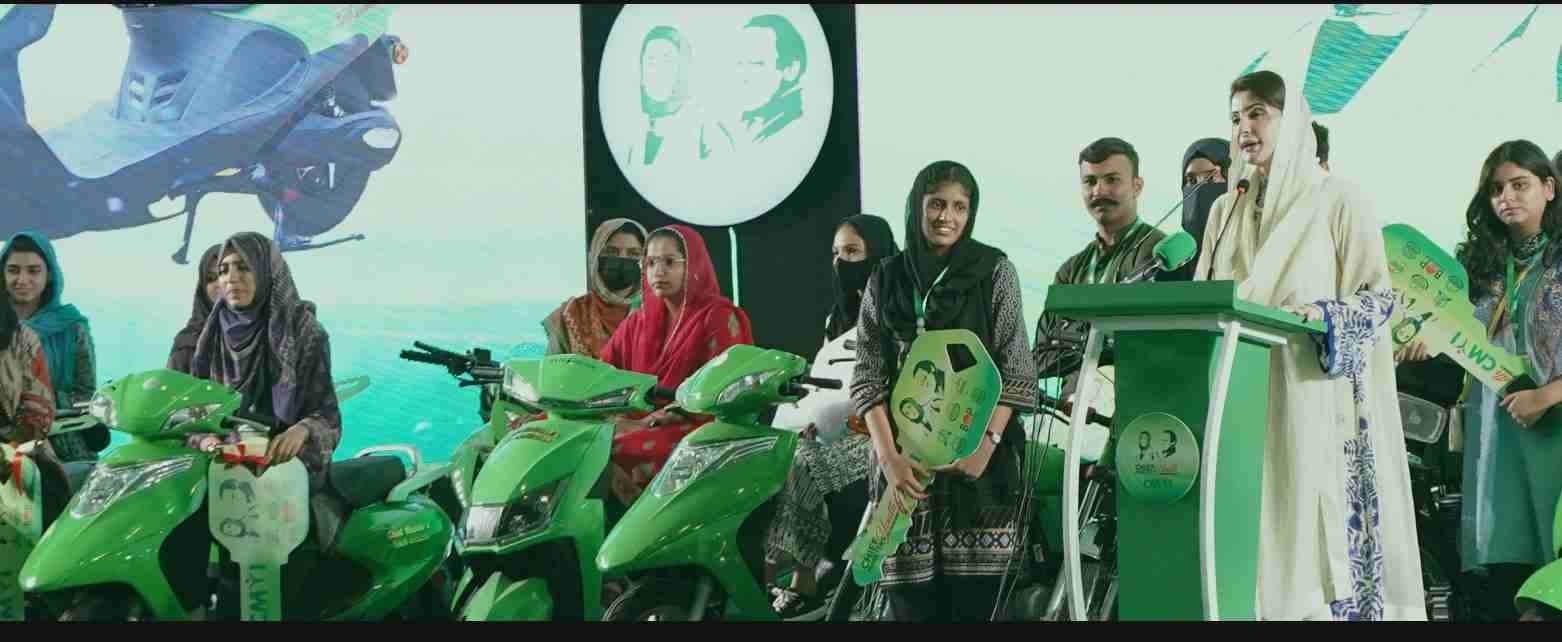
Table of Contents
Understanding the CM Punjab Bike Scheme
The CM Punjab Bike Scheme represents a groundbreaking government effort to supply motorcycles at reduced costs to higher education students. Managed collaboratively by the Punjab Transport Department and Bank of Punjab, it features zero-markup financing backed by provincial subsidies.
This initiative prioritizes regular students facing commuting challenges, offering both traditional petrol and modern electric variants to balance affordability with eco-friendliness.
Core elements:
- Provincial subsidy exceeding one billion rupees in initial phases
- Transparent digital portal at bikes.punjab.gov.pk
- Inclusive quotas for gender, rural areas, and underrepresented groups
- Partnership ensuring seamless verification and delivery
Maryam Nawaz Bike Scheme Explained
The Maryam Nawaz Bike Scheme emphasizes youth empowerment through accessible mobility solutions. By integrating electric vehicles, it supports Punjab’s broader green transportation goals while alleviating financial pressures on student households.
Dedicated allocations for female beneficiaries promote gender equity in education and daily travel.
Program strengths:
- Addresses rising fuel expenses
- Encourages timely campus attendance
- Reduces environmental footprint
- Builds long-term asset ownership for recipients
Origins and Implementation Under Chief Minister Maryam Nawaz
Chief Minister Maryam Nawaz Sharif introduced this scheme to extend prior student support measures like scholarships and laptops. It commenced with memorandum signing between relevant departments, focusing initially on urban centers before provincial rollout.
Evolution highlights collaboration with financial institutions for markup absorption and digital transparency.
Key milestones:
- Official launch targeting thousands of beneficiaries
- Incorporation of electric models for sustainability
- Establishment of dedicated online platform
- Ongoing expansions based on recipient feedback
Core Goals: Student Empowerment, Eco-Friendly Travel, and Cost Reduction
Primary aims encompass enabling independent commuting for learners, advancing zero-emission vehicles, and minimizing transport expenditures for families.
Government markup coverage and down payment assistance render ownership realistic for diverse socioeconomic backgrounds.
Strategic objectives:
- Boost higher education enrollment and retention
- Prioritize female and rural participation
- Align with national clean energy policies
- Deliver tangible economic relief to youth
Maryam Nawaz Electric Bike Component Overview
The electric segment within Maryam Nawaz Bike Scheme supplies battery-powered motorcycles to combat urban pollution and fuel reliance. Initial focus targeted high-density areas, with gradual broadening.
Recipients enjoy insurance inclusions and warranty protections.
Distinctive aspects:
- Eliminates ongoing fuel costs
- Qualifies for additional green incentives
- Limited initially to select cities
- Features reliable range specifications
Standout Elements of Electric Bike Allocation
Electric allocations provide contemporary features including efficient lithium batteries, regenerative braking, and minimal upkeep requirements. Approved vendors ensure quality standards.
Government facilitates substantial initial cost reductions.
Notable attributes:
- Emission-free daily operation
- Reduced lifetime expenses
- Urban-centric initial rollout
- Potential future charging support
Petrol Versus Electric Options in the Program
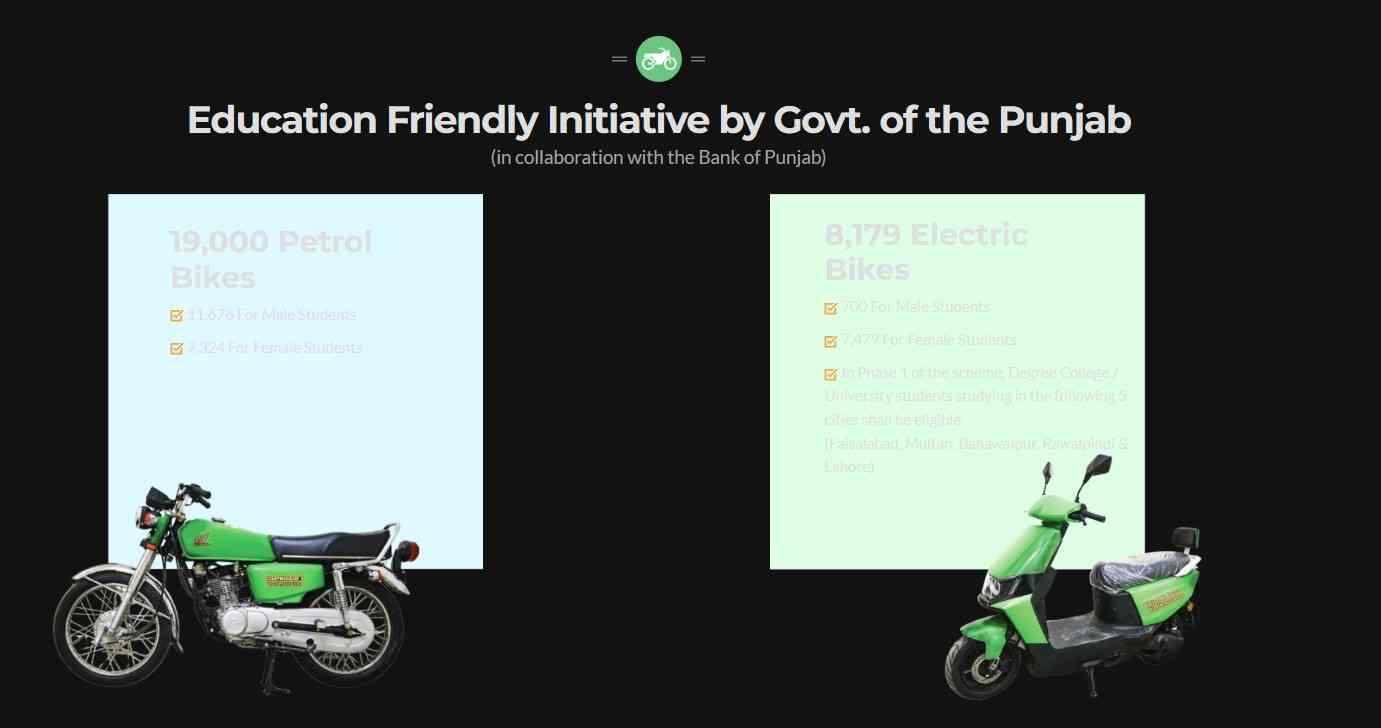
Petrol motorcycles deliver conventional reliability and extensive range suitability for varied terrains, whereas electric alternatives excel in operational savings and environmental contributions.
Selection depends on individual commute patterns and infrastructure availability.
Comparative factors:
- Fuel versus charging economics
- Service interval differences
- Performance characteristics
- Sustainability implications
Rationale for Electric Emphasis in Punjab Mobility
Electric promotion addresses provincial air quality concerns and fossil fuel import burdens. It complements national EV adoption strategies while offering students substantial long-term financial benefits.
Silent, efficient rides enhance urban livability.
Driving factors:
- Mitigate smog in major cities
- Achieve operational cost reductions
- Support renewable transition
- Prepare for evolving transport norms
Phase Structure of CM Punjab Bike Scheme
Distribution occurs across structured phases for efficient management. Early stages established processes in key locations, with subsequent expansions increasing volumes and geographic reach.
Current phases incorporate lessons learned for smoother execution.
Phase progression:
- Incremental quota enhancements
- Greater electric inclusion
- Refined selection mechanisms
- Accelerated delivery timelines
Details of Initial Phase Implementation
Initial phase allocated thousands of units, predominantly petrol with targeted electric distribution in five major cities: Lahore, Faisalabad, Multan, Rawalpindi, and Bahawalpur.
Gender-balanced quotas ensured equitable access.
Allocation breakdown:
- Significant male and female reservations
- District-proportional petrol distribution
- Campus-specific electric placement
- Substantial provincial investment
Petrol and Electric Distribution in First Phase
Petrol units followed population-based district quotas province-wide, while electrics concentrated on urban educational institutions to maximize environmental impact.
This balanced rural practicality with city sustainability.
Distribution insights:
- Census-guided petrol equity
- Pollution-focused electric targeting
- Maintained gender parity
- Multi-billion rupee facilitation
Subsequent Phase Developments
Later phases amplified electric proportions and extended coverage, incorporating applicant feedback for process refinements.
Enhanced female and rural prioritizations emerged.
Advancements:
- Expanded model catalogues
- Streamlined digital interfaces
- Additional financial relief
- Strengthened partnerships
Recent Progress in Active Phases
Active phases report thousands of successful deliveries, with resolved procedural hurdles enabling continued momentum.
Preparations advance for further scaling.
Current highlights:
- Cumulative distributions exceeding ten thousand
- Operational grievance mechanisms
- Infrastructure planning integration
- Timely fulfillment commitments
Eligibility Framework for CM Punjab Bike Scheme
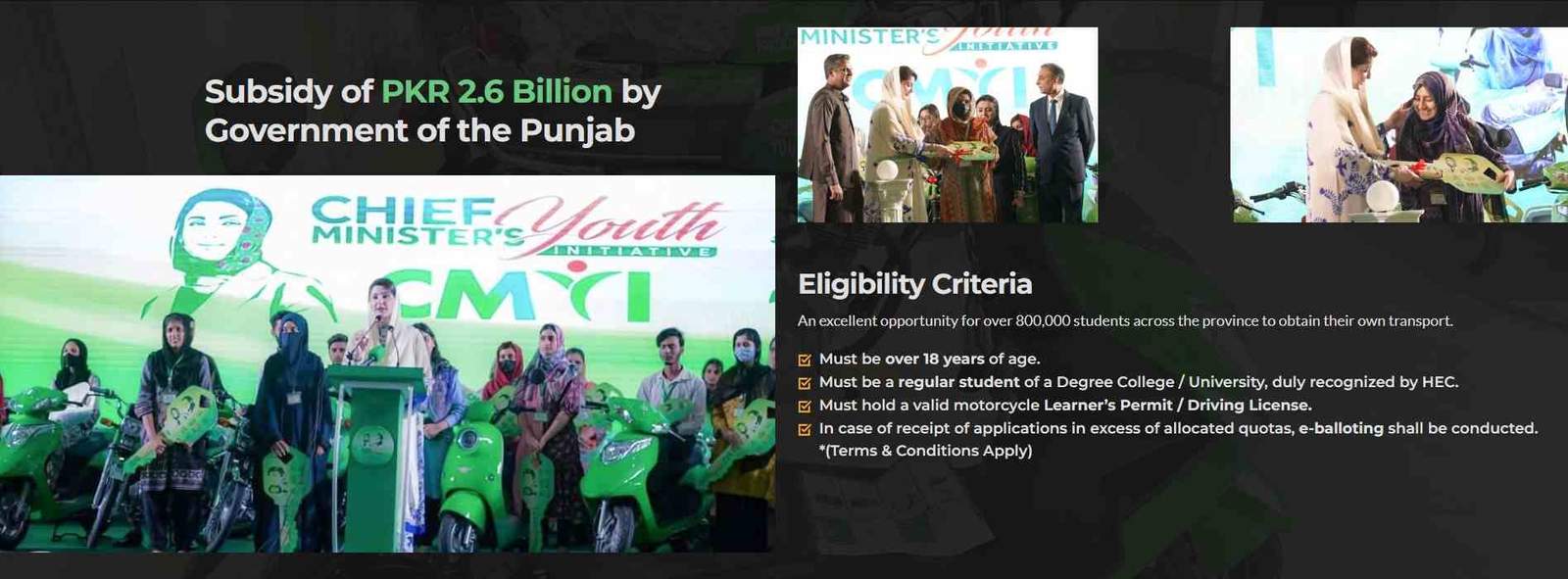
Qualification requires full-time enrollment in HEC-recognized institutions, minimum age of eighteen, valid motorcycle documentation, and Punjab residency.
Family vehicle ownership restrictions apply in certain contexts.
Fundamental criteria:
- Verified regular student status
- Appropriate identification and permits
- Domicile confirmation
- Exclusion of non-traditional programs
Essential Student Qualification Standards
Core standards mandate active campus-based enrollment and possession of learner or full motorcycle credentials.
Distance education participants remain ineligible.
Mandatory conditions:
- Recognized degree pursuit
- Daily attendance expectation
- Residency verification
- Documentation compliance
Age and Institutional Enrollment Prerequisites
Participants must exceed eighteen years with confirmed placement in accredited graduate or postgraduate programs.
Institutional authentication validates genuine need.
Enrollment norms:
- No specified maximum age
- Bonafide verification process
- Traditional format requirement
- Periodic status checks
Government Bike Scheme Qualification in Punjab
Qualification extends to domiciled regular learners satisfying license and enrollment thresholds, with advantages for vulnerable categories.
Prioritization mechanisms promote inclusivity.
Broad access features:
- Enforced gender balances
- Geographic equity measures
- Accommodation for disabilities
- Minority considerations
Dedicated Quotas for Women, Rural Areas, Disabled, and Minorities
Reserved portions guarantee representation for females (often substantial percentages), rural domiciles, persons with disabilities, and minority communities.
These foster balanced beneficiary diversity.
Quota specifics:
- Prominent female allocations
- Rural weighting advantages
- Disability provisions
- Inclusive minority integration
Distance Learning Participant Eligibility Status
Distance or virtual program enrollees do not qualify, as the scheme targets individuals requiring routine physical commuting.
Focus remains on traditional campus needs.
Rationale for exclusion:
- Limited daily travel requirement
- Mobility-centric design
- Attendance-based priority
- Policy consistency
Application Process for CM Punjab Bike Scheme
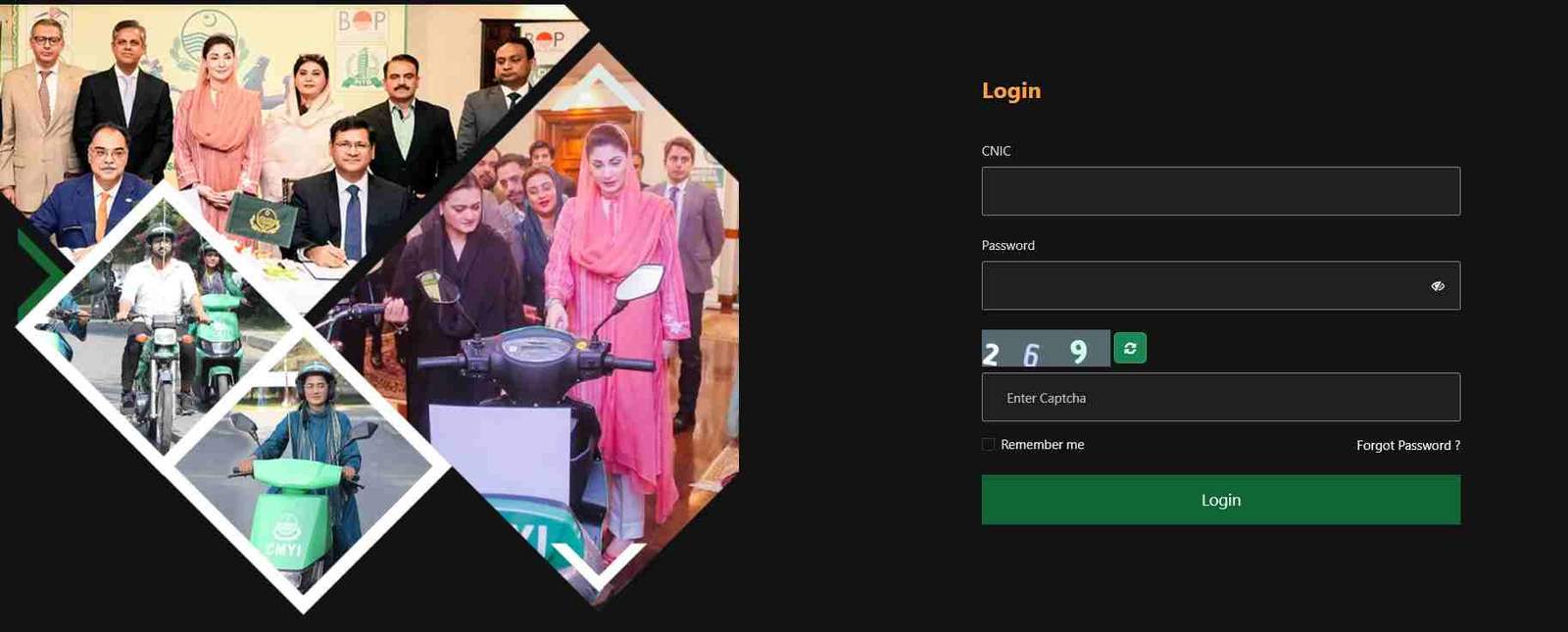
Applications submit exclusively online through bikes.punjab.gov.pk, involving registration, detail entry, document upload, and preference indication.
Manual submissions are not accepted.
Sequential guidance:
- Portal access and account creation
- Form completion
- File attachments
- Preference submission
- Confirmation receipt
Comprehensive Application Guidance
Process initiates with CNIC-linked registration, progressing through personal, academic, and credential information.
Accurate document presentation is crucial.
Procedural steps:
- Secure registration
- Thorough data input
- Clear uploads
- Model selection
- Submission finalization
Online Submission via Official Portal
Portal utilization demands CNIC authentication, educational validation, and supporting evidence provision within designated periods.
Interface supports user assistance features.
Navigation flow:
- Landing page orientation
- Registration gateway
- Personal dashboard
- Status monitoring
Necessary Documentation for Submission
Documentation encompasses CNIC, institutional identification, enrollment verification, photograph, and motorcycle permit or license.
Quality scans facilitate processing.
Required items:
- Identity proof
- Student credentials
- Admission evidence
- License documentation
- Recent image
Female-Specific Scooty Application Pathway
Female applicants access identical portal while benefiting from enhanced quotas and suitable model options emphasizing safety.
Scooty designs prioritize user comfort.
Women-focused elements:
- Elevated reservation percentages
- Appropriate catalogue choices
- Safety enhancements
- Expedited considerations
Frequent Application Errors to Avoid
Errors often involve data mismatches, low-quality uploads, ineligible model choices, or absent permit evidence.
Thorough review prevents rejection.
Common pitfalls:
- Inaccurate entries
- Blurry submissions
- Duplicate attempts
- Incomplete sections
Current Application Deadline Information
Deadlines align with phase announcements; monitor official channels for extensions or new windows.
Early submission recommended.
Timeline advice:
- Regular portal checks
- Prompt action
- Phase awareness
- Notification subscriptions
Electric Bike Application Specifics
Electric applications mirror general process but constrain choices to approved battery models, initially city-restricted.
Catalogue emphasizes verified performance.
Electric pathway:
- Category restriction
- Specification review
- Location eligibility
- Environmental alignment
Electric Application Procedural Nuances
Applicants select from curated electric listings, reviewing range and charging details while confirming urban campus status.
Emphasis on sustainable commitment.
Distinct steps:
- Electric filtering
- Model evaluation
- Technical familiarity
- Submission verification
Petrol and Electric Application Variations
Petrol offers unrestricted provincial access with diverse models, contrasting electric’s geographic and catalogue limitations.
Shared documentation baseline.
Primary distinctions:
- Area constraints
- Selection breadth
- Allocation structures
- Assistance variations
Selection and Balloting Mechanism
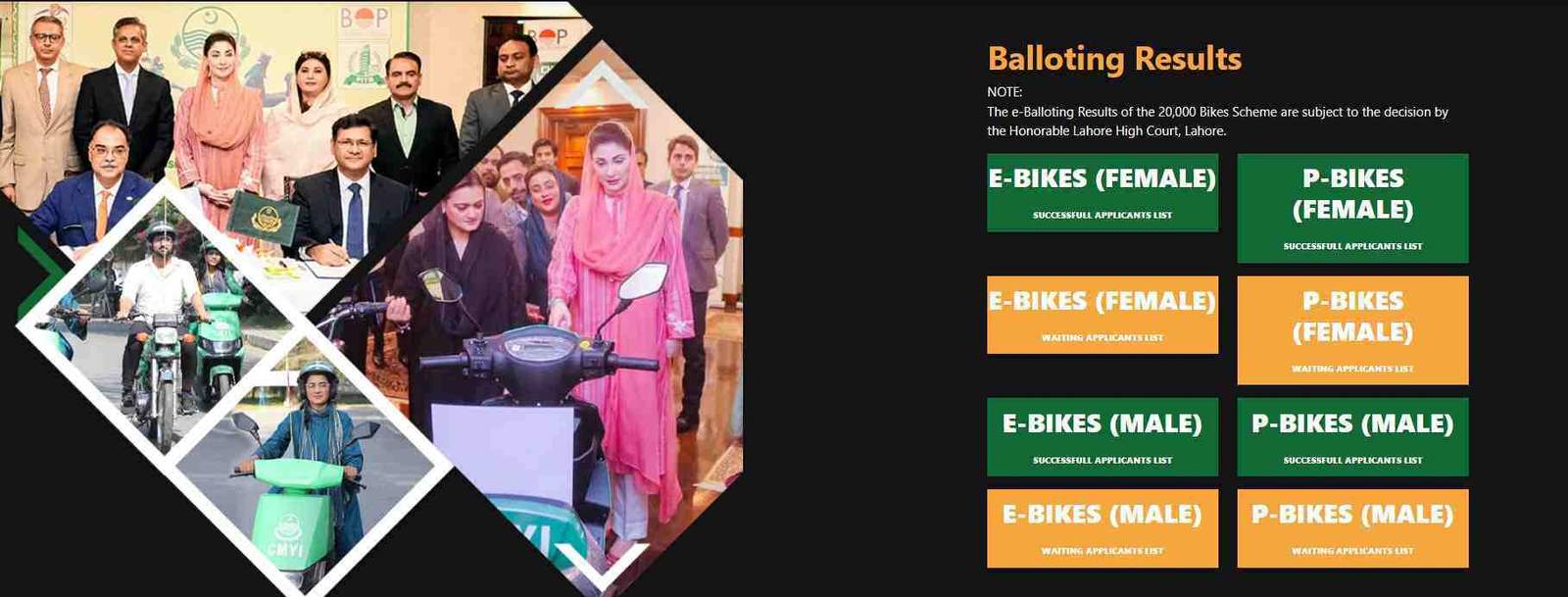
Oversubscription triggers computerized balloting managed by Punjab Information Technology Board for impartiality.
Results appear publicly with redress options.
Operational flow:
- Application consolidation
- Quota enforcement
- Random computerized draw
- Outcome publication
Electronic Balloting Functionality
Balloting employs audited random algorithms applying district and demographic balances under oversight.
Transparency maintains public trust.
Technical aspects:
- Automated fairness
- Category adherence
- Traceable records
- Accessible announcements
Bank of Punjab Role in Processing and Delivery
Bank of Punjab conducts post-selection verification, executes agreements, manages collections, and coordinates handovers.
Ensures regulatory compliance.
Key functions:
- Evidence validation
- Contract facilitation
- Payment handling
- Logistics arrangement
Post-Selection Procedures
Successful candidates receive contact for verification, agreement completion, initial payment, and scheduled receipt.
Full ownership transfers upon plan conclusion.
Subsequent actions:
- Institutional visit
- Documentation signing
- Payment commencement
- Delivery appointment
Financing and Installment Framework
Plans feature markup-free payments over fixed terms, with government absorbing interest and assisting initial amounts.
Variations reflect model pricing.
Structural details:
- Zero beneficiary markup
- Manageable periodic amounts
- Subsidy integration
- Prepayment flexibility
Interest-Free Financing and Subsidy Breakdown
Provincial government absorbs complete markup while providing down payment relief, yielding multi-billion collective support.
Per-unit benefits substantial.
Subsidy composition:
- Full interest coverage
- Initial amount aid
- Insurance bundling
- Clear computation
Subsidy Magnitude in CM Punjab Bike Scheme
Subsidy encompasses total markup and meaningful upfront reductions, dramatically lowering effective burden.
Investment reflects youth development priority.
Benefit scope:
- Comprehensive markup relief
- Down payment minimization
- Coverage inclusions
- Unit-specific valuation
Petrol Bike Monthly Payment Estimates
Petrol payments typically commence around five thousand rupees monthly post-adjustment, aligned with popular efficient models.
Two-year standard duration.
Representative figures:
- Entry-level affordability
- Specification-based variation
- Consistent term
- Bank-managed collection
Electric Bike Installment Projections
Electric installments reflect higher capitals but compensate through operational savings, generally below ten thousand monthly.
Quality components justify structure.
Electric estimates:
- Capital accommodation
- Long-term offset
- Adjusted assistance
- Sustainable alignment
Initial Payment Obligations and Support
Initial obligations diminish via government contributions, rendering entry feasible.
Balance handled upfront or integrated.
Support mechanics:
- Significant state portion
- Minimized student share
- Bank mediation
- Transparent breakdown
Accessing Bike Loan Under CM Initiative
Loan activates automatically for selectees through Bank of Punjab with state-backed terms.
Seamless integration.
Loan characteristics:
- Selection-triggered
- Favorable conditions
- Government guarantee
- Student-oriented design
Catalogued Models Available
Catalogue presents established petrol brands and vetted electric manufacturers meeting quality benchmarks.
Choices within financing ceilings.
Offerings include:
- Proven conventional selections
- Contemporary electric alternatives
- Compliance-assured variants
- Vendor-supported options
Prominent Petrol Selections Including Honda CD 70
Honda CD 70 dominates petrol preferences owing to durability, efficiency, and market presence.
Current valuation approximately 159,900 rupees.
Standout traits:
- 70cc dependable powerplant
- Superior mileage
- Robust construction
- Simple servicing
Current Honda CD 70 Pricing
Honda CD 70 maintains pricing around 159,900 rupees, influenced by manufacturer adjustments.
Scheme parameters apply.
Pricing influences:
- Standard rate
- Program compatibility
- Assistance application
- Payment translation
Electric Model Brands and Choices
Electric listings feature reputable assemblers with proven battery performance and service networks.
Periodic catalogue refreshment.
Selection considerations:
- Domestic production emphasis
- Guarantee provisions
- Component availability
- Reliability assessments
Optimal Electric Brand Within Program
Optimal electric choice varies by range needs, construction, and support; catalogue spotlights leading contenders.
Detailed specification comparison advised.
Evaluation criteria:
- Capacity metrics
- Power delivery
- Charge duration
- Feedback analysis
Petrol Motorcycles in the Initiative
Petrol dominates due to infrastructure compatibility and range flexibility, particularly rural-appropriate.
Conventional performance familiarity.
Petrol merits:
- Refueling independence
- Extensive servicing
- Established dependability
- Varied offerings
Benefits of Petrol Selection
Petrol provides rapid refueling, potential higher velocities, strong resale, and mechanic ubiquity.
Terrain versatility notable.
Advantages summary:
- Immediate replenishment
- Speed capabilities
- Market liquidity
- Repair accessibility
Preferred Models Below Financing Thresholds
Threshold-compliant models prioritize value through efficiency and longevity, led by 70cc standards.
Optimal economy focus.
Suggested priorities:
- Consumption efficiency
- Build resilience
- Upkeep simplicity
- Value retention
Leading Student Motorcycle in Pakistan
Honda CD 70 consistently excels for learners via economical operation, trustworthiness, and minimal costs.
Program enhances reach.
Student preferences:
- Component affordability
- Mileage excellence
- Ride comfort
- Track record
70cc Motorcycle Speed Capabilities
70cc units achieve 80-90 km/h tops, adequate for urban and intercity travel.
Efficiency-balanced performance.
Velocity notes:
- Secure operational range
- Appropriate acceleration
- Capacity handling
- Control stability
Electric Motorcycles in the Program
Electrics rise for nil fuel expenditure and ecological alignment, suiting shorter urban routes.
Program incentives accelerate uptake.
Electric strengths:
- Quiet functionality
- Reduced servicing
- Responsive torque
- Clean credentials
Electric Advantages: Savings and Sustainability
Electrics eliminate petrol outlay while curbing emissions, yielding cleaner provincial air.
Lifetime economy pronounced.
Benefit highlights:
- Zero recurring fuel
- Infrequent maintenance
- Durable batteries
- Positive ecological contribution
Extended Range Electric Variants
Premium catalogue entries approach impressive single-charge distances, with practical options delivering 100-150 kilometers.
Specifications guide expectations.
Range determinants:
- Battery dimension
- Usage conditions
- Payload influence
- Topography effects
Budget-Friendly Extended Range Scooters
Multiple electric scooters provide over 100 kilometers per charge within program bounds.
Daily student suitability.
Viable selections:
- Effective powertrains
- Advanced cells
- Lightweight frames
- Ergonomic designs
Electric Motorcycle Drawbacks
Challenges include charge durations, comparative range limits, battery replacement expenses, and charging point reliance.
Balanced evaluation essential.
Limitations overview:
- Replenishment time
- Eventual cell cost
- Mass increase
- Infrastructure dependence
250W Motor Legality Status
Lower wattage motors generally conform to road classifications for standard licensing.
Model-specific approvals govern.
Regulatory points:
- Classification standards
- Velocity restrictions
- Credential needs
- Registration protocols
Punjab Electric Subsidy Details
Electric subsidy integrates markup absorption, down payment aid, and potential usage-based rewards.
Comprehensive green encouragement.
Subsidy facets:
- Monetary easing
- Incentive programs
- Ecological promotion
- Extended advantages
Selecting Appropriate Motorcycle in Program
Selection considers distance, terrain, charging access, and petrol-electric preference.
Catalogue supports decisions.
Guidance tips:
- Commute evaluation
- Infrastructure assessment
- Household consultation
- Resale projection
Ideal Choices for Novice Riders
Lower capacity petrol units suit novices with controllable power and forgiving handling.
Lightweight ergonomics aid learning.
Beginner suitability:
- Reduced seat elevation
- Progressive delivery
- Clutch simplicity
- Balance assurance
Family-Oriented Motorcycle Recommendations
Higher capacity or comfort-focused models accommodate occasional passengers, though program emphasizes individual student use.
Load and seating considerations.
Family factors:
- Pillion accommodation
- Storage provisions
- Protective elements
- Dependability emphasis
Recommended Engine Size for Initial Ownership
70cc represents starter optimum blending manageability, economy, and regulatory ease.
Standard learner selection.
First-timer counsel:
- Skill development margin
- Safety prioritization
- Cost consciousness
- Compliance alignment
Top Scooty Options for Female Beneficiaries
Step-through electric designs rank highly for women via effortless mounting and maneuverability.
Convenience and security prioritized.
Leading attributes:
- Transmission automation
- Compartment space
- Lower seating
- Stability enhancement
Bike Size Selection Methodology
Size aligns with rider height ensuring grounded foot placement and confident control.
Comfort testing recommended.
Fit guidelines:
- Flat-footed stability
- Seated leg angle
- Reach comfort
- Weight equilibrium
Higher Capacity Speed Potential
Larger engines surpass 140 km/h, though program favors moderate displacements for safety and efficiency.
Higher rarely featured.
Performance observation:
- Scheme rarity
- Excess capability
- Elevated expenses
- Credential implications
Licensing and Registration Obligations
Valid motorcycle credentials required; post-delivery registration assisted.
Adherence compulsory.
Obligatory elements:
- Permit minimum
- Preferred full endorsement
- Age conformity
- Rule familiarity
Motorcycle Credential Necessity
Valid learner permit or license mandatory for application and operation.
Promotes responsible road use.
Requirement rationale:
- Entry prerequisite
- Receipt condition
- Legal compliance
- Coverage validity
Two-Wheeler Licensing Expenses
Licensing involves modest fees varying regionally for learner and permanent stages.
Process accessible.
Expense components:
- Initial permit
- Examination charges
- Full issuance
- Renewal costs
Punjab Motorcycle Registration Procedure
Registration proceeds via Excise authorities post-receipt with program documentation support.
Includes plate allocation.
Registration pathway:
- Evidence presentation
- Fee settlement
- Authentication
- Plate retrieval
70cc Registration Charges
70cc charges remain reasonable encompassing transfer, plating, and taxation.
Location minor variations.
Charge elements:
- Token lifetime
- Enrollment fee
- Card issuance
- Plate provision
Bike Taxation in Punjab
Taxation features capacity-based one-time token applicable at registration.
Lower cc affordable.
Tax particulars:
- Displacement scaling
- Singular payment
- Transfer relevance
- Potential exemptions
Petrol and Electric Comparative Analysis
Petrol convenience contrasts electric economy; decision hinges on lifestyle.
Thorough comparison valuable.
Versus examination:
- Operational expenditure
- Servicing demands
- Capability traits
- Ecological footprint
Running Cost and Maintenance Contrast
Petrol bears fuel burden versus electric’s nominal charging; latter minimizes service needs.
Electric long-term superiority.
Cost evaluation:
- Routine outlay
- Interval frequency
- Component longevity
- Ownership totality
Ecological and Savings Implications
Electrics eradicate direct emissions enhancing air quality while accumulating substantial savings.
Sustainable selection future-oriented.
Outcome summary:
- Emission diminution
- Health improvements
- Financial gains
- Preparedness advantage
Urban Versus Rural Suitability Recommendations
Urban favors electric charging convenience and brevity, rural leans petrol range and availability.
Context dictates optimum.
Suggestion framework:
- Metropolitan electric preference
- Countryside petrol practicality
- Usage personalization
- Infrastructure factoring
Program Impact and Advantages
Initiative markedly improves attendance, female mobility, and environmental metrics. Recipient narratives illustrate life changes.
Thousands positively affected.
Observed outcomes:
- Enhanced punctuality
- Gained autonomy
- Expense alleviation
- Green participation
Female Student Empowerment Through Scooty Provision
Reserved female portions and appropriate designs advance safety, confidence, and educational persistence.
Catalytic for gender progress.
Empowerment dimensions:
- Dedicated allocations
- Tailored safety
- Self-reliance fostering
- Societal shift
Beneficiary Experiences from Earlier Phases
Earlier recipients describe improved academics, time efficiency, and household relief.
Authentic transformations documented.
Illustrative accounts:
- Remote learner access
- Urban saver testimonials
- Burden lightening
- Performance uplift
Alignment with Green Punjab Objectives
Program advances provincial sustainability by electric promotion, emission reduction, and awareness cultivation.
Integral to comprehensive strategy.
Environmental synergy:
- Pollution curtailment
- EV advancement
- Consciousness building
- Forward planning
Frequently Asked Questions
What Role Does PAVE Portal Play in Bike Initiatives? PAVE relates to wider vehicle programs; dedicated bike portal handles applications separately.
Who Qualifies for Scooty Allocations? Female qualifiers access enhanced quotas and suitable scooty configurations.
Connection to Employment Bike Programs? Distinct initiatives exist; student focus remains educational mobility.
Interest-Free Status of Related Housing Schemes? Housing programs feature separate interest structures unrelated to bikes.
Application Pathway for Electric Taxi Programs? Electric taxi follows independent channels and announcements.
Electric Taxi Program Timeline? Taxi deadlines announced distinctly via government sources.
Associated Electric Vehicle Initiatives? Complementary green efforts explore four-wheelers beyond two-wheeler focus.

Add a Comment