
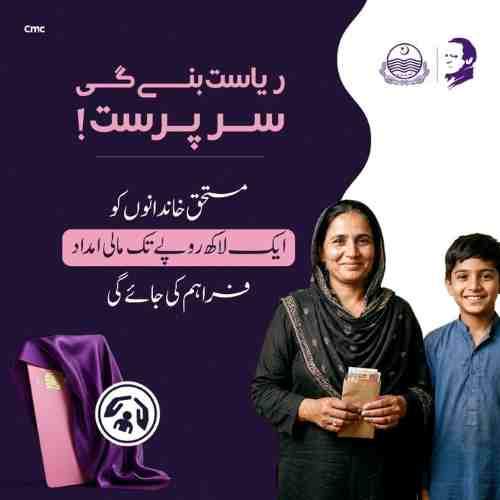
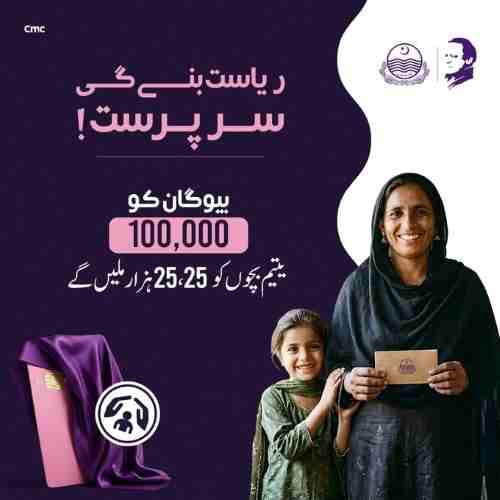
The moment a family loses its primary earner, the financial and emotional toll can be devastating, often leaving widows and children without resources to meet basic needs like food, healthcare, and education. The CM Punjab Rehmat Card emerges as a transformative government initiative designed to provide substantial one-time financial support of Rs.100,000 to widows and Rs.25,000 to each orphan, ensuring these vulnerable families can rebuild their lives with dignity rather than depending on inconsistent charity. This comprehensive guide explores every aspect of the scheme, from eligibility requirements and application procedures to the broader health implications of financial empowerment for vulnerable populations.
Key Takeaways
- Lump-Sum Empowerment Grant: Eligible widows receive Rs.100,000, while each orphan receives Rs.25,000 as a single payment, not a recurring monthly stipend, serving as seed capital for self-employment or covering major family expenses.
- Health and Nutrition Impact: Financial assistance directly addresses social determinants of health by enabling families to afford nutritious food, medical care, and preventive healthcare services previously out of reach.
- Multiple Application Avenues: Registration operates through Zakat and Ushr Department offices, a dedicated mobile application, an official web portal, and a call center, eliminating technology barriers for all eligible persons.
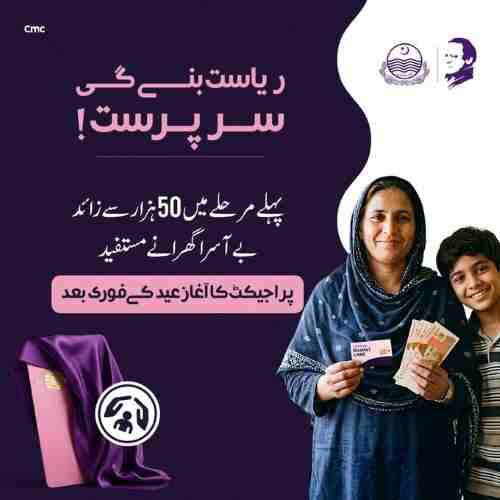
- Post-Eid-ul-Fitr Launch: The scheme received final approval on March 5, 2026, with the official registration drive commencing immediately after Eid-ul-Fitr 2026, targeting over 40,000 deserving families in the first phase.
- Digital Transparency System: The entire process relies on NADRA biometric verification and digital disbursement through ATM-enabled cards, eliminating middlemen and ensuring funds reach intended beneficiaries intact.
- Read More: PEF Phase 3 School List PDF Download (All Punjab District Wise)
- Read More: PEF Phase 3 Online Apply | School List, Last Date to Apply
- Read More: Green Tractor Scheme Online Apply (by CM Punjab- Phase 4)
- Read More: Maryam Nawaz 3 Marla Scheme | Apni Zameen Apna Ghar 3 Marla Scheme
CM Punjab Rehmat Card (Apply Now) | 25K to 1 Lakh For Widow & orphans
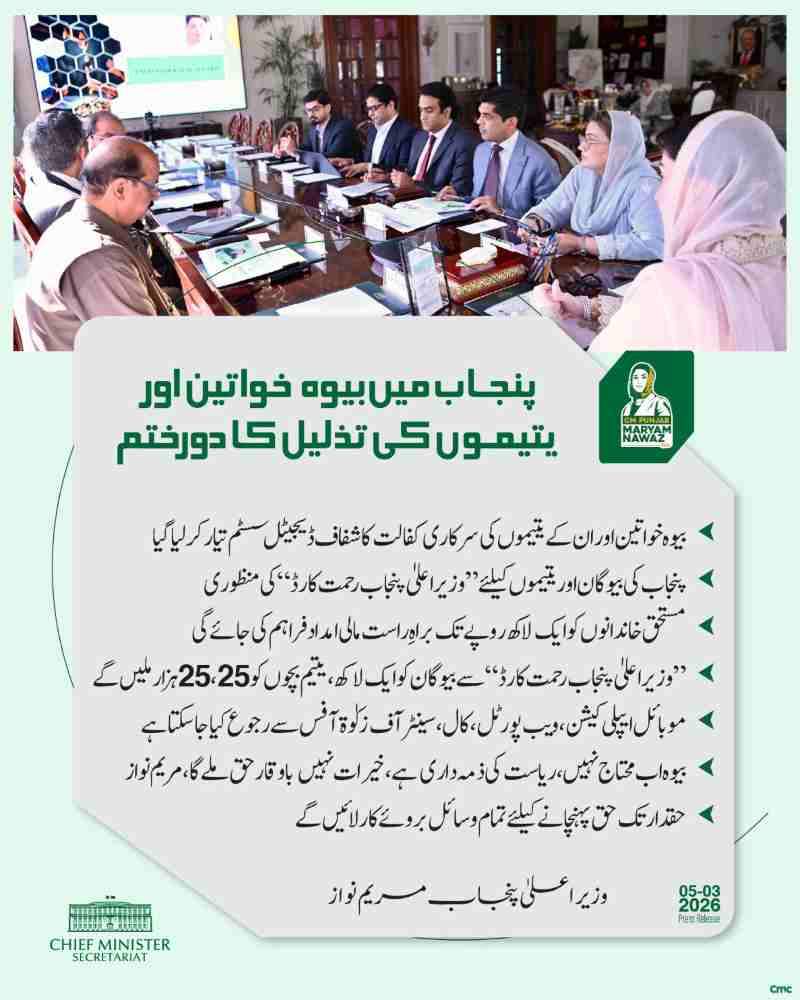
Table of Contents
What Is the CM Punjab Rehmat Card and How Does It Impact Family Health Outcomes?
Read More: CM Punjab Transplant Program (Free Liver, Kidney, & Heart Transplant)
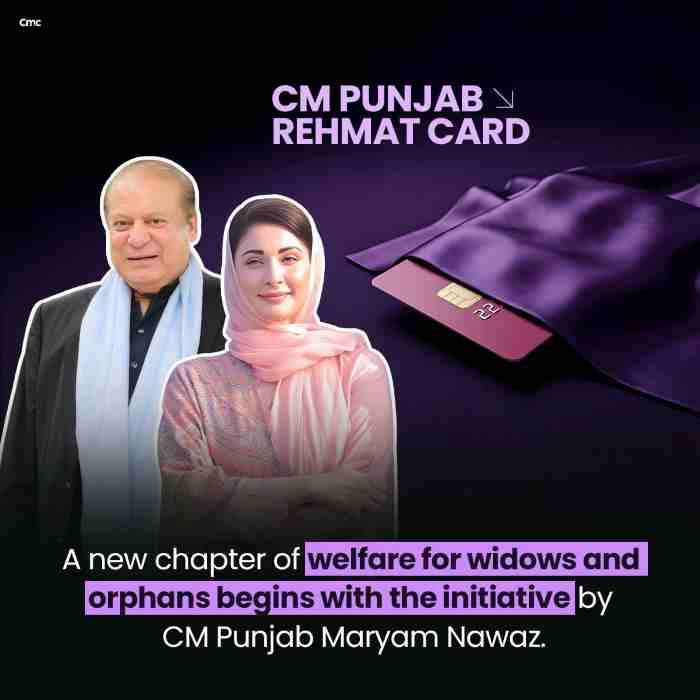
The CM Punjab Rehmat Card represents a fundamental shift in how the provincial government approaches social protection for widows and orphans, recognizing that financial stability is directly linked to physical and mental health outcomes. This initiative, formally approved by Chief Minister Maryam Nawaz on March 5, 2026, is the first program of its kind in Pakistan specifically designed to provide substantial lump-sum financial assistance to families who have lost their primary earner.
Unlike traditional charity models that offer sporadic, inadequate support, the Rehmat Card program operates on the principle that every citizen has a rightful share in Punjab’s resources and that the state bears the responsibility of acting as guardian for its most vulnerable members.
The health implications of this financial intervention cannot be overstated. Medical research consistently demonstrates that household financial instability correlates strongly with poor health outcomes, including malnutrition, delayed medical care, untreated chronic conditions, and elevated maternal and child mortality rates. By providing widows with Rs.100,000 and each orphan with Rs.25,000, the government directly addresses the economic barriers that prevent families from accessing healthcare services, purchasing essential medications, and maintaining adequate nutrition.
The Link Between Financial Instability and Poor Health Outcomes in Punjab
- Families living below the poverty line face difficult choices between purchasing food and seeking medical care
- Widowed mothers often skip their own medications to afford treatment for sick children
- Malnutrition rates among orphans are significantly higher than the general child population
- Financial stress contributes to mental health conditions including depression and anxiety disorders
- Delayed healthcare seeking leads to advanced disease stages and higher treatment costs
- Children from financially unstable households have lower vaccination completion rates
- Maternal mortality remains elevated among women lacking financial resources for emergency obstetric care
How the Rehmat Card Addresses Social Determinants of Health
The World Health Organization identifies income and social protection as primary determinants of health equity. The CM Punjab Rehmat Card intervenes at this fundamental level by:
- Providing capital that enables families to afford balanced, nutritious diets
- Removing financial barriers to preventive healthcare services and routine checkups
- Allowing mothers to seek timely medical care without worrying about consultation fees
- Enabling purchase of essential medications for chronic conditions like hypertension and diabetes
- Reducing stress-related illnesses through improved financial security
- Supporting children’s educational attainment, which correlates with lifelong health outcomes
- Creating opportunities for home-based businesses that generate sustainable income for ongoing healthcare needs
Beyond Charity: The State as Guardian for Vulnerable Populations
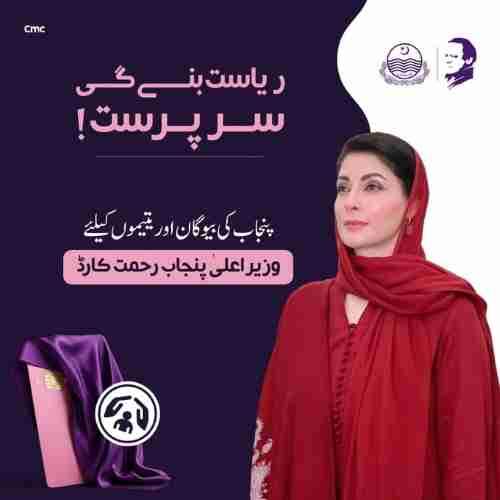
The philosophical foundation of the Rehmat Card program rests on the concept of “Riyasat-e-Rehmat” or the Welfare State, where the government assumes the role of guardian for citizens who have lost their natural protectors. This represents a significant departure from traditional zakat-based charity models that often carry stigma and provide insufficient amounts.
Key philosophical distinctions include:
- Rightful entitlement versus charitable giving: Beneficiaries receive what is rightfully theirs as citizens, not alms
- Dignity preservation: The ATM card system allows private, dignified access to funds
- Empowerment focus: The substantial grant amount enables productive investment, not mere consumption
- Systematic coverage: The program aims for universal coverage of eligible families rather than selective charity
- Transparency mandate: Digital systems ensure accountability and prevent exploitation
Healthcare System Implications of Widespread Financial Assistance
When thousands of families suddenly gain purchasing power for healthcare, the provincial health system must respond appropriately. The Rehmat Card program creates several important dynamics for healthcare delivery in Punjab:
- Increased demand for primary care services in underserved districts
- Greater utilization of maternal and child health services
- Potential reduction in emergency department visits for preventable conditions
- Improved medication adherence for chronic disease patients
- Enhanced ability to afford transportation to distant healthcare facilities
- Reduced reliance on expensive private healthcare loans from predatory lenders
- Better health outcomes data for government planning and resource allocation
Mental Health Benefits of Financial Security for Widows
The psychological impact of losing a spouse while simultaneously facing economic hardship creates a devastating双重 burden for widows. Depression, anxiety, and post-traumatic stress symptoms are highly prevalent among this population. The Rehmat Card intervention provides:
- Immediate relief from constant worry about meeting basic needs
- Restored sense of agency and control over life circumstances
- Reduced social isolation as women can participate more fully in community life
- Hope for the future through ability to plan and invest
- Decreased family conflict related to financial scarcity
- Improved parenting capacity as mothers are less consumed by financial stress
- Enhanced self-esteem through dignified access to government support
Who Is Eligible for the CM Punjab Rehmat Card? (Complete Eligibility Criteria)
Determining your eligibility is the first and most crucial step before applying. The CM Punjab Rehmat Card has a clearly defined set of criteria designed to ensure that the aid reaches the intended beneficiaries: the most deserving widows and orphans in Punjab. Meeting all these conditions is mandatory for a successful application. The criteria cover residency, personal status, income level, and exclusions to prevent duplication of benefits.
Residency Requirement: Is the Rehmat Card Only for Residents of Punjab?
Yes, the CM Punjab Rehmat Card is strictly for permanent residents of the Punjab province. Applicants must be able to prove their residency through official documents such as a domicile certificate, a valid CNIC with a Punjab address, or long-standing utility bills. This is a provincial government initiative funded by Punjab’s treasury, and its benefits are therefore reserved for its residents.
Category A: Eligibility Criteria for Widows
For a woman to be eligible as a widow under this scheme, she must fulfill specific conditions related to her marital status and personal circumstances.
What is the Minimum Age Requirement for Widows to Apply?
While a specific minimum age has not been rigidly defined in the initial announcements, the scheme implicitly targets women of working age who are capable of utilizing the grant for economic empowerment. There is no upper age limit, meaning elderly widows are fully eligible, provided they meet all other criteria. The primary focus is on the loss of the spouse and the resultant vulnerability, rather than an age restriction.
Can Divorced Women Also Apply for This Scheme?
The CM Punjab Rehmat Card is specifically titled and designed for “widows,” meaning women whose husbands have passed away. As of the initial guidelines, divorced women are not included in the target demographic for this particular scheme. However, they may be eligible for other social protection programs run by the Punjab government or the federal Benazir Income Support Programme (BISP). It is essential to apply under the correct category for which you qualify.
Is a Spouse’s Death Certificate Mandatory for Registration?
Yes, the husband’s death certificate is an absolutely mandatory document for a widow’s application. This is the primary legal proof that confirms her status as a widow. The death certificate must be an official document issued by the local union council or the municipal authority. Without this, the application will be considered invalid and will be rejected during the initial scrutiny phase.
Can a Widow Who Has Remarried Apply?
No, a widow who has remarried is not eligible for the CM Punjab Rehmat Card. The scheme is designed to support women who are currently without a male earner due to the death of their husband. Remarriage implies a new family structure and a potential new source of financial support, which would disqualify her from being considered under this specific widow-centric program.
Category B: Eligibility Criteria for Orphans
The definition of an “orphan” under this scheme is specific and must be understood clearly by guardians applying on their behalf.
Who is Defined as an “Orphan” Under This Scheme?
Under the CM Punjab Rehmat Card scheme, an “orphan” is defined as a child who has lost their father. The child may still have their mother (who is the widow applying for the card). The scheme provides the Rs. 25,000 per child to support their upbringing and welfare within the family unit led by their widowed mother.
What is the Age Limit for Orphans to Receive the Rs. 25,000?
While a specific age cap (such as 18 or 21) has not been explicitly detailed in the initial information, such schemes typically define a child as a dependent up to a certain age, often 18 years, or until they become self-sufficient. It is anticipated that children up to the age of 18, or those still in education, will be considered eligible. Clear guidelines on the age limit will likely be provided when the official application portal is launched.
Can Guardians Apply on Behalf of Minor Orphans?
Yes, the mother, as the primary guardian, applies on behalf of her minor orphaned children. Her application for the widow’s grant automatically includes provisions for listing and verifying her dependent children. The children’s B-Forms are required to establish their identity and relationship to the deceased father. If the widow has also passed away, a legal guardian (such as a grandmother or an uncle) may need to approach the authorities with special documentation, including guardianship certificates, to apply on behalf of the orphans.
Income and Poverty Criteria
To ensure the aid goes to those in genuine financial need, the scheme includes specific income and poverty score criteria.
What is the PMT Score Limit for This Program?
The PMT (Proxy Means Test) score is a crucial metric used by social protection programs in Pakistan, particularly BISP, to measure a household’s poverty level. A lower score indicates greater poverty. For the CM Punjab Rehmat Card, it is expected that applicants will need a PMT score of 45 or less to be eligible. This score is derived from the National Socio-Economic Registry (NSER) survey data. If you have not been surveyed, you may need to get your PMT score calculated during the application process.
Does the Family Income Need to Be Less Than Rs. 50,000?
Yes, one of the primary indicators of need is a low household income. The guidelines suggest that preference, and likely eligibility, will be given to families whose total monthly household income is less than Rs. 50,000. This income threshold helps to filter out families that may have some means of support, focusing the grant on those living on very low earnings or in extreme poverty.
Exclusions and Disqualifications
Certain categories of individuals are explicitly disqualified from receiving the CM Punjab Rehmat Card to prevent duplication and ensure fairness.
Can Government Employees’ Widows Apply for This Grant?
Generally, widows of government employees are not eligible for this grant. The rationale is that the family would have received a pension, death-cum-retirement gratuity, and other benefits from the government as part of the employee’s service package. These benefits are designed to provide long-term financial security, making them ineligible for this additional social welfare grant. The widow’s own employment status as a government servant would also disqualify her.
Does Receiving BISP Disqualify Someone from the Rehmat Card?
This is a common point of confusion. As of the latest guidelines, receiving the Benazir Income Support Programme (BISP) stipend does not automatically disqualify a widow from applying for the CM Punjab Rehmat Card. However, the PMT score derived from the BISP NSER survey will be used to determine eligibility. If a widow’s PMT score is within the required limit (e.g., 45 or less), she may still be eligible. The government aims to complement, not replace, existing federal programs. However, if a widow is receiving other large grants from similar provincial programs (like the PSPA), she might be disqualified to avoid benefit duplication.
Can Families Already Benefiting from Other PSPA Programs Apply?
If a family is already receiving a substantial, regular stipend from another specific program managed by the Punjab Social Protection Authority (PSPA) that serves a similar purpose, they may be disqualified. The CM Punjab Rehmat Card is intended for those not currently covered by other large-scale, targeted support schemes. The verification process will cross-check beneficiary lists to prevent a single household from receiving multiple major government grants intended for different target groups.
Are Minorities Eligible for the Rehmat Card?
Yes, minorities are fully eligible for the CM Punjab Rehmat Card. The scheme is inclusive and based on residency and need, not religion. Widows and orphans from all communities living in Punjab can apply, provided they meet the other criteria. This universal approach aligns with the government’s vision of a welfare state that protects all its vulnerable citizens equally.
Is There a Specific Quota for Different Districts in Punjab?
While the scheme aims to cover the entire province, the first phase, targeting over 40,000 families, will likely be distributed across all districts based on poverty data and population. There may not be a rigidly fixed “quota” per district, but the selection will be based on the number of eligible and deserving applicants from each area. The government’s goal is a fair and transparent distribution based on need.
What If My Husband Was Not the Sole Earner? Does That Affect Eligibility?
The primary factor is the loss of the husband and the family’s current financial status, not necessarily whether he was the sole earner. If the widow herself is working and her income, combined with any other sources, pushes the total household income above the prescribed limit (e.g., Rs. 50,000), she may be disqualified. The assessment is based on the current household’s economic condition, which is now without the husband’s contribution. Any income she currently earns will be counted towards the total.
How to Apply for the CM Punjab Rehmat Card (Step-by-Step Registration Guide)
The government has designed a multi-channel registration system for the CM Punjab Rehmat Card to ensure that every eligible person, regardless of their location or access to technology, can apply. You can choose the method that is most convenient for you, whether it is digital or in-person. It is crucial to use only the official channels to avoid fraud and ensure your application is processed correctly.
Method 1: Online Registration (CM Punjab Rehmat Card Apply Online)
For those with access to a smartphone or computer and the internet, the online portal and mobile app will be the fastest and most convenient way to apply.
Step-by-Step Guide to Apply via the Official Web Portal
- Visit the Official Website: Once launched, go to the official designated website for the CM Punjab Rehmat Card. This URL will be announced through official government media channels.
- Find the Registration Section: Look for a prominent button or tab labelled “Apply for Rehmat Card” or “New Registration.”
- Enter Your CNIC: You will be prompted to enter your 13-digit Computerized National Identity Card (CNIC) number. This is the primary key to your identity in the system.
- Verify with Mobile Number: An OTP (One-Time Password) will be sent to the mobile number registered with your CNIC in NADRA’s records. Enter this OTP on the portal to proceed.
- Fill the Application Form: You will be presented with an online form requiring details about yourself, your deceased husband, and your dependent children. Fill in all information accurately.
- Upload Documents: You will need to upload scanned copies or clear photos of the required documents, such as your CNIC, your husband’s death certificate, and the children’s B-Forms.
- Submit and Note Your Token Number: After reviewing all the information, submit the form. You will receive a unique application tracking number or token number. Note this down for future reference to check your status.
How to Register Using the Official Mobile Application
A dedicated mobile application for the CM Punjab Rehmat Card is expected to be launched, possibly integrated into the existing “Go Punjab” app. The process will be similar to the web portal but optimized for mobile use.
- Download the official app from the Google Play Store or Apple App Store.
- Open the app and select the Rehmat Card registration option.
- Follow the on-screen instructions to enter your CNIC, verify via OTP, and complete the digital form.
- The app may also have the functionality to take pictures of your documents directly using your phone’s camera for upload.
What is the Official Website URL for Rehmat Card Registration?
As of now, before the official launch post-Eid-ul-Fitr, the specific URL for the CM Punjab Rehmat Card registration portal has not been activated or publicly released. The government will announce the official website address, along with the app download links, through press releases, official social media accounts of the Chief Minister’s office, and the Punjab Zakat & Ushr Department’s website. Be cautious of fake websites and only use the officially announced link.
Troubleshooting: What to Do If the Portal is Not Opening or Showing Errors
If you encounter technical issues with the portal:
- Check Your Internet Connection: Ensure you have a stable internet connection.
- Try a Different Browser: Sometimes, compatibility issues arise. Try using a different browser like Chrome, Firefox, or Edge.
- Clear Cache and Cookies: Clearing your browser’s cache and cookies can resolve many loading issues.
- Apply During Off-Peak Hours: The portal may experience high traffic immediately after launch. Try applying early in the morning or late at night.
- Use the Helpline: If the problem persists, contact the official Rehmat Card helpline for technical support.
Method 2: Offline Registration (Physical Application)
For those who are not comfortable with digital methods or lack internet access, the traditional in-person application route remains a primary option.
Where Are the Zakat and Ushr Department Offices Located?
The Punjab Zakat and Ushr Department has a network of offices across all districts of the province. You can find an office in the headquarters of your district, often located near the Deputy Commissioner’s office or the main government secretariat complex. Additionally, designated e-Khidmat Markaz (service centers) in your tehsil may also serve as registration points for the scheme.
How to Find Your Nearest Zakat & Ushr Office or E-Khidmat Markaz
To find your nearest registration point:
- Check the Official Website: The Zakat & Ushr Department’s official website will likely publish a list of all designated registration centers with addresses and contact numbers.
- Ask at Your Union Council: Your local Union Council office can often provide information on the nearest government service centers.
- Use Google Maps: Searching for “Zakat Office near me” or “e-Khidmat Markaz near me” on Google Maps can help you locate these offices and get directions.
The Manual Application Process at the Office Counter
- Visit the Office: Go to your nearest designated Zakat & Ushr office or e-Khidmat Markaz.
- Obtain the Form: Ask the help desk or the relevant counter for the CM Punjab Rehmat Card application form.
- Fill the Form Manually: Carefully fill out the form with all the required information in clear, legible handwriting. Use a black pen.
- Attach Photocopies of Documents: Attach self-attested photocopies of all the required documents (CNIC, Death Certificate, B-Forms, etc.) to the application form.
- Submit the Application: Submit the completed form and documents to the designated official at the counter. They may issue you a manual receipt or token number as proof of submission.
- Biometric Verification: Your fingerprints may be captured at the office itself using NADRA-verified biometric devices to initiate the verification process.
Method 3: Registration via Call Center and Helpline
For those who need assistance or have queries, a dedicated call center will be operational. While it’s unlikely you can complete the entire application over the phone, the helpline can:
- Provide information about the scheme and eligibility.
- Guide you on how to apply online or where the nearest registration center is.
- Help you check your application status.
- Register complaints or report issues.
The official helpline number will be announced at the launch of the scheme.
CM Punjab Rehmat Card Registration Last Date: When Does It Close?
The government has indicated that registration will remain active for a specific period, with some sources suggesting a deadline around mid-March 2026 for an initial enrollment phase. However, for the main phase launching after Eid, a clear start and end date will be announced. It is crucial to apply as soon as the registration window opens to avoid missing the deadline. Keep checking official news sources for the confirmed last date.
When Will the Official Registration Start?
The official registration drive for the CM Punjab Rehmat Card is scheduled to begin immediately after Eid-ul-Fitr 2026. This timeline was set to allow the government to complete all preparatory work, including the finalization of the digital infrastructure, training of staff at Zakat offices, and printing of the cards. Once Eid is over, the government will announce the “start date,” and all application channels will become active.
Required Documents for CM Punjab Rehmat Card Registration
Having the correct and complete documentation is essential for a smooth application process for the CM Punjab Rehmat Card. Incomplete or incorrect documentation is one of the primary reasons for application rejection. Prepare all these documents in advance to ensure you can apply without any last-minute hurdles.
Comprehensive Document Checklist
CNIC (Computerized National Identity Card) Requirements
- For the Widow: A valid, original CNIC is mandatory. The address on the CNIC should be in Punjab to prove residency.
- For Deceased Husband: A copy of the deceased husband’s CNIC is often required to verify his identity and family tree with NADRA.
- For Adult Orphans: If any orphan is 18 or above, their own CNIC will be required.
Children’s B-Forms (For Orphans and Dependents)
- For every minor orphan child (under 18), you must provide their original B-Form (Child Registration Certificate). This document, issued by NADRA, is proof of the child’s identity, parentage, and date of birth. It establishes the relationship between the child, the deceased father, and the applicant mother.
Husband’s Death Certificate (Mandatory for Widows)
- An official, computerized death certificate issued by the local Union Council or the Municipal Committee is mandatory. This is the primary legal document proving the widow’s status. It must clearly state the name of the deceased and the date of death.
Parents’ Death Certificates (For Orphans)
- For orphans applying without their mother (i.e., if the mother has also passed away and a legal guardian is applying), the death certificates of both parents are required to prove the child’s orphan status.
Proof of Residence (Domicile, Utility Bills, etc.)
- To prove permanent residency in Punjab, you can provide any of the following documents in your name or your deceased husband’s name:
- Domicile certificate
- Permanent residence certificate from the union council
- Recent electricity, gas, or water bill
- Rental agreement (along with a copy of the owner’s CNIC)
Income Certificate or Affidavit
- While an official income certificate from a government department may not be required, you may need to submit a self-affidavit or a certificate from the Union Council stating that your total monthly household income is below the prescribed limit (e.g., less than Rs. 50,000). This is to self-declare your financial need.
Mobile Number (Must be Active and Registered in Applicant’s Name)
- You must provide a valid, active mobile phone number that is registered in your own name (or the applicant’s name) with the mobile network operator. All communication from the government, including application status updates, approval notifications, and OTPs for online verification, will be sent to this number. It is a critical part of the digital verification chain.
What if a Document is Missing or Lost?
If a key document is lost or missing, you must take immediate steps to obtain a duplicate from the relevant issuing authority before applying.
- Lost CNIC: File a complaint with NADRA and apply for a duplicate CNIC immediately.
- Lost Death Certificate: Visit the Union Council where the death was registered to obtain a duplicate certificate.
- Lost B-Form: Contact the local NADRA office to get a duplicate Child Registration Certificate.
Applying without these mandatory documents will lead to automatic rejection.
Do I Need to Provide a Photograph?
The biometric verification system through NADRA will use the photograph already on your CNIC. However, a recent passport-sized photograph may be required for the physical application form or for the card itself. It is a good practice to keep 4-5 passport-sized photographs ready.
Is NADRA Verification Mandatory for All Documents?
Yes, NADRA verification is the backbone of the entire verification process. Every document you submit, especially your CNIC and your children’s B-Forms, will be electronically verified against NADRA’s central database. Your biometric fingerprints will also be matched. This ensures that the person applying is genuine and eliminates the possibility of fraud or identity theft. This step is non-negotiable.
Checking Eligibility and Application Status (Verification Process)
After you submit your application for the CM Punjab Rehmat Card, it enters a multi-stage verification process designed to ensure transparency and accuracy. Knowing how to check your application status and understanding what each stage means can save you from anxiety and help you take the right steps if there is a problem.
How to Check CM Punjab Rehmat Card Application Status Online
The government will provide an online portal and likely the mobile app to track your application status in real-time.
- Visit the official CM Punjab Rehmat Card web portal.
- Look for a section labelled “Check Application Status” or “Track Your Application.”
- Enter your application tracking number (received at the time of submission) or your CNIC number.
- The system will display the current stage of your application.
Step-by-Step: Using CNIC to Check Status on the Portal
- Navigate to the official status-check page on the Rehmat Card website.
- Enter your 13-digit CNIC number without any dashes.
- Complete any Captcha or security check if required.
- Click on “Submit” or “Check Status.”
- Your current status will be displayed on the screen.
What Does “Submitted,” “Under Review,” “Approved,” and “Rejected” Mean?
- Submitted: Your application has been successfully received by the system. It is in the queue for initial scrutiny.
- Under Review / Processing: Your documents are being verified with NADRA. This is a technical phase where your biometric data and documents are being checked for authenticity.
- Under Field Verification: Your application has passed the initial document check and has been forwarded to the relevant district office for a physical visit to your home to verify your address and living conditions.
- Approved: Your application has successfully passed all stages of verification. Your name has been added to the final beneficiary list, and your card is being processed for issuance.
- Rejected: Your application did not meet the eligibility criteria, or there was a problem with your documents or verification. The portal or an SMS may provide a reason for rejection.
How to Check Application Status via SMS
An SMS-based system is also expected to be launched for those without internet access. You may need to send your CNIC number to a specific short code (which will be announced). In return, you will receive an automated SMS with your current application status.
Biometric Verification: How and Where Will It Happen?
Biometric verification is a critical step.
- If you applied online: You may be called to a designated NADSA office, e-Khidmat Markaz, or Zakat office to have your fingerprints verified.
- If you applied offline: Your fingerprints were likely captured at the time of submission at the Zakat office.
- How it works: Your fingerprints are matched against the data on your CNIC in NADRA’s central database. This positively confirms your identity and prevents someone else from applying using your identity.
Will There Be a Field Verification Visit After I Apply?
Yes, field verification is a standard part of the process. After your documents are cleared by NADRA, a team from the Zakat & Ushr Department or a designated third-party monitoring agency may visit the address you provided. Their purpose is to:
- Confirm that you actually reside at the given address.
- Assess your living conditions and household composition.
- Verify that the information you provided about your family is accurate.
You must be present at your home during this time, or you may miss the visit, which could delay or jeopardize your application.
What Should I Do If My Application Is Rejected?
If your application is rejected, do not panic. First, try to find out the reason for rejection. This could be:
- Incorrect Information: A mistake in the form (e.g., wrong CNIC number).
- Missing Documents: A required document was not submitted or was illegible.
- Failed Verification: Biometric mismatch or field visit could not confirm your residence.
- Ineligible: You do not meet the PMT score or income criteria.
How to File a Complaint or Appeal a Rejection
If you believe your rejection was a mistake or based on incorrect information, you have the right to appeal.
- Visit Your Local Zakat Office: Go to the district Zakat & Ushr Department office where you applied.
- Obtain the Reason: Ask the relevant officer to explain the specific reason for rejection as per the system.
- Submit an Appeal/Written Application: File a formal written application, attaching copies of all your documents and explaining why you believe the rejection is incorrect. Reference your application number.
- Request for Re-verification: Ask for your case to be re-examined or for a field visit to be conducted if that was the reason for rejection.
Your appeal will be processed by the relevant authorities.
The Role of NADRA and PSPA in Verification
- NADRA (National Database and Registration Authority): Handles the electronic verification of all CNICs and B-Forms, and performs biometric matching to confirm the identity of every applicant.
- PSPA (Punjab Social Protection Authority): Likely oversees the data-matching process to ensure that beneficiaries are not already receiving duplicate benefits from other government programs. They help maintain the integrity of the social protection database.
After Approval: How to Get Your Rehmat Card and Withdraw Money
Once your application is approved, the final and most awaited stage begins: receiving your card and accessing the funds. Understanding the process from approval to cash in hand ensures a smooth and secure experience with the CM Punjab Rehmat Card.
How Will I Be Notified of My Approval?
You will be notified of your approval primarily through an official SMS sent to the mobile number you provided during registration. This SMS will confirm that you have been selected as a beneficiary for the CM Punjab Rehmat Card and will provide instructions on the next steps. You may also be able to see your approval status on the online portal by checking with your CNIC.
Where to Collect the Physical Rehmat Card?
The physical CM Punjab Rehmat Card will not be mailed to your home. You will need to collect it in person from a designated distribution center. This will likely be:
- The same Zakat & Ushr Department office where you applied (if you applied offline).
- A designated branch of the partner bank responsible for issuing the card.
- Your nearest e-Khidmat Markaz.
The notification SMS will specify the exact location and the date from which you can collect your card. You must bring your original CNIC for verification at the time of collection.
Is the Rehmat Card an ATM-Enabled Debit Card?
Yes, the CM Punjab Rehmat Card is designed to be an ATM-enabled debit card. It will work like any other bank card, allowing you to withdraw cash from Automated Teller Machines (ATMs). It will be linked to a special government-initiated bank account in your name. This design ensures that you have direct, secure, and dignified access to your funds without needing to visit a government office or deal with cash handouts.
How to Activate Your Rehmat Card and Set a PIN
When you receive your card, it will likely be in an inactive state for security reasons. You will need to activate it. The process is standard for bank cards:
- Take your card and your original CNIC to any ATM of the issuing bank.
- Insert the card and follow the on-screen instructions. You will be prompted to create a new 4-digit Personal Identification Number (PIN). Choose a number you can easily remember but others cannot guess.
- Complete the transaction. Your card is now active. Alternatively, some banks may send the initial PIN in a separate sealed envelope, which you can then change at an ATM.
How to Check the CM Punjab Rehmat Card Balance?
Balance Check via ATM
The most common way to check your balance is at any ATM. Insert your card, enter your PIN, and select the “Balance Inquiry” option. The available balance will be displayed on the screen (and often printed on a small slip).
Balance Check via Mobile App
If the issuing bank has a mobile app, and your card is linked to an account, you may be able to register for internet or mobile banking to check your balance anytime from your phone.
Balance Check via SMS Alert
Some banks offer an SMS alert service. You may receive an automatic SMS after every transaction. For a balance inquiry, you might need to send a specific code (like “BAL” followed by your card number) to a designated short code. Details of these services will be provided in the information packet you receive with your card.
Step-by-Step: How to Withdraw Money from an ATM
- Locate an ATM belonging to the bank that issued your CM Punjab Rehmat Card. Using the issuing bank’s ATM will usually be free of charge.
- Insert your card into the machine as indicated.
- Select your preferred language.
- Enter your 4-digit PIN when prompted. Ensure no one is looking over your shoulder.
- Select “Cash Withdrawal” from the main menu.
- Choose the account type (usually “Current” or “Savings” – if unsure, check the card or try one).
- Enter the amount you wish to withdraw. You can withdraw in installments if you don’t want to take the whole sum at once.
- Collect your cash from the dispenser. Count it before leaving the ATM.
- Decide if you want a receipt and collect your card back. Ensure you have taken your card before leaving.
What If the ATM Machine Eats My Card or Deducts Money Without Dispensing?
This can happen due to technical glitches. Do not panic.
- Do Not Leave the ATM: Stay near the machine and note the ATM ID, location, date, and time.
- Contact the Bank Immediately: Use the helpline number usually displayed on the ATM itself. Report the incident with all the details.
- File a Complaint at the Bank Branch: Visit the issuing bank’s branch as soon as possible and file a formal complaint. They will investigate and, if the transaction failed on their end, will reverse the deduction or reissue your card. Keep your complaint number for follow-up.
Can I Use the Card for Shopping at POS Terminals?
Yes, if the CM Punjab Rehmat Card is a standard debit card from a partner bank, it can likely be used for payments at Point of Sale (POS) terminals in shops and supermarkets that accept card payments. You will need to enter your PIN for the transaction to be processed. This provides a convenient alternative to carrying and withdrawing large amounts of cash.
CM Punjab Rehmat Card Timeline and Phases
Understanding the official timeline and phasing of the CM Punjab Rehmat Card launch helps set realistic expectations for when you can apply and when you might receive the funds.
Official Launch Date: When Will the Scheme Be Formally Inaugurated?
The CM Punjab Rehmat Card scheme was formally approved on March 5, 2026. The formal inauguration and launch of the registration drive are scheduled to take place immediately after Eid-ul-Fitr 2026. This means that in the days following the Eid holidays, a major public event is expected where the Chief Minister will officially launch the program and open the registration portals for the public.
Why Is the Launch Scheduled Immediately After Eid-ul-Fitr?
Scheduling the launch for after Eid-ul-Fitr is a strategic decision. It allows the government to complete all backend preparations, including the final testing of the IT infrastructure (portal, app), the printing of cards, and the training of staff at Zakat offices across Punjab. It also ensures that the launch does not get lost in the pre-Eid rush and receives the full attention of the media and the public.
Phase 1: How Many Families Will Benefit in the First Phase?
The first phase of the CM Punjab Rehmat Card is designed to be a significant rollout, aiming to provide financial assistance to over 50,000 deserving families across the province. Some reports and estimates narrow this down to approximately 40,000 families in the initial phase. This first phase will serve as a pilot to test the system’s effectiveness and transparency before potentially expanding the program to cover even more beneficiaries in subsequent phases.
Phase 2 and Beyond: Expansion Plans
While the primary focus is on the successful execution of Phase 1, the government has indicated that this is a long-term commitment. Depending on the response, the availability of funds, and the successful identification of deserving families, the scheme is expected to be expanded. Future phases could potentially include a higher number of beneficiaries, an increase in the grant amounts, or even the inclusion of other vulnerable categories.
Registration Deadline: How Long Will the Application Window Stay Open?
For Phase 1, a specific registration window will be announced. Some initial reports suggested a deadline around mid-March 2026 for an early enrollment drive, but for the main post-Eid launch, a clear start and end date will be publicized. It is highly advisable to apply as soon as the registration opens to ensure your application is considered within the first phase. Missing the deadline could mean waiting for a subsequent phase.
Punjab Social Protection Ecosystem: How Rehmat Card Fits In
The CM Punjab Rehmat Card is not an isolated initiative but a vital component of a larger, integrated social protection ecosystem being developed in Punjab. Understanding how it fits in with other schemes provides a clearer picture of the government’s comprehensive welfare strategy.
Comparison: Rehmat Card vs. Other CM Punjab Schemes
Punjab has launched multiple targeted cards to address the specific needs of different vulnerable groups.
CM Punjab Himmat Card
- Target Group: Persons with disabilities.
- Purpose: To provide financial assistance for medical expenses, rehabilitation, and assistive devices to empower individuals with disabilities to lead more independent lives.
- Rehmat Card vs. Himmat Card: The core difference lies in the target demographic: widows/orphans vs. disabled persons. A disabled widow could potentially be eligible for both, provided she meets the specific criteria for each.
CM Punjab Khidmat Card
- Target Group: General low-income families.
- Purpose: A broader social safety net providing financial support to deserving families across the province, irrespective of their specific category (widow, orphan, disabled, etc.).
- Rehmat Card vs. Khidmat Card: The Khidmat Card is a more generalized program, while the Rehmat Card is a specialized, high-value intervention for a specific, highly vulnerable group.
CM Punjab Minority Card
- Target Group: Deserving families from minority communities.
- Purpose: To provide targeted financial assistance to minorities, ensuring their inclusion and well-being as part of the government’s commitment to protect all its citizens.
- Rehmat Card vs. Minority Card: The Rehmat Card is inclusive and open to all communities, including minorities. The Minority Card is an additional, dedicated scheme for minorities. A widow from a minority community would have to choose the most appropriate scheme for her situation, or the government’s data systems would ensure she doesn’t get double benefits.
Ramadan Nigahban Program
- Target Group: Low-income families during the holy month of Ramadan.
- Purpose: A temporary, seasonal program to provide subsidized food items and essential commodities to the poor during Ramadan, easing their financial burden during the month.
- Rehmat Card vs. Nigahban Program: The Nigahban Program is a short-term, consumption-based support program, whereas the Rehmat Card is a long-term, capital-based empowerment scheme providing a one-time large grant.
Can One Family Benefit from Multiple Schemes Simultaneously?
This is a key question for governance. The aim is to prevent duplication of large grants, ensuring resources are distributed widely. While a family receiving a small, regular stipend from BISP may still be eligible for the Rehmat Card, it is highly unlikely that a family will be allowed to receive two major, lump-sum provincial grants simultaneously (e.g., both the Himmat Card and the Rehmat Card for different family members, unless the need is exceptionally severe and verified).
The PSPA’s data system is designed to cross-check beneficiaries across all schemes to prevent overlap and ensure equitable distribution.
The Role of the Punjab Social Protection Authority (PSPA)
The PSPA is the central coordinating body for social protection in the province. Its role in the CM Punjab Rehmat Card scheme is crucial. It helps in:
- Policy Formulation: Advising on the design and targeting of the scheme.
- Data Integration: Maintaining a unified database of beneficiaries across all social protection programs to prevent duplication.
- Monitoring and Evaluation: Overseeing the implementation of the scheme to ensure it meets its objectives and funds are used effectively.
- Grievance Redressal: Helping to establish and oversee the system for handling complaints and appeals.
Frequently Asked Questions (FAQs) About CM Punjab Rehmat Card
Can a widow with a government job apply for the Rehmat Card?
No, generally, widows who are themselves government employees are not eligible. The scheme is intended for those with no stable government income. The family pension and benefits from the deceased husband’s service also disqualify the family.
Are orphans living in orphanages eligible for the Rs. 25,000?
This is a specific case that may require clarification. If the orphan is legally under the care of a state-run or registered private orphanage, the application would need to be made by the legal administrator of the orphanage, with proper documentation proving the child’s orphan status and residency in Punjab.
My PMT score is high but my income is low. Can I apply?
The PMT score is a composite index. If your score is above the limit but your actual cash income is low, you may still apply, but approval is not guaranteed. The field verification team will assess your living conditions, which may help your case if the PMT score doesn’t accurately reflect your poverty.
Is there an application fee for the Rehmat Card?
No, there is absolutely no application fee for the CM Punjab Rehmat Card. The application process is completely free. Be aware of fraudsters who may ask for money to register you or guarantee your card. Report such individuals to the authorities immediately.
Can I apply for the Rehmat Card through the “Go Punjab” App?
It is highly likely that the registration for the Rehmat Card will be integrated into the official “Go Punjab” mobile application, providing a convenient single window for various government services. Once the scheme launches, check for a new section within the app.
My mobile number is not registered in my name. Can I still apply?
For online verification, the system relies on the mobile number being registered with your CNIC in NADRA’s records to send OTPs. If your current number is not in your name, you will face difficulties with online registration. You should first visit your mobile network operator’s franchise to get your SIM biometric-verified and registered in your own name.
I am a widow living abroad but my family is in Punjab. Can I apply?
The scheme requires the applicant (the widow) to be a resident of Punjab. If you are living abroad, you are not a permanent resident. However, if you have returned to Punjab or are planning to, you must be physically present in the province to apply and go through the verification process. Your family members cannot apply on your behalf while you are abroad.
I lost my Rehmat Card. How do I get a duplicate?
If your card is lost or stolen, immediately report it to the issuing bank’s helpline to block the card and prevent unauthorized withdrawals. Then, visit the bank branch or the Zakat office where you received the card to apply for a duplicate. There may be a nominal administrative fee for a replacement card.
The ATM is not dispensing cash but the balance is deducted. What to do?
This is a known ATM error. Immediately contact the bank’s helpline number displayed on the ATM. Note the ATM ID, time, and amount. The bank will investigate and, after confirming the error, will reverse the transaction and credit the amount back to your card within a few working days.
Is the Rehmat Card amount taxable?
No, the financial grant received under the CM Punjab Rehmat Card is a social welfare payment from the government and is not considered taxable income. You will not be required to pay income tax on this amount.
Will I receive the money in one lump sum or installments?
The scheme is designed as a one-time grant. The full entitled amount (Rs. 100,000 for widow + Rs. 25,000 per orphan) will be loaded onto your card at once. However, you are not required to withdraw it all at once. You can manage your funds and withdraw cash in multiple installments as per your needs, using the ATM card.
Troubleshooting and Common Problems
“Website Not Working” – Solutions for Portal Downtime
High traffic immediately after launch can overwhelm the server. If the site is slow or down:
- Try accessing it during non-peak hours (late night or early morning).
- Clear your browser cache and cookies.
- Use a different browser or device.
- Wait and try again after some time. The IT team will work to stabilize the server.
“Biometric Verification Failed” – Causes and Solutions
Biometric failure can occur due to worn-out fingerprints, dirty fingers, or device issues.
- Ensure your fingers are clean and dry before attempting verification.
- If your fingerprints are faint, the NADRA operator may have alternative verification methods, such as an iris scan or manual verification based on your documents and photograph.
- You may be asked to try again on a different device.
“SMS Not Received” – How to Resolve Communication Issues
If you are not receiving OTPs or status update SMS:
- Check if your mobile phone’s inbox is full. Delete old messages.
- Ensure your mobile number is correctly entered and is registered in your name.
- Check if you have temporarily blocked messages from official/government senders.
- Wait for some time; network congestion can cause delays.
- If the problem persists for over 24 hours, contact the helpline.
Dealing with Middlemen and Fraud: Official Warning
The government has issued strict warnings against fraudsters who promise to get your card made in exchange for money or a cut of the grant.
- Remember: The application and card issuance process is completely free.
- Do not give your original CNIC or documents to anyone promising to “do the work for you.”
- Do not share your PIN or card details with anyone.
- Report any such individuals to the nearest police station or the anti-corruption hotline.
Official Helpline Number and Support Channels
Official contact details will be released at the launch of the scheme. General support channels include:
- PSPA Helpline Number: Will be announced for queries related to social protection programs.
- Zakat & Ushr Department: Contact your local district office for in-person assistance.
- Official Website: The website will have a “Contact Us” section with email and form-based query submission.
Conclusion: The Future of Welfare in Punjab
The CM Punjab Rehmat Card represents a significant leap forward in the province’s journey towards becoming a true welfare state. It is a program built on dignity, transparency, and direct empowerment, moving beyond traditional charity to provide vulnerable widows and orphans with the financial capital to rebuild their lives.
This guide has equipped you with all the necessary information—from understanding eligibility and the application process to knowing how to withdraw your money and troubleshoot common issues. By following the official channels and preparing your documents in advance, you can navigate this process smoothly and access the support you rightfully deserve. This is a testament to the government’s commitment that no citizen should feel helpless, and that the state stands firmly as the guardian of its people.
Final Checklist Before You Apply
- Confirm you are a permanent resident of Punjab.
- Ensure you meet the widow/orphan criteria and have a low household income (below Rs. 50,000).
- Gather all original documents: your CNIC, husband’s death certificate, children’s B-Forms, and proof of residence.
- Ensure your mobile SIM is registered in your name.
- Wait for the official launch after Eid-ul-Fitr 2026.
- Apply through the official web portal, mobile app, or nearest Zakat office.
- Never pay anyone to apply or process your card.
Stay Updated: Where to Find Official News and Notifications
To stay informed about the exact launch date, the official website URL, and any changes to the scheme, regularly check:
- Official Government News Channels: Dawn, The News, and Associated Press of Pakistan (APP).
- CM Punjab Official Social Media: The official X (Twitter) and Facebook accounts of the Chief Minister of Punjab.
- Punjab Zakat & Ushr Department Website: Their official webpage will host all notifications and links.
- Local Media: Your local newspapers and TV channels will also broadcast the official launch announcements.
Frequently Asked Questions (FAQs)
What is the official helpline number for the CM Punjab Rehmat Card?
The official helpline number will be announced by the Punjab government at the time of the scheme’s launch, immediately after Eid-ul-Fitr. It will be published on the official website and through all major news channels.
Can I apply for the CM Punjab Rehmat Card if I am already getting the BISP stipend?
Yes, receiving BISP does not automatically disqualify you. Your eligibility will be determined by your PMT score and other criteria. The BISP NSER data will be used to verify your poverty score.
How long will it take to get the Rehmat Card after applying?
The processing time will depend on the volume of applications and the speed of verification. After the application window closes, the verification process (document check, biometric, field visit) will begin. Successful applicants can expect to receive their cards within a few weeks to a couple of months after the verification process is complete for their batch.
What should I do if my name is not in the NADRA database or my CNIC is old?
You must have a valid, computerized CNIC to apply. If your CNIC is old (manual) or you are not in the database, visit your nearest NADRA office immediately to get your new CNIC made and your biometrics recorded. Without this, you cannot be verified and will not be eligible.
Is the CM Punjab Rehmat Card only for rural areas or also for cities?
The scheme is for the entire province of Punjab, covering both rural and urban areas. Widows and orphans living in cities like Lahore, Faisalabad, Rawalpindi, Multan, and Gujranwala are equally eligible, provided they meet the residency and income criteria.
Can a grandmother apply for the orphan grant if the mother is also deceased?
Yes, a legal guardian, such as a grandmother, can apply on behalf of the orphaned children. However, she will need to provide additional legal documentation, such as guardianship certificates from the court or the union council, along with the death certificates of both parents, to prove her legal standing and the children’s orphan status.
Where can I download the application form for the CM Punjab Rehmat Card?
The application form will be available for download on the official web portal once it is launched. It will also be available in physical form at all designated Zakat & Ushr Department offices and e-Khidmat Markaz across Punjab.

Add a Comment