Diesel-Subsidy-Scheme

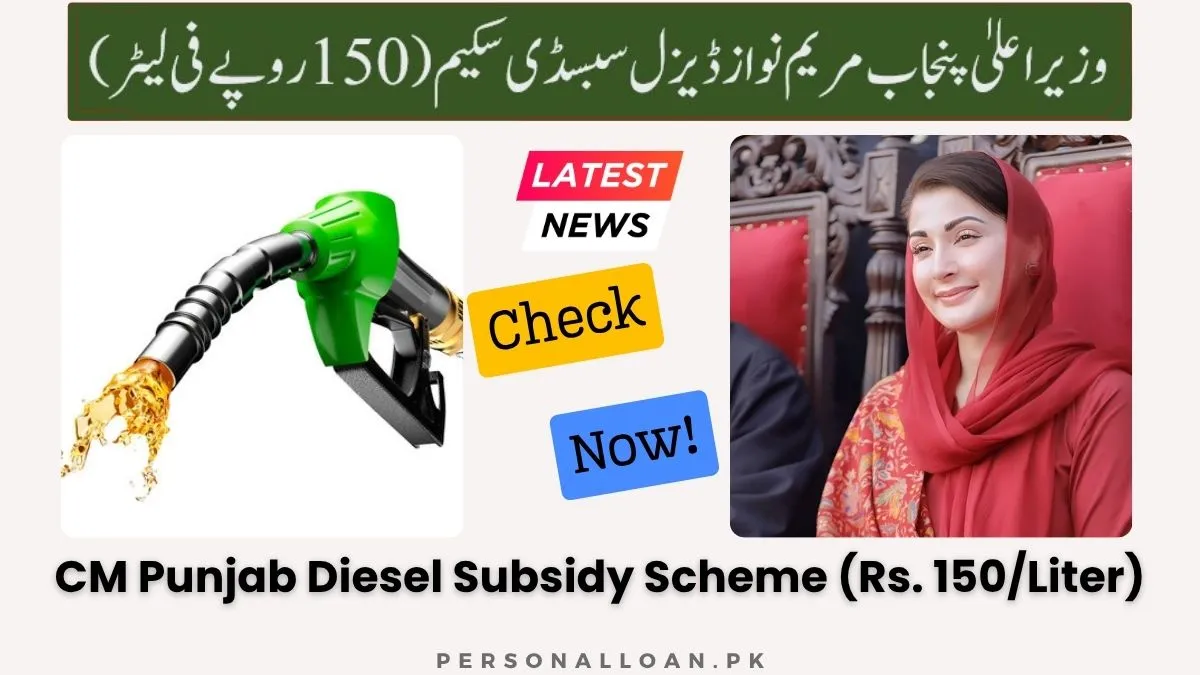
Diesel Subsidy Scheme (Rs. 150/Liter) – Fuel Subsidy App
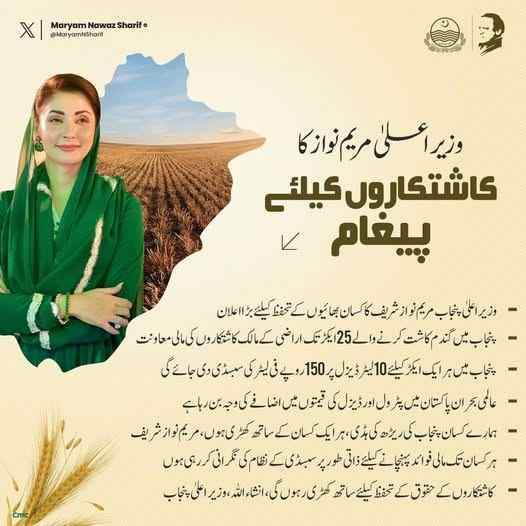
Rising fuel prices have placed an enormous financial burden on small farmers and daily commuters across Pakistan. The Punjab Government launched the Diesel Subsidy Scheme (Rs. 150/Liter) in April 2026 to provide direct relief to wheat growers and registered motorbike owners. This comprehensive guide walks you through every aspect of the program, from eligibility requirements to step-by-step registration, troubleshooting common errors, and understanding the digital disbursement system.

Key Takeaways

  • Farmer Diesel Support: Wheat growers with up to 25 acres receive Rs. 150 per liter on 10 liters of diesel per acre via the Kisan Card.
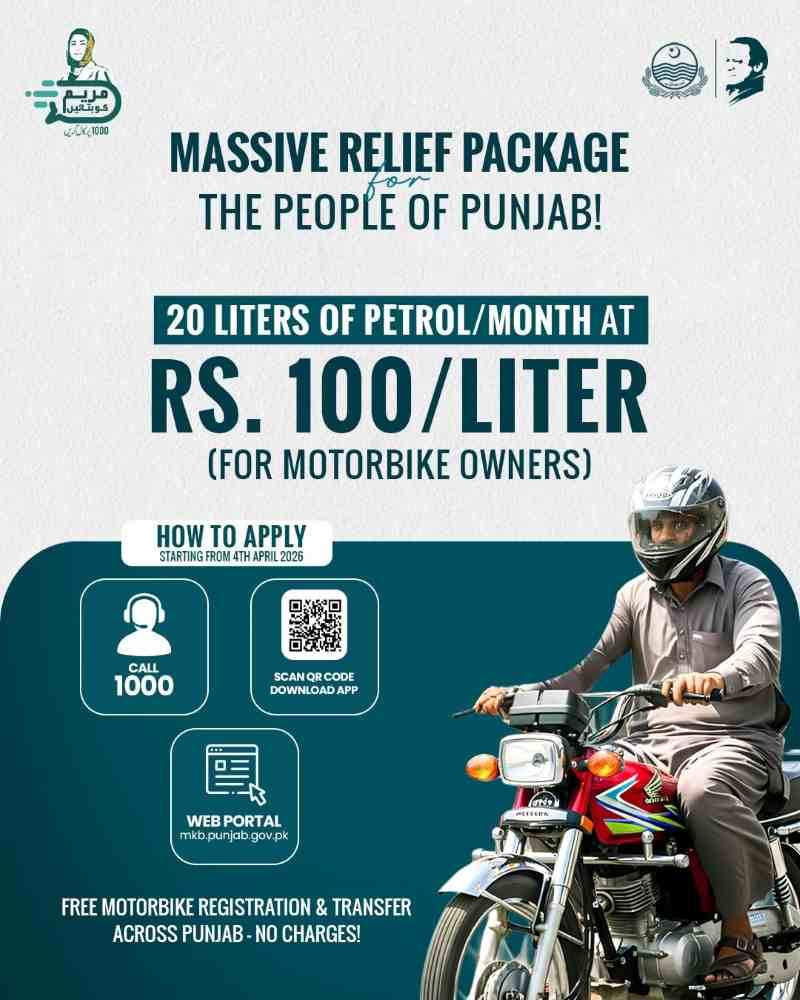
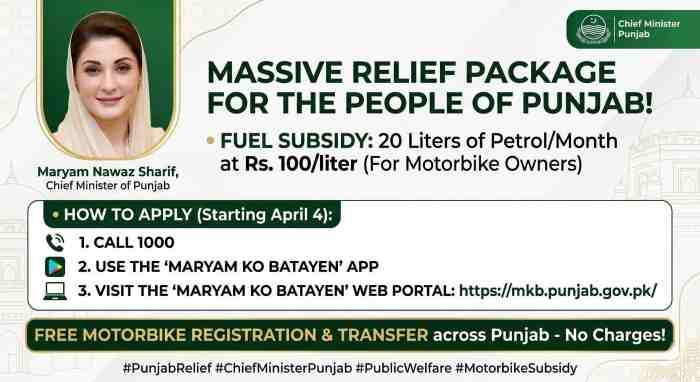
  • Motorbike Petrol Subsidy: Registered 70cc bike owners get Rs. 100 per liter on 20 liters monthly, totaling Rs. 2,000 in monthly savings.
  • Three Registration Channels: Apply through SMS (9771), the Maryam Ko Batayen mobile app, or the official web portal mkb.punjab.gov.pk.
  • QR Code System: Beneficiaries receive a digital QR code after verification, which is scanned at authorized petrol pumps to apply the discount instantly.
  • Provincial Differences: Punjab offers fuel-specific subsidies, while Sindh provides direct cash transfers of Rs. 1,500 per acre and Rs. 2,000 monthly for bikers.

Maryam Nawaz Diesel Subsidy Scheme (Rs. 150/Liter) – Fuel Subsidy App

CM-Punjab-Diesel-Subsidy-Scheme

What Is the Diesel Subsidy Scheme (Rs. 150/Liter) and Why Was It Created?
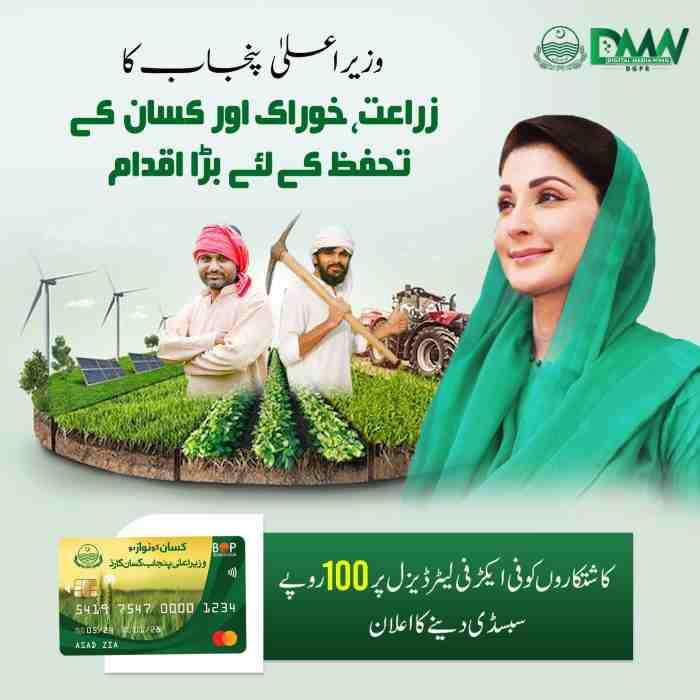
Maryam-Nawaz-Diesel-Subsidy-Scheme

The Diesel Subsidy Scheme (Rs. 150/Liter) is a targeted financial relief program announced by the Punjab Government in April 2026 to offset the impact of surging global oil prices on agricultural production and low-income transportation. The scheme provides two distinct benefits: a diesel subsidy for wheat farmers and a petrol subsidy for registered motorcycle owners.

Understanding the Program’s Official Name and Coverage Area

The initiative falls under the broader “Punjab Petrol Relief Package.” It operates through digital platforms including the Maryam Ko Batayen application, the web portal mkb.punjab.gov.pk, and the SMS short code 9771. The program covers all 36 districts of Punjab province. Farmers and bike owners residing in rural and urban areas alike can apply, provided they meet the eligibility criteria.

The Core Reasons Behind Launching This Fuel Subsidy
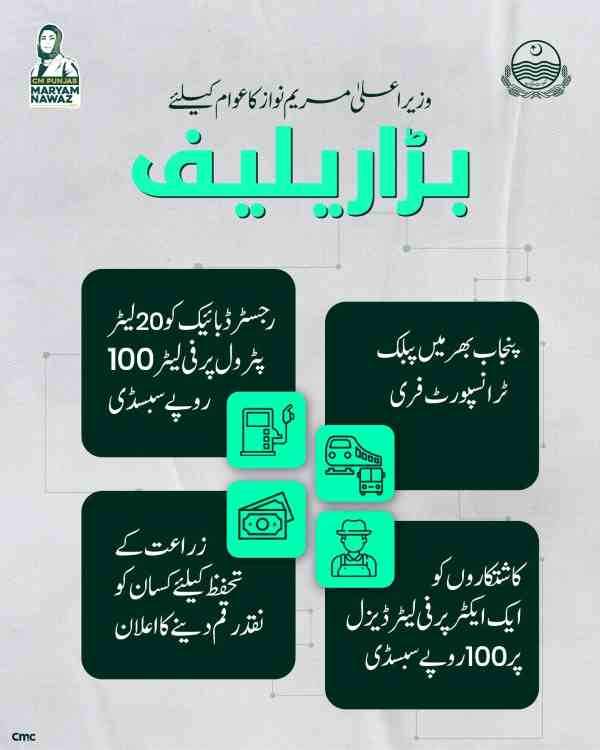
CM-Punjab-Maryam-Nawaz-Subsidy

Three primary factors drove the government to introduce this subsidy:

  • Global crude oil price spike: International markets saw a sharp increase in petroleum prices due to supply chain disruptions.
  • Protecting wheat production: Farmers faced unsustainable input costs for plowing, irrigation, and harvesting.
  • Relief for daily commuters: Low-income workers relying on motorcycles for employment faced severe financial strain.

How International Oil Markets Directly Impact Pakistani Fuel Prices

Pakistan imports more than 80% of its petroleum requirements. When global crude oil prices rise, domestic petrol and diesel prices adjust upward within weeks. This pass-through effect means that farmers operating diesel-powered tractors and water pumps experience immediate cost increases. Similarly, delivery riders and daily wage earners see their commuting expenses rise without any corresponding increase in income. The subsidy acts as a buffer against these external shocks.

How To Apply For The Diesel Subsidy Scheme By Maryam Ko Batain Portal
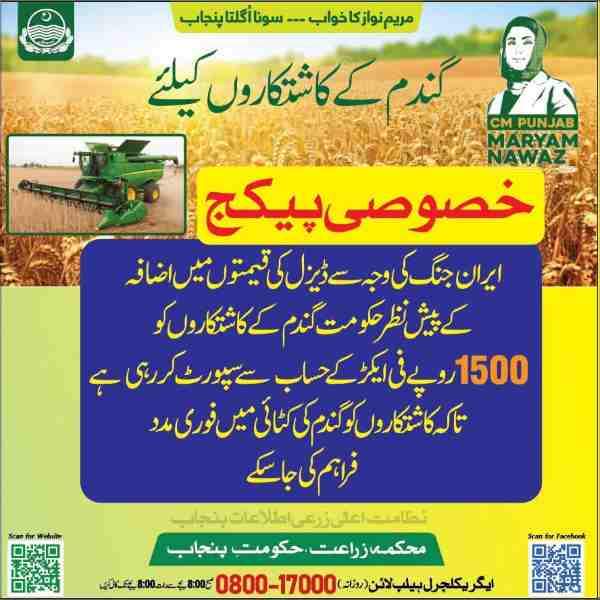
Sasta-Petrol-Subsidy-Scheme

The Bike Petrol Subsidy Scheme, facilitated through the Maryam Ko Batain portal, offers eligible citizens financial relief on fuel costs for two-wheelers. Below is a streamlined, step‑by‑step guide to completing your application online.

Step‑by‑Step Application Process

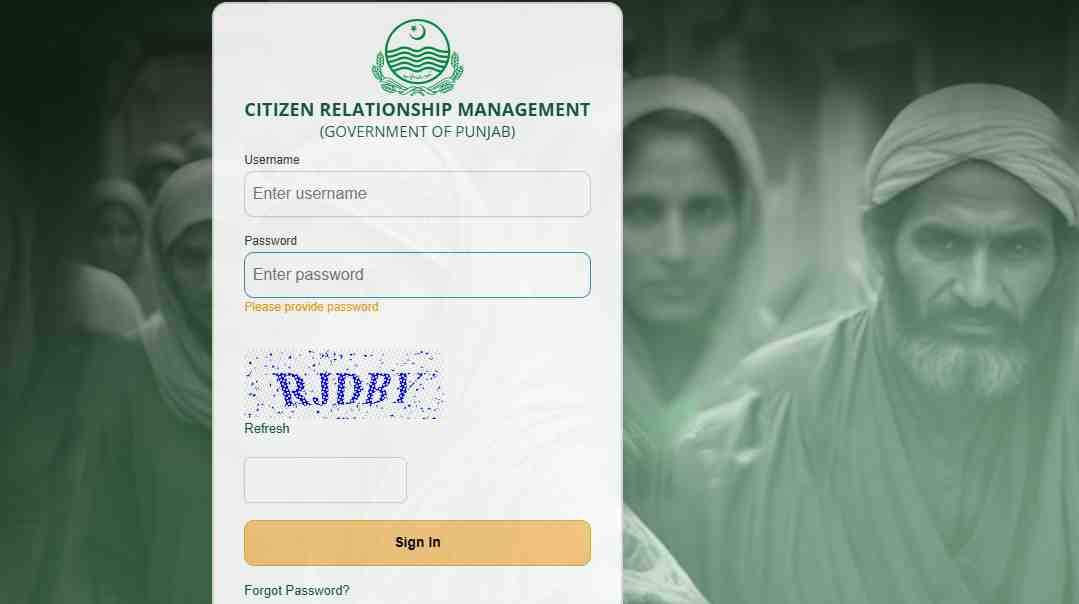
Step 1: Access the official portal and log in
CM-Punjab-maryam-ko-batain-App-Login

Open the official Maryam Ko Batain portal by navigating to https://crm.punjab.gov.pk/. Enter your registered credentials to log in to your account.

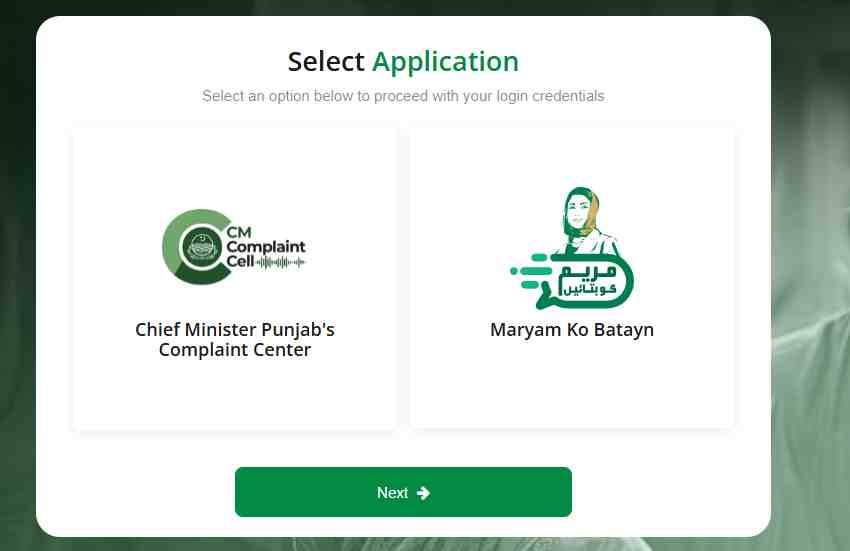
Step 2: Select the Maryam Ko Batain portal option
Maryam-ko-batain-App

After successful login, locate and select the “Maryam Ko Batain” portal option from the available services. Then, click NEXT to proceed.

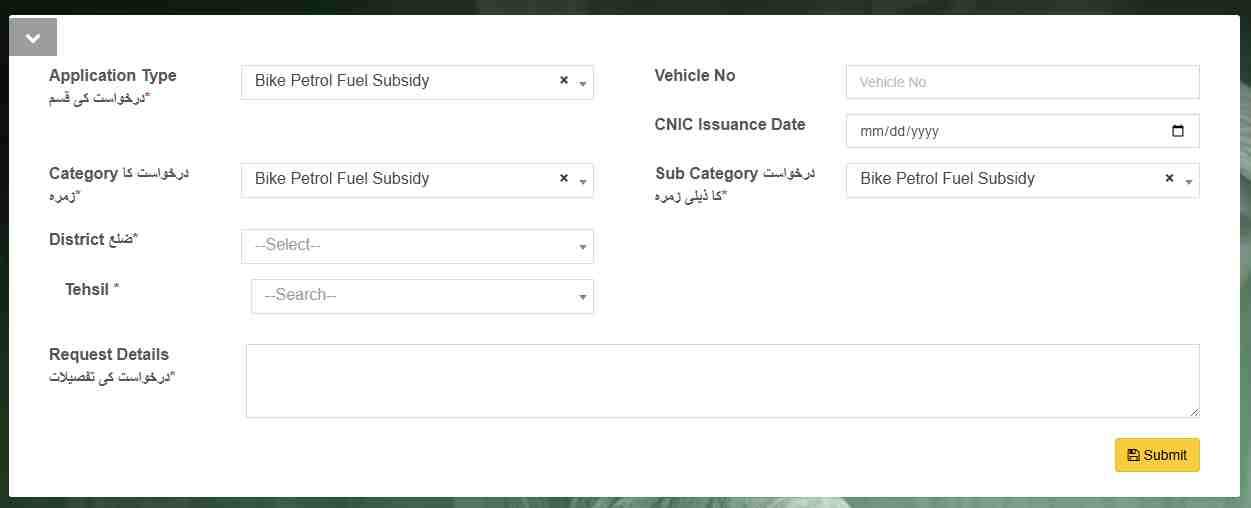
Step 3: Complete and submit the online application form
Petrol-Subsidy-Scheme-Form

Fill out the online application form by providing all required details accurately. Once the form is complete, click SUBMIT. Use the following link to access the submission page directly:
https://crm.punjab.gov.pk/Complaint/AddComplaint

Note: Ensure all information entered is correct before final submission to avoid processing delays. For further assistance, refer to the official portal’s help section.

Who Qualifies for the Diesel Subsidy Scheme (Rs. 150/Liter)?
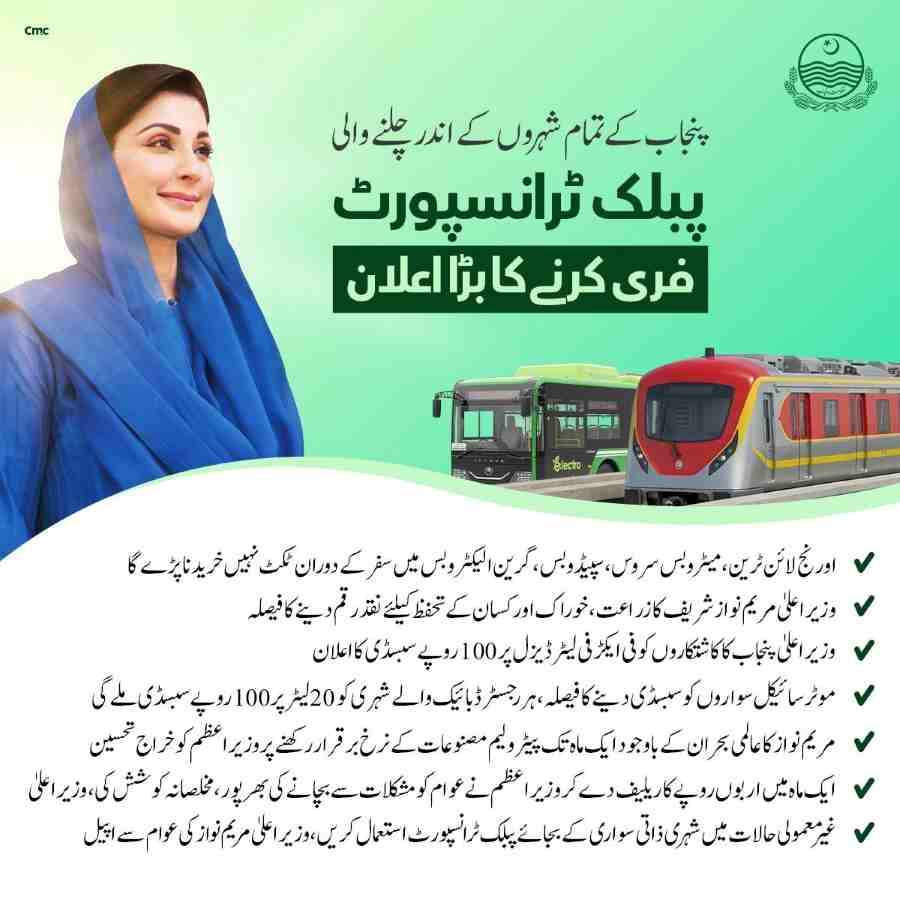
CM-Punjab-Petrol-Subsidy

Eligibility for the Diesel Subsidy Scheme (Rs. 150/Liter) is strictly defined by land ownership records for farmers and vehicle registration documents for motorbike owners. The government uses digital verification through NADRA and the Punjab Land Record Authority to prevent fraud.

Specific Criteria for Farmers Seeking the Diesel Subsidy

Only wheat growers actively cultivating the crop during the current season qualify for the diesel subsidy. The scheme does not extend to farmers growing other crops such as rice, sugarcane, or maize. The applicant must be the recorded owner or tenant with a valid cultivation agreement.

Land Ownership Limits and Per-Acre Subsidy Calculation

Farmers with agricultural land holdings up to 25 acres are eligible. The subsidy calculation follows this simple formula:

Landholding (acres)Diesel subsidy limit (liters)Total subsidy value (Rs.)
5 acres50 liters (5 x 10)7,500 (50 x 150)
10 acres100 liters15,000
15 acres150 liters22,500
20 acres200 liters30,000
25 acres250 liters37,500

Why Tractor Owners Must Also Be Registered Farmers
Maryam-Nawaz-Petrol-Subsidy

A person who owns a tractor but does not cultivate land (for example, a commercial service provider) is not eligible. The subsidy requires that the tractor be used exclusively on the applicant’s own wheat fields. During verification, land records are cross-checked with tractor registration details to ensure compliance.

The Critical Role of the Kisan Card in Receiving Subsidized Diesel

The Kisan Card functions as a digital wallet and identification tool for farmers. Without an active Kisan Card linked to verified land records, a farmer cannot claim the diesel subsidy. Farmers who do not yet have a Kisan Card must first apply for one through the Agriculture Department. The process takes approximately 7 to 10 working days.

Clarifying the Separate Petrol Subsidy for Motorbike Owners

The Rs. 150 per liter benefit applies only to diesel for agricultural use. Motorbike owners receive a completely different benefit: Rs. 100 per liter on petrol. Many applicants confuse the two. The key distinction is the fuel type (diesel vs. petrol) and the purpose (farming vs. commuting).

Motorcycle Eligibility Requirements: Engine Capacity and Registration

Only motorcycles with engine capacity of 70cc or less qualify for the petrol subsidy. The vehicle must be:

  • Registered with the Excise and Taxation Department.
  • Displaying a valid number plate.
  • Owned by the applicant (proof required via registration book).
  • Free of outstanding taxes or fines.

Motorcycles above 70cc, unregistered vehicles, and bikes registered under another person’s name are automatically disqualified.

Income Threshold for the Motorbike Petrol Subsidy

While the government has not published a strict income cutoff, preference is given to applicants with monthly household incomes below an estimated threshold. The system prioritizes:

  • Delivery riders (food, e-commerce, courier).
  • Daily wage laborers.
  • Families already enrolled in the Benazir Income Support Programme (BISP).
  • Widows and persons with disabilities who own a motorcycle.

Applicants with high-income profiles (e.g., government officers, business owners) may see their CNIC return a “not eligible” status.

Comparing Provincial Relief: Punjab vs. Sindh vs. KP

The Diesel Subsidy Scheme (Rs. 150/Liter) is unique to Punjab. However, other provinces have launched their own relief measures:
ProvinceFarmer SupportMotorbike Support
PunjabRs. 150/liter diesel (10L/acre)Rs. 100/liter petrol (20L/month)
SindhRs. 1,500/acre cash transferRs. 2,000/month cash transfer
Khyber PakhtunkhwaNo comparable subsidyNo comparable subsidy
BalochistanNo comparable subsidyNo comparable subsidy

How to Register for the Diesel Subsidy Scheme (Rs. 150/Liter)

Diesel-Subsidy-Scheme

Registration for the Diesel Subsidy Scheme (Rs. 150/Liter) opened on April 4, 2026. Applicants can choose from three convenient channels: SMS, mobile app, or web portal. Each channel follows a similar verification process.

Channel 1: SMS Registration via 9771 (No Smartphone Required)

This method works for both farmers and bike owners who do not own a smartphone. Follow these steps:

  1. Open the SMS application on your mobile phone.
  2. Type your CNIC number (without dashes) followed by a space, then your motorcycle registration number (for bikers) or land record number (for farmers).
  3. Send the message to 9771.
  4. Within 30 seconds, you will receive a confirmation message with a verification code.
  5. Keep this code safe. You will need it to claim your subsidy.

Channel 2: Maryam Ko Batayen Mobile App (Android Only)

The official mobile application is named “Maryam Ko Batayen.” Download it exclusively from the Google Play Store. Fake apps exist, so verify the developer name as “Punjab Information Technology Board.”

Step-by-step app registration:

  • Install the app and grant necessary permissions (SMS, camera, storage).
  • Enter your CNIC and mobile number. An OTP will be sent via SMS.
  • Select your role: “Farmer” or “Bike Owner.”
  • For farmers: Enter your land ownership details (Kisan Card number or Fard number).
  • For bike owners: Enter your motorcycle registration number and engine capacity.
  • Upload a clear photo of your CNIC and vehicle registration book.
  • Submit the application. You will receive a tracking ID.

Channel 3: Web Portal Registration (mkb.punjab.gov.pk)

The web portal is accessible from any computer or smartphone browser. The process is identical to the app:

  • Visit mkb.punjab.gov.pk.
  • Click on “New Registration.”
  • Fill in the online form with CNIC, mobile number, and land/vehicle details.
  • Upload scanned copies of required documents (JPEG or PDF format).
  • Submit and note down your application reference number.

Helpline 1000: Assistance for Registration and Complaints

The Punjab Government has activated a toll-free helpline at 1000. Services available:

  • Guidance on which registration channel suits you best.
  • Help with completing the application if you face difficulties.
  • Status check for submitted applications.
  • Reporting technical issues (app crashes, portal errors).
  • Filing complaints about denied eligibility or non-receipt of subsidy.

The helpline operates seven days a week from 8:00 AM to 8:00 PM.

Verification Timeline and What Happens After You Apply

After submitting your application, the system initiates a verification process that typically takes 3 to 5 business days. During this period:

  • NADRA confirms your CNIC validity and identity.
  • PLRA (Punjab Land Record Authority) verifies land ownership for farmers.
  • Excise department verifies motorcycle registration for bikers.
  • PSER (Punjab Socio-Economic Registry) checks income levels for bikers.

Once verified, you receive an SMS confirming eligibility. The app and portal also update your status to “Approved.”

Password Recovery and Account Access Issues

If you forget your password for the Maryam Ko Batayen app:

  • Tap “Forgot Password” on the login screen.
  • Enter your registered CNIC and mobile number.
  • An OTP is sent to your mobile number.
  • Create a new password (minimum 8 characters, including one number).
  • If you no longer have access to the registered mobile number, call helpline 1000 for manual reset.

Fixing App Crashes and Technical Glitches

Common solutions for app stability problems:

  • Clear the app cache: Go to phone Settings > Apps > Maryam Ko Batayen > Storage > Clear Cache.
  • Update the app to the latest version from the Play Store.
  • Uninstall and reinstall the app.
  • Restart your phone.
  • If none work, use the web portal instead while the app team fixes the issue.

Required Documents for Diesel Subsidy Scheme Registration

The Diesel Subsidy Scheme (Rs. 150/Liter) requires specific documents to establish identity, ownership, and eligibility. Having these ready before starting the application saves time.

Complete Document Checklist for Farmers

Farmers must provide:

  • Valid CNIC: The original computerised national identity card. Copies are accepted for upload.
  • Kisan Card: Front and back images. If you don’t have one, apply first.
  • Land ownership proof: Fard (certificate of land ownership) or cultivation agreement for tenant farmers.
  • Mobile SIM registration proof: The mobile number used must be registered under your CNIC. You can check this by dialing *668#.
  • Recent passport-size photograph (for apps that require facial verification).

Complete Document Checklist for Motorbike Owners

Bike owners must provide:

  • Valid CNIC.
  • Motorcycle registration book (Excise and Taxation): The page showing your name, registration number, and engine capacity.
  • Proof of income (optional but helpful): Salary slip, BISP card, or sworn affidavit for low-income status.
  • Valid driving license (recommended but not mandatory for subsidy).

The QR Code System: How to Use It at the Petrol Pump

After approval, the app generates a digital QR code. This QR code changes every month to prevent reuse. To claim your subsidized fuel:

  1. Go to an authorized petrol pump (look for the “Subsidy Fuel” signage).
  2. Tell the attendant you want to use the subsidy scheme.
  3. Open the Maryam Ko Batayen app and tap “Show QR Code.”
  4. The attendant scans your QR code with a handheld device.
  5. The discount is applied automatically. For a bike owner, you pay only Rs. 100 per liter instead of the market price.
  6. The pump generates a receipt showing the original price, subsidy amount, and your payment.

Subsidy Limits: How Much Fuel Can You Get?

The Diesel Subsidy Scheme (Rs. 150/Liter) imposes clear monthly and per-crop limits to ensure fair distribution across all eligible beneficiaries.

Maximum Diesel Liters for Farmers Based on Land Size

Farmers receive 10 liters of subsidized diesel per acre, per wheat crop season. This is not a monthly benefit but a one-time allocation for the entire cultivation cycle. For example:

  • A farmer with 5 acres receives a total of 50 liters for the season.
  • A farmer with 12 acres receives 120 liters.
  • A farmer with 25 acres receives the maximum of 250 liters.

The subsidy is designed to cover approximately 70% of a typical farmer’s diesel needs for wheat cultivation.

Monthly Petrol Limit for Motorbike Owners

Motorbike owners receive 20 liters of petrol per month at the subsidized rate of Rs. 100 per liter. This is a monthly allowance that resets on the first day of each calendar month. Unused liters do not carry over to the next month. The scheme initially runs for three months, after which the government will review continuation.

What Happens If You Exceed Your Monthly or Per-Acre Limit?

The system strictly enforces the limits. If a farmer attempts to buy more than the per-acre allocation, the QR code will decline the transaction. Similarly, a bike owner who tries to purchase a 21st liter in the same month will be charged the full market price. There are no exceptions.

How Subsidy Disbursement Works (Kisan Card and QR Code)

The Diesel Subsidy Scheme (Rs. 150/Liter) uses a fully digital disbursement system. No cash changes hands directly between the government and beneficiaries. Instead, the subsidy travels through digital channels to the point of sale.

Disbursement for Farmers via the Kisan Card

For farmers, the subsidy amount is loaded onto the Kisan Card. Think of the Kisan Card as a prepaid debit card specifically for agricultural inputs. When a farmer goes to an authorized agricultural dealer or petrol pump:

  • The dealer scans the Kisan Card.
  • The system checks the available subsidy balance (based on land size).
  • The farmer pays only the subsidized rate (market price minus Rs. 150 per liter).
  • The dealer receives the full market price (subsidy portion comes from the government).

Disbursement for Bike Owners via QR Code Discount at Pump

Bike owners do not receive cash. Instead, the QR code acts as a digital coupon. At the pump:

  • The attendant scans the QR code.
  • The system verifies the bike owner’s identity and remaining monthly quota.
  • The pump’s price is automatically reduced by Rs. 100 per liter.
  • The bike owner pays the reduced amount directly to the pump.

One-Time vs. Recurring Benefit

The diesel subsidy for farmers is a one-time benefit per wheat crop season. If global prices remain high, the government may announce additional seasons. The petrol subsidy for bike owners is a recurring monthly benefit, at least for the initial three-month period.

Authorized Petrol Pumps: Finding One Near You

Not every petrol pump participates. The government has equipped approximately 12,000 pumps with QR code scanners and dedicated subsidized fuel nozzles. To find an authorized pump:

  • Open the Maryam Ko Batayen app and tap “Find a Pump.”
  • The app uses your location to show the nearest authorized pumps on a map.
  • Alternatively, ask at your regular pump if they have the subsidy QR code scanner.

Checking Your Diesel Subsidy Eligibility Status

Before applying, you can check whether you are likely to qualify. After applying, you can track your application status.

Eligibility Check via SMS (9771)

Send your CNIC number to 9771. The system responds with one of three messages:

  • “Eligible – Proceed with registration.”
  • “Partially eligible – Additional documents required. Call 1000.”
  • “Not eligible – Reason: [land size exceeds limit / bike >70cc / income threshold].”

Eligibility Check via Web Portal

Visit mkb.punjab.gov.pk and enter your CNIC. The portal displays your eligibility status and, if eligible, provides a direct link to start registration.

Common Reasons for “Not Eligible” Status

ReasonSolution
Land holding exceeds 25 acresNo solution; scheme capped at 25 acres
Motorcycle engine capacity above 70ccNo solution; only 70cc and below qualify
Motorcycle not registered in applicant’s nameTransfer ownership or register vehicle first
Mobile number not matching CNIC recordVisit your mobile operator to update SIM ownership
Income above threshold (bike owners)Provide additional income proof if you believe error
Kisan Card not activeApply for Kisan Card through Agriculture Department

Additional Relief Measures in the Punjab Package

The Diesel Subsidy Scheme (Rs. 150/Liter) is just one component of a larger relief initiative. Citizens can access several other benefits.

Free Public Transport on Major Transit Systems

The Punjab Government has made the following services completely free for all passengers:

  • Orange Line Train (Lahore)
  • Metro Bus Service (Lahore and Multan)
  • Speedo Bus (various routes)
  • Green Electric Bus (Lahore and Rawalpindi)

No ticket or pass is required. Simply board the bus or train.

Waiver of Motorbike Registration and Transfer Fees

All fees associated with registering a new motorcycle or transferring ownership of an existing motorcycle have been abolished. This saves citizens between Rs. 1,500 and Rs. 3,000 per transaction. The waiver applies to all motorcycles regardless of engine capacity.

Subsidies for Goods Transport and Buses

To prevent cascading price increases on essential goods, the government provides:

  • Rs. 70,000 per month subsidy for each goods transport vehicle (truck, trailer, van).
  • Rs. 80,000 per month subsidy for each passenger bus.

These subsidies are paid directly to transport companies, not individual drivers.

Transparency and Fraud Prevention Mechanisms

The Diesel Subsidy Scheme (Rs. 150/Liter) incorporates multiple safeguards to ensure that only legitimate beneficiaries receive the relief.

Multi-Layer Digital Verification

Every application passes through three verification layers:

  • NADRA biometric and identity check: Prevents fake CNICs.
  • PLRA land record check: Prevents false land claims.
  • Excise vehicle registration check: Prevents claims on stolen or non-existent motorcycles.

Real-Time Monitoring by Chief Minister’s Office

The Chief Minister of Punjab has stated that she personally reviews weekly dashboards showing subsidy distribution metrics. Any anomaly (e.g., a single CNIC receiving multiple subsidies) triggers an automatic audit.

Penalties for Fraud

Individuals caught attempting to defraud the scheme face:

  • Permanent disqualification from all government subsidy programs.
  • Legal action under the Punjab Prevention of Electronic Crimes Act.
  • Recovery of any fraudulently obtained subsidy amount plus 100% penalty.

Common Errors and How to Resolve Them

Even with a well-designed system, users encounter problems. Below are the most frequent issues and their fixes.

Error: “CNIC Not Found in NADRA Database”

Cause: Your CNIC may be expired, blocked, or entered incorrectly.
Fix: Visit a NADRA office to verify your CNIC status. Ensure you enter the number without dashes (e.g., 1234567890123).

Error: “Land Records Do Not Match”

Cause: Your Kisan Card or Fard may have outdated information.
Fix: Update your land records at the local Patwari or Land Record Center. Obtain a new Fard and reapply.

Error: “QR Code Invalid at Petrol Pump”

Cause: The QR code may have expired (each code is valid for 48 hours), or you may have already used your monthly quota.
Fix: Generate a fresh QR code from the app. Check your remaining quota. If the quota is exhausted, wait for the next month.

Error: “You Have Already Registered with Another CNIC”

Cause: The system detected a duplicate registration attempt.
Fix: If you genuinely have only one CNIC, call helpline 1000 to report a false positive. This can happen if a family member used your CNIC without permission.

Future of the Diesel Subsidy Scheme

The Diesel Subsidy Scheme (Rs. 150/Liter) is currently a temporary measure. Its continuation depends on multiple factors.

Will the Scheme Continue Beyond the Initial Three Months?

The government has allocated a budget for three months of operation. A review will occur at the end of the second month. Factors influencing the decision include:

  • Global crude oil price trends.
  • Budget utilization and fraud rates.
  • Public feedback and demand.
  • Fiscal capacity of the provincial government.

What Happens If Global Oil Prices Drop?

If international prices fall significantly, the government may reduce or eliminate the subsidy. The objective is to keep the market price stable for consumers, not to provide permanent below-market fuel.

Potential Expansion to Other Provinces

There are no current plans to expand the Punjab-specific scheme to other provinces. However, if the model proves successful, the federal government may encourage other provinces to adopt similar programs.

Summary of Critical Information

Here is a quick reference for the most important points about the Diesel Subsidy Scheme (Rs. 150/Liter):

  • Farmers: Up to 25 acres wheat land, Rs. 150/liter diesel, 10 liters/acre, via Kisan Card.
  • Bike owners: 70cc or less, Rs. 100/liter petrol, 20 liters/month, via QR code.
  • Registration: SMS 9771, Maryam Ko Batayen app, or mkb.punjab.gov.pk.
  • Helpline: 1000 (toll-free, 8 AM to 8 PM).
  • Verification time: 3-5 business days.
  • Authorized pumps: Approximately 12,000 across Punjab.

Frequently Asked Questions (FAQs)

1. What is the Diesel Subsidy Scheme (Rs. 150/Liter)?
A Punjab Government program launched in April 2026 providing Rs. 150 per liter diesel subsidy to wheat farmers (up to 25 acres) and Rs. 100 per liter petrol subsidy to registered 70cc motorbike owners.

2. How do I download the Fuel Subsidy App?
Search for “Maryam Ko Batayen” on the Google Play Store. Download only from the official developer “Punjab Information Technology Board.”

3. Who is eligible for the Rs. 150 per liter diesel subsidy?
Wheat growers in Punjab with land holdings of up to 25 acres. The farmer must have an active Kisan Card.

4. How can I register for the Punjab Diesel Subsidy Scheme?
Send your CNIC to 9771 via SMS, use the Maryam Ko Batayen mobile app, or visit mkb.punjab.gov.pk web portal.

5. Is the diesel subsidy only for farmers?
Yes, the Rs. 150 per liter subsidy is exclusively for agricultural diesel. Motorbike owners receive a separate Rs. 100 per liter petrol subsidy.

6. What documents are required for the Fuel Subsidy App registration?
CNIC, Kisan Card (for farmers), motorcycle registration book (for bikers), and a mobile SIM registered under your name.

7. How do I check my eligibility for the fuel subsidy via CNIC?
Send your CNIC number to 9771. You will receive an SMS with your eligibility status within one minute.

Disclaimer: This guide is based on official announcements from the Punjab Government as of the program launch date. Subsidy details, eligibility criteria, and registration processes may change at the government’s discretion. Always verify current information through the official helpline (1000) or the web portal (mkb.punjab.gov.pk) before taking any action.
Sindh-Govt-Petrol-Subsidy-Scheme

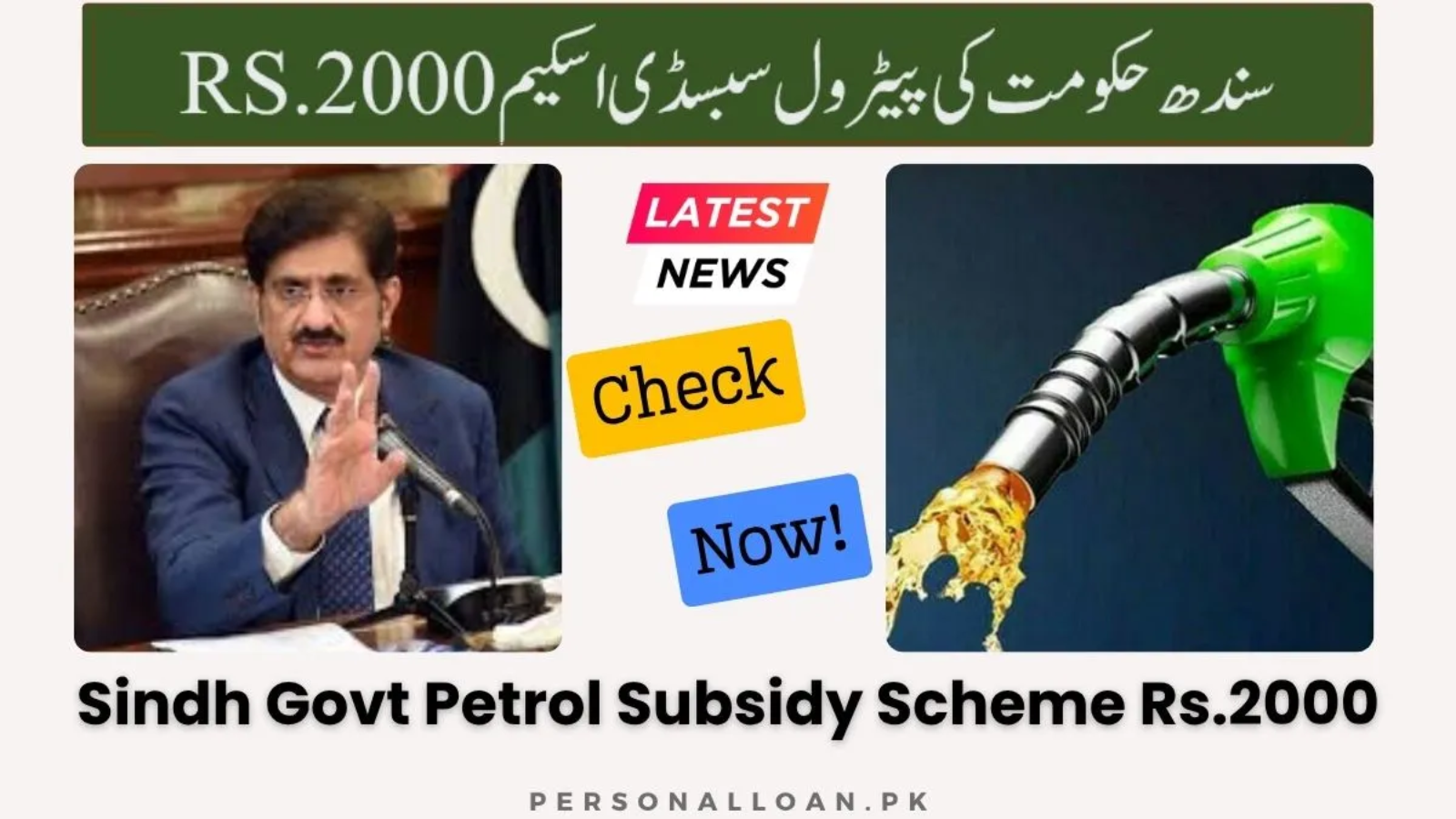
Sindh Govt Petrol Subsidy Scheme – Petrol Subsidy App

Riding a motorcycle to work or college has become painfully expensive as petrol prices crossed Rs450 per litre, pushing daily commuting costs beyond what many families in Sindh can afford. The Sindh government launched a targeted relief program that gives registered motorcycle owners Rs2,000 each month through a dedicated mobile application.

This comprehensive guide walks you through every detail of the Sindh petrol subsidy scheme. You will discover exactly who qualifies, how to download and use the official app, what documents you need, how to fix common errors like “Vehicle Record Not Found,” and when the money will reach your bank account.

Key Takeaways

  • Direct Monthly Cash: You receive Rs2,000 deposited directly into your bank account or digital wallet, not as a discount at petrol pumps.
  • Ownership Is Mandatory: Your motorcycle must already be registered in your name in the Sindh Excise database. If not, you must transfer ownership first.
  • Free Transfer Window: For 15 days after the announcement, the government waived all motorcycle transfer fees to help you update records at zero cost.
  • App-Only Registration: The Sindh Excise and Taxation Department has built a mobile application that handles all registrations, verifications, and payment tracking.
  • One-Month Pilot Phase: The scheme starts as a one-month trial beginning mid-April. Extension depends on how smoothly the digital system performs.
  • Farmers and Transporters Also Benefit: The same relief package includes diesel subsidies for small farmers and monthly support for buses and trucks.

Sindh Govt Petrol Subsidy Scheme – Petrol Subsidy App

Sindh-Govt-Petrol-Subsidy-Scheme

What Exactly Is the Sindh Government Petrol Subsidy Scheme?

The Sindh Government Petrol Subsidy Scheme is a cash transfer program that gives Rs2,000 per month to every registered motorcycle owner who successfully verifies their vehicle and bank account through a mobile app.

Understanding the Core Purpose Behind the Scheme

Why did the Sindh government create this subsidy? Three factors drove the decision.

First, petrol prices in Pakistan reached record levels due to global oil market instability. A single litre crossed Rs458, making a full tank cost more than a day’s wages for many workers.

Second, millions of families in Sindh rely on motorcycles as their primary mode of transport. Students, daily wage workers, small business owners, and delivery riders all depend on two-wheelers to earn their living.

Third, previous subsidy models that tried to offer discounts at petrol pumps proved administratively impossible to implement. The government chose direct cash transfers as a cleaner, more transparent alternative.

Official Launch Details You Need to Know

Chief Minister Murad Ali Shah publicly announced this relief package on April 3 during a press conference at the CM House in Karachi.

The total package value exceeds Rs55 billion and covers not only motorcycle owners but also small farmers, public buses, and goods transporters.

For motorcycle owners specifically, the government allocated a significant portion of this budget to ensure monthly payments reach verified beneficiaries without delay.

Key Features That Define This Subsidy Program

The Sindh petrol subsidy scheme operates differently from any previous relief effort in the province.

  • Payment amount is fixed at Rs2,000 per month per eligible motorcycle
  • Calculation method uses Rs100 per litre on a 20-litre monthly quota
  • Funds go directly to your bank account or Easypaisa/JazzCash wallet
  • No need to visit any petrol pump or show any physical card
  • Verification happens entirely through digital databases
  • The Excise Department handles all vehicle record checks
  • Ownership transfer fees are completely waived for 15 days
  • Extended office hours at Excise centers help with transfers

How the Rs2,000 Subsidy Amount Was Calculated

The government arrived at the Rs2,000 figure by analyzing average monthly petrol consumption among motorcycle users in Sindh.

Most daily commuters travel between 30 to 50 kilometres per day. A typical 70cc motorcycle consumes approximately 20 litres of petrol over 25 to 30 days of regular use.

By providing Rs100 per litre on that 20-litre baseline, the government covers roughly 40 to 50 percent of the actual fuel cost for the average rider.

Who Can Get This Petrol Subsidy? Complete Eligibility Breakdown

Eligibility for the Sindh petrol subsidy depends on three main conditions: motorcycle registration status, ownership verification, and an active bank or digital account.

Motorcycle Registration Requirements Explained

Your motorcycle must be registered with the Sindh Excise and Taxation Department to qualify.

The registration must be current and active. Vehicles with expired registration or outstanding token tax will not pass the verification check.

Approximately 6.7 million motorcycles are registered across Sindh province. However, a large percentage of these vehicles are not registered in the name of the person who actually rides them.

Common registration mismatches include:

  • Motorcycles bought from a family member but never formally transferred
  • Used bikes purchased from a dealer with outdated ownership records
  • Vehicles registered under a parent’s or sibling’s name
  • Bikes inherited without updating Excise records
  • Motorcycles still listed under the original showroom owner

Ownership Rules: Why Your Name Must Match

The mobile app links your CNIC directly to the Excise database. When you enter your 13-digit CNIC, the system returns only those vehicles where your name appears as the registered owner.

If your motorcycle is registered under anyone else’s name, the system will show no results. You will see a “Vehicle Record Not Found” error message.

This strict ownership requirement prevents fraud and ensures that subsidies go only to legitimate owners rather than multiple claimants on the same vehicle.

Tax Compliance and Token Tax Status

Your motorcycle must be tax-compliant to receive the subsidy.

The Excise database checks for paid token tax for the current year. If you have not paid your annual token tax, the vehicle is considered inactive in the system.

How to check your token tax status:

  • Visit your local Excise and Taxation office
  • Provide your registration book or CNIC
  • Request a tax compliance certificate
  • Pay any outstanding taxes immediately
  • Keep the receipt as proof of payment

Bank Account and Digital Wallet Necessity

You cannot receive the subsidy without a valid bank account or digital wallet.

The government transfers funds electronically. No cash payments are made at any government office or petrol pump.

Acceptable accounts include:

  • Any traditional bank account in Pakistan with an active IBAN
  • Easypaisa mobile account with verified CNIC
  • JazzCash account with completed biometric verification
  • Any other State Bank-approved digital wallet

If you do not have an IBAN number, you can still provide your regular bank account number. The system accepts both formats.

Special Cases: Students, Women, and Senior Citizens

Students who own a motorcycle registered in their name are fully eligible.

No minimum age requirement exists beyond the legal age for holding a CNIC. College and university students can apply exactly like any other owner.

Women motorcycle owners receive the same subsidy amount with no additional conditions.

Senior citizens who ride motorcycles or own vehicles used by family members can also apply, provided the ownership documents match their CNIC.

Who Is Excluded From This Scheme?

Several categories of people and vehicles cannot receive this subsidy.

  • Car owners are completely excluded from the motorcycle subsidy program
  • Owners of motorcycles with engine capacity above 70cc may be excluded
  • Unregistered motorcycles have no path to eligibility
  • Vehicles with outstanding taxes or fines are blocked
  • Non-Sindh registered vehicles do not qualify
  • Commercial motorcycle fleets may face additional verification

The Official Petrol Subsidy App: Complete Registration Walkthrough

The Petrol Subsidy App is the only official channel for registration. The Sindh Excise and Taxation Department developed this application specifically for CNIC-based verification and subsidy processing.

App Name, Availability, and Download Instructions

The official name is the “Sindh Petrol Subsidy App,” though the exact branded name may change when the app appears on app stores.

Where can you download the app?

The application will be available on the Google Play Store for Android users. An iOS version may follow depending on demand and testing results.

As of the latest government announcement, the app is in final development and expected to go live within 2 to 3 days.

Do not download any unofficial apps claiming to offer petrol subsidy registration. Scammers may create fake applications to steal CNIC and bank information. Only trust links from the official Sindh Excise website.

Step-by-Step Registration Process

Follow these exact steps to complete your registration successfully.

Step 1 – Download the official app from the Google Play Store after its release.

Step 2 – Open the app and grant necessary permissions for CNIC scanning and camera access.

Step 3 – Enter your 13-digit CNIC number without any dashes or spaces.

Step 4 – Wait for the system to query the Excise database. This usually takes 10 to 15 seconds.

Step 5 – Review the vehicle information that appears. Your motorcycle’s registration number, make, model, and engine capacity should display correctly.

Step 6 – Confirm that the displayed motorcycle is the one you want to register for the subsidy.

Step 7 – Enter your bank account details. You will need either your full IBAN or your regular account number along with the bank name and branch code.

Step 8 – Provide your active mobile number. This number must match the one recorded in your Excise database for OTP verification.

Step 9 – Submit the application and note the confirmation reference number.

Step 10 – Wait for verification. The system will check your bank details against your CNIC name.

How to Check Eligibility Through CNIC Before the App Launches

You do not need to wait for the app to check whether your motorcycle is registered in your name.

The Sindh Excise Department maintains a public website where you can enter your CNIC and see all vehicles registered under your identity.

Visit the official Excise portal, locate the vehicle verification section, and enter your CNIC. If your motorcycle appears, you are eligible to apply once the app launches. If nothing appears, you must complete an ownership transfer.

Required Documents: Keep These Ready

Before opening the app, gather these items to avoid interruptions during registration.

  • Your original CNIC (computerized national identity card)
  • A clear photo or scan of your CNIC front and back
  • Your motorcycle registration book (original or photocopy)
  • Your bank account IBAN or complete account details
  • Your active mobile phone number registered with Excise
  • Your email address (optional but recommended)

You do not need to upload any physical documents during the initial app registration. The system verifies everything through digital databases. However, keep your documents handy in case the system asks for manual verification.

Data Security: Is Your Information Safe?

The Sindh Excise Department uses encrypted servers and secure authentication protocols.

Your CNIC and bank details are transmitted through protected channels. The app does not store your information on your phone. All data resides on government servers with restricted access.

Common security concerns addressed:

  • No third party has access to your bank details
  • The app does not request your bank password or PIN
  • Payment processing happens through official banking channels
  • Your CNIC is used only for vehicle verification
  • You can delete your registration data after the scheme ends

Solving Ownership Problems: The Motorcycle Transfer Process

If your motorcycle is not registered in your name, you must transfer ownership before applying. The government has made this process easier by waiving all transfer fees for 15 days.

Why Ownership Transfer Matters for the Subsidy

The subsidy system is designed to pay one person per registered vehicle. If your family member’s name is on the registration book, that person must apply using their own CNIC and bank account.

Transferring ownership to your name ensures that you become the verified owner in the Excise database. Once the transfer is complete, your CNIC will correctly link to the motorcycle.

Step-by-Step Ownership Transfer Guide

Visit your local Excise and Taxation Department office with the following items.

What you need to bring:

  • Original registration book of the motorcycle
  • CNIC copies of both the current owner and the new owner
  • Physical presence of the motorcycle for inspection
  • Completed transfer application form (available at the office)
  • Affidavit of sale if the original owner is unavailable

The process typically takes 30 to 60 minutes at the office. The fee is currently waived, so you pay nothing for the transfer service.

The 15-Day Fee Waiver Explained

Chief Minister Murad Ali Shah personally approved the fee waiver to encourage legal ownership transfers.

Standard motorcycle transfer fees in Sindh range from Rs500 to Rs2,000 depending on vehicle age and engine capacity. This cost previously discouraged many people from updating their records.

During the 15-day waiver period, you can transfer ownership completely free of charge. Excise offices are also staying open for extended hours to handle the increased workload.

How to Update Your Mobile Number in Excise Records

Your registered mobile number is critical for receiving OTP codes and application updates.

To update your mobile number:

  • Visit any Excise and Taxation office in your district
  • Bring your CNIC and registration book
  • Fill out the mobile number update form
  • Verify your identity with fingerprint or CNIC scan
  • Receive confirmation of the update within 24 hours

Do not attempt to register for the subsidy with an unregistered mobile number. The OTP will not reach you, and your application will fail.

Payment Timeline and Disbursement Mechanism

The subsidy is paid directly into your bank account during specific windows. Understanding the payment schedule helps you plan your finances.

First Payment Date and Subsequent Schedule

The first round of payments is scheduled for disbursement between April 15 and April 20.

This timing gives the Excise Department approximately 15 days from the announcement date to process registrations, verify records, and coordinate with banks.

After the first payment, subsequent monthly payments will follow a similar mid-month schedule. Exact dates will be announced through the app and official channels.

How the Bank Transfer Process Works

Once your registration is approved, your name is added to the payment master list.

The government sends this list to the State Bank of Pakistan, which then routes individual payments to respective banks.

Your bank credits the Rs2,000 directly to your linked account. The transaction appears as “Govt Subsidy – Excise Dept” or similar wording in your bank statement.

For digital wallet users, the amount appears as a credit in your Easypaisa or JazzCash balance. You can withdraw cash at any agent location or use the balance for mobile payments.

Tracking Your Payment Status

The Petrol Subsidy App includes a payment tracking feature.

After logging in, you can see:

  • Verification status (pending, approved, rejected)
  • Payment processing stage (not started, in progress, completed)
  • Transaction date once funds are released
  • Bank reference number for the transfer

Check the app daily during payment windows. If your status shows “completed” but money is not in your account, wait 24 to 48 hours for bank processing.

What Causes Payment Failures?

Several issues can prevent successful payment delivery.

  • Incorrect IBAN or account number entry
  • Bank account name that does not match CNIC name
  • Inactive or frozen bank account
  • Closed digital wallet account
  • OTP verification not completed
  • Vehicle record mismatch discovered after approval

If your payment fails, the app will show a “payment returned” status. You can update your bank details and request a retry. Returned payments are typically reprocessed in the next batch.

Beyond Motorcycles: Other Subsidies in the Rs55 Billion Package

The relief package announced by CM Murad Ali Shah extends far beyond motorcycle owners. Farmers and transport operators also receive substantial support.

Small Farmers Diesel Subsidy

Farmers with landholdings between 1 and 25 acres receive Rs1,500 per acre to offset diesel costs.

This subsidy covers approximately 2 million acres of farmland across Sindh. About 336,000 small farmers are expected to benefit directly.

The diesel subsidy helps with wheat threshing, irrigation, and land preparation. Payments are made through the same bank transfer system used for motorcycle owners.

Public Transport and Goods Transport Support

Public buses receive Rs100,000 per month to keep fares stable.

Goods transport vehicles receive between Rs70,000 and Rs80,000 monthly depending on vehicle size and axle configuration.

In exchange for this subsidy, transporters must commit to maintaining current fare and freight rates. The transport department monitors compliance and can revoke subsidies from violators.

Wheat Price Support for Farmers

The government set a minimum wheat price of Rs3,500 per maund to protect farmers from market fluctuations.

This price support ensures that farmers receive fair compensation even if market rates drop. The provincial government purchases wheat directly at this floor price.

Troubleshooting Common App Errors and Rejection Reasons

Many applicants face technical issues during registration. Here are the most common errors and exactly how to fix them.

“Vehicle Record Not Found” Error

This is the most common error message.

Why it happens: Your CNIC does not match any motorcycle in the Excise database.

Solutions:

  • Verify that you entered your CNIC correctly without typos
  • Check if your motorcycle is registered at all
  • Confirm that the registration is in your name, not a family member‘s
  • Visit an Excise office to see the exact ownership status
  • Complete a transfer if the vehicle is under another name

“CNIC Not Eligible” Message

This error appears when your CNIC is found but no eligible vehicle is attached.

Possible causes include:

  • Your motorcycle is deregistered or has expired registration
  • Outstanding token tax or fines block eligibility
  • Your CNIC is expired or blocked by NADRA
  • The motorcycle engine capacity exceeds the eligible limit

“Bank Verification Failed” Error

This occurs when your bank account details do not match your CNIC information.

Common mismatches:

  • Name spelling differs between CNIC and bank records
  • Account is joint and the primary holder is someone else
  • IBAN belongs to a closed or frozen account
  • Bank branch code is incorrect

Fix by visiting your bank and ensuring your name matches your CNIC exactly. Then update the details in the app.

Sindh vs. Punjab: How Provincial Subsidies Compare

CM-Punjab-Maryam-Nawaz-Petrol-Subsidy

Both Sindh and Punjab launched petrol subsidy schemes around the same time, but their approaches differ significantly.

Sindh’s Cash Transfer Model

Sindh gives Rs2,000 cash directly to your bank account.

Advantages of this model:

  • You can spend the money on anything, not just fuel
  • No need to visit specific petrol pumps
  • No risk of fake QR codes or pump fraud
  • Works with any bank or digital wallet

Disadvantages:

  • Cash may be spent on non-fuel items
  • Requires a bank account which not everyone has

Punjab’s Pump Discount Model

Maryam-Nawaz-Petrol-Subsidy

Punjab offers a Rs100 per litre discount at the pump, capped at 20 litres monthly.

Advantages:

  • Guarantees the money is spent on fuel
  • No bank account needed
  • Immediate discount at time of purchase

Disadvantages:

  • Only works at participating petrol pumps
  • Requires a QR code or app voucher
  • Risk of pump operators not honoring the discount

Federal Government’s Fuel Subsidy App

The federal government launched its own Fuel Subsidy App for two and three-wheelers nationwide.

This app provides a QR code that you scan at designated pumps to get an instant discount. The federal model covers 12,000 petrol pumps across Pakistan.

Frequently Asked Questions

What is the Sindh Govt Petrol Subsidy Scheme?
It is a provincial relief program that deposits Rs2,000 monthly into the bank accounts of registered motorcycle owners who verify their identity and vehicle through a mobile app.

How can I apply for the Sindh petrol subsidy?
Download the official Petrol Subsidy App from the Excise Department, enter your CNIC, confirm your motorcycle appears in the records, provide your bank account details, and submit the application.

What is the name of the Sindh Petrol Subsidy App?
The official application is called the “Sindh Petrol Subsidy App,” developed by the Sindh Excise and Taxation Department. It will be available on the Google Play Store within days.

Is the Sindh petrol subsidy app available on the Play Store?
Not yet as of the latest announcement. The app is in final testing and expected to go live within 2 to 3 days. Only download from the official Play Store listing.

How much money will I get from the Sindh petrol subsidy?
You receive Rs2,000 per month, calculated as Rs100 per litre on a 20-litre petrol quota.

Who is eligible for the Sindh motorcycle petrol subsidy?
Registered motorcycle owners whose vehicle is listed under their CNIC in the Excise database and who have an active bank account or digital wallet.

How do I register my motorcycle for the petrol subsidy?
Open the app, enter your CNIC, wait for vehicle verification, confirm your motorcycle details, enter bank account information, and submit. The system handles the rest.

Can I get the subsidy if the bike is not in my name?
No. You must transfer ownership to your name first. The government waived transfer fees for 15 days to make this easy and affordable.

What is the deadline to apply for the Sindh petrol subsidy?
No fixed deadline has been announced, but the 15-day free transfer window suggests you should complete registration as early as possible.

Will the subsidy be given as cash or a fuel card?
Cash. The full Rs2,000 is deposited directly into your bank account or digital wallet, not as a fuel card or pump discount.

CM-Maryam-Nawaz-Petrol-Subsidy

Sasta Petrol Subsidy Scheme 2026 – Petrol Subsidy For Bikers

A sudden spike in petrol prices to over Rs. 458 per litre has made daily commuting unaffordable for millions of Pakistani motorcycle owners, who rely on two-wheelers for work, education, and essential errands. The government has responded with the Sasta Petrol Subsidy Scheme 2026, a targeted initiative that provides a direct discount of Rs. 100 per litre on up to 20 litres of fuel each month, effectively putting Rs. 2,000 back into the pockets of eligible bikers. This comprehensive guide covers every aspect of the scheme, including eligibility verification, step-by-step registration through SMS and mobile apps, provincial variations, and troubleshooting common issues.

Key Takeaways

  • Monthly Savings: Eligible bikers save Rs. 2,000 per month with a Rs. 100/litre discount on a 20-litre quota, totaling Rs. 24,000 annually.
  • Two SMS Methods: Send CNIC to 786 for BISP-based eligibility checks, then CNIC#REG#CHASSIS to 9771 to receive an 8-digit voucher code.
  • Provincial Differences: Punjab offers direct pump discounts and registration fee waivers; Sindh provides a Rs. 2,000 cash transfer per registered motorcycle.
  • Strict Verification: Applicants must have a monthly household income below Rs. 50,000–60,000, a motorcycle registered in their name, and a SIM linked to their CNIC.
  • Free Registration: All official registration channels (helpline 1000, SMS, web portals) are completely free; avoid any third-party asking for payment.

Sasta Petrol Subsidy Scheme – Petrol Subsidy For Bikers

CM-Punjab-Maryam-Nawaz-Petrol-Subsidy

Understanding the Sasta Petrol Subsidy Scheme

Maryam-Nawaz-Petrol-Subsidy

The Sasta Petrol Subsidy Scheme 2026 is a federally coordinated, provincially administered relief program that provides a fixed fuel price reduction of Rs. 100 per litre on a monthly quota of 20 litres for registered motorcycle owners, rickshaw drivers, and owners of small cars up to 800cc. The discount is applied directly at the point of sale, meaning eligible users pay only the subsidized price (e.g., Rs. 358 instead of Rs. 458 per litre) when filling up at any of the over 12,000 participating petrol pumps nationwide.

Core Mechanics of the Subsidy

  • Discount Type: Fixed rupee reduction (not a percentage), applied instantly at the pump.
  • Monthly Quota: 20 litres per registered vehicle; unused quota does not roll over.
  • Payment Method: Users pay the discounted price directly to the pump; the government reimburses the difference to the fuel company.
  • Participating Pumps: PSO, Shell, Total Parco, and select CNG stations equipped with government-issued verification devices.
  • Eligible Vehicles: Motorcycles, rickshaws, and cars with engine displacement up to 800cc.

Why This Scheme Was Introduced

The government launched the Sasta Petrol Subsidy Scheme 2026 in direct response to the steepest fuel price hike in Pakistan’s history, where petrol crossed Rs. 458 per litre and high-speed diesel exceeded Rs. 520 per litre. For a daily wage earner earning Rs. 800–1,000 per day, fuel costs previously consumed 30–40% of their income. This subsidy aims to protect the most vulnerable commuters from being priced out of essential mobility.

The scheme shifts from untargeted subsidies—which benefit all consumers regardless of income—to a digitally verified, income-based system. By linking the subsidy to CNIC, BISP data, and vehicle registration records, the government ensures that relief reaches only those who genuinely need it. This approach also encourages formal vehicle registration, as unregistered motorcycles are ineligible.

How To Apply For The Bike Petrol Subsidy Scheme By Maryam Ko Batain Portal

Sasta-Petrol-Subsidy-Scheme

The Bike Petrol Subsidy Scheme, facilitated through the Maryam Ko Batain portal, offers eligible citizens financial relief on fuel costs for two-wheelers. Below is a streamlined, step‑by‑step guide to completing your application online.

Step‑by‑Step Application Process

Step 1: Access the official portal and log in

CM-Punjab-maryam-ko-batain-App-Login

Open the official Maryam Ko Batain portal by navigating to https://crm.punjab.gov.pk/. Enter your registered credentials to log in to your account.

Step 2: Select the Maryam Ko Batain portal option

Maryam-ko-batain-App

After successful login, locate and select the “Maryam Ko Batain” portal option from the available services. Then, click NEXT to proceed.

Step 3: Complete and submit the online application form

Petrol-Subsidy-Scheme-Form

Fill out the online application form by providing all required details accurately. Once the form is complete, click SUBMIT. Use the following link to access the submission page directly:
https://crm.punjab.gov.pk/Complaint/AddComplaint

Note: Ensure all information entered is correct before final submission to avoid processing delays. For further assistance, refer to the official portal’s help section.

Eligibility Criteria for the Petrol Subsidy for Bikers

CM-Punjab-Maryam-Nawaz-Subsidy

What is the monthly income limit to qualify for the Sasta Petrol Scheme?

The monthly household income must be below Rs. 50,000 to Rs. 60,000, verified through either the Benazir Income Support Programme (BISP) poverty scorecard database or a sworn affidavit for non-BISP households. This threshold is designed to exclude middle- and high-income households while covering daily wage workers, delivery riders, and small-scale self-employed individuals.

Income Verification Methods

  • Automatic BISP Verification: Families already receiving BISP cash transfers are automatically eligible without additional income proof. They simply need to send their CNIC to 786 to confirm.
  • CNIC-Based Database Check: The system cross-references the CNIC with BISP, the National Socio-Economic Registry (NSER), and COVID-19 relief databases.
  • Manual Appeal Process: If the system rejects a CNIC but the applicant believes they qualify, they can visit a BISP tehsil office with income documents for reassessment. The appeal process typically takes 7–14 days.

Do I need a bike registered in my own name to get the subsidy?

Yes, the motorcycle must be officially registered in the applicant’s name with the local Excise & Taxation Department, and the registration document must show the same CNIC used for subsidy application. Motorcycles registered under a family member’s name (spouse, parent, sibling) are not accepted unless ownership is legally transferred.

Why This Rule Exists

The government wants to prevent one household from claiming multiple subsidies using a single motorcycle. By requiring name matching, the system ensures that each subsidy payment corresponds to a unique owner-vehicle pair. This also encourages formal registration, reducing the number of unregistered motorcycles on the road.

What if the motorcycle is not in my name?

Both Punjab and Sindh governments have waived all transfer fees for a limited period. Owners can transfer the motorcycle into their name free of charge through the local Excise & Taxation office. After transfer, the new owner becomes eligible for the subsidy.

What documents are required for petrol subsidy registration?

CM-Punjab-Petrol-Subsidy

Only three documents are required:

  • A valid, non-expired Computerized National Identity Card (CNIC).
  • The motorcycle’s registration book (excise document) showing the applicant as owner.
  • A mobile SIM card registered against the same CNIC used for application.

Document Verification Process

  • CNIC Validation: The system checks that the CNIC is active, not blocked, and belongs to a Pakistani citizen aged 18 or above.
  • SIM Ownership Verification: The mobile number used for SMS registration must match the CNIC in the Pakistan Telecommunication Authority (PTA) database.
  • Vehicle Registration Check: The Excise database confirms that the motorcycle’s registered owner CNIC matches the applicant’s CNIC.

Are electric bikes eligible for any form of fuel subsidy?

No, the Sasta Petrol Subsidy specifically covers internal combustion engine motorcycles that run on petrol. However, electric bike owners may be eligible for separate charging subsidies announced by some provincial governments as part of their broader electric vehicle promotion policies.

Why Electric Bikes Are Excluded

The scheme is funded by the petroleum levy and fuel taxes, which are collected from petrol consumers. Since electric bikes do not consume petrol, they do not contribute to the fund that supports the subsidy. Additionally, the government is developing separate incentives for electric vehicles, including reduced electricity rates for charging stations and lower registration fees.

Can rickshaw drivers apply for the Sasta Petrol Scheme?

Yes, registered rickshaw drivers with a valid CNIC and vehicle registration document are eligible for the same Rs. 100 per litre discount on a 20-litre monthly quota. Rickshaws are classified alongside motorcycles as low-cost transport for low-income workers.

Rickshaw-Specific Considerations

  • The rickshaw must be registered in the driver’s name with the Excise department.
  • Three-wheelers up to 800cc are included in the federal scheme.
  • Rickshaw owners should use the same SMS registration process as motorcycle owners (send CNIC and vehicle details to 9771).

How to Apply and Register for the Petrol Subsidy

CM-Maryam-Nawaz-Petrol-Subsidy

What is the SMS code to register for the petrol subsidy?

There are two active SMS codes serving different purposes. Send your 13-digit CNIC number (without dashes) to 786 for eligibility checking and automatic enrollment if you are in the BISP database. Then, after confirming eligibility, send “CNIC# MOTORCYCLE_REG# CHASSIS#” to 9771 to receive a unique 8-digit voucher code.

Step-by-Step SMS Registration Process

  1. Check Eligibility: Open SMS app, type your 13-digit CNIC (e.g., 1234567890123), send to 786. Wait for reply (within 30 seconds to 2 minutes).
  2. Interpret Reply: “Eligible” means you can proceed. “Not eligible” means you fail income threshold or CNIC verification.
  3. Register Vehicle: Send message in format: CNIC#REG_NUMBER#CHASSIS (e.g., 1234567890123#ABC123#R17A1234567) to 9771.
  4. Receive Voucher: Within 2–48 hours, you receive an 8-digit voucher code via SMS. Save this code.

SMS 786 vs SMS 9771 – Key Differences

FeatureSMS 786SMS 9771
PurposeEligibility check & BISP enrollmentVehicle registration & voucher generation
Required dataCNIC onlyCNIC + registration number + chassis number
Response timeSeconds to 2 minutes2 to 48 hours
OutputEligibility status8-digit voucher code
Who should useNew applicants, non-BISP householdsThose who received “Eligible” from 786

How do I apply for the Rs. 100 petrol subsidy via the mobile app?

Download the official “Fuel Subsidy App 2026” from Google Play Store or Apple App Store, register with your CNIC, verify via OTP sent to your registered mobile number, enter your motorcycle registration details, and generate a digital QR voucher that can be scanned at any participating petrol pump.

App Registration Walkthrough

  • Download: Search “Fuel Subsidy App 2026” or “Petrol Subsidy App Pakistan” on official stores. Avoid third-party APK sites.
  • Initial Registration: Enter 13-digit CNIC, mobile number, and email (optional).
  • OTP Verification: You receive a 6-digit code via SMS. Enter it in the app.
  • Vehicle Addition: Add motorcycle registration number, chassis number, and upload a photo of the registration book (optional but recommended).
  • QR Generation: After verification, the app displays a dynamic QR code that refreshes every 60 seconds for security.

Additional Provincial Apps

  • Punjab: “Maryam Ko Batayen” app (available on Play Store and App Store) – also allows helpline registration at 1000.
  • Sindh: Excise Department app (being rolled out) – for cash transfer registration.
  • National: “Fuel Quota App” – tracks monthly consumption and remaining quota.

How do I check my eligibility for the 786 petrol scheme online?

Visit pass.gov.pk (national portal) or mkb.punjab.gov.pk (Punjab portal), enter your 13-digit CNIC in the designated field, complete the captcha verification, and the system will instantly display your eligibility status along with any pending requirements.

Online Portal Features

  • Eligibility Check: Real-time verification against BISP and NSER databases.
  • Application Status: Track whether your registration has been approved, pending, or rejected.
  • Voucher Retrieval: If you lost your SMS voucher code, you can regenerate it through the portal.
  • Quota Tracking: View how many litres you have used in the current month and how many remain.
  • Complaint Lodgment: File complaints about pump refusals or technical issues.

Portal Navigation Tips

  • Use only official government domains (gov.pk). Beware of fake portals asking for fees.
  • Keep your CNIC and registered mobile number handy. The portal sends OTP to your phone for login.
  • If the portal shows “No record found,” you may need to first send SMS to 786 for initial enrollment.

Is there an official mobile app for the 2026 petrol subsidy?

Yes, there are three official apps: the national “Fuel Subsidy App 2026” (nationwide coverage), Punjab’s “Maryam Ko Batayen” app (Punjab-specific features), and the “Fuel Quota App” for quota tracking and pump location mapping. All are available on Google Play Store and Apple App Store.

App Comparison

App NameCoveragePrimary FunctionAdditional Features
Fuel Subsidy App 2026NationwideQR code generation, registrationPump locator, quota tracker
Maryam Ko BatayenPunjab onlyRegistration, helpline integrationFee waiver info, farmer diesel subsidy
Fuel Quota AppNationwideQuota tracking, consumption historyMonthly reports, usage analytics

How do I update my mobile number for the petrol scheme if I changed my SIM?

Visit the nearest Excise & Taxation office with your original CNIC, the new SIM’s ownership certificate (from your mobile network operator showing the SIM is registered against your CNIC), and your motorcycle registration book to request a manual mobile number update in the subsidy database.

Why This Is Necessary

The subsidy system uses mobile number as a primary verification factor. If you change your SIM without updating the database, the system will reject your OTP requests and you will not be able to generate vouchers or check your quota. The Excise office updates the number in the central database, after which you can resume using the app and SMS services.

Alternative Method (If Available)

Some users report that calling helpline 1000 and verifying identity through CNIC and a few security questions can also trigger a number update. However, the Excise office method is more reliable.

How to Use the Subsidy at Petrol Pumps

How do I get a petrol subsidy voucher code for my motorcycle?

After successful SMS registration to 9771, you receive a unique 8-digit voucher code via SMS. Alternatively, open the Fuel Subsidy App, log in with your CNIC and OTP, and tap “Generate Voucher” to create a QR code. Both the numeric code and the QR code work at participating pumps.

Voucher Generation Methods Compared

  • SMS Voucher: Simple, works on any phone. However, the code is static and could be shared (though sharing is against terms).
  • App QR Code: More secure, refreshes every 60 seconds, cannot be screenshotted and reused. Recommended for regular users.
  • Web Portal Voucher: Accessible from any computer. Print or write down the code before going to the pump.

Voucher Validity Period

Each voucher code is valid for 7 days from generation. Unused vouchers expire and cannot be renewed. You can generate a new voucher at any time, but each generation counts toward your monthly quota tracking.

Is the petrol subsidy valid at all petrol pumps in Pakistan?

No, the subsidy is valid only at over 12,000 participating pumps nationwide that display the official “Sasta Petrol Subsidy” sticker. Major participating companies include PSO, Shell, Total Parco, and select CNG stations that have been integrated with the government’s POS verification system.

How to Find a Participating Pump

  • Use the “Fuel Subsidy App” pump locator feature (shows nearest participating pumps on a map).
  • Look for the green “Sasta Petrol” sticker on the pump premises.
  • Ask the pump attendant before filling – if they are unaware, the pump likely does not participate.

Pump Participation Requirements

Each participating pump receives two dedicated mobile devices from the National Information Technology Board (NITB) to manage fuel distribution. The pump must also have two subsidized fuel nozzles separate from regular fuel lines. Pumps that violate rules (e.g., refusing the discount or charging extra) are delisted.

How do PSO and Shell pumps verify the subsidy code before giving the discount?

The pump attendant enters your 8-digit voucher code into a Point-of-Sale (POS) device that is connected to the central government database, or scans your app’s QR code using a dedicated mobile device. The system instantly verifies the code against the database, confirms your remaining monthly quota, and authorizes the discounted transaction.

Verification Process Flow

  1. You present your CNIC and voucher code or QR code.
  2. Attendant enters code or scans QR.
  3. System checks: code validity, remaining quota, CNIC match.
  4. If all checks pass, the system authorizes up to 20 litres at discounted rate.
  5. Attendant fills petrol, records actual litres dispensed.
  6. System deducts that amount from your remaining quota.

What the Attendant Sees

The device displays your name (partially masked), remaining monthly litres, and the discounted price per litre. It does not display your income or other sensitive information.

What should I do if a petrol pump refuses to give the discount despite my valid code?

Immediately call the national helpline at 1000 (toll-free from all networks) and provide the pump’s name, location, the attendant’s name (if known), your CNIC, and the voucher code you attempted to use. You can also use the “Complaint” feature within the Fuel Subsidy App to file a report with supporting photos.

Escalation Steps

  • First Attempt: Ask to speak to the pump manager. Sometimes attendants are untrained.
  • Second Attempt: Call 1000 while still at the pump. The helpline operator may call the pump directly to instruct them.
  • Third Attempt: File a formal complaint through the app. The complaint is logged and investigated.
  • Final Step: If unresolved, visit the local Excise & Taxation office with documentation. Repeated violations can lead to pump delisting.

Documentation to Keep

Always keep your voucher SMS or a screenshot of your QR code. If possible, take a photo of the pump’s name board and the refusal message (if given). This evidence supports your complaint.

Read More: Top 5 Free Kidney Transplant Hospital In Pakistan

Provincial Implementation: Punjab, Sindh, and Federal Comparison

Is the petrol subsidy for bikers available in all provinces of Pakistan?

Yes, the subsidy is available in all provinces, but with significant variations. Punjab offers a direct Rs. 100 per litre discount at pumps via app and helpline 1000. Sindh provides a Rs. 2,000 cash transfer directly to bank accounts instead of pump discounts. Khyber Pakhtunkhwa and Balochistan follow the federal SMS-based model with BISP integration.

Provincial Comparison Table

FeaturePunjabSindhFederal (KP/Balochistan)
Subsidy typePump discount (Rs. 100/litre)Cash transfer (Rs. 2,000/month)Pump discount (Rs. 100/litre)
Application channelHelpline 1000, Maryam Ko Batayen app, mkb.punjab.gov.pkExcise Department app (coming)SMS 786 and 9771, pass.gov.pk
Additional benefitsRegistration/transfer fees waived15-day free ownership transferNone
Payment timingAt pump, instantly15 days after registrationAt pump, instantly
Vehicle scopeMotorcycles onlyMotorcycles, rickshawsMotorcycles, rickshaws, cars up to 800cc

How to apply for the CM Maryam Nawaz Petrol Subsidy in Punjab

Punjab residents can register by calling helpline 1000 (toll-free), using the “Maryam Ko Batayen” mobile app available on Play Store and App Store, or visiting the official web portal at mkb.punjab.gov.pk. Registration officially began on April 4, and there are no registration fees.

Punjab-Specific Benefits

  • Fuel Subsidy: Rs. 100 per litre discount on 20 litres monthly (Rs. 2,000 total).
  • Registration Fee Waiver: All fees for motorcycle registration or transfer in Punjab are waived.
  • Free Public Transport: One month of free travel on Lahore Orange Line Metro Train, Metro Bus, Speedo Bus, and Green Electric Buses.

Step-by-Step Punjab Registration

  • Via Helpline 1000: Call from your registered mobile number. Provide CNIC and motorcycle registration number to the operator. You receive confirmation SMS within 24 hours.
  • Via Maryam Ko Batayen App: Download, register with CNIC, add vehicle details, submit. The app also shows your remaining quota.
  • Via Web Portal: Visit mkb.punjab.gov.pk, enter CNIC, complete OTP verification, fill vehicle details.

How does the Sindh government’s petrol subsidy for bikers work?

Sindh provides a one-time cash payment of Rs. 2,000 per registered motorcycle owner, transferred directly to the bank account linked with the Excise Department’s digital system. This is not a pump discount; it is a cash subsidy calculated as Rs. 100 per litre for 20 litres (Rs. 2,000 total).

Why Sindh Chose Cash Transfers

Chief Minister Murad Ali Shah stated that providing discounted fuel directly at petrol pumps was not administratively feasible given the number of pumps and potential for fraud. Cash transfers are easier to verify, track, and audit. The government also avoids the logistical challenge of equipping thousands of pumps with verification devices.

Sindh Registration Process

  • Eligibility: Motorcycle must be registered in the applicant’s name with Sindh Excise Department.
  • Registration Method: Excise Department mobile app (to be fully functional within 2–3 days of launch).
  • Required Information: CNIC, bank account number (any bank with digital account capability), motorcycle registration number.
  • Disbursement Timeline: Payments begin 15 days after registration, with first transfers expected between April 15 and April 20.
  • Free Transfer Period: Motorcycles not currently in the owner’s name can be transferred free of cost within the first 15 days of the scheme.

What is the difference between the Prime Minister’s scheme and provincial schemes?

The federal Prime Minister’s scheme focuses on automatic BISP enrollment and SMS 786 registration, with subsidized petrol available at pumps nationwide. Provincial schemes (Punjab, Sindh) offer additional benefits like fee waivers or alternative delivery mechanisms (cash transfers), but all provincial subsidies are funded by the federal government as part of the national relief package.

Key Distinctions

  • Federal Scheme Coverage: Entire country, but relies on BISP database. Best for households already in social safety nets.
  • Punjab Scheme: Adds registration fee waivers and free public transport. Uses helpline 1000 and dedicated app.
  • Sindh Scheme: Uses cash transfers instead of pump discounts. Requires bank account.
  • KP/Balochistan: Follow federal model without significant provincial additions.

Saving Calculations and Financial Impact

How much total money can I save monthly with the Sasta Petrol Subsidy Scheme?

With a discount of Rs. 100 per litre on a 20-litre monthly quota, you save exactly Rs. 2,000 per month, or Rs. 24,000 annually. For a daily commuter who travels 40 kilometres per day on a motorcycle that gives 50 kilometres per litre, monthly consumption is approximately 24 litres – almost entirely covered by the subsidy.

Savings Breakdown by Usage

Daily commute (km)Mileage (km/l)Monthly litres neededSubsidized litresOut-of-pocket cost (subsidized)Cost without subsidyMonthly savings
20 km50 km/l12 litres12 litresRs. 4,296Rs. 5,496Rs. 1,200
30 km50 km/l18 litres18 litresRs. 6,444Rs. 8,244Rs. 1,800
40 km50 km/l24 litres20 litresRs. 7,160Rs. 10,992Rs. 3,832

Assumes market price of Rs. 458 per litre, subsidized price of Rs. 358 per litre.

Annual Impact

For a delivery rider earning Rs. 25,000 per month, fuel costs previously consumed 30–40% of income. After subsidy, fuel expenses drop to 18–24% of income, freeing up Rs. 2,000 monthly for other essentials like food, utilities, or children’s education.

Does the 20-litre quota carry over to the next month if unused?

No, the 20-litre quota resets automatically on the 1st of every month, and any unused litres from the previous month do not roll over. The system is designed as a use-it-or-lose-it monthly allocation to encourage regular usage and simplify quota management.

Quota Reset Mechanics

  • The quota counter resets to 20 litres at 00:00 on the first day of each month.
  • Unused litres are forfeited and cannot be claimed later.
  • You can track your remaining quota in the Fuel Subsidy App or by sending “QUOTA” to 9771.
  • If you use less than 20 litres in a month, you cannot carry the balance forward.

Strategic Advice

Plan your fuel purchases around the monthly reset. If you have unused quota near month-end, consider filling your tank even if you don’t immediately need all the petrol. Petrol can be stored safely in the motorcycle tank for future use.

Can I use the subsidy for someone else’s motorcycle with my CNIC?

No, the subsidy is strictly non-transferable. The CNIC used for registration must match the motorcycle’s owner name in Excise records. When you present your voucher or QR code at the pump, the attendant’s device displays your name and vehicle registration number. If these do not match the motorcycle you are filling, the transaction is rejected.

Consequences of Attempted Misuse

  • The transaction is declined at the pump.
  • Your voucher code may be temporarily blocked pending investigation.
  • Repeated attempts can lead to permanent disqualification from the scheme.
  • The government conducts random audits matching subsidy claims with vehicle ownership records.

Legitimate Ways to Help Family Members

If a family member owns a motorcycle registered in their name, they must register separately using their own CNIC. One CNIC cannot cover multiple motorcycles. However, if the family member is unable to use digital channels, you can assist them with registration using their credentials.

Troubleshooting and Rejection Reasons

What should I do if my CNIC is rejected by 786 when I send an SMS?

Your CNIC likely fails the BISP poverty score or income threshold. Visit the nearest BISP tehsil office with your CNIC and any income documents (pay stubs, employer letter, or sworn affidavit) to request a reassessment of your poverty score or to file an appeal.

Common Rejection Reasons and Solutions

Rejection messageMeaningSolution
“Not eligible”Income above threshold or not in BISPAppeal at BISP office with income proof
“CNIC invalid”CNIC expired or blockedRenew CNIC at NADRA
“SIM mismatch”Mobile number not registered to this CNICGet SIM ownership certificate from mobile operator
“Already registered”Someone in household already claimedOnly one person per household; check with family members

Appeal Process

  • Visit BISP tehsil office (find location on BISP website).
  • Bring original CNIC and photocopy.
  • Bring income proof (salary slip, bank statement, or affidavit).
  • Request a “poverty score reassessment” or “dynamic registry update.”
  • If approved, your CNIC will be added to the database within 7–14 days.

How long does it take to get approval after sending an SMS to 9771?

Approval takes between 2 to 48 hours. You will receive a confirmation SMS with your 8-digit voucher code if eligible, or a rejection reason (e.g., “Income exceeds limit” or “Vehicle not registered”). The wide time range accounts for manual verification steps and database synchronization between federal and provincial Excise departments.

What Happens During the 2–48 Hour Window

  • The system verifies your CNIC against BISP and NSER databases (automated, seconds to minutes).
  • It checks vehicle registration against Excise database (automated, but may be delayed if provincial databases are slow).
  • If both checks pass, a voucher code is generated and sent.
  • If either check fails, a rejection SMS is sent with the reason.

Expediting the Process

  • Ensure your motorcycle registration is current and matches your CNIC exactly.
  • Use the exact format required: CNIC#REG_NUMBER#CHASSIS (no spaces, no extra characters).
  • Avoid sending multiple messages; this can reset your position in the queue.

Do I need a driving license to apply for the petrol subsidy for bikers?

No, a driving license is not required for the subsidy. Only a valid CNIC and a motorcycle registered in the applicant’s name are mandatory. The government recognizes that many low-income bikers in rural areas may not have formal driving licenses but still own registered motorcycles.

Why No License Requirement

The subsidy is tied to vehicle ownership, not driving privileges. The CNIC and registration document prove ownership and identity. Requiring a license would exclude many legitimate low-income users, particularly in rural areas where licensing rates are lower.

Can one family have multiple people registered for the Sasta Petrol Scheme?

Yes, but each registered person must own a distinct motorcycle registered in their own name. The system checks for duplicate CNIC-vehicle pairs, not for household limits. If a household has two motorcycles, each owned by a different family member with their own CNIC, both can register.

Household Registration Rules

  • There is no explicit “one per household” limit in the scheme rules.
  • However, each motorcycle must be individually registered to a unique CNIC.
  • The same CNIC cannot be used for two different motorcycles.
  • If multiple family members qualify based on income, all can apply.

Practical Example

A household with a father (CNIC A) owning Motorcycle 1, and an adult son (CNIC B) owning Motorcycle 2 can both register. Each receives their own Rs. 2,000 monthly benefit. Total household benefit: Rs. 4,000 per month.

Is the petrol subsidy part of the Benazir Income Support Programme (BISP)?

Yes, the federal scheme integrates with BISP. Families already receiving BISP cash transfers are automatically enrolled for the petrol subsidy without any separate application. They simply need to send their CNIC to 786 to confirm eligibility and then proceed to 9771 for vehicle registration.

BISP Integration Benefits

  • No separate income verification required – BISP already has your poverty score.
  • Faster processing – automatic eligibility approval.
  • Combined payment tracking – some provinces may link subsidy to existing BISP payment mechanisms.

If You Are Not a BISP Beneficiary

You can still apply. Your CNIC will be checked against the NSER database. If you are not in either database, you can still register through the appeal process with income documents.

Important Terms, Conditions, and Deadlines

What is the deadline to register for the Sasta Petrol Scheme?

The initial registration deadline is June 30, but the government may extend based on fuel price trends and budgetary allocations. The scheme was announced as an emergency measure, and continuation depends on global oil prices, IMF conditions, and federal budget provisions for the next fiscal year.

Key Dates to Remember

EventDate
Scheme announcementApril 4
Registration opensApril 4
Punjab helpline 1000 activeApril 4
Sindh cash transfers beginApril 15–20
Initial registration deadlineJune 30
Possible extension announcementLate June

What Happens After the Deadline

If the scheme is not extended, no new registrations will be accepted after June 30. Existing registered users may continue to receive the subsidy until the allocated budget is exhausted. The government will announce any extension at least two weeks before the deadline.

Can students apply for the biker petrol subsidy if they own a motorcycle?

Yes, students above 18 years with a valid CNIC and a motorcycle registered in their name can apply, provided their household income meets the Rs. 60,000 monthly limit. Student status is not a disqualifier. However, the income of the entire household is considered, not just the student’s personal income.

Student-Specific Considerations

  • If the student is financially dependent on parents, the parents’ income is counted toward the household limit.
  • If the student is self-supporting (e.g., working part-time while studying), their own income is considered.
  • Students living in university hostels may need to provide proof of address and household composition.

How do I complain if a petrol pump refuses to give the discount?

Use the “Complaint” feature in the Fuel Subsidy App (found under “Support” or “Help” menu), call 1000 and ask for the complaints department, or send a WhatsApp message to 0334-111-1000 with the pump’s name, location, your CNIC, and the refusal reason. The complaint is logged and investigated within 48 hours.

Information to Include in Your Complaint

  • Pump name and exact location (city, road name, nearby landmark).
  • Date and time of the incident.
  • Attendant’s name or description (if possible).
  • Your CNIC and voucher code (but do not share this in WhatsApp; use the app or helpline for secure channels).
  • Whether you were able to fill petrol at any pump afterward.

What Happens After You Complain

The helpline operator creates a ticket. The pump is contacted and reminded of its obligations. If the pump repeatedly refuses the subsidy, it is delisted from the program, meaning it can no longer dispense subsidized fuel to any customer. The government also publishes a list of compliant pumps.

Is the petrol subsidy available for cars over 1000cc?

No, the scheme is strictly for motorcycles, rickshaws, and cars up to 800cc. Vehicles above 1000cc are ineligible for any fuel subsidy. This includes popular 1000cc cars and all larger vehicles. The rationale is that owners of larger vehicles have higher incomes and can afford market rates.

Cars That Qualify (Up to 800cc)

  • Suzuki Mehran (796cc)
  • Suzuki Bolan (796cc)
  • Other models with engine displacement of 800cc or less

Cars That Do NOT Qualify

  • Suzuki Cultus (1000cc)
  • Suzuki Wagon R (1000cc)
  • Honda City (1200cc or higher)
  • Toyota Corolla (1300cc or higher)
  • All SUVs and luxury vehicles

Is there a helpline number for petrol subsidy technical issues?

Yes, the national technical helpline is 1000 (toll-free from all mobile networks), operational 8 AM to 8 PM, Monday through Saturday. This helpline handles registration issues, voucher problems, pump refusals, and general inquiries. For Punjab-specific issues, the same number works. For Sindh, additional support is available through the Excise Department helpline.

Helpline Services

Issue typeWhat they can help with
RegistrationSMS not working, app download issues, OTP not received
VoucherLost code, expired code, code not working at pump
EligibilityRejection explanation, appeal guidance
Pump refusalComplaint filing, pump verification
General queriesScheme rules, deadlines, documentation

When to Call

Call between 9 AM and 6 PM for fastest response. Avoid calling late at night or during Friday prayer hours (1–2 PM). The helpline receives high call volumes in the first week of each month (quota reset period), so expect longer wait times then.

Will the Sasta Petrol Subsidy Scheme continue after 2026?

Continuation depends on global oil prices, federal budget allocations, and IMF conditions. However, the government has hinted at a permanent fuel quota system for low-income households if the pilot succeeds. The digital infrastructure (apps, verification systems) is designed to be reusable for other social protection programs.

Factors Influencing Continuation

  • Global Oil Prices: If prices remain above $90 per barrel, pressure to continue the subsidy will be high.
  • IMF Agreement: The IMF capped fuel subsidies at Rs. 152 billion. Extending the scheme requires staying within this cap or renegotiating.
  • Budget Allocations: The federal budget for the next fiscal year (July to June) will determine funding.
  • Pilot Success: If fraud rates are low and the subsidy reaches the intended beneficiaries, continuation is more likely.

What a “Permanent System” Might Look Like

Instead of a temporary emergency measure, the government could institutionalize the Fuel Quota Program as a permanent feature of the social safety net. Eligible households would receive a fixed monthly fuel quota through the app, funded by a dedicated portion of the petroleum levy. This would replace ad-hoc price subsidies with a predictable, budgeted transfer.

How does the MKB Punjab gov pk portal work for petrol subsidy registration?

The mkb.punjab.gov.pk portal allows Punjab residents to enter their CNIC, vehicle registration number, and mobile number to instantly check eligibility and download a digital subsidy card. The portal is integrated with the Excise Department database and BISP, providing real-time verification.

Portal Walkthrough

  1. Open a web browser on your computer or smartphone.
  2. Go to mkb.punjab.gov.pk (no “www” needed).
  3. Click on “Register for Petrol Subsidy.”
  4. Enter your 13-digit CNIC (no dashes).
  5. Enter your motorcycle registration number as shown on your excise document.
  6. Enter your mobile number (must be registered against your CNIC).
  7. Complete the captcha and submit.
  8. If eligible, you see a confirmation page with your subsidy card (PDF). Download and save it.
  9. You also receive an SMS with your voucher code.

Portal Troubleshooting

  • If the page does not load, try using a different browser or clear your cache.
  • If you get “Invalid CNIC,” double-check the number and try again.
  • If you get “Vehicle not found,” your registration may not be in the Excise database. Visit the Excise office to update your record.

What is the CM Punjab Bike Scheme and how is it different from the petrol subsidy?

The CM Punjab Bike Scheme provides interest-free installments to purchase a new motorcycle, while the Sasta Petrol Subsidy is a fuel discount for existing motorcycle owners. Both can be used together. The Bike Scheme helps low-income individuals acquire a motorcycle; the Petrol Subsidy helps them afford fuel for it.

Comparison

FeatureCM Punjab Bike SchemeSasta Petrol Subsidy
PurposePurchase a new motorcycleAfford fuel for existing motorcycle
BenefitInterest-free financingRs. 100/litre discount on 20 litres monthly
Who qualifiesLow-income households without a motorcycleMotorcycle owners already registered
Application channelBank of Punjab (BOP)Helpline 1000, Maryam Ko Batayen app
DurationLong-term (loan repayment over 2–3 years)Monthly (renews each month)

Using Both Schemes

A family can first apply for the CM Punjab Bike Scheme to acquire a motorcycle. After taking possession and registering the motorcycle in their name, they can then apply for the Sasta Petrol Subsidy. The two schemes are complementary, not mutually exclusive.

Frequently Asked Questions (FAQs)

How many litres of petrol are discounted per month under the 2026 scheme?
20 litres per month at Rs. 100 per litre discount.

Can I apply if my motorcycle is more than 10 years old?
Yes, vehicle age is not a criterion; only registration in your name matters.

Is the subsidy available on high-octane petrol?
No, only regular petrol (RON 87 or 92) is subsidized.

What is the “Fuel Quota App” mentioned in news articles?
It is the official name of the national petrol subsidy app for tracking your monthly quota.

Do I need to re-register every month?
No, one-time registration is valid until the scheme ends or your eligibility changes.

Can I get the subsidy in cash instead of at the pump?
No, the discount is applied only as a price reduction at participating pumps.

What if I sell my registered motorcycle?
The subsidy ends immediately; you must notify the helpline to delink your CNIC.

Are Afghan refugees or foreign nationals eligible?
No, only Pakistani citizens with a valid CNIC are eligible.

Can I use the subsidy for my 800cc car (e.g., Suzuki Mehran)?
Yes, cars up to 800cc are included in the federal scheme.

How do I know if my petrol pump is participating?
Look for the official “Sasta Petrol Subsidy” sticker or ask the manager to verify.

What is the difference between SMS 786 and SMS 9771?
786 checks eligibility via BISP database; 9771 registers your motorcycle and issues a voucher.

Can I register at a physical counter instead of online?
Yes, visit your local Excise & Taxation office or BISP registration center.

Is there a fee to register for the petrol subsidy?
No, registration is completely free.

How do I check my remaining monthly quota?
Open the Fuel Subsidy App and view the “Remaining Litres” dashboard.

What happens if I lose my phone after generating a QR code?
Call 1000 immediately to block the code and request a new one via SMS.

Can a widow apply using her late husband’s motorcycle?
Yes, but she must first transfer the motorcycle registration to her name via excise office.

Are petrol subsidies for bikers available in Gilgit-Baltistan and AJK?
Yes, through the federal SMS 786 system, but participating pumps are limited.

What is the “BOP Bike Scheme” mentioned in searches?
It is the Bank of Punjab’s motorcycle financing plan, separate from the fuel subsidy.

Can I apply if I use my motorcycle for delivery services (Foodpanda, Bykea)?
Yes, delivery riders are eligible if they meet income and registration criteria.

How do I appeal a rejected application?
Visit the nearest assistant director’s office at the Excise & Taxation department with your CNIC and income proof.

What if I have a 70cc motorcycle?
All engine displacements qualify, but owners of heavy bikes (150cc and above) may be excluded.

Do I need a bank account to get the subsidy?
For Sindh cash transfer, yes. For Punjab and federal pump discount, no.

Can I use the subsidy at night when pumps are less crowded?
Yes, participating pumps operate 24/7; the subsidy works at any time.

Is the subsidy available for CNG motorcycles?
No, only petrol motorcycles are covered.

Can I get the subsidy for my motorcycle if I live in a rented home?
Yes, residency proof is not required; only CNIC and vehicle registration matter.

What if I have two motorcycles in my name?
Only one subsidy per CNIC. You can choose which motorcycle to register for the scheme.

Does the subsidy cover motorcycle maintenance or repair?
No, only fuel purchase at the pump.

Can I transfer my voucher code to another person?
No, vouchers are tied to your CNIC and cannot be transferred.

What is the maximum number of family members who can register?
No explicit limit, but each must own a distinct motorcycle registered in their name.

How do I unsubscribe from the scheme if I no longer need it?
Call 1000 or visit the Excise office to request removal.

Final Step: How to Register for the Sasta Petrol Subsidy Scheme 2026 Right Now

Follow these six steps to secure your Rs. 100 per litre fuel discount immediately:

  1. Check eligibility: Send your 13-digit CNIC (without dashes) to 786. Wait for the reply SMS.
  2. Register your vehicle: If eligible, send a message in this format to 9771: CNIC#REGISTRATION_NUMBER#CHASSIS_NUMBER (example: 1234567890123#ABC123#R17A1234567).
  3. Wait for approval: Within 2 to 48 hours, you will receive an 8-digit voucher code via SMS.
  4. Download the app (optional but recommended): Search “Fuel Subsidy App 2026” on Google Play Store or Apple App Store. Install and register with your CNIC.
  5. Find a participating pump: Use the app’s pump locator or look for the “Sasta Petrol Subsidy” sticker at PSO, Shell, and Total Parco stations.
  6. Fill your tank: Present your CNIC and either the SMS voucher code or the app’s QR code to the pump attendant. Pay only the discounted price.

Important Reminders

  • Do not pay any registration fee. The scheme is 100% free.
  • Use only official government channels: SMS 786, SMS 9771, helpline 1000, pass.gov.pk, mkb.punjab.gov.pk.
  • Beware of fake apps or websites asking for money or personal information.
  • If you encounter any issue, call 1000 immediately.
Petrol-Subsidy-App

Petrol Subsidy App – Apply via SMS (9771) | Get 20L Fuel

The cost of petrol in Pakistan has surged to record levels, crossing Rs. 458 per litre, which has pushed millions of low-income motorcycle and rickshaw owners to the brink of financial hardship. In response, the government announced a targeted fuel relief scheme offering a Rs. 100 per litre subsidy on up to 20 litres monthly, but confusion over registration methods—especially the viral SMS code 9771—has created a dangerous wave of scams. This comprehensive guide separates fact from fiction, providing verified application steps, eligibility rules, and critical security measures to help you claim your rightful subsidy without losing your personal data.

Key Takeaways

  • 9771 is a Confirmed Scam: No official petrol subsidy uses SMS code 9771; sending your CNIC there risks identity theft.
  • Rs. 100 Per Litre Discount: Eligible 70cc motorcycle owners receive a fixed discount at the pump, not a cash transfer.
  • App-Only Registration: The federal subsidy requires a smartphone app with QR code generation; SMS is not an option.
  • Sindh Offers Direct Cash: Registered motorcycle owners in Sindh get Rs. 2,000 monthly deposited into bank accounts.
  • BISP Data Helps Verification: Your Benazir Income Support Program status may auto-qualify you for the fuel relief.
  • No Registration Fee Ever: Any request for payment to activate or register for the subsidy is fraudulent.

Petrol Subsidy App – Apply via SMS (9771) | Get 20L Fuel

CM-Punjab-Maryam-Nawaz-Petrol-Subsidy

Understanding Pakistan’s Fuel Subsidy Landscape and the 9771 Confusion

Maryam-Nawaz-Petrol-Subsidy

Motorbike owners in the province of Punjab, Pakistan.

Benefit Details:
Qualified individuals will receive 20 liters of petrol per month at a subsidized rate of Rs. 100 per liter. This is significantly lower than the market rate, aiming to reduce daily commuting costs for low- and middle-income households.

Application Start Date:
The application process will open on 4th April 2026. Citizens are advised to apply only after this date through the official channels listed below.

How to Apply (Four Official Channels):

  • Phone (Helpline): Call 1000 – a dedicated toll-free number. Follow the automated or agent-assisted instructions to register your motorbike and confirm eligibility.
  • Mobile App: Download the official government app (likely named or linked to the “Maryam Ki Taleem Bahaar” or similar portal as per the web address). The app will guide you through uploading documents and applying for the subsidy.
  • QR Code: Scan the official QR code displayed on government posters, websites, or at district offices. Scanning will redirect you to the mobile app download page or the web portal.
  • Web Portal: Visit mktb.punjab.gov.pk (note: “mktb” likely stands for a government relief initiative). On the portal, create an account, enter your motorbike registration details, CNIC number, and submit the application online.

Additional Benefit – Free Motorbike Registration & Transfer:
In a parallel relief measure, the Punjab government is also waiving all fees for motorbike registration and transfer of ownership across the province. This means no charges will be levied at excise and taxation offices for these services, further reducing financial burdens on motorbike owners.

Important Notes for Applicants:

  • Keep your motorbike’s registration document, CNIC, and proof of ownership ready before applying.
  • Only one application per eligible motorbike owner (likely linked to CNIC).
  • The 20-liter monthly quota is specifically for motorbike owners; other vehicles may not qualify.
  • Beware of unofficial agents or fake websites – use only the given helpline (1000) and portal (mktb.punjab.gov.pk).

The government’s fuel subsidy program is a targeted relief mechanism designed to protect the most vulnerable transport users from global oil price volatility. Unlike broad-based subsidies that benefit all consumers, this scheme uses digital verification to deliver benefits exclusively to low-income households owning small-engine motorcycles (70cc or below) and rickshaws. The primary delivery method is a mobile application that generates a unique QR code for each eligible user, which petrol pump attendants scan to apply the discount at the point of sale.

How To Apply For The Bike Petrol Subsidy Scheme By Maryam Ko Batain Portal

Sasta-Petrol-Subsidy-Scheme

The Bike Petrol Subsidy Scheme, facilitated through the Maryam Ko Batain portal, offers eligible citizens financial relief on fuel costs for two-wheelers. Below is a streamlined, step‑by‑step guide to completing your application online.

Step‑by‑Step Application Process

Step 1: Access the official portal and log in

CM-Punjab-maryam-ko-batain-App-Login

Open the official Maryam Ko Batain portal by navigating to https://crm.punjab.gov.pk/. Enter your registered credentials to log in to your account.

Step 2: Select the Maryam Ko Batain portal option

Maryam-ko-batain-App

After successful login, locate and select the “Maryam Ko Batain” portal option from the available services. Then, click NEXT to proceed.

Step 3: Complete and submit the online application form

Petrol-Subsidy-Scheme-Form

Fill out the online application form by providing all required details accurately. Once the form is complete, click SUBMIT. Use the following link to access the submission page directly:
https://crm.punjab.gov.pk/Complaint/AddComplaint

Note: Ensure all information entered is correct before final submission to avoid processing delays. For further assistance, refer to the official portal’s help section.

Why an app instead of SMS?

CM-Punjab-Maryam-Nawaz-Subsidy

  • SMS systems lack real-time verification against NADRA and Excise databases.
  • App-based QR codes are encrypted and time-stamped, preventing duplication or resale.
  • The government can track monthly quotas accurately and prevent exceeding the 20-litre limit.
  • Digital records allow for anti-fraud analytics and audit trails.

The 9771 phenomenon explained
In the weeks following the subsidy announcement, fraudulent SMS messages began circulating across all provinces. These messages typically read: “Send your CNIC to 9771 to get 20 litres of free petrol per month.” The scammers chose 9771 because it resembles legitimate short codes like 8171 (BISP) and 786 (past subsidy checks). However, the government has never activated 9771 for any official service. The Pakistan Telecommunication Authority (PTA) has publicly listed 9771 as a scam number.

Why do people fall for the 9771 scam?

  • Urgency: Messages often say “last chance” or “limited time offer.”
  • Authority mimicry: The formatting copies official government SMS templates.
  • Desperation: High petrol prices make any relief offer seem plausible.
  • Lack of digital literacy: Many users do not know how to verify official short codes.

What actually happens when you send your CNIC to 9771?
The scammers collect your 13-digit CNIC number and potentially your mobile number. They then use this data for:

  • Applying for duplicate SIM cards in your name.
  • Opening fraudulent bank accounts or obtaining micro-loans.
  • Selling your identity on the dark web to other criminal networks.
  • Attempting SIM swaps to take over your mobile accounts.

Federal Government’s Rs.100 Per Litre Relief Program: Complete Breakdown

CM-Punjab-Petrol-Subsidy

The federal petrol subsidy provides a fixed discount of Rs. 100 on every litre of petrol purchased, up to a maximum of 20 litres per month per eligible vehicle. This means a qualified motorcycle owner pays the market price minus Rs. 100 at the pump. For example, if the market price is Rs. 458.41 per litre, the subsidized price becomes Rs. 358.41. Over a full month of 20 litres, the total saving equals Rs. 2,000.

Who manages the federal subsidy?
The program is jointly overseen by the Ministry of Energy (Petroleum Division), the Ministry of Information Technology and Telecommunication, and the National Information Technology Board (NITB). The Poverty Alleviation and Social Safety Division (PASS) provides socio-economic data for eligibility cross-verification.

How the discount is applied at the pump

  • Eligible user opens the official app and generates a QR code.
  • Petrol pump attendant uses a government-provided smartphone to scan the code.
  • The system verifies the user’s remaining monthly quota and identity.
  • Attendant dispenses fuel from a designated “subsidy nozzle” at the discounted rate.
  • The transaction is recorded digitally, reducing the user’s available quota for that month.

Participating petrol pumps
Over 12,000 petrol stations nationwide will participate, including outlets from:

  • Pakistan State Oil (PSO)
  • Shell Pakistan
  • Total Parco
  • Hascol Petroleum
  • Many independent dealers with valid licenses

Each participating pump receives two dedicated mobile devices and training for staff. A list of participating pumps will be available within the official app upon launch.

Timeline and current status
The federal government announced the scheme following the petrol price hike. The mobile application is currently in its final testing phase. The system has undergone pilot testing in select districts. A nationwide rollout is expected soon. No exact launch date has been published, but government sources indicate it will be “within weeks.”

What happens if you use more than 20 litres in a month?
Any petrol purchased beyond the 20-litre monthly quota is charged at the full market price. The app displays your remaining quota in real-time. Once you reach zero litres, the QR code either stops working or generates a code for full-price fuel only. There is no rollover of unused quota to the next month.

SMS Codes Decoded: Which Numbers Are Safe and Which Are Scams?

Petrol-Subsidy-App
Petrol-Subsidy-App

Confusion over SMS short codes has become the primary vector for fraud. This section provides a definitive reference for every code circulating in connection with the petrol subsidy.

Official SMS codes you can trust

  • 8171 – Benazir Income Support Program (BISP) status checker. Send your 13-digit CNIC without dashes to 8171. You receive an automated reply with your eligibility and payment information. This code does NOT register you for the petrol subsidy, but your BISP status may be used to pre-qualify you.
  • 786 – Previously used for the “Sasta Petrol Scheme” and Ehsaas cash transfers. This code is legitimate for checking past or other government assistance programs. However, it does NOT register you for the new Rs. 100 per litre fuel subsidy. Sending your CNIC to 786 will not get you the fuel discount.
  • 5566 – Mentioned in some government communications for checking status of certain relief programs. Its role in the new petrol subsidy is minimal. Do not rely on 5566 for registration.

Confirmed scam codes

  • 9771 – This code is completely fraudulent. No official government scheme uses 9771. Sending your CNIC here exposes you to identity theft. The government has issued public warnings against this number.
  • Any 11-digit mobile number claiming to be a registration line – Official government services use short codes (4 to 6 digits) or toll-free numbers like 0800-03000. Messages from regular mobile numbers (e.g., 0300-1234567) asking for CNIC are scams.

How to verify an SMS code’s authenticity

  • Check the official website pass.gov.pk for published codes.
  • Call the toll-free helpline 0800-03000 to confirm.
  • Look for public announcements from the Ministry of Information.
  • Remember: No legitimate subsidy registration happens via SMS alone.

What to do if you receive a suspicious SMS

  • Do not reply. Do not click any links.
  • Take a screenshot (for evidence).
  • Forward the message to PTA’s spam reporting number (check PTA website for current number).
  • Delete the message.
  • Warn family members, especially elderly or less digitally literate relatives.

Official Digital Application Process: Step-by-Step Guide to the Petrol Subsidy App

The official registration for the federal petrol subsidy occurs exclusively through a mobile application. No SMS, no website form, no physical paperwork. The app is designed to be simple enough for users with basic smartphone literacy. Below is the complete step-by-step process based on government documentation and pilot testing results.

Prerequisites before you begin

  • A smartphone (Android recommended; iOS version may be released later).
  • Active mobile SIM registered in your name (same as CNIC).
  • Your 13-digit CNIC card (original, not a copy).
  • Your vehicle registration book (smart card) showing you as the registered owner.
  • A stable internet connection (Wi-Fi or mobile data).

Step 1: Download the official app from a trusted source
Wait for the government to announce the official launch date. Then download the app only from:

  • The Google Play Store (official listing verified by a government badge).
  • The official government website pass.gov.pk (direct APK download only as a last resort).

Do not download from third-party app stores, WhatsApp links, or random websites. Fake apps already exist. They mimic the logo and interface but contain malware that steals your contacts, messages, and CNIC data.

Step 2: Open the app and select your language
The app supports both Urdu and English. Choose your preferred language. The interface uses simple icons and large text for accessibility.

Step 3: Enter your 13-digit CNIC without dashes
Type your CNIC number exactly as it appears on your card. Example: 1234567890123 (not 12345-6789012-3). The app will validate the format immediately. If you enter an invalid number, you will see an error message.

Step 4: Enter your mobile number for SIM verification
Type the mobile number you use daily. The app sends a One-Time Password (OTP) via SMS to that number. Enter the OTP into the app. This step confirms that the SIM card is active and registered to you (same name as CNIC).

Step 5: Enter your vehicle registration number
Find your vehicle’s registration number from your official smart card or token tax receipt. Enter it exactly as printed, including letters and numbers. Example: LEJ-12-3456 or ABC-12-345.

The app then queries the provincial Excise and Taxation Department’s database. The system checks:

  • Does this registration number exist?
  • Is the vehicle a 70cc motorcycle (or other eligible category)?
  • Does the registered owner’s CNIC match the one you entered in Step 3?

Step 6: Complete identity verification via NADRA
The app sends your CNIC to NADRA’s verification service. NADRA confirms:

  • Your CNIC is valid and not blocked.
  • Your photograph (for potential future biometric checks).
  • Your address and family details (used for income proxy checks via NSER data).

Step 7: Submit your application for approval
After all data entries, the app shows a summary screen. Review all details. Then submit. The application status changes to “Under Review.”

Step 8: Wait for automated approval
The system cross-verifies your data against three databases:

  • NADRA (identity)
  • Provincial Excise (vehicle ownership)
  • Mobile network operator (SIM ownership)

This process typically takes between 2 hours and 2 days. You do not need to contact anyone. The app will send a notification when approved or rejected.

Step 9: Receive your digital fuel quota and QR code
Upon approval, the app displays:

  • Your monthly quota (e.g., 20 litres).
  • Your remaining quota (initially 20 litres).
  • A “Generate QR Code” button.
  • A list of nearest participating petrol pumps.

Tap “Generate QR Code” when you are at a participating pump. A unique, encrypted QR code appears on screen. It expires after 5-10 minutes for security.

Step 10: Collect your subsidized fuel

  • Show the QR code to the petrol pump attendant.
  • The attendant scans it using the government-provided device.
  • The device confirms your eligibility and remaining quota.
  • You tell the attendant how many litres you want (up to your remaining quota).
  • You pay the subsidized price (market price minus Rs. 100 per litre).
  • The attendant dispenses fuel and records the transaction.
  • Your remaining quota in the app updates automatically.

What if your application is rejected?
Common reasons for rejection include:

  • Vehicle engine capacity above 70cc.
  • Vehicle registered in another person’s name.
  • SIM not registered to you.
  • Household income above the threshold (as per NSER data).
  • Duplicate application (someone else used your CNIC already).

You can appeal a rejection by calling the helpline 0800-03000. The helpline will guide you on how to correct the issue.

Read More: Community Health Inspector (By Maryam Nawaz) | 50K Salary- Apply Online

Eligibility Verification System: Income, Vehicle, and Documentation Rules

The eligibility system uses a multi-layered verification approach to ensure that only the intended beneficiaries receive the subsidy. No single piece of information alone qualifies you; all three pillars (income, vehicle, and identity) must align.

Income eligibility: monthly household income below Rs. 60,000
The government uses the National Socio-Economic Registry (NSER) maintained by BISP as the primary source of income data. The NSER scores households based on assets, education, housing conditions, and other poverty indicators. A household with a score above a certain threshold (indicating income above Rs. 60,000) is automatically disqualified.

If you are not in the NSER database, you may need to provide alternative proof:

  • Recent pay stubs showing monthly earnings.
  • Bank statements for the last six months.
  • A sworn affidavit of income (with legal penalties for false declarations).

The government may conduct random audits. False declarations can lead to legal action and permanent disqualification from all social protection programs.

Vehicle eligibility: 70cc motorcycles only
The engine capacity limit is strictly enforced. The Excise database contains the exact cubic capacity (cc) for every registered motorcycle. Popular eligible models include:

  • Honda CD 70
  • Suzuki GD 110 (some variants may exceed 70cc – check registration)
  • United US 70
  • Road Prince 70
  • Super Power 70

Any motorcycle with 71cc or above is ineligible. Electric motorcycles are not covered under this petrol subsidy.

Vehicle registration name matching
The registered owner’s name on the Excise database must exactly match the name on your CNIC. Even a single character difference (e.g., “Muhammad” vs “Mohammad”) can cause rejection. If your vehicle is registered under a family member’s name (spouse, parent, sibling), you are not eligible unless you transfer ownership.

How to transfer vehicle registration to your name

  • Visit your local Excise and Taxation Department office.
  • Obtain a transfer application form.
  • Provide original CNIC of both current owner and new owner.
  • Pay the applicable transfer fee (varies by province; some provinces have waived fees for this scheme).
  • Receive a new smart card in your name after processing (typically 7-14 days).

SIM ownership consistency
The mobile number you use for registration must be registered with the mobile network operator (Jazz, Zong, Telenor, Ufone) in your name. Prepaid SIMs purchased without proper biometric verification often cause rejection. You can verify your SIM’s ownership by dialing *848# (for most operators) or by visiting your operator’s service center.

Documentation checklist
Before starting your app registration, gather:

  • Your original CNIC.
  • Your vehicle registration smart card or token tax receipt.
  • Your mobile phone with the registered SIM.
  • Your BISP card (if you are a beneficiary – optional but helpful).
  • Proof of income (if not in NSER database).

Provincial Fuel Assistance Programs: Sindh, Punjab, and Beyond

In addition to the federal scheme, several provincial governments have announced their own fuel relief measures. These programs operate independently and have different application processes, eligibility rules, and benefit amounts.

Sindh government’s Rs. 2,000 monthly cash subsidy
The Sindh government announced a direct cash transfer of Rs. 2,000 per month for every registered motorcycle owner in the province. Unlike the federal scheme (discount at pump), this is a cash deposit into your bank account.

Key features of the Sindh program:

  • No app required. The government uses Excise registration data to identify eligible owners.
  • The amount is fixed at Rs. 2,000 (equivalent to Rs. 100 per litre for 20 litres).
  • Payment is made through partner banks (Habib Bank, National Bank, Bank of Al-Habib, etc.).
  • Motorcyclists whose vehicles are not in their own name have 15 days to complete transfer.
  • The program is active and payments have already started for some districts.

How to claim Sindh’s subsidy:

  • Verify your motorcycle registration online via the Sindh Excise portal.
  • If the vehicle is not in your name, visit an Excise office to transfer ownership within 15 days.
  • Ensure you have a bank account (any bank) linked to your CNIC.
  • The government will automatically deposit Rs. 2,000 monthly into the account associated with your CNIC (if you have a bank account). If not, you may receive a payment order to collect cash from a designated center.

Punjab government’s free public transport initiative
Punjab took a different approach: instead of subsidizing fuel for private motorcycles, the provincial government made public transport free for specific periods and routes. This primarily benefits daily commuters in Lahore, Rawalpindi, and Multan. There is no direct fuel subsidy for motorcycle owners in Punjab beyond the federal scheme.

Khyber Pakhtunkhwa and Balochistan
Both provinces are evaluating similar relief packages. As of the latest announcements, no specific fuel subsidy programs have been launched. Residents should rely on the federal scheme and watch for provincial government press releases.

Can you receive both federal and provincial subsidies?
Yes, in most cases. The federal subsidy is a discount at the pump. The Sindh subsidy is a cash transfer. They are not mutually exclusive. A motorcycle owner in Sindh can potentially receive the Rs. 100 per litre discount (federal) plus the Rs. 2,000 cash (Sindh). However, the government may introduce coordination to prevent double-dipping. Check official announcements for final rules.

Cybersecurity Alert: Protecting Your CNIC from Subsidy Scams

The surge in petrol subsidy scams has made CNIC data a prime target for criminals. This section provides actionable steps to protect your identity and recover if you have already been scammed.

How scammers use your CNIC after you send it to 9771

  • SIM issuance: Scammers use your CNIC to obtain a duplicate SIM from a mobile operator. With that SIM, they can receive OTPs for your bank accounts, email, and social media.
  • Bank account fraud: They open a digital bank account (EasyPaisa, JazzCash, or traditional bank) in your name, then use it for money laundering or loan applications.
  • Loan applications: They apply for micro-loans from apps or banks using your CNIC. You become responsible for repayment.
  • Criminal activity: Your CNIC can be used to register a crime (e.g., a mobile phone used for harassment). The police trace it to you.

Warning signs that your CNIC has been compromised

  • You receive SMS OTPs for transactions you did not initiate.
  • Your mobile network suddenly stops working (possible SIM swap).
  • You get calls from banks or loan companies about applications you never made.
  • Your BISP status shows payments being made to an unknown bank account.

Immediate steps if you sent your CNIC to 9771

  • Step 1: Contact your mobile network operator immediately. Ask them to lock your SIM and flag your CNIC for high-security verification on any new SIM requests.
  • Step 2: Check your credit report. You can request a free credit report from the State Bank of Pakistan’s credit bureau (eCredits). Look for unauthorized loans or credit cards.
  • Step 3: File a complaint with the FIA Cyber Crime Wing online. Provide the date you sent the SMS, the number 9771, and your CNIC.
  • Step 4: Visit your nearest NADRA office. Request a new CNIC with a different number (this is possible in fraud cases).
  • Step 5: Monitor your bank accounts and EasyPaisa/JazzCash wallets daily for unauthorized transactions.

How to report a subsidy scam to authorities

  • PTA (Pakistan Telecommunication Authority): Forward the scam SMS to 9000 (check if still active) or use PTA’s online complaint form.
  • FIA Cyber Crime: Visit fia.gov.pk, navigate to the Cyber Crime Wing, and file a complaint. Attach screenshots.
  • Local police: File a First Information Report (FIR) at your nearest police station. This creates an official record.
  • Citizen Portal: Use the Prime Minister’s Performance Delivery Unit (PMDU) Citizen Portal app to report the scam.

Best practices to avoid future scams

  • Never send your CNIC to any number unless it is an official, verified short code like 8171 (and even then, understand what it does).
  • Be skeptical of any unsolicited message promising money, fuel, or subsidies.
  • Verify information through official government websites (pass.gov.pk, bisp.gov.pk).
  • Educate family members, especially those who are not tech-savvy.
  • Use the helpline 0800-03000 to confirm any scheme before sharing data.

Frequently Asked Questions (FAQs) About the Petrol Subsidy App and SMS Registration

Is there a registration fee for the petrol subsidy app?
No. Registration is completely free. Any message asking for payment (even a small amount like Rs. 50) is a scam. The government does not charge for social protection enrollment.

How do I know if my motorcycle is 70cc or below?
Check your vehicle registration smart card. The engine capacity (cc) is printed on the card. Alternatively, look at the vehicle’s manual or the stamp on the engine block. Common 70cc models include Honda CD 70, United US 70, and Super Power 70.

What if I don’t have a smartphone?
The federal scheme currently requires a smartphone. The government is exploring options such as:

  • Facilitation centers where staff can help you register.
  • USSD codes (like *123#) for feature phones, but no announcement has been made.
  • Family members can register on your behalf using their smartphone, but your CNIC and SIM must be yours.

Can I use the subsidy for my rickshaw?
Yes, rickshaws (three-wheelers) are included. The monthly quota for rickshaws may be higher than 20 litres, but the exact amount has not been announced. Check the app after launch for your specific quota.

Is the petrol subsidy available for cars?
Only for cars up to 800cc, and this is still under consideration. As of now, the confirmed scheme covers motorcycles (70cc) and rickshaws. Car owners should wait for official announcements.

How long will the subsidy program last?
The government announced an initial three-month relief package. Depending on fiscal space and global oil prices, the program may be extended or made permanent. Check official announcements for updates.

What is the difference between the federal discount and the Sindh cash transfer?
The federal discount reduces the price at the pump (you pay less when you buy fuel). The Sindh cash transfer deposits Rs. 2,000 into your bank account (you can spend it on anything). Both can be received simultaneously unless the government changes the rules.

Why did I receive a message from 9771 even though it’s a scam?
Scammers send these messages in bulk using SMS blasting devices or compromised mobile networks. The message may appear to come from “9771” but is actually spoofed. The PTA is working to block such spoofing, but scammers constantly change tactics.

What should I do if I already sent my CNIC to 9771?
Follow the immediate steps outlined in the Cybersecurity Alert section above: contact your mobile operator, check your credit report, file an FIA complaint, and consider getting a new CNIC from NADRA.

Where can I find the official app when it launches?
Bookmark pass.gov.pk. The government will post the official download link there. Major newspapers and TV news channels will also announce the launch. Do not search for “Petrol Subsidy App” on the Play Store and download the first result – wait for the official announcement.

CM-Maryam-Nawaz-Petrol-Subsidy

Bike Petrol Subsidy App – Apply via SMS | Get 20L Fuel

Riding a motorcycle to work every day has become unaffordable for millions of Pakistanis, with petrol prices hitting a record Rs 458 per liter. The government has launched a digital relief program called the Bike Petrol Subsidy App, allowing eligible motorcycle owners to purchase 20 liters of fuel monthly at just Rs 100 per liter through SMS registration on 9771.

What this comprehensive guide covers:

  • The exact SMS format and step-by-step registration process for the fuel subsidy
  • Complete eligibility breakdown including income limits, vehicle ownership, and documentation
  • How to generate and use QR codes at over 12,000 designated petrol pumps
  • Troubleshooting common failures like OTP delays, CNIC rejection, and scam identification
  • The free motorcycle registration benefit in Punjab and how to claim it

Key Takeaways

  • 20 Liter Monthly Quota: Approved applicants receive 20 liters of petrol at Rs 100 per liter, saving Rs 358 per liter compared to the market price of Rs 458 – a monthly saving of Rs 7,160.
  • Call at 1000 is the Primary Channel: Citizens without smartphones can register by sending their 13-digit CNIC followed by vehicle registration number to 9771, with confirmation within 24-48 hours.
  • Strict Eligibility Rules Apply: Only individuals with monthly income below Rs 50,000-60,000, owning a registered motorcycle in their name, and with a SIM registered under their CNIC qualify.
  • Beware of the 9711 Scam: Fraudsters use the fake shortcode 9711 to steal personal data. The official code is 9771 only. Never share OTP or bank details.
  • Punjab Offers Free Registration: Motorcycle owners in Punjab can register their vehicles and transfer ownership at zero cost, in addition to the fuel subsidy.

Bike Petrol Subsidy App – Apply via Call 1000 | Get 20L Fuel

CM-Punjab-Maryam-Nawaz-Petrol-Subsidy

What is the Bike Petrol Subsidy App and why was it created?

Maryam-Nawaz-Petrol-Subsidy

The Bike Petrol Subsidy App is a government-developed digital platform that distributes discounted fuel to low-income motorcycle and rickshaw owners across Pakistan. The federal government launched this initiative in response to the unprecedented petrol price hike that pushed rates to Rs 458 per liter – the highest in the nation’s history.

Primary reasons for launching this subsidy program:

  • Record-high global oil prices made daily commuting unaffordable for millions
  • The previous blanket subsidy was fiscally unsustainable, costing billions monthly
  • Wealthy citizens were benefiting equally from taxpayer-funded fuel support
  • A targeted digital system ensures relief reaches only those who genuinely need it

Key facts about the program:

  • Official name: Motorcycle Petrol Subsidy Relief Package
  • Also known as: Sasta Petrol App, Fuel Subsidy App, Petrol Relief Scheme
  • Technology partner: Pakistan Digital Authority and Ministry of IT
  • Infrastructure: 24,000 mobile devices deployed at petrol pumps for verification

How To Apply For The Bike Petrol Subsidy Scheme By Maryam Ko Batain Portal

Sasta-Petrol-Subsidy-Scheme

The Bike Petrol Subsidy Scheme, facilitated through the Maryam Ko Batain portal, offers eligible citizens financial relief on fuel costs for two-wheelers. Below is a streamlined, step‑by‑step guide to completing your application online.

Step‑by‑Step Application Process

Step 1: Access the official portal and log in

CM-Punjab-maryam-ko-batain-App-Login

Open the official Maryam Ko Batain portal by navigating to https://crm.punjab.gov.pk/. Enter your registered credentials to log in to your account.

Step 2: Select the Maryam Ko Batain portal option

Maryam-ko-batain-App

After successful login, locate and select the “Maryam Ko Batain” portal option from the available services. Then, click NEXT to proceed.

Step 3: Complete and submit the online application form

Petrol-Subsidy-Scheme-Form

Fill out the online application form by providing all required details accurately. Once the form is complete, click SUBMIT. Use the following link to access the submission page directly:
https://crm.punjab.gov.pk/Complaint/AddComplaint

Note: Ensure all information entered is correct before final submission to avoid processing delays. For further assistance, refer to the official portal’s help section.

Understanding the 20-liter fuel benefit at Rs 100 per liter

CM-Punjab-Maryam-Nawaz-Subsidy

Eligible motorcycle owners receive 20 liters of petrol each month at a heavily subsidized rate of Rs 100 per liter. The current market price stands at Rs 458 per liter, meaning the government absorbs Rs 358 per liter in subsidy costs.

Breakdown of savings per month:

ItemAmount
Market price for 20 litersRs 9,160
Subsidized cost for 20 litersRs 2,000
Total monthly savingsRs 7,160
Annual savings (if program continues)Rs 85,920

Additional details about the quota:

  • Three-wheeler (rickshaw) owners receive the same 20-liter monthly quota
  • Small car owners (up to 800cc) remain under government review for future inclusion
  • The subsidy applies only to regular petrol – Hi-Octane is not covered
  • Unused quota from any month expires and does not carry forward

Official application start date and program duration

CM-Punjab-Petrol-Subsidy

The application process officially opens on April 4. Citizens must apply only after this date through the four authorized channels. Applications submitted before the launch date will be automatically rejected.

Important timeline milestones:

  • Registration opens: April 4 through SMS, app, web portal, and helpline
  • Verification period: 3 to 7 business days after successful submission
  • First fuel disbursement: Within 10 days of approval confirmation
  • Initial program duration: 3 months, with potential extension based on government review

The government has deployed a dedicated infrastructure of 24,000 mobile phones at petrol pumps to support QR code verification, ensuring smooth implementation from day one.

Read More: Free Medicines Program- At Your Doorstep (By CM Punjab Maryam Nawaz)

Federal program versus Punjab provincial package – key differences

Pakistan has two parallel fuel subsidy initiatives operating simultaneously. Understanding the difference helps applicants choose the correct registration channel.

Federal Fuel Subsidy Program (Nationwide):

  • Coverage: All four provinces and Islamabad
  • Eligibility: Household income below Rs 60,000
  • Registration: SMS to 9771 or federal Petrol Subsidy App
  • Benefit: 20 liters subsidized petrol for motorcycles and rickshaws

Punjab Government Relief Package (Province-specific):

  • Coverage: Exclusively for residents of Punjab province
  • Eligibility: Registered motorcycle owners with income below Rs 50,000-60,000
  • Registration: Maryam Ko Batayen App, web portal (mkb.punjab.gov.pk), helpline 1000
  • Additional benefit: Free motorcycle registration and transfer fee waiver
  • Announced by: Chief Minister Maryam Nawaz Sharif

Which channel should you use?

  • Punjab residents should use Punjab-specific channels for faster processing and extra benefits
  • Residents of Sindh, KP, Balochistan, and Islamabad should use SMS to 9771

Complete Eligibility Criteria for the Petrol Subsidy

CM-Maryam-Nawaz-Petrol-Subsidy

Who qualifies for the 20-liter monthly fuel subsidy?

Eligibility is determined by three main factors: income level, vehicle ownership, and mobile SIM registration status. The program targets low-income individuals who depend on motorcycles for daily commuting and livelihood activities.

Primary eligibility requirements (all must be met):

  • Monthly household income below Rs 50,000 to Rs 60,000 (varies by province)
  • Ownership of a registered motorcycle or rickshaw
  • Vehicle registration book must list the applicant’s name exactly as on CNIC
  • Mobile SIM card must be registered under the same CNIC with NADRA
  • For Punjab-specific benefits, the applicant must be a resident of Punjab province

Who is automatically disqualified:

  • Individuals with monthly income exceeding Rs 60,000
  • Motorcycles without proper registration or official number plates
  • Vehicles registered under another person’s name (spouse, parent, sibling)
  • Cars of any engine capacity (not yet included in the scheme)
  • Commercial vehicle owners (except rickshaws classified as three-wheelers)

Income limit for the petrol relief – what you need to know

The income threshold ranges from Rs 50,000 to Rs 60,000 per month, depending on the specific program and province. The federal program generally uses the higher threshold of Rs 60,000, while some provincial programs apply the lower cutoff.

Income verification process explained:

  • The government cross-references applicant CNICs with existing social welfare databases
  • Applicants enrolled in Ehsaas Kafalat, BISP, or similar programs are automatically pre-qualified
  • Income declared in tax records and other government systems is used for verification
  • False declarations result in permanent disqualification from all government relief programs

What counts as household income:

  • Salary or wages from employment
  • Income from self-employment or business
  • Agricultural income
  • Pension or other government benefits
  • Remittances from family members abroad

Vehicle registration and ownership requirements

The subsidy is strictly available only for motorcycles that are properly registered with the Excise and Taxation Department and have a verified number plate. Unregistered motorcycles or those with fake number plates are ineligible.

Registration requirements checklist:

  • Valid registration book issued by the Excise and Taxation Department
  • Official government-issued number plate (not a makeshift or duplicate plate)
  • Registration document lists the applicant’s name exactly as on CNIC
  • No outstanding taxes or fines affecting registration status

What if your motorcycle is not registered?

  • The Punjab government has waived all registration and transfer fees
  • Visit any Excise and Taxation office to register your motorcycle at zero cost
  • After completing registration, you become eligible to apply for the fuel subsidy
  • This fee waiver applies only in Punjab province during the program period

Engine capacity limits for motorcycles

The subsidy primarily targets motorcycles with engine capacities up to 70cc – the most common and affordable two-wheelers used by low-income commuters in Pakistan.

Current understanding of engine capacity rules:

  • Standard 70cc motorcycles: Fully eligible
  • 70cc to 150cc motorcycles: May be subject to additional verification
  • Above 150cc: Likely ineligible (final government decision pending)

Why engine capacity matters:

  • The government aims to target the subsidy to those who genuinely cannot afford higher-priced fuel
  • Owners of more expensive, higher-capacity motorcycles are presumed to have higher incomes
  • The final engine capacity threshold will be announced on the official app and portal

What motorcycle owners should do:

  • Apply through SMS to 9771 regardless of your motorcycle’s engine capacity
  • The system will automatically verify your vehicle details against Excise records
  • If your engine capacity exceeds the approved limit, you will receive a rejection notification
  • Check the official app or website for the final threshold once announced

Documents required for registration

The registration process requires minimal documentation to ensure accessibility for all citizens, especially those with limited digital literacy.

Required documents and information:

  • CNIC: 13-digit number without dashes. Must be valid and linked to NADRA records
  • Motorcycle Registration Book: Contains registration number, chassis number, and engine number
  • Mobile SIM Registration: The mobile number used must be registered under your CNIC with your service provider (Jazz, Zong, Telenor, or Ufone)
  • Proof of Income (if requested): Some applicants may need to provide income verification, though the system primarily uses existing government databases

Where to obtain these documents:

  • CNIC: Issued by NADRA offices nationwide
  • Registration Book: Issued by the Excise and Taxation Department when you register your motorcycle
  • SIM Registration: Contact your mobile service provider to verify or update your SIM’s ownership details

Important note: SMS registration only requires numeric information (CNIC and vehicle registration number). The mobile app and web portal may ask for document uploads for verification purposes.

Four Official Registration Methods Explained

Method 1: SMS registration to 9771 – step by step

SMS registration is the simplest method, requiring only a basic mobile phone and no internet connection. This is the recommended channel for citizens without smartphones or limited digital literacy.

Exact steps to register via SMS:

Step 1: Prepare your CNIC number.

  • Locate your 13-digit CNIC number on your NADRA-issued identity card
  • Write down the number without any dashes, spaces, or special characters
  • Example correct format: 1234567890123
  • Example incorrect format: 12345-6789012-3 or 12345 6789012 3

Step 2: Locate your motorcycle’s registration number.

  • Find your official registration book issued by the Excise and Taxation Department
  • Look for the field labeled “Registration Number” or “Vehicle Number”
  • Write down the complete registration number exactly as it appears, including letters and numbers

Step 3: Compose and send the SMS.

  • Open your phone’s messaging application
  • In the recipient field, enter 9771
  • In the message body, type your CNIC number followed immediately by the registration number with no spaces or punctuation
  • Example: 1234567890123LEJ123456
  • Press send

What happens after sending:

  • You will receive an automated acknowledgment within 30 seconds to 2 minutes
  • Within 24-48 hours, you will receive a verification code if your CNIC and vehicle details match government records
  • If approved, you will receive further instructions on how to access your fuel quota
  • If rejected, you will receive a message explaining the reason (e.g., “CNIC not eligible” or “Vehicle not registered in your name”)

Method 2: Maryam Ko Batayen mobile app registration

The Maryam Ko Batayen mobile application is the Punjab government’s official digital platform for the petrol subsidy. It offers a complete digital experience with QR code generation, fuel quota tracking, and real-time balance checks.

Step-by-step app registration process:

Step 1: Download the official app.

  • Open the Google Play Store on your Android smartphone
  • Search for “Maryam Ko Batayen”
  • Verify the publisher is the Government of Punjab or Pakistan Digital Authority
  • Download and install the app

Step 2: Enter personal details.

  • Launch the app and click on “Register” or “Apply for Subsidy”
  • Enter your 13-digit CNIC number without dashes
  • Enter your mobile number (same number registered under your CNIC)
  • Click “Next” to proceed

Step 3: Complete vehicle verification.

  • Enter your motorcycle’s registration number as it appears on your registration book
  • Enter your motorcycle’s chassis number (found on the vehicle frame and registration book)
  • The app will automatically verify this information against the Excise and Taxation database

Step 4: OTP verification.

  • You will receive a One-Time Password on your registered mobile number
  • Enter the OTP in the app within 2-5 minutes
  • If you do not receive the OTP, check your network and request a new code

Step 5: Set up account password.

  • Create a strong password (minimum 8 characters including letters and numbers)
  • Confirm the password and save it in a secure location
  • Your account is now created and ready to use

Step 6: Generate your fuel QR code.

  • Log in to your account
  • Click on “Generate Voucher” or “Get Fuel Quota”
  • Your unique QR code will be displayed on the screen
  • Take a screenshot or keep the app open when visiting the petrol pump

Method 3: Web portal registration at mkb.punjab.gov.pk

The official web portal provides a desktop-friendly alternative for applicants who prefer using a computer or laptop.

How to register via the web portal:

Step 1: Access the official website.

  • Open your web browser (Chrome, Firefox, Edge, or Safari)
  • Type mkb.punjab.gov.pk in the address bar and press Enter
  • Verify the domain is exactly .gov.pk to confirm authenticity

Step 2: Create an account.

  • Click on “Register” or “Apply for Petrol Subsidy”
  • Enter your 13-digit CNIC number without dashes
  • Enter your mobile number (registered under your CNIC)
  • Create a username and password for your portal account
  • Click “Register” to create your account

Step 3: Complete the application form.

  • Log in using your CNIC and password
  • Click on “New Application” or “Apply for Fuel Subsidy”
  • Select “Motorcycle” as your vehicle type
  • Enter your motorcycle’s registration number and chassis number
  • Enter your current residential address (as per CNIC)
  • Review all entered information for accuracy

Step 4: Upload documents and submit.

  • Upload a scanned copy or clear photo of your CNIC (front and back)
  • Upload a scanned copy or clear photo of your motorcycle registration book
  • Click the checkbox to confirm all information is accurate
  • Click “Submit Application”

After submission:

  • You will receive a confirmation message on the screen
  • An SMS confirmation will be sent to your registered mobile number
  • Application status can be tracked from your portal dashboard
  • Processing typically takes 3-7 business days

Method 4: Helpline 1000 – toll-free registration assistance

The helpline number 1000 is a toll-free government service that provides registration assistance for citizens who cannot use SMS, apps, or web portals due to technological barriers, disabilities, or other constraints.

Helpline details:

  • Number: 1000
  • Type: Toll-free (no call charges apply)
  • Availability: 24 hours a day, 7 days a week
  • Services: Registration assistance, eligibility verification, complaint registration, technical support

Automated registration process:

  • Call 1000 and follow the voice prompts
  • Use your keypad to enter your CNIC number, mobile number, and vehicle registration number
  • The system will confirm receipt and provide a reference number

Agent-assisted registration process:

  • Call 1000 and press 0 or say “Agent”
  • A live customer service representative will assist you
  • Provide your CNIC, mobile number, and vehicle registration number to the agent
  • The agent will enter your information into the system on your behalf

Tips for successful helpline registration:

  • Have your CNIC and motorcycle registration book nearby before calling
  • Speak clearly and slowly when providing information
  • Write down any reference number or confirmation code provided
  • If the call drops, call back immediately and reference your previous call

How to Use the Subsidy at Petrol Pumps

Generating and using the QR code voucher

After your application is approved, you can generate a unique QR code within the app that serves as your digital voucher for purchasing subsidized fuel.

How to generate your QR code:

  • Log in to the Maryam Ko Batayen app
  • On the home screen, click on “Generate QR Code” or “Get Fuel Voucher”
  • Select the amount of fuel you wish to purchase (up to your remaining monthly quota)
  • The app will generate a unique QR code valid for a single transaction
  • Take a screenshot of the QR code or keep the app open for scanning

QR code validity rules:

  • Each QR code is valid for 24 to 48 hours from generation
  • Each QR code can only be scanned once for a single fuel purchase
  • The QR code deducts the selected fuel amount from your monthly quota in real-time

Step-by-step process at the petrol pump

What happens when you arrive at a designated petrol pump:

  1. Request subsidized fuel and inform the attendant you are using the Bike Petrol Subsidy program
  2. Open your app and display the QR code on your phone screen (ensure adequate screen brightness)
  3. The attendant scans the QR code using the government-issued mobile device
  4. Verification appears on the device showing your name, CNIC (partially masked), vehicle registration, and remaining monthly quota
  5. Attendant enters the number of liters you wish to purchase (up to your remaining quota)
  6. The device deducts the amount from your quota and generates a confirmation
  7. Fuel is dispensed at Rs 100 per liter
  8. You receive an SMS or in-app notification confirming the transaction

Finding designated petrol pumps near you

The government has designated over 12,000 petrol pumps across Pakistan that are equipped to accept the subsidy voucher and QR code.

How to find a participating pump:

MethodActionResponse
In-app locatorOpen Maryam Ko Batayen app, click “Find Pump”Map showing all designated pumps in your area
SMS querySend “PUMP [your city name]” to 9771List of designated pumps with addresses
Web portalLog in to mkb.punjab.gov.pk, navigate to “Participating Pumps”Searchable database of all designated pumps
Physical signageLook for official government posters at petrol stationsIndicates pump accepts subsidy vouchers

Participating Oil Marketing Companies (OMCs):

  • Pakistan State Oil (PSO) – largest network nationwide
  • Shell Pakistan – strong presence in urban areas
  • Total Parco – significant network in central and northern Pakistan
  • Hascol Petroleum – major presence in southern Pakistan
  • GO Petroleum – growing network across the country
  • Independent and regional pump operators registered with the government

Rural area coverage and accessibility

The government is prioritizing the inclusion of petrol pumps in rural areas and remote villages to ensure subsidy benefits reach all eligible citizens regardless of location.

Rural coverage plan:

  • Every district headquarters will have at least 2-3 designated pumps
  • Most tehsil headquarters will have at least 1 designated pump
  • Pumps along major inter-city highways and in large villages will be included
  • Mobile verification units (vans with verification devices) may be deployed to remote areas with no designated pumps

What to do if there is no designated pump in your area:

  • Check the in-app locator for the nearest participating pump (even if it requires travel)
  • Contact the helpline (1000) to report the lack of coverage in your area
  • The government is continuously adding new pumps to the network, so check back regularly

Free Motorcycle Registration Benefit in Punjab

What the free registration includes

The Punjab government has eliminated all registration and transfer fees for motorcycles across the province as part of the comprehensive relief package announced by Chief Minister Maryam Nawaz Sharif.

Services covered by the fee waiver:

  • Initial registration fees for new motorcycles
  • Transfer of ownership fees for existing motorcycles
  • Number plate fees for official government-issued plates
  • Smart card fees for the new computerized registration card

What is NOT covered:

  • Outstanding taxes or fines from previous years (must be cleared separately)
  • Third-party charges (e.g., courier fees for document delivery)
  • Late fees for expired registrations (may still apply)

How to claim free registration and transfer

Step-by-step process for free registration:

  1. Gather required documents: CNIC (original and copy), proof of purchase (sales invoice or receipt), proof of residence
  2. Visit Excise and Taxation Office: Go to the office in your district (call ahead to confirm hours)
  3. Submit application: Complete the registration application form available at the office
  4. Vehicle inspection: An Excise officer may inspect your motorcycle to verify chassis and engine numbers
  5. Fee waiver applied: The officer processes your registration without collecting any fees
  6. Receive documents: Temporary registration certificate issued immediately; permanent smart card delivered later

Free transfer of ownership process:

  • Both buyer and seller visit the Excise office together (or buyer with signed transfer deed)
  • Submit the original registration book and completed transfer application
  • The fee waiver is automatically applied to all transfer requests
  • New registration book and smart card are issued in the buyer’s name

Validity period of the fee waiver

The registration fee waiver is initially valid for the same duration as the fuel subsidy program (three months from April 4), with potential extension based on government review.

Current waiver validity:

  • Start date: April 4
  • Initial duration: 3 months (until early July)
  • Potential extension: The government may extend if the relief package continues

What this means for motorcycle owners:

  • If you delayed registration due to cost concerns, now is the ideal time
  • Even if you do not currently own a motorcycle, purchasing one during this period allows free registration
  • The fee waiver applies to all registration and transfer requests submitted during the validity period, regardless of when the motorcycle was originally purchased

Troubleshooting Common Registration Issues

What to do when you don’t receive an OTP

If you do not receive an OTP within 2 minutes of requesting it, follow these troubleshooting steps in order.

Immediate actions to take:

  • Check your network signal – ensure at least 2-3 bars
  • Restart your phone – resolves many network connectivity issues
  • Check your SMS inbox – ensure it is not full and messages from shortcodes are not blocked
  • Wait 5 minutes – network delays can occasionally cause slower delivery
  • Request a new OTP – click “Resend OTP” or “Request New Code”

Advanced troubleshooting:

  • Verify SIM ownership – your mobile SIM must be registered under your CNIC with your service provider. SIMs registered under another person’s name will not receive OTPs for government services
  • Check shortcode blocking – some phones or carriers may block shortcode messages. Contact your mobile service provider (Jazz, Zong, Telenor, Ufone) to ensure shortcodes like 9771 are not blocked
  • Try a different mobile number – if you have a secondary number registered under your CNIC, try using that number instead

If all else fails:

  • Call the government helpline (1000) and explain you are not receiving OTPs
  • Visit your nearest Excise and Taxation office or facilitation center for manual registration assistance

Why your CNIC shows as “not eligible” and how to fix it

Your CNIC may show as “not eligible” for several reasons related to income, vehicle ownership, or database mismatches.

Common reasons and solutions:

ReasonExplanationSolution
Income above thresholdHousehold income exceeds Rs 50,000-60,000 limitNo solution; income threshold is fixed
Vehicle not in your nameMotorcycle registered under a different person’s nameComplete transfer of ownership at Excise office
No registered vehicleNo motorcycle registered under your CNICRegister your motorcycle (fees currently waived in Punjab)
SIM not under your CNICMobile number registered under a different nameVisit mobile service provider to update SIM ownership
Incomplete NADRA recordsCNIC has outdated or incomplete informationUpdate CNIC at a NADRA office
Already registeredYour CNIC already linked to a subsidy quotaOne quota per CNIC; cannot register a second vehicle

Application stuck on “pending verification” for weeks

If your application remains in “pending verification” status for more than 10 business days, there may be an issue requiring intervention.

Common causes of prolonged pending status:

  • High application volume – system overwhelmed with new applications (wait additional 5-7 days)
  • CNIC/NADRA mismatch – your CNIC records are outdated or incomplete (visit NADRA to update)
  • Vehicle registration issue – your motorcycle’s record is not properly in the Excise database (visit Excise office)
  • SIM ownership mismatch – your mobile number not registered under your CNIC (update with service provider)
  • Income verification delay – system awaiting data from other government databases (wait; automated systems resolve within 7-10 days)

What to do if your application is stuck:

  • Wait at least 10 business days before taking action (delays are common during initial launch)
  • Call the helpline 1000 and ask for a status update
  • Visit your nearest Excise and Taxation office for manual intervention
  • Re-apply if the system allows (some applications may have been lost due to technical errors)

Security, Scams, and Fraud Prevention

The fake 9711 SMS scam – what you need to know

Fraudsters are using the fake shortcode 9711 (note the transposed digits: 9711 instead of the official 9771) to steal personal information from citizens seeking fuel subsidies. Do not respond to any message from 9711 or any shortcode other than the official 9771.

How the 9711 scam works:

  • Scammers send an SMS from 9711 claiming to be from the “Fuel Subsidy Program” or “Government of Pakistan”
  • The message asks you to reply with your CNIC number, mobile number, and bank account details
  • Some messages include a link that installs malware on your phone or directs to a fake government website
  • Scammers use collected information for identity theft, bank fraud, or selling your data

Official 9771 versus scam 9711 – key differences:

FeatureOfficial 9771Scam 9711
Shortcode97719711
Asks for bank detailsNeverFrequently
Asks for OTPNo (OTP is received, not requested)Yes (asks you to provide OTP)
Contains linksNoYes
Asks for paymentNoYes

How to identify fake apps and fraudulent websites

Fake apps and websites are designed to look like official government platforms but actually steal personal information or install malware.

Red flags for fake apps:

  • Publisher name is not Government of Punjab, Pakistan Digital Authority, or a recognized government entity
  • App is not available on the official Google Play Store or Apple App Store
  • App asks for unnecessary permissions (access to contacts, camera, microphone, storage) not required for fuel subsidy registration
  • App contains spelling errors, grammatical mistakes, or inconsistent formatting
  • App asks for payment or “registration fee” before allowing you to apply

Red flags for fake websites:

  • Domain name is not an official .gov.pk domain (e.g., mktb.punjab.gov.pk is official; mktb-punjab.com is fake)
  • Website does not use HTTPS encryption (look for padlock icon in address bar)
  • Website displays pop-up ads or asks you to click on suspicious links
  • Website asks for bank account details, ATM PIN, or credit card information

How to report scams and protect your information

If you receive a suspicious message, call, or encounter a fake website related to the bike petrol subsidy, report it immediately to the relevant authorities.

Reporting channels:

  • PTA (Pakistan Telecommunication Authority): Forward suspicious SMS messages to 9000. PTA will investigate and block fraudulent shortcodes
  • FIA (Federal Investigation Agency) Cyber Crime Wing: Report online fraud through FIA’s online complaint system or visit your local FIA office
  • Government Helpline (1000): Report the scam to the official subsidy helpline for public warnings and channel blocking
  • Local Police: If you lost money or suffered financial harm, file a First Information Report (FIR) at your local police station

What to include in your report:

  • The phone number or shortcode that sent the message
  • The exact text of the message (screenshot if possible)
  • Any links contained in the message (do not click them, but copy the URL if visible)
  • The date and time you received the message
  • Any action you took (replied, clicked a link, provided information)

Frequently Asked Questions

How do I register for the bike petrol subsidy via SMS?
Send your 13-digit CNIC number followed by your motorcycle’s registration number to 9771. Example: 1234567890123LEJ123456. No spaces or dashes.

What is the SMS code to apply for the petrol subsidy?
The official SMS code is 9771. Beware of the fake code 9711 used by scammers.

Who is eligible for the 20L monthly petrol subsidy?
Low-income individuals with monthly income below Rs 50,000-60,000 who own a registered motorcycle or rickshaw in their name.

Is the bike petrol subsidy app available on the Play Store?
Yes, the Maryam Ko Batayen app (Punjab) and the federal Petrol Subsidy App are available on the Google Play Store.

How can I check my eligibility for the Sasta Petrol Scheme?
Send “ELIGIBILITY” followed by your CNIC to 9771, check in the app, or call helpline 1000.

Does the subsidy apply to cars over 800cc?
No, the subsidy is limited to motorcycles and rickshaws. Small cars up to 800cc are under review.

What documents are needed for the petrol subsidy registration?
CNIC, motorcycle registration book, and a mobile SIM registered under your CNIC.

How do I get the QR code for subsidized fuel?
Log in to the Maryam Ko Batayen app, click “Generate QR Code,” and select the fuel amount.

Is the petrol subsidy available for rickshaw drivers?
Yes, rickshaw drivers are eligible for the same 20-liter monthly quota at Rs 100 per liter.

Which petrol pumps accept the subsidy voucher?
Over 12,000 designated petrol pumps across Pakistan, including PSO, Shell, Total Parco, and others.

How much discount do I get per liter of petrol?
Rs 358 per liter discount (market price Rs 458 minus subsidized price Rs 100).

Can I use someone else’s CNIC to apply for the subsidy?
No, using someone else’s CNIC is fraud and results in permanent disqualification.

What should I do if I don’t receive an OTP for registration?
Check your network, ensure your SIM is registered under your CNIC, request a new OTP, or call helpline 1000.

Is there a monthly limit on the petrol subsidy?
Yes, 20 liters per month per vehicle. Unused quota does not carry over.

How do I update my mobile number in the petrol subsidy app?
Log in to the app, go to Profile > Update Mobile Number, verify with OTP, and confirm.

Can I register two motorcycles on one CNIC?
No, only one vehicle per CNIC is allowed.

Do I need to have the vehicle in my name to get the subsidy?
Yes, the motorcycle must be registered in your name with the Excise and Taxation Department.

How long does the verification process take after SMS registration?
Typically 3-7 business days, depending on application volume and data accuracy.

Is the petrol subsidy scheme active in all cities of Pakistan?
Yes, the federal program (SMS 9771) is active nationwide. Punjab has additional provincial benefits.

What is the official helpline number for petrol subsidy complaints?
Call 1000 (toll-free, 24/7) for registration assistance, complaints, and technical support.

WASA-Punjab-Sewage-Fleet-Phase-1

WASA Punjab Sewage Fleet Phase 1 – by Maryam Nawaz 41 Districts

Every year, when monsoon rains hit Punjab, thousands of families in smaller cities watch helplessly as sewage backs up into their homes. Streets become rivers of waste. Children fall sick. Businesses close for weeks. This recurring nightmare is finally being addressed.

The WASA Punjab Sewage Fleet Phase 1, launched by Chief Minister Maryam Nawaz Sharif on April 2, 2026, is a PKR 9.01 billion game-changer. For the first time in Punjab’s history, the Water and Sanitation Agency (WASA) now operates across all 41 districts, bringing mechanized sewerage services to previously neglected regions.

This comprehensive guide covers the project’s machinery, district allocations, complaint procedures, flood prevention strategies, budget breakdowns, employment impact, and future expansion plans.

Key Takeaways

  • 41-District Coverage: WASA is now administratively established in every district of Punjab, ending the era of Lahore-centric sanitation.
  • 552 Modern Machines: Phase 1 includes sewer suction units, jetting machines, dewatering pumps, desilting equipment, and loader rickshaws.
  • Rapid Flood Response: The fleet reduces urban flooding response time from days to under two hours during emergencies.
  • Citizen Helpline 1334: A toll-free number allows residents to report blockages, track complaints, and request emergency dewatering.
  • Phase 2 Incoming: An additional 937 machines will be deployed to the remaining 22 districts, completing the full rollout.

WASA Punjab Sewage Fleet Phase 1 – by Maryam Nawaz 41 Districts

CM-Punjab-WASA-Sewage-Fleet-Phase-1

Understanding the Project’s Strategic Foundation

Punjab-WASA-Sewage-Fleet-Phase-1

The WASA Punjab Sewage Fleet Phase 1 represents a historic decentralization of sanitation services, moving WASA beyond major metropolitan hubs to every district headquarters across the province for the first time.

What exactly is the WASA Punjab Sewerage Fleet Phase 1 project?

This project is a provincial government initiative that establishes a fully mechanized sewerage and drainage system across all 41 districts of Punjab. Prior to this launch, WASA operations were confined to only 15 major cities, leaving 26 districts without any modern sanitation infrastructure.

Key features of the project:

  • Total budget: PKR 9.01 billion
  • Launch date: April 2, 2026
  • Total machines in Phase 1: 552 units
  • Districts covered in Phase 1: 15
  • Remaining districts for Phase 2: 22

The initiative replaces manual scavenging with advanced machinery. Workers no longer need to enter hazardous manholes. Instead, suction units and jetting machines clear blockages remotely and safely.

The project falls under the larger Suthra Punjab program. This is the province’s largest-ever sanitation and waste management drive, which also includes underground water storage tanks and solid waste management systems.

When did Maryam Nawaz inaugurate this fleet and why that date?

Chief Minister Maryam Nawaz Sharif inaugurated the WASA Punjab Sewerage Fleet Phase 1 on April 2 at a ceremony in Lahore. She personally inspected the machinery and handed over vehicle keys to provincial ministers.

Why April 2 was chosen:

  • Allows nearly three months for deployment before monsoon season
  • Provides time for operator training and system drills
  • Enables districts to run test simulations before real emergencies
  • Ensures all machinery is pre-positioned at high-risk locations by June

During the inauguration, the Chief Minister stated that sewerage services are now being initiated at the district level to ensure rapid response during heavy rains and floods. The ceremony was attended by provincial ministers, WASA officials, and representatives from all 15 Phase 1 districts.

Why was expansion to all 41 districts necessary?

Three critical gaps in Punjab’s previous sanitation framework made this expansion essential.

Gap 1: Historical neglect of rural sanitation

  • Millions of residents in smaller districts had no access to mechanized sewerage cleaning
  • Manual scavenging remained the only option in many areas
  • This practice is hazardous and leads to worker deaths from toxic gas exposure

Gap 2: Weak district-level sanitation departments

  • District sanitation departments lacked funding and modern equipment
  • No organized response mechanism existed for urban flooding
  • Cities like Jhelum, Okara, and Hafizabad had no rapid-response capability

Gap 3: Increasing frequency of urban flooding

  • Climate change has made heavy rains more intense and unpredictable
  • Smaller cities have drainage systems not designed for current rainfall levels
  • Prolonged waterlogging causes disease outbreaks and economic losses

By establishing WASA in every district, the government creates a standardized, province-wide rapid-response framework. Equipment and personnel can now be mobilized within hours instead of days.

How does the fleet prevent urban flooding before it starts?

The fleet prevents urban flooding through three coordinated mechanisms that work both proactively and reactively.

Proactive prevention (before rain falls):

  • Desilting machines remove accumulated silt from open drains and sewer lines
  • This restores the original flow capacity of the drainage network
  • Without regular desilting, drains overflow during the first heavy rain

Reactive response (during and after rain):

  • Dewatering pumps are deployed immediately to waterlogged areas
  • High-capacity pumps extract thousands of gallons per minute
  • Standing water is removed before it becomes a health hazard

Rapid dispatch system:

  • When a complaint is received via helpline 1334, the nearest available unit is dispatched
  • GPS tracking ensures the closest machine is always sent
  • Response times are measured in hours, not days

What is the total cost of the WASA Punjab Sewerage Phase 1?

The Phase 1 project carries a total budget of PKR 9.01 billion. This covers not just machinery but also training, infrastructure setup, and long-term maintenance.

Budget breakdown:

CategoryAmount (PKR)Percentage
Machinery procurement6.30 billion70%
Training and capacity building1.35 billion15%
Operational setup and administration1.36 billion15%

What the budget includes:

  • 552 machines and vehicles with spare parts
  • Certified training programs for operators and mechanics
  • Establishment of district-level WASA offices
  • Storage facilities and fueling stations
  • Five-year maintenance reserve fund

Compared to previous WASA budgets that focused exclusively on Lahore, this represents a paradigm shift. Smaller districts are now receiving comparable investment to major cities.

What is the Suthra Punjab initiative and how does it connect?

Suthra Punjab is the parent program under which the WASA Sewage Fleet operates. It is the province’s largest-ever sanitation and waste management drive.

Components of Suthra Punjab:

  • WASA Sewage Fleet (mechanized sewerage and drainage)
  • 358 underground water storage tanks (capture rainwater, prevent flooding)
  • Rehabilitation of drainage infrastructure in 59 major cities
  • Deployment of over 30,000 vehicles for solid waste management
  • 150,000 workers managing 50,000 tons of waste daily
  • Cleanliness drives in government schools

The program has gained recognition beyond Pakistan, with other provinces and even foreign cities seeking to adopt the Suthra Punjab model. The WASA fleet is the most visible and impactful component of this broader initiative.

Read More: Bike Petrol Subsidy App – Apply via SMS | Get 20L Fuel

The Machinery – Technical Specifications and Capabilities

WASA-Punjab-Sewage-Fleet-Phase-1

The Phase 1 fleet consists of 552 modern machines organized into four functional categories: cleaning units, water management equipment, logistics vehicles, and specialized narrow-street vehicles.

What types of machines are included in the WASA Punjab fleet?

The fleet is divided into four functional categories based on the specific task each machine performs.

Cleaning units:

  • Sewer suction units – extract solid waste and sludge from manholes and septic tanks
  • Jetting machines – use high-pressure water jets to clear clogs and flush sewer lines
  • Desilting machines – remove accumulated silt from open drains and canals

Water management equipment:

  • Dewatering pumps – extract floodwater from low-lying areas
  • Water bowsers – supply clean water for flushing and jetting operations

Logistics and support vehicles:

  • Dumpers – transport solid waste from desilting sites to disposal facilities
  • Truck cranes – lift heavy manhole covers and position equipment

Specialized narrow-street vehicles:

  • Loader rickshaws – navigate old city areas where standard trucks cannot enter

How many sewer suction units and jetting machines were purchased?

Phase 1 includes 180 sewer suction units and 120 jetting machines. These are the workhorses of the fleet.

Sewer suction unit specifications:

  • Tank capacity: 8,000 to 12,000 liters per unit
  • Can empty multiple septic tanks or manholes in a single trip
  • Vacuum pump extracts waste from depths up to 10 meters

Jetting machine specifications:

  • Operating pressure: 2,000 to 3,000 PSI
  • Water jet power: sufficient to break through hardened sludge and tree roots
  • Also scours interior walls of sewer pipes, restoring flow capacity

All machines are fabricated locally under quality standards set by the Housing and Urban Development Department. Local fabrication ensures spare parts availability and easier mechanic training.

What is the role of dewatering pumps in the new fleet?

Dewatering pumps are the frontline defense against urban flooding. Each pump extracts between 500 and 2,000 gallons of water per minute, depending on the model and water depth.

Deployment strategy:

  • Pumps are pre-positioned at high-risk locations before monsoon season
  • Low-lying areas, underpasses, and neighborhoods with poor drainage get priority
  • During heavy rain, pumps are activated immediately without waiting for dispatch

Technical features:

  • Diesel-powered for reliability during power outages
  • Mounted on trailers for rapid mobility between locations
  • Can operate continuously for 24 hours on a full fuel tank

Phase 1 includes 100 dewatering pumps distributed across the 15 target districts. Districts with the highest flood risk receive the largest allocations.

Why were desilting machines prioritized for the 15 districts?

Desilting machines were prioritized because accumulated silt is the number one cause of drain blockages in Punjab’s smaller cities. In many districts, open drains have not been desilted for years, reducing flow capacity by 50% or more.

How desilting machines work:

  • Use auger and conveyor systems to extract silt without manual entry
  • Safer and faster than manual desilting, which exposes workers to toxic gases
  • Each machine clears approximately 500 meters of drain per day

Pre-monsoon schedule:

  • Desilting runs continuously in the weeks before monsoon
  • High-risk zones receive multiple desilting cycles
  • Restores drainage networks to design capacity

Without desilting, even the best pumps cannot prevent flooding because water has nowhere to flow.

How many loader rickshaws were provided and why?

Fifty loader rickshaws are included in the Phase 1 fleet. These three-wheeled vehicles are designed specifically for narrow streets in old city areas.

Loader rickshaw specifications:

  • Load capacity: 500 to 800 kilograms
  • Can navigate streets as narrow as 5 feet
  • Three-wheel design provides maneuverability

Use cases:

  • Transporting desilted waste from collection points to main roads
  • Spot cleaning of small blockages in residential lanes
  • Collecting solid waste from areas inaccessible to dumpers

Loader rickshaws are particularly valuable in cities like Rawalpindi, Multan, and Sialkot, where historical neighborhoods have very narrow streets. Without these vehicles, those areas would remain inaccessible to mechanized cleaning.

What is the function of water bowsers and dumpers?

Water bowsers and dumpers complete the logistics chain for sewerage operations.

Water bowser function:

  • Supply clean water for jetting machines
  • Provide emergency water supply during droughts
  • Ensure jetting machines never run dry during operations

Dumper function:

  • Transport solid waste extracted by suction units and desilting machines
  • Carry 10 to 15 tons of waste per trip
  • Significantly reduce the number of trips required for large blockages

Together, these vehicles ensure that waste is promptly removed from residential areas and that cleaning equipment has the resources it needs.

Who fabricated the machinery for the fleet?

The machinery was fabricated locally by Pakistani manufacturers under the supervision of the Housing and Urban Development Department. Local fabrication was a deliberate strategic choice.

Benefits of local fabrication:

  • Spare parts remain available from local suppliers
  • Mechanics can be trained on familiar equipment
  • Reduces foreign exchange costs
  • Supports local engineering sector jobs

Each machine was built to specifications developed by WASA engineers based on Punjab’s specific conditions. Suction units handle high solid content in Punjab’s sewage. Jetting machines are calibrated for pipe materials commonly used in the province.

Maintenance contracts have been awarded to local workshops, ensuring repairs can be performed quickly without waiting for imported parts.

District-Wise Distribution – Phase 1 vs. Phase 2

Phase 1 covers 15 specific districts with 552 machines. Phase 2 will add 937 more machines to the remaining 22 districts, completing the 41-district coverage.

How many districts are covered and what does “coverage” mean?

The expansion covers all 41 districts of Punjab administratively. However, operational coverage is being phased in.

Types of coverage:

  • Administrative coverage: District WASA office established with staff and budget
  • Operational coverage: Fleet actively deployed and responding to complaints

Current status:

  • Phase 1 districts: Both administrative and operational coverage
  • Phase 2 districts: Administrative coverage established, operational coverage pending

Full operational coverage across all 41 districts is expected by the completion of Phase 2.

Which 15 districts received the fleet in Phase 1?

The 15 Phase 1 districts were selected based on population density, historical flood frequency, and existing drainage infrastructure.

Central and North Punjab:

  1. Rawalpindi – largest allocation due to severe flood risk
  2. Faisalabad – industrial hub with complex waste streams
  3. Sialkot – narrow streets requiring loader rickshaws
  4. Sheikhupura – growing peri-urban areas
  5. Gujrat – frequent blockages in old city
  6. Jhelum – flash flood vulnerability from surrounding hills
  7. Hafizabad – no prior mechanized service
  8. Nankana Sahib – heritage city with aging drains

South Punjab:
9. Multan – low-lying flood zone
10. Dera Ghazi Khan – terrain challenges
11. Sargodha – large geographic area
12. Sahiwal – agricultural drainage issues
13. Okara – rapid urbanization
14. Jhang – combined sewer and stormwater system
15. (Additional district as confirmed by official list)

Which district received the largest share of machinery?

Rawalpindi received the largest share, with over 50 units. This includes multiple dewatering pumps, sewer suction units, and jetting machines.

Why Rawalpindi got the most:

  • Highest population density among Phase 1 districts
  • Extensive drainage network that frequently overflows
  • History of severe urban flooding in areas like Dhoke Kala Khan and Morgah
  • Nullah system requires coordinated response across multiple points

Faisalabad received the second-largest allocation, with a focus on industrial waste management. The city’s textile industry discharges waste that quickly clogs sewer lines, requiring more frequent jetting and suction operations.

How was machinery distributed across Central and North Punjab?

Distribution followed a risk-based allocation model tailored to each district’s specific vulnerabilities.

Rawalpindi: Heaviest concentration of dewatering pumps for nullah flooding
Faisalabad: Additional jetting machines for industrial waste
Sialkot: Extra loader rickshaws for narrow street network
Jhelum and Gujrat: Rapid-deployment dewatering pumps for flash flood response
Hafizabad and Nankana Sahib: Basic suction and jetting capabilities for first-time service

How was machinery distributed across South Punjab?

South Punjab districts face different challenges requiring different equipment mixes.

Multan: Low-lying topography requires additional dewatering pumps and water bowsers
Dera Ghazi Khan: Hilly terrain needs more powerful suction units and all-terrain vehicles
Sargodha: Large geographic area requires additional vehicles for rapid deployment
Sahiwal and Okara: Agricultural districts need desilting machines for farm-to-market drains
Jhang: Combined sewer and stormwater system requires balanced mix of all machine types

Which districts are included in Phase 2?

Phase 2 will cover the remaining 22 districts that were not included in Phase 1. These include:

Attock, Bahawalnagar, Bahawalpur, Bhakkar, Chakwal, Chiniot, Gujranwala, Kasur, Khanewal, Khushab, Kot Addu, Layyah, Lodhran, Mandi Bahauddin, Mianwali, Muzaffargarh, Narowal, Pakpattan, Rahim Yar Khan, Rajanpur, Toba Tek Singh, and Vehari.

Phase 2 numbers:

  • 937 additional machines and vehicles
  • Nearly double the Phase 1 fleet
  • Mix will be adjusted based on lessons learned from Phase 1

Is WASA fully operational in all 41 districts now?

WASA is administratively established in all 41 districts, but operational coverage is not yet complete.

Current operational status:

  • Phase 1 districts: Fully operational with machinery deployed
  • Phase 2 districts: Administrative structures in place, awaiting machinery deployment

What this means for citizens:

  • Residents of Phase 1 districts: Call 1334 for immediate response
  • Residents of Phase 2 districts: Call 1334 but complaint will be logged for Phase 2 or referred to district-level staff

Full operational coverage across all 41 districts is expected after Phase 2 completion.

Citizen Engagement and Complaint Resolution

Citizens can report sewerage issues via the official WASA helpline at 1334, a centralized digital tracking system, and a forthcoming mobile application for real-time complaint resolution.

How can citizens report sewerage issues to the new fleet?

The primary reporting channel is the WASA helpline at 1334. The process is designed to be simple and accessible for all residents.

Step-by-step reporting process:

  1. Dial 1334 from any mobile or landline
  2. Select your preferred language (Urdu, Punjabi, or English)
  3. Provide your district name and exact street address with landmarks
  4. Describe the issue: blockage, overflow, missing manhole cover, or flooding
  5. Receive a unique complaint number for tracking
  6. Wait for confirmation SMS or call from the response team

Alternative reporting channels:

  • WASA Punjab website (online complaint form)
  • Forthcoming Suthra Punjab mobile application
  • In-person visit to district WASA office
  • Email to district WASA office

What is the official helpline number and is it toll-free?

The official WASA Punjab helpline number is 1334, available 24 hours a day, 7 days a week.

Toll-free status:

  • Toll-free from most mobile networks: Jazz, Zong, Telenor, Ufone
  • Toll-free from all landlines in Punjab
  • Charges may apply from other networks or international numbers

What the helpline handles:

  • Sewer blockages
  • Manhole cover theft or damage
  • Waterlogging
  • Flooding emergencies
  • Billing inquiries

During the monsoon season, additional operators are deployed to handle increased call volume.

Is there an online complaint portal for Lahore and other districts?

Yes, Lahore residents can file complaints through the WASA Lahore online portal. The portal accepts complaints 24/7 and issues an automatic tracking number.

Online portal features:

  • Upload photos of the issue to help response teams assess
  • Receive automatic tracking number
  • Check complaint status online
  • Escalate if not resolved within committed timeframe

For districts outside Lahore, the centralized WASA Punjab website provides a unified complaint form. Citizens select their district from a dropdown menu, fill in their address and complaint details, and submit. The complaint is routed to the relevant district WASA office.

Did Maryam Nawaz launch any mobile apps for monitoring?

The Suthra Punjab mobile application is under development and expected to launch in the coming months. It will integrate all WASA Punjab services into a single platform.

Upcoming app features:

  • GPS tracking of WASA jetting machines and dewatering pumps in real-time
  • Photo and video upload for complaint verification
  • Push notifications for status updates
  • Direct calling to helpline 1334 from within the app
  • Service history and repeat complaint tracking

Availability:

  • Free to download
  • Android version on Google Play Store
  • iOS version on Apple App Store

How can residents of small districts access WASA services?

Residents of small districts have multiple access points even before full operational coverage.

Access methods:

  • Helpline 1334 is available throughout Punjab
  • District WASA office direct numbers on official website
  • Physical complaint register at district WASA office
  • Union council offices as complaint collection points

For citizens without phone or internet:

  • Visit the district WASA office in person
  • Reception staff logs the complaint
  • Receive written acknowledgment

Public awareness campaigns are being conducted in rural areas to educate citizens about the helpline and complaint process.

Is there a digital tracking system for the fleet?

Yes, all WASA jetting machines, dewatering pumps, and suction units are equipped with GPS tracking devices.

How the tracking system works:

  • Central command center sees real-time location of every machine
  • When a complaint is received, system identifies nearest available machine
  • Citizen receives SMS with estimated arrival time and vehicle registration

Additional monitoring functions:

  • Supervisors verify machines are operating in assigned areas
  • Fuel consumption and engine hours are tracked
  • Maintenance needs are identified before breakdowns occur

How often will desilting machines be used in major cities?

Desilting machines operate on a scheduled rotation with increased frequency before and during monsoon.

Pre-monsoon schedule (May and June):

  • Each major city receives at least two full desilting cycles
  • High-risk zones receive three cycles

Monsoon season:

  • Machines shift to emergency response mode
  • Pre-positioned at strategic locations when heavy rain is forecast
  • Drains are cleared immediately when rain begins

Between monsoons:

  • Monthly rotation focusing on drains with reduced flow capacity
  • Preventive approach reduces silt accumulation over time

What is the difference between the old system and the Phase 1 fleet?

The differences are fundamental and transformative across multiple dimensions.

Old system characteristics:

  • Manual scavenging with workers entering manholes
  • Response times measured in days
  • Service limited to 15 major cities
  • Paper-based complaint records
  • Irregular, manual desilting

New Phase 1 fleet characteristics:

  • Fully mechanized – no worker enters a manhole without powered suction
  • Response times measured in hours
  • Service available in all 41 districts administratively
  • Digital complaint tracking system
  • Scheduled, mechanized desilting

Safety improvement:
The old system resulted in numerous worker deaths from toxic gas exposure. The new system eliminates this hazard entirely.

Monsoon Preparedness and Flood Impact

The primary objective of the Phase 1 fleet is to eliminate urban flooding during the upcoming monsoon season by enabling rapid dewatering and desilting within hours rather than days.

How will this project impact the upcoming monsoon season?

The project will reduce the duration and severity of urban flooding by ensuring every district has its own mechanized response capability.

Previous situation:

  • Districts had to request equipment from Lahore
  • Process took days during which floodwaters caused extensive damage
  • Many districts had no response capability at all

New situation:

  • Each of the 15 Phase 1 districts has its own dewatering pumps, suction units, and jetting machines
  • Local teams activate immediately when rain begins
  • Drains are cleared and standing water is pumped out before reaching dangerous levels

Most impacted districts:
Hafizabad, Nankana Sahib, and Jhang had no mechanized response before. For the first time, they have the same flood-fighting capability as Lahore and Rawalpindi.

Which districts are most prone to urban flooding in Punjab?

Three districts stand out as the most flood-prone: Rawalpindi, Multan, and Sialkot.

Rawalpindi:

  • Nullah system overflows during heavy rain
  • Adjacent neighborhoods flood within minutes
  • Average of 3-5 flooding events per monsoon season

Multan:

  • Low-lying topography means water does not drain naturally
  • Requires mechanical pumping for days after rain stops
  • Standing water persists for 5-7 days after heavy rain

Sialkot:

  • Narrow streets combined with inadequate drainage capacity
  • Flash floods occur within 2-3 hours of rain starting
  • Industrial areas face additional risks from waste mixing with floodwater

Other high-risk districts:

  • Gujranwala (flat terrain)
  • Faisalabad (inadequate drain capacity relative to urban growth)
  • Dera Ghazi Khan (flash floods from surrounding hills)

What is the average response time of the new dewatering pumps?

The target response time is 30 to 60 minutes from complaint to deployment.

How this is achieved:

  • Dewatering pumps are prepositioned at strategic locations across each district
  • Not stored at a central depot
  • GPS system identifies nearest pump when complaint is received
  • Driver receives location on mobile device and proceeds directly

During monsoon season:

  • Pumps are positioned at high-risk locations before rain begins
  • When rain is forecast, pumps are already on-site
  • Activation happens immediately when needed

How does the fleet improve sanitation in rural Punjab?

The fleet improves rural sanitation by connecting peri-urban and rural areas to the same service standards as cities.

Direct benefits:

  • Residents of small towns and villages can call 1334 and receive mechanized service
  • Suction units clean septic tanks safely and efficiently
  • Previously, septic tank cleaning was done manually or by unregulated private operators

Health impact:

  • Reduction in waterborne diseases: hepatitis, typhoid, cholera
  • All three diseases are linked to poor sanitation and flooding
  • Eliminating sewage overflows reduces disease transmission

Quality of life:

  • No more raw sewage flowing through streets
  • Children can play outside without risk of contamination
  • Property values in cleaned areas increase

Are underground water storage tanks being built under this plan?

Yes, the Suthra Punjab program includes construction of 358 underground water storage tanks across the province.

Dual purpose of the tanks:

  • Capture rainwater during monsoon, preventing flooding
  • Store captured water for dry-season use

How tanks work with the fleet:

  • Dewatering pumps fill tanks during heavy rain
  • Desilting machines keep inlet channels clear
  • After rain stops, stored water is released into drains at controlled rate or treated for non-potable uses

Benefits:

  • Reduces both flooding and water scarcity
  • Integrated approach maximizes infrastructure investment

Budget, Employment, and Economic Impact

The PKR 9.01 billion project covers not only machinery but also over 5,000 new operational hires, training programs, and a 5-year maintenance plan for the fleet.

What is the total budget for the 41-district expansion?

The complete 41-district expansion budget is not yet finalized. Phase 1 is allocated PKR 9.01 billion. Phase 2 is expected to require a similar or larger budget.

Phase 1 budget breakdown:

  • Machinery procurement: PKR 6.3 billion (70%)
  • Training and capacity building: PKR 1.35 billion (15%)
  • Operational setup and administration: PKR 1.36 billion (15%)

What machinery procurement includes:

  • 552 vehicles and machines
  • Spare parts
  • Tools and maintenance equipment

What training budget covers:

  • Certified training for operators, mechanics, and supervisors
  • Ongoing refresher courses

Funding comes from the provincial government’s annual development budget. No foreign aid component is involved.

How many employees are being hired?

Over 5,000 new employees are being hired across the 41 districts.

Job roles and requirements:

RoleNumberRequirements
Machine operators1,200Middle school + driving license + training
Mechanics300Diploma in mechanical engineering
Helpline operators200Intermediate + computer literacy
Supervisors150Bachelor’s degree + experience
Administrative staff500Various qualifications
Drivers2,000Valid LTV/HTV license

Hiring process:

  • Managed by each district WASA office
  • Technical assistance from central WASA Punjab authority
  • Priority given to residents of the district where they will work

What are the specific job roles created?

Machine operators:

  • Run sewer suction units, jetting machines, desilting machines, and dewatering pumps
  • Receive two weeks of certified training on their specific machine type
  • Complete one week of safety training

Mechanics:

  • Maintain the entire fleet
  • Each district has a workshop with trained mechanics
  • Spare parts stocked centrally and distributed as needed

Helpline staff:

  • Handle incoming calls
  • Log complaints and issue tracking numbers
  • Follow up with citizens to confirm resolution
  • Work in shifts for 24/7 coverage

Supervisors:

  • Coordinate response teams
  • Monitor GPS data
  • Report to district WASA manager
  • Conduct quality checks on completed jobs

Is there a training program for fleet operators?

Yes, a comprehensive training program has been developed in partnership with TEVTA.

Training components:

  • Classroom instruction
  • Simulator training
  • Supervised field operations

Training duration by role:

  • Machine operators: 3 weeks (2 weeks classroom + 1 week field)
  • Mechanics: 8 weeks (6 weeks classroom + 2 weeks workshop)
  • Supervisors: 4 weeks (management training + technical overview)

Certification:

  • All trainees must pass written exam and practical skills test
  • Certification valid for two years
  • Refresher course required to maintain certification

How will this project reduce economic losses from flooding?

Urban flooding causes an estimated PKR 50 billion in economic losses annually in Punjab.

Types of losses:

  • Business interruption (shops closed during flooding)
  • Property damage (homes and vehicles)
  • Productivity losses (workers unable to reach jobs)

Projected reduction:

  • 20-30% reduction in losses in first year
  • Faster flood response means businesses reopen sooner
  • Preventive desilting means floods are less severe

Impact on small businesses:

  • A shop that floods for three days loses three days of revenue
  • Clearing floodwater within hours instead of days saves those businesses from prolonged closure

Challenges, Criticism, and Future Outlook

Despite its historic scale, the WASA Punjab Sewage Fleet Phase 1 faces challenges including maintenance costs, political criticism, and the need for behavioral change in waste disposal.

What are the potential challenges to success?

Three biggest challenges: maintenance, staffing, and public behavior.

Maintenance challenge:

  • Heavy machinery requires regular servicing
  • If spare parts are unavailable, machines break down
  • If mechanics are not properly trained, repairs are delayed

Staffing challenge:

  • Operating a sewerage fleet is not a desirable job for many workers
  • Government response: competitive salaries, safety equipment, career progression paths

Public behavior challenge:

  • Citizens who throw solid waste into drains cause blockages
  • No amount of machinery can prevent this behavior
  • Public awareness campaigns are essential

Will districts have enough mechanics for the new machines?

Current mechanic-to-machine ratio is approximately 1:2. Each mechanic is responsible for two machines.

Adequacy assessment:

  • Adequate for routine maintenance
  • May be stretched during monsoon when multiple machines operate continuously

Solutions being implemented:

  • Mobile repair vans deployed with mechanic and common spare parts
  • Van travels to broken-down machine anywhere in the district
  • Regional training centers being established to increase mechanic supply
  • Graduates required to work for WASA for at least two years

How will WASA prevent theft or misuse of the fleet?

Every machine is equipped with GPS tracking and fuel monitoring.

Tracking features:

  • GPS shows machine location in real-time
  • Fuel monitoring detects unauthorized fuel consumption
  • Alert sent to supervisor if machine used outside assigned area or during off-hours

Physical security:

  • Locked storage yards
  • Security cameras
  • Guards on duty
  • Machines returned to yard at end of each shift

Penalties for misuse:

  • Fines
  • Termination of employment
  • Criminal charges for theft

What is the political opposition saying?

Opposition parties have raised three main criticisms.

Criticism 1: Lahore-centric

  • Launch ceremony was in Lahore
  • Central command center remains in provincial capital
  • Government response: services are still delivered at district level

Criticism 2: Inflated costs

  • Allegation that PKR 9.01 billion budget is inflated
  • Government response: procurement details published, third-party audits invited

Criticism 3: Previous failures

  • Past sanitation initiatives failed due to lack of maintenance
  • Government response: dedicated maintenance fund and five-year maintenance contracts established

How many additional machines will be added in Phase 2?

Phase 2 will add 937 additional machines and vehicles, nearly doubling the Phase 1 fleet.

Machine mix:

  • Will be determined based on lessons learned from Phase 1
  • If certain machine types prove more valuable, mix will shift accordingly
  • Example: if dewatering pumps sit idle most of the year, Phase 2 may include fewer pumps and more suction units

District coverage:

  • Remaining 22 districts not covered in Phase 1
  • Completes the 41-district expansion

Where can citizens find the official list of machinery distributed?

The official list of machinery distributed in Phase 1 is available on the Punjab government’s official website under the Housing and Urban Development Department section.

What the list includes:

  • District-wise allocation
  • Machine types
  • Serial numbers
  • Fabrication details
  • Procurement cost
  • Warranty period

Alternative access:

  • Right to Information (RTI) request to Punjab Information Commission
  • Process takes 14 to 30 days
  • Free of charge for citizens

What is the 5-year vision for WASA in all 41 districts?

The 5-year vision includes three phases.

Phase 1 (completed):

  • WASA established in 15 districts
  • 552 machines deployed

Phase 2 (in progress):

  • 937 additional machines
  • Remaining 22 districts covered

Phase 3 (future):

  • Automated monitoring sensors in sewer lines
  • Real-time water quality testing
  • Integration with solid waste management
  • Sludge treatment plants in major cities

Sludge treatment plants:

  • Currently, waste extracted by suction units is dumped in landfills
  • Treatment plants will convert waste into compost or biogas
  • Reduces environmental impact

Ultimate goal:

  • Every district has same service standards as Lahore
  • Citizens resolve issues through digital channels

Practical How-To Guide for Citizens

To get help from the new WASA fleet, citizens should identify the correct helpline (1334), provide their district name, and describe the issue as “blockage,” “overflow,” or “flooding.”

How to file a WASA sewerage complaint in Lahore?

Step-by-step guide:

  1. Dial 1334 from any phone
  2. Select option 1 for Lahore district
  3. Provide exact address: street name, house number, landmarks
  4. Describe issue: blockage (drain not flowing), overflow (sewage coming out), or flooding (standing water)
  5. Receive complaint number – note it down
  6. Wait for SMS with estimated response time
  7. If not resolved within 24 hours, call 1334 again with complaint number

Online option:

  • Visit WASA Lahore website
  • Fill out complaint form
  • Upload photos of the issue
  • Receive complaint number by email

How to report sewerage issues in small districts?

For small districts, the process is similar with local variations.

Phone method:

  • Dial 1334
  • Select your district from the menu
  • If helpline busy, call district WASA office directly (number on official website)

In-person method:

  • Visit Assistant Commissioner’s office in your tehsil
  • AC’s office logs complaint and forwards to district WASA office

App method (when launched):

  • Suthra Punjab mobile app
  • Works with any smartphone
  • Does not require strong internet connection

How to track your WASA complaint status?

Phone tracking:

  • Call 1334
  • Provide your complaint number
  • Operator tells current status: received, assigned, in progress, resolved, or closed

Online tracking:

  • Visit WASA Punjab website
  • Enter complaint number in tracking portal
  • View timeline: when received, when team assigned, when resolved

If complaint marked “resolved” but issue persists:

  • Call 1334
  • Provide original complaint number
  • Complaint is reopened and escalated to supervisor

What information should you provide when calling?

To ensure a fast response, provide complete information.

Required information:

  • Your full name and phone number
  • District name and tehsil
  • Street address with house number
  • Nearby landmarks (mosque, school, market)
  • Description of issue: blockage, overflow, missing manhole cover, or flooding
  • Whether issue is recurring and how often
  • Photos if possible (describe what you see)

Important:
Do not hang up until you receive a complaint number. Without this number, you cannot track or escalate your complaint.

How to request emergency dewatering during monsoon?

During monsoon season, a separate emergency protocol is activated.

Emergency request process:

  • Call 1334
  • Say “emergency dewatering” to be connected to monsoon response team
  • Provide exact location
  • Describe water depth
  • If water is entering homes or businesses, say “critical”

Response time:

  • Target: under 2 hours
  • If no team arrives within 2 hours, call again
  • Ask to speak to district monsoon coordinator

Technical Quick Reference Data

This section provides quick-reference answers to the most searched technical and factual queries about the WASA Punjab Sewage Fleet Phase 1.

Exact count of sewer suction units in Phase 1: 180 units

Specifications:

  • Tank capacity: 8,000 to 12,000 liters
  • Vacuum pump extracts waste from depths up to 10 meters
  • Mounted on heavy-duty trucks for all-terrain mobility

Exact count of jetting machines in Phase 1: 120 units

Specifications:

  • Operating pressure: 2,000 to 3,000 PSI
  • Water tank capacity: 5,000 liters
  • Hose length: 50 to 100 meters
  • Clears clogs and scours pipe walls

Total number of dewatering pumps in Phase 1: 100 units

Specifications:

  • Pumping capacity: 500 to 2,000 gallons per minute
  • Diesel-powered
  • Trailer-mounted for rapid deployment
  • Continuous operation: 24 hours on full fuel tank

Number of loader rickshaws in the fleet: 50 units

Specifications:

  • Load capacity: 500 to 800 kilograms
  • Three-wheeled design
  • Designed for narrow streets where standard trucks cannot operate

Official list of 15 districts in Phase 1

  1. Jhelum
  2. Gujrat
  3. Okara
  4. Hafizabad
  5. Sialkot
  6. Sheikhupura
  7. Nankana Sahib
  8. Jhang
  9. Sahiwal
  10. Rawalpindi
  11. Faisalabad
  12. Sargodha
  13. Multan
  14. Dera Ghazi Khan
  15. (Additional district per official confirmation)

Official list of 22 districts in Phase 2

Attock, Bahawalnagar, Bahawalpur, Bhakkar, Chakwal, Chiniot, Gujranwala, Kasur, Khanewal, Khushab, Kot Addu, Layyah, Lodhran, Mandi Bahauddin, Mianwali, Muzaffargarh, Narowal, Pakpattan, Rahim Yar Khan, Rajanpur, Toba Tek Singh, Vehari.

Total PKR 9.01 billion budget breakdown table

CategoryAmount (PKR)Percentage
Machinery procurement6.30 billion70%
Training and capacity building1.35 billion15%
Operational setup and administration1.36 billion15%
Total9.01 billion100%

Where to download the WASA Punjab mobile app?

The app is under development. Once launched:

  • Google Play Store for Android devices
  • Apple App Store for iOS devices
  • Free to download

Is the WASA helpline 1334 toll-free?

Yes, toll-free from:

  • Most mobile networks: Jazz, Zong, Telenor, Ufone
  • All landlines in Punjab

Charges may apply from other networks or international numbers.

Conclusion and Final Assessment

The WASA Punjab Sewage Fleet Phase 1 is a landmark infrastructure project that, if maintained properly, will transform urban sanitation and flood resilience across all 41 districts of Punjab.

Key achievements:

  • 552 modern machines deployed across 15 districts
  • WASA administrative structures established in all 41 districts for the first time
  • Over 5,000 new jobs created
  • Response time reduced from days to hours

Call to action for citizens:
Test the helpline 1334 now, before monsoon begins. Report any existing blockages or drainage issues so they can be cleared before the rains arrive. The system works best when citizens use it proactively, not just during emergencies.

Final verdict:
Highly positive but conditional. The project has the right equipment, budget, and political backing. Success depends on maintenance, staffing, and public cooperation. If these conditions are met, the WASA Punjab Sewage Fleet Phase 1 will be remembered as the project that ended urban flooding in Punjab.

For the latest updates on Phase 2 and the Suthra Punjab program, visit the official WASA Punjab website.

Disclaimer

This article is based on official announcements and public records. Readers should verify specific details through official WASA Punjab channels before making decisions based on this content.

Frequently Asked Questions (FAQs)

Q1: What is the WASA Punjab Sewerage Fleet Phase 1?
A: It is a PKR 9.01 billion project launched by Chief Minister Maryam Nawaz Sharif on April 2, 2026, deploying 552 modern machines across 15 districts to provide mechanized sewerage services across all 41 districts of Punjab for the first time.

Q2: Which districts are included in Phase 1?
A: The 15 districts are Jhelum, Gujrat, Okara, Hafizabad, Sialkot, Sheikhupura, Nankana Sahib, Jhang, Sahiwal, Rawalpindi, Faisalabad, Sargodha, Multan, Dera Ghazi Khan, and one additional district per official confirmation.

Q3: How can I report a sewerage complaint?
A: Call the WASA helpline at 1334, provide your district and address, describe the issue, and receive a complaint number for tracking. You can also file a complaint online through the WASA Punjab website.

Q4: What types of machines are in the Phase 1 fleet?
A: The fleet includes 180 sewer suction units, 120 jetting machines, 100 dewatering pumps, desilting machines, water bowsers, dumpers, truck cranes, and 50 loader rickshaws.

Q5: When will Phase 2 be launched?
A: Phase 2 will add 937 additional machines to the remaining 22 districts. The official launch timeline has not been announced but is expected following Phase 1 deployment completion.

Q6: Is WASA now in all 41 districts?
A: WASA is administratively established in all 41 districts. Operational coverage with machinery is complete for 15 districts in Phase 1. The remaining 22 districts will receive operational coverage in Phase 2.

Q7: How much did the Phase 1 project cost?
A: The total cost of Phase 1 is PKR 9.01 billion, covering machinery procurement (PKR 6.3 billion), training (PKR 1.35 billion), and operational setup (PKR 1.36 billion).

Q8: What is the Suthra Punjab program?
A: Suthra Punjab is the province’s largest-ever sanitation and waste management program, under which the WASA fleet operates. It includes underground water storage tanks, drainage rehabilitation, and solid waste management across Punjab.

CM-Punjab-Maryam-Nawaz-Gobar-Tax

Gobar Tax (By CM Punjab Rs 30 Per Day) | Cow Buffalo Dung Tax

The Punjab government has reportedly imposed a daily levy of PKR 30 on every cow and buffalo across 168 designated cattle colonies, a measure colloquially known as the “Gobar Tax” or dung tax. This fee, part of the Suthra Punjab Biogas Programme, is framed as a service charge for organised waste collection to address severe sanitation issues and produce renewable energy. This comprehensive guide examines the policy from a health and environmental perspective, covering who pays, which areas are affected, exemptions for rural villages, biogas benefits, and farmer concerns.

What You Will Learn From This Guide:

  • Health hazards of untreated animal waste in cattle colonies
  • How the Gobar Tax supports biogas production and clean energy
  • Exact payment rules, penalties, and compliance requirements
  • Complete list of affected districts and cattle colonies
  • Exemptions for small farmers and rural villages
  • Farmer protests, economic impact, and policy alternatives

Key Takeaways

  • Daily Rs 30 Levy: The Gobar Tax is a PKR 30 per day fee on every cow and buffalo in 168 designated cattle colonies across Punjab, officially framed as a service fee for waste collection rather than a traditional tax.
  • Health and Environmental Crisis: Untreated animal waste in cattle colonies causes water contamination, air pollution, methane emissions, and spreads diseases like diarrhoea and respiratory infections.
  • Biogas and Clean Energy: Collected dung will be processed at biogas plants, including a pilot facility already producing 85 kg of CNG daily, with plans for a 50 MW waste-to-energy plant.
  • Rural Exemption: Small villages and households with only 2–3 cows are generally exempt, as the policy specifically targets formalised urban dairy colonies.
  • Farmer Financial Burden: With annual costs approaching PKR 11,000 per animal, dairy farmers face significant pressure during record-high fodder prices and inflation.

Gobar Tax (By CM Punjab Rs 30 Per Day) | Cow Buffalo Dung Tax

CM-Punjab-Maryam-Nawaz-Gobar-Tax

Table of Contents

What Exactly Is the Gobar Tax? A Health and Environmental Perspective

The Gobar Tax is a daily service charge of PKR 30 per cow and buffalo, officially designed to address the severe public health and environmental crisis caused by untreated animal waste in Punjab’s cattle colonies. The Punjab government has decided to impose this daily fee across 168 designated “Gwala” colonies, including major areas in Lahore, as part of the Suthra Punjab Biogas Programme.

From a healthcare standpoint, the rationale behind this levy is rooted in the massive biohazard generated by approximately 5 million buffaloes housed in these colonies. Open dumping of dung creates multiple health risks:

  • Water contamination: Runoff from manure piles seeps into groundwater and surface water, contaminating drinking water sources with pathogens including E. coli and Salmonella
  • Air pollution: Decomposing manure releases ammonia, hydrogen sulfide, and methane, causing respiratory irritation and contributing to greenhouse gas emissions
  • Vector-borne diseases: Manure piles serve as breeding grounds for flies, mosquitoes, and rodents that transmit diseases such as typhoid, cholera, and leptospirosis
  • Drainage blockages: Solid waste clogs urban drainage systems, leading to standing water that becomes a breeding ground for malaria-carrying mosquitoes

The government frames the fee as a service charge rather than a traditional tax. Officials argue that if you own a buffalo, you generate a bio-hazard, and the state now offers a solution for a small fee.

How does this compare to the health impact of proper waste management? Proper dung collection and processing can reduce diarrhoeal diseases by up to 40 percent in communities living near cattle colonies, while biogas combustion produces 70 percent less indoor air pollution than traditional dung cake burning.

Who Announced the Gobar Tax? The Role of CM Maryam Nawaz Sharif

Chief Minister Maryam Nawaz Sharif’s administration is implementing the Gobar Tax as a cornerstone of the Suthra Punjab cleanliness and green energy agenda. The Maryam Nawaz-led government frames the move as a green energy initiative under the ‘Suthra Punjab’ (Clean Punjab) Biogas Programme, though critics view it as a sign of fiscal desperation.

Key leadership and administrative details:

  • Primary authority: Chief Minister Maryam Nawaz Sharif leads the Punjab government
  • Implementing body: Local Government department of Punjab
  • Legal basis: The Punjab Local Governments (Taxation) Rules provide framework for local government taxation
  • Programme umbrella: The tax falls under the “Shandar Suthra Punjab – Waste to Value” project
  • Official denial contradiction: A Punjab Minister has denied rumors of the dung tax, stating reports about charging Rs 30 per buffalo per day as dung tax are baseless and untrue

This contradiction between government denial and media reports of active collection creates significant confusion for livestock owners trying to understand their obligations. The Minister for Local Government has stepped forward to clarify that this isn’t just a revenue grab but a structured plan for renewable energy.

What should farmers believe – the denial or the collection reports? Given that major news outlets report collection has already commenced in Harbanspura and Gujjarpura colonies, farmers in those areas should prepare for compliance while seeking official written confirmation from their local Collecting Officer.

Read More: Top 5 Free Kidney Transplant Hospital In Pakistan

What Health Hazards Does the Gobar Tax Aim to Address?

The Gobar Tax targets the severe public health crisis caused by improper disposal of animal waste in Punjab’s urban cattle colonies, where approximately 5 million buffaloes produce massive amounts of untreated dung daily. The open dumping of this waste creates multiple pathways for disease transmission and environmental degradation.

Waterborne disease risks:
When rainwater mixes with manure piles, contaminated runoff seeps into groundwater aquifers and surface water bodies. Communities relying on well water or nearby rivers face elevated risks of:

  • Diarrhoeal diseases: Including cholera, typhoid, and dysentery
  • Hepatitis A and E: Transmitted through faecal contamination of water sources
  • Gastroenteritis: Causing dehydration, especially dangerous for children and elderly

Respiratory health impacts:
Decomposing dung releases ammonia, hydrogen sulfide, and volatile organic compounds. Residents of cattle colonies and surrounding areas report:

  • Chronic bronchitis: From prolonged exposure to airborne particulates
  • Asthma exacerbation: Ammonia acts as a respiratory irritant
  • Eye and throat irritation: Common among colony residents and waste workers

Vector-borne disease transmission:
Manure piles provide ideal breeding habitats for:

  • Houseflies: Mechanical vectors for Salmonella, Shigella, and E. coli
  • Mosquitoes: Standing water near manure sites breeds Culex and Anopheles species
  • Rodents: Attracted to dung heaps, carrying leptospirosis and hantavirus

What is the estimated disease burden from cattle colony waste? While comprehensive epidemiological studies are lacking, local health facilities near major cattle colonies report higher-than-average rates of diarrhoea, respiratory infections, and vector-borne illnesses compared to other urban areas.

The legal authority for the Gobar Tax derives from the Punjab Local Governments (Taxation) Rules, which empower local governments to levy various fees and charges for services rendered. A local government may, through a notification published in the official Gazette, levy all or any of the taxes, fees, rates, tolls, rent and other charges given in the Fifth Schedule.

Legal framework components:

  • Taxation rules: The Punjab Local Governments (Taxation) Rules provide detailed procedures for assessment and collection
  • Collecting Officers: Appointed officials responsible for assessment and collection
  • Objection process: Persons directly affected by a proposed tax may send written objections within thirty days from publication of notice
  • Constitutional considerations: Agricultural income, including livestock grazing, is exempt from federal taxation under the Income Tax Ordinance
  • Provincial authority: Local government taxation falls within provincial jurisdiction

Legal experts may question whether a per-animal service charge on livestock constitutes an agricultural tax, which remains a complex area under Pakistan’s provincial-federal fiscal division. The government’s framing as a “service fee” rather than a “tax” may be an attempt to navigate these legal complexities.

What recourse do citizens have if they believe the tax is unlawful? Affected persons can file written objections within thirty days of the tax notification, and if unsatisfied with the response, may pursue legal challenges through the provincial court system.

Is the Gobar Tax Part of the “Suthra Punjab” Biogas Programme?

The Gobar Tax is a central component of the Suthra Punjab Biogas Programme, which aims to convert animal waste into clean energy while addressing long-standing sanitation problems in cattle colonies. Under the Suthra Punjab Program, tax will be collected from 168 cattle colonies across the province, including Lahore, with a fee collected for the cleaning and collection of buffalo waste.

Suthra Punjab programme details:

  • Programme launch: Chief Minister Maryam Nawaz Sharif launched the “Waste to Value” project under the ‘Suthra (Clean) Punjab Program’
  • Biogas production: For the first time in history, a successful experiment of producing biogas from biodegradable animal waste has been conducted at Lakhodair
  • Pilot plant output: A pilot bio-CNG plant at the Lakhodeer landfill site has started production, currently producing around 85 kilogrammes of CNG daily from waste
  • Future expansion: A 50 MW waste-to-energy plant is now planned, which will convert 3,000 tons of solid waste into electricity daily
  • Revenue potential: Gas extraction from the landfill site over the next ten years is expected to generate $2.5 million

The minister expressed satisfaction that a pilot bio-CNG plant at the Lakhodeer landfill site has started production, noting that Chief Minister Maryam Nawaz Sharif has directed further upgradation of the project. The government would continue learning from operational experiences to further improve the system.

What is the health benefit of biogas compared to traditional dung burning? Biogas combustion produces 70 percent less particulate matter and carbon monoxide than burning dried dung cakes, significantly reducing indoor air pollution and respiratory disease risk for households that switch to biogas.

Which Cities and Districts Are Currently Collecting the Gobar Tax?

Collection has reportedly already commenced across all 168 designated “Gwala” colonies, with initial implementation focused on Lahore’s major dairy colonies. According to officials, the daily collection of 30 rupees per unit has already commenced across 168 designated “Gwala” colonies.

Geographic scope of implementation:

  • Phase 1 – Lahore: Harbanspura and Gujjarpura cattle colonies are the primary starting points
  • Lahore’s scale: These colonies house approximately 5 million buffaloes
  • Province-wide coverage: All 36 districts of Punjab will eventually be covered
  • South Punjab districts: Multan, Muzaffargarh, Bahawalpur, Rahim Yar Khan, Dera Ghazi Khan
  • Central and Northern Punjab: Gujranwala, Sialkot, Rawalpindi

The government has begun compiling exhaustive lists of 168 cattle colonies across the province that will be brought under the tax net. In cities like Lahore, cattle owners will be required to pay the daily fee of PKR 30 per animal.

Does the Gobar Tax apply to both cows and buffaloes? Yes, the daily Rs. 30 fee applies to both cows and buffaloes within designated cattle colonies. The Punjab government has decided to impose a daily “Gobar Tax” of Rs 30 per cow and buffalo in 168 cattle colonies across the province.

Which Specific Cattle Colonies Are Subject to the Gobar Tax?

The Punjab government has identified 168 designated cattle colonies, also known as Gawala Colonies, across all 36 districts of Punjab for the Gobar Tax. The tax will be collected from 168 cattle colonies across the province, including Lahore, with a fee collected for the cleaning and collection of buffalo waste.

Key characteristics of affected colonies:

  • Total number: 168 cattle colonies identified for tax collection
  • Colony type: Formalised “Gwala” or “Gawala” colonies designated by local government
  • Urban focus: Colonies in and around major cities like Lahore, Rawalpindi, Gujranwala
  • Livestock population: Approximately 5 million cows and buffaloes in these colonies
  • Pilot start: The pilot project will start in Lahore’s Harbanspura and Gujjarpura colonies

Is there a complete public list of the 168 cattle colonies available? The government has begun compiling exhaustive lists, but a public directory is still being developed. Livestock owners should contact their local Collecting Officer for colony-specific information.

Are Small Farmers in Villages Exempt from the Gobar Tax?

The Gobar Tax is generally not collected in small villages or from households with only 2–3 cows for personal use. The current policy specifically targets formalised cattle colonies rather than individual village homes.

Reasons small villages remain exempt:

  • Targeted areas: The tax applies only to 168 designated cattle colonies, not rural villages
  • Service limitation: The government does not provide daily door-to-door manure collection services in small villages
  • Scale consideration: The policy is designed for large-scale urban dairy operations
  • Animal count threshold: Households with just 2–3 animals for personal use are not the current focus
  • Administrative practicality: Enforcing per-animal fees across millions of scattered rural households would be logistically impossible

What applies to rural villages instead of the Gobar Tax? While you won’t pay the daily Gobar Tax, other Suthra Punjab initiatives may affect rural areas. Separate garbage collection fees based on house size or property type may apply in rural towns. In some villages, the government is setting up community biogas plants that buy dung from farmers or provide piped gas back to households in exchange for waste.

Is the Gobar Tax Applicable to Cattle Colonies Only or Residential Areas Too?

The tax is specifically targeted at formalised cattle colonies rather than residential areas. The fee applies only to 168 designated “Gawala Colonies” where large numbers of animals are kept in close quarters.

Key distinctions:

  • Exclusive to cattle colonies: Ordinary residential areas are not subject to the per-animal Gobar Tax
  • Reason for focus: Areas with high animal density cause major drainage and waste issues requiring organised intervention
  • Residential exclusion: Households keeping one or two animals within city limits are not currently targeted
  • Future possibility: Expansion to residential areas has not been announced

What about dairy farms located outside city limits? The policy primarily targets urban and semi-urban formalised colonies, but expansion to peri-urban dairy farms remains possible as the programme matures. Farmers in buffer zones should monitor official announcements.

Does the Gobar Tax Apply to Goats, Sheep, or Other Small Livestock?

Current reports indicate the daily Rs. 30 fee applies only to cows and buffaloes. Goats, sheep, camels, horses, and donkeys are not subject to the Gobar Tax.

Reasons for exclusion:

  • Waste volume: Small livestock produce significantly less waste than cows and buffaloes
  • Biogas focus: Industrial biogas production requires consistent, high-volume feedstock from large ruminants
  • Economic considerations: Small livestock owners typically keep fewer animals, making per-animal fees less practical
  • No official announcement: The government has not indicated any plan to expand the tax to small livestock

Could the tax expand to goats and sheep in the future? While no expansion has been announced, the legal framework for local government taxation could theoretically be amended to include other animals. Livestock owners with mixed herds should stay informed through official government notifications.

How Much Revenue Is the Punjab Government Expecting from the Gobar Tax?

With approximately 5 million buffaloes in the targeted colonies, the daily collection could amount to Rs 150 million per day, translating to nearly PKR 55 billion annually. This represents a significant revenue stream for the provincial government.

Revenue calculations:

  • Daily per-animal rate: PKR 30
  • Affected animals: Approximately 5 million cows and buffaloes in 168 colonies
  • Daily total collection: Approximately Rs 150 million (5 million × Rs 30)
  • Annual potential: Nearly Rs 55 billion (Rs 150 million × 365 days)
  • Per-animal annual cost: PKR 10,950 per year

Is the Rs. 30 fee per animal or per household? The fee is per animal, not per household. A farmer owning 10 buffaloes would pay Rs 300 per day, or approximately PKR 109,500 annually.

Revenue expectations may vary based on compliance rates and accurate animal census. The government is developing a database of livestock farmers to facilitate tax administration, capturing farmer details, contact information, demographic data, and livestock-specific information.

How Does the Annual Cost of Gobar Tax Compare to Farmers’ Income?

The annual cost of nearly PKR 11,000 per animal represents a significant expense, especially during periods of high inflation and record-high fodder prices. For the poor cattle farmers and dairy owners of Punjab, the tax is a “double whammy.”

Financial breakdown for a typical dairy farm:

  • Annual per-animal cost: PKR 10,950 (365 days × PKR 30)
  • Typical dairy farm size in urban colonies: 5–20 animals
  • Annual burden for a 10-animal farm: Approximately PKR 109,500
  • Daily milk revenue per buffalo: A buffalo producing 8–10 litres daily at PKR 120–150 per litre yields daily revenue of PKR 960–1,500
  • Tax as percentage of gross daily revenue: Approximately 2–3% per animal
  • Context of inflation: Farmers already battling record-high fodder prices, expensive electricity for tubewells, and general cost of living spike

Will this tax lead to an increase in milk prices in Punjab? Economists warn that dairy farmers may pass the additional cost to consumers, potentially raising milk prices across the province. A 2-3% increase in production costs could translate to a similar percentage increase in retail milk prices.

What Is the Cost-Benefit Analysis for Farmers Paying the Gobar Tax?

The government promises organised cleaning and manure collection services, which may reduce farmers’ labour and disposal costs in exchange for the daily fee. Whether this represents fair value depends on service quality.

Potential benefits for farmers:

  • Labour saving: Farmers no longer need to arrange waste disposal themselves
  • Reduced disposal costs: Eliminates expenses for manual waste removal
  • Biogas access: Potential cheaper fuel alternative for rural and semi-urban areas
  • Organic fertiliser: Collected manure can be processed into nutrient-rich fertiliser that may be available at subsidised rates
  • Cleaner colony environment: Reduced odour, flies, and disease vectors

Is the value of services received worth the Rs. 30 daily fee? This depends entirely on the quality and reliability of government services, which remain unproven at this early stage. Farmers should document service delivery (or lack thereof) to support any future claims for fee reductions or refunds.

Is the Gobar Tax a Sign of Fiscal Desperation or a Green Energy Investment?

Opposition leaders and critics argue the tax adds a financial burden during high inflation and contradicts the government’s promise of a “tax-free budget.” The government maintains the fee is necessary for environmental management. Critics argue that after years of economic mismanagement and mounting debt, the government has reached a point where it is measuring buffalo droppings to scrape together a few extra rupees.

Critics’ arguments:

  • Promise contradiction: The tax follows a pledge of a tax-free budget
  • Economic context: Record-high fodder prices, expensive electricity, general cost of living spike
  • Opposition label: “Revenue-raising move” disguised as environmental initiative
  • Burden on poor: Small dairy farmers already struggling to make ends meet

Government’s counter-arguments:

  • Environmental necessity: Cattle colonies generate massive untreated waste causing water and air pollution
  • Service fee framing: Not a tax but a charge for services rendered
  • Green energy investment: Biogas production reduces dependence on imported fuel
  • Long-term benefits: Cleaner environment and potentially cheaper energy for communities

The truth likely lies somewhere between these positions. The environmental problems in cattle colonies are real and require solutions, but the timing and implementation method have raised legitimate concerns.

How Will the Collected Dung Be Used for Biogas Production?

The collected manure will be processed in anaerobic digesters to produce methane-rich biogas and organic fertiliser under the Suthra Punjab programme. This waste-to-energy approach is the core environmental justification for the fee.

Biogas production process:

  • Collection: Manure is collected daily from designated colonies
  • Anaerobic digestion: Manure is placed in sealed digesters where bacteria break down organic matter without oxygen
  • Biogas capture: The process releases methane-rich gas that can be used for cooking, heating, electricity generation, or vehicle fuel
  • Slurry by-product: The remaining material is nutrient-rich and can be used as organic fertiliser
  • Pilot success: A pilot bio-CNG plant at the Lakhodeer landfill site has started production, currently producing around 85 kilogrammes of CNG daily from waste

What are the health benefits of transitioning from dung cakes to biogas? Traditional dung cake burning releases harmful particulate matter, carbon monoxide, and volatile organic compounds. Biogas combustion is significantly cleaner, reducing indoor air pollution and lowering the risk of respiratory infections, particularly among women and children who spend the most time near cooking fires.

What Environmental Problems Is the Gobar Tax Trying to Solve?

Cattle colonies generate massive amounts of untreated animal waste that causes water pollution, air pollution, and public health hazards across Punjab’s urban areas. These environmental problems have been ignored for decades.

Environmental issues in cattle colonies:

  • Untreated waste: Millions of tonnes of manure dumped without proper treatment
  • Water pollution: Runoff contaminates groundwater and surface water sources, affecting drinking water quality
  • Air pollution: Decomposing manure releases methane (a potent greenhouse gas) and ammonia (a respiratory irritant)
  • Public health: Breeding grounds for disease vectors like flies and mosquitoes
  • Drainage issues: Waste clogs drainage systems in urban areas, leading to flooding and sanitation failures
  • Greenhouse gas emissions: Methane from decomposing manure is 25 times more potent than carbon dioxide

How does the Gobar Tax compare to India’s GOBAR-Dhan scheme? India’s GOBAR-Dhan (Galvanizing Organic Bio-Agro Resources) scheme focuses on converting cattle and organic waste into wealth in villages, but it is an incentive-based programme rather than a tax. India encourages voluntary participation with support for biogas plant construction, while Pakistan imposes a mandatory service fee.

Can the Gobar Tax Help Pakistan Achieve Its Renewable Energy Targets?

With 5 million buffaloes in targeted colonies alone, the biogas potential is substantial enough to meaningfully contribute to Pakistan’s renewable energy goals. Each buffalo can produce 1–2 cubic metres of biogas daily.

Renewable energy potential:

  • Biogas yield per buffalo: Approximately 1–2 cubic metres of biogas per day
  • Total daily potential from 5 million animals: 5–10 million cubic metres of biogas
  • Energy equivalent: Enough to power thousands of homes or replace significant diesel and LPG consumption
  • Carbon offset: Methane capture prevents release of a greenhouse gas 25 times more potent than CO2
  • Fuel import reduction: Biogas can substitute for imported natural gas, LPG, and diesel

Is the government investing biogas revenue back into clean energy infrastructure? The Suthra Punjab programme envisions using the collected manure to power state-led biogas plants. A 50 MW waste-to-energy plant is now planned, which will convert 3,000 tons of solid waste into electricity daily, with gas extraction from the landfill site over the next ten years expected to generate $2.5 million.

Who Is the Official Authority Responsible for Collecting the Gobar Tax?

The Local Government department of Punjab, through appointed Collecting Officers, is responsible for assessment and collection of the Gobar Tax. These officers have legal authority under the Punjab Local Governments (Taxation) Rules.

Collection authority details:

  • Responsible authority: Local Government department of Punjab
  • Collecting Officers: Officials appointed for assessment and collection
  • Legal basis: Punjab Local Governments (Taxation) Rules
  • Collection mechanism: Daily collection by designated officers in each cattle colony
  • Powers of Collecting Officers: May enter premises, inspect records, and demand payment

The Local Government determines the persons by whom the tax shall be assessed and collected, and makes rules for the assessment and collection process. Farmers should request identification from anyone claiming to be a Collecting Officer before making any payment.

How Can I Pay the Rs. 30 Daily Fee for My Livestock?

While specific Gobar Tax payment channels are still being developed, the Punjab government’s e-Pay system provides digital payment infrastructure for government fees. Farmers should expect multiple payment options.

Available and anticipated payment methods:

  • Digital payments: e-Pay Punjab app and website allow online tax payments
  • Payment methods: Internet banking, ATM, OTC (Over the Counter) banking transactions
  • PSID generation: Citizens can generate a 17-digit PSID number for payment
  • Physical collection: Likely available through designated Collecting Officers in each colony
  • Bank branches: Over-the-counter payments at partner banks

Is there an online portal to register livestock for tax purposes? The government is developing a database of livestock farmers to facilitate tax administration. This database captures farmer details, contact information, demographic data, and livestock-specific information. Farmers in targeted colonies will likely need to register their animals.

Is the Gobar Tax Being Collected Monthly or Daily?

The tax is calculated on a daily basis (Rs. 30 per animal per day), but collection may occur on a weekly or monthly schedule for practical purposes. Daily collection would be administratively burdensome for both farmers and collectors.

Collection frequency details:

  • Daily accrual: Liability accrues daily at Rs. 30 per animal
  • Collection frequency: Likely weekly or monthly to reduce transaction costs
  • Commenced collection: Daily collection has reportedly already commenced in 168 Gwala colonies
  • Payment periods: Farmers may pay in advance or arrears depending on policy
  • Receipt issuance: Official receipts should be provided for each payment period

Farmers should clarify the collection schedule with their local Collecting Officer to avoid misunderstandings about payment due dates.

Is There a Fine for Not Paying the Daily Gobar Tax?

Under the Punjab Local Government legal framework, non-payment of taxes, fees, or rates is an offence punishable by imprisonment up to six months or a fine up to Rs 500,000, or both. These penalties are severe and should not be ignored.

Penalties for non-payment:

  • Criminal offence: Non-payment is classified as an offence under local government rules
  • Imprisonment: Up to six months
  • Fine: Up to Rs 500,000
  • Both penalties: Court may impose both imprisonment and fine
  • Recovery procedures: The tax authority may demand immediate payment even if appeals are pending
  • Asset seizure: In extreme cases, authorities may seize assets to recover unpaid amounts

What happens if a farmer refuses to pay the dung collection fee? Refusal to pay may trigger legal proceedings, including fines, asset seizure, and potential imprisonment. However, farmers who believe the tax is unlawful should seek legal advice before refusing payment, as non-payment carries serious legal risks.

Is There a Specific Receipt or Token Issued for Gobar Tax Payment?

The government is expected to issue official receipts or tokens for each payment, and farmers should always request and retain these documents. Receipts serve as proof of compliance.

Receipt and record-keeping:

  • Digital receipts: e-Pay system generates challans and receipts for payments
  • Physical tokens: Collecting Officers likely issue paper receipts
  • Record keeping: Farmers should retain receipts for dispute resolution
  • Compliance verification: Receipts may be checked during inspections
  • Dispute evidence: Receipts protect farmers from claims of non-payment

Farmers should maintain a dedicated file for all Gobar Tax receipts, organised by date and animal count. This documentation is essential if any dispute arises about payment history.

Will the Government Provide Free Vaccinations or Other Services to Those Paying the Tax?

No official announcement has been made linking the Gobar Tax to free veterinary services or vaccinations. Farmers have raised this question, but the government has not confirmed any ancillary benefits.

Current status of additional services:

  • No official link: No announcement of free vaccinations for tax payers
  • Possible bundled services: Some farmers hope for improved veterinary access
  • Suthra Punjab benefits: Cleaner colonies and potential biogas access
  • Unanswered questions: Whether tax revenue will fund livestock health services
  • Farmer demands: Some have suggested the fee should include veterinary care

Farmers should not assume any services beyond manure collection are included. If the government announces additional benefits, official notifications will provide details.


Are Widows or Poor Farmers Exempt from the Punjab Gobar Tax

Official exemption policies have not been clearly articulated, but the South Punjab government is simultaneously distributing free livestock to widows. This creates potential confusion about tax liability for vulnerable groups.

Current exemption landscape:

  • No clear exemption policy: Official exemption criteria not yet published
  • Context of widows: South Punjab government distributing free livestock to widows
  • Potential contradiction: Widows receiving free livestock may still face Gobar Tax liability
  • Economic hardship concerns: Critics argue the tax disproportionately affects the poor
  • Advocacy for exemptions: Farmer groups are demanding exemptions for vulnerable households

Should widows and poor farmers be exempt? Advocacy groups argue that vulnerable livestock owners should be exempted or charged a reduced rate. No official decision has been announced, but farmers in these categories should contact their local Collecting Officer to inquire about possible relief.


Why Are Farmers Protesting Against the Rs. 30 Daily Gobar Tax?

Farmers are protesting because the tax adds financial burden during record-high inflation, fodder prices, and electricity costs. The agricultural sector is currently battling record-high fodder prices, expensive electricity for tubewells, and a general spike in the cost of living.

Primary protest reasons:

  • Economic burden: Annual cost of nearly PKR 11,000 per animal
  • Record-high fodder prices: Farmers struggling to afford animal feed
  • Expensive electricity: High costs for tubewell irrigation
  • Cost of living spike: General inflation affecting all farming inputs
  • “Double whammy”: Tax on top of existing economic pressures
  • Lack of consultation: Farmers say they were not consulted before implementation

Has the tax dampened cattle supply to colonies? Despite the new levy, the Minister confirmed that cattle arrivals and supply in these colonies have actually increased, suggesting that the tax hasn’t yet dampened the spirits of the province’s dairy farmers.


Has the Punjab Assembly Officially Passed the Gobar Tax Law?

The legal status remains unclear, with government officials denying the existence of the tax while news reports confirm collection has commenced. This ambiguity is itself a point of contention.

Legislative status facts:

  • Minister’s denial: Local Government Minister stated reports are “baseless and untrue”
  • No policy decision: Minister claimed no policy decision has been made
  • Contradictory reports: Major news outlets report collection has already begun
  • Legal authority: May fall under existing local government taxation powers rather than requiring new legislation
  • Public confusion: Farmers are uncertain whether the tax is legally enforceable

Is the Gobar Tax a permanent fee or a temporary measure? The duration of the tax has not been specified, though the Suthra Punjab programme suggests a medium-term commitment. Farmers should assume the fee will continue unless officially discontinued.


Is the Gobar Tax a Tax or a Service Fee? The Semantic Debate

The government’s framing as a “service fee” rather than a “tax” may have legal and political implications, though the distinction may be semantic for farmers’ wallets. The choice of terminology affects legal requirements and public perception.

Key differences between tax and service fee:

  • Legal requirement: New taxes may require legislative approval, while service fees may fall under existing authority
  • Legislative approval: Taxes typically require assembly vote; fees often within executive power
  • Public perception: “Tax” generates more opposition than “fee”
  • Legal challenge basis: Constitutional limits on taxation versus requirement to demonstrate service provided
  • Revenue use: Tax revenue goes to general fund; fee revenue should fund specific service

What do legal experts say about the distinction? The difference may be semantic rather than substantive, as both are compulsory government levies. Courts typically look at the substance of the charge rather than its label. If the government does not actually provide manure collection services, a “service fee” could be challenged as a disguised tax.


Can I Sell My Animal’s Dung Privately If I Pay the Gobar Tax?

This is a key unresolved question. The government may claim ownership of collected manure in exchange for the service fee, potentially restricting private sales. Farmers currently selling dung for income could lose that revenue stream.

Current uncertainty:

  • Unclear policy: No official guidance on private dung sales
  • Potential restriction: Government may require all manure to be turned over to collection services
  • Loss of income: Farmers currently selling dung privately may lose that revenue stream
  • Need for clarification: Farmers should seek official guidance before entering private dung sale agreements
  • Economic impact: Dung currently sells as fertiliser or fuel, providing supplementary income

What is the current market value of buffalo dung in Pakistan? Dung is currently sold as organic fertiliser or dried as fuel (dung cakes), providing supplementary income to farmers. The Gobar Tax may disrupt this informal economy. Farmers should ask their Collecting Officer explicitly whether private dung sales remain permitted after paying the fee.


What Should Farmers Do If They Believe the Gobar Tax Is Unfairly Applied?

Farmers have several avenues for dispute resolution, starting with the Collecting Officer and escalating to legal challenges if necessary. Taking systematic action is essential.

Step-by-step dispute resolution:

  • Step 1 – Contact Collecting Officer: Discuss the matter with the designated officer first
  • Step 2 – File formal complaint: Submit written complaint to Local Government department
  • Step 3 – Legal challenge: File petition in High Court challenging the tax’s legality
  • Step 4 – Political representation: Raise issue with local elected representatives
  • Step 5 – Media advocacy: Report unfair treatment to media outlets
  • Step 6 – Collective action: Join farmer associations already protesting the tax

What legal recourse is available for challenging the tax? Farmers may challenge the tax’s constitutionality, applicability, or assessment method through the court system. Legal aid organisations may assist farmers who cannot afford private lawyers. Before refusing payment, farmers should obtain legal advice, as non-payment carries criminal penalties.


How Does Punjab’s Gobar Tax Compare to Similar Levies in Other Countries?

Several countries have implemented manure management fees or environmental levies on livestock waste, but Punjab’s per-animal daily fee is relatively unique in its structure. International examples provide useful comparisons.

International manure management charges:

  • Netherlands: Phosphate rights system limiting manure production, with farmers paying for rights
  • Denmark: Nitrogen taxes on livestock operations based on environmental impact
  • Germany: Manure management fees under environmental regulations
  • China: Fines for improper manure disposal combined with biogas incentives
  • India: GOBAR-Dhan scheme uses incentives and support rather than taxes

What can Punjab learn from international experiences? Successful programmes combine regulation with incentives, invest revenue visibly in environmental improvements, and engage stakeholders in policy design. Countries with mandatory fees typically provide clear, measurable services in return.


Will the Gobar Tax Expand to Other Provinces in Pakistan?

While no announcements have been made, other provinces may observe Punjab’s implementation before deciding on similar measures. The outcome in Punjab will likely determine whether other provinces follow.

Potential expansion considerations:

  • Sindh: Large cattle population in Karachi and Hyderabad colonies
  • KPK: Significant livestock sector, particularly in rural areas
  • Balochistan: Smaller cattle colony infrastructure
  • Federal observation: Other provinces likely monitoring Punjab’s results
  • No current plans: No official announcements from other provinces

Livestock owners in other provinces should monitor Punjab’s experience. If the Gobar Tax proves successful (high compliance, effective waste management, biogas production), other provincial governments may adopt similar measures.


What Is the Long-Term Vision for the Suthra Punjab Biogas Programme?

The long-term vision likely involves scaling up biogas production across all 168 cattle colonies and reducing Pakistan’s reliance on imported fuel. The programme has ambitious goals.

Long-term vision components:

  • Full coverage: All 168 cattle colonies fully operational with collection systems
  • Biogas infrastructure: Large-scale biogas plants processing all collected manure
  • Fuel substitution: Biogas replacing LPG, diesel, and natural gas in targeted areas
  • Revenue reinvestment: Tax revenue funding further environmental initiatives
  • Formalisation: Informal dairy sector brought into formal economy
  • Carbon credits: Potential to generate carbon credits from methane capture

Could the tax evolve into a carbon credit programme? Capturing methane from manure generates carbon credits under international frameworks. These credits could potentially be sold, with revenue offsetting the tax burden or funding additional farmer benefits. This remains a theoretical possibility rather than an announced plan.


How Can the Gobar Tax Be Improved to Balance Environmental Goals with Farmer Welfare?

Several policy adjustments could make the Gobar Tax more equitable and effective while maintaining environmental benefits. These recommendations come from farmer organisations and policy analysts.

Recommended improvements:

  • Tiered rates: Lower rates for smallholders and vulnerable farmers
  • Exemption thresholds: Exempt first 2–3 animals for subsistence farmers
  • Service guarantees: Clear service-level agreements for waste collection
  • Revenue transparency: Public reporting of revenue collection and spending
  • Biogas rebates: Farmers receive discounted biogas in exchange for manure
  • Stakeholder consultation: Engage farmer representatives in policy design
  • Pilot evaluation: Assess impact before full provincial expansion
  • Grievance mechanism: Clear, accessible process for complaints and disputes

What do farmers want from the government? Farmers seek clarity on services provided, assurance of fair treatment, recognition of their economic challenges, and a voice in policy decisions that affect their livelihoods.

Frequently Asked Questions (FAQ)

Is the Gobar Tax being collected in my area? Check whether your location is within one of the 168 designated cattle colonies. If you live in a rural village or residential area with only 2–3 animals, the tax likely does not apply.

How much will I pay if I own 5 buffaloes? Rs. 150 per day (5 × Rs. 30), or approximately PKR 54,750 annually.

Can I avoid the tax by selling my animals? Selling animals may reduce your liability, but consider the loss of livelihood. Some farmers may reduce herd sizes in response to the tax.

Is the government providing receipts? Yes, official receipts should be provided for all payments. Always request and retain your receipt.

What happens if I don’t pay? Non-payment is an offence punishable by fine (up to Rs 500,000) or imprisonment (up to six months), or both.

Will the tax affect milk prices? Economists expect dairy farmers to pass some of the cost to consumers, potentially raising milk prices across Punjab.

Is the tax permanent? The duration has not been specified; it may continue as long as the Suthra Punjab programme operates.

Can I get my money back if services aren’t provided? This is unclear. Farmers should document service failures (e.g., dates when manure was not collected) for potential claims.

Does the tax apply to calves? Current reports specify “cows and buffaloes” without age distinction. Clarification from the government is needed.

Are religious or charitable organisations with livestock exempt? No specific exemption has been announced for religious or charitable organisations.

CM-Punjab-Bewa-Sahara-Card

CM Punjab Bewa Sahara Card Registration | 2026 Punjab Portal

The moment a woman loses her husband, the emotional grief is often accompanied by an immediate and terrifying financial freefall—rent due dates, children’s school fees, and mounting utility bills suddenly become insurmountable mountains. The CM Punjab Bewa Sahara Card 2026 arrives as a transformative government intervention designed specifically to catch these falling families, offering a robust financial package ranging from Rs. 100,000 to Rs. 150,000 alongside a regular monthly stipend of Rs. 10,000. This comprehensive guide walks you through every aspect of the scheme, from understanding eligibility requirements to completing your registration successfully before the March 14 deadline.

Key Takeaways

  • Dual Benefit Structure: Eligible widows receive both a substantial one-time grant of up to Rs. 150,000 and a recurring monthly stipend of Rs. 10,000, creating immediate relief and long-term stability.
  • Child-Sensitive Tiers: The financial assistance increases with dependent children—widows with one child receive Rs. 125,000, while those with two or more children qualify for the maximum Rs. 150,000 grant.
  • Digital-First Implementation: Registration operates through the Punjab Socio-Economic Registry portal, with funds transferred directly to bank accounts or mobile wallets to eliminate middlemen and corruption.
  • Document Precision Matters: Your application success hinges on possessing a NADRA-verified death certificate, valid CNIC, children’s B-Forms, and a mobile number registered in your name.
  • Free Registration Alert: The application process costs absolutely nothing—any individual demanding payment for registration or guaranteed approval is committing fraud and should be reported immediately.

CM Punjab Bewa Sahara Card Registration | Punjab Portal

CM-Punjab-Rehmat-Card

What is the CM Punjab Bewa Sahara Card Scheme 2026 and Why Was It Launched?

The CM Punjab Bewa Sahara Card 2026 is a landmark social welfare initiative by the Punjab Government, spearheaded by Chief Minister Maryam Nawaz, designed to provide direct financial assistance to widows across the province. This program is not merely a temporary relief measure but a structured, long-term commitment to ensuring financial stability, social dignity, and economic empowerment for women who have lost their primary breadwinner. By leveraging modern digital infrastructure, primarily the Punjab Socio-Economic Registry, the scheme guarantees transparency, efficiency, and targeted delivery of funds to those who need them most.

What exactly is the CM Punjab Bewa Sahara Card 2026?

CM-Rehmat-Card
CM-Rehmat-Card

The CM Punjab Bewa Sahara Card 2026 functions as both a financial instrument and a symbol of state protection for vulnerable widows. It is a government-issued entitlement card that qualifies the holder for substantial monetary benefits. Unlike traditional welfare programs that often get bogged down in bureaucratic red tape, this card is linked directly to the beneficiary’s verified digital identity, enabling seamless and corruption-free transactions. The program is administered under the vigilant oversight of the Punjab Social Protection Authority and relies on the comprehensive data housed within the Punjab Socio-Economic Registry to identify and verify eligible households.

Read More: PEF Phase 3 Online Apply | School List, Last Date to Apply

What is the main purpose and vision behind the Bewa Sahara Card?

Maryam-Nawaz-Rehmat-Card

The core purpose of the Bewa Sahara Card is to uplift widows from the vicious cycle of poverty and financial dependency that often follows the death of a husband. The vision, as articulated by Chief Minister Maryam Nawaz, is that every widow in Punjab deserves respect, financial security, and equal opportunity. This philosophy transforms the initiative from a simple handout into a right-based entitlement. The program aims to provide immediate economic relief by alleviating the acute financial burden covering essential expenses like food, rent, utilities, and healthcare. It fosters long-term empowerment by enabling widows to make independent household decisions, invest in their children’s education, and potentially start small-scale income-generating activities. Additionally, it integrates widows into the formal social safety net, making them automatically eligible for other government benefits like education stipends for children and health coverage schemes.

How is the Bewa Sahara Card different from other government handouts?

The Bewa Sahara Card distinguishes itself from conventional aid programs through its innovative, technology-driven approach. The key differentiators include direct financial transfers where money is sent directly into the beneficiary’s verified bank account or popular mobile wallets like JazzCash and Easypaisa. This mechanism completely eliminates corrupt middlemen, agents, and the need for physical queues at distribution points. Digital verification infrastructure determines eligibility not by local favoritism but through an objective, data-driven process. The system cross-references applicant data with NADRA records and the PSER database, ensuring that only genuinely deserving widows receive assistance and preventing duplicate registrations. The holistic and multi-tiered support uniquely combines a substantial one-time grant with a regular monthly stipend, providing both immediate capital for significant expenses and a steady, predictable income stream for daily needs.

Is the Bewa Sahara Card a one-time payment or a monthly stipend?

CM-Punjab-Bewa-Sahara-Card-Registration

This is one of the most frequently asked questions, and understanding the answer is crucial for all applicants. The CM Punjab Bewa Sahara Card 2026 program actually encompasses two distinct but complementary forms of financial support. The one-time grant, often referred to as the Widow Support Card, is a lump-sum payment ranging from Rs. 100,000 to Rs. 150,000. The exact amount is determined by the number of dependent children a widow has. This fund is primarily sourced through the Zakat and Ushr Department and is designed to provide a financial cushion for major expenses or to serve as capital for a small home-based business. In addition to the one-time grant, eligible widows also receive a recurring monthly stipend of Rs. 10,000. This regular payment is managed by the Punjab Social Protection Authority and is intended to cover ongoing household expenses like groceries, utility bills, and medicines. An eligible widow can potentially benefit from both, creating a robust and multi-layered financial safety net.

Which government departments are managing the Bewa Sahara Card?

The successful implementation of such a large-scale scheme requires the coordinated effort of multiple government bodies, each playing a specialized role. The Punjab Social Protection Authority serves as the lead implementing agency, overseeing the entire program, managing the disbursement of the monthly stipend, and operating the dedicated helpline for beneficiary support. The Punjab Socio-Economic Registry functions as the central digital database and the backbone of the scheme, with all registration, data verification, and eligibility scoring conducted through this portal. A valid PSER profile is the gateway to being considered for the Bewa Sahara Card. The Zakat and Ushr Department administers the one-time grant component, utilizing Shariah-compliant funds collected through the Zakat system. NADRA provides the critical layer of identity verification, confirming the applicant’s identity through her CNIC, validating her marital status as a widow, and verifying the details of her dependent children.

Who is Eligible to Apply for the CM Punjab Bewa Sahara Card?

CM-Punjab-Bewa-Sahara-Card

To qualify for the CM Punjab Bewa Sahara Card 2026, applicants must be widows with a NADRA-verified death certificate of their husband, permanent residents of Punjab, and belong to low-income households not receiving other major provincial stipends. This stringent set of criteria ensures that the program’s substantial resources are directed precisely to the most vulnerable and deserving women across the province.

What is the complete eligibility criteria for the Bewa Sahara Card?

The government has established clear and objective rules to determine eligibility, minimizing ambiguity and potential for manipulation. The fundamental requirements include marital status where the applicant must be a widow with this status verifiable through official NADRA records. Residency requires the applicant to be a permanent resident of the Punjab province, with proof such as a Punjab domicile certificate, a valid Punjabi-issued CNIC, or a long-term utility bill being mandatory. Income level criteria restrict the scheme strictly to widows from low-income households with no stable or sufficient source of income, with the primary focus on those living below or near the poverty line as verified by the PSER survey. Employment status dictates that the applicant must not be a government employee nor be in receipt of a government pension, as the program is designed for those without a formal, state-provided income source. Regarding overlapping benefits, a key condition is that the applicant should not be a beneficiary of another major provincial financial stipend to prevent duplication and ensure wider distribution of resources.

Who gets priority for the Bewa Sahara Card?

CM-Bewa-Sahara-Card
CM-Bewa-Sahara-Card

While all eligible widows are encouraged to apply, the program operates on a prioritization system to ensure that those in the most desperate circumstances receive aid first. Priority is given to widows with dependent children, especially those with two or more children, as their financial responsibilities and household expenses are significantly higher. Women from economically disadvantaged and rural backgrounds who may have limited access to other forms of social or family support receive preference. Those who are already registered in the PSER database are prioritized because their socio-economic status has been officially documented and verified, speeding up the assessment process. Widows with disabilities or serious health conditions face compounded challenges in earning a livelihood and are therefore given special consideration.

What is the age limit for widows to apply for the Bewa Sahara Card?

Officially, there is no rigid upper age limit specified for the CM Punjab Bewa Sahara Card. The primary focus of eligibility is on the applicant’s status as a widow and her proven financial need, rather than her chronological age. However, the applicant must possess a valid and current Computerized National Identity Card. For younger widows, particularly those with children, the program’s additional child support top-up is a critical feature designed to help them provide for their families during their most vulnerable years.

Can divorced women apply for the Bewa Sahara Card?

CM-Punjab-Bewa-Sahara-Card

No, the scheme is explicitly and exclusively designed for widows. Divorced women are not eligible under the core widow status requirement. The program’s entire verification framework, which mandates the submission and NADRA verification of the husband’s death certificate, is specifically designed to confirm widowhood. While divorced women may face significant financial hardship, they are not the target demographic for this particular initiative and are encouraged to explore other social welfare programs that may be applicable to their situation.

Can a widow already receiving BISP or other aid apply for this card?

This depends on the nature and source of the existing aid. The key condition is that the applicant should not be receiving another provincial government stipend. Since the Benazir Income Support Programme is a federal-level program, it may not automatically disqualify a widow. However, to ensure equitable distribution of provincial resources and prevent an individual from accumulating multiple benefits, the final eligibility will be determined during the thorough PSER verification process. It is highly recommended to contact the PSPA helpline at 1221 for a definitive, case-specific answer based on your current beneficiary status. The system is designed to be fair and inclusive while ensuring that the most vulnerable widows who have no other support are prioritized.

What happens if my husband’s death certificate is not from NADRA?

The scheme mandates that the husband’s death certificate must be issued and verifiable by NADRA. If your certificate is from a Union Council but not yet in the NADRA system, you will need to get it registered with NADRA first. This is a crucial step, as the entire verification process relies on NADRA’s database to confirm the applicant’s status. Without a NADRA-verified certificate, your application will likely be rejected. You can visit your nearest NADRA registration center with the original Union Council death certificate and other required documents to have it officially entered into the national database before proceeding with your Bewa Sahara Card application.

What is the Financial Assistance Amount Under the Bewa Sahara Card?

CM-Punjab-Bewa-Sahara-Card

The financial assistance provided through the CM Punjab Bewa Sahara Card is substantial and structured to support families of different sizes with both immediate and ongoing financial needs. Beneficiaries receive a regular monthly stipend of Rs. 10,000 paid directly into their bank account or mobile wallet, ensuring a steady income stream for daily expenses. Additionally, a one-time grant is provided based on the number of children, with a base grant of Rs. 100,000 for widows with no children, Rs. 125,000 for those with one child, and up to Rs. 150,000 for widows with two or more children.

How much extra money is given for one or more children under this scheme?

The scheme provides a significant top-up amount to recognize the increased financial burden of raising children. For widows with one child, an additional Rs. 25,000 is provided, bringing the total one-time grant to Rs. 125,000. For widows with two or more children, a total additional amount of Rs. 50,000 is provided, raising the maximum one-time grant to Rs. 150,000. This structure aims to directly support the education, healthcare, and well-being of orphaned children who have lost their father and are now entirely dependent on their mother’s care.

Can widows with children get more money from the Bewa Sahara Card?

Absolutely yes. The program is explicitly designed to provide greater financial support to widows who are also caring for children. The one-time grant increases by Rs. 25,000 for one child and by Rs. 50,000 for two or more children, acknowledging the higher cost of living and care. This additional support is a cornerstone of the scheme’s goal to protect vulnerable families and ensure that children who have lost their father do not also lose their chance at education, proper nutrition, and a stable upbringing.

What is the total budget allocated for the Bewa Sahara Card scheme?

The Punjab government has demonstrated its strong commitment to this cause by allocating a substantial budget for the welfare of widows. A total of Rs. 4 Billion has been allocated for the Widow Support Card one-time grant scheme alone. This significant financial commitment underscores the government’s intent to reach and support hundreds of thousands of deserving widows across the province. The budgeting reflects a serious policy shift toward institutionalizing social protection rather than offering sporadic, inadequate relief measures.

How is the monthly stipend of Rs. 10,000 disbursed to beneficiaries?

The monthly stipend of Rs. 10,000 is disbursed through modern digital channels to ensure transparency, security, and convenience for the beneficiaries. Once an application is approved and verified, the beneficiary’s bank account details or mobile wallet information is linked to the payment system. On a fixed date each month, the amount is automatically transferred. Beneficiaries receive an SMS notification confirming the credit, after which they can withdraw the money from any ATM using their bank card or visit any JazzCash or Easypaisa retail shop for over-the-counter withdrawal. This system eliminates the need for physical visits to government offices and protects women from the harassment and exploitation often associated with cash distribution.

What Documents are Required for the CM Punjab Bewa Sahara Card Registration?

Ensuring you have all the correct documents is the most critical step for a successful application. The complete document checklist includes the Computerized National Identity Card original and photocopy of the applicant’s CNIC, which must be valid and ideally reflect widow status. The husband’s death certificate must be the original death certificate issued and verified by NADRA, which is non-negotiable proof of widow status. For widows applying for the additional child support top-up, the children’s B-Forms for each child are mandatory. Proof of residence through a recent utility bill, rent agreement, or domicile certificate confirms permanent residency in Punjab. An active mobile number registered in the applicant’s own name with their CNIC is required to receive all SMS notifications. Bank account or mobile wallet details such as bank passbook copy or JazzCash and Easypaisa account information are necessary for receiving payments.

Why is an active mobile number registered in my name so important?

Your mobile number is your primary link to the entire process from start to finish. It is essential because you will receive an SMS confirming your application submission immediately after applying. You will be notified at every stage of the verification process, including any requests for additional information or clarification. You will receive an SMS when your application is approved and when your monthly stipend or one-time grant has been transferred to your account. A number not registered in your name will fail the verification check, leading to significant delays or outright rejection of your application.

Do I need a B-Form for my children to apply for the Bewa Sahara Card?

If you are applying for the higher grant amount based on having children, you absolutely need the B-Form for each child. This document is essential to verify the number of dependent children you have and to qualify for the additional Rs. 25,000 or Rs. 50,000 top-up. The B-Form serves as the official record of the child’s identity and relationship to you. If you do not have a B-Form for your children, you should register them with NADRA first before applying. The verification team will cross-check these B-Form numbers with NADRA’s database, so any discrepancy or missing record will result in your application being processed at the base amount only.

What happens if my documents are incomplete or have errors?

Incomplete documentation or errors in your submitted documents are the leading causes of application rejection and delays. If your application is submitted with missing or incorrect documents, the verification team will flag it as deficient. You may receive an SMS asking you to visit a facilitation center to correct the issues, or your application may simply be rejected without further notification. To avoid this scenario, carefully review every document before submission, ensure all names and numbers match exactly across different documents, and consider visiting an e-Khidmat Markaz where staff can review your documents before you formally apply.

How Can I Apply for the CM Punjab Bewa Sahara Card Registration 2026?

Online registration through the PSER portal is the recommended method for its speed and convenience. The step-by-step process for online application begins by visiting the official PSER portal at pser.punjab.gov.pk, ensuring you are on the official government website. You must create an account by registering using your 13-digit CNIC number and your active, NADRA-registered mobile number. Completing the household survey requires filling out the detailed socio-economic survey form with accurate information about your family, income, and assets. You then upload clear, scanned copies of all required documents including CNIC, death certificate, and B-Forms. After reviewing all the information for accuracy, you submit the form and save the reference number you receive after submission to track your application status.

How do I register on the PSER portal for the Bewa Sahara Card?

Registration on the PSER portal is the gateway to applying for the Bewa Sahara Card. The process involves creating a comprehensive household profile where you will need to provide details about all family members, your income sources, education levels, and housing conditions. This data helps the government calculate a Proxy Means Test score, which objectively determines your eligibility for various welfare programs, including the Bewa Sahara Card. Simply navigate to the PSER portal and follow the New Registration or Sign Up link to begin. The system is designed to be user-friendly, with clear instructions at each step, and you can save your progress and return later if needed.

Can I apply for the Bewa Sahara Card through an SMS code?

Currently, the primary online method is through the PSER web portal. While SMS services are used for checking eligibility and receiving updates, the initial registration for the CM Punjab Bewa Sahara Card requires a more detailed application. You may be able to send your CNIC to a short code such as 8070 to check if you are pre-qualified based on existing government data, but a full application will still need to be completed online or in-person at a center to provide all the necessary documentation. The SMS service is best utilized for status inquiries after you have submitted your complete application.

Where are the registration centers for the Bewa Sahara Card in Lahore and other cities?

For those who prefer in-person assistance or lack reliable internet access, offline registration is available at multiple locations across every district of Punjab. You can apply at e-Khidmat Markaz, which are one-stop government facilitation centers located in almost every district and tehsil, including all major cities like Lahore, Faisalabad, Rawalpindi, Multan, and Gujranwala. Social Welfare Facilitation Desks under the Social Welfare Department also accept applications. Additionally, over 5,000 PSER Registration Centers have been set up at Union Council offices and local schools specifically for this purpose, ensuring that even women in the most remote villages can access registration services without traveling long distances.

What is the offline registration process for the Bewa Sahara Card?

If you choose to apply offline, the process is simple and supported by trained staff at every step. First, locate your nearest e-Khidmat Markaz or designated PSER registration point. Bring all your original documents along with a set of photocopies when you visit. The staff will help you fill out the application form and will digitally enter your information into the PSER system on your behalf. Your fingerprints will be captured for biometric verification at the center to ensure your identity is securely linked to your application. After completion, you will receive a printed acknowledgment slip or a receipt with a reference number for future tracking. This entire service is completely free, and you should not pay anyone for assistance.

Can I apply for the Bewa Sahara Card through the Maryam Nawaz App?

Yes, the Punjab government is leveraging mobile technology for easier access to its welfare programs. You can use the official Maryam Ki Duniya app or the Maryam Ko Batayn app to submit requests for financial support or find direct links to the registration portal. These apps provide a user-friendly interface for citizens to engage with government services and can be a convenient starting point for your application process. The apps are available for download on both Android and iOS platforms through the official app stores.

What is the Last Date and Timeline for the Bewa Sahara Card Registration 2026?

Yes, the registration for the CM Punjab Bewa Sahara Card 2026 is officially open and accepting applications. The scheme was formally announced and launched in late February 2026 to provide financial relief, particularly in the lead-up to Ramadan when household expenses typically increase for families across Pakistan.

What is the last date to apply for the Bewa Sahara Card?

The government has set a clear deadline for this registration phase to ensure timely processing and fund disbursement before the holy month. The last date to apply for the current phase of the CM Punjab Bewa Sahara Card registration is March 14, 2026. It is crucial to submit your application before this date, as late submissions will not be accepted, and you will have to wait for any future registration windows that may or may not be announced.

When will the Bewa Sahara Card payments start being distributed?

Authorities have confirmed that funds will be transferred directly to beneficiaries soon after the verification process is completed. The first phase of disbursement is targeted for the end of February 2026, immediately after the initial document verification is complete for early applicants. The goal is to ensure that eligible widows receive financial aid before the start of Ramadan, allowing them to prepare for the month with dignity and without financial stress. If you apply now, payments could be processed within weeks, provided your documents are in order and your application passes the verification stage without issues.

How long does the verification process take for the Bewa Sahara Card?

The verification process is thorough to ensure transparency and prevent fraud, and typically takes between two to four weeks. This timeline depends heavily on the accuracy and completeness of the documents you provide and the current volume of applications being processed. Incorrect information or missing documents will cause significant delays as your application may be set aside for manual review or returned for corrections. During this period, the PSPA and PSER teams cross-check your data with NADRA and other relevant databases, conduct biometric verification, and assign your eligibility score based on your household’s socio-economic profile.

How to Check My Bewa Sahara Card Application Status and Payment?

Once you have applied, you can easily track your application online through the official channels. Simply visit the official PSER portal at pser.punjab.gov.pk and look for the Check Status or Track Application option prominently displayed on the homepage. You will need to enter your 13-digit CNIC number and the reference number you received at the time of application. The portal will display your current status in real-time, showing whether your application is Under Review, Approved, Payment Processed, or Rejected. This transparency allows you to know exactly where you stand in the process without needing to visit any office.

How can I check my Bewa Sahara Card status via SMS?

The government uses SMS alerts to keep applicants informed at every stage, and you can also proactively check your status through SMS. While the primary code for the new system may be confirmed upon application, codes such as 8171 used for BISP and Ehsaas programs and 8070 have been mentioned for checking eligibility in related programs. To check your status, simply type your CNIC number without spaces and send it to 8070 or 8171. You will receive a return SMS with your current application status or eligibility information. Keep an eye on official SMS notifications from these numbers for unsolicited updates on your Bewa Sahara Card application as well.

How do I withdraw money from the Bewa Sahara Card?

Funds are disbursed through modern, secure channels, making withdrawal convenient and accessible even for women in rural areas. If you provided bank account details during registration, the amount will be transferred directly to that account, and you can withdraw it from any ATM using your bank card or visit the bank branch for over-the-counter withdrawal. If you registered a mobile wallet such as JazzCash or Easypaisa, the money will be credited to that account, and you can withdraw it from any affiliated retail shop or ATM that supports mobile wallet withdrawals. Some beneficiaries may receive a specific card that can be used at biometric-enabled ATMs from banks like HBL or Bank Alfalah for secure, fingerprint-verified withdrawals that add an extra layer of protection against fraud.

How can I update my mobile number in the Bewa Sahara database?

If your mobile number changes after you have applied, it is vital to update it immediately to continue receiving notifications about your application and payments. You will need to update your number in the official NADRA database first, as the PSER system pulls its data directly from NADRA records. Visit your nearest NADRA office with your CNIC to update your mobile number officially. Once updated with NADRA, the change will automatically reflect in the PSER system within a few days. You can also contact the PSPA helpline at 1221 for guidance if the update does not reflect automatically or if you need immediate assistance.

What is the PSPA Helpline and Where Can I Get Help?

Yes, the government has set up dedicated helplines to assist applicants with any questions or difficulties they may encounter. The primary helpline for the Bewa Sahara Card, managed by the Punjab Social Protection Authority, is 1221. You can call this number for any queries regarding eligibility, application status, payment issues, or general information about the scheme from anywhere in Punjab.

What is the PSER helpline number for registration issues?

For issues specifically related to registration on the PSER portal, navigating the online application, or technical problems with the survey, a separate helpline is available. You can contact the PSER helpline at 0800-02345 for assistance and to lodge complaints about technical glitches or registration difficulties. The official PSPA helpline 1221 is also a comprehensive resource for all program-related queries and can redirect you to the appropriate department if your issue requires specialized attention.

How can I get help if I am stuck during the Bewa Sahara Card application?

If you encounter any problems during the application process, you have multiple support channels available to assist you. You can call the helpline at 1221 for PSPA or 0800-02345 for PSER to receive telephonic guidance from trained operators who can walk you through the steps. You can visit your nearest e-Khidmat Markaz where staff are trained to assist you with the application, document scanning, and submission from start to finish. Your local social welfare department office can also provide in-person assistance and clarify any confusion about the process or required documents. The key is to seek help early rather than abandoning the application when you encounter difficulty.

What Problems Might I Face and How to Solve Them?

If your application is rejected, do not lose hope as a rejection is not necessarily permanent or final. You should first find out the reason for rejection by checking the PSER portal or calling the helpline to understand why your application was not approved. Common reasons for rejection include incorrect documents, data mismatches with NADRA records, incomplete information, or failure to meet income criteria. Once you understand the reason, you can correct the errors, gather the right documents, and reapply during the same registration period as long as the deadline of March 14 has not passed. Visiting an e-Khidmat Markaz can be very helpful in understanding the reason and preparing a new, correct application with professional assistance.

Is biometric verification mandatory for the Bewa Sahara Card?

Yes, biometric verification is a mandatory and non-negotiable step in the application and disbursement process. It is the primary method used to confirm your identity and ensure that the funds reach the correct, verified beneficiary. Your fingerprints will be verified against NADRA’s database to prevent fraud, impersonation, and multiple registrations by the same individual. This verification is done either at the time of offline registration at a center or at a later verification camp if you applied online. Without successful biometric verification, your application cannot proceed to approval, and funds cannot be disbursed.

What are the common mistakes to avoid during registration?

Avoiding these common pitfalls can save you from significant delays or outright rejection of your application. Mismatched CNIC and mobile number is a frequent error, so ensure your SIM is registered in your own name with NADRA before applying. Submitting incomplete or blurry documents causes verification delays, so always upload clear, legible copies and avoid blurry scans or photographs. Entering incorrect information such as mistyped CNIC numbers or misspelled names causes immediate flags in the system. Missing documents from the checklist leads to incomplete applications, so use the checklist to ensure you have everything before you start. Waiting until the last date creates stress and leaves no time for corrections, so apply early to have buffer time. Submitting multiple applications can lead to automatic rejection as the system flags duplicates. Paying agents who promise guaranteed approval is both unnecessary and risky because the registration process is completely free and no one can guarantee approval.

Are there any fees for the Bewa Sahara Card application?

No, absolutely not under any circumstances. The registration for the CM Punjab Bewa Sahara Card 2026 is completely free of cost from start to finish. The government has explicitly warned against fraudsters who may demand money in exchange for registration, forms, or promises of guaranteed approval through official and unofficial channels. If anyone asks you for a fee, whether at a center, through phone calls, or via agents in your community, it is a scam. Report such individuals to the helpline at 1221 immediately so that action can be taken against them and other vulnerable women can be protected from exploitation.

How Does the Bewa Sahara Card Relate to Other Programs and Systems?

The Punjab Socio-Economic Registry is the digital backbone of all major social welfare programs in Punjab, including the Bewa Sahara Card. It is a comprehensive database containing detailed socio-economic data on low-income families across the province. The PSER is critically important because it serves as the centralized platform for determining eligibility for multiple programs including Bewa Sahara, Rashan Relief, and education stipends through a single registration. It enables transparent verification by allowing the government to cross-check data, prevent duplication, and ensure funds go to genuinely deserving families. It uses a Proxy Means Test score to objectively identify the poorest households based on multiple factors rather than subjective assessments.

How do I register in the PSER for the Bewa Sahara Card?

Registering in the PSER is the essential first step to being considered for the Bewa Sahara Card and all other Punjab government welfare programs. You can register in the PSER through the same methods as the Bewa Sahara Card application. Online registration is available by visiting the official PSER portal at pser.punjab.gov.pk and completing the household survey with accurate information about your family composition, income sources, expenses, and living conditions. Offline registration is available by visiting your nearest e-Khidmat Markaz or designated PSER registration center, where staff will help you complete your registration and enter your information into the system. Once you are registered in the PSER and your data confirms you as a low-income widow, you will be automatically considered for relevant programs without needing to submit separate applications for each.

What is the difference between the Himmat Card and the Bewa Sahara Card?

While both are welfare initiatives by the Punjab government targeting vulnerable populations, they serve distinctly different groups and purposes. The Himmat Card is designed to provide financial assistance to persons with disabilities, helping them access mobility aids, medical care, and livelihood support. In contrast, the Bewa Sahara Card is specifically designed for widows who have lost their husbands and face financial vulnerability as a result. The eligibility criteria, required documents, and the nature of support are tailored to the specific needs of these two distinct vulnerable groups. The Bewa Sahara Card also has a specific top-up for children, which the Himmat Card does not include.

Is there a separate Sahara Card for widows from minority communities?

Yes, the Punjab government has ensured inclusivity in its welfare programs by creating specific provisions for minority communities. There is a separate portal and scheme called the Minority Sahara Card for widows and deserving individuals belonging to minority communities such as Christian, Hindu, Sikh, and others. The application for this can be made through a dedicated portal at mcard.punjab.gov.pk. This ensures that financial assistance reaches vulnerable individuals from all backgrounds regardless of their faith, reflecting the government’s commitment to equal protection for all citizens.

Conclusion and Final Checklist

The CM Punjab Bewa Sahara Card 2026 is far more than a financial aid program; it is a powerful statement of social justice and women’s empowerment that has the potential to transform hundreds of thousands of lives. By leveraging technology to ensure transparency and direct delivery, it restores dignity and provides a financial lifeline to widows who have long been marginalized and forgotten by traditional systems. It empowers them to make independent decisions, support their children’s futures, and rebuild their lives with self-respect rather than dependency on charity or family members. This initiative sets a new standard for social protection in Pakistan, proving that the state can be a true partner in the pursuit of a dignified life for its most vulnerable citizens.

Quick checklist for a successful Bewa Sahara Card application

Before you begin your application, run through this final checklist to ensure a smooth and successful process. Verify your eligibility by confirming you meet all criteria as a widow, Punjab resident, and low-income household. Gather all documents including your CNIC, husband’s NADRA death certificate, children’s B-Forms, proof of residence, and have your active mobile number ready. Register on PSER by completing your profile at pser.punjab.gov.pk or at an e-Khidmat Markaz before applying specifically for the card. Fill the application carefully by providing accurate information and uploading clear, legible copies of all documents. Submit before the deadline of March 14, 2026, to ensure your application is considered in this phase. Save your reference number after submission for future tracking and status checks. Monitor your SMS and the portal regularly for updates on your application status. Never pay anyone for any part of the process, and report any requests for payment to the helpline immediately.

Frequently Asked Questions

What is the CM Punjab Bewa Sahara Card?

The CM Punjab Bewa Sahara Card is a government initiative providing financial assistance to widows in Punjab, including a monthly stipend of Rs. 10,000 and a one-time grant of up to Rs. 150,000 depending on the number of children.

Who is eligible for the Bewa Sahara Card in Punjab?

Widows who are permanent residents of Punjab, have a NADRA-verified death certificate of their husband, belong to low-income households, and are not receiving other major provincial stipends are eligible to apply.

How much money is given through the CM Punjab Bewa Sahara Card?

Beneficiaries receive a monthly stipend of Rs. 10,000 and a one-time grant of Rs. 100,000 for widows with no children, Rs. 125,000 for those with one child, and Rs. 150,000 for those with two or more children.

How can I apply online for the Bewa Sahara Card?

You can apply online by visiting the official PSER portal at pser.punjab.gov.pk, creating an account with your CNIC and mobile number, completing the household survey, and uploading the required documents.

What documents are required for the CM Punjab Bewa Sahara Card?

Required documents include your CNIC, husband’s NADRA-verified death certificate, children’s B-Forms, proof of Punjab residence, an active mobile number registered in your name, and bank account or mobile wallet details.

Is the Bewa Sahara Card registration open for 2026?

Yes, registration is currently open and will continue until March 14, 2026. Applications submitted after this date will not be accepted in the current phase.

How do I check my Bewa Sahara Card application status?

You can check your status online at the PSER portal using your CNIC and reference number, or by sending your CNIC via SMS to 8070 or 8171 to receive an update.