
Every year, thousands of foreign nationals with Pakistani roots discover they need official identification to reconnect with their heritage, yet many struggle with confusing eligibility rules and complex application procedures. The Pakistan Origin Card (POC) serves as the bridge between foreign citizenship and Pakistani heritage, but misinformation about who qualifies and how to apply remains widespread.
This definitive guide walks you through everything required to obtain your POC successfully. You will discover precise eligibility requirements, the complete online application process through the PakID system, current fee structures for 2026, document checklists for every applicant category, and expert strategies to avoid common rejection reasons.
Key Takeaways
- QR Technology Replaces Microchips: All newly issued POC cards now feature QR codes instead of traditional microchips, enabling instant smartphone verification and enhanced security features.
- Senior Citizens Receive Lifetime Validity: Applicants aged 60 years and above automatically qualify for lifetime-valid POC cards with a special senior citizen designation.
- Mobile Biometrics Now Available: The PakID mobile app allows direct fingerprint capture with ten attempts before requiring manual 600 DPI scanned forms.
- Limited Political Rights: POC holders can live, work, own property, and conduct business in Pakistan indefinitely but cannot vote or hold public office.
- Read More: Family Registration Certificate (FRC): How to Apply Online
- Read More: NADRA Office Timing and Working Days (All Pakistan)
- Read More: NADRA Pakistan Timing | Is Nadra Helpline 24 Hours
Pakistan Origin Card (POC): How To Apply, Fee, & Tracking
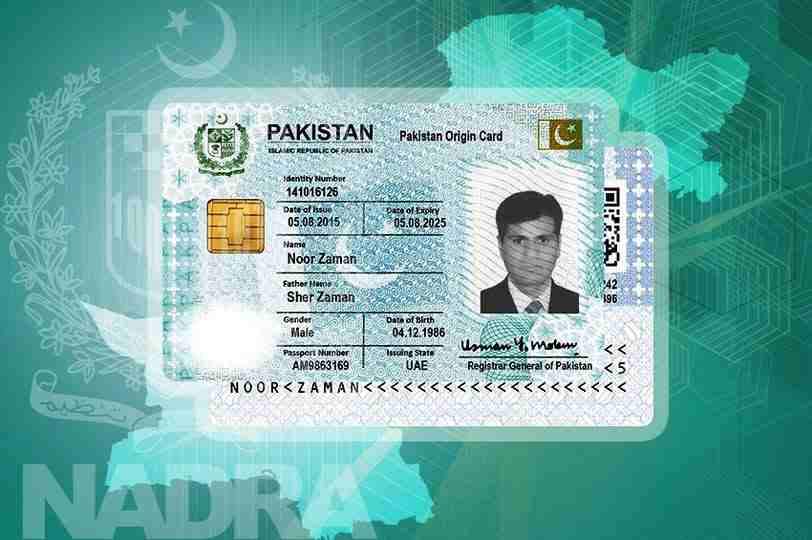
Table of Contents
What is the Pakistan Origin Card?
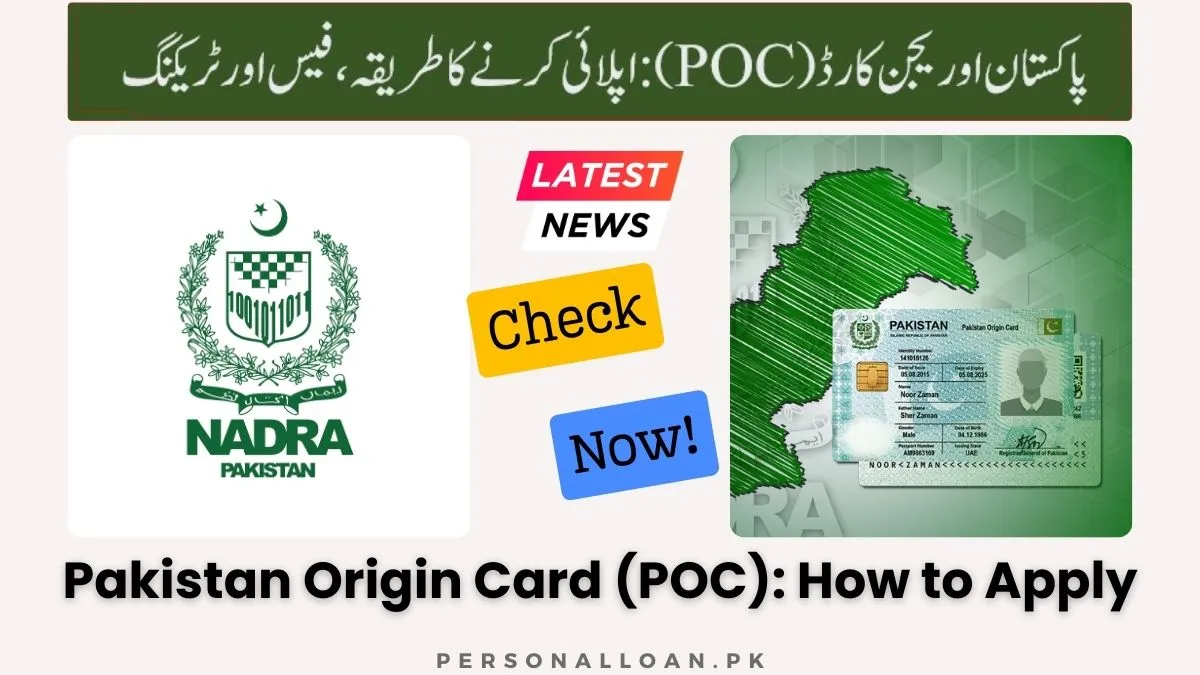
The Pakistan Origin Card is an official identification document issued by the National Database and Registration Authority (NADRA) specifically for foreign nationals who can establish verifiable Pakistani ancestry through birth, parentage, or marriage.
Core Purpose and Function
- Serves as proof of Pakistani origin rather than proof of citizenship
- Functions as both identity verification and multiple-entry travel authorization
- Links the holder to Pakistan’s national database without granting citizenship
- Provides legal status for foreign nationals residing in Pakistan long-term
- Enables access to government services, banking, and property transactions
Physical Card Features
- Standard credit-card size format with embedded security features
- Prominent QR code on the front for instant digital verification
- Holder’s photograph, full name, father’s name, and date of birth displayed
- Unique 13-digit identification number for database reference
- Holographic laminate and microprint patterns preventing forgery
- Senior citizen logo for applicants aged 60 and above
- Color-coded design distinguishing POC from CNIC and NICOP cards
Legal Status Clarification
The POC occupies a unique legal position distinct from other documents. Unlike a visa that requires periodic renewal and permits only temporary stays, the POC grants indefinite residence rights. Unlike a passport that proves citizenship, the POC explicitly confirms foreign nationality while recognizing Pakistani origin. Unlike a CNIC reserved for citizens, the POC provides most rights of residency without political privileges.
Who Qualifies for a Pakistan Origin Card?
Eligibility for the Pakistan Origin Card centers on proving genuine connection to Pakistan through family lineage, previous citizenship, or marital relationship. NADRA applies strict verification standards to ensure only legitimate applicants receive this privileged status.
Core Eligibility Categories
- Former Pakistani citizens who voluntarily acquired foreign citizenship
- Children born abroad to Pakistani parents holding citizenship at time of birth
- Grandchildren of Pakistani nationals, regardless of where they were born
- Foreign spouses married to Pakistani citizens with registered marriages
- Individuals who renounced Pakistani citizenship through proper channels
Former Pakistani Citizens
Anyone who held Pakistani citizenship at any point in their life and subsequently became a citizen of another country qualifies for a POC. This includes individuals born in Pakistan who emigrated and naturalized elsewhere, as well as those who held citizenship through parentage and later acquired foreign nationality.
Required proof for this category includes:
- Cancelled Pakistani passport showing Pakistani citizenship
- Surrendered CNIC or NICOP with cancellation stamps
- Renunciation certificate from Pakistani embassy if citizenship was formally renounced
- Birth certificate issued in Pakistan showing place of birth
- Old NADRA records matching applicant’s biographical information
Children and Grandchildren of Pakistani Nationals
The eligibility extends through two generations, recognizing that diaspora families maintain connections across generations. Children born anywhere in the world to Pakistani parents qualify automatically. Grandchildren also qualify provided the grandparent’s Pakistani citizenship can be verified through official records.
Documentation requirements include:
- Parent’s or grandparent’s valid or cancelled Pakistani identification
- Birth certificates establishing the family tree relationship
- Marriage certificates linking generations through proper documentation
- Affidavits from family members when official records are incomplete
- NADRA family tree extracts when available
Foreign Spouses of Pakistani Citizens
Marriage to a Pakistani national creates eligibility for a POC, though with certain conditions and shorter validity periods. The Pakistani spouse must provide valid identification, and the marriage must be legally recognized under both Pakistani law and the laws of the country where the marriage occurred.
Key considerations for spousal applications:
- Marriage must be registered with appropriate authorities
- Foreign marriage certificates require proper attestation
- Pakistani spouse’s CNIC or NICOP must be valid
- Divorce or death of Pakistani spouse affects card validity
- Spousal POCs carry five-year validity versus seven years for standard cards
Ineligibility Exceptions
Certain categories of applicants cannot receive POCs regardless of their Pakistani connections. Understanding these exceptions prevents wasted application fees and effort.
Ineligible categories include:
- Citizens of India and Israel under current Pakistani regulations
- Individuals unable to provide verifiable proof of Pakistani origin
- Applicants with fraudulent or forged documentation
- Persons with criminal histories making them inadmissible under immigration law
- Those who cannot establish the required family relationship through documents
- Individuals who previously held POCs that were revoked for cause
Required Documents Complete Checklist

Gathering correct documentation before starting your application prevents delays, rejections, and repeated submission attempts. Different eligibility categories require different document sets.
Universal Document Requirements
Every POC applicant regardless of category must provide:
- Valid foreign passport with at least six months validity remaining
- Recent photograph meeting NADRA technical specifications
- Complete fingerprints captured through app or scanned form
- Proof of current foreign address for card delivery
- Contact information including email and phone number
Proof of Pakistani Origin Documents
Acceptable documents proving Pakistani origin vary based on individual circumstances. Submit the strongest available evidence from this list:
- Cancelled Pakistani passport showing citizenship and exit/entry stamps
- Surrendered CNIC card with official cancellation markings
- Valid or expired NICOP showing Pakistani origin status
- Father’s or grandfather’s Pakistani identification documents
- Pakistani birth certificate (Form B) if born in Pakistan
- School records from Pakistani institutions showing parentage
- NADRA family tree extract when available through database queries
Marriage Documentation for Spousal Applications
Foreign spouses must provide comprehensive marriage documentation:
- Original marriage certificate from country where marriage occurred
- Certified English or Urdu translation if original is in another language
- Attestation from country’s foreign ministry or equivalent authority
- Attestation from Pakistani embassy in the country of marriage
- Pakistani spouse’s valid CNIC or NICOP showing current status
- Joint photographs or additional evidence if marriage is recent
Child Applicant Documentation
Parents applying for minor children must submit:
- Child’s foreign passport with clear biographical page
- Official birth certificate showing both parents’ names
- Parents’ marriage certificate to establish family unit
- Proof of Pakistani parent’s origin through their identification
- Consent letter from both parents if applicable
- School photographs or recent images showing current appearance
Document Preparation Guidelines
Proper document preparation significantly improves application success rates:
- Scan all documents in color at 300 DPI minimum resolution
- Save files in PDF or JPEG format under 2MB each
- Ensure all text is clearly legible without shadows or glare
- Include both sides of identification cards
- Verify names match exactly across all documents
- Correct any spelling discrepancies before submission
Step-by-Step Application Walkthrough
The POC application process occurs entirely online through NADRA’s PakID platform. Following these steps precisely ensures smooth processing.
Account Creation on PakID
Begin by establishing your presence in the NADRA online system:
- Download the PakID mobile app from official app stores
- Visit the PakID website through any web browser as alternative
- Select “Create New Account” and provide valid email address
- Enter mobile number capable of receiving international SMS
- Record verification codes sent to both email and phone
- Create secure password meeting NADRA complexity requirements
- Complete profile information including full name and date of birth
Application Type Selection
Choose the correct application category based on your circumstances:
- Select “Smart POC” from available document options
- Choose “Fresh” for first-time applicants or those expired over one year
- Select “Renewal” for cards expiring within six months
- Choose “Modification” for updating information on existing cards
- Select “Reprint” for lost, stolen, or damaged cards
Personal Information Entry
Complete all biographical fields with extreme accuracy:
- Enter full name exactly as shown on passport
- Include all given names and surnames without abbreviation
- Record date of birth matching birth certificate precisely
- Provide place of birth including city and country
- Enter father’s name as shown on your identification documents
- Add mother’s name for family record purposes
- Specify marital status and spouse’s information if applicable
Address Information Requirements
Address details determine card delivery and verification contact:
- Enter current foreign address for card shipping
- Include apartment numbers, building names, and postal codes
- Provide Pakistani permanent address for family reference
- Ensure phone number includes country code for international contact
- Verify email address is monitored regularly for status updates
- Add alternate contact person’s information if desired
Document Upload Process
Upload all required documents following technical specifications:
- Upload passport biographical page showing photo and details
- Submit proof of Pakistani origin documents
- Add marriage certificate for spousal applications
- Include birth certificates for minor applicants
- Upload supporting relationship evidence when needed
- Verify each document is clearly visible and complete
- Check file sizes remain under platform limits
Photograph Upload Specifications
Photograph quality determines acceptance or rejection:
- Use plain white background with even lighting
- Face must be centered and forward-facing
- Both eyes open and clearly visible
- No shadows across face or background
- No glasses unless medically required
- No head coverings except for religious reasons
- Hair must not obscure facial features
- Neutral expression with mouth closed
- Recent photo within six months of application
- Minimum 600 pixels width in JPEG format
Biometric Submission Methods
Fingerprints can be submitted through two approved methods:
- Mobile app capture using phone’s fingerprint sensor or camera
- Ten attempts allowed for successful capture
- Fingers must be clean, dry, and properly positioned
- Follow on-screen prompts for each finger sequentially
Alternative manual method:
- Download fingerprint form from NADRA website
- Visit professional fingerprinting service for ink prints
- Ensure all ten fingers are clearly printed
- Scan completed form at exactly 600 DPI resolution
- Upload as PDF or high-quality JPEG
- Verify all prints are legible and complete
Fee Payment Completion
Pay the required fee to submit your application:
- Review all entered information before payment
- Note tracking ID displayed on confirmation screen
- Select payment method from available options
- Enter card details for credit or debit card payment
- Confirm amount in Pakistani rupees before submitting
- Wait for payment confirmation screen
- Save payment receipt for records
- Record transaction reference number
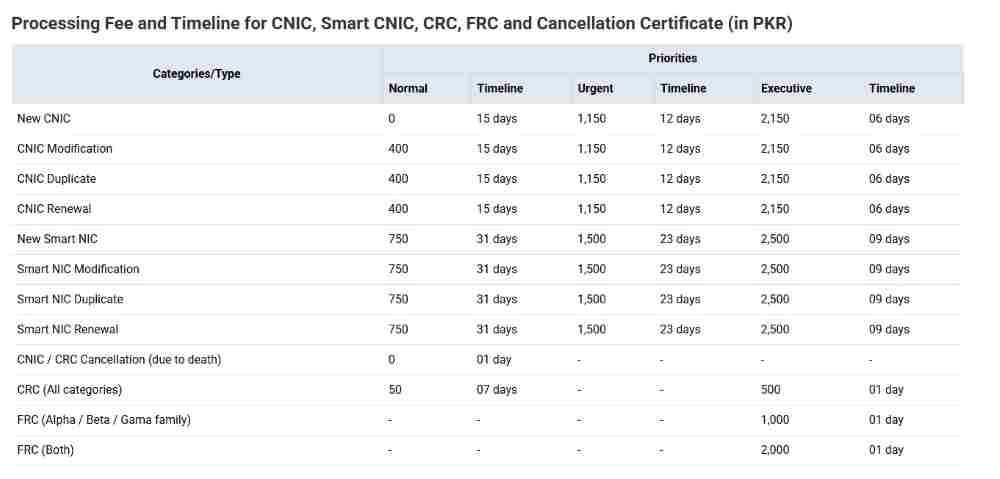
Pakistan Origin Card Fee Structure
Understanding the complete fee structure helps you budget appropriately and select the right processing option for your needs.
Standard Processing Fees
Normal processing fees for standard timelines:
- Adult applicants: approximately 8,500 Pakistani rupees
- Minor applicants under 18 years: approximately 4,250 rupees
- Senior citizens 60 years and above: same as adult rate but lifetime validity
- Renewal applications: approximately 8,000 rupees
- Reprint requests: approximately 4,500 rupees
- Modifications: approximately 3,500 rupees
Urgent Processing Fees
Expedited processing for faster card receipt:
- Adult urgent applications: approximately 17,000 rupees
- Minor urgent applications: approximately 8,500 rupees
- Urgent renewals: approximately 16,000 rupees
- Priority handling throughout verification stages
- Faster printing queue placement
- Expedited courier shipping included
Fee Components Breakdown
Total fee consists of multiple elements:
- Government base fee for database updates and record maintenance
- NADRA service charges for application processing
- Verification fees covering document examination
- Card production costs including materials and printing
- International courier delivery charges
- Sales tax applied to service portions
- Bank transaction fees for card payments
Payment Methods Available
Multiple payment options accommodate international applicants:
- International credit cards including Visa and Mastercard
- Debit cards with international transaction capability
- American Express cards accepted through payment gateway
- Pakistani bank accounts through online banking
- EasyPaisa mobile wallet for Pakistan-based applicants
- JazzCash accounts for local payment options
- e-Sahulat outlets within Pakistan
Application Tracking and Status Monitoring
Once submitted, tracking your application provides visibility into progress and alerts you to any issues requiring attention.
Accessing Your Application Status
Monitor progress through these channels:
- Log into PakID account and navigate to “My Applications”
- View current status displayed prominently
- Click on application for detailed status information
- Check email regularly for NADRA communications
- Note any requests for additional information
- Track courier once card ships
Status Definitions and Meanings
Understanding status messages helps interpret progress:
Under Process:
- Application received and in initial queue
- Basic verification checks underway
- No action required from applicant
- Typical duration one to two weeks
Sent for Verification:
- Application forwarded to verification officers
- Manual review of documents in progress
- Family relationships being checked
- May take two to three weeks
Additional Information Requested:
- NADRA needs clarification or missing documents
- Check application messages for details
- Upload requested items promptly
- Timeline pauses until response received
Printed:
- Card manufacturing completed
- Ready for dispatch
- Shipping preparation underway
- Tracking number will appear soon
Shipped:
- Card dispatched via courier
- Tracking number available
- Estimated delivery dates provided
- Signature required upon delivery
Delivered:
- Card successfully delivered
- Confirm receipt in application
- Report any delivery issues immediately
Common Status Issues
Problems occasionally arise requiring intervention:
- Status not updating for extended periods
- Tracking ID not recognized in system
- Messages not received despite status changes
- Courier tracking not showing movement
- Delivery attempted without success
- Card returned to NADRA as undeliverable
POC Benefits and Usage Rights
The Pakistan Origin Card provides substantial benefits enabling full participation in Pakistani society while maintaining foreign citizenship.
Residence and Travel Benefits
- Indefinite stay in Pakistan without visa requirements
- No need for police registration during extended stays
- Multiple entries without separate entry permissions
- Exemption from exit permit requirements
- Ability to live anywhere in Pakistan without restrictions
- Family members can accompany or join later
Property Ownership Rights
- Full rights to purchase residential property
- Commercial real estate acquisition permitted
- Agricultural land ownership allowed
- Property registration in POC holder’s name
- Inheritance rights for Pakistani property
- Transfer property to heirs according to Pakistani law
- Mortgage and financing available from Pakistani banks
Employment and Business Rights
- Work for Pakistani employers without permits
- Start businesses as sole proprietor or partner
- Register companies with Securities and Exchange Commission
- Obtain business loans from financial institutions
- Sign contracts and legal agreements
- Pay taxes and receive tax registration numbers
- Join professional associations and regulatory bodies
Financial and Banking Benefits
- Open savings and current accounts in Pakistani banks
- Maintain foreign currency accounts
- Access credit cards and loans
- Invest in Pakistani stock market
- Purchase government savings schemes
- Receive remittances from abroad
- Transfer funds internationally through banking channels
Limitations and Restrictions
Understanding what the POC does NOT provide prevents misunderstandings:
- No right to vote in Pakistani elections
- Cannot hold elected political office
- Ineligible for Pakistani passport
- No diplomatic protection abroad
- Cannot join military or civil services
- Not eligible for government scholarships reserved for citizens
- Cannot sponsor foreign nationals for citizenship
Renewal Process and Requirements
Renewing your POC before expiration ensures continuous validity and avoids travel disruptions.
When to Renew
Timing considerations for renewal applications:
- Apply up to six months before expiration date
- Renewals accepted after expiration without penalty
- Cards expired over one year require fresh application
- Senior citizens with lifetime cards need no renewal
- Spousal cards require renewal every five years
Online Renewal Steps
The renewal process streamlines verification:
- Log into PakID account
- Select “Renew POC” from application options
- Verify pre-filled information accuracy
- Update address if changed since last card
- Upload new photograph meeting current specifications
- Pay renewal fee based on processing speed
- Submit and note new tracking ID
Information Updates During Renewal
Renewal provides opportunity to update records:
- Change of address in Pakistan or abroad
- Updated passport number after renewal
- Name change due to marriage or divorce
- Correction of minor spelling errors
- Addition of spouse information
- Update contact details including phone and email
Modification and Correction Procedures
Life events and errors require updating your POC information through modification applications.
Common Modification Reasons
- Marriage requiring addition of spouse name
- Divorce requiring removal of spouse reference
- Name change through legal processes
- Address changes in Pakistan or abroad
- Passport number updates after renewal
- Correction of spelling mistakes
- Date of birth corrections with supporting evidence
- Father’s name corrections
Modification Application Steps
Process for updating information:
- Select “Modification” from PakID application options
- Choose specific information requiring change
- Enter corrected information accurately
- Upload supporting documentation proving change
- Pay modification fee approximately 3,500 rupees
- Submit application and track progress
- Receive updated card with corrected information
Required Supporting Documents
Documentation varies by modification type:
- Marriage certificate for spouse addition
- Divorce decree for spouse removal
- Court order for legal name changes
- New passport for passport number updates
- Birth certificate for date of birth corrections
- Address proof for location changes
- Affidavit explaining discrepancies when needed
Lost, Stolen, or Damaged Card Replacement
Losing your POC while abroad creates urgency, but the replacement process protects your identity and restores your documentation.
Immediate Actions After Loss
Take these steps immediately upon discovering loss:
- Report loss to local police and obtain written report
- Note date and location where loss occurred
- Document circumstances of loss for records
- Gather any identifying information about the card
- Prepare to apply for reprint through PakID
Reprint Application Process
Replacing a lost or damaged card:
- Log into PakID and select “Reprint” option
- Choose “Lost” or “Damaged” as appropriate
- Upload police report for lost cards
- Upload photos showing damage for damaged cards
- Pay reprint fee approximately 4,500 rupees
- Submit application and receive tracking ID
- New card issued with same number and information
Lost Card Security
NADRA protects against misuse of lost cards:
- Old card immediately marked invalid in database
- QR code scans return “card reported lost” message
- Banks and authorities alerted to invalid status
- Replacement card carries original information
- Identity protected from fraudulent use
- No liability for transactions after loss report
Biometrics and Photograph Best Practices
Application rejections most commonly result from biometric and photograph issues. Following these guidelines ensures acceptance.
Photograph Success Factors
Professional-quality photographs increase approval rates:
- Use professional photography service when possible
- Ensure even lighting without shadows
- Position face centered and forward-facing
- Maintain neutral expression with closed mouth
- Remove glasses unless medically necessary
- Keep hair away from eyes and face
- Wear solid color clothing contrasting with background
- Avoid patterns, logos, or busy designs
- Verify white background is pure white
Common Photograph Rejection Reasons
Avoid these frequent mistakes:
- Shadows across face from poor lighting
- Hair partially covering eyes or eyebrows
- Glasses causing glare or reflections
- Smiling or open mouth expressions
- Head tilted or not centered
- Background not plain white
- Photo older than six months
- Filters or editing applied to image
- Low resolution causing pixelation
Mobile Fingerprint Capture Tips
Successful mobile fingerprint capture requires:
- Clean hands free of dirt, oil, or moisture
- Warm hands improving print visibility
- Steady pressure on sensor throughout capture
- Following on-screen positioning guides
- Trying all ten attempts if initial attempts fail
- Different finger placement angles if needed
- Patience during capture process
Manual Fingerprint Form Guidelines
When using manual forms, ensure:
- Professional fingerprinting service with proper equipment
- Black ink on white paper for optimal contrast
- Complete prints for all ten fingers
- Clear impressions without smudging
- Proper finger order on form
- Form scanned at exactly 600 DPI
- No cropping or editing of scanned image
- File saved in PDF format for upload
Troubleshooting Rejected Applications
Understanding why applications fail helps you correct issues and resubmit successfully.
Document Mismatch Issues
Inconsistent information across documents causes rejection:
- Names spelled differently on passport versus birth certificate
- Dates of birth not matching across documents
- Father’s name variations between documents
- Missing documents required for specific categories
- Documents not properly attested when required
- Expired identification documents submitted
- Illegible scans rejected by verification system
Previous Record Conflicts
NADRA database may show existing records:
- Previous POC or NICOP already in system
- Family member with similar identifying information
- Duplicate records requiring consolidation
- Records from previous applications incomplete
- Identity theft concerns requiring investigation
- Name matching someone else’s record
Biometric Quality Rejections
Poor quality biometrics trigger rejection:
- Fingerprints too light or incomplete
- Prints smudged during capture
- Fingers positioned incorrectly on sensor
- Skin conditions affecting print clarity
- Photograph does not meet specifications
- Face not clearly visible in photo
- Recent appearance changes not reflected
Relationship Verification Failures
Unable to prove Pakistani origin causes rejection:
- Missing documentation for claimed relationship
- Documents not establishing clear family tree
- Pakistani relative’s records not found in NADRA
- Marriage not properly registered or attested
- Birth certificates missing parent information
- Adopted children without proper legal documentation
Resubmission Strategy
After rejection, take these steps:
- Read rejection reason carefully from status message
- Gather corrected documentation addressing specific issue
- Verify all information matches across new documents
- Consider professional assistance if unsure
- Start fresh application rather than modifying rejected one
- Pay new application fee
- Submit with improved documentation and accuracy
Contact and Support Channels
When issues arise, multiple support channels connect you with NADRA assistance.
NADRA Helpline International
Contacting NADRA from abroad:
- Dial +92 51 111 786 100
- Call during Pakistan business hours for best response
- Prepare tracking ID before calling
- Have passport number and personal information ready
- Be prepared for potential wait times
- Take notes during conversation for reference
- Request reference number for your inquiry
Online Complaint System
The NADRA Centralized Complaint Management System provides structured issue resolution:
- Access NCCMS through NADRA official website
- Register as new user or login existing account
- Create complaint with detailed issue description
- Include tracking ID in complaint fields
- Attach screenshots showing error messages
- Provide complete contact information
- Note complaint reference number for tracking
- Monitor complaint status through portal
Email Support Channels
Written communication provides documentation trail:
- Use email address provided in application status
- Include tracking ID in email subject line
- Clearly state issue in first paragraph
- Attach relevant screenshots and documents
- Request specific action or clarification
- Allow three to five business days for response
- Follow up if no response received
Embassy and Consulate Assistance
Pakistani missions abroad offer limited support:
- Visit embassy website for local contact information
- Schedule appointment if required
- Bring printed application and tracking ID
- Request assistance with online system navigation
- Ask about local biometric services if needed
- Inquire about document attestation services
- Seek guidance on complex cases
Frequently Asked Questions
How long does POC processing take?
Normal processing requires approximately 30 to 45 days from submission to delivery. Urgent processing reduces this to 23 to 30 days. Processing times begin after successful payment and may extend if additional verification is required or if documents need clarification.
Can I travel to Pakistan while my application processes?
You cannot use an application in process as travel authorization. You must either wait for card issuance or obtain appropriate visa through Pakistani embassy for your planned travel. The POC is required for visa-free entry.
What happens if my POC expires while I am in Pakistan?
An expired POC while in Pakistan does not automatically require departure. You can apply for renewal from within Pakistan through the same online system. Your expired card remains valid for identification purposes while renewal processes, but cannot be used for re-entry if you leave.
Do children need separate POCs?
Yes, each individual regardless of age requires their own POC. Parents must apply separately for each minor child. Children receive cards with their own photograph and identification number, valid until they reach adulthood when they may apply as adults.
Can I work in Pakistan on a POC?
Yes, POC holders may accept employment with Pakistani companies without requiring separate work permits. Employers verify POC status through NADRA systems. Self-employment and business ownership are also permitted without restrictions.
Is Pakistani income taxable for POC holders?
POC holders residing in Pakistan for more than 183 days per year become resident taxpayers subject to Pakistani income tax on their worldwide income. Those residing less than 183 days pay tax only on Pakistan-source income. Tax treaties may provide relief from double taxation.
What is the difference between POC and NICOP?
The fundamental difference is citizenship status. NICOP holders are Pakistani citizens living abroad, often holding dual nationality. POC holders are foreign nationals with Pakistani origin but no citizenship claim. NICOP holders can vote and obtain Pakistani passports; POC holders cannot.

Add a Comment