
The inability to afford a kidney transplant often feels like a death sentence for countless Pakistanis suffering from end-stage renal disease. However, a network of world-class, government-supported, and philanthropic hospitals now provides free kidney transplant hospital in Pakistan services, offering a genuine second chance at life without financial ruin. This definitive medical guide explores the top centers providing zero-cost renal care, the government programs funding them, and the step-by-step process to access this life-saving treatment.
What You Will Learn in This Guide:
- Detailed profiles of the top 5 institutions offering completely free kidney transplants
- Step-by-step registration and eligibility criteria for each hospital and government scheme
- In-depth analysis of costs, success rates, waiting periods, and post-transplant medication coverage
- Legal and ethical requirements through PHOTA and how to avoid illegal transplants
- The future landscape of free transplant services across all provinces of Pakistan
Key Takeaways
- Five Leading Institutions: SIUT Karachi, PKLI Lahore, GIMS Sukkur, Jinnah Hospital Lahore, and MIKD Multan are the primary providers of completely free kidney transplants in Pakistan.
- Government Coverage Expands: The CM Punjab Transplant Program has successfully performed over 1,000 free transplants, covering procedures that can cost up to Rs6.5 million per patient.
- Lifelong vs. Limited Medication: SIUT provides lifelong free immunosuppressants, while the Punjab government offers one year of free post-transplant medication under its program.
- PHOTA Registration is Mandatory: No legal transplant can proceed in Punjab without registration with the Punjab Human Organ Transplantation Authority, which strictly prevents organ trafficking.
- Regional Expansion is Active: New free transplant services have launched in Quetta (Balochistan) and are planned for Peshawar (KP), significantly improving geographic access.
- Read More: Free Medicines Program- At Your Doorstep (By CM Punjab Maryam Nawaz)
- Read More: Community Health Inspector (By Maryam Nawaz) | 50K Salary- Apply Online
- Read More: Maryam Nawaz Insulin Program | Free Insulin Scheme (By Insulin Card)
Top 5 Best Free Kidney Transplant Hospitals In Pakistan
Table of Contents
1. The Landscape of Free Kidney Transplants in Pakistan
What is the Current State of Kidney Failure and Transplantation in Pakistan?
Approximately 150,000 patients die annually in Pakistan due to the lack of organ transplantation access, highlighting a massive healthcare gap that the government and philanthropic organizations are now aggressively working to fill through free transplant initiatives. The demand for kidney transplants far exceeds the available supply, with thousands of new patients entering dialysis each year and facing prohibitively high costs for private treatment.
The scale of the problem:
- Over 20 million people in Pakistan are estimated to suffer from some form of kidney disease.
- End-stage renal disease (ESRD) affects tens of thousands of new patients every year.
- Dialysis, the only alternative to transplant, costs between Rs25,000 to Rs50,000 per month, a burden most families cannot sustain.
- Private kidney transplants cost between Rs1.5 million to Rs3 million, placing them out of reach for the average Pakistani household.
Read More: CM Punjab Climate Internship Program (PKR 60K Apply Online)
How Has the Government Responded to This Healthcare Crisis?
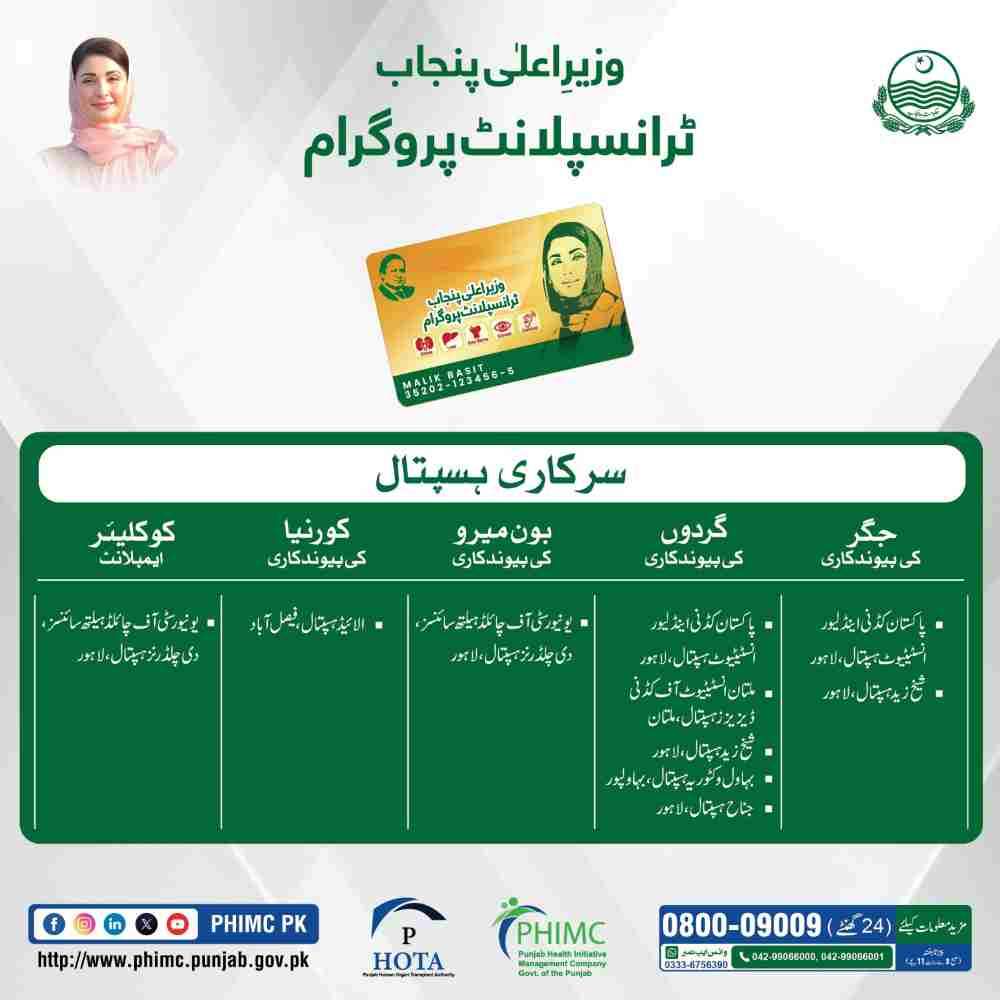
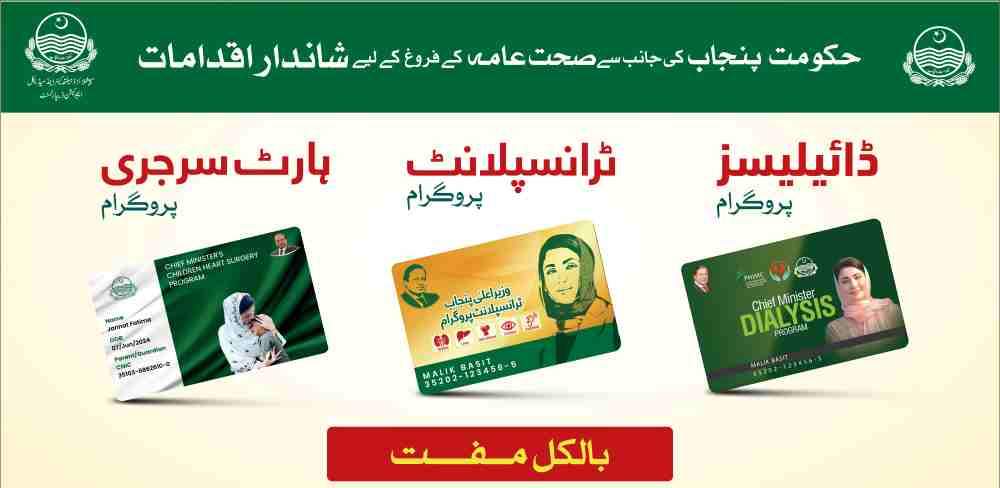
In response, both federal and provincial governments have launched landmark programs. The Punjab government, under Chief Minister Maryam Nawaz Sharif, launched the Chief Minister’s Special Initiative for Transplant Program (CMSITP), the most comprehensive transplant initiative in Pakistan’s history. This program covers five major organ transplants free of cost: kidney, liver, bone marrow, cornea, and cochlear implants for children with hearing impairments.
Key government actions:
- The Government of Punjab has allocated hundreds of millions of rupees annually to fund free transplants.
- The Sindh government supports SIUT and GIMS through a public-private partnership model.
- The Government of Balochistan launched kidney transplant services at the Institute for Kidney and Bladder Diseases in Quetta, making it available completely free of charge.
- The KP government has approved seed money of Rs500 million to establish transplant centers at Khyber Teaching Hospital in Peshawar.
2. Top 5 Hospitals Providing Free Kidney Transplants
How Do the Top Free Kidney Transplant Hospitals Compare?
| Hospital | Location | Free Coverage | Total Free Transplants | Key Unique Feature |
|---|---|---|---|---|
| SIUT Karachi | Karachi | 100% free including lifelong medicines | 6,000+ | Asia’s largest free transplant center |
| PKLI Lahore | Lahore | 80% of patients free, others subsidized | 1,200+ | Robotic surgery and 80% free treatment |
| GIMS Sukkur | Sukkur | 100% free for five organs | 1,362+ liver only | First five-organ transplant center |
| Jinnah Hospital Lahore | Lahore | 100% free under CM program | First completed Jan 2026 | Newest government teaching hospital program |
| MIKD Multan | Multan | 100% free (Punjab government funded) | 100+ | Regional center for South Punjab |
Why is SIUT Karachi the Gold Standard for Free Kidney Transplants?
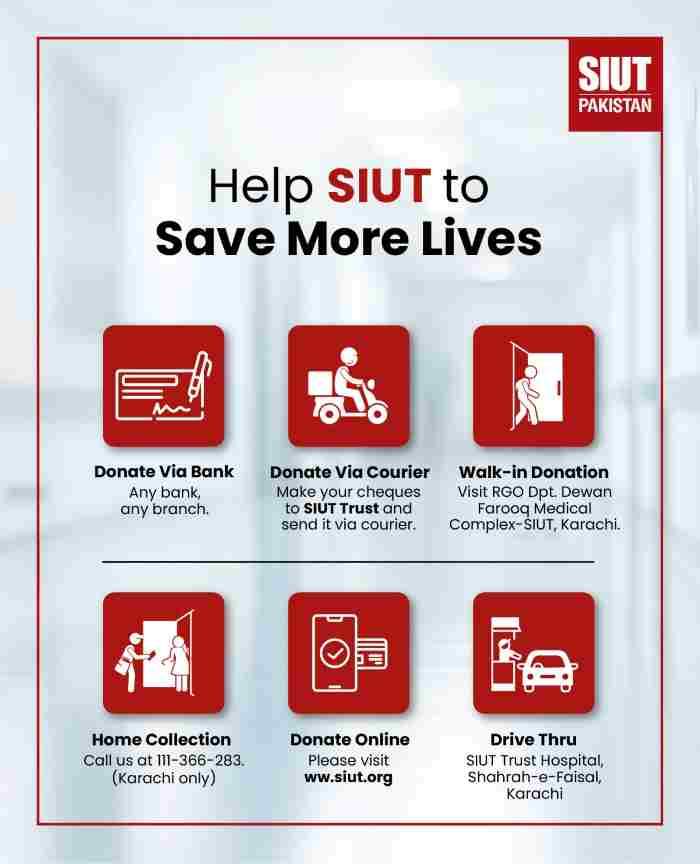
SIUT Karachi is the gold standard because it has pioneered a community-supported, free renal transplantation model since the 1980s, performing over 6,000 renal transplants with a 90% graft survival rate at one year, funded through a 40-60% government-community partnership. All services, from dialysis and kidney transplants to advanced surgeries and oncology treatments, are offered at no cost to patients, preserving their dignity and self-respect.
Key features of the SIUT model:
- Complete financial coverage: The institute has performed over 5,500 kidney, liver, and cornea transplants free of cost.
- Lifelong free medication: All transplant patients receive free immunosuppressant medicines, post-checkups, dietary charts, and surveillance for their entire life.
- Advanced technology: SIUT operates the country’s first clinical transplant immunology laboratory and offers robotic surgery, CT/MRI diagnostics, and lithotripsy.
- Massive scale: The institute has treated over 35 million patients over its five decades of operation.
- Ethical transplantation: SIUT is a pioneer in introducing transplant technology in Pakistan with a strong ethical framework.
The unique funding model:
SIUT operates on a community-government partnership model that has increased the number of transplantations and patient and organ survival substantially. The scheme has proven effective, and currently, 110 transplants per year are performed, with free aftercare and immunosuppressive drugs. Confidence has been built in the community, with strong donations of money, equipment, and medicines.
How Does PKLI Lahore Offer Free Kidney Transplants to 80% of Patients?
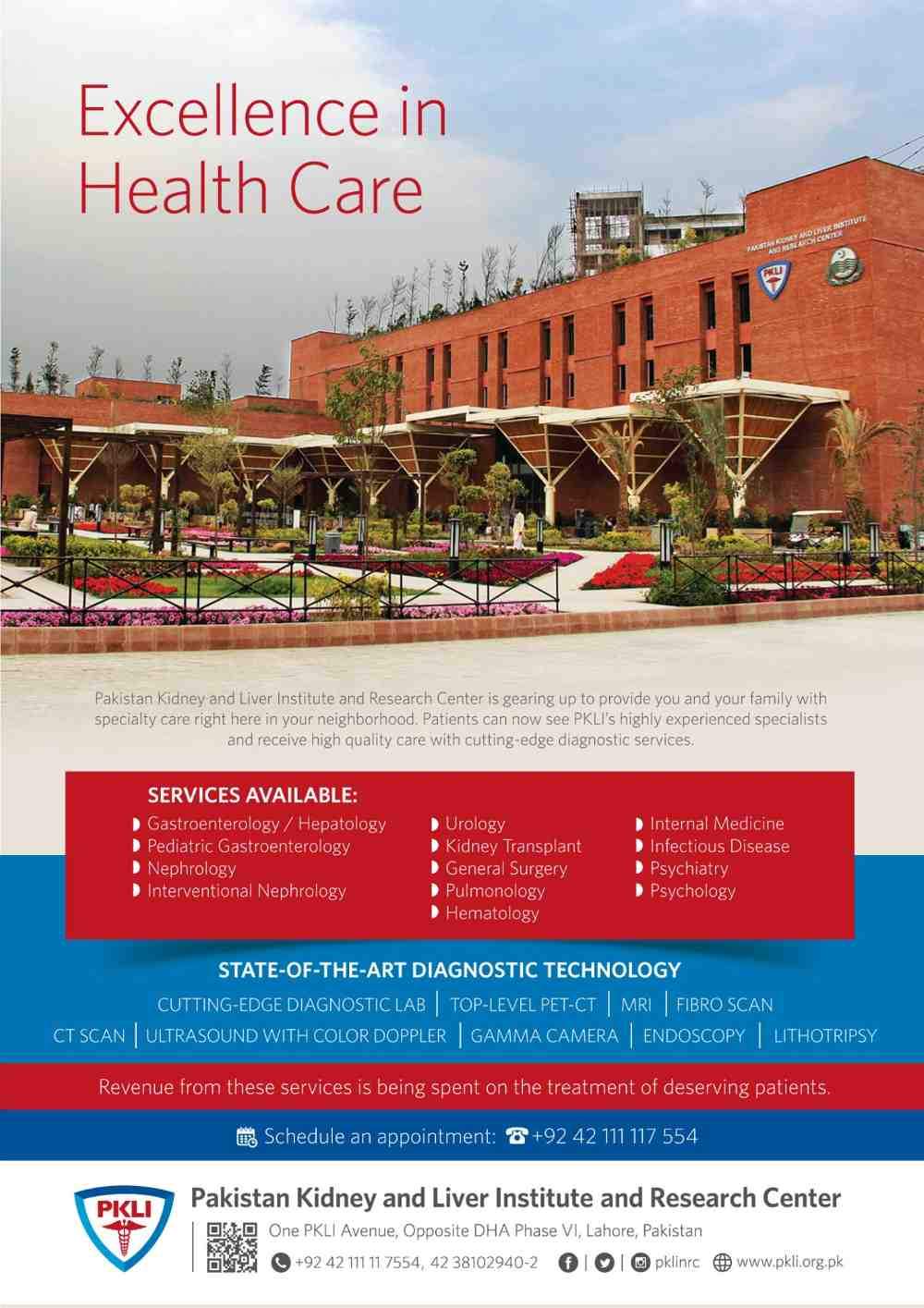
PKLI Lahore offers free treatment to nearly 80% of deserving kidney and liver patients, a fact confirmed by Chairman Professor Dr. Saeed Akhtar, who stated that the institute has successfully carried out more than 1,000 liver transplants and over 1,200 kidney transplants, with a significant portion provided free of cost. The institute has spent approximately PKR 17 billion to support patient care.
PKLI’s impressive achievements:
- Total transplants: 1,200+ kidney transplants, 1,000+ liver transplants, 16 bone marrow transplants.
- Surgical volume: Approximately 14,500 surgical procedures completed.
- Robotic surgeries: Over 500 successful robotic surgeries performed, bringing cutting-edge technology to Pakistan.
- Free treatment percentage: 80% of patients receive free, technology-driven treatment, underscoring the institute’s commitment to accessible, high-quality healthcare.
How the PKLI financial model works:
- Financial screening tool: A structured assessment evaluates household income, assets, and family size.
- 80% threshold: Nearly four out of five patients receive treatment completely free of charge.
- Subsidized rates for others: Patients who can partially pay receive treatment at significantly reduced costs compared to market rates.
- Zakat and donations: Philanthropic contributions help fund free treatments for the most vulnerable patients.
- Government support: The Punjab government backs the institute’s mission.
Future initiatives at PKLI:
- PKLI University to train healthcare professionals.
- Pakistan’s first advanced biobank research facility.
- Medical tourism promotion.
- A deceased donor transplant program currently in development.
What Makes GIMS Sukkur Pakistan’s First Five-Organ Transplant Super Center?
GIMS Sukkur has transformed into Pakistan’s pioneering center that offers 100% free transplants for five major organs: kidney, liver, bone marrow, cornea, and lung, a feat no other institution in the country can claim. The journey began in 2012 with its first cardiac surgery, and the breakthrough came in 2016 with Pakistan’s inaugural 100% free-of-cost kidney transplant, soon joined by a free liver transplant.
GIMS’s remarkable milestones:
- 2016: First 100% free kidney transplant in Pakistan.
- 2018: Launch of cornea transplantation.
- 2019: Introduction of a Rapid Response unit and Gambat Heart Center.
- 2021: Addition of hematology and a 100% free bone marrow transplant unit.
- 2022: Opening of a state-of-the-art Nuclear Medicine Cancer Care and Research Center.
- 2023: Lung cancer and transplant facilities added.
- 2024: Over 1,000 free liver transplants completed and crossed 100 free bone marrow transplants.
Patient demographics at GIMS:
- 47% from Sindh (local patients)
- 34% from Punjab (the second largest contributor)
- 15% from Balochistan
- 4% from Khyber Pakhtunkhwa
- A smaller fraction from Azad Kashmir, Islamabad, and even Afghanistan
This diverse patient base proves the center’s reach extends beyond provincial borders, welcoming patients from neighboring nations for free treatment. GIMS now stands as a beacon of compassionate, affordable healthcare, proving that cutting-edge medical services can be delivered without cost, empowering the most deprived communities.
Is Jinnah Hospital Lahore Actually Offering Free Kidney Transplants?
Yes, Jinnah Hospital Lahore has formally begun offering free kidney transplant services under the Punjab government initiative, with the first successful operation performed on a patient who received a kidney from a family donor, and both patient and donor are recovering well. The hospital received its transplant license from the Punjab Healthcare Commission after a thorough inspection.
Key details about Jinnah Hospital’s transplant program:
- First transplant completed: The operation was performed as a major step forward under the Chief Minister’s vision.
- Hospital recognition: Punjab Health Minister Khawaja Salman Rafiq congratulated the doctors on the successful operation.
- Free surgeries commitment: The Punjab government has confirmed that free surgeries are being provided at this facility.
- Only government teaching hospital in Punjab offering transplants: Patients from across Punjab, including remote areas, can now access free transplants.
What Makes MIKD Multan a Leading Free Transplant Center for South Punjab?
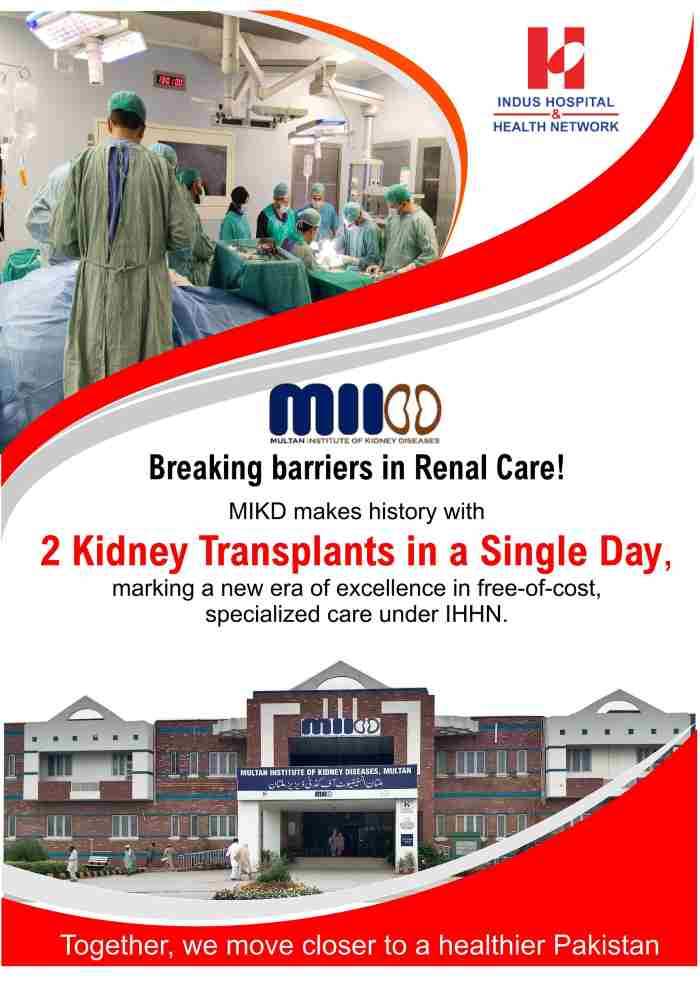
The Multan Institute of Kidney Diseases (MIKD), managed by the Indus Hospital & Health Network, has achieved a remarkable milestone by successfully completing its 100th free-of-cost renal transplant, a major accomplishment reflecting MIKD’s strong commitment to delivering compassionate and high-quality kidney care to underserved communities in South Punjab. Since its first transplant on August 3, 2021, MIKD has been steadily growing as a center of excellence for renal care.
MIKD’s achievements and capabilities:
- 100th transplant milestone: Completed on April 8, marking a significant achievement.
- 20 transplants per year average: The institute maintains a steady pace of free transplants.
- Five-step workup process: Includes advanced diagnostics, donor and recipient screenings, and approval by the Transplant Evaluation Committee.
- Skilled multidisciplinary team: Led by transplant surgeons including Dr. M. Salman Arshad, Dr. Ali Imran Zaidi, Dr. Nouman Masood, and Dr. Ayyaz Bilal.
- Advanced infrastructure: Four operation theatres (two modular), dedicated ICU and HDU units with 13 beds, 24/7 emergency room with dialysis machines, and fully functional departments including pathology, radiology, pharmacy, and blood bank.
Post-transplant care at MIKD:
- Regular checkups, medication support, and follow-up visits for one year.
- After the first year, patients are enrolled in the hospital’s “Adopt a Patient” program.
- This ensures continued support for those in need, without any financial burden.
A patient story from MIKD:
Muhammad Naeem, a 53-year-old patient from Multan, spent years relying on a wheelchair and dialysis. With MIKD’s support, he lost weight, completed his transplant workup, and received a kidney from his wife. Six months later, Naeem is now walking again and running a small drink corner to support his family. His story shows how access to quality healthcare can restore dignity, mobility, and livelihood.
3. Government Programs Enabling Free Transplants
What is the CM Punjab Free Transplant Program and Who Qualifies?
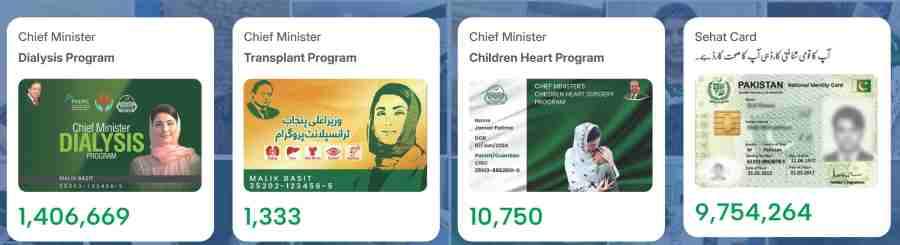
The CM Punjab Free Transplant Program, officially the Chief Minister’s Special Initiative for Transplant Program (CMSITP), is a landmark healthcare initiative launched by the Punjab government to provide completely free kidney, liver, bone marrow, corneal, and cochlear implant transplants to underprivileged residents of Punjab. The program is implemented by the Punjab Health Initiative Management Company (PHIMC), which oversees the financial and administrative aspects, ensuring transparency and efficiency.
Program coverage details:
| Procedure Type | Coverage | Government Cost |
|---|---|---|
| Kidney Transplant | 100% free | Up to Rs2 million per patient |
| Liver Transplant | 100% free | Approximately Rs6.5 million per surgery |
| Bone Marrow Transplant | 100% free | Fully covered |
| Corneal Transplant | 100% free | Fully covered |
| Cochlear Implant | 100% free | Fully covered |
Program performance statistics:
- 2,001 patients registered under the CM Special Transplant Programme.
- 1,574 successful transplants performed to date.
- 799 kidney transplants completed free of charge.
- 255 liver transplants performed with government spending.
- 460 cochlear implants successfully completed.
- 32 corneal transplants performed.
- 28 bone marrow transplants completed.
Eligibility criteria:
- Residency requirement: Must be a permanent resident of Punjab with valid proof of residency.
- Age criteria: Patients aged 18 to 60 are eligible for the program.
- Financial criteria: Must be classified as financially struggling based on government assessment.
- Medical need: Must be certified by a specialist as requiring an organ transplant.
- Legal donor requirement: Must have a legal donor (usually a family member) registered with PHOTA.
Post-transplant medication coverage:
- One year of free immunosuppressant medicines for kidney and liver transplant recipients.
- Medicines provided at no cost for twelve months following the procedure.
- This significantly reduces the financial burden during the critical first year of recovery.
How Can I Register for the CM Punjab Free Transplant Program via PHOTA?
To register for the CM Punjab Free Transplant Program, patients must first register with the Punjab Human Organ Transplantation Authority (PHOTA), which is the mandatory regulatory body responsible for ensuring all organ transplants in Punjab are ethical, legal, and safe. Without this registration, a patient cannot legally receive a transplant under the program.
Step-by-step registration process:
- Initial medical evaluation: Consult with a specialist who confirms the medical need for a kidney transplant.
- Donor identification: Identify a legal donor (usually a close family member) willing to donate.
- Documentation gathering: Collect all required documents including CNIC, proof of residence, income certificate, and medical reports.
- PHOTA application submission: Submit the completed application form along with all supporting documents to PHOTA.
- Verification process: PHOTA reviews the application to ensure compliance with ethical and legal standards.
- Approval and hospital referral: Once approved, PHOTA refers the patient to an empaneled hospital for the transplant procedure.
Required documents for PHOTA registration:
- Valid CNIC (Computerized National Identity Card) of patient and donor.
- Proof of Punjab residency (domicile certificate or other government-issued document).
- Income certificate or proof of financial status.
- Medical reports from a certified specialist confirming organ failure.
- Donor consent documents as required by PHOTA regulations.
- Family tree or relationship proof between patient and donor.
Important notes about PHOTA registration:
- Registration is absolutely mandatory; no transplant can proceed without PHOTA approval.
- PHOTA has approved the registration of 28 hospitals across Punjab for transplantation of various organs.
- The authority takes strict action against illegal organ transplants, including canceling hospital registrations.
- A toll-free helpline (09009 0800) has been set up for information and assistance.
4. Eligibility, Registration, and Documentation
What Are the Eligibility Criteria for a Free Kidney Transplant in Pakistan?
The eligibility criteria for a free kidney transplant in Pakistan vary by hospital and program, but generally include a confirmed medical diagnosis of end-stage renal disease requiring transplantation, the presence of a legal donor (usually a close family member), financial need as determined by the hospital’s screening process or government program criteria, and valid identification documents proving residency in the relevant province for government-funded programs.
General eligibility requirements across all programs:
- Medical necessity: Confirmed diagnosis of irreversible kidney failure requiring transplantation.
- Legal donor availability: A donor who is a close relative (parent, sibling, child, spouse) and willing to donate.
- Donor health: The donor must be medically fit for donation with no contraindications.
- PHOTA compliance: For transplants in Punjab, registration with PHOTA is mandatory.
- Financial assessment: Most programs require proof of financial inability to pay for the transplant.
Hospital-specific eligibility criteria:
| Hospital | Financial Criteria | Donor Requirement | Residency | Age Limit |
|---|---|---|---|---|
| SIUT Karachi | No income threshold, need-based | Family donor preferred | No restriction | No strict limit |
| PKLI Lahore | Financial screening tool | Family donor required | Pakistan-wide | Clinical judgment |
| GIMS Sukkur | Need-based, no income threshold | Family donor preferred | No restriction | No strict limit |
| Jinnah Hospital Lahore | Under CM program criteria | Legal donor with PHOTA | Punjab resident | 18-60 years |
| MIKD Multan | Government-funded, need-based | Family donor required | Punjab resident | 18-60 years |
What is the Age Limit for Receiving a Free Kidney Transplant in Pakistan?
Generally, patients between 18 and 60 years are eligible for free kidney transplants under most government programs in Pakistan, with children considered for specific treatments like cochlear or cornea transplants, but SIUT Karachi and GIMS Sukkur have no strict age limit and evaluate each patient individually based on clinical condition rather than chronological age.
Age limits by hospital and program:
| Institution/Program | Lower Age Limit | Upper Age Limit | Special Considerations |
|---|---|---|---|
| SIUT Karachi | No strict limit | No strict limit | Case-by-case clinical evaluation |
| PKLI Lahore | Clinical judgment | Clinical judgment | Fitness more important than age |
| GIMS Sukkur | No strict limit | No strict limit | Case-by-case evaluation |
| CM Punjab Program | 18 years | 60 years | Children considered for specific treatments |
| Jinnah Hospital Lahore | 18 years | 60 years | Under CM program guidelines |
Can a Non-Relative Donate a Kidney for a Free Transplant in Pakistan?
A non-relative can donate a kidney for a transplant in Pakistan only under very strict conditions regulated by PHOTA, which requires proof of an emotional attachment such as a long-standing relationship (like a spouse or close friend) and approval from the transplant authority. The donation must be completely altruistic with no financial transaction involved.
Types of donors recognized in Pakistan:
| Donor Type | Relationship | PHOTA Approval | Additional Requirements |
|---|---|---|---|
| Immediate family | Parent, child, sibling | Standard process | Proof of relationship |
| Extended family | Grandparent, aunt, uncle, cousin | Enhanced scrutiny | Family tree documentation |
| Spouse | Husband or wife | Enhanced scrutiny | Marriage certificate |
| Emotional attachment | Close friend, long-term relationship | Intensive scrutiny | Proof of relationship duration |
| Stranger | No prior relationship | Generally not approved | Organ trafficking concerns |
What Documents Are Required for a Free Transplant Application at Major Hospitals?
The documents required for a free transplant application vary by hospital, but generally include CNIC copies of patient and donor, proof of income and financial status, medical reports from a certified nephrologist confirming end-stage renal disease, donor evaluation reports, and a completed financial assessment form.
PKLI required documents checklist:
- Patient identification: Valid CNIC (original and copies), recent photographs.
- Donor identification: Valid CNIC, proof of relationship to patient.
- Financial documentation: Income certificate, proof of assets, utility bills, family size declaration.
- Medical documentation: Complete medical history, dialysis records, lab reports, imaging studies.
- Donor medical documentation: Complete health assessment, blood type matching, crossmatch reports.
- Legal documentation: PHOTA registration (for Punjab residents), donor consent forms.
SIUT required documents checklist:
- Patient identification: CNIC or B-Form for children, proof of address.
- Donor identification: CNIC, proof of relationship (family tree or marriage certificate).
- Medical referral: Referral letter from a nephrologist confirming need for transplant.
- Medical records: Available medical history and test results (as much as possible).
- Financial documentation: No formal requirement; financial assessment done through interview.
5. Financial Breakdown: Costs, Subsidies, and Zakat
How Much Does a Kidney Transplant Cost in Pakistan If Not Done for Free?
A kidney transplant in Pakistan costs between Rs1.5 million to Rs3 million for the complete procedure including pre-transplant evaluation, surgery, hospital stay, and initial follow-up care, with PKLI offering treatment at about Rs6 million for paying patients which is still significantly lower than international rates. These costs do not include lifelong immunosuppressant medications, which add significant ongoing expense.
Breakdown of kidney transplant costs in Pakistan:
| Cost Component | Estimated Range (Rs) | Notes |
|---|---|---|
| Pre-transplant evaluation | 150,000 – 300,000 | Donor and recipient testing, crossmatching |
| Surgery and hospital stay | 800,000 – 1,500,000 | Operating room, anesthesia, 2-3 week stay |
| Surgeon and medical team fees | 200,000 – 500,000 | Transplant surgeon, nephrologist, anesthesiologist |
| Diagnostic and lab work | 100,000 – 200,000 | Pre and post-surgery tests |
| Medications (initial) | 100,000 – 300,000 | Immunosuppressants for first few months |
| Follow-up care (first year) | 100,000 – 200,000 | Regular check-ups, lab monitoring |
| Total estimated cost | 1,450,000 – 3,000,000 | Excludes lifelong medication |
Comparison of costs across hospitals:
| Hospital | Cost for Paying Patients | Subsidized Rates Available |
|---|---|---|
| PKLI Lahore | Approximately Rs6 million | Yes, for qualifying patients |
| Private hospitals | Rs3 million+ | Limited |
| International rates | Rs10-50 million | Not applicable |
Is the Medicine After a Kidney Transplant Also Free in Pakistan?
The medicine after a kidney transplant is completely free for patients treated at SIUT Karachi for their entire lifetime, while under the CM Punjab Transplant Program, patients receive free immunosuppressant medicines for one year following the transplant, after which they must arrange for their own medications or seek additional support from charitable organizations or hospital assistance programs.
Immunosuppressant medication coverage by hospital:
| Hospital/Program | Medication Coverage | Duration | Typical Monthly Cost If Not Covered |
|---|---|---|---|
| SIUT Karachi | 100% free | Lifelong | Rs15,000 – 30,000 |
| CM Punjab Program | Free | 1 year post-transplant | Rs15,000 – 30,000 |
| PKLI Lahore | Case-by-case | Variable | Rs15,000 – 30,000 |
| GIMS Sukkur | 100% free | Lifelong | Rs15,000 – 30,000 |
Common immunosuppressant medications used in Pakistan:
- Tacrolimus (primary calcineurin inhibitor)
- Mycophenolate mofetil (antiproliferative agent)
- Prednisolone (corticosteroid)
- Cyclosporine (alternative calcineurin inhibitor)
- Sirolimus (mTOR inhibitor, used in specific cases)
How Does PKLI’s Financial Assistance System Work for Needy Patients?
PKLI’s financial assistance system operates on a sliding scale where approximately 80% of deserving patients receive completely free treatment, while the remaining 20% may receive subsidized rates of up to 30% or more off the standard commercial rate, with the specific subsidy amount determined by a structured financial screening tool that evaluates household income, assets, family size, and other socioeconomic factors.
How PKLI determines financial assistance level:
| Patient Category | Estimated Income Level | Assistance Provided | Out-of-Pocket Cost |
|---|---|---|---|
| Extremely needy | Below poverty line | 100% free | Zero |
| Very needy | Low income, multiple dependents | 100% free | Zero |
| Moderately needy | Lower-middle income | 70-80% subsidy | 20-30% of standard rate |
| Borderline | Middle income | 30-50% subsidy | 50-70% of standard rate |
| Affluent | High income | No subsidy | Full commercial rate (~Rs6 million) |
How Zakat funding works at PKLI:
- Zakat collections are maintained in a separate fund designated for patient assistance.
- Eligible patients (Muslims meeting Zakat criteria) can apply for Zakat support.
- Zakat funds are distributed according to Islamic principles to the most deserving recipients.
- Patients do not need to repay Zakat assistance.
- The Zakat committee reviews applications and determines distribution amounts.
6. Success Rates and Patient Outcomes
What is the Success Rate of Free Kidney Transplants in Pakistan?
The success rate of free kidney transplants in Pakistan at leading institutions like SIUT and PKLI exceeds 90% for the first year post-transplant, with long-term graft survival rates comparable to international standards. SIUT has achieved a 90% graft survival rate at one year, a figure that stands shoulder to shoulder with the world’s best transplant centers.
Success rate comparison by hospital:
| Hospital | 1-Year Graft Survival | 5-Year Graft Survival | Notes |
|---|---|---|---|
| SIUT Karachi | Over 90% | Over 80% | Decades of experience, large patient volume |
| PKLI Lahore | Over 90% | Data accumulating | Newer institute with modern protocols |
| International average | 85-95% | 70-85% | Varies by center and patient population |
Factors that influence transplant success:
- Donor-recipient matching: Better HLA matching leads to lower rejection rates.
- Age of recipient: Younger patients generally have better outcomes.
- Cause of kidney failure: Some diseases have higher recurrence rates.
- Medication adherence: Taking immunosuppressants exactly as prescribed is critical.
- Quality of follow-up care: Regular monitoring catches problems early.
- Donor health: Kidneys from healthy donors function better and last longer.
What is Life Like After a Kidney Transplant in Pakistan?
Life after a kidney transplant in Pakistan is transformative for most patients, with successful recipients reporting that they can return to normal activities, work, and family life without the constraints of dialysis. Many describe feeling “reborn” with energy levels they had not experienced in years due to kidney failure.
Common patient-reported improvements after transplant:
| Aspect of Life | Before Transplant (On Dialysis) | After Successful Transplant |
|---|---|---|
| Energy level | Low, constant fatigue | Normal, improved significantly |
| Diet | Strict restrictions on fluids, potassium, phosphorus | Normal diet with some healthy guidelines |
| Travel | Requires dialysis arrangements | Free to travel with medication |
| Work | Often unable to work full-time | Can return to employment |
| Sleep | Often disrupted by dialysis schedule | Normal sleep patterns |
| Mental health | Depression and anxiety common | Improved mood and outlook |
7. Regional Access: Islamabad, Peshawar, and Balochistan
Are There Any Free Kidney Transplant Hospitals in Islamabad or Rawalpindi?
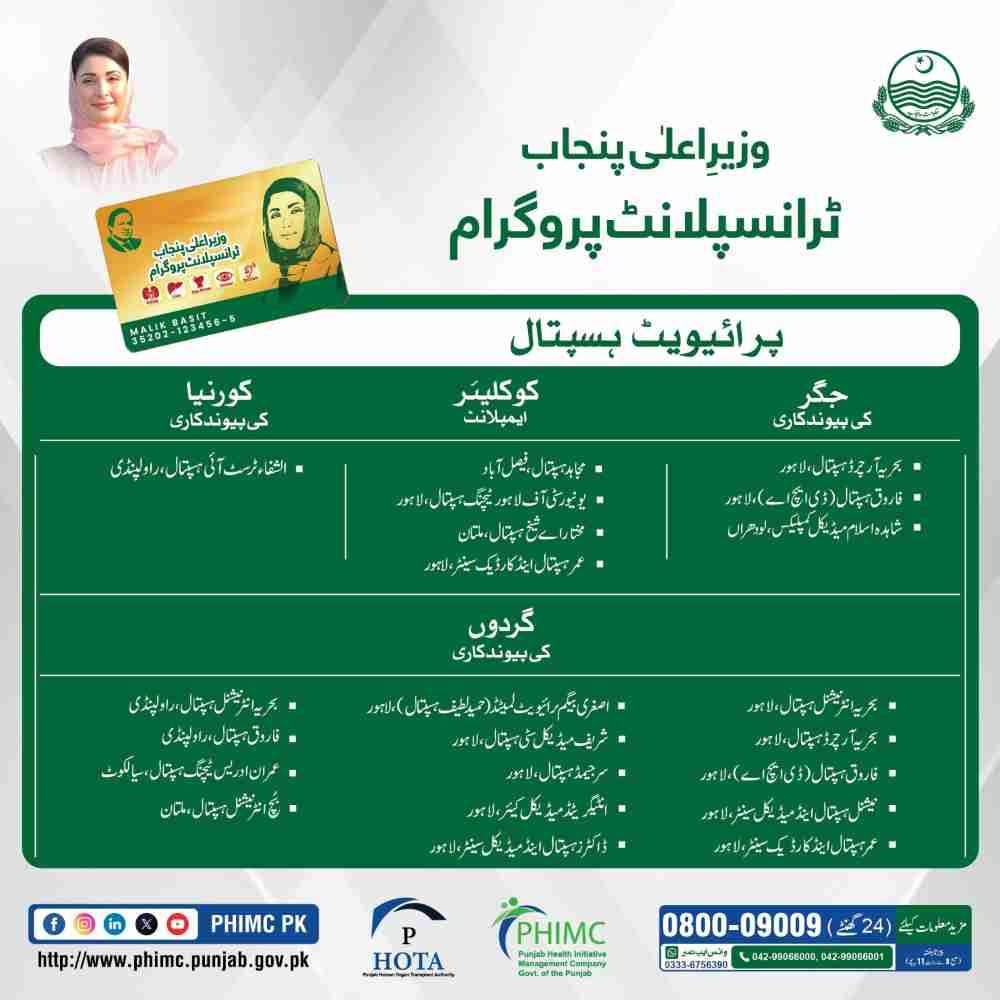
Free kidney transplant services in Islamabad and Rawalpindi are primarily available through PKLI Rawalpindi (which plans to begin transplant procedures), and through Bahria International Hospital Rawalpindi under the CM Punjab Transplant Program for eligible patients. There is currently no government hospital in Islamabad itself that performs free kidney transplants, so patients must travel to Rawalpindi or Lahore for treatment.
Options for patients in Islamabad and Rawalpindi:
| Hospital | Location | Free Coverage Eligibility | Current Status |
|---|---|---|---|
| PKLI Rawalpindi | Rawalpindi | Under CM Punjab Program (30% subsidy or free through Zakat) | Planning to start transplants Sep 2025 |
| Bahria International Hospital | Rawalpindi | Under CM Punjab Program | Active |
| Benazir Bhutto General Hospital | Rawalpindi | Free kidney treatments including dialysis and surgeries | 6 successful transplants conducted |
Are There Free Kidney Transplant Facilities in Peshawar and Balochistan?
Yes, significant developments are underway in both provinces. In Khyber Pakhtunkhwa, the government has decided to establish kidney, liver, and bone marrow transplant centers at Khyber Teaching Hospital (KTH), Peshawar, with seed money of Rs500 million approved. In Balochistan, the Institute for Kidney and Bladder Diseases in Quetta has officially launched kidney transplant services completely free of charge.
KP developments:
- KTH attains quaternary care status: Pakistan’s first quaternary care hospital offering free treatment for community liver, kidney, and bone marrow transplants.
- Rs500 million seed money: Approved to establish a 300-bed facility.
- Experienced leadership: Dr. Taqi Taufiq Khan (renal transplant surgeon with 100+ transplants) will supervise kidney transplants.
- 60-70 transplants per month target: The ambitious plan aims to serve a large patient population.
- Sehat Card Plus integration: Centers will be connected with SCP to ensure free services on a sustainable basis.
Balochistan developments:
- Institute for Kidney and Bladder Diseases, Quetta: Officially launched kidney transplant services in accordance with the Human Organ Transplant Act.
- Completely free of charge: Patients no longer need to travel to other provinces, incurring costs amounting to hundreds of thousands of rupees.
- State-of-the-art facilities: Expert medical supervision and modern equipment.
8. Legal and Ethical Framework (PHOTA)
What is PHOTA and Why is Registration Mandatory?
PHOTA (Punjab Human Organ Transplantation Authority) is the regulatory body established by the Punjab government to oversee all organ transplantation activities in the province, ensuring that every transplant is ethical, legal, and safe. Registration with PHOTA is mandatory for any patient seeking a free transplant under the CM Punjab Transplant Program because without this registration, the transplant cannot legally proceed.
What PHOTA does:
- Registration: Approves patients and donors for transplantation.
- Verification: Confirms relationships between donors and recipients.
- Oversight: Monitors transplant activities at registered hospitals.
- Enforcement: Takes action against illegal transplants and organ trafficking.
- Approval: Authorizes hospital registrations and renewals for transplant services.
Why PHOTA registration is mandatory:
- Legal requirement: The Transplantation of Human Organs and Tissues Act requires regulatory approval for all transplants.
- Prevention of organ trade: PHOTA ensures no financial transaction is involved in organ donation.
- Ethical compliance: Verifies that donations are voluntary and based on genuine relationships.
- Patient safety: Ensures both donor and recipient meet medical and legal requirements.
- Program access: Without PHOTA registration, patients cannot access CM Punjab Program benefits.
Is There Strict Action Against Illegal Organ Transplants in Punjab?
Yes, the Punjab government through PHOTA takes strict action against illegal organ transplants in Punjab, including canceling hospital registrations, pursuing criminal charges against medical professionals involved in unauthorized transplants, and actively monitoring transplant activities to prevent organ trafficking. The Health Minister has confirmed that strict action is underway against illegal organ transplants in the province.
Types of enforcement actions taken:
| Violation | Enforcement Action |
|---|---|
| Unregistered transplant | Hospital registration cancelled, criminal charges filed |
| Commercial organ trade | Arrests, prosecution under Transplantation Act |
| Fake documentation | Legal action against patients and donors involved |
| Unapproved donor relationships | Transplant halted, investigation initiated |
9. The Future of Free Transplants in Pakistan
Is the Free Kidney Transplant Hospital Network Expanding to Other Cities?
Yes, the free kidney transplant hospital network is actively expanding to other cities in Pakistan. The Punjab government’s CM Transplant Program has already empaneled hospitals in multiple locations including Lahore, Rawalpindi, and Multan, with further expansion planned. SIUT is also expanding with a new campus in Larkana, bringing free transplant services to northern Sindh.
Current expansion initiatives:
| Location | Current Status | Future Plans |
|---|---|---|
| Multan | MIKD fully operational, 100+ transplants | Expand capacity |
| Larkana | SIUT new campus | Free transplant services for northern Sindh |
| Rawalpindi | PKLI Rawalpindi planning Sep 2025 start | Begin kidney and liver transplant procedures |
| Peshawar | KTH centers under development | 60-70 transplants per month target |
| Quetta | Institute for Kidney and Bladder Diseases launched | Expand capacity and services |
PKLI’s future initiatives:
- PKLI University: Training the next generation of transplant professionals.
- Advanced biobank research facility: Pakistan’s first, supporting transplant research.
- Medical tourism promotion: Attracting international patients to generate revenue.
- Deceased donor transplant program: Expanding options for patients without living donors.
Are SIUT-Style Free Treatment Centers Coming to Punjab and KP?
While no exact replica of the SIUT model has been established in Punjab or KP, the Punjab government’s CM Transplant Program represents a different approach to achieving the same goal of free transplants, using government funding rather than philanthropic donations as the primary funding source. This model could potentially be replicated in KP as the province’s health infrastructure develops.
Comparison of funding models:
| Feature | SIUT Model | CM Punjab Program | PKLI Model |
|---|---|---|---|
| Primary funding | Philanthropic donations | Government budget | Mixed (govt + donations) |
| Geographic focus | Sindh (with national reach) | Punjab | Punjab |
| Free medication | Lifelong | 1 year | Variable |
| Patient volume | Very high | Growing rapidly | High |
10. Frequently Asked Questions
Which hospital provides 100% free kidney transplants in Pakistan?
SIUT Karachi provides 100% free kidney transplants including all pre-transplant evaluation, surgery, hospital stay, and lifelong immunosuppressant medications. GIMS Sukkur also provides 100% free transplants for five organs. PKLI Lahore provides free transplants to approximately 80% of its deserving patients, while Jinnah Hospital Lahore, MIKD Multan, and Bahria International Hospitals provide free transplants under the CM Punjab Transplant Program for eligible patients.
Is SIUT Karachi completely free for kidney transplants?
Yes, SIUT Karachi is completely free for kidney transplants, including all medical services from initial diagnosis through surgery and lifelong follow-up care, as well as all immunosuppressant medications for the patient’s entire life. The institute has performed over 6,000 renal transplants with a 90% graft survival rate at one year.
How can I register for the CM Punjab Free Transplant Program?
To register for the CM Punjab Free Transplant Program, patients must first register with PHOTA (Punjab Human Organ Transplantation Authority), complete a medical evaluation confirming the need for transplant, identify a legal donor, and then contact the program helpline at 09009 0800 for further guidance on application procedures and empaneled hospital selection.
Does PKLI Lahore offer free kidney transplants to everyone?
No, PKLI Lahore does not offer free kidney transplants to everyone. The institute provides free treatment to nearly 80 percent of deserving kidney and liver patients based on a financial screening process that evaluates household income, assets, and family size. The remaining patients may receive subsidized rates or pay full commercial rates.
What are the eligibility criteria for a free kidney transplant in Pakistan?
The eligibility criteria include confirmed medical diagnosis of end-stage renal disease, availability of a legal donor (usually a family member), financial need as determined by the hospital’s screening process or government program criteria, and valid identification documents proving residency for government-funded programs in Punjab.
Is the medicine after a kidney transplant also free in Pakistan?
Yes, medicine after a kidney transplant is free for patients treated at SIUT Karachi for their entire lifetime, while patients under the CM Punjab Transplant Program receive free immunosuppressant medications for one year post-transplant. GIMS Sukkur also provides lifelong free medications. PKLI may provide free medications to patients who received free transplants, depending on available funding.
Which hospital is better for a kidney transplant: PKLI or SIUT?
Neither hospital is universally better. SIUT offers decades of experience and lifelong free medications, while PKLI offers newer facilities, robotic surgery options, and potentially shorter waiting times. The choice depends on the patient’s location, specific medical needs, and personal preferences. Both achieve success rates exceeding 90%.

Add a Comment