
Are you a farmer in Punjab waiting to purchase a tractor without bearing the full financial burden? The Green Tractor Scheme online apply 2026 process for Phase 4 represents the single most important opportunity for small and medium landholders to access modern farm machinery at a fraction of the cost. This definitive guide provides every detail you need—from the official Phase 4 announcement and enhanced subsidies to the complete step-by-step online registration process—ensuring you navigate the application with confidence and avoid costly mistakes.
Key Takeaways
- Phase 4 Officially Approved: Chief Minister Maryam Nawaz has approved Phase IV of the Green Tractor Scheme, increasing the subsidy for high-horsepower tractors to Rs. 1.5 million and for low-horsepower tractors to Rs. 700,000.
- Kissan Card is Mandatory: Without an active Kissan Card verified through SMS to 8070, your application will be automatically disqualified.
- Application is 100% Free: The official portal at gts.punjab.gov.pk charges no fees; any agent demanding money for guaranteed selection is a scammer.
- Small Farmers Prioritized: Landholders owning between 1 and 12 acres receive priority in the computerized balloting system.
- Online Registration Only: Phase 4 accepts applications exclusively through the online portal; no manual forms will be distributed at agriculture offices.
- Read More: Punjab Super Seeder Subsidy Scheme Apply Now!
- Read More: Maryam Nawaz 3 Marla Scheme | Apni Zameen Apna Ghar 3 Marla Scheme
- Read More: CM Punjab All Schemes List | Maryam Nawaz Programs
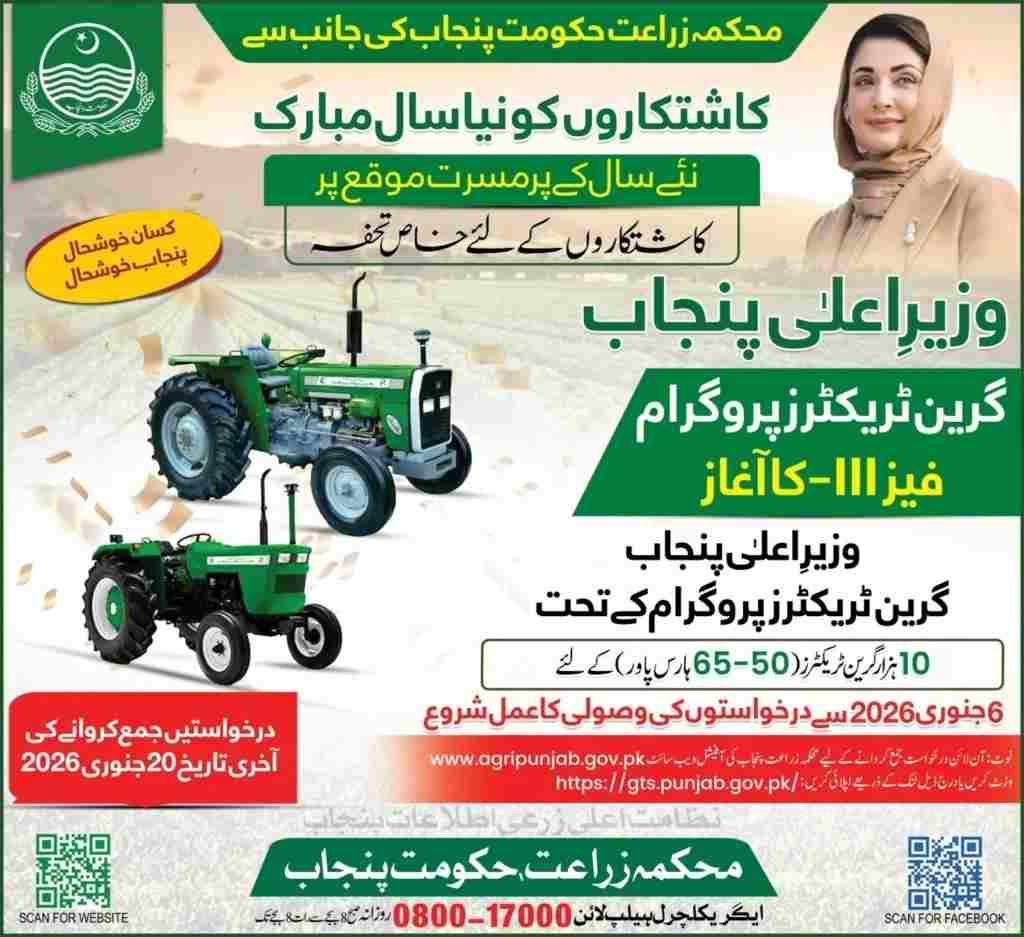
Table of Contents
What is the Current Official Status of the CM Punjab Green Tractor Scheme Phase 4 for 2026?
The Punjab government has officially approved Phase 4 of the Green Tractor Scheme, marking a significant expansion of agricultural support across the province. Chief Minister Maryam Nawaz Sharif personally announced the initiative, directing authorities to prepare a comprehensive summary for implementation. This phase introduces enhanced subsidies specifically designed to benefit farmers owning both small and large landholdings.
The scheme operates as a subsidy program where the government bears a substantial portion of the tractor cost, making mechanized farming accessible to thousands of farmers who previously could not afford modern equipment. Phase 4 builds upon the success of previous phases, incorporating lessons learned and addressing gaps identified during earlier distributions.
Phase 3 concluded with balloting conducted in late February, distributing approximately 9,500 tractors to successful applicants across all districts of Punjab. The transition to Phase 4 represents the government’s continued commitment to agricultural development and food security through mechanization. Farmers who missed Phase 3 now have renewed hope as preparations for the next phase accelerate.
The Agriculture Department Punjab serves as the implementing agency, working in close coordination with the Chief Minister’s office to ensure transparent distribution. Technical working groups have already begun refining the eligibility criteria and application process based on feedback from previous phases.
Overview of the Green Tractor Scheme: A Recap of Its Success
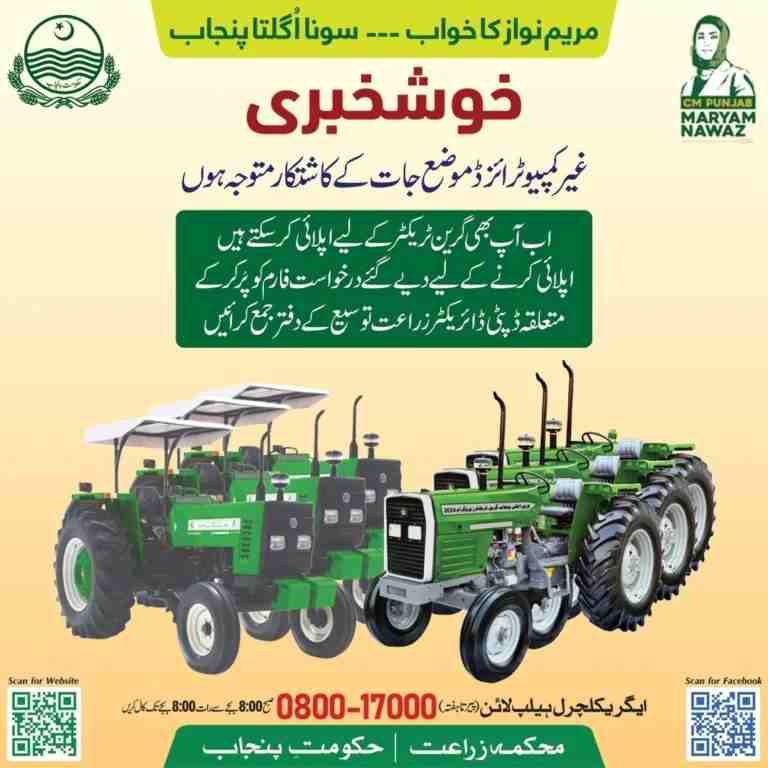
The Green Tractor Scheme has transformed Punjab’s agricultural landscape since its inception, placing thousands of tractors in the hands of working farmers. The program addresses a fundamental challenge facing Pakistani agriculture: the high cost of farm mechanization that places modern equipment beyond the reach of small farmers.
Previous phases distributed tractors through a transparent computerized balloting system that eliminated human intervention and favoritism. Successful applicants received subsidies ranging from Rs. 600,000 to Rs. 1,000,000 depending on the phase and tractor horsepower. The scheme specifically targeted farmers owning between 1 and 50 acres of land, ensuring that benefits reached those who needed mechanization most urgently.
Farmers who received tractors through earlier phases report significant improvements in crop yields, reduced cultivation time, and lower dependence on expensive rental equipment. The scheme has particularly benefited small farmers in South Punjab, where agricultural income directly determines family welfare and community prosperity.
Local tractor manufacturers including Millat Tractors, Al-Ghazi Tractors, and other domestic producers have partnered with the government to ensure adequate supply and after-sales service. This collaboration strengthens Pakistan’s industrial base while meeting farmers’ equipment needs through locally manufactured machines designed for local conditions.
Key Objectives of Phase 4: Promoting Mechanized Farming
Phase 4 pursues multiple strategic objectives that extend beyond simple equipment distribution. The primary goal remains accelerating farm mechanization across Punjab to increase agricultural productivity and reduce post-harvest losses. Tractors enable farmers to complete planting and harvesting operations within optimal windows, directly impacting crop quality and yield.
Supporting small and medium farmers receives heightened emphasis in Phase 4, with the revised subsidy structure specifically benefiting those with limited landholdings. The government recognizes that small farmers face the greatest barriers to mechanization and therefore deserve priority access to subsidized equipment.
Ensuring transparent distribution through computerized balloting remains a cornerstone objective. The online application system captures applicant data directly from NADRA and land records from the Punjab Land Record Authority, eliminating document forgery and multiple applications from the same individual.
Economic stimulation through local manufacturing represents another key objective. By purchasing tractors from domestic manufacturers, the scheme supports thousands of jobs in the industrial sector while reducing dependence on imported agricultural equipment.
What This Guide Covers
This comprehensive guide walks you through every aspect of the Green Tractor Scheme Phase 4 application process. You will learn the exact eligibility requirements, including land ownership thresholds and the mandatory Kissan Card prerequisite. The document checklist section ensures you gather everything needed before the online portal opens.
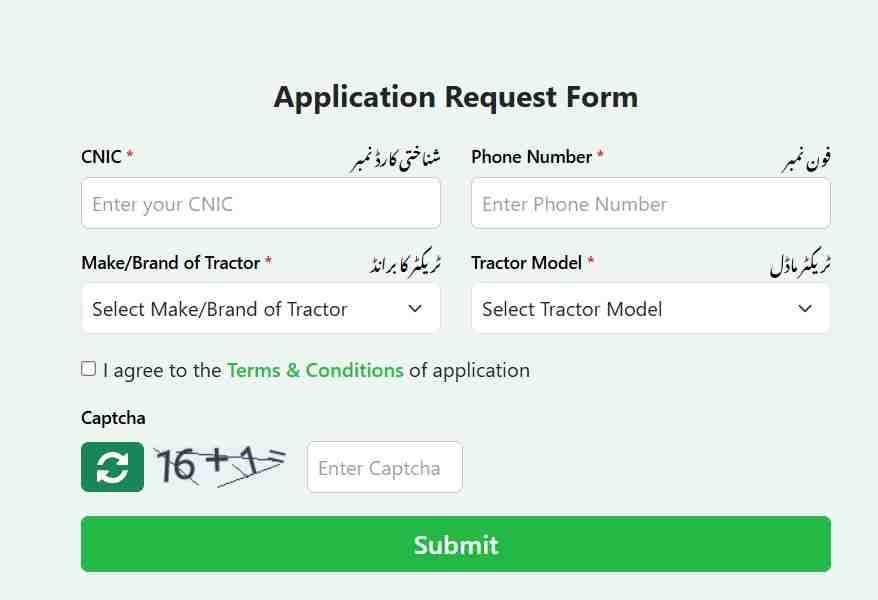
The step-by-step online application tutorial provides screenshots and detailed instructions for each registration stage, from creating your account to submitting your final application. Tractor selection guidance helps you choose the right horsepower and brand for your specific land conditions and farming needs.
Balloting and result checking procedures are explained in plain language, including multiple methods to verify your selection status. Post-selection steps cover document verification, payment procedures, and tractor delivery from authorized dealers. Common rejection reasons and scam avoidance tips protect you from costly mistakes and fraudulent agents.
Phase 4 Announcement and Key Details
Has the Green Tractor Scheme Phase 4 Officially Been Launched in 2026?
Phase 4 has received official approval from Chief Minister Maryam Nawaz Sharif, who directed the Agriculture Department to prepare the complete summary for implementation. While the online portal is not yet accepting applications, the administrative machinery is fully mobilized to launch registration once procedural formalities conclude.
The Chief Minister’s approval represents the highest level of government commitment, signaling that Phase 4 will proceed with enhanced features and expanded coverage. Farmers should begin preparations immediately rather than waiting for the portal to open, as document verification and Kissan Card activation require time.
What is the Expected Launch Date for Green Tractor Scheme Phase 4 Registration?
Based on patterns observed in previous phases, registration for Phase 4 will likely open within 4 to 6 weeks of the official approval announcement. The government typically allows a 30 to 45-day application window, providing sufficient time for farmers across all districts to complete their online registration.
The Agriculture Department follows a standard sequence: approval announcement, summary preparation, portal development or updates, public awareness campaign, and finally registration opening. Each stage requires approximately one week, suggesting that farmers have limited time to prepare before applications open.
How Many Tractors Will Be Distributed in Phase 4 of the CM Punjab Scheme?
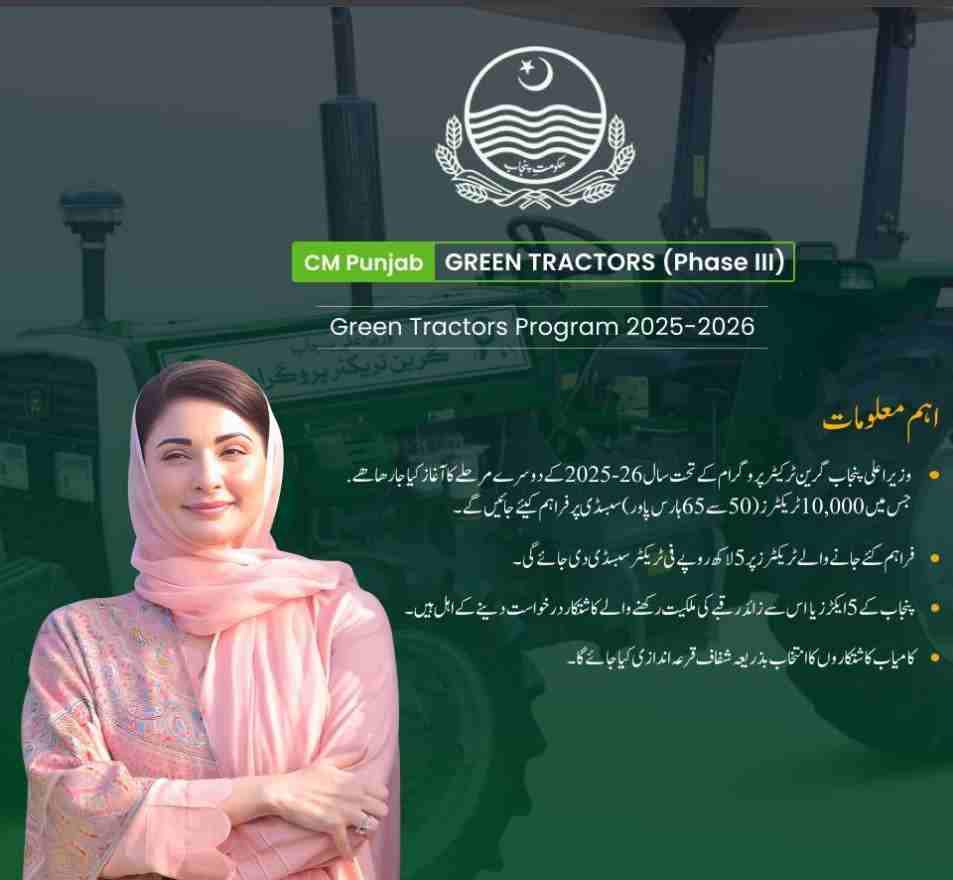
Phase 4 aims to distribute approximately 9,500 tractors to farmers across Punjab, matching the target set for Phase 3. However, government sources indicate potential for increasing this number if initial response demonstrates high demand and if budgetary allocations permit expansion.
The distribution follows a district-wise quota system based on agricultural land area and farming population. Each district receives a predetermined number of tractors, ensuring balanced geographic representation and preventing concentration in any single region.
What is the Total Budget Allocated for Phase 4 of the Green Tractor Scheme?
The Punjab government has allocated a substantial budget exceeding Rs. 9 billion for Phase 4, reflecting the enhanced subsidy amounts approved by the Chief Minister. This allocation covers both the subsidy payments to manufacturers and the administrative costs of running the program.
The increased budget supports the new two-tier subsidy structure: Rs. 1.5 million for high-horsepower tractors and Rs. 700,000 for low-horsepower models. This differentiated approach ensures that farmers receive appropriate support regardless of whether they need a small utility tractor or a heavy-duty machine for large landholdings.
Will Phase 4 Cover All Districts of Punjab, Including South Punjab?
Phase 4 extends across all districts of Punjab, with special attention to South Punjab where agricultural development needs remain most acute. The district quota system ensures that farmers in remote areas have equal opportunity to receive subsidized tractors.
South Punjab districts including Multan, Bahawalpur, Rahim Yar Khan, Dera Ghazi Khan, and Muzaffargarh receive quota allocations proportionate to their agricultural significance. The government has explicitly directed that no district should face exclusion or reduced representation in the balloting process.
Official Announcements: Where to Find the First Notification
The official Agriculture Department Punjab website at agripunjab.gov.pk serves as the primary source for all scheme announcements. The dedicated Green Tractor Scheme portal at gts.punjab.gov.pk will host the application link and all related information once registration opens.
Farmers should also monitor local newspapers, particularly daily Jang, Nawa-i-Waqt, and Express, which publish official advertisements when registration begins. Agriculture extension offices in each tehsil receive official notifications and can provide guidance to farmers without internet access.
Eligibility Criteria: Who Can Apply for Phase 4?
Who is Eligible for the Punjab Green Tractor Scheme Phase 4?
Punjab residents who own agricultural land between 1 and 50 acres and possess a valid Computerized National Identity Card are eligible to apply for Phase 4. Applicants must be Pakistani citizens permanently residing in Punjab and actively engaged in farming operations on their owned land.
The scheme specifically targets individual farmers rather than agricultural businesses or corporations. Applications submitted in the name of farming partnerships, companies, or trusts face automatic rejection during the verification stage.
What is the Required Landholding to Apply for the Tractor Scheme?
Land ownership between 1 and 50 acres constitutes the fundamental eligibility requirement for Phase 4. The government uses digital land records maintained by the Punjab Land Record Authority to verify ownership, eliminating the need for applicants to submit physical documents.
Small farmers owning between 1 and 12 acres receive priority in the computerized balloting system. This preferential treatment reflects the government’s recognition that small landholders face the greatest difficulty affording tractors at market prices. Medium farmers with 12 to 25 acres and larger farmers with 25 to 50 acres fall into separate categories with proportional representation.
Is the Kissan Card Mandatory for Phase 4 Applications?
The Kissan Card serves as an absolute prerequisite for Phase 4 application submission. No farmer can register for the Green Tractor Scheme without first obtaining and activating their Kissan Card through the official registration process.
The Kissan Card functions as a digital identity for farmers, containing verified information about land ownership, CNIC details, and contact information. The Agriculture Department uses this card to validate applicant eligibility and prevent fraudulent applications from individuals who do not actually own agricultural land.
Farmers without an active Kissan Card must register immediately by sending their CNIC number to 8070 and following the verification instructions. The process typically completes within 24 to 48 hours, after which the card becomes active for scheme applications.
Can I Apply if I Own More Than 50 Acres of Land?
Farmers owning more than 50 acres of agricultural land are not eligible for the Green Tractor Scheme Phase 4. The program specifically targets small and medium farmers who cannot afford tractors at commercial prices without government assistance.
Land ownership is calculated based on total agricultural land owned by the applicant, regardless of location within Punjab. Farmers owning land in multiple districts must combine all holdings to determine whether they fall within the eligible 1 to 50-acre range.
Is There an Age Limit for Farmers Applying for the Scheme?
Applicants must be between 21 and 65 years of age on the date of application submission. This age range ensures that applicants are legally adult and likely to remain actively engaged in farming for the foreseeable future.
Age verification occurs automatically through NADRA records linked to the applicant’s CNIC. Farmers whose CNIC shows an age outside this range will find their applications rejected during the initial verification stage, before balloting occurs.
Can Overseas Pakistanis Apply for the Green Tractor Scheme?
Overseas Pakistanis are not eligible to apply for the Green Tractor Scheme, as the program requires applicants to be Punjab residents actively engaged in farming. The government intends the subsidy to benefit working farmers who personally cultivate their land, not absentee landowners residing abroad.
Family members of overseas Pakistanis who remain in Punjab and actively farm the land may apply if they meet all other eligibility criteria. However, the application must be submitted in the name of the resident farmer, not the overseas owner.
Can Tenants or Sharecroppers Apply for the Tractor Subsidy?
Tenants and sharecroppers who do not own agricultural land are not eligible to apply for the Green Tractor Scheme. The program’s eligibility criteria explicitly require land ownership, with verification conducted through official land records maintained by the Punjab Land Record Authority.
The government has designed the scheme to benefit landowners who make long-term investments in their agricultural operations. Tenants, despite their crucial role in farming, lack the land ownership documentation required for verification and therefore cannot participate in the current phase.
How Many Times Can One Family Apply for the Scheme?
Each family is limited to one successful application across all phases of the Green Tractor Scheme. Farmers who received a tractor in Phase 1, Phase 2, or Phase 3 are disqualified from applying in Phase 4, regardless of changes in land ownership or family circumstances.
The government maintains a comprehensive database of previous beneficiaries cross-referenced by CNIC numbers. Applications from previous winners are automatically rejected during verification, and such rejections cannot be appealed through any channel.
Will There Be a Quota for Women Farmers in Phase 4?
Phase 4 includes a dedicated quota for women farmers, recognizing the growing role of women in Punjab’s agricultural sector. The exact percentage varies by district based on the number of women landowners registered in official land records.
Women applicants must meet the same land ownership and Kissan Card requirements as male applicants. The government encourages women who own agricultural land to apply, with the dedicated quota ensuring their representation in the final selection list.
Required Documents: Preparing Your Application File
What Documents Are Required for the Phase 4 Registration?
The Green Tractor Scheme Phase 4 requires only three essential documents: your Computerized National Identity Card, proof of land ownership automatically verified through PLRA, and an active Kissan Card. The online system eliminates the need for physical document submission by pulling data directly from government databases.
Your CNIC must be valid and contain your current mobile phone number registered in your name. Mobile number verification occurs through SMS OTP, and applications using numbers registered to other individuals face immediate rejection.
Computerized National Identity Card: Ensuring It’s Valid and Mobile-Linked
Your CNIC serves as the primary identifier throughout the application process, from registration to balloting and final tractor delivery. The card must be valid with no expired date, and the name on your CNIC must exactly match your name in land records.
The mobile phone number you provide during registration must be registered in your name under your CNIC. NADRA records are cross-checked during verification, and applications using numbers registered to other family members or unrelated individuals are rejected. Farmers should visit their mobile network operator’s customer service center to verify their number’s registration status before applying.
Proof of Land Ownership: The Importance of Digital Fard
The Punjab Land Record Authority maintains digital records of all agricultural land in the province, accessible through the ARAZI portal. Your application automatically accesses these records during verification, eliminating the need to submit physical copies of your Fard.
Land records must show your name as the recorded owner of agricultural land totaling between 1 and 50 acres. Land held jointly with others is counted proportionally, meaning you receive credit only for your share of jointly owned property. Farmers with disputes or pending court cases affecting their land records must resolve these issues before applying.
Kissan Card: How to Get It and Why It’s Essential
The Kissan Card functions as your digital agricultural identity, without which Phase 4 application is impossible. Registration requires sending your CNIC number to 8070 via SMS, after which you receive instructions for completing your profile.
Upon successful registration, you receive a confirmation message indicating your Kissan Card is active. The entire process typically completes within 24 hours, though some cases requiring additional verification may take up to three days. Farmers should complete Kissan Card registration well before the Phase 4 application window opens.
Recent Passport-Sized Photographs: Specifications and Requirements
The online application system captures your photograph directly from NADRA records, eliminating the need to upload separate images. Farmers whose NADRA photograph is old or unclear should visit their nearest NADRA center to update their record before applying.
The system uses your NADRA photograph for all official correspondence, including the ballot result list and tractor delivery documentation. Ensuring your photograph is current and recognizable prevents confusion during the physical verification stage after selection.
Mobile Number: Why It Must Be Registered Under the Applicant’s CNIC
Every communication regarding your application occurs through SMS messages sent to the mobile number you provide. OTP verification, application confirmation, ballot results, and delivery instructions all arrive via SMS, making the mobile number a critical component of your application.
Mobile network operators verify ownership through their subscriber databases. Applications using numbers registered to spouses, children, or other relatives are rejected during verification because the system cannot confirm the number belongs to the applicant. Farmers should check their number’s registration status by dialing the appropriate code for their network operator.
The Kissan Card: Your Digital Passport to the Scheme
How Do I Register for a Kissan Card to Become Eligible for Phase 4?
Kissan Card registration follows a simple SMS-based process accessible to farmers with even basic mobile phones. Open your messaging application and type your CNIC number without dashes or spaces, then send it to 8070. You receive an immediate acknowledgment followed by a confirmation message within 24 hours.
The system automatically verifies your information against NADRA and Punjab Land Record Authority databases. If your land records match your CNIC details, registration completes automatically. Cases with discrepancies receive SMS instructions for visiting the nearest agriculture extension office with supporting documents.
How to Check Kissan Card Status Online or Via SMS
Checking your Kissan Card status requires sending your CNIC number to 8070 with the word “STATUS” before your number. For example, type “STATUS 1234567890123” and send to 8070. You receive an immediate response indicating whether your card is active, pending, or requires additional verification.
The Agriculture Department website also offers a Kissan Card status check feature accessible through the farmer portal. Enter your CNIC number, and the system displays your current registration status along with any pending requirements. Farmers should verify their status monthly to ensure no issues arise before Phase 4 applications open.
What to Do If Your Kissan Card Is Not Active or Has Incorrect Data
Inactive Kissan Cards typically result from discrepancies between your CNIC information and land records. Visit your nearest agriculture extension office with original copies of your CNIC, land ownership documents, and any other supporting papers. The staff verifies your information and updates the Kissan Card database accordingly.
Incorrect data, such as misspelled names or wrong land area figures, requires correction through the same process. Agriculture department officials have the authority to make corrections after verifying your original documents. Farmers should address these issues immediately rather than waiting until the application window opens.
Step-by-Step Guide: Green Tractor Scheme Online Apply 2026 (Phase 4)
How Can I Apply Online for the Green Tractor Scheme 2026?
Online application begins by visiting the official Green Tractor Scheme portal at gts.punjab.gov.pk. The homepage displays current scheme information along with a prominent “Apply Now” button that becomes active when registration opens. Click this button to begin your application.
The system guides you through five distinct stages: account creation, personal information verification, land record confirmation, tractor selection, and final submission. Each stage must complete before proceeding to the next, and you can save your progress and return later if needed.
Where Is the Official Green Tractor Scheme Online Apply Link for Phase 4?
The only official application link for Phase 4 is gts.punjab.gov.pk. Any other website claiming to accept Green Tractor Scheme applications is fraudulent and designed to steal your personal information. The Punjab government does not authorize third-party websites or agents to accept applications.
Bookmark this official link now and use it exclusively when registration opens. Social media pages, WhatsApp groups, and unofficial websites often share fake links designed to resemble the official portal. Always verify the website address in your browser’s address bar before entering any personal information.
Step 1: Visiting the Official GTS Portal and Creating an Account
Upon reaching gts.punjab.gov.pk, locate and click the “New Registration” or “Sign Up” button. Enter your CNIC number without dashes, your mobile number registered in your name, and create a secure password. The system sends an OTP to your mobile number for verification.
Enter the OTP exactly as received to verify your account. After successful verification, you can log in using your CNIC and password to begin the application. Save your login credentials securely, as you will need them to check your application status later.
Step 2: Filling the Online Registration Form with Personal Details
The application form displays your personal information as retrieved from NADRA records. Verify that your name, father’s name, date of birth, and address appear correctly. Any discrepancies must be corrected through NADRA before proceeding, as the online system cannot override NADRA data.
Your contact information, including mobile number and optional landline number, appears in this section. Confirm the mobile number is correct, as all future communications will be sent to this number. The system may also ask for an email address, which is optional but helpful for receiving updates.
Step 3: Entering Accurate Land Ownership Details for Verification with PLRA
The land ownership section automatically accesses your PLRA records based on your CNIC. Your total agricultural land area appears on screen, along with a breakdown by district and tehsil. Verify that the displayed information matches your actual land ownership.
If your land records do not appear or show incorrect information, you cannot proceed with the application. Visit your nearest PLRA service center or agriculture extension office to correct your records before the application deadline. Applications with incorrect land data are automatically rejected during verification.
Step 4: Selecting the Desired Tractor Category, Brand, and Horsepower
Phase 4 offers two tractor categories: low-horsepower models suitable for small farms and high-horsepower models for larger operations. Low-horsepower tractors typically range from 50 to 65 HP and receive the Rs. 700,000 subsidy. High-horsepower tractors from 70 to 85 HP receive the Rs. 1.5 million subsidy.
After selecting your category, choose your preferred brand from available options including Millat, Al-Ghazi, Buraq, and GM Belarus. The system displays available models within each brand, allowing you to select specific features such as 2WD or 4WD configuration. Your selection determines which tractor you receive if successful in the ballot.
Step 5: Uploading Scanned Copies of All Required Documents
The Phase 4 online system minimizes document uploads by relying on government databases. However, you may need to upload a recent photograph if your NADRA photo is unavailable, or proof of address if your CNIC address differs from your current residence.
Accepted file formats include JPG, PNG, and PDF, with maximum file size limits displayed on each upload screen. Ensure your documents are clear and legible before uploading, as unclear documents can delay verification. The system accepts uploads from both computers and mobile devices.
Step 6: Verifying Your Application with the One-Time Password Sent to Your Mobile
Before final submission, the system sends a verification OTP to your registered mobile number. This final security step confirms that you personally submitted the application and that your mobile number remains active. Enter the OTP within the specified time limit, typically 5 to 10 minutes.
The OTP verification creates an electronic record of your consent and application submission. After successful OTP entry, you cannot modify your application, though you can still view it online. Any changes after this point require contacting the helpline with valid justification.
Step 7: Submitting the Application and Saving the Confirmation Slip
After OTP verification, click the “Submit Application” button. The system processes your submission and generates a confirmation screen displaying your application number, submission date, and a summary of your information. Save or print this confirmation slip immediately.
The confirmation slip contains your unique tracking number needed for future inquiries. Take a screenshot, photograph, or printout and store it safely. Without this number, checking your application status becomes difficult, though you can still access your application by logging into the portal.
Can I Apply Offline or at Local Agriculture Offices If I Cannot Apply Online?
Phase 4 accepts applications exclusively through the online portal at gts.punjab.gov.pk. Manual application forms are not available at agriculture extension offices, and staff cannot submit applications on your behalf. Farmers without personal internet access must seek assistance from family members, friends, or public internet facilities.
Agriculture extension offices do provide guidance and can help farmers understand the process, but they cannot bypass the online system. Staff can explain requirements, verify documents, and answer questions, but the actual application submission must occur through the official website.
Tractor Selection: Approved Brands, Models, and HP
Which Tractor Brands Are Available Under the CM Punjab Subsidy Scheme?
Phase 4 includes all major Pakistani tractor manufacturers, ensuring farmers have access to quality machines with readily available spare parts and service networks. Millat Tractors, the country’s largest manufacturer, offers Massey Ferguson models ranging from 50 to 85 horsepower with both 2WD and 4WD configurations.
Al-Ghazi Tractors provides New Holland models renowned for fuel efficiency and durability in Pakistani farming conditions. Their lineup includes models suitable for everything from light cultivation to heavy tillage operations. Farmers preferring New Holland tractors can select from multiple horsepower options within their approved range.
Buraq Tractors has emerged as a reliable alternative, offering competitively priced models with robust construction suited for small to medium farms. GM Belarus tractors serve farmers requiring heavy-duty performance for challenging soil conditions and large landholdings.
Millat Tractors: Approved Models
Millat Tractors participates in Phase 4 with their complete range of Massey Ferguson models manufactured at their Sheikhupura facility. The MF 240 and MF 260 serve farmers with smaller landholdings requiring efficient operation and lower fuel consumption. These models excel in orchards and vegetable farming where maneuverability matters.
The MF 350 and MF 360 provide mid-range power suitable for farmers with 12 to 25 acres, handling both cultivation and hauling tasks effectively. For large landholders, the MF 375 and MF 385 deliver the power needed for deep plowing and heavy disc harrow operations. All Millat models come with comprehensive warranties and nationwide service networks.
Al-Ghazi Tractors: Approved Models
Al-Ghazi Tractors’ New Holland line includes the NH 480, a popular choice among Pakistani farmers for its balance of power and fuel economy. The NH 550 provides additional horsepower for farmers requiring greater pulling capacity for heavy implements.
The NH 640 represents the high-horsepower end of Al-Ghazi’s Phase 4 offerings, suitable for farmers with extensive landholdings requiring maximum productivity. All New Holland models feature advanced engineering for reduced maintenance and longer service life under demanding farming conditions.
Buraq Tractors: Approved Models
Buraq Tractors offers models specifically designed for Pakistani farming conditions, with rugged construction and simplified maintenance requirements. Their 50 to 65 horsepower range targets small farmers seeking reliable performance at competitive prices.
Buraq’s participation in government subsidy schemes demonstrates their commitment to serving the agricultural sector. Farmers choosing Buraq tractors benefit from growing dealer networks and increasing parts availability across Punjab.
GM Belarus Tractors: Approved Models
GM Belarus tractors serve farmers requiring maximum durability for challenging conditions. Their models feature heavy-duty construction and proven engineering derived from decades of agricultural equipment manufacturing experience.
The Belarus lineup includes models suitable for large landholders who routinely perform heavy tillage operations. These tractors excel in areas with difficult soil conditions where lighter machines might struggle to maintain productivity.
Can I Choose the Horsepower of the Tractor Myself?
Phase 4 allows farmers to select their preferred horsepower within the two broad categories established by the scheme. Low-horsepower category includes tractors from 50 to 65 HP, while high-horsepower category covers 70 to 85 HP models. Your landholding size should guide your selection, though the final choice remains yours.
The application system displays available horsepower options for each brand, allowing you to select the specific model matching your requirements. Your selection becomes part of your application record and determines which tractor you receive if successful in the ballot.
Are Electric Tractors Included in the CM Punjab Scheme?
Electric tractors are not included in Phase 4, as the scheme focuses on conventional diesel-powered models from established domestic manufacturers. The government continues to evaluate electric agricultural equipment for potential inclusion in future phases as the technology matures and charging infrastructure develops.
Current Phase 4 tractors run on diesel, with manufacturers continuously improving fuel efficiency to reduce operating costs for farmers. The widespread availability of diesel fuel across Punjab ensures that farmers can operate their tractors without range anxiety or refueling challenges.
How to Choose the Right Approved Tractor for Your Land
Selecting the appropriate tractor horsepower directly impacts your farming efficiency and operating costs. Farmers with 1 to 12 acres should choose low-horsepower models between 50 and 60 HP, which provide adequate power for all operations while consuming less fuel than larger machines. These smaller tractors maneuver easily in tight spaces and cost less to maintain.
Farmers with 12 to 25 acres benefit from mid-range tractors around 65 to 70 HP, offering sufficient power for all cultivation tasks while remaining economical to operate. Those with 25 to 50 acres should select high-horsepower models between 75 and 85 HP to handle heavy implements and maintain productivity during peak seasons.
2WD vs. 4WD: Which Drive Type Is Right for Your Soil and Terrain?
Two-wheel drive tractors suit farmers with dry land conditions and primarily flat terrain where traction rarely becomes problematic. These models cost less to purchase and maintain, making them attractive for farmers prioritizing initial affordability.
Four-wheel drive tractors provide superior traction in wet conditions, sandy soils, and hilly terrain where 2WD models might struggle. Farmers in rice-growing areas or regions with heavy rainfall benefit significantly from 4WD capability. The additional cost proves worthwhile for those regularly working in challenging conditions.
The Selection Process: Understanding the Balloting System
How Does the Selection Process Work for the Green Tractor Scheme?
The Green Tractor Scheme employs a computerized balloting system that randomly selects successful applicants from the pool of verified candidates. This system eliminates human intervention and ensures every eligible farmer has an equal chance of selection regardless of influence or connections.
Before balloting occurs, all applications undergo thorough verification against NADRA and PLRA databases. Ineligible applications are removed from the pool, leaving only qualified candidates eligible for selection. The balloting software then randomly draws names based on district quotas and category allocations.
Is the Green Tractor Scheme Balloting Computerized and Transparent in 2026?
Phase 4 balloting continues the tradition of computerized transparency established in previous phases. The process occurs in the presence of media representatives, civil society observers, and government officials who witness the random selection. No individual can influence or predict the outcome.
The balloting software uses cryptographic random number generation to ensure true randomness. Results are published immediately on the official portal, allowing all applicants to check their status simultaneously. This transparency has earned the scheme widespread trust among farming communities.
How Are Applications Verified Before the Balloting?
Verification occurs through automated database checks rather than manual document review. The system cross-references each applicant’s CNIC with NADRA records to confirm identity, age, and citizenship. Land ownership verification accesses PLRA databases to confirm total agricultural land falls within eligible limits.
Previous beneficiary status is checked against the complete database of all scheme phases. Applicants who received tractors in any previous phase are automatically disqualified. Kissan Card status verification confirms the card is active and properly registered.
What Is the Quota System, and How Does It Affect the Green Tractor Balloting?
The quota system allocates tractor numbers across districts based on agricultural land area and farming population. Each district receives a predetermined number of tractors, ensuring farmers in every region have fair opportunity regardless of their district’s population density.
Within districts, further quotas may apply for small farmers, women, and other priority groups. Small farmers owning less than 12 acres receive preferential allocation within their district’s total. Women applicants compete within their dedicated quota, increasing their chances of selection.
Checking Your Application Status and Results
How Can I Track My Application Status Online After Applying?
Log in to the official GTS portal at gts.punjab.gov.pk using your CNIC and password. The dashboard displays your current application status, which may show “Submitted,” “Under Verification,” “Verified,” “Selected,” or “Not Selected.” Status updates occur automatically as your application progresses through each stage.
The portal also displays any issues requiring your attention, such as document discrepancies or verification failures. Address these issues immediately by visiting your nearest agriculture extension office with supporting documents. Delayed responses can result in application rejection before balloting occurs.
How Do I Check My Name in the Green Tractor Scheme Balloting Result?
Three methods exist for checking ballot results, ensuring all farmers can access their status regardless of internet availability. The online method provides instant access through the official portal. SMS service works on basic mobile phones. Agriculture extension offices offer in-person assistance.
Method 1: Online Portal Result Checking
Visit gts.punjab.gov.pk and click the “Ballot Result” or “Check Status” link. Enter your CNIC number in the provided field and click “Search.” The system displays your result immediately, showing whether you have been selected and providing further instructions if successful.
Successful applicants see their name, application number, and selected tractor details. Unsuccessful applicants receive notification that they were not selected in this ballot but remain eligible for future phases.
Method 2: SMS Service for Result Checking
Send your CNIC number to 8070 with the word “TRACTOR” before your number. For example, type “TRACTOR 1234567890123” and send to 8070. You receive an immediate SMS response indicating your selection status.
The SMS service operates 24 hours daily and works on all mobile networks. Save the response message for your records, as it contains your result confirmation.
Method 3: Visiting Local Tehsil Agriculture Office
Farmers without mobile phones or internet access can visit their nearest tehsil agriculture extension office. Staff members access the official portal and check results for visitors. Bring your CNIC and application number to expedite the process.
Agriculture extension offices display printed lists of successful applicants on their notice boards. These lists are updated within 24 hours of result announcement and remain available throughout the delivery period.
Where Can I Find the Official Green Tractor Scheme List of Winners for 2026?
The complete winners list publishes on the official GTS portal in PDF format for download. Visit gts.punjab.gov.pk and click the “Winners List” or “Successful Applicants” link. Select your district from the dropdown menu to view or download the PDF containing all successful applicants from your area.
The PDF list includes applicant names, CNIC numbers (partially masked for privacy), father’s names, and selected tractor details. Download and save this list for reference, though individual result checking through CNIC remains the most reliable method.
What If the Official Website Is Slow or Down When I Try to Check My Result?
High traffic immediately after result announcements can temporarily slow the website. If you encounter difficulties, wait 30 to 60 minutes and try again. The SMS service typically handles higher volumes without slowdown, providing an alternative access method.
Agriculture extension offices maintain offline copies of results and can verify your status even if the website experiences technical difficulties. Visit your nearest office with your CNIC for immediate assistance.
Post-Selection: What Happens After You Win the Ballot?
What Happens If I Win the Ballot but Cannot Pay the Remaining Balance?
Successful applicants must pay their share of the tractor cost within the specified deadline, typically 15 to 30 days after result announcement. Failure to pay results in forfeiture of your selection, and the tractor passes to the next eligible applicant from the waiting list.
The government does not offer financing or installment plans for the balance amount. Farmers must arrange the full payment through personal savings, bank loans, or other sources before the deadline. Those uncertain about payment should consider declining selection to avoid blocking a tractor that another farmer could utilize.
What Is the Next Step After Being Selected in the Ballot?
Selected applicants receive an official notification via SMS and email (if provided) with detailed instructions for completing the process. The first step involves visiting your designated agriculture extension office for physical document verification, where officials compare your original documents against the application data.
After successful verification, you receive a payment challan or bank deposit slip specifying the exact amount due based on your selected tractor model and subsidy category. Pay this amount at any designated bank branch within the specified timeframe, keeping the deposit receipt safe.
Document Verification: The Physical Verification Process
Physical verification confirms that the person who applied online matches the actual applicant and that all documents are genuine. Bring your original CNIC, land ownership documents, Kissan Card, and any other supporting papers to your designated agriculture extension office at the scheduled time.
Officials photograph you with your documents and record biometric verification through your fingerprints. This multi-layered verification prevents identity fraud and ensures the tractor reaches the actual applicant. Cases where documents do not match online data result in disqualification at this stage.
Payment Procedure: How to Pay Your Share of the Tractor Cost
Payment occurs through designated government bank branches, typically the National Bank of Pakistan or Bank of Punjab. Present your payment challan at the bank counter and deposit the exact amount shown. The bank issues a official receipt that you must preserve for tractor delivery.
Never pay cash to any individual claiming to represent the scheme. All payments occur through formal banking channels with official receipts. Any request for payment outside this system signals a scam, and you should report such attempts to authorities immediately.
Tractor Delivery: How and Where You Receive Your New Tractor
After payment verification, you receive instructions for collecting your tractor from the authorized dealer. Dealers contact you directly to schedule delivery once the government releases payment to their account. Delivery typically occurs within 30 to 45 days after successful payment.
Inspect your tractor thoroughly at the dealership before accepting delivery. Verify the model matches your selection, check all functions operate correctly, and confirm the chassis and engine numbers match the documentation. Report any discrepancies immediately to both the dealer and agriculture department officials.
Avoiding Rejection and Scams: Essential Tips
Why Is a Green Tractor Scheme Application Rejected?
Applications face rejection for multiple reasons, most of which applicants can avoid through careful preparation. Incorrect or mismatched CNIC information causes immediate rejection, as the system cannot verify your identity against NADRA records. Always confirm your CNIC details before applying.
Discrepancies in land records represent another common rejection cause. Your PLRA records must exactly match your claimed land ownership. Land disputes, unregistered transfers, or errors in the digital record all result in rejection during verification.
Being a defaulter of bank loans or government dues also triggers automatic rejection. The system checks your financial history against credit bureau databases. Outstanding agricultural loans or unpaid utility bills can disqualify you regardless of other eligibility factors.
Previous scheme beneficiaries face automatic rejection, as the system maintains a permanent database of all applicants who received tractors in any phase. Applications from such individuals are rejected without appeal.
Fake or forged documents discovered during physical verification result in immediate disqualification and potential legal action. Never submit false information, as the multi-layered verification system consistently detects fraud.
What Are the Common Disqualification Reasons Farmers Must Know Before Applying?
Land ownership outside the 1 to 50 acre range disqualifies applications regardless of other qualifications. Farmers with less than one acre cannot participate, while those exceeding 50 acres fall outside the scheme’s target demographic.
Age below 21 or above 65 on the application date results in disqualification. The system checks age automatically based on CNIC date of birth, with no exceptions for those close to the limit.
Invalid Kissan Card status blocks applications entirely. Farmers must verify their card is active before beginning the application process. Cards pending verification or showing errors must be corrected through agriculture extension offices.
How to Avoid Scams and Fraud in the Green Tractor Scheme Phase 4
No agents or middlemen are authorized to accept applications or payments. Anyone claiming to guarantee selection in exchange for money is committing fraud. Report such individuals to the agriculture department helpline immediately.
The application process is completely free. The government charges no fee for submitting applications, and any website or individual demanding payment for registration is fraudulent. Only payments after selection go to designated bank branches.
Ignore messages or calls promising guaranteed selection. The computerized balloting system is truly random, and no individual can influence outcomes. Claims of inside access to influence results are always false.
Only trust information from official sources: gts.punjab.gov.pk, agripunjab.gov.pk, and verified agriculture department social media accounts. Information from WhatsApp groups, Facebook pages, or unofficial websites may contain errors or scams.
Official Helpline and Support
What Is the Helpline Number for the Punjab Agriculture Department for Green Tractor Queries?
The Punjab Agriculture Department operates dedicated helplines for Green Tractor Scheme inquiries. Call 0800-17000 from any landline or mobile phone for assistance with application questions, eligibility verification, and general information. This helpline operates Monday through Saturday from 8:00 AM to 8:00 PM.
The Chief Minister’s Complaint Center at 0800-02345 handles escalated issues and complaints regarding scheme implementation. Use this number if your concerns remain unresolved through regular channels or if you encounter problems with officials or dealers.
Best Practices for Calling the Helpline
Have your CNIC number and application tracking number ready before calling. This information allows operators to access your record immediately and provide accurate assistance. Without these numbers, operators cannot verify your identity or access your application details.
Clearly explain your issue, including any error messages received or specific questions about eligibility. Take notes during the call, including the operator’s name and any reference number provided for your inquiry. Follow up if promised actions do not occur within specified timeframes.
How to Register a Complaint If You Face Issues During the Application Process
Complaints regarding technical issues with the online portal should be reported through the website’s contact form or by calling the helpline. Provide screenshots if possible, showing any error messages or system failures encountered.
Complaints about officials demanding bribes or inappropriate payments require immediate reporting to the Chief Minister’s Complaint Center at 0800-02345. Such behavior violates government policy and will result in disciplinary action when verified.
Important Rules and Regulations
Is the Subsidy Applicable to Used or Refurbished Tractors?
Phase 4 subsidies apply exclusively to new tractors purchased from authorized manufacturers and dealers. Used tractors, refurbished machines, or imports from other countries do not qualify for any subsidy amount. The program aims to increase the fleet of modern, reliable tractors in Punjab, not to subsidize transfers of existing equipment.
Can I Sell the Tractor After Receiving It Through the Scheme?
A lock-in period applies to all tractors received through the Green Tractor Scheme. Successful applicants must retain ownership and possession of their tractor for a minimum of three years from the date of delivery. Selling the tractor during this period violates scheme terms and may result in legal action.
The government tracks tractors through registration records and may conduct random verification checks. Farmers found to have sold their subsidized tractor within the lock-in period may be required to repay the full subsidy amount plus penalties.
What Is the Last Date to Apply for Phase 4?
The application deadline for Phase 4 will be announced when registration opens, typically 30 to 45 days after the launch date. Applicants must complete and submit their applications before 11:59 PM on the specified last date. Late applications are not accepted under any circumstances.
Monitor official sources daily once registration opens to ensure you do not miss the deadline. Set reminders on your phone and inform family members to help you remember. Missing the deadline means waiting for Phase 5, which may not occur for another year or more.
Conclusion: Securing Your Future with the Green Tractor Scheme
Phase 4 of the Green Tractor Scheme represents an unprecedented opportunity for Punjab farmers to access modern machinery at substantially subsidized rates. The enhanced subsidy structure, with Rs. 1.5 million for high-horsepower tractors and Rs. 700,000 for low-horsepower models, makes tractor ownership achievable for thousands of farmers who previously could only dream of mechanizing their operations.
Your preparation today determines your success tomorrow. Activate your Kissan Card immediately by sending your CNIC to 8070. Verify your land records through PLRA and correct any discrepancies before they cause application rejection. Gather your documents and ensure your mobile number is registered in your name.
Bookmark the official portal at gts.punjab.gov.pk and check it daily once Phase 4 announcements begin. Share this information with fellow farmers who may not have access to detailed guidance. The Green Tractor Scheme transforms lives—ensure yours is among those transformed when Phase 4 results are announced.
What Should Farmers Do Right Now to Prepare for the Phase 4 Announcement?
Complete your Kissan Card registration today if you have not already done so. This single step eliminates the most common barrier to successful application. Verify your land records through the ARAZI portal or by visiting your nearest PLRA service center. Update your NADRA photograph if it is old or unclear.
Save the official portal link and helpline numbers in your phone. Discuss the scheme with family members and plan your financial arrangements for the balance payment if selected. Preparation positions you for success when the application window finally opens.
Disclaimer
This article provides comprehensive information about the Green Tractor Scheme Phase 4 based on official government announcements and public records. Readers should verify all details through official sources including gts.punjab.gov.pk and agripunjab.gov.pk before taking any action.
Frequently Asked Questions
What is the Phase 4 launch date for the CM Punjab Green Tractor Scheme?
Phase 4 has been officially approved by Chief Minister Maryam Nawaz Sharif, but the exact launch date for online registration has not yet been announced. Farmers should monitor the official portal at gts.punjab.gov.pk for the announcement, which is expected within weeks of the approval.
How much subsidy will farmers receive in Phase 4?
Phase 4 introduces a two-tier subsidy structure: Rs. 1.5 million for high-horsepower tractors ranging from 70 to 85 HP, and Rs. 700,000 for low-horsepower tractors between 50 and 65 HP. This enhanced structure provides greater support than previous phases.
Is the Kissan Card mandatory for Phase 4 applications?
Yes, the Kissan Card is absolutely mandatory for Phase 4 applications. Farmers without an active Kissan Card cannot register for the scheme. Activate your card immediately by sending your CNIC to 8070 if you have not already done so.
Can farmers with more than 50 acres apply?
Farmers owning more than 50 acres of agricultural land are not eligible for the Green Tractor Scheme Phase 4. The program specifically targets small and medium farmers with landholdings between 1 and 50 acres.
How do I check my name in the balloting result?
You can check your result through three methods: online at gts.punjab.gov.pk by entering your CNIC, via SMS by sending your CNIC to 8070 with the word “TRACTOR,” or by visiting your nearest agriculture extension office with your CNIC.
Are electric tractors included in Phase 4?
Electric tractors are not included in Phase 4. The current phase focuses on conventional diesel-powered tractors from domestic manufacturers including Millat, Al-Ghazi, Buraq, and GM Belarus.
What documents are required for Phase 4 registration?
Phase 4 requires only your valid CNIC, active Kissan Card, and verified land ownership through PLRA records. The online system automatically verifies these documents through government databases, eliminating physical document submission.
Can I sell the tractor after receiving it through the scheme?
A three-year lock-in period applies to all tractors received through the Green Tractor Scheme. Selling the tractor within this period violates scheme terms and may result in legal action including recovery of the full subsidy amount.
What happens if I win the ballot but cannot pay the remaining balance?
If you cannot pay your share of the tractor cost within the specified deadline, your selection is forfeited and the tractor passes to the next applicant on the waiting list. No extensions or installment plans are available.
How many tractors will be distributed in Phase 4?
Phase 4 aims to distribute approximately 9,500 tractors to farmers across all districts of Punjab, with potential for expansion if demand exceeds initial projections and budgetary allocations permit.

Add a Comment