
Are you a livestock farmer in Punjab struggling to afford quality feed and veterinary care for your cattle due to rising costs and limited access to formal credit? The CM Punjab Livestock Card Phase 2 is a transformative government initiative that provides interest-free loans directly to farmers through a digital card system, enabling them to purchase essential animal feed, silage, and mineral mixtures for calf fattening. This comprehensive guide covers everything you need to know about the Punjab Livestock Card, including eligibility requirements, application methods, loan amounts, repayment terms, and how to check your status through official channels.
Key Takeaways
- Interest-Free Financing Available: The scheme provides completely interest-free loans ranging from Rs. 135,000 to Rs. 540,000, with the government covering all markup costs to reduce financial burden on farmers and eliminate the risk of interest-based debt accumulation.
- Flexible Cash Withdrawal: Phase 2 introduces a 30% cash withdrawal facility, allowing farmers to access part of their loan in cash while the remaining 70% must be used at authorized dealers for feed purchases, striking a balance between flexibility and program integrity.
- Simple SMS Application: Farmers can apply by sending their CNIC number to 8070 in the format “PLC CNIC,” with registration processed on a first-come, first-served basis to ensure fair and transparent beneficiary selection without political interference or favoritism.
- Women Empowerment Priority: Special quotas exist for women farmers, widows, and divorced women, particularly in South Punjab, with free livestock distribution and comprehensive training support that addresses the unique challenges women face in livestock management.
- Digitized Verification System: The Punjab Information Technology Board has developed an end-to-end digital system that verifies applicants through NADRA, mobile network operators, and credit bureau databases, ensuring only eligible farmers receive benefits while preventing fraud and duplicate applications.
- Read More: Punjab Livestock Scheme | CM Punjab Livestock Card
- Read More: CM Punjab Rehmat Card (Apply Now) | 25K to 1 Lakh For Widow & orphans
- Read More: PEF Phase 3 School List PDF Download (All Punjab District Wise)
- Read More: Green Tractor Scheme Online Apply (by CM Punjab- Phase 4)
Understanding the CM Punjab Livestock Card Phase 2 Program
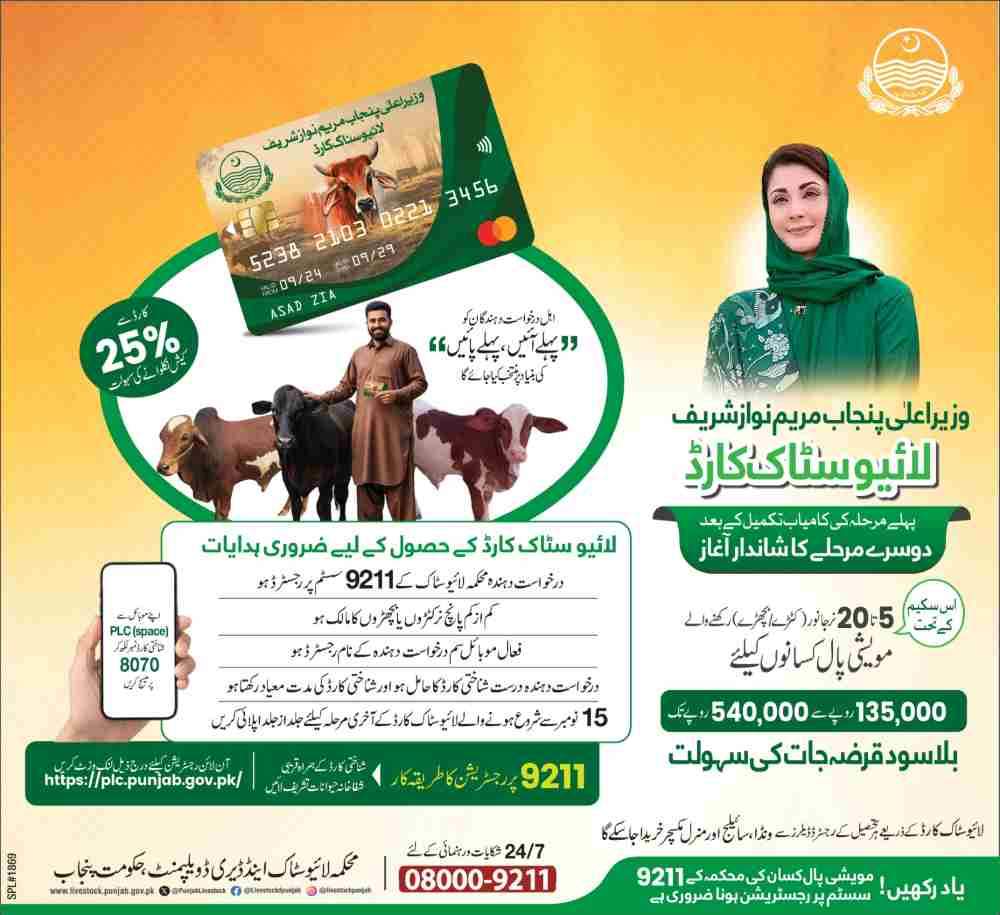
Table of Contents
What Exactly Does the Punjab Livestock Card Phase 2 Offer to Farmers?
The CM Punjab Livestock Card Phase 2 functions as a digital debit card pre-loaded with an interest-free loan amount specifically designated for purchasing animal feed and nutritional supplements. Unlike conventional agricultural loans that deposit cash into bank accounts with minimal oversight, this card operates through a restricted payment system at authorized feed dealers, ensuring every rupee serves its intended purpose of improving animal nutrition. The card carries no interest charges whatsoever, with the Punjab government absorbing all administrative costs and financial markup that would typically apply to such lending products. This structure fundamentally transforms how agricultural support reaches farmers, replacing indirect subsidies with direct, traceable financial assistance that puts purchasing power directly in the hands of those raising livestock.
Why Did the Punjab Government Launch This Livestock Financing Initiative?
The provincial government recognized several interconnected challenges facing Punjab’s livestock sector that required innovative solutions beyond traditional agricultural policy. Small and medium farmers consistently face cash flow constraints during critical periods when animals need optimal nutrition for growth and production, forcing them to either underfeed their livestock or borrow from informal lenders at exorbitant interest rates. This financial pressure directly impacts animal weight gain, milk production, and ultimately the prices farmers receive at market, perpetuating cycles of poverty that span generations. The calf fattening segment received particular attention because it offers the most rapid return on investment, with properly nourished animals reaching market weight in four months compared to eight months or longer for underfed livestock. By targeting this specific production bottleneck, the scheme maximizes impact per rupee invested while creating measurable improvements in meat production that benefit provincial food security and export potential.
Read More: Maryam Nawaz 3 Marla Scheme | Apni Zameen Apna Ghar 3 Marla Scheme
Who Qualifies as Target Beneficiaries Under the Phase 2 Expansion?
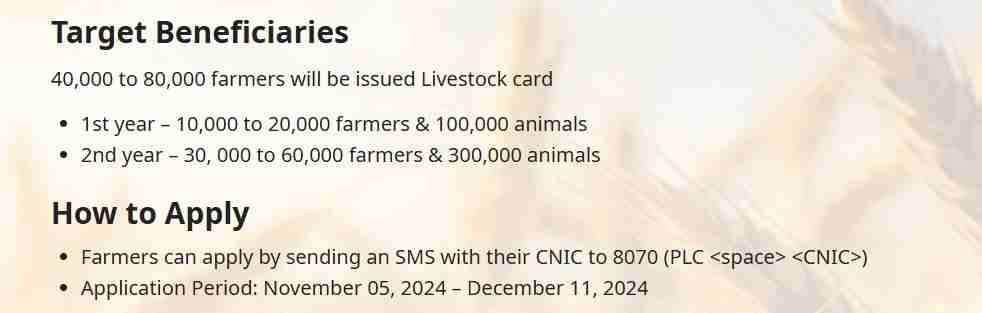
The program targets a carefully defined segment of Punjab’s livestock farming community, focusing on small to medium operators who lack access to formal credit but possess the experience and infrastructure to utilize loans effectively. Phase 2 aims to reach 40,000 to 80,000 farmers across the province, with a graduated implementation strategy that prioritizes quality over speed during initial rollout. Year one targets 10,000 to 20,000 farmers and 100,000 animals, allowing the Livestock Department to refine verification procedures and build administrative capacity before scaling. Year two dramatically expands to 30,000 to 60,000 farmers and 300,000 animals, reflecting confidence in the program’s systems and demonstrating the government’s commitment to transforming livestock production at scale. This phased approach ensures that early beneficiaries receive full support while the program learns and adapts, rather than rushing to hit numerical targets that compromise service quality.
How Does Phase 2 Differ From the Initial Livestock Card Launch?
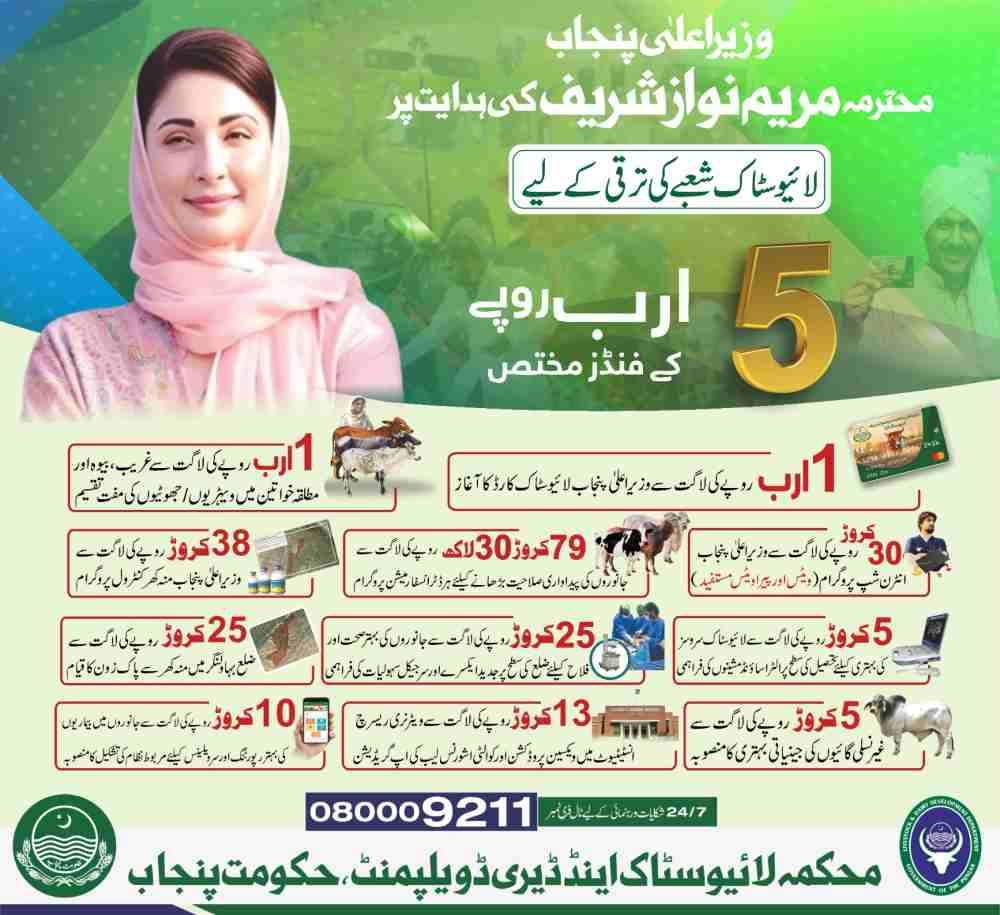
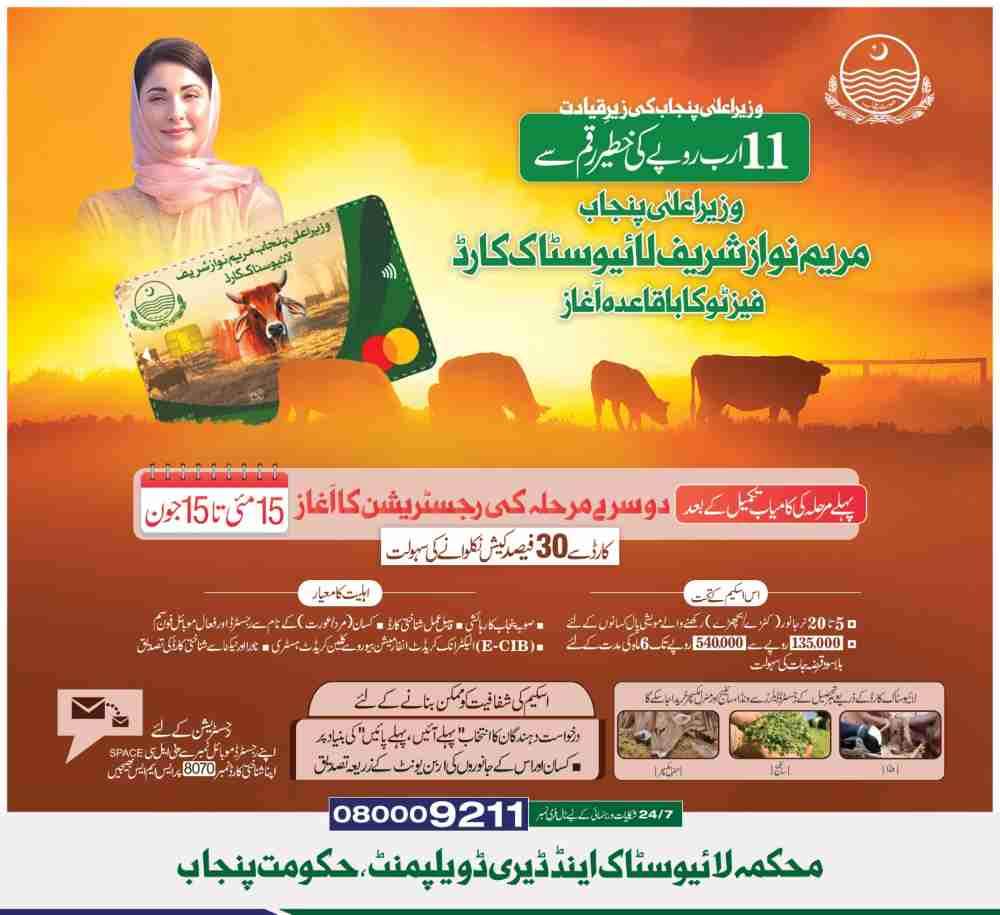
Phase 2 represents substantial evolution from the pilot program, incorporating lessons learned during initial implementation and expanding benefits based on farmer feedback and program data. The maximum loan limit increased significantly from Rs. 270,000 to Rs. 540,000, acknowledging that farmers with larger herds require proportionally greater financial support to achieve meaningful production improvements. The 30% cash withdrawal facility addresses feedback from Phase 1 farmers who sometimes needed flexibility for transportation costs or purchases from dealers not yet integrated into the authorized network. Verification processes have been streamlined through improved PITB technology, reducing processing times while maintaining rigorous fraud prevention. The women’s component has been substantially expanded based on demonstrated success in Phase 1, recognizing that female farmers achieve exceptional results when given direct access to resources and training.
What Role Does the Livestock Department Play in Scheme Implementation?
The Livestock Department serves as the primary implementing agency, coordinating all aspects of beneficiary identification, verification, and ongoing support throughout the loan cycle. District livestock officers manage the critical physical verification process, visiting applicant farms to count animals, verify their presence, and confirm they match SPMS-9211 registration records. Veterinary officers integrated into the program provide ongoing health support to beneficiaries, conducting regular monitoring visits and responding to disease outbreaks that could threaten loan repayment capacity. The department also manages the authorized dealer network, approving vendors based on their capacity to maintain quality feed stocks and comply with program reporting requirements. This hands-on involvement ensures that agricultural expertise informs every stage of program implementation, rather than treating livestock financing as a purely administrative or banking exercise.
Complete Eligibility Requirements for Phase 2 Participation
What Are the Basic Residency and Identity Requirements for Applicants?
Every applicant must hold Pakistani citizenship and possess a valid Computerized National Identity Card issued by NADRA, with permanent residence verified as being within Punjab province. The residency verification process checks current address records against NADRA databases and may require additional documentation such as utility bills or property records if database information appears inconsistent. This requirement ensures that program benefits flow to Punjab residents as intended, rather than being captured by individuals from other provinces who might apply using temporary addresses. The CNIC must be valid and unexpired at the time of application, with all personal information matching other documentation submitted during the registration process. Farmers whose CNICs have expired should renew through NADRA before applying, as expired identity documents trigger automatic rejection during the initial verification stage.
How Many Animals Must a Farmer Own to Qualify for the Livestock Card?
Animal ownership constitutes the most fundamental eligibility criterion, with specific minimum and maximum requirements designed to target the intended beneficiary population. Farmers must own between five and twenty male calves or young stock, with the loan amount calculated at Rs. 27,000 per verified animal. This per-animal rate reflects average feed costs required to achieve significant weight gain over the four-month utilization period, ensuring loan amounts align with actual production needs. Both cattle and buffalo calves qualify for inclusion, recognizing that Punjab’s livestock sector encompasses significant populations of both species with similar nutritional requirements during fattening phases. The minimum threshold of five animals ensures that very small operators without capacity for meaningful production increases do not receive loans they cannot effectively utilize, while the maximum ceiling prevents the largest commercial operations from dominating limited program resources.
Why Is SPMS-9211 Registration Absolutely Mandatory for Participation?
The SPMS-9211 system serves as the government’s comprehensive digital livestock record database, and registration within this system provides the only acceptable proof of animal ownership for Livestock Card applications. Each registered animal receives a unique identification number and physical ear tag that remains with the animal throughout its life, creating an unbreakable chain of custody that prevents fraud where farmers might claim ownership of non-existent animals. The system maintains detailed health records including vaccination history, disease treatments, and weight measurements, providing valuable data that helps livestock officers assess animal condition during verification visits. Farmers who have not yet registered their animals must complete this process before applying, visiting their nearest Livestock Department office or veterinary hospital where staff can enter animals into the system and apply permanent identification tags.
What Credit History Standards Must Applicants Satisfy?
The Punjab government requires all applicants to demonstrate clean credit history with no defaults on previous government loans or subsidized credit programs. This verification occurs through the Electronic Credit Information Bureau, which maintains comprehensive records of all formal lending transactions and government program participation throughout Pakistan. Farmers who defaulted on previous initiatives including Kisan Cards, tractor financing schemes, agricultural input loans, or earlier livestock programs find their applications automatically rejected during this verification stage. The requirement protects program sustainability by ensuring that limited resources flow to farmers who have demonstrated responsible financial behavior and are likely to repay according to terms. Farmers with no prior credit history are not penalized, as the system can verify a clean slate through absence of negative records.
How Does Mobile SIM Registration Verification Work and Why Is It Required?
Every applicant must maintain an active mobile SIM card registered in their own name as verified by NADRA and mobile network operator databases. This requirement serves multiple critical functions within the program’s digital infrastructure. The registered mobile number receives application confirmation messages, status updates throughout verification, and repayment reminders when loans approach maturity. Two-factor authentication during online portal access relies on SMS verification codes sent to this number. Emergency communications about disease outbreaks or weather events affecting livestock reach beneficiaries through this channel. The verification process checks not only current ownership but also registration date, rejecting numbers recently transferred or newly activated as potential fraud indicators. Farmers without personally registered SIMs should visit their mobile network operator’s franchise with CNIC to transfer ownership or obtain new connections before applying.
Are There Any Age Restrictions or Income Limitations for Applicants?
The main Livestock Card program does not impose specific age limits, recognizing that farmers of all ages may maintain productive livestock operations worthy of support. However, the women’s component specifies a maximum age of 55 years for widows and divorced women, reflecting the program’s focus on supporting women during their prime working years when livestock management can generate sustainable income. Income verification occurs indirectly through the Punjab Social and Economic Registry for women applicants, while general farmers are evaluated based on livestock ownership rather than income brackets. The scheme explicitly prioritizes small farmers, meaning those with substantial landholdings or existing large-scale commercial operations may find applications deprioritized in favor of genuine smallholders during competitive selection periods.
Detailed Application Procedures for Phase 2
How Can Farmers Apply Through the Simple SMS Method to 8070?
The SMS application method offers the most accessible registration pathway, requiring only a basic mobile phone and knowledge of your CNIC number without any internet connectivity or digital literacy. Farmers open their messaging application and type “PLC” followed by a space and their thirteen-digit CNIC number without dashes or spaces between digits. Sending this message to 8070 initiates immediate automated processing that checks basic eligibility criteria against government databases and confirms receipt within minutes. The confirmation message includes a unique tracking reference number that applicants should save for future status inquiries. This system handles thousands of simultaneous applications without delays, and farmers who do not receive confirmation within twenty-four hours should resend the message or contact the helpline to verify delivery and troubleshoot potential network issues.
What Steps Are Involved in Online Registration Through the Official Portal?
Farmers with internet access and basic digital literacy can complete more comprehensive applications through the official Punjab Livestock Department website at livestock.punjab.gov.pk. The online portal guides applicants through each step of the registration process, validating information as entered and highlighting missing requirements before submission. New users must create an account using their CNIC number and registered mobile number, receiving a verification code via SMS to confirm identity. The application form collects detailed information about livestock holdings including animal counts, breeds, and SPMS-9211 registration numbers. Document upload functionality allows farmers to attach CNIC scans, proof of residence, and any other supporting materials directly through the portal. After submission, the system provides real-time status tracking showing each stage of verification as it completes.
What Documents Must Applicants Prepare Before Starting Registration?
Proper documentation preparation significantly reduces processing delays and minimizes rejection risk during verification stages. The essential documents include original CNIC and clear photocopies, recent proof of SPMS-9211 registration showing animal identification numbers, mobile SIM ownership verification that can be demonstrated through recent recharge history or operator confirmation, proof of residence such as utility bills or domicile certificate issued within the last six months, recent passport-sized photographs for physical file records, bank account details if already holding accounts with partner banks, and for women applicants under special quotas, widowhood or divorce certificates where applicable. Organizing these documents in both physical and digital formats streamlines whichever application method farmers choose.
What Happens During the Multi-Stage Verification Process After Application?
Following successful application submission, a comprehensive verification process begins that determines final approval and card issuance. NADRA databases first verify CNIC authenticity, confirming the applicant is a living citizen with valid identity credentials and no discrepancies that might indicate fraud. Mobile network operator records simultaneously confirm SIM ownership and active status, flagging any numbers registered to different individuals. The E-CIB credit bureau check reviews all previous government loan participation and default status, generating an immediate eligibility determination. Following these automated checks, designated verification teams conduct physical inspections of the applicant’s livestock, visiting farm locations to count animals, verify their presence, and confirm they match SPMS-9211 registration records. This physical verification prevents fraud where farmers might claim animals they do not actually possess. Finally, the complete verification package is reviewed by district-level committees that make final approval decisions based on verified eligibility and available quota.
How Long Does Complete Verification Typically Take From Start to Finish?
The complete verification process generally requires two to four weeks from application submission to final decision, though actual timelines vary based on application volume and verification team availability in each district. Automated checks complete within twenty-four to forty-eight hours, generating initial eligibility determinations that filter out obviously ineligible applicants quickly. Physical inspections consume the most time, as verification teams must travel to each applicant’s location, often in remote rural areas with limited road infrastructure. High-volume districts may experience backlogs during peak application periods, particularly when new registration windows open. Farmers receive SMS updates at each milestone including application received, automated verification complete, inspection scheduled, inspection completed, and final decision. Those whose applications exceed thirty days without update should contact the helpline to inquire about delays and ensure files have not encountered administrative obstacles.
Loan Structure and Financial Terms Explained
How Much Interest-Free Credit Can Farmers Access Through This Scheme?
The CM Punjab Livestock Card provides loans ranging from Rs. 135,000 to Rs. 540,000, with the exact amount determined by verified animal count multiplied by the standard per-animal rate of Rs. 27,000. This per-animal calculation ensures proportionality, meaning farmers with larger herds receive larger loans that reflect their greater feed requirements and production capacity. Farmers owning the minimum five animals qualify for Rs. 135,000, providing substantial working capital for feed purchases that can transform their operations. Those with ten animals access Rs. 270,000, while farmers reaching the Phase 2 maximum of twenty animals receive the full Rs. 540,000 ceiling. The government covers all interest charges that would normally apply, meaning farmers repay exactly the amount borrowed without any additional financial burden.
What Specific Purchases Are Permitted Using the Livestock Card?
The Livestock Card operates through a restricted payment system that ensures loan funds contribute directly to production increases rather than diversion to household or other expenses. Approved purchases include Wanda concentrated animal feed that provides essential proteins and energy for rapid weight gain during the critical fattening period. Silage, fermented fodder that preserves nutritional value and provides consistent feed quality throughout the year, qualifies as an approved purchase. Mineral mixtures containing calcium, phosphorus, and trace elements essential for bone development and overall animal health can be purchased with card funds. Veterinary medicines and nutritional supplements recommended by livestock officers are covered when purchased from authorized dealers. Feed additives that improve digestion and nutrient absorption also qualify, provided they appear on the approved products list maintained by the Livestock Department.
Can Farmers Withdraw Cash From Their Livestock Card Accounts?
Phase 2 introduces a 30% cash withdrawal facility that provides farmers with flexibility while maintaining program integrity through the remaining 70% restricted to authorized dealer purchases. This partial cash component addresses situations where farmers need to transport purchased feed, pay for labor, or purchase from dealers who may not yet be fully integrated into the authorized network. Cash withdrawals can be processed at partner bank ATMs or over the counter at Bank of Punjab branches, with farmers required to provide basic documentation of intended use when amounts exceed certain thresholds. Farmers considering cash withdrawals should understand that this reduces the traceability benefits of the card system and may trigger additional documentation requirements during subsequent application phases or loan renewal processes.
What Are the Complete Repayment Terms Including Grace Period?
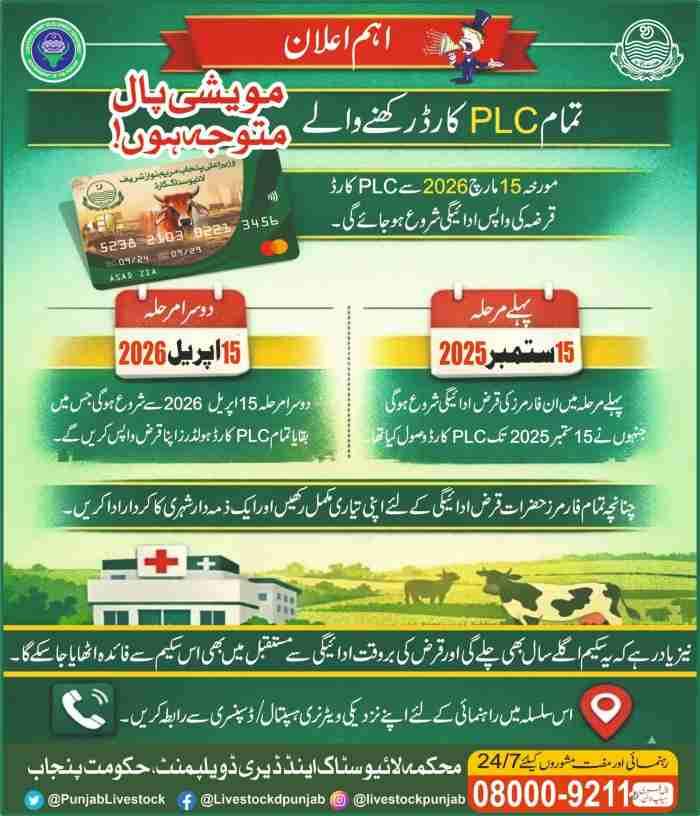
The loan repayment structure aligns precisely with the natural cycle of calf fattening operations, providing adequate time for animals to reach market weight before repayment obligations begin. Farmers receive a four-month utilization period during which they can purchase feed and care for their animals without any repayment pressure whatsoever. Following this, a one-month grace period allows for marketing and sale of fattened animals, with full repayment due at the end of this fifth month. This five-month total cycle matches typical fattening periods where calves gain significant weight within one hundred twenty days of optimized feeding, after which farmers can sell at premium prices reflecting improved condition. The grace month acknowledges that actual sales may take time to finalize and ensures farmers are not forced into distress sales at unfavorable prices.
How Is Loan Repayment Structured and Collected From Beneficiaries?
Loan repayment occurs as a single lump sum at the end of the five-month cycle rather than through monthly installments, simplifying administration and matching farmers’ cash flow patterns. Most farmers sell fattened animals in bulk transactions that generate significant lump-sum payments, making monthly installments impractical and potentially forcing premature sales at unfavorable prices. Repayment occurs through the same partner bank system that disbursed the loan, with farmers depositing the principal amount at any Bank of Punjab branch using their Livestock Card account number. The bank provides a receipt confirming repayment that farmers should retain as proof for future scheme participation and credit history purposes. Early repayment is permitted and encouraged, with no penalties or lost benefits for farmers who can repay sooner through successful animal sales or other income.
What Consequences Follow Loan Default or Late Payment?
Default consequences are significant and designed to maintain program sustainability while discouraging casual non-payment. Farmers who fail to repay by the deadline face immediate flagging in the E-CIB credit bureau system, rendering them ineligible for any future government scheme including Kisan Cards, tractor subsidies, and subsequent livestock program phases. The government initiates recovery procedures through partner banks, which may include legal notices and civil proceedings to recover outstanding amounts. However, the program recognizes that genuine hardship can occur through disease outbreaks, natural disasters, or family emergencies. Farmers facing unavoidable difficulties should contact the helpline immediately to discuss restructuring options before default status is recorded. The government prefers working solutions that recover principal over punitive measures that leave farmers permanently excluded from future opportunities.
Special Provisions for Women Farmers
Are Women Farmers Eligible to Apply for the Livestock Card Program?
Women farmers are not merely eligible but actively prioritized under the CM Punjab Livestock Card Phase 2, with special quotas and dedicated program components addressing the unique challenges women face in livestock farming. The government recognizes that women perform the majority of daily animal care work in rural Punjab yet rarely control the financial resources needed for feed and veterinary inputs. By providing cards directly to women, the scheme ensures that those doing the work receive the resources, fundamentally shifting household dynamics and empowering women economically. Applications from women receive equal consideration in the general pool, and a separate women’s component provides additional opportunities specifically for female beneficiaries who might otherwise be overlooked in household decision-making.
What Does the Rural Women’s Livestock Program in South Punjab Include?
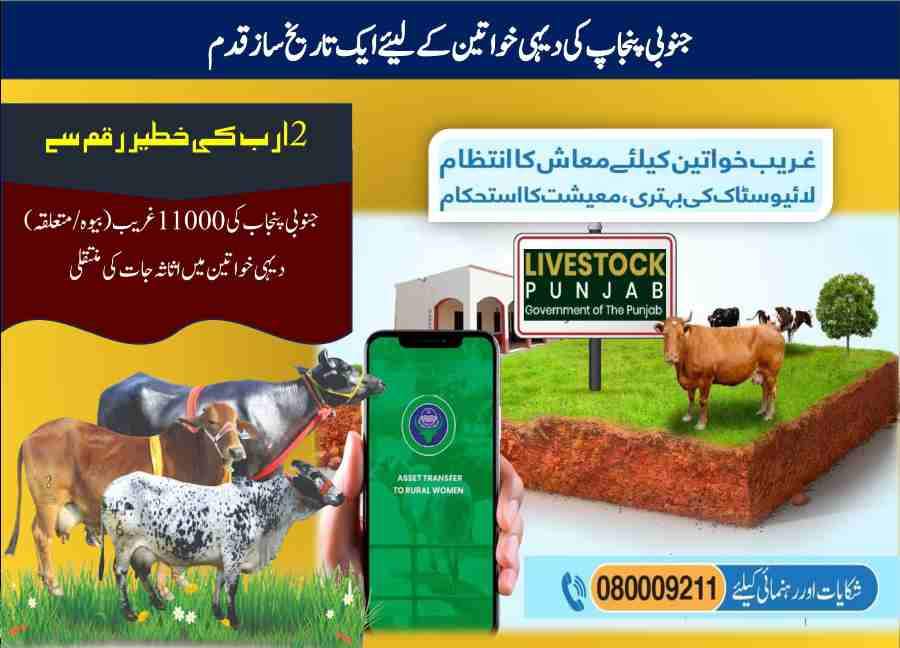
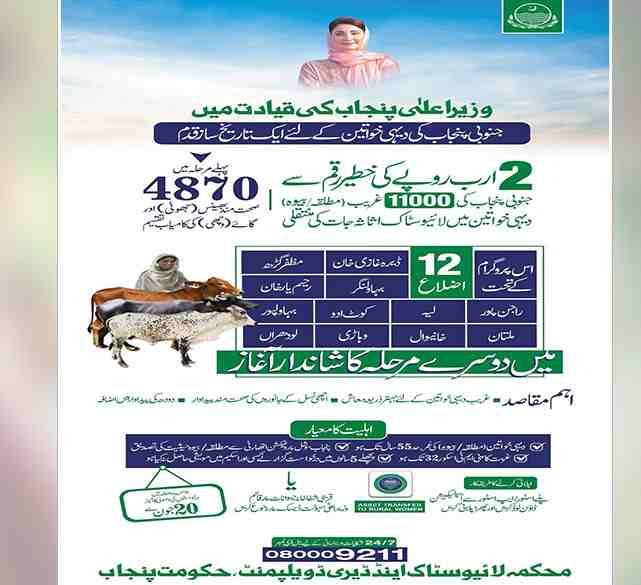
A dedicated component of Phase 2 targets 10,957 poor rural women across twelve districts of South Punjab, providing free livestock assets rather than loans to the most vulnerable households. This program specifically benefits widowed and divorced women not exceeding fifty-five years of age who did not receive animals from any government scheme during the previous five years. The districts covered include Multan Division with 3,652 beneficiaries, Bahawalpur Division with 2,740 beneficiaries, and Dera Ghazi Khan Division with 4,565 beneficiaries, reflecting the concentration of poverty and livestock-dependent livelihoods in these areas. Selected women receive healthy cows or buffaloes, initial feed support, and comprehensive training on livestock management, animal nutrition, and breed improvement from field veterinarians.
What Benefits Do Widows and Divorced Women Receive Under Special Quotas?
Widowed and divorced women receive the most comprehensive support package under the women’s component, acknowledging their heightened vulnerability and limited alternative income sources. Each eligible woman receives a productive dairy animal selected for good genetic potential and current health status, along with three months of free feed to establish the animal in its new environment. Free veterinary care continues throughout the program, with regular checkups and vaccination schedules managed by local livestock departments. Training programs specifically designed for women participants cover practical topics like recognizing illness early, proper milking techniques, and basic business calculations for milk sales. The program’s ultimate goal is creating sustainable livelihoods where women can sell milk and milk products, generating monthly income that continues long after direct program support ends.
How Do Women Apply Under the Special Quota Provisions?
Women applying under the special quota must follow slightly different procedures than general applicants, reflecting the program’s different structure as an asset transfer rather than loan scheme. Applications are accepted through the same SMS system to 8070, but women should also visit their local Livestock Department office to register specifically for the women’s component. Required documentation includes CNIC, proof of widowhood or divorce status through Nikah Nama or divorce certificate, and verification of residence in eligible South Punjab districts. The Punjab Social and Economic Registry poverty score is checked to confirm eligibility, with priority given to women scoring below the threshold indicating extreme poverty. Selection occurs through transparent processes with district-level committees reviewing applications and selecting beneficiaries based on verified eligibility and available quota.
Practical Guide to Using Your Livestock Card
How Can Farmers Locate Authorized Feed Dealers in Their Area?
The Livestock Department maintains a comprehensive directory of authorized dealers who have been vetted and equipped to accept Livestock Card payments throughout Punjab. Farmers can access this directory through the official website by entering their district and tehsil information to receive nearby dealer listings with complete contact details and directions. The helpline provides dealer information when callers provide their location, with operators able to SMS dealer details directly to mobile phones. SMS-based lookup allows farmers to send their CNIC and location keyword to 8070, receiving automated replies with nearest authorized dealers. Authorized dealers display official certification from the Livestock Department and use government-provided point-of-sale terminals that connect directly to the central card system. Farmers should verify dealer authorization before making purchases, as transactions at unauthorized shops will not process and may indicate fraud attempts.
What Is the Step-by-Step Process for Making Purchases?
Using the Livestock Card at authorized dealers follows a simple, secure process designed for farmers with varying literacy levels and technology comfort. Present your card to the dealer, who will insert it into the point-of-sale terminal and enter the purchase amount after confirming product availability and pricing. You will be prompted to enter your four-digit PIN, which you set during card activation at the bank and should never share with anyone including dealers. The terminal communicates with the central system to verify available balance and authorize the transaction, generating two receipts showing the purchase amount, date, dealer information, and remaining balance. Always collect your receipt and verify the deducted amount matches your intended purchase before leaving the shop. The receipt serves as your record of how loan funds are being utilized and may be requested during subsequent verification visits or when applying for future phases.
How Can Farmers Check Their Card Balance and Transaction History?
Staying informed about your remaining balance helps with budgeting and ensures you do not exceed loan limits unexpectedly. Balance can be checked through multiple convenient channels including sending your CNIC number to 8070 with the word “BALANCE” to receive automated reply showing current available funds. The online portal provides comprehensive account access when you log in using your credentials, displaying current balance and complete transaction history with dates, amounts, and dealer names for each purchase. Bank of Punjab ATMs accept the card for balance inquiries and cash withdrawals where applicable, providing twenty-four-hour access to account information. The helpline offers balance information after identity verification for farmers who prefer speaking with operators. Reviewing transaction history monthly helps identify any unauthorized transactions and ensures your card has not been compromised.
What Immediate Steps Should Be Taken If the Card Is Lost or Stolen?
Immediate action is essential if your Livestock Card is lost or stolen, as the loaded funds could be misused before the card is blocked. Call the helpline immediately to report the loss and request card blocking, providing your CNIC number and any reference details you have for fastest processing. Follow up by visiting your nearest Bank of Punjab branch within twenty-four hours to complete formal blocking procedures documented in writing and apply for a replacement card. The replacement process typically takes five to seven working days, during which your remaining balance remains secure in your account. Any unauthorized transactions occurring after you report the loss are investigated, and funds may be restored if the bank determines proper reporting procedures were followed. Keep your PIN confidential and never write it on the card or store it with the card where finders could access both.
Technology Infrastructure Supporting the Scheme
What Role Does PITB Play in Digitizing the Livestock Card Program?
The Punjab Information Technology Board has developed and maintains the end-to-end digital infrastructure that makes the Livestock Card scheme possible at scale across Punjab’s diverse geography. PITB’s systems handle application processing through multiple channels including SMS and web portals, managing the complex workflow that routes applications through verification stages. Database management ensures all applicant information remains secure while accessible to authorized personnel at Livestock Department offices and partner banks. Verification workflows integrate with external databases including NADRA for identity verification, mobile network operators for SIM confirmation, and the credit bureau for financial history checks. The card transaction network connects thousands of authorized dealers, banks, and the central system, enabling real-time balance updates and transaction processing. Analytics generated by the system help program managers identify bottlenecks, track disbursement rates, and ensure equitable distribution across districts, enabling data-driven program improvements.
What Features Does the Farmer Guidance App Provide to Beneficiaries?
The Farmer Guidance App, developed alongside the Livestock Card, provides registered farmers with a comprehensive mobile platform for accessing expert advice, receiving alerts, and managing their livestock operations more effectively. Veterinary helplines connect farmers directly to livestock officers for immediate consultation when animal health issues arise, reducing mortality through timely intervention. Disease alerts notify farmers about outbreaks in their region and recommended preventive measures, enabling proactive protection of their herds. Feeding guides provide scientifically-based recommendations for optimizing nutrition based on animal age, weight, and production goals, helping farmers maximize the impact of their feed purchases. Vaccination reminders help farmers maintain animal health schedules, improving overall herd productivity and reducing treatment costs. The app also provides weather alerts relevant to livestock management, helping farmers prepare for extreme conditions.
How Does the SPMS-9211 System Function as the Program’s Backbone?
The SPMS-9211 system functions as the comprehensive livestock management platform that underpins the entire Livestock Card scheme by maintaining detailed records of every registered animal throughout Punjab. Farmers can access their SPMS records through the associated mobile app or by visiting veterinary hospitals where staff can print complete animal histories for verification purposes. The system tracks each animal’s unique ear tag number, breed, age, vaccination history, disease treatments, and ownership transfers, creating an unbreakable chain of custody that prevents fraud. For Livestock Card purposes, SPMS-9211 provides the definitive verification of animal ownership and count, preventing claims for non-existent animals. The system enables longitudinal tracking of animal health outcomes, allowing the Livestock Department to measure the scheme’s impact on productivity and adjust future phases accordingly based on objective data rather than anecdotal reports.
How Can Farmers Track Their Application Status Through Multiple Channels?
The PLC Punjab gov pk portal offers comprehensive status tracking for all applicants, providing transparency throughout the verification process. To check your status online, visit livestock.punjab.gov.pk and navigate to the application status section, where you enter your CNIC number and the reference number received during initial application. The system displays your current stage including received, under automated verification, pending physical inspection, inspection completed, under final review, approved, or rejected. Each status includes the date when that stage was reached and estimated remaining time for the next update. Farmers whose applications show prolonged inactivity can use the portal’s inquiry feature to request status updates or call the helpline with their reference number for personalized assistance.
What SMS-Based Status Checking Options Exist for Farmers Without Internet?
For farmers without internet access, the SMS system provides basic status checking functionality through the same 8070 short code used for applications. Send your CNIC number to 8070 with the word “STATUS” to receive an automated reply indicating your current application stage. This system works on any mobile phone and requires no data connection, making it accessible to farmers in areas with limited internet infrastructure or those who prefer simple mobile communication. The SMS response includes your application reference number, current status, and estimated timeline for completion. While less detailed than the online portal, this method provides essential information and works reliably across all mobile networks in Punjab. Farmers can use this method as frequently as needed without charge, enabling regular monitoring throughout the verification period.
Training and Support Services Available
What Training Programs Do Beneficiaries Receive After Selection?
Selected Livestock Card beneficiaries gain access to comprehensive training programs designed to maximize the productive impact of their loan funds through improved management practices. These free training sessions cover modern livestock management techniques, with modules on balanced nutrition and feed formulation that help farmers understand why specific feeds are recommended and how to combine them for optimal results. Disease prevention training teaches recognition of common illnesses including foot-and-mouth disease, hemorrhagic septicemia, and mastitis, with appropriate response protocols that reduce mortality and treatment costs. Breeding management sessions explain optimal timing for breeding and selection criteria for replacement stock, helping farmers improve their herds over time. Business skills training helps farmers calculate profitability, track expenses, and make informed decisions about when to sell fattened animals to maximize returns.
What Veterinary Support Services Are Available to Card Holders?
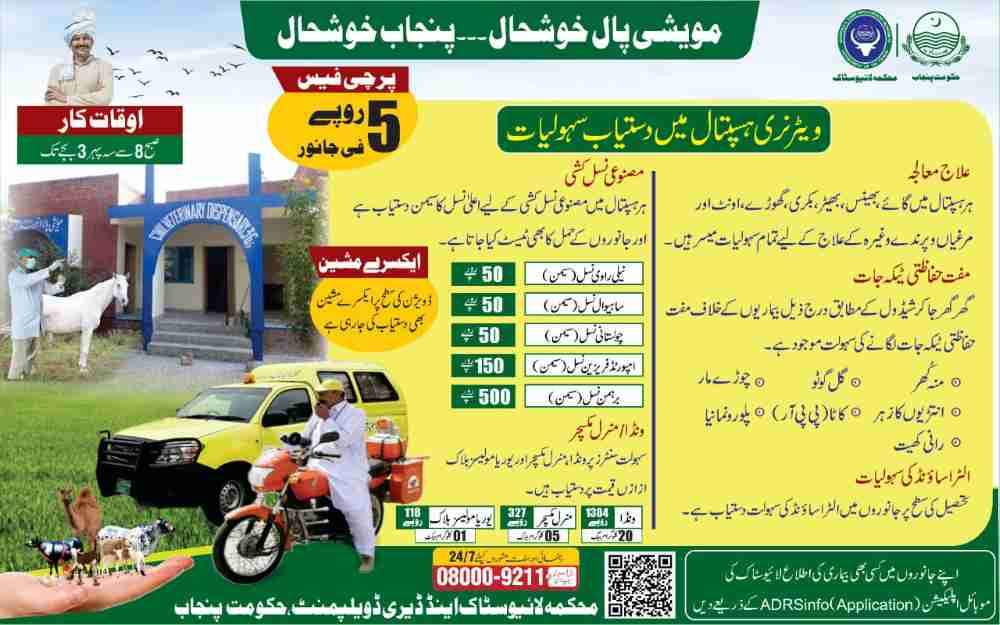
The Livestock Card scheme integrates closely with the provincial veterinary network to ensure beneficiaries’ animals remain healthy and productive throughout the loan period. Registered farmers receive priority access to government veterinary hospitals and dispensaries, with reduced or eliminated fees for basic consultations and common treatments. Vaccination campaigns specifically target Livestock Card beneficiaries’ animals, ensuring they receive protection against preventable diseases that could derail fattening progress. Veterinary officers conduct regular health monitoring visits to beneficiary farms, identifying potential issues before they become serious and providing on-site treatment when needed. This comprehensive health support protects the government’s investment in loans while ensuring farmers benefit from improved animal productivity rather than losses from preventable diseases.
What Helpline Numbers Provide Round-the-Clock Support?
The CM Punjab Livestock helpline operates twenty-four hours daily, seven days weekly, providing immediate assistance for farmers facing technical issues, application questions, or emergency situations requiring rapid response. The primary helpline number is 08000-9211, a toll-free line accessible from any phone in Punjab without charge to the caller. Trained operators handle initial inquiries, resolving common questions about application status, dealer locations, card usage, and eligibility requirements efficiently. Complex issues are escalated to specialized teams within the Livestock Department or PITB, with guaranteed callback within forty-eight hours for problems requiring technical expertise. Farmers can also reach support through email at support@livestock.punjab.gov.pk, though response times are longer than the helpline for non-urgent inquiries.
Frequently Asked Questions
What is the CM Punjab Livestock Card Phase 2 program?
The CM Punjab Livestock Card Phase 2 is a government initiative providing interest-free loans ranging from Rs. 135,000 to Rs. 540,000 to livestock farmers for purchasing animal feed, silage, and mineral mixtures to support calf fattening operations and improve meat production.
How can I apply for the Punjab Livestock Card Phase 2 online?
You can apply by sending an SMS with your CNIC number to 8070 in the format “PLC CNIC,” through the online portal at livestock.punjab.gov.pk, or by visiting your nearest Livestock Department office or Bank of Punjab branch for in-person assistance.
What are the complete eligibility criteria for the livestock card?
Applicants must be Punjab residents with valid CNIC, own 5 to 20 male calves registered in the SPMS-9211 system, have an active SIM registered in their name, and maintain clean credit history with no defaults on previous government loans.
How much interest-free loan can I get through this scheme?
Loan amounts range from Rs. 135,000 for five animals to Rs. 540,000 for twenty animals, calculated at Rs. 27,000 per verified animal during physical inspection. The exact amount depends on your verified animal count.
What is the repayment period for the livestock loan?
The loan comes with a four-month utilization period for purchasing feed and caring for animals, plus a one-month grace period, making total repayment due five months from loan disbursement as a single lump sum.
How do I check my livestock card application status online?
You can check status by sending your CNIC to 8070 with the word “STATUS,” visiting the online portal at livestock.punjab.gov.pk, or calling the helpline at 08000-9211 with your application reference number.
Can women farmers apply for Phase 2 of the livestock card?
Yes, women farmers are actively encouraged to apply and benefit from special provisions including dedicated quotas, free livestock distribution for widows and divorced women in South Punjab, and equal consideration in the general application pool.
What documents are required for the application process?
Required documents include valid CNIC, proof of mobile SIM ownership, SPMS-9211 registration record showing animal identification, proof of residence, and for women applicants under special quota, widowhood or divorce certificates where applicable.

Add a Comment