
Every day, millions of children across Punjab arrive at school without having eaten a proper meal, their empty stomachs hindering their ability to learn, grow, and thrive. The CM Punjab School Nutrition Program represents a landmark public health intervention that directly addresses this crisis by providing scientifically formulated daily nutrition to primary school students, transforming both their health outcomes and educational trajectories.
What this comprehensive medical guide covers:
- The complete district-by-district rollout with updated coverage statistics
- Nutritional composition analysis of all food items and their developmental benefits
- Medical eligibility criteria and automatic enrollment protocols
- The recycling initiative’s health and environmental impact
- Clinical outcome data including enrollment increases and malnutrition reduction
- Official grievance mechanisms and quality monitoring systems
Key Takeaways
- Medical Impact on Development: Daily provision of fortified milk and biscuits directly targets childhood malnutrition, addressing critical deficiencies in calcium, iron, zinc, and vitamins A and D that affect brain development and physical growth in children aged 5 to 12 years.
- Proven Educational Outcomes: Government data confirms a 28 percent surge in student enrollment across participating districts, with over 24,700 new students joining schools primarily because of the nutritional incentive, demonstrating the direct link between food security and educational access.
- Expansive Geographic Coverage: The program now operates in 13 districts encompassing 8,319 schools, with a balanced gender distribution of 4,309 boys’ schools and 4,010 girls’ schools, ensuring equitable access to nutrition for all primary students.
- Innovative Sustainability Model: The milk pack recycling initiative generates revenue that funds school improvements while teaching environmental responsibility, with recycled furniture demonstrating remarkable durability against extreme temperatures and weather conditions.
- Substantial Financial Commitment: The Punjab government has released 2.6 billion rupees specifically for procurement, packaging, transportation, and monitoring, ensuring uninterrupted delivery of nutrition to over 400,000 students daily.
- Read More: Sehat Sahulat Program (By CM Punjab) | Free Insulin, Dialysis, & Medicines
- Read More: CM Punjab Dialysis Card | Free Dialysis Scheme (by CM Punjab)
- Read More: Maryam Nawaz Insulin Program | Free Insulin Scheme (By Insulin Card)
CM Punjab School Nutrition Program: Districts and Food Items List
Table of Contents
Understanding the Medical Foundation of the Punjab School Nutrition Program
The CM Punjab School Nutrition Program operates on a fundamental public health principle: nutrition is the biological foundation upon which education is built. When children experience malnutrition, their bodies prioritize survival over growth and cognitive function, leading to irreversible developmental consequences.
What is the medical rationale behind providing free meals to school children?
The human brain undergoes critical development during early childhood, with approximately 90 percent of adult brain volume achieved by age five and continued refinement through adolescence. Nutrient deficiencies during this window permanently impair cognitive architecture, reducing learning capacity regardless of subsequent educational quality.
Medical research consistently demonstrates that protein-energy malnutrition affects neurotransmitter production, synaptic plasticity, and myelination processes essential for efficient neural communication. Iron deficiency specifically compromises dopamine signaling and hippocampal function, directly impacting attention, memory, and behavioral regulation in classroom settings.
The CM Punjab School Nutrition Program addresses these biological imperatives by providing a daily nutritional intervention designed to fill the most common dietary gaps in the target population. Each component serves a specific physiological purpose based on established nutritional science rather than merely providing empty calories.
Which medical conditions does the program specifically target?
Childhood malnutrition manifests through multiple clinical presentations that the program systematically addresses. Stunting, defined as height-for-age below the fifth percentile, affects approximately 40 percent of Pakistani children under five according to national health surveys, representing chronic undernutrition with lifelong consequences including reduced cognitive capacity and lower adult earning potential.
Wasting, or acute malnutrition indicated by low weight-for-height, compromises immune function and increases susceptibility to infectious diseases that further deplete nutritional reserves. The program’s consistent daily nutrition helps stabilize weight trajectories and rebuild depleted energy stores.
Micronutrient deficiencies represent the most widespread yet invisible form of malnutrition. Iron deficiency anemia affects cognitive function and physical stamina before producing visible symptoms. Zinc deficiency impairs immune response and growth velocity. Iodine deficiency during childhood reduces IQ by up to 15 points. Vitamin A deficiency compromises vision and infection resistance.
How does the program’s nutritional content support child development?
The standardized daily ration provides approximately 300 to 350 calories from the combination of milk and biscuits, representing 15 to 20 percent of a child’s daily caloric requirements. More importantly, the nutritional density exceeds simple caloric value.
The 175 to 200 milliliter UHT milk pack delivers 6 to 8 grams of complete protein containing all essential amino acids required for tissue building and repair. The calcium content of approximately 250 to 300 milligrams supports the rapid bone mineralization occurring during primary school years, reducing future osteoporosis risk.
The fortified biscuits contribute complex carbohydrates for sustained energy release, preventing the blood sugar fluctuations that cause attention lapses and irritability. The fortification formula typically adds 4 to 6 milligrams of iron, covering 40 to 60 percent of daily requirements, plus zinc, iodine, and vitamins A and D at levels calibrated to WHO child nutrition guidelines.
Section 1: District-Wise Implementation and Geographic Coverage Analysis
Understanding where the CM Punjab School Nutrition Program operates requires examining the phased rollout strategy designed to build implementation capacity while prioritizing areas with the greatest medical need.
Which districts currently participate in the Punjab School Nutrition Program?
As of the most recent government notifications, the CM Punjab School Nutrition Program operates across 13 districts with comprehensive coverage of government primary schools. The complete district list includes Bahawalnagar, Bhakkar, Chiniot, Dera Ghazi Khan, Kot Addu, Layyah, Mianwali, Muzaffargarh, Rahim Yar Khan, Rajanpur, Taunsa, Lodhran, and Vehari.
This geographic footprint represents strategic expansion from the original pilot districts based on malnutrition prevalence data and logistical feasibility. The program currently serves students in 8,319 schools, with 4,309 institutions for boys and 4,010 for girls ensuring gender-equitable access.
How was the district selection process medically prioritized?
Public health officials selected initial districts using multiple data sources including the National Nutrition Survey indicators, district health information system reports, and education department enrollment statistics. Southern Punjab districts consistently demonstrated higher malnutrition rates, lower food security scores, and greater educational vulnerability, justifying their prioritization.
Dera Ghazi Khan, Muzaffargarh, and Rajanpur formed the original pilot cohort because they represented the convergence of multiple risk factors: high stunting prevalence, low household income indicators, significant food insecurity, and substantial government school enrollment. The successful operationalization in these challenging environments validated the program model for broader expansion.
What does the phased expansion timeline look like for new districts?
The expansion strategy follows a measured approach that balances urgency with implementation quality. Each new district undergoes a preparation phase involving supplier contracting, school infrastructure assessment, storage facility verification, and staff training before meal distribution begins.
Layyah district exemplifies this process, with 798 schools selected to participate and recycling infrastructure installed before launch. Over 99,000 students in Layyah now receive daily nutrition through the program, with recycling bins placed in every participating school under Environment Protection Agency supervision.
Chiniot’s recent inclusion added approximately 60,000 students across 353 schools, demonstrating the program’s capacity to scale while maintaining quality standards. Kot Addu, Lodhran, Taunsa, and Vehari represent the most recent expansion wave, with formal inauguration ceremonies marking their entry into the program.
Will the program eventually cover all Punjab districts?
Government officials have consistently stated the intention to expand the CM Punjab School Nutrition Program to all 36 districts based on successful pilot outcomes and available funding. The phased approach builds administrative capacity and logistical expertise while demonstrating value to secure continued budget allocation.
Districts under consideration for future phases include Rawalpindi, Faisalabad, Sargodha, Gujranwala, and Sahiwal, representing the transition from exclusively southern Punjab focus to province-wide coverage. Each new phase will incorporate lessons learned from earlier implementation, including enhanced monitoring protocols and refined delivery mechanisms.
| Phase | Districts Included | Approximate School Coverage |
|---|---|---|
| Initial Pilot | Dera Ghazi Khan, Muzaffargarh, Rajanpur | 3,527 schools |
| First Expansion | Bahawalnagar, Bhakkar, Layyah, Mianwali, Rahim Yar Khan | Approximately 2,500 schools |
| Current Coverage | Chiniot, Kot Addu, Lodhran, Taunsa, Vehari plus prior districts | 8,319 total schools |
Read More: CM Punjab Climate Internship Program (PKR 60K Apply Online)
Section 2: Comprehensive Nutritional Analysis of Food Items
The medical effectiveness of any nutrition program depends entirely on the quality and composition of the food provided. The CM Punjab School Nutrition Program’s food items undergo rigorous specification and testing to ensure they deliver intended health benefits.
What food items constitute the standard daily nutrition pack?
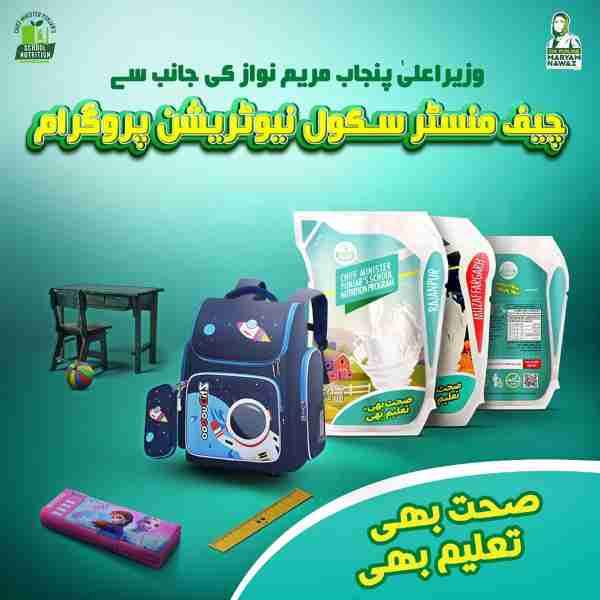
Every eligible student receives two components daily: one milk pack and one biscuit packet. This combination was selected after extensive nutritional analysis comparing various delivery mechanisms for cost-effectiveness, nutritional density, shelf stability, and cultural acceptability.
The milk component consists of 175 to 200 milliliters of UHT-treated cow’s milk. UHT processing involves heating milk to 135 to 150 degrees Celsius for two to five seconds, eliminating pathogenic microorganisms while preserving nutritional value. This treatment enables ambient storage for up to six months without refrigeration, critical for reaching schools in remote areas with unreliable electricity.
The biscuit component comprises 50 to 75 grams of specially formulated fortified biscuits. The manufacturing process incorporates micronutrient powders directly into the dough before baking, ensuring uniform distribution of added vitamins and minerals throughout each biscuit.
Why is UHT treatment medically necessary for school milk distribution?
UHT processing serves multiple medical and logistical purposes essential for program success. The high-temperature treatment destroys bacteria including Salmonella, E. coli, and Listeria species that cause foodborne illness, protecting children with developing immune systems from potentially severe infections.
The sterilization eliminates spoilage organisms that would otherwise cause rapid deterioration in Punjab’s extreme temperatures, which regularly exceed 40 degrees Celsius during summer months. This stability eliminates cold chain requirements, dramatically reducing program complexity and cost while maintaining safety.
Nutritionally, UHT processing preserves protein quality and calcium bioavailability while causing minimal vitamin loss compared to other preservation methods. Vitamin fortification after processing ensures final nutritional content meets specifications regardless of minor processing variations.
What specific nutrients do the fortified biscuits contain?
The biscuit fortification formula represents a carefully calibrated micronutrient delivery system designed to address the most prevalent deficiencies in Pakistani children. Each biscuit batch undergoes laboratory testing to verify nutrient content meets contract specifications.
Iron fortification typically provides 4 to 6 milligrams per serving, using electrolytic iron or ferrous fumarate forms with good bioavailability while minimizing gastrointestinal side effects. This represents a substantial contribution toward the 10 to 15 milligram daily requirement for school-age children.
Zinc oxide provides 3 to 5 milligrams of elemental zinc, supporting immune function, growth, and cognitive development. Zinc deficiency affects approximately 40 percent of Pakistani children, contributing to increased infection risk and growth impairment.
Iodine addition uses potassium iodate at levels providing 50 to 70 micrograms per serving, complementing universal salt iodization efforts while ensuring children receive adequate amounts for thyroid function and brain development.
Vitamin A palmitate provides 200 to 300 micrograms of retinol equivalents, supporting vision, immune function, and epithelial integrity. Vitamin D fortification adds 2 to 5 micrograms, critical for calcium absorption and bone health in a population with limited sun exposure due to cultural clothing practices.
How many milk packs and biscuits have been distributed medically?
The cumulative distribution figures demonstrate the program’s massive scale and public health impact. Over 33.7 million milk packs have reached students since program inception, each representing a child receiving high-quality protein and calcium essential for growth.
Biscuit distribution exceeds 12.2 million packets, each delivering the micronutrient fortification package designed to prevent deficiency diseases. Combined, these distributions represent over 45 million instances of nutritional intervention, each contributing to improved health outcomes.
What nutritional value does the milk-biscuit combination provide?
The synergistic effect of consuming milk and biscuits together exceeds the sum of individual components. Milk protein enhances absorption of certain micronutrients from biscuits, while biscuit carbohydrates facilitate efficient utilization of milk amino acids for tissue building.
The complete protein profile from milk complements the plant proteins in biscuits, ensuring all essential amino acids are available for growth. Calcium from milk requires vitamin D for absorption, which the fortified biscuits provide, demonstrating the thoughtful design behind component pairing.
The caloric distribution provides approximately 30 percent of energy from protein, supporting tissue synthesis, 50 percent from carbohydrates for immediate energy needs, and 20 percent from fats essential for brain development and fat-soluble vitamin absorption.
Section 3: Medical Eligibility and Beneficiary Criteria
Understanding who qualifies for the CM Punjab School Nutrition Program requires examining the medical and demographic targeting criteria that maximize public health impact.
Which students medically qualify for program participation?
Eligibility follows a geographic and institutional targeting model rather than individual screening. Any student enrolled in a government primary school located within a program-covered district automatically qualifies regardless of individual nutritional status.
This universal approach within targeted areas offers several medical advantages. It eliminates stigma associated with means testing, ensures siblings receive equal nutrition regardless of individual variation, and captures children whose malnutrition may not be visually apparent but who still benefit from supplementation.
The primary school focus targets children aged approximately 5 to 10 years, representing the late childhood window when growth velocity remains high and cognitive development continues rapidly. This age group shows greatest responsiveness to nutritional intervention while still being accessible through the school system.
Is the program available equally to boys and girls medically?
Yes, the program maintains strict gender equity in implementation, with schools for both sexes receiving identical rations. The current coverage includes 4,309 boys’ schools and 4,010 girls’ schools, demonstrating near-parity in institutional access.
This equity carries particular medical significance given cultural patterns where girls may receive less household food allocation than boys. School-based nutrition programs provide an equalizing mechanism ensuring girls receive at least one nutritionally complete meal regardless of home food distribution practices.
Are private school students medically excluded from the program?
The program specifically targets government schools because their student populations come predominantly from lower-income households with higher malnutrition risk. Private school students generally come from families with greater resources to provide adequate nutrition at home.
This targeting ensures limited public health resources reach the populations with greatest medical need. Government school students show higher prevalence of stunting, wasting, and micronutrient deficiencies than private school counterparts, justifying the exclusive focus.
Do parents need medical applications or documentation for enrollment?
No application or documentation process exists for families. Enrollment in a participating government school automatically enrolls the child in the nutrition program, with school rosters serving as the basis for meal counts.
This automatic enrollment carries medical advantages by removing barriers that might prevent high-need children from accessing services. Parents who cannot read, lack documentation, or face transportation barriers to government offices still have their children covered automatically.
What is the medical basis for targeting primary rather than secondary grades?
The primary school focus reflects developmental biology showing that nutritional interventions produce greatest benefit when delivered during active growth and brain development. Secondary school students have passed critical windows for height attainment and foundational cognitive development.
Primary students also show greater immediate response to nutrition in terms of school attendance and classroom engagement, creating positive feedback loops that reinforce educational participation. Younger children face greater health risks from malnutrition, including higher infection mortality and developmental delay.
Section 4: Medical Implementation and Quality Assurance Protocols
The medical effectiveness of any large-scale nutrition program depends entirely on implementation quality. The CM Punjab School Nutrition Program employs multiple layers of quality assurance to ensure children receive safe, nutritious food consistently.
How does the program ensure medical quality of distributed food?
Quality assurance begins with supplier qualification through competitive tendering that requires demonstrated manufacturing capability, food safety certifications, and quality control laboratory access. Approved suppliers undergo regular audits verifying continued compliance with contract specifications.
Each production batch undergoes testing before release, with samples retained for potential follow-up analysis. The Punjab Food Authority conducts independent testing of randomly collected samples from distribution channels, providing third-party verification of nutritional content and safety.
School-level staff receive training on visual inspection of delivered items, checking package integrity, expiry dates, and any signs of damage before accepting deliveries. This distributed quality monitoring creates multiple checkpoints preventing substandard products from reaching children.
What medical monitoring systems track program implementation?
Digital monitoring systems track daily distribution against enrollment data, flagging discrepancies that might indicate delivery failures or reporting errors. District education officers conduct unannounced school visits to observe distribution and interview students about their experience.
Nutrition Coordination Committees in each school include teacher representatives and parent volunteers who oversee implementation and report concerns through established channels. This community involvement provides continuous local monitoring beyond what government inspectors can achieve.
Health outcome monitoring in pilot phases includes baseline and follow-up anthropometric measurements tracking weight and height changes. These data inform program refinement and demonstrate impact to stakeholders supporting continued funding.
How does the Punjab Food Authority medically inspect food items?
The Punjab Food Authority maintains dedicated inspection teams focusing specifically on school nutrition program supplies. Inspectors conduct unannounced facility visits to observe manufacturing processes, review quality control records, and collect samples for laboratory analysis.
Laboratory testing verifies nutritional content matches specifications, including protein, fat, calcium, iron, zinc, and vitamin levels. Microbial testing ensures pathogen absence and acceptable total plate counts indicating hygienic processing. Packaging integrity testing verifies seals maintain sterility throughout distribution.
Failed inspections trigger immediate corrective action requirements, with repeat failures resulting in contract termination and potential legal action. This enforcement creates strong supplier incentives for consistent quality.
What medical protocols address food safety incidents?
The program maintains incident response protocols for any food safety concern. Suspected contamination triggers immediate suspension of distribution from affected batches while investigation proceeds. Affected schools receive replacement supplies from verified safe sources to minimize distribution interruption.
Medical referral pathways ensure children experiencing any adverse reaction receive appropriate care with documentation supporting investigation. Parent communication protocols inform families transparently about any safety concerns while maintaining confidence in program safety overall.
Section 5: The Medical and Environmental Benefits of Milk Pack Recycling
The milk pack recycling initiative represents an innovative integration of nutrition programming with environmental health education, creating multiple benefits beyond direct food provision.
What is the medical rationale for teaching recycling to children?
Environmental health education represents an often-overlooked component of child development. Understanding waste management, resource conservation, and environmental protection builds health literacy that persists into adulthood, influencing behaviors affecting long-term health outcomes.
The recycling program teaches children that resources have value beyond single use, encouraging mindful consumption patterns. Empty pack collection creates daily habits of environmental responsibility while keeping school grounds clean and reducing waste-related health hazards.
How are empty milk packs medically processed after collection?
Collection systems vary by school but generally involve classroom-level bins where students deposit rinsed empty packs. School-level consolidation prepares materials for pickup by recycling partners who transport packs to processing facilities.
Recycling technology separates the paperboard, plastic, and aluminum components for different applications. The high-quality paper fibers become raw material for new paper products. Plastic and aluminum components undergo processing for various manufacturing applications including furniture production.
What products result from recycled milk pack processing?
The recycling program produces tangible benefits that return to schools, creating visible connections between student participation and improved facilities. Furniture manufactured from recycled materials includes student desks, chairs, and teacher tables that equip classrooms at no additional cost.
Notebooks and stationery items also emerge from the recycling stream, providing learning materials funded entirely by waste that would otherwise burden landfills. Pencils manufactured from recycled components further extend the program’s reach into classroom supplies.
What medical durability do recycled furniture products demonstrate?
The recycled furniture exhibits remarkable durability characteristics with direct health implications. Products withstand temperatures up to 100 degrees Celsius without warping or degrading, ensuring functionality even in extreme summer conditions.
Rain exposure causes no damage, allowing outdoor use and eliminating moisture-related deterioration that affects wood furniture. The expected 40-year lifespan means furniture installed today will serve multiple generations of students, providing stable, safe seating that supports proper posture during learning.
This durability eliminates replacement costs and reduces waste from furniture disposal, extending environmental benefits beyond the initial recycling process. Schools receiving recycled furniture gain assets that improve learning environments for decades.
How do recycling revenues medically benefit individual schools?
Recycling revenue flows back to the generating schools through dedicated accounts managed for school improvement purposes. Funds accumulate based on pack volume returned, creating incentives for maximizing student participation in collection efforts.
School communities decide how to allocate these resources based on local priorities. Common uses include purchasing additional educational materials, funding minor facility repairs, acquiring sports equipment, and supporting extracurricular activities that promote physical activity and social development.
This revenue stream creates sustainable school improvement funding independent of government budget cycles, empowering communities and building local ownership of educational outcomes. The recycling component transforms the nutrition program from simple food distribution into comprehensive school development support.
Section 6: Medical Complaint Systems and Quality Feedback
Effective grievance mechanisms ensure continuous quality improvement by capturing user experiences and addressing problems before they affect health outcomes.
What medical complaint channels exist for program concerns?
The School Education Department maintains a dedicated helpline at 111-112-020 for reporting any program-related concerns. Trained operators document complaints, assign tracking numbers, and route issues to appropriate officials for investigation and resolution.
The Chief Minister’s complaint cell at 0800-02345 provides escalation pathways for issues not resolved at departmental level. This high-level oversight ensures persistent problems receive appropriate attention and creates accountability throughout the implementation chain.
Online complaint portals allow digital submission with tracking functionality, enabling complainants to monitor progress toward resolution. These systems maintain records supporting trend analysis and systemic improvement identification.
How are medical complaints investigated and resolved?
Received complaints trigger structured investigation protocols appropriate to complaint nature. Quality concerns prompt immediate inspection of affected school’s supplies and追溯 to specific delivery batches. Distribution complaints verify delivery records and supplier performance.
Supply chain issues receive expedited attention to minimize distribution interruption, with alternative arrangements implemented while resolving underlying problems. Personnel complaints regarding distribution conduct result in supervisory review and corrective action.
Resolution timelines vary by complaint complexity but generally target initial response within 48 hours and full resolution within two weeks. Complainants receive updates throughout the process, maintaining transparency and trust in the system.
How does complaint data medically improve program quality?
Aggregated complaint data reveals patterns indicating systemic issues requiring broader intervention. Geographic complaint clusters might indicate regional supplier problems requiring contract review. Recurring issue types might indicate training gaps requiring refresher education.
This continuous quality improvement approach treats complaints not as failures but as valuable feedback for program enhancement. Each reported concern becomes data informing system refinement, gradually reducing problem incidence over time.
Regular reporting to program leadership includes complaint trends, resolution rates, and identified improvement opportunities. This visibility ensures resource allocation for quality improvement matches demonstrated needs rather than assumed priorities.
Section 7: Documented Medical Outcomes and Impact Statistics
The CM Punjab School Nutrition Program has generated measurable outcomes justifying continued investment and expansion. These statistics represent the program’s real-world impact on child health and education.
What medical impact has the program shown on school attendance?
The most dramatic and immediately measurable outcome involves school attendance increases following program implementation. Government data documents a 28 percent increase in student enrollment across participating districts, representing over 24,700 new students joining schools primarily because of the nutritional incentive.
This attendance impact carries medical significance beyond simple numbers. Regular school attendance ensures children receive daily nutrition, creating positive reinforcement cycles where nutritional benefit drives attendance, which ensures continued nutrition. The attendance increase represents children who would otherwise miss both education and nutrition accessing both simultaneously.
Teachers report improved punctuality alongside increased attendance, with students arriving on time to ensure they receive their milk and biscuits rather than drifting in throughout the morning. This timeliness maximizes instructional time and reduces classroom disruption.
How has the program medically reduced malnutrition indicators?
While comprehensive malnutrition impact studies continue, early indicators suggest significant improvement in nutritional status among participating children. The daily provision of high-quality protein, calcium, iron, and zinc directly addresses the most common deficiency patterns affecting Pakistani children.
The program’s scale means hundreds of thousands of children now receive nutritional support previously unavailable, preventing deficiency progression that would otherwise require medical intervention. This primary prevention approach proves more cost-effective than treating established malnutrition’s health and educational consequences.
Weight-for-age measurements in pilot schools show improvement trajectories exceeding regional averages, suggesting the program successfully supports catch-up growth in undernourished children. Height-for-age improvements require longer observation periods but early data trends appear promising.
What medical learning improvements has the program documented?
Educational impact manifests through multiple channels. Improved nutrition directly supports cognitive function through enhanced neurotransmitter production, increased cerebral blood flow, and optimal brain metabolism. Teachers consistently report improved concentration, better information retention, and increased classroom participation among students receiving program meals.
The indirect effects through attendance and punctuality further amplify learning gains. Students attending more school days accumulate more instructional time, building knowledge and skills progressively rather than catching up after absences. This cumulative advantage compounds over time, creating lasting educational benefit.
Standardized assessment data in program schools shows improvement trajectories exceeding provincial averages, suggesting nutritional support translates into measurable academic gains. These outcomes validate the program’s theory of change linking nutrition to education.
What economic medical benefits accrue to participating families?
Household-level economic impact operates through multiple mechanisms. Direct food substitution saves families the cost of providing breakfast or snacks, representing significant savings for households living on tight budgets. These savings free resources for other necessities including healthcare, housing, and additional food purchases.
Improved child health reduces healthcare expenditures for treating nutrition-related illnesses including diarrhea, respiratory infections, and deficiency diseases. Healthier children require fewer clinic visits and medication purchases, further stretching household resources.
Enhanced educational outcomes potentially improve future earning capacity, representing long-term economic benefit extending decades beyond program participation. Children completing more schooling earn higher adult incomes, breaking intergenerational poverty cycles.
Section 8: Financial Investment and Medical Cost-Effectiveness
Understanding program economics illuminates how public health investments translate into nutritional outcomes for children.
What is the total medical budget for program implementation?
The Punjab government has committed substantial resources to the CM Punjab School Nutrition Program, with total approved funding exceeding 6 billion rupees for comprehensive implementation. This investment covers food procurement, logistics infrastructure, quality monitoring systems, and program administration.
Recent financial releases demonstrate sustained commitment, with 2.6 billion rupees allocated specifically for procurement, packaging, transportation, and monitoring activities. This funding ensures uninterrupted nutrition delivery while supporting continuous quality improvement.
How are program funds medically allocated across implementation components?
Procurement represents the largest budget category, covering milk and biscuit purchases from approved suppliers at negotiated rates ensuring cost-effectiveness while maintaining quality standards. Volume purchasing achieves economies of scale reducing per-unit costs below retail equivalents.
Logistics and distribution funding supports the transportation network delivering supplies from manufacturers to schools across 13 districts. This infrastructure includes warehousing, vehicle fleets, and delivery scheduling systems ensuring consistent supply.
Quality monitoring allocation funds Punjab Food Authority inspection activities, laboratory testing, and compliance enforcement ensuring nutritional content meets specifications. This investment in quality assurance protects program integrity and child health outcomes.
What is the medical cost per child for program participation?
Per-child daily cost calculations demonstrate remarkable efficiency given nutritional value delivered. When total program costs divide by beneficiaries served, the per-meal expense compares favorably to alternative nutrition interventions while delivering substantial educational co-benefits.
This cost-effectiveness reflects careful program design eliminating unnecessary expenses while maintaining quality. Volume procurement, streamlined distribution, and integrated monitoring systems achieve economies unavailable to smaller-scale interventions.
The recycling revenue stream further improves effective cost per child by generating supplementary funding that supports schools without additional government expenditure. This innovative financing mechanism enhances program sustainability while expanding benefits beyond direct nutrition.
Section 9: Future Medical Expansion and Program Evolution
The CM Punjab School Nutrition Program continues evolving based on implementation experience and emerging evidence. Understanding future directions helps stakeholders anticipate program changes and opportunities.
How will the program medically expand to additional districts?
Expansion planning follows evidence-based criteria prioritizing districts with greatest need based on malnutrition prevalence, food security indicators, and educational vulnerability. Each new district undergoes preparation ensuring implementation quality matches established standards.
Future expansion phases will incorporate lessons from current implementation, including refined supplier contracts, enhanced monitoring protocols, and improved distribution logistics. This learning organization approach ensures each expansion benefits from previous experience.
Target districts for subsequent phases include those with demonstrated need and implementation feasibility. The ultimate goal of province-wide coverage requires systematic progress through remaining districts while maintaining quality standards established in pilot phases.
What medical menu expansions are under consideration?
Phase-II pilot programs are testing expanded menu options including cooked meals incorporating meat, pulses, vegetables, and fruits. These pilots assess feasibility, cost, nutritional impact, and cultural acceptability of more diverse offerings.
Protein-rich items including chicken and mutton provide amino acid profiles complementing milk protein while introducing variety increasing long-term acceptability. Pulse incorporation adds fiber and plant protein while connecting to traditional dietary patterns.
Fresh vegetable and fruit inclusion provides phytonutrients and additional vitamins beyond those in fortified biscuits, potentially enhancing nutritional impact. These pilots will inform decisions about potential menu diversification in future program phases.
How might the program medically expand to additional grade levels?
Current primary grade focus reflects developmental priorities and implementation feasibility. Secondary grade inclusion remains under consideration based on pilot outcomes and resource availability.
Middle school students in grades six through eight continue experiencing growth and development responsive to nutritional intervention, suggesting potential benefit from program inclusion. Older students may also influence household food practices, multiplying program impact beyond direct beneficiaries.
Resource requirements for grade-level expansion require careful assessment against available funding. Each additional grade increases beneficiary counts substantially, requiring proportional budget increases to maintain per-child nutritional quality.
What medical innovations might enhance future program impact?
Technology integration offers opportunities for enhanced monitoring and impact assessment. Digital attendance tracking linked to meal distribution could generate real-time data on program reach and correlation with educational outcomes.
Biometric monitoring in sample schools could provide detailed nutritional impact data including height velocity, weight gain trajectories, and body composition changes. This evidence would strengthen program justification and guide refinement.
Enhanced fortification formulations based on emerging nutritional science could optimize micronutrient delivery as understanding of child nutritional requirements evolves. Program flexibility allows formula adjustments as evidence accumulates.
Parent and community education components could extend program impact beyond school hours by improving household nutrition practices. Teaching families about child nutrition needs could multiply program benefits through improved home food practices.
| Future Direction | Current Status | Anticipated Development |
|---|---|---|
| Geographic Expansion | 13 districts covered | All 36 districts |
| Menu Diversification | Milk and biscuits standard | Cooked meals pilot expansion |
| Grade Level Inclusion | Primary grades only | Potential middle school inclusion |
| Technology Integration | Basic digital monitoring | Enhanced real-time tracking |
| Community Education | Limited current focus | Expanded parent nutrition education |
Frequently Asked Questions
Which districts currently participate in the Punjab School Nutrition Program?
The program operates in 13 districts: Bahawalnagar, Bhakkar, Chiniot, Dera Ghazi Khan, Kot Addu, Layyah, Mianwali, Muzaffargarh, Rahim Yar Khan, Rajanpur, Taunsa, Lodhran, and Vehari, covering 8,319 government schools.
What specific nutrients do children receive through the program?
Children receive protein and calcium from UHT milk, plus iron, zinc, iodine, and vitamins A and D from fortified biscuits, addressing the most common deficiencies affecting Pakistani children.
Is the milk provided safe for consumption without refrigeration?
Yes, UHT processing eliminates harmful bacteria and enables ambient storage for up to six months without refrigeration, ensuring safety even in areas with unreliable electricity.
Do private school students qualify for program participation?
No, the program specifically targets government school students whose families face greater economic challenges and higher malnutrition risk.
How has the program impacted school attendance medically?
Program participation has driven a 28 percent increase in student enrollment across covered districts, with over 24,700 new students joining schools primarily because of the nutritional incentive.
What medical monitoring ensures food quality and safety?
The Punjab Food Authority conducts unannounced inspections and laboratory testing of food samples, while school-level staff perform visual inspections before accepting deliveries.
How many milk packs and biscuits has the program distributed medically?
Program distribution exceeds 33.7 million milk packs and 12.2 million biscuit packets, representing over 45 million individual nutritional interventions for Punjab’s children.
What happens to empty milk packs after consumption medically?
Empty packs are collected, recycled, and transformed into durable furniture, notebooks, and pencils, with revenue funding school improvements and environmental education.
How can parents report medical concerns about the program?
The School Education Department helpline at 111-112-020 accepts complaints, with online portals providing digital submission and tracking options.
Will the program expand to additional districts medically?
Yes, government plans aim for gradual expansion to all 36 Punjab districts based on successful pilot outcomes and available funding, with additional districts under consideration for future phases.
What medical evidence supports the program’s nutritional design?
The milk-biscuit combination follows WHO child nutrition guidelines and addresses deficiencies documented in national health surveys, with fortification levels calibrated to meet a substantial portion of daily requirements.
How does the program medically benefit girls specifically?
School-based nutrition ensures girls receive at least one nutritionally complete meal regardless of household food allocation patterns, addressing gender disparities in nutrition access.
What medical age group does the program target primarily?
The program focuses on primary grades 1 through 5, typically ages 5 to 10 years, when children remain responsive to nutritional intervention for both growth and cognitive development.
How is recycling revenue medically used for school benefit?
Funds generated from milk pack recycling return to originating schools for discretionary use including educational materials, facility improvements, and sports equipment supporting physical activity.
What medical impact has the program shown on learning outcomes?
Teachers report improved concentration, better information retention, and increased classroom participation among students receiving program meals, with standardized assessment scores showing improvement trajectories exceeding provincial averages.

Add a Comment