
The cost of petrol in Pakistan has surged to record levels, crossing Rs. 458 per litre, which has pushed millions of low-income motorcycle and rickshaw owners to the brink of financial hardship. In response, the government announced a targeted fuel relief scheme offering a Rs. 100 per litre subsidy on up to 20 litres monthly, but confusion over registration methods—especially the viral SMS code 9771—has created a dangerous wave of scams. This comprehensive guide separates fact from fiction, providing verified application steps, eligibility rules, and critical security measures to help you claim your rightful subsidy without losing your personal data.
Key Takeaways
- 9771 is a Confirmed Scam: No official petrol subsidy uses SMS code 9771; sending your CNIC there risks identity theft.
- Rs. 100 Per Litre Discount: Eligible 70cc motorcycle owners receive a fixed discount at the pump, not a cash transfer.
- App-Only Registration: The federal subsidy requires a smartphone app with QR code generation; SMS is not an option.
- Sindh Offers Direct Cash: Registered motorcycle owners in Sindh get Rs. 2,000 monthly deposited into bank accounts.
- BISP Data Helps Verification: Your Benazir Income Support Program status may auto-qualify you for the fuel relief.
- No Registration Fee Ever: Any request for payment to activate or register for the subsidy is fraudulent.
- Read More: Top 5 Free Liver Transplant Hospital In Pakistan
- Read More: Top 5 Free Kidney Transplant Hospital In Pakistan
- Read More: Free Medicines Program- At Your Doorstep (By CM Punjab Maryam Nawaz)
Petrol Subsidy App – Apply via SMS (9771) | Get 20L Fuel
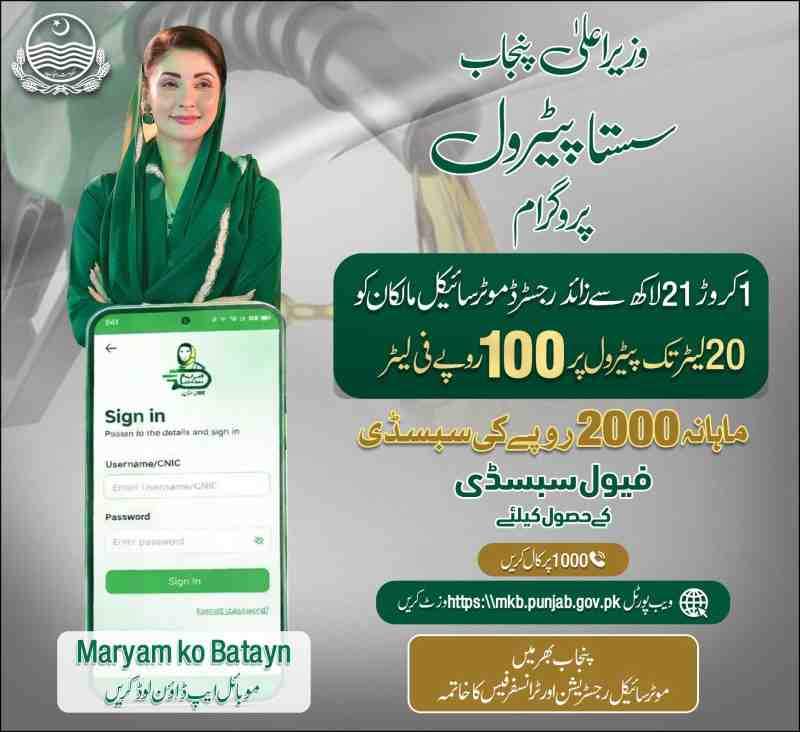
Table of Contents
Understanding Pakistan’s Fuel Subsidy Landscape and the 9771 Confusion
Motorbike owners in the province of Punjab, Pakistan.
Benefit Details:
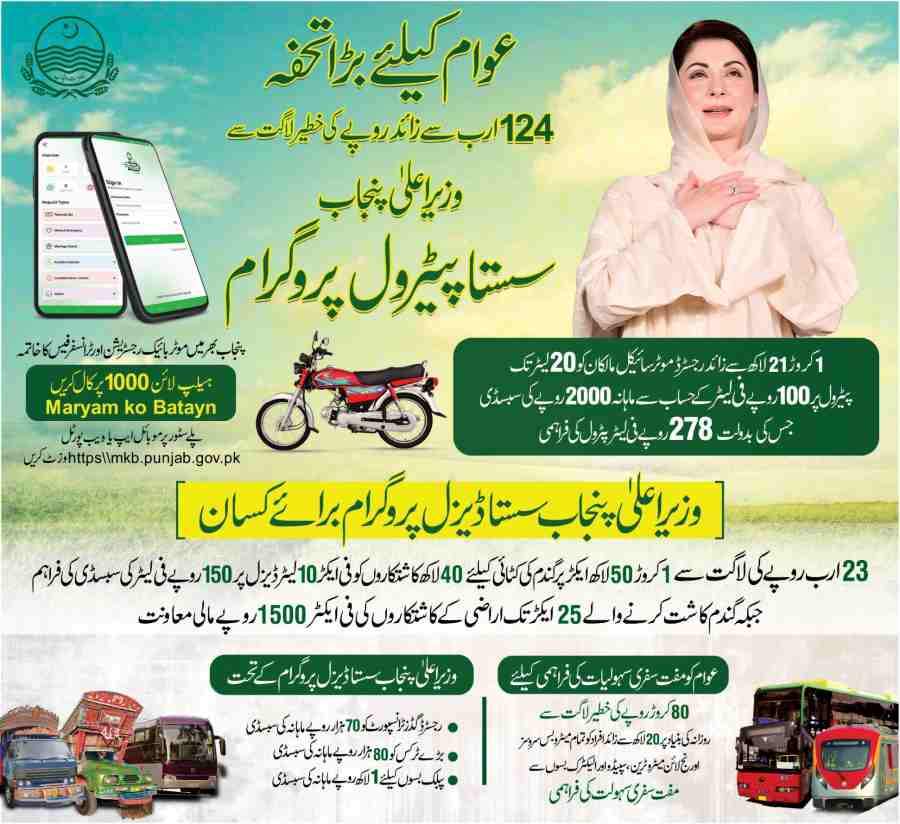
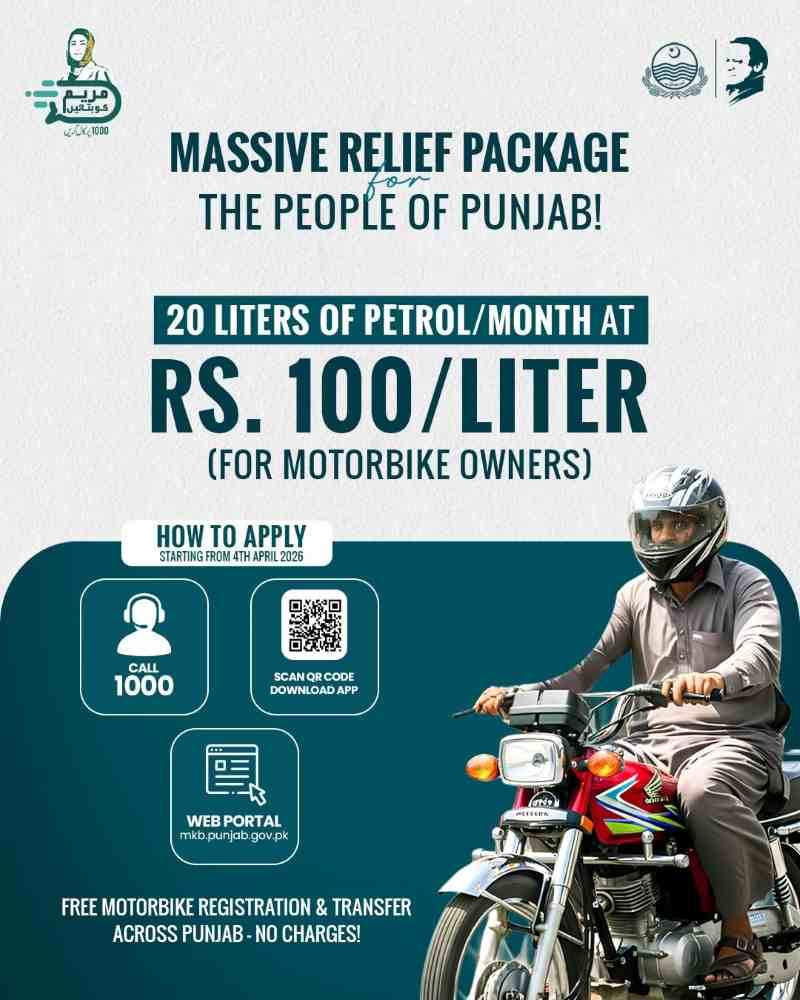
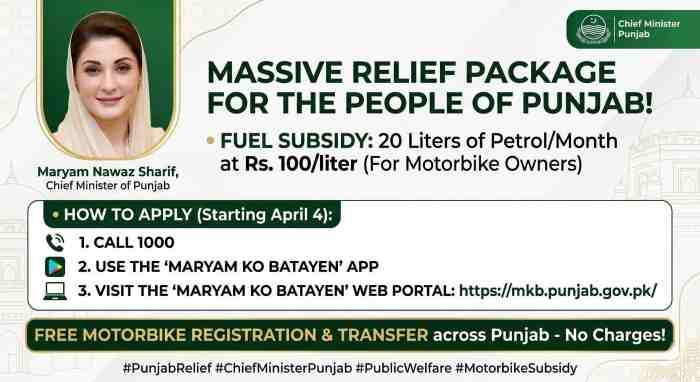
Qualified individuals will receive 20 liters of petrol per month at a subsidized rate of Rs. 100 per liter. This is significantly lower than the market rate, aiming to reduce daily commuting costs for low- and middle-income households.
Application Start Date:
The application process will open on 4th April 2026. Citizens are advised to apply only after this date through the official channels listed below.
How to Apply (Four Official Channels)

- Phone (Helpline): Call 1000 – a dedicated toll-free number. Follow the automated or agent-assisted instructions to register your motorbike and confirm eligibility.
- Mobile App: Download the official government app (likely named or linked to the “Maryam Ki Taleem Bahaar” or similar portal as per the web address). The app will guide you through uploading documents and applying for the subsidy.
- QR Code: Scan the official QR code displayed on government posters, websites, or at district offices. Scanning will redirect you to the mobile app download page or the web portal.
- Web Portal: Visit mktb.punjab.gov.pk (note: “mktb” likely stands for a government relief initiative). On the portal, create an account, enter your motorbike registration details, CNIC number, and submit the application online.
Additional Benefit – Free Motorbike Registration & Transfer:
In a parallel relief measure, the Punjab government is also waiving all fees for motorbike registration and transfer of ownership across the province. This means no charges will be levied at excise and taxation offices for these services, further reducing financial burdens on motorbike owners.
Important Notes for Applicants
- Keep your motorbike’s registration document, CNIC, and proof of ownership ready before applying.
- Only one application per eligible motorbike owner (likely linked to CNIC).
- The 20-liter monthly quota is specifically for motorbike owners; other vehicles may not qualify.
- Beware of unofficial agents or fake websites – use only the given helpline (1000) and portal (mktb.punjab.gov.pk).
The government’s fuel subsidy program is a targeted relief mechanism designed to protect the most vulnerable transport users from global oil price volatility. Unlike broad-based subsidies that benefit all consumers, this scheme uses digital verification to deliver benefits exclusively to low-income households owning small-engine motorcycles (70cc or below) and rickshaws. The primary delivery method is a mobile application that generates a unique QR code for each eligible user, which petrol pump attendants scan to apply the discount at the point of sale.
How To Apply For The Bike Petrol Subsidy Scheme By Maryam Ko Batain Portal
The Bike Petrol Subsidy Scheme, facilitated through the Maryam Ko Batain portal, offers eligible citizens financial relief on fuel costs for two-wheelers. Below is a streamlined, step‑by‑step guide to completing your application online.
Step‑by‑Step Application Process
Step 1: Access the official portal and log in
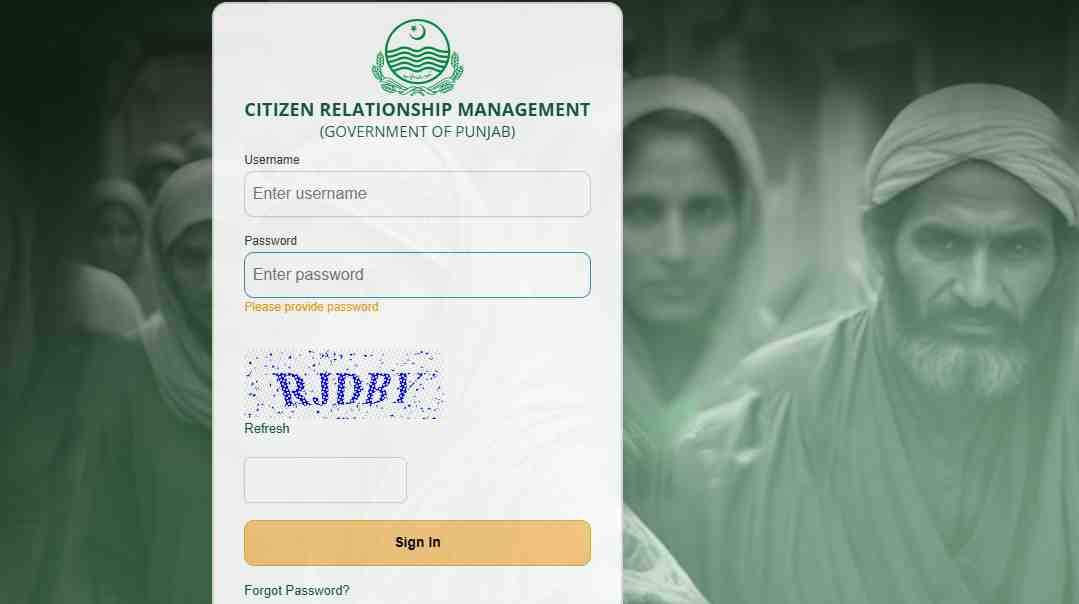
Open the official Maryam Ko Batain portal by navigating to https://crm.punjab.gov.pk/. Enter your registered credentials to log in to your account.
Step 2: Select the Maryam Ko Batain portal option
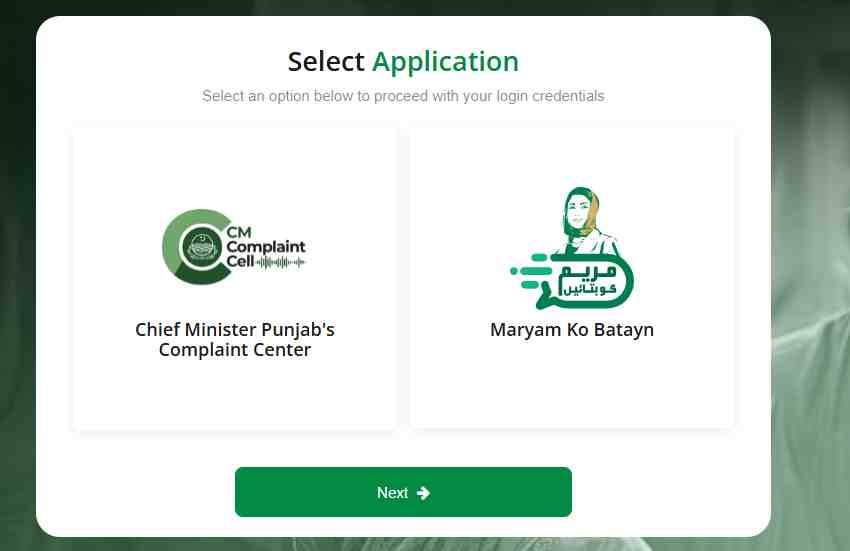
After successful login, locate and select the “Maryam Ko Batain” portal option from the available services. Then, click NEXT to proceed.
Step 3: Complete and submit the online application form
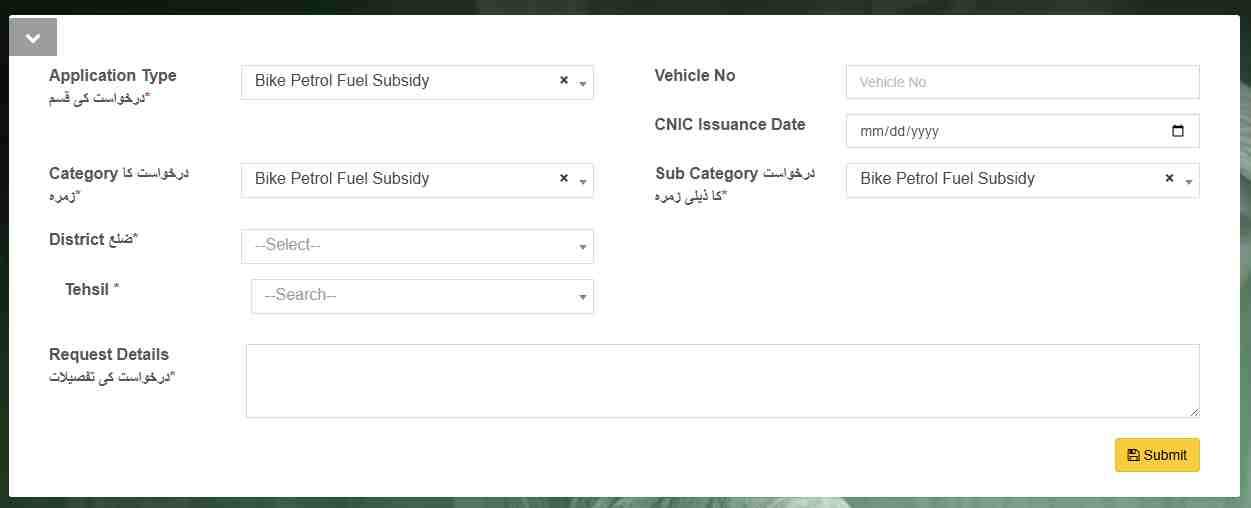
Fill out the online application form by providing all required details accurately. Once the form is complete, click SUBMIT. Use the following link to access the submission page directly:
https://crm.punjab.gov.pk/Complaint/AddComplaint
Note: Ensure all information entered is correct before final submission to avoid processing delays. For further assistance, refer to the official portal’s help section.
CM Punjab Free Public Transport in Punjab (Fuel Crisis Relief)
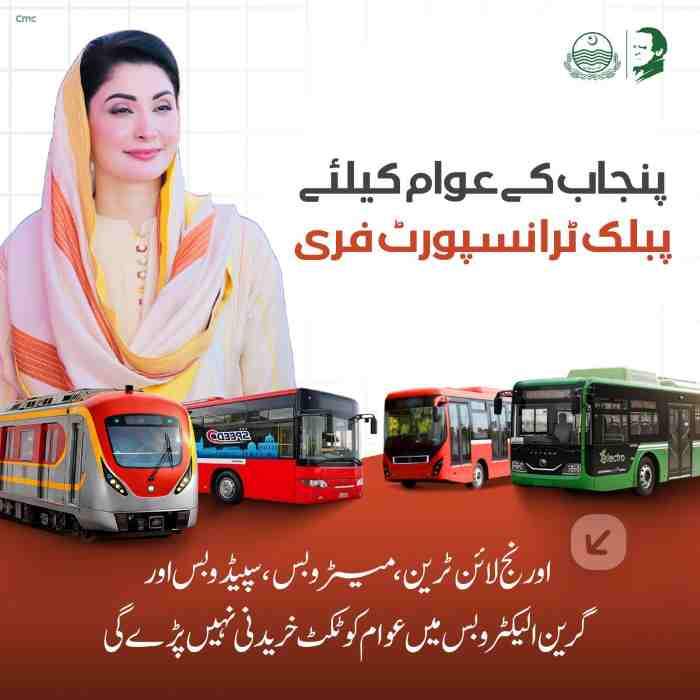
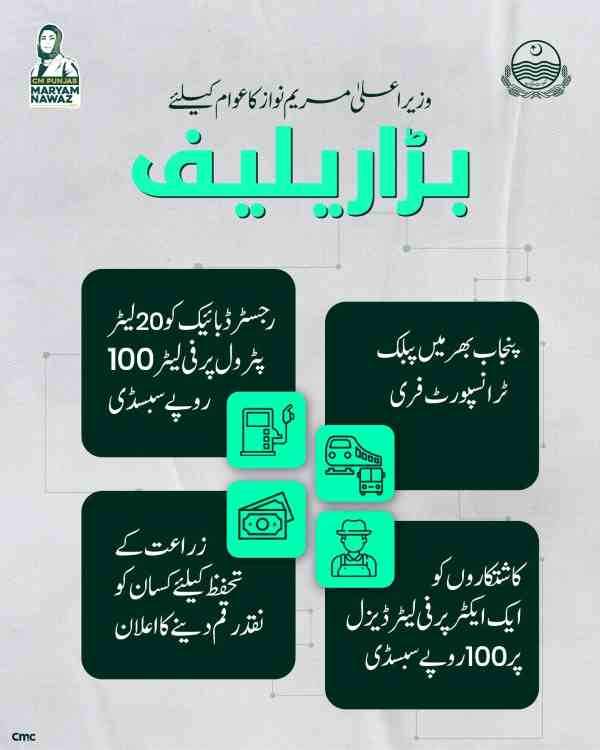
Due to the recent fuel crisis and sharp increase in petrol and diesel prices, the Punjab government has announced a major relief package for the public. This step was taken to reduce the financial burden on people who are already facing economic difficulties.
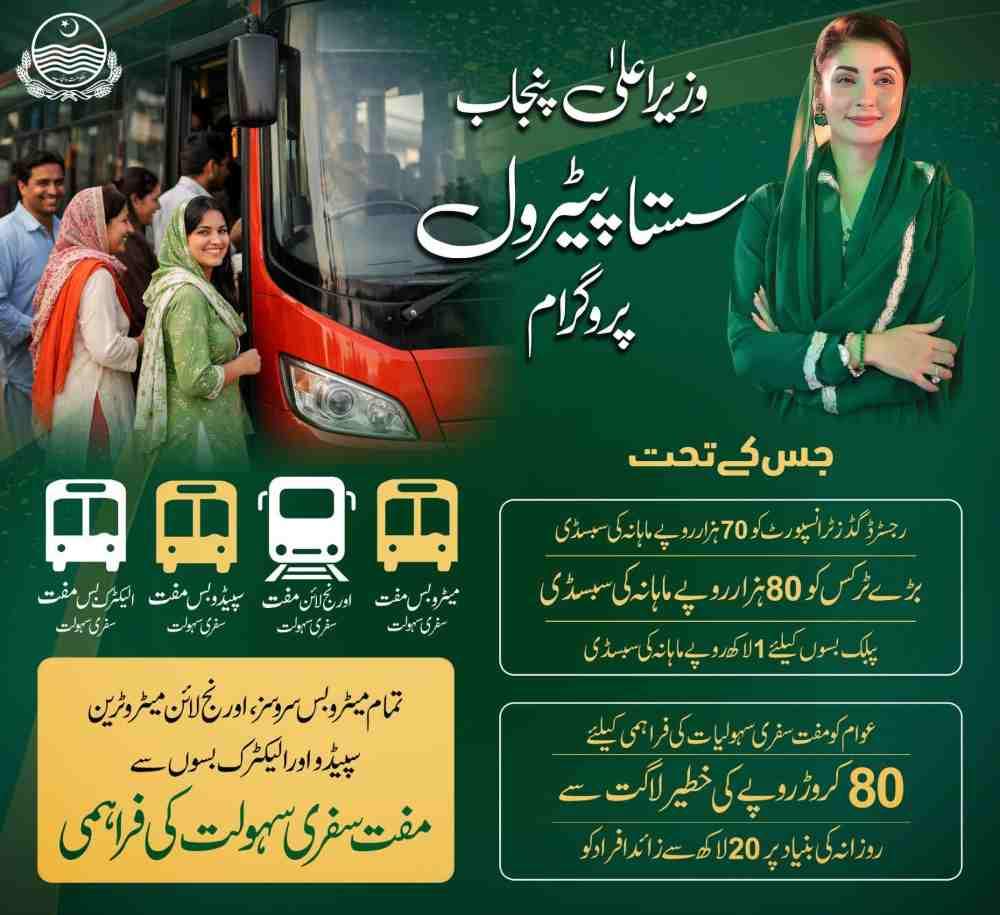
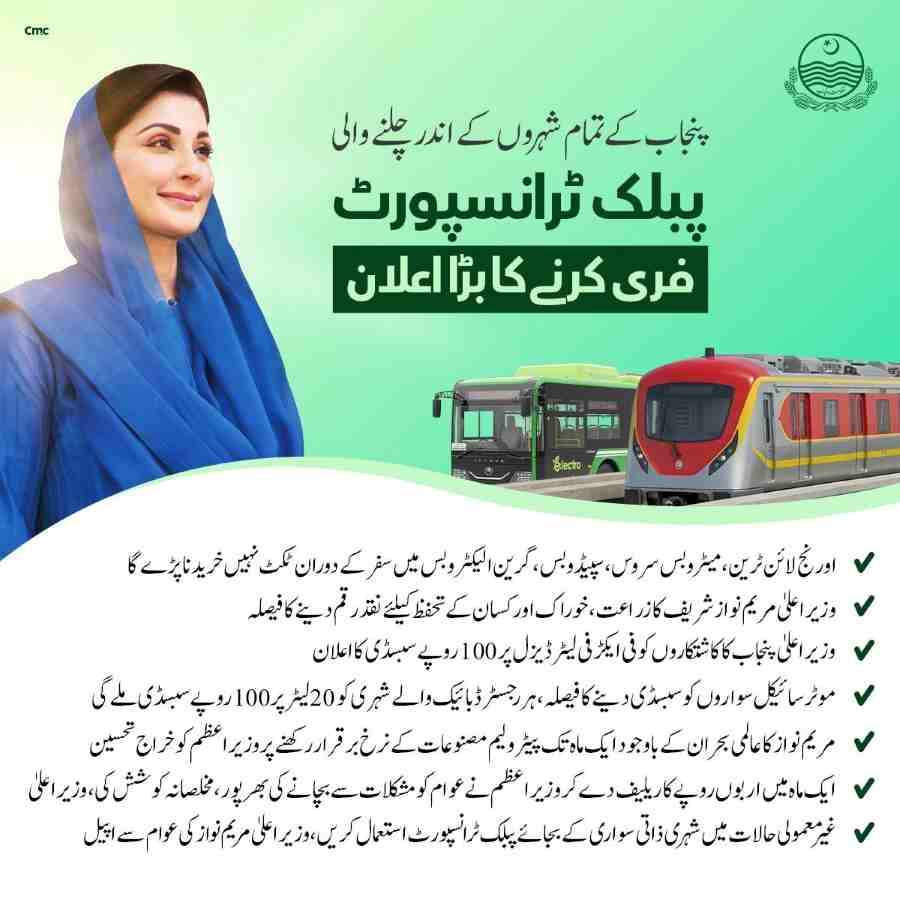
The Chief Minister of Punjab, Maryam Nawaz Sharif, announced that public transport will be completely free for one month in all cities of Punjab.
This free service includes:
- Metro Bus
- Orange Line Train
- Speedo Bus
- Green Electric Buses
People can travel without buying tickets during this period.
Why This Decision Was Taken
- Fuel prices increased بسبب global oil crisis and international conflicts
- Pakistan depends heavily on imported oil
- Daily travel became expensive for common citizens
- Government wanted to control inflation and help people
Additional Relief Measures
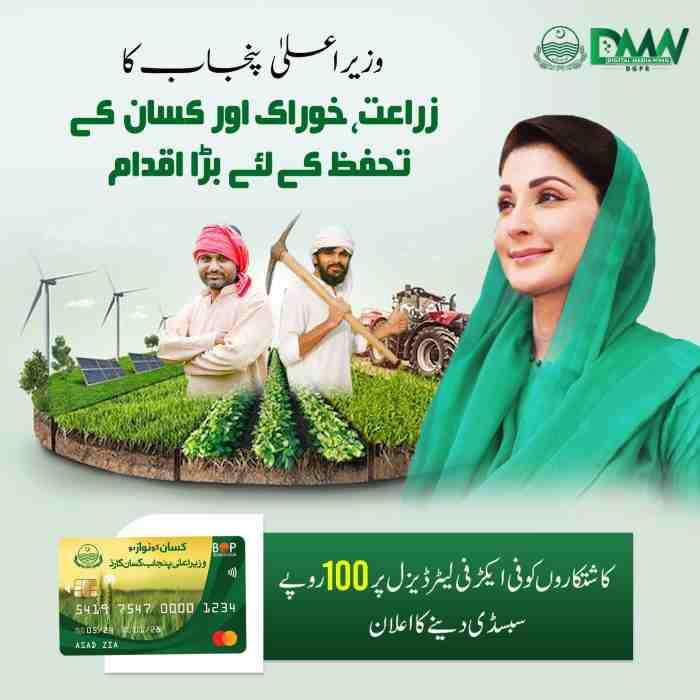
Along with free transport, the government also announced:
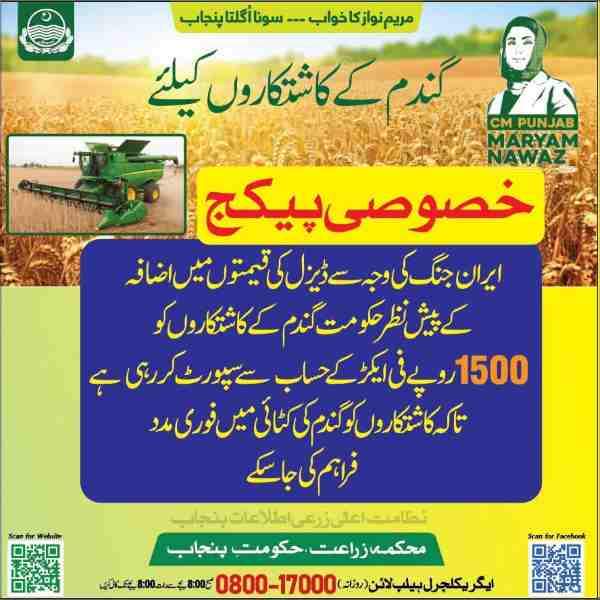
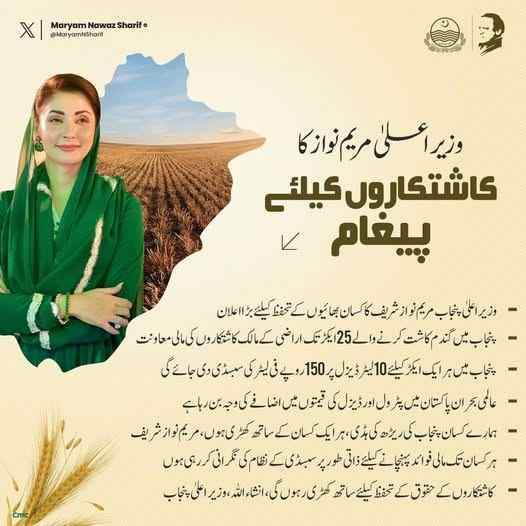
- Fuel subsidy for farmers (diesel support)
- Subsidy for motorcycle owners (monthly fuel relief)
- Financial support for transport sector to avoid fare increase
Purpose of Free Transport
The main goals of this initiative are:
- Reduce travel expenses for the public
- Encourage people to use public transport instead of private vehicles
- Control fuel consumption during crisis
- Provide temporary economic relief
Why an app instead of SMS?
- SMS systems lack real-time verification against NADRA and Excise databases.
- App-based QR codes are encrypted and time-stamped, preventing duplication or resale.
- The government can track monthly quotas accurately and prevent exceeding the 20-litre limit.
- Digital records allow for anti-fraud analytics and audit trails.
The 9771 phenomenon explained
In the weeks following the subsidy announcement, fraudulent SMS messages began circulating across all provinces. These messages typically read: “Send your CNIC to 9771 to get 20 litres of free petrol per month.” The scammers chose 9771 because it resembles legitimate short codes like 8171 (BISP) and 786 (past subsidy checks). However, the government has never activated 9771 for any official service. The Pakistan Telecommunication Authority (PTA) has publicly listed 9771 as a scam number.
Why do people fall for the 9771 scam?
- Urgency: Messages often say “last chance” or “limited time offer.”
- Authority mimicry: The formatting copies official government SMS templates.
- Desperation: High petrol prices make any relief offer seem plausible.
- Lack of digital literacy: Many users do not know how to verify official short codes.
What actually happens when you send your CNIC to 9771?
The scammers collect your 13-digit CNIC number and potentially your mobile number. They then use this data for:
- Applying for duplicate SIM cards in your name.
- Opening fraudulent bank accounts or obtaining micro-loans.
- Selling your identity on the dark web to other criminal networks.
- Attempting SIM swaps to take over your mobile accounts.
Federal Government’s Rs.100 Per Litre Relief Program: Complete Breakdown
The federal petrol subsidy provides a fixed discount of Rs. 100 on every litre of petrol purchased, up to a maximum of 20 litres per month per eligible vehicle. This means a qualified motorcycle owner pays the market price minus Rs. 100 at the pump. For example, if the market price is Rs. 458.41 per litre, the subsidized price becomes Rs. 358.41. Over a full month of 20 litres, the total saving equals Rs. 2,000.
Who manages the federal subsidy?
The program is jointly overseen by the Ministry of Energy (Petroleum Division), the Ministry of Information Technology and Telecommunication, and the National Information Technology Board (NITB). The Poverty Alleviation and Social Safety Division (PASS) provides socio-economic data for eligibility cross-verification.
How the discount is applied at the pump
- Eligible user opens the official app and generates a QR code.
- Petrol pump attendant uses a government-provided smartphone to scan the code.
- The system verifies the user’s remaining monthly quota and identity.
- Attendant dispenses fuel from a designated “subsidy nozzle” at the discounted rate.
- The transaction is recorded digitally, reducing the user’s available quota for that month.
Participating petrol pumps
Over 12,000 petrol stations nationwide will participate, including outlets from:
- Pakistan State Oil (PSO)
- Shell Pakistan
- Total Parco
- Hascol Petroleum
- Many independent dealers with valid licenses
Each participating pump receives two dedicated mobile devices and training for staff. A list of participating pumps will be available within the official app upon launch.
Timeline and current status
The federal government announced the scheme following the petrol price hike. The mobile application is currently in its final testing phase. The system has undergone pilot testing in select districts. A nationwide rollout is expected soon. No exact launch date has been published, but government sources indicate it will be “within weeks.”
What happens if you use more than 20 litres in a month?
Any petrol purchased beyond the 20-litre monthly quota is charged at the full market price. The app displays your remaining quota in real-time. Once you reach zero litres, the QR code either stops working or generates a code for full-price fuel only. There is no rollover of unused quota to the next month.
SMS Codes Decoded: Which Numbers Are Safe and Which Are Scams?
Confusion over SMS short codes has become the primary vector for fraud. This section provides a definitive reference for every code circulating in connection with the petrol subsidy.
Official SMS codes you can trust
- 8171 – Benazir Income Support Program (BISP) status checker. Send your 13-digit CNIC without dashes to 8171. You receive an automated reply with your eligibility and payment information. This code does NOT register you for the petrol subsidy, but your BISP status may be used to pre-qualify you.
- 786 – Previously used for the “Sasta Petrol Scheme” and Ehsaas cash transfers. This code is legitimate for checking past or other government assistance programs. However, it does NOT register you for the new Rs. 100 per litre fuel subsidy. Sending your CNIC to 786 will not get you the fuel discount.
- 5566 – Mentioned in some government communications for checking status of certain relief programs. Its role in the new petrol subsidy is minimal. Do not rely on 5566 for registration.
Confirmed scam codes
- 9771 – This code is completely fraudulent. No official government scheme uses 9771. Sending your CNIC here exposes you to identity theft. The government has issued public warnings against this number.
- Any 11-digit mobile number claiming to be a registration line – Official government services use short codes (4 to 6 digits) or toll-free numbers like 0800-03000. Messages from regular mobile numbers (e.g., 0300-1234567) asking for CNIC are scams.
How to verify an SMS code’s authenticity
- Check the official website pass.gov.pk for published codes.
- Call the toll-free helpline 0800-03000 to confirm.
- Look for public announcements from the Ministry of Information.
- Remember: No legitimate subsidy registration happens via SMS alone.
What to do if you receive a suspicious SMS
- Do not reply. Do not click any links.
- Take a screenshot (for evidence).
- Forward the message to PTA’s spam reporting number (check PTA website for current number).
- Delete the message.
- Warn family members, especially elderly or less digitally literate relatives.
Official Digital Application Process: Step-by-Step Guide to the Petrol Subsidy App
The official registration for the federal petrol subsidy occurs exclusively through a mobile application. No SMS, no website form, no physical paperwork. The app is designed to be simple enough for users with basic smartphone literacy. Below is the complete step-by-step process based on government documentation and pilot testing results.
Prerequisites before you begin
- A smartphone (Android recommended; iOS version may be released later).
- Active mobile SIM registered in your name (same as CNIC).
- Your 13-digit CNIC card (original, not a copy).
- Your vehicle registration book (smart card) showing you as the registered owner.
- A stable internet connection (Wi-Fi or mobile data).
Step 1: Download the official app from a trusted source
Wait for the government to announce the official launch date. Then download the app only from:
- The Google Play Store (official listing verified by a government badge).
- The official government website pass.gov.pk (direct APK download only as a last resort).
Do not download from third-party app stores, WhatsApp links, or random websites. Fake apps already exist. They mimic the logo and interface but contain malware that steals your contacts, messages, and CNIC data.
Step 2: Open the app and select your language
The app supports both Urdu and English. Choose your preferred language. The interface uses simple icons and large text for accessibility.
Step 3: Enter your 13-digit CNIC without dashes
Type your CNIC number exactly as it appears on your card. Example: 1234567890123 (not 12345-6789012-3). The app will validate the format immediately. If you enter an invalid number, you will see an error message.
Step 4: Enter your mobile number for SIM verification
Type the mobile number you use daily. The app sends a One-Time Password (OTP) via SMS to that number. Enter the OTP into the app. This step confirms that the SIM card is active and registered to you (same name as CNIC).
Step 5: Enter your vehicle registration number
Find your vehicle’s registration number from your official smart card or token tax receipt. Enter it exactly as printed, including letters and numbers. Example: LEJ-12-3456 or ABC-12-345.
The app then queries the provincial Excise and Taxation Department’s database. The system checks:
- Does this registration number exist?
- Is the vehicle a 70cc motorcycle (or other eligible category)?
- Does the registered owner’s CNIC match the one you entered in Step 3?
Step 6: Complete identity verification via NADRA
The app sends your CNIC to NADRA’s verification service. NADRA confirms:
- Your CNIC is valid and not blocked.
- Your photograph (for potential future biometric checks).
- Your address and family details (used for income proxy checks via NSER data).
Step 7: Submit your application for approval
After all data entries, the app shows a summary screen. Review all details. Then submit. The application status changes to “Under Review.”
Step 8: Wait for automated approval
The system cross-verifies your data against three databases:
- NADRA (identity)
- Provincial Excise (vehicle ownership)
- Mobile network operator (SIM ownership)
This process typically takes between 2 hours and 2 days. You do not need to contact anyone. The app will send a notification when approved or rejected.
Step 9: Receive your digital fuel quota and QR code
Upon approval, the app displays:
- Your monthly quota (e.g., 20 litres).
- Your remaining quota (initially 20 litres).
- A “Generate QR Code” button.
- A list of nearest participating petrol pumps.
Tap “Generate QR Code” when you are at a participating pump. A unique, encrypted QR code appears on screen. It expires after 5-10 minutes for security.
Step 10: Collect your subsidized fuel
- Show the QR code to the petrol pump attendant.
- The attendant scans it using the government-provided device.
- The device confirms your eligibility and remaining quota.
- You tell the attendant how many litres you want (up to your remaining quota).
- You pay the subsidized price (market price minus Rs. 100 per litre).
- The attendant dispenses fuel and records the transaction.
- Your remaining quota in the app updates automatically.
What if your application is rejected?
Common reasons for rejection include:
- Vehicle engine capacity above 70cc.
- Vehicle registered in another person’s name.
- SIM not registered to you.
- Household income above the threshold (as per NSER data).
- Duplicate application (someone else used your CNIC already).
You can appeal a rejection by calling the helpline 0800-03000. The helpline will guide you on how to correct the issue.
Read More: Community Health Inspector (By Maryam Nawaz) | 50K Salary- Apply Online
Eligibility Verification System: Income, Vehicle, and Documentation Rules
The eligibility system uses a multi-layered verification approach to ensure that only the intended beneficiaries receive the subsidy. No single piece of information alone qualifies you; all three pillars (income, vehicle, and identity) must align.
Income eligibility: monthly household income below Rs. 60,000
The government uses the National Socio-Economic Registry (NSER) maintained by BISP as the primary source of income data. The NSER scores households based on assets, education, housing conditions, and other poverty indicators. A household with a score above a certain threshold (indicating income above Rs. 60,000) is automatically disqualified.
If you are not in the NSER database, you may need to provide alternative proof:
- Recent pay stubs showing monthly earnings.
- Bank statements for the last six months.
- A sworn affidavit of income (with legal penalties for false declarations).
The government may conduct random audits. False declarations can lead to legal action and permanent disqualification from all social protection programs.
Vehicle eligibility: 70cc motorcycles only
The engine capacity limit is strictly enforced. The Excise database contains the exact cubic capacity (cc) for every registered motorcycle. Popular eligible models include:
- Honda CD 70
- Suzuki GD 110 (some variants may exceed 70cc – check registration)
- United US 70
- Road Prince 70
- Super Power 70
Any motorcycle with 71cc or above is ineligible. Electric motorcycles are not covered under this petrol subsidy.
Vehicle registration name matching
The registered owner’s name on the Excise database must exactly match the name on your CNIC. Even a single character difference (e.g., “Muhammad” vs “Mohammad”) can cause rejection. If your vehicle is registered under a family member’s name (spouse, parent, sibling), you are not eligible unless you transfer ownership.
How to transfer vehicle registration to your name
- Visit your local Excise and Taxation Department office.
- Obtain a transfer application form.
- Provide original CNIC of both current owner and new owner.
- Pay the applicable transfer fee (varies by province; some provinces have waived fees for this scheme).
- Receive a new smart card in your name after processing (typically 7-14 days).
SIM ownership consistency
The mobile number you use for registration must be registered with the mobile network operator (Jazz, Zong, Telenor, Ufone) in your name. Prepaid SIMs purchased without proper biometric verification often cause rejection. You can verify your SIM’s ownership by dialing *848# (for most operators) or by visiting your operator’s service center.
Documentation checklist
Before starting your app registration, gather:
- Your original CNIC.
- Your vehicle registration smart card or token tax receipt.
- Your mobile phone with the registered SIM.
- Your BISP card (if you are a beneficiary – optional but helpful).
- Proof of income (if not in NSER database).
Provincial Fuel Assistance Programs: Sindh, Punjab, and Beyond
In addition to the federal scheme, several provincial governments have announced their own fuel relief measures. These programs operate independently and have different application processes, eligibility rules, and benefit amounts.
Sindh government’s Rs. 2,000 monthly cash subsidy
The Sindh government announced a direct cash transfer of Rs. 2,000 per month for every registered motorcycle owner in the province. Unlike the federal scheme (discount at pump), this is a cash deposit into your bank account.
Key features of the Sindh program:
- No app required. The government uses Excise registration data to identify eligible owners.
- The amount is fixed at Rs. 2,000 (equivalent to Rs. 100 per litre for 20 litres).
- Payment is made through partner banks (Habib Bank, National Bank, Bank of Al-Habib, etc.).
- Motorcyclists whose vehicles are not in their own name have 15 days to complete transfer.
- The program is active and payments have already started for some districts.
How to claim Sindh’s subsidy:
- Verify your motorcycle registration online via the Sindh Excise portal.
- If the vehicle is not in your name, visit an Excise office to transfer ownership within 15 days.
- Ensure you have a bank account (any bank) linked to your CNIC.
- The government will automatically deposit Rs. 2,000 monthly into the account associated with your CNIC (if you have a bank account). If not, you may receive a payment order to collect cash from a designated center.
Punjab government’s free public transport initiative
Punjab took a different approach: instead of subsidizing fuel for private motorcycles, the provincial government made public transport free for specific periods and routes. This primarily benefits daily commuters in Lahore, Rawalpindi, and Multan. There is no direct fuel subsidy for motorcycle owners in Punjab beyond the federal scheme.
Khyber Pakhtunkhwa and Balochistan
Both provinces are evaluating similar relief packages. As of the latest announcements, no specific fuel subsidy programs have been launched. Residents should rely on the federal scheme and watch for provincial government press releases.
Can you receive both federal and provincial subsidies?
Yes, in most cases. The federal subsidy is a discount at the pump. The Sindh subsidy is a cash transfer. They are not mutually exclusive. A motorcycle owner in Sindh can potentially receive the Rs. 100 per litre discount (federal) plus the Rs. 2,000 cash (Sindh). However, the government may introduce coordination to prevent double-dipping. Check official announcements for final rules.
Cybersecurity Alert: Protecting Your CNIC from Subsidy Scams
The surge in petrol subsidy scams has made CNIC data a prime target for criminals. This section provides actionable steps to protect your identity and recover if you have already been scammed.
How scammers use your CNIC after you send it to 9771
- SIM issuance: Scammers use your CNIC to obtain a duplicate SIM from a mobile operator. With that SIM, they can receive OTPs for your bank accounts, email, and social media.
- Bank account fraud: They open a digital bank account (EasyPaisa, JazzCash, or traditional bank) in your name, then use it for money laundering or loan applications.
- Loan applications: They apply for micro-loans from apps or banks using your CNIC. You become responsible for repayment.
- Criminal activity: Your CNIC can be used to register a crime (e.g., a mobile phone used for harassment). The police trace it to you.
Warning signs that your CNIC has been compromised
- You receive SMS OTPs for transactions you did not initiate.
- Your mobile network suddenly stops working (possible SIM swap).
- You get calls from banks or loan companies about applications you never made.
- Your BISP status shows payments being made to an unknown bank account.
Immediate steps if you sent your CNIC to 9771
- Step 1: Contact your mobile network operator immediately. Ask them to lock your SIM and flag your CNIC for high-security verification on any new SIM requests.
- Step 2: Check your credit report. You can request a free credit report from the State Bank of Pakistan’s credit bureau (eCredits). Look for unauthorized loans or credit cards.
- Step 3: File a complaint with the FIA Cyber Crime Wing online. Provide the date you sent the SMS, the number 9771, and your CNIC.
- Step 4: Visit your nearest NADRA office. Request a new CNIC with a different number (this is possible in fraud cases).
- Step 5: Monitor your bank accounts and EasyPaisa/JazzCash wallets daily for unauthorized transactions.
How to report a subsidy scam to authorities
- PTA (Pakistan Telecommunication Authority): Forward the scam SMS to 9000 (check if still active) or use PTA’s online complaint form.
- FIA Cyber Crime: Visit fia.gov.pk, navigate to the Cyber Crime Wing, and file a complaint. Attach screenshots.
- Local police: File a First Information Report (FIR) at your nearest police station. This creates an official record.
- Citizen Portal: Use the Prime Minister’s Performance Delivery Unit (PMDU) Citizen Portal app to report the scam.
Best practices to avoid future scams
- Never send your CNIC to any number unless it is an official, verified short code like 8171 (and even then, understand what it does).
- Be skeptical of any unsolicited message promising money, fuel, or subsidies.
- Verify information through official government websites (pass.gov.pk, bisp.gov.pk).
- Educate family members, especially those who are not tech-savvy.
- Use the helpline 0800-03000 to confirm any scheme before sharing data.
Frequently Asked Questions (FAQs) About the Petrol Subsidy App and SMS Registration
Is there a registration fee for the petrol subsidy app?
No. Registration is completely free. Any message asking for payment (even a small amount like Rs. 50) is a scam. The government does not charge for social protection enrollment.
How do I know if my motorcycle is 70cc or below?
Check your vehicle registration smart card. The engine capacity (cc) is printed on the card. Alternatively, look at the vehicle’s manual or the stamp on the engine block. Common 70cc models include Honda CD 70, United US 70, and Super Power 70.
What if I don’t have a smartphone?
The federal scheme currently requires a smartphone. The government is exploring options such as:
- Facilitation centers where staff can help you register.
- USSD codes (like *123#) for feature phones, but no announcement has been made.
- Family members can register on your behalf using their smartphone, but your CNIC and SIM must be yours.
Can I use the subsidy for my rickshaw?
Yes, rickshaws (three-wheelers) are included. The monthly quota for rickshaws may be higher than 20 litres, but the exact amount has not been announced. Check the app after launch for your specific quota.
Is the petrol subsidy available for cars?
Only for cars up to 800cc, and this is still under consideration. As of now, the confirmed scheme covers motorcycles (70cc) and rickshaws. Car owners should wait for official announcements.
How long will the subsidy program last?
The government announced an initial three-month relief package. Depending on fiscal space and global oil prices, the program may be extended or made permanent. Check official announcements for updates.
What is the difference between the federal discount and the Sindh cash transfer?
The federal discount reduces the price at the pump (you pay less when you buy fuel). The Sindh cash transfer deposits Rs. 2,000 into your bank account (you can spend it on anything). Both can be received simultaneously unless the government changes the rules.
Why did I receive a message from 9771 even though it’s a scam?
Scammers send these messages in bulk using SMS blasting devices or compromised mobile networks. The message may appear to come from “9771” but is actually spoofed. The PTA is working to block such spoofing, but scammers constantly change tactics.
What should I do if I already sent my CNIC to 9771?
Follow the immediate steps outlined in the Cybersecurity Alert section above: contact your mobile operator, check your credit report, file an FIA complaint, and consider getting a new CNIC from NADRA.
Where can I find the official app when it launches?
Bookmark pass.gov.pk. The government will post the official download link there. Major newspapers and TV news channels will also announce the launch. Do not search for “Petrol Subsidy App” on the Play Store and download the first result – wait for the official announcement.

Add a Comment