
Imagine living in a village where the nearest hospital is 50 kilometers away, accessible only by a rough dirt road that becomes impassable during monsoon rains. For millions of Punjab residents, this was daily reality until the CM Punjab Field Hospital Program transformed healthcare delivery by bringing fully equipped medical units directly to their doorsteps. This comprehensive guide explains everything citizens need to know about accessing these life-changing free medical services, understanding coverage areas, contacting helplines, and maximizing the benefits of this revolutionary healthcare initiative.
What this guide covers:
- Complete program overview including launch details and operational framework
- District-wise coverage and how to find units in your area
- Detailed list of all free medical services and diagnostic tests available
- Step-by-step instructions for accessing services through helplines and scheduling systems
- Quality assurance mechanisms including the innovative Pay-for-Performance Model
- Comparison with other Punjab health initiatives like Sehat Card and Clinic on Wheels
- Future expansion plans and complementary health projects
- Answers to frequently asked questions from rural communities
Key Takeaways
- Healthcare at Your Doorstep: The program deploys 32 mobile medical units across all 36 Punjab districts, eliminating travel costs and time for rural populations who previously traveled hours for basic medical care.
- Zero-Cost Comprehensive Services: All consultations, diagnostic tests including ultrasound and X-ray, laboratory investigations, and essential medicines are provided completely free with no hidden charges or registration fees.
- Live Digital Monitoring: A 24/7 dashboard tracks every unit’s location, staff attendance, patient numbers, and service quality in real-time, ensuring accountability at all levels.
- Integrated Health Network: Field hospitals work alongside 200 Clinic on Wheels units, upgraded BHUs, Community Health Inspectors, and the upcoming air ambulance service to create seamless healthcare access.
- Massive Patient Impact: Combined with parallel initiatives, the program has already served nearly 30 million patients, with field hospitals alone targeting over 1.5 million rural residents annually.
- Simple Access Process: No appointments or documentation required—citizens can walk in during operating hours, call 1033 for schedule information, or check with local Lady Health Workers for upcoming visits.
- Read More: CM Punjab School Nutrition Program: Districts and Food Items List
- Read More: Sehat Sahulat Program (By CM Punjab) | Free Insulin, Dialysis, & Medicines
- Read More: CM Punjab Dialysis Card | Free Dialysis Scheme (by CM Punjab)
CM Punjab Field Hospital Program (Area + Helpline)
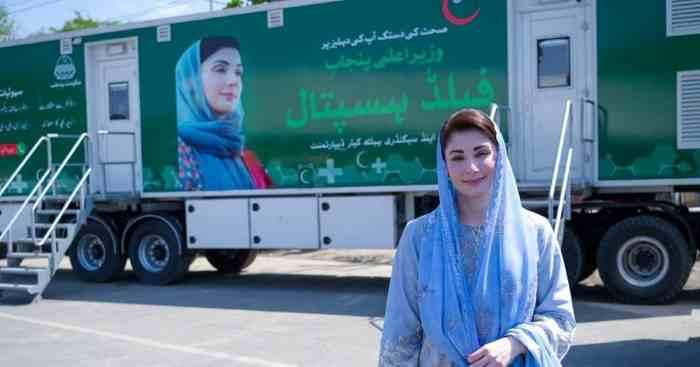
Table of Contents
What is the CM Punjab Field Hospital Program and Why Was It Created?
The CM Punjab Field Hospital Program represents a fundamental restructuring of how public healthcare reaches rural citizens who have historically been excluded from medical services due to geographic and economic barriers. Chief Minister Maryam Nawaz Sharif launched this initiative to operationalize the principle that healthcare is a fundamental right, not a privilege reserved for those living near urban medical centers.
What is the official definition of the CM Punjab Field Hospital Program?
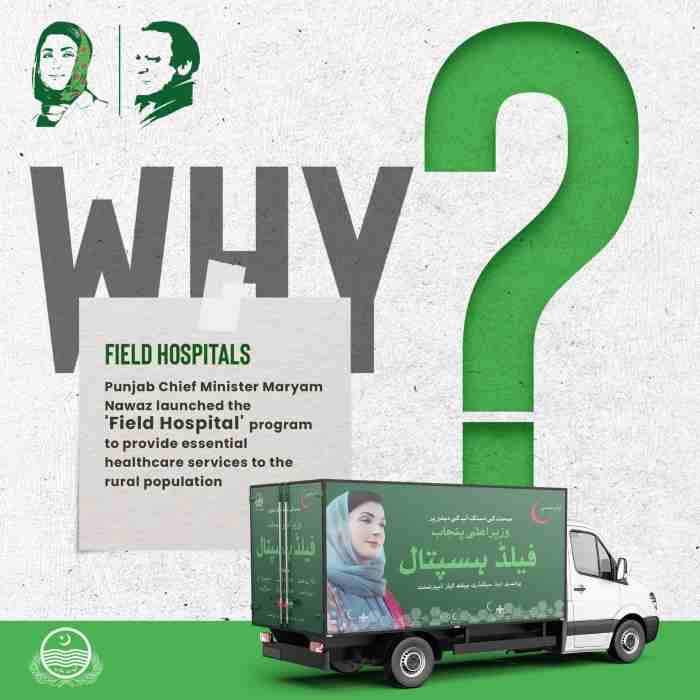
The program officially consists of 32 specialized mobile medical units divided into two categories operating across Punjab’s rural landscape. Twenty-one units function as comprehensive mobile healthcare facilities equipped with consultation rooms, basic diagnostic capabilities, and full pharmacies. Eleven additional units serve as advanced mobile diagnostic centers carrying specialized equipment including ultrasound machines, X-ray systems, ECG devices, and laboratory testing facilities.
These units are not merely modified vans or basic mobile clinics. Each unit operates from a converted shipping container transformed into a fully functional, air-conditioned medical facility. The container design provides durability for rough rural roads, adequate space for medical equipment and staff, and the ability to establish operations quickly at any location with basic access.
When did the CM Punjab Field Hospital Program become operational?
Chief Minister Maryam Nawaz Sharif formally inaugurated the Field Hospital Program in May 2024 during a ceremony attended by health officials, district administrators, and community representatives. What makes this timeline remarkable is the speed of implementation—from official approval during the 5th health reforms meeting in March 2024 to fully operational units deployed across Punjab in just six weeks.
This accelerated timeline required unprecedented coordination between multiple government departments. The Primary and Secondary Healthcare Department provided medical oversight and staffing. The Communication and Works Department handled the physical conversion of containers into medical facilities. District administrations coordinated with local communities to identify optimal locations and schedules. The result demonstrates what focused political will can achieve when bureaucratic obstacles are removed.
Why did the Punjab Government prioritize mobile healthcare units?
Addressing Geographic Healthcare Deserts:
Millions of Punjab residents live in what health experts term “healthcare deserts”—areas where the nearest government hospital lies beyond reasonable travel distance. For families without private transport, reaching medical care meant arranging expensive private vehicles, losing full days of wages, or simply forgoing treatment until conditions became critical.
Overcoming Infrastructure Failures:
While Punjab theoretically maintains a network of Basic Health Units and Rural Health Centers, many have suffered from chronic understaffing, equipment failures, medicine shortages, and building deterioration. Rather than waiting years to rehabilitate this entire infrastructure, the government chose to deploy self-sufficient mobile units that bypass these systemic problems entirely.
Responding to Demographic Realities:
Punjab’s rural population is dispersed across thousands of small villages rather than concentrated in easily serviceable towns. Static hospitals, no matter how well-equipped, cannot serve populations spread across vast geographic areas. Mobile units can rotate through multiple villages, bringing services to each community on a regular schedule.
How do field hospitals differ from traditional healthcare facilities?
Mobility as the Core Advantage:
Traditional hospitals wait for patients to come to them. Field hospitals travel to where patients live. This fundamental reversal of the healthcare delivery model eliminates the single greatest barrier to access—the requirement that sick people must arrange transportation to receive care.
Self-Sufficiency in Remote Areas:
Field hospitals carry everything needed to function independently. Each unit includes its own power generation through generators or solar panels, water storage for sanitation needs, medicine stocks sufficient for weeks of operation, and communication equipment to stay connected with central command.
Rapid Deployment Capability:
When health emergencies arise or when population movements create new healthcare needs, field hospitals can redeploy within days. Traditional hospital construction takes years and millions in investment. Mobile units can respond to changing demographics and emerging health threats with agility impossible for permanent facilities.
What is the exact composition of the 32 field hospital units?
Mobile Healthcare Units (21 Units):
These units serve as comprehensive primary care centers capable of handling the vast majority of common health complaints. Each carries:
- A qualified medical officer for consultations and treatment decisions
- Lady Health Workers for maternal and child health services
- Vaccinators maintaining cold chains for immunization programs
- Paramedical staff for basic procedures and patient flow management
- Pharmacy stocks covering essential medicines across all therapeutic categories
- Basic diagnostic equipment including blood pressure monitors, glucometers, and weighing scales
Mobile Investigation Units (11 Units):
These specialized units focus exclusively on diagnostic services that rural communities previously could access only by traveling to district headquarters. Equipment includes:
- Digital X-ray systems for fracture diagnosis and chest imaging
- Ultrasound machines for obstetric monitoring and abdominal examinations
- ECG machines for cardiac assessment
- Fully equipped laboratories capable of complete blood counts, urine analysis, and disease-specific testing
- Refrigeration for test reagents and sample storage
Which Areas Does the CM Punjab Field Hospital Program Cover?
The program explicitly aims for universal coverage across Punjab’s entire geographic expanse, with deployment strategies ensuring that even the most remote villages receive regular visits from mobile medical units.
How many districts currently have active field hospital services?
All 36 districts of Punjab currently host field hospital rotations, with units distributed according to population density, existing healthcare infrastructure, and geographic accessibility. The complete district list includes:
Northern Punjab Region:
Rawalpindi district receives multiple units serving both peri-urban areas and remote villages in the Potohar region. Attock district units cover communities along the Indus River where healthcare access has historically been limited. Jhelum district services extend into the Salt Range areas with difficult terrain. Chakwal units reach villages in the Pothohar plateau. Murree district presents unique challenges due to mountainous terrain, but specially adapted units operate year-round serving these hill communities.
Central Punjab Region:
Lahore district units focus on peri-urban zones and katchi abadis rather than the city center where multiple hospitals already exist. Gujranwala, Gujrat, and Sialkot districts receive coverage for rural populations outside these industrial centers. Mandi Bahauddin and Hafizabad districts with their predominantly agricultural populations receive regular unit rotations.
Western Punjab Region:
Sargodha district units serve communities across the Jhelum River plain. Khushab district with its mix of agricultural and desert areas receives dedicated coverage. Mianwali and Bhakkar districts in the rugged western terrain have historically suffered from healthcare access problems and receive priority scheduling.
Southern Punjab Region:
Multan district units extend beyond the city into surrounding agricultural areas. Bahawalpur district covers the Cholistan desert periphery where permanent facilities are scarce. Dera Ghazi Khan division receives intensive coverage due to its remote location and challenging terrain. Rahim Yar Khan, Muzaffargarh, Layyah, Rajanpur, Lodhran, Khanewal, and Vehari districts all maintain active rotations with multiple units.
How does the government determine which villages receive field hospital visits?
Distance-Based Priority System:
The Primary and Secondary Healthcare Department maintains a comprehensive database of all villages with their distances from the nearest functional government health facility. Villages beyond 10 kilometers from any hospital, BHU, or RHC receive highest priority for field hospital scheduling.
Population Density Considerations:
Larger villages with more residents receive longer visits and more frequent rotations. A village of 5,000 people might receive a three-day visit monthly, while a hamlet of 200 people might receive a single day visit quarterly. This ensures maximum impact from limited mobile unit resources.
Health Indicator Targeting:
District health authorities analyze health data including maternal mortality rates, infant mortality rates, disease outbreak reports, and malnutrition indicators to identify communities with greatest health needs. Villages showing poor health metrics receive priority scheduling regardless of other factors.
Infrastructure Gap Analysis:
Areas where BHUs or RHCs exist but remain non-functional due to staff shortages or equipment problems receive field hospital coverage as a temporary measure while permanent facilities undergo rehabilitation. Once permanent facilities resume operation, field hospitals rotate to other underserved areas.
Are field hospitals accessible in mountainous and difficult terrain?
The program specifically addresses the challenge of serving communities in Punjab’s hill stations and mountainous areas. Murree district, with its rugged topography and seasonal weather challenges, maintains active field hospital operations throughout the year.
Units serving mountainous areas receive:
- Four-wheel drive vehicles capable of navigating steep and unpaved roads
- Enhanced communication equipment for areas with limited mobile coverage
- Cold weather packages including patient and staff heating during winter months
- Modified schedules that account for road conditions and seasonal accessibility
- Extended visit durations because travel between locations takes longer
Chief Minister Maryam Nawaz personally demonstrated commitment to mountain communities by conducting surprise inspection visits to field hospitals operating in Murree, personally reviewing facilities and gathering patient feedback.
What coverage exists for katchi abadis and informal settlements?
Katchi abadis—informal settlements and slum areas typically located on the peripheries of cities and towns—represent a unique healthcare challenge. Residents often lack formal addresses, documentation, and political representation, making them invisible to traditional healthcare planning.
The Field Hospital Program specifically targets these communities through:
- Coordination with the parallel Clinic on Wheels initiative, which deploys 200 smaller units dedicated to semi-urban and katchi abadi populations
- Scheduling units in areas identified by local councilors as having high concentrations of informal settlements
- Removing documentation requirements so undocumented residents face no barriers to access
- Working through Community Health Inspectors who conduct household visits in these areas regardless of residents’ legal status
Can residents of major cities like Lahore access field hospital services?
While the program’s primary mandate focuses on rural populations lacking alternative healthcare access, residents of Lahore and other major cities can access field hospital services under specific circumstances.
Field hospitals in urban areas deploy to:
- Peri-urban zones on city peripheries where municipal services including healthcare remain limited
- Katchi abadis and informal settlements within city limits that lack permanent health facilities
- Areas temporarily underserved due to BHU or RHC closures for renovation
- Communities that request services through formal channels when no alternative access exists
However, residents of urban areas with access to government hospitals, BHUs, or RHCs should utilize those permanent facilities for routine care, preserving field hospital capacity for populations with no other options.
How can residents verify field hospital schedules for their specific villages?
Helpline Verification Method:
Calling 1033 remains the most direct method for schedule verification. When calling, provide your district name, tehsil, and village name to the helpline operator. Operators access the central scheduling database and provide upcoming dates for your location.
Website Schedule Access:
The official Punjab government website at punjab.gov.pk maintains a dedicated health services portal with downloadable PDF schedules. Users can search by district or tehsil to find scheduled visits for their areas. The website updates monthly with new schedules as units complete rotations.
Local Information Sources:
- Lady Health Workers maintain complete schedule information for their catchment areas and inform households during visits
- Union Council offices receive printed schedules for public display
- Village mosque announcements occur 24-48 hours before unit arrival through loudspeaker systems
- Local councilors and community leaders receive schedule updates through official channels
- District Health Officer offices maintain master schedules and respond to public inquiries
What Free Medical Services Do CM Punjab Field Hospitals Provide?
The scope of free services available at field hospitals exceeds what many rural residents have ever experienced, even at private clinics that charge consultation fees. Understanding exactly what is available helps patients maximize their visits and receive complete care.
What consultation services are available at field hospital units?
General Medical Consultations:
Qualified medical officers conduct thorough consultations for patients presenting with any health concern. Consultations follow standard clinical protocols including history taking, physical examination, and preliminary diagnosis. Doctors spend adequate time with each patient, explaining conditions and treatment plans in accessible language.
Chronic Disease Management:
Patients with known chronic conditions including hypertension, diabetes, asthma, and heart disease receive ongoing management support. Doctors adjust medications based on current readings, check for complications, and provide lifestyle counseling. Patients maintain continuity of care even when different doctors staff the unit on different visits because digital records track each patient’s history.
Acute Illness Treatment:
Common acute conditions including respiratory infections, gastrointestinal illnesses, urinary tract infections, skin conditions, and minor injuries receive immediate diagnosis and treatment. The pharmacy stocks appropriate medications for rapid symptom relief and complete recovery.
Pediatric Consultations:
Children receive specialized attention with growth monitoring, developmental assessments, and treatment for common childhood illnesses. Vaccination status is checked and catch-up immunizations provided when needed.
Geriatric Care:
Elderly patients often present with multiple complex conditions requiring coordinated management. Doctors assess medication interactions, functional status, and nutritional needs while providing appropriate treatment and referrals.
What diagnostic services are completely free at investigation units?
Radiology Services:
Digital X-ray facilities enable diagnosis of fractures, pneumonia, tuberculosis, and other chest conditions. Images are captured digitally and can be viewed immediately, allowing same-day diagnosis and treatment initiation. X-ray services prove particularly valuable for accident victims and patients with chronic cough.
Ultrasound Imaging:
Ultrasound services support multiple clinical needs:
- Obstetric ultrasound for pregnancy confirmation, fetal growth monitoring, and detection of complications
- Abdominal ultrasound for liver, gallbladder, kidney, and spleen evaluation
- Pelvic ultrasound for gynecological conditions
- Soft tissue ultrasound for masses and fluid collections
Cardiac Assessment:
Twelve-lead ECG machines record heart electrical activity, enabling diagnosis of heart attacks, arrhythmias, and other cardiac conditions. Patients with chest pain, palpitations, or known heart disease receive prompt cardiac evaluation without traveling to city hospitals.
Laboratory Testing:
Investigation units maintain capability for comprehensive laboratory testing including:
- Complete blood counts for anemia, infection, and blood disorder diagnosis
- Blood glucose testing for diabetes screening and management
- Renal function tests for kidney disease assessment
- Liver function tests for hepatitis and liver disease monitoring
- Urinalysis for urinary tract infections and kidney problems
- Pregnancy testing for early detection
- Malaria rapid diagnostic tests in endemic areas
- Typhoid testing when clinically indicated
- Hepatitis B and C screening for at-risk populations
- Lipid profiles for cardiovascular risk assessment
What medicines are available free of charge at field hospital pharmacies?
Antibiotics and Anti-Infectives:
Complete courses of commonly prescribed antibiotics including amoxicillin, co-amoxiclav, azithromycin, ciprofloxacin, and metronidazole are stocked and dispensed according to doctor prescriptions. Antifungal and antiviral medications for common infections are also available.
Cardiovascular Medications:
Patients with hypertension, heart disease, and related conditions receive:
- Multiple classes of blood pressure medications including ACE inhibitors, calcium channel blockers, and beta-blockers
- Antiplatelet agents including aspirin and clopidogrel
- Statins for cholesterol management
- Nitrates for angina relief
- Diuretics for fluid management
Diabetes Management:
- Oral hypoglycemic agents including metformin and sulfonylureas
- Insulin for patients requiring injectable therapy
- Glucose monitoring supplies including test strips
- Syringes and sharps disposal containers
Respiratory Medications:
- Inhalers for asthma and COPD including bronchodilators and steroids
- Nebulizer solutions for acute breathing difficulty
- Oral medications for respiratory conditions
- Oxygen for emergency respiratory support
Gastrointestinal Treatments:
- Acid-suppressing medications including proton pump inhibitors
- Anti-emetics for nausea and vomiting
- Anti-diarrheal agents
- Laxatives for constipation
- Liver disease medications including those for hepatitis management
Pain Management:
- Simple analgesics including paracetamol and NSAIDs
- Moderate pain medications for acute injuries
- Topical preparations for localized pain
- Muscle relaxants for musculoskeletal conditions
Dermatological Preparations:
- Antifungal creams and powders
- Antibiotic ointments
- Steroid creams for inflammatory conditions
- Antihistamines for allergic reactions
- Scabies and lice treatments
Maternal Health Supplies:
- Iron and folic acid supplements for pregnant women
- Calcium supplements
- Multivitamins
- Tetanus toxoid vaccine
- Family planning supplies including oral contraceptives and injectables
What maternal and child health services are provided?
Antenatal Care Package:
Pregnant women receive comprehensive antenatal services including:
- Regular blood pressure monitoring to detect pregnancy-induced hypertension
- Weight gain tracking and nutritional counseling
- Fundal height measurements for fetal growth assessment
- Fetal heart rate monitoring
- Tetanus immunization according to schedule
- Iron and folic acid supplementation
- Screening for high-risk conditions
- Ultrasound for pregnancy dating and complication detection
- Birth planning and hospital delivery coordination
- Postnatal visit scheduling
Immunization Services:
Vaccinators maintain cold chains and administer all Expanded Program on Immunization vaccines:
- BCG vaccine for tuberculosis prevention at birth
- Pentavalent vaccine for diphtheria, tetanus, pertussis, hepatitis B, and Hib
- Polio vaccines including IPV and OPV
- Pneumococcal vaccine for pneumonia prevention
- Measles and rubella vaccine
- Typhoid vaccine in endemic areas
- COVID-19 vaccines for eligible populations
Family Planning Services:
- Counseling on all contraceptive methods
- Oral contraceptive pill supplies
- Injectable contraceptive administration
- Condom distribution
- Intrauterine device insertion where trained staff available
- Implant insertion and removal
- Referral for permanent methods
Child Health Services:
- Growth monitoring with weight and height measurement
- Nutritional assessment and counseling
- Deworming tablets according to schedule
- Vitamin A supplementation
- Acute malnutrition screening and referral
- Developmental milestone monitoring
- Treatment of common childhood illnesses
Are specialized services available for chronic disease patients?
The program recognizes that chronic disease patients require ongoing support beyond episodic care. Special provisions include:
Doorstep Medicine Delivery:
Patients registered with chronic conditions including hepatitis, tuberculosis, diabetes, and hypertension receive medicine supplies delivered to their homes through Lady Health Workers and Community Health Inspectors. This eliminates the need for repeated visits and ensures treatment continuity.
Treatment Compliance Monitoring:
Community Health Inspectors conduct follow-up visits to check medication adherence, monitor for side effects, and identify patients needing additional medical attention. Inspectors use digital tools to track each patient’s progress and report concerns to supervising medical officers.
Referral Coordination:
When chronic disease patients require specialist consultation or hospital admission, field hospital staff coordinate referrals to appropriate facilities. Ambulance transport is arranged when needed, and referral letters document the patient’s history and current condition.
Cancer Treatment Support:
The government dramatically expanded funding for cancer medicines from Rs. 2 billion to Rs. 6 billion, ensuring uninterrupted treatment for cancer patients. Field hospitals serve as distribution points for cancer medications and monitoring sites for patients undergoing treatment.
How Can Citizens Access CM Punjab Field Hospital Services?
Accessing field hospital services requires understanding the multiple communication channels available and the simple process for receiving care when units visit your area.
What is the official helpline number for the CM Punjab Field Hospital Program?
Primary Helpline: 1033
This toll-free number connects callers to the Primary and Secondary Healthcare Department’s centralized call center. Operators are available 24 hours daily, seven days weekly, including holidays. Services available through 1033 include:
- Schedule inquiries for any village or area in Punjab
- Complaint registration about any field hospital issue
- Service information about available treatments and facilities
- Feedback submission about patient experiences
- Guidance on accessing specific medical services
- Referral assistance for specialized care needs
District Health Office Contacts:
Each district maintains its own health office contact numbers for local inquiries. These numbers prove particularly useful for:
- Last-minute schedule changes due to weather or road conditions
- Local complaint resolution without going through central channels
- Coordination with district-specific health programs
- Connecting with Community Health Inspectors serving specific areas
CM Special Monitoring Unit:
For serious complaints not resolved through regular channels, citizens can contact the Chief Minister’s Special Monitoring Unit through the Citizen Portal app. This channel ensures direct oversight from the highest level of government.
How can residents find field hospital schedules for their specific villages?
Step 1: Identify Your Correct Administrative Location
Before searching, know your correct district, tehsil, and village name. Some villages share names with others in different districts, so accurate identification ensures correct schedule information.
Step 2: Call 1033 for Immediate Information
Dial 1033 from any phone. When connected, provide your complete location details to the operator. Operators access the central scheduling database and provide:
- The date when a field hospital will next visit your village
- The specific location within the village where the unit will park
- Operating hours for the visit
- Types of services available during this particular visit
- Any documentation you might want to bring (though none is required)
Step 3: Check Online Through punjab.gov.pk
Navigate to the Punjab government website and locate the health department section. Look for the Field Hospital Program page which contains:
- Monthly schedule PDFs downloadable by district
- Interactive maps showing current unit locations
- Contact information for district health officials
- Frequently asked questions about scheduling
Step 4: Consult Local Information Sources
- Ask your Lady Health Worker during her household visits
- Visit your Union Council office where printed schedules are displayed
- Listen for mosque announcements, typically made 24-48 hours before arrival
- Contact your local councilor who receives schedule updates through official channels
- Check with neighboring villages that may have already received visits
What happens during a field hospital visit?
Registration Process:
Upon arrival at the unit location, patients proceed to the registration desk. Staff record:
- Name, age, and gender
- Village of residence
- Presenting complaint
- Previous medical history if relevant
- Any medications currently being taken
Registration takes 2-3 minutes and requires no documentation or payment. Staff treat all patients with respect regardless of appearance, dress, or social status.
Triage and Prioritization:
While generally operating on first-come, first-served basis, staff identify patients needing immediate attention:
- Elderly individuals receive priority to minimize waiting time
- Pregnant women are seen promptly regardless of queue position
- Patients with visible distress or emergency conditions go to front of line
- Families with small children may be accommodated together
Medical Consultation:
Patients meet with the medical officer in a private consultation area. Doctors:
- Take detailed history of the present illness
- Perform relevant physical examination
- Order diagnostic tests when indicated
- Explain findings in accessible language
- Prescribe appropriate treatment
- Provide health education about prevention and self-care
Diagnostic Testing:
If tests are ordered, patients proceed to the investigation area where technicians:
- Collect blood samples using sterile equipment
- Perform X-rays or ultrasounds as ordered
- Conduct ECG recording
- Provide results to the doctor within minutes for most tests
- Explain any preparation needed for specific tests
Pharmacy Dispensing:
After consultation, patients receive prescribed medications from the pharmacy:
- Staff verify prescriptions against doctor’s orders
- Sufficient medication is dispensed to last until next visit
- Instructions for proper use are explained clearly
- Special storage requirements are communicated
- Follow-up instructions are provided
Referral When Needed:
If conditions require care beyond field hospital capabilities, staff:
- Provide written referral to appropriate facility
- Arrange ambulance transport when necessary
- Contact receiving facility to expect the patient
- Document all findings for receiving doctors
- Schedule follow-up at next field hospital visit
What should patients bring to field hospital visits?
Recommended Items:
- Previous medical records if available and relevant
- Current medication bottles or packaging
- List of questions or concerns
- Family members for support if desired
- Water and snacks for waiting periods
- Umbrella or sun protection depending on weather
Not Required Items:
- No identification documents needed
- No proof of residence required
- No referral letters necessary
- No appointment confirmations
- No payment of any kind
How can patients provide feedback about their experiences?
Immediate Feedback Through Exit Interviews:
Staff periodically conduct brief exit interviews asking patients about:
- Satisfaction with doctor consultation
- Wait times experienced
- Medicine availability
- Staff behavior and attitude
- Overall experience quality
Helpline Feedback:
Patients can call 1033 after their visit to provide detailed feedback. Operators document all comments and forward them to program administrators.
Community Health Inspector Visits:
Following field hospital visits, Community Health Inspectors conduct household visits to check on patients, verify treatment compliance, and gather feedback about services received.
CM Citizen Portal:
Serious concerns or particularly positive experiences can be shared through the Chief Minister’s Citizen Portal app, which ensures direct visibility at the highest government level.
How Does the Pay-for-Performance Model Ensure Quality Healthcare?
The CM Punjab Field Hospital Program incorporates an innovative financing mechanism that fundamentally changes incentives for healthcare providers, ensuring quality remains the central focus of all operations.
What exactly is the Pay-for-Performance Model?
The Pay-for-Performance Model represents a departure from traditional government healthcare financing where providers receive fixed salaries regardless of performance quality. Under this new approach, compensation directly links to measurable outcomes and service quality metrics.
Base Salary Component:
Healthcare providers receive a base salary covering essential living expenses. This ensures financial stability and attracts qualified professionals to rural postings.
Performance Bonus Component:
Significant additional compensation becomes available based on achieving or exceeding performance targets. Bonuses can constitute 30-50% of total compensation, creating powerful financial incentives for excellence.
Team-Based Incentives:
While individual performance matters, the model also includes team-based incentives encouraging collaboration. Doctors, nurses, technicians, and support staff work together to achieve unit-level targets because everyone benefits from collective success.
What specific metrics determine performance payments?
Patient Volume Metrics:
- Number of patients examined daily and monthly
- Patient throughput efficiency without compromising quality
- Coverage of target populations in assigned areas
- Return visit rates indicating patient satisfaction
Clinical Quality Indicators:
- Diagnostic accuracy compared to referral confirmations
- Appropriate antibiotic prescribing patterns
- Adherence to clinical protocols and guidelines
- Complete and accurate medical record documentation
- Appropriate referral rates avoiding both under and over-referral
Patient Experience Measures:
- Patient satisfaction scores from exit interviews
- Complaint rates and resolution timeliness
- Wait time averages compared to targets
- Staff courtesy and communication quality ratings
Health Outcome Tracking:
- Blood pressure control rates in hypertensive patients
- Blood sugar control in diabetic patients
- Treatment completion rates for infectious diseases
- Vaccination coverage increases in catchment areas
- Maternal and child health indicator improvements
Operational Efficiency:
- Medicine stock management and wastage minimization
- Equipment maintenance and uptime
- Supply chain utilization efficiency
- Reporting timeliness and accuracy
How does the live dashboard monitor performance in real-time?
Centralized Data Collection:
Every field hospital unit connects to a central digital dashboard that aggregates data from all 32 locations. Information streams continuously through mobile data connections, providing real-time visibility into operations statewide.
Dashboard Display Components:
- GPS tracking showing each unit’s current location
- Staff attendance records with login and logout times
- Patient count displays updated hourly
- Service utilization graphs by category
- Medicine stock levels with automated reorder triggers
- Equipment status indicators showing functionality
- Patient satisfaction scores from digital surveys
- Referral tracking to higher facilities
- Comparison displays showing performance against targets
- Alert systems flagging units needing attention
Management Response Protocols:
When dashboard indicators show underperformance:
- Automated alerts notify district health officers
- Supervisory staff conduct rapid response visits
- Support teams deploy to address identified problems
- Performance improvement plans activate automatically
- Escalation to senior officials occurs if issues persist
Transparency and Accountability:
Senior officials including the Chief Minister can access the dashboard at any time, conducting virtual inspections without prior notice. This visibility ensures no unit can hide problems and that excellent performance receives recognition.
What happens when performance issues are identified?
Immediate Corrective Actions:
For minor, temporary issues:
- On-site supervisors address problems immediately
- Additional resources deployed if shortages identified
- Staff rotations adjusted to address coverage gaps
- Equipment repairs prioritized and tracked
Performance Improvement Plans:
For persistent underperformance:
- Formal improvement plan developed with clear timelines
- Additional training provided where skill gaps exist
- Mentoring from high-performing units arranged
- Weekly progress reviews until targets achieved
- Support resources allocated to address root causes
Financial Consequences:
Under the Pay-for-Performance structure:
- Bonus payments reduced proportionally to performance shortfalls
- Repeated underperformance affects base compensation
- Exceptional performance recognized through enhanced bonuses
- Team incentives align everyone toward improvement
Personnel Actions:
For chronic, severe underperformance:
- Staff transfers to different units or locations
- Replacement of underperforming team members
- Contract termination for repeated violations
- Legal action in cases of fraud or gross negligence
How Does the Field Hospital Program Compare to Other Punjab Health Initiatives?
Understanding how the Field Hospital Program fits within Punjab’s broader health landscape helps citizens navigate the overall system and access the most appropriate services for their needs.
Field Hospital Program versus Clinic on Wheels: What’s the difference?
Scale and Capacity Differences:
Field hospitals represent the larger, more comprehensive option with 32 units serving deeply rural areas. Clinic on Wheels operates 200 smaller units focusing on semi-urban populations and katchi abadis. The scale difference reflects different mandates—field hospitals serve as mini-hospitals while clinics provide basic primary care.
Service Depth Comparison:
Field hospitals include advanced diagnostic capabilities through their investigation units—X-ray, ultrasound, ECG, and laboratory services are standard. Clinic on Wheels units provide basic diagnostics including blood pressure, blood sugar, and limited laboratory tests, referring patients needing advanced testing to field hospitals or permanent facilities.
Geographic Focus:
Field hospitals target populations with no alternative access—villages far from any permanent healthcare facility. Clinic on Wheels serves areas with partial access—semi-urban populations, urban slums, and communities near non-functional facilities that need supplemental services.
Operational Coordination:
The two programs operate as an integrated network rather than separate initiatives. Clinic on Wheels staff identify patients needing advanced diagnostics and refer them to nearby field hospitals. Field hospitals provide the comprehensive services these referred patients require, creating seamless care pathways.
Field Hospital Program versus Sehat Card: How do they work together?
Service Type Differences:
Sehat Card provides cashless treatment coverage for hospitalization, surgeries, and specialized procedures at empaneled public and private hospitals. Field hospitals provide outpatient care, diagnostics, and medicines at the community level. The two programs address different parts of the healthcare continuum.
Access Method Differences:
Sehat Card requires registration, card issuance, and presentation at authorized hospitals. Field hospitals require no registration, documentation, or cards—patients simply walk in during operating hours. This makes field hospitals accessible to the most marginalized populations who may lack the documentation needed for card programs.
Referral Coordination:
When field hospital doctors identify patients needing hospitalization or specialized procedures, they coordinate with Sehat Card facilities for coverage. Patients receive referral letters documenting their condition and can access Sehat Card services without navigating complex systems independently.
Complementary Coverage:
The combination ensures comprehensive protection—field hospitals catch health problems early through accessible community services, while Sehat Card covers the costs when hospitalization becomes necessary. This integrated approach prevents the common situation where patients avoid care until conditions become critical because they cannot afford treatment.
Field Hospital Program versus upgraded BHUs and RHCs: What’s the relationship?
Infrastructure Improvement Context:
The government has allocated Rs. 16 billion for upgrading 2,500 Basic Health Units and 300 Rural Health Centers across Punjab. This massive infrastructure project will eventually restore permanent healthcare facilities to thousands of communities.
Temporary Coverage During Upgrades:
While BHUs and RHCs undergo renovation and staff rehabilitation, field hospitals provide temporary coverage to affected communities. Residents continue receiving services without interruption despite their local facility being closed for upgrades.
Permanent Coverage for Unserved Areas:
Even after all BHUs and RHCs become fully functional, significant geographic gaps will remain. Field hospitals will continue serving villages too small or too remote to justify permanent facilities, ensuring universal coverage regardless of settlement patterns.
Quality Benchmarking:
Field hospital performance data provides benchmarks for evaluating upgraded BHUs and RHCs. The Pay-for-Performance metrics and patient satisfaction scores from mobile units set standards that permanent facilities must match or exceed.
Field Hospital Program versus Maryam Nawaz Health Clinics: Are they the same initiative?
Maryam Nawaz Health Clinics refer specifically to the upgraded and newly constructed permanent basic health units operating under the broader health reforms. These are fixed-location facilities receiving renovation, new equipment, and enhanced staffing.
Field hospitals remain distinct as mobile units that travel between locations. Both carry the Chief Minister’s name but serve different functions in the healthcare delivery system.
The naming convention reflects comprehensive health sector transformation rather than a single program. All initiatives bearing the Chief Minister’s name represent components of an integrated vision for accessible, quality healthcare across Punjab.
What Future Expansions and Improvements Are Planned?
The current 32-unit configuration represents phase one of a comprehensive healthcare expansion strategy. Multiple initiatives already underway will significantly enhance coverage and services in coming months and years.
How will the Field Hospital Program expand in coming years?
Tehsil-Level Coverage Expansion:
Plans call for expanding the program to ensure every tehsil (sub-district) in Punjab receives regular field hospital visits. Current coverage, while district-wide, may leave some tehsils with less frequent rotations than desired. Expansion will increase unit numbers and optimize scheduling for more equitable coverage.
Integration with Expanded Clinic on Wheels Network:
The 200-unit Clinic on Wheels network will integrate more closely with field hospital scheduling. Coordinated deployment ensures complementary rather than overlapping coverage, with clear referral pathways between clinic and field hospital units.
Enhanced Diagnostic Capabilities:
Future investigation units will carry expanded diagnostic capabilities including:
- Digital X-ray with telereadiology for specialist interpretation
- Advanced ultrasound with Doppler capabilities
- Cardiac stress testing equipment
- Pulmonary function testing
- Expanded laboratory testing menus
Specialized Service Modules:
Plans include developing specialized units for:
- Maternal and child health focus with enhanced obstetric capabilities
- Geriatric care with services tailored to elderly patients
- Mental health counseling and basic psychiatric services
- Dental care with basic extraction and restoration
- Eye care with refraction and basic treatment
What complementary health projects support the Field Hospital Program?
Air Ambulance Service:
Pakistan’s first air ambulance service is under development with training already completed. This service will transport critically ill patients from remote areas to tertiary care hospitals within the golden hour—the critical window when emergency treatment most effectively saves lives.
The air ambulance specifically serves:
- Heart attack patients needing rapid cardiac intervention
- Stroke victims requiring immediate specialist care
- Severe trauma cases from accidents
- Obstetric emergencies threatening mother and child
- Critically ill patients in areas inaccessible by road
BHU and RHC Revamping Program:
The comprehensive Rs. 16 billion upgrade program for 2,500 BHUs and 300 RHCs includes:
- Complete building rehabilitation and new construction
- Modern medical equipment installation
- Staff housing construction to attract professionals to rural areas
- Medicine storage facility upgrades
- Ambulance procurement for emergency transport
- Solar power systems ensuring uninterrupted operations
- Digital record-keeping systems for continuity of care
New Cardiology Institutes:
Specialized cardiac care centers under development include:
- Nawaz Sharif Institute of Cardiology Sargodha with June 2026 completion target
- Similar institutes planned for Sahiwal and Murree
- Cardiac catheterization labs in Jhelum and Jhang
- Enhanced cardiac services at district headquarters hospitals
Comprehensive Cancer Care:
The 250-bed Muhammad Nawaz Sharif Cancer Hospital in Lahore targets June 2026 completion, providing:
- Radiation therapy services previously unavailable to most Punjab patients
- Chemotherapy infusion centers
- Surgical oncology capabilities
- Palliative care services
- Financial support for underprivileged cancer patients
District-Level Specialty Hospitals:
Chief Minister Maryam Nawaz has committed to building modern hospitals with cardiology and cancer units in every district within five years. The first medical city is under development in Lahore, establishing a model for district-level facilities.
What Impact Has the Program Achieved So Far?
Data collected since launch demonstrates transformative impact on healthcare access and outcomes for Punjab’s rural populations.
How many patients have received treatment through field hospitals?
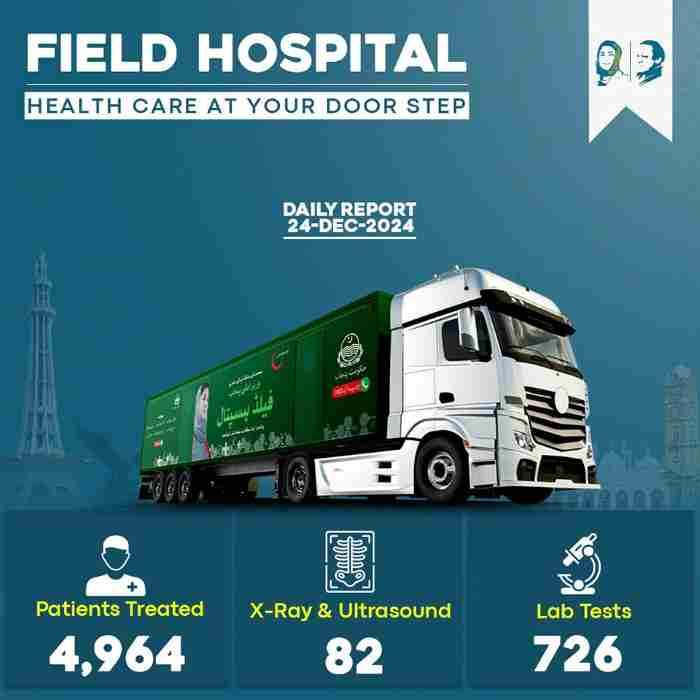
Combined with the parallel Clinic on Wheels initiative, field hospitals have provided medical care to nearly 30 million people across Punjab since program launch. This figure represents approximately one-quarter of the province’s total population, demonstrating unprecedented healthcare access expansion.
Field hospitals alone serve over 1.5 million patients annually in their current configuration. With planned expansion, this number will increase significantly, potentially reaching 3-4 million patients yearly within two years.
Patient distribution across service categories shows:
- General consultations: 65% of all patient encounters
- Chronic disease management: 15% of encounters
- Maternal and child health services: 12% of encounters
- Diagnostic services only: 5% of encounters
- Emergency care: 3% of encounters
What do patients say about their experiences with field hospitals?
Patient satisfaction surveys reveal consistently high approval ratings across multiple dimensions:
Accessibility Appreciation:
Patients consistently express gratitude for services reaching their villages. Elderly patients who previously could not travel to distant hospitals now receive regular care. Working families no longer lose full days of wages for medical visits. Mothers with young children avoid the ordeal of traveling with infants for vaccinations.
Quality Recognition:
Patients report that field hospital services match or exceed what they previously received at private clinics charging fees. Doctors spend adequate time, explain conditions clearly, and treat patients with respect. Diagnostic equipment provides answers unavailable at local private facilities.
Medicine Availability Satisfaction:
The fully stocked pharmacies address a common complaint about government health facilities—prescriptions written but medicines unavailable. Patients leave with actual medications, not prescriptions they cannot afford to fill.
Staff Behavior Praise:
Lady Health Workers and vaccinators receive particular appreciation for their friendly, supportive approach with women and children. Patients report feeling comfortable and respected regardless of social status or appearance.
What economic impact has the program achieved?
Direct Patient Savings:
Previously, rural residents needing medical care faced:
- Transportation costs of Rs. 500-2000 per trip
- Full day lost wages averaging Rs. 500-800 daily
- Food and incidental expenses during travel
- Accommodation costs for overnight stays
- Lost companion wages when family members accompanied patients
Eliminating these costs represents effective income transfer of thousands of rupees per family annually. For chronic disease patients requiring monthly visits, annual savings reach Rs. 50,000-100,000.
Productivity Gains:
Early treatment prevents progression to disabling conditions that would permanently reduce earning capacity. Diabetic patients maintaining glucose control avoid complications causing blindness or amputation. Hypertensive patients receiving treatment avoid strokes causing permanent disability. Early childhood illness treatment prevents developmental delays affecting lifelong potential.
Community Economic Multiplier:
Money previously spent on healthcare transportation now stays in local economies, circulating through village shops and services. Healthier workers miss fewer workdays and maintain higher productivity. Children attending school regularly rather than accompanying sick parents achieve better educational outcomes.
Frequently Asked Questions About the CM Punjab Field Hospital Program
Are the medical services at Punjab field hospitals really 100% free?
Yes, absolutely 100% free with no exceptions. No fees are charged for registration, consultation, any diagnostic test including ultrasound, X-ray, ECG, or laboratory investigations, or any medicine dispensed. The government covers all costs through consolidated funding to ensure no financial barrier prevents anyone from accessing healthcare. If any staff member requests payment, citizens should immediately report through helpline 1033 for immediate action.
What are the operating hours for CM Punjab mobile health units?
Field hospitals typically operate from 9:00 AM to 5:00 PM, six days weekly. Friday operations may have adjusted hours accommodating prayer schedules. Units remain at each location for 1-3 days depending on population size and healthcare needs. Operating hours for specific locations can be confirmed through the 1033 helpline or by checking with local Lady Health Workers.
Do field hospitals provide delivery services for pregnant women?
Field hospitals provide comprehensive antenatal care, postnatal checks, immunizations, and family planning services. However, they do not conduct deliveries due to space limitations and the need for sterile operating environments not feasible in mobile units. Pregnant women identified as high-risk or near term receive referrals to appropriate facilities with ambulance transport arranged if needed.
Is there an emergency contact for mobile medical units after hours?
For medical emergencies outside operating hours, citizens should contact the nearest government hospital, call 1122 rescue service, or reach their district health authority. The 1033 helpline operates 24/7 for information and complaints but is not an emergency medical service. In life-threatening situations, always call 1122 first.
Can I get diabetes or blood pressure checkups at field hospitals?
Yes, blood sugar testing and blood pressure monitoring are standard services at all field hospital units. Patients with known diabetes or hypertension can receive regular checkups and medication refills. Newly diagnosed patients receive treatment initiation and ongoing management support. Doctors adjust medications based on readings and provide lifestyle counseling for optimal disease control.
How do I register for CM Punjab Health Program online?
No registration is required for field hospital services—simply walk in during operating hours. For other health programs including Sehat Card and specialized treatment schemes, visit the Punjab Health Department portal linked through punjab.gov.pk. The Community Health Inspectors Programme will soon create digital health profiles for every household, automatically registering all family members for available services.
What is the list of Maryam Nawaz Health Clinics near me?
Maryam Nawaz Health Clinics refer to upgraded BHUs and RHCs. The complete list with locations and contact information is available on the Punjab Health Department website. You can also call 1033 to locate the nearest functional BHU or RHC to your area. District Health Officer offices maintain printed lists for public viewing.
What role do Community Health Inspectors play in this program?
The Community Health Inspectors Programme deployed 55,000 trained inspectors who conduct household visits, perform basic diagnostic tests including blood sugar checks, administer essential injections, create digital health profiles, and refer patients to field hospitals or other facilities. They serve as the direct link between communities and the healthcare system, ensuring no household is missed and that follow-up care continues between field hospital visits.
Are any lab tests not available for free at field hospitals?
No, all lab tests performed at field hospital investigation units are completely free. The program does not charge for any diagnostic service. If external tests are required at private laboratories due to equipment limitations, patients receive referrals with information about free testing options at government facilities where available. The program continually expands its test menu to cover more conditions.
How can I report problems or file complaints about field hospital services?
Complaints can be reported through multiple channels:
- Call 1033 and select the complaint option
- Contact your District Health Officer directly
- Use the CM Citizen Portal app for serious issues
- Inform your Community Health Inspector who documents and escalates
- Visit during CM’s open kutchery events for direct submission
- Write to district health office through postal mail
All complaints receive tracking numbers and guaranteed response timelines. The Special Monitoring Unit reviews complaint patterns to identify systemic issues requiring broader intervention.

Add a Comment