
Imagine being trapped in an abusive marriage with no money, no job, and no idea where to seek help. Or facing relentless harassment at your workplace while your employer ignores your complaints. Perhaps you are being denied your rightful share of inherited property by your own brothers. For countless women across Punjab, these scenarios are not hypothetical fears but daily realities.
The Government of Punjab has established a comprehensive network of protection services anchored by the toll-free helpline 1043, operated under the Punjab Commission on the Status of Women (PCSW), alongside the emergency response helpline 1737 managed by the Punjab Women Protection Authority (PWPA). This guide provides complete, actionable information about every aspect of women’s protection services in Punjab—from reporting mechanisms and legal procedures to shelter accommodations and long-term rehabilitation support.
Key Takeaways
- Two Helplines Serve Distinct Purposes: Call 1043 for complaints, legal guidance, and counseling through PCSW. Call 1737 for immediate police response, rescue operations, and shelter placement through PWPA.
- Complete Confidentiality Guaranteed: Your identity remains protected when you report through 1043, with all-women staff handling calls and female supervisors ensuring sensitive case management.
- Shelter Access in Every District: Dar-ul-Aman facilities operate across all 36 Punjab districts, providing safe accommodation, medical care, legal aid, and vocational training.
- Legal Reforms Strengthen Protection: Recent legislation strengthens legal safeguards and expands support services for survivors of violence and discrimination.
- Multiple Reporting Channels Available: Register complaints through phone calls, online portals, mobile apps, virtual police stations, or by visiting Women Protection Centers in person.
- Read More: Khelta Punjab CM Punjab Pink Games 2026 | How To Apply
- Read More: CM Punjab Livestock Card Phase 2 | PLC Card | PLC Punjab gov pk
- Read More: Punjab Livestock Scheme | CM Punjab Livestock Card
- Read More: CM Punjab Rehmat Card (Apply Now) | 25K to 1 Lakh For Widow & orphans
CM Punjab Women Helpline | PCSW – Toll-Free Helpline 1043
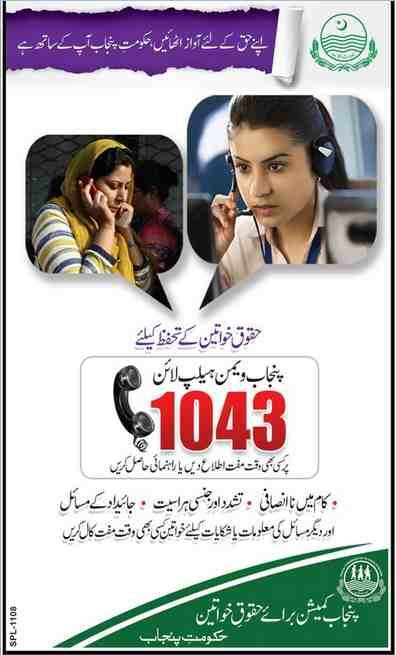
Table of Contents
Understanding the Women Protection Ecosystem in Punjab
The Government of Punjab has developed a multi-layered protection system that addresses women’s needs at every stage—from initial crisis through long-term rehabilitation. Understanding how these different components work together helps you access the right service at the right time.
The Two Pillars: PCSW and PWPA Explained
The Punjab Commission on the Status of Women (PCSW) operates under the PCSW Act 2014 as an autonomous body with civil court powers. Its primary functions include receiving complaints through helpline 1043, monitoring implementation of women’s protection laws, conducting research on gender issues, and recommending policy changes to government. The Commission holds authority to summon government officials, demand records from public institutions, and inspect jails, shelter homes, and government facilities to ensure compliance with women’s rights protections.
The Punjab Women Protection Authority (PWPA) functions as the executive arm for women’s protection under the PWPA Act 2017. It manages emergency response through helpline 1737, operates Violence Against Women Centers (VAWCs), oversees all Dar-ul-Aman shelters across Punjab, and coordinates with police for rescue operations. The Authority maintains full operational presence across all 36 Punjab districts with designated District Women Protection Officers responding to cases.
How the System Responds When You Call
When you dial 1043, an all-women call agent answers and records your complaint. The agent collects:
- Your full name and CNIC number
- Current address and location details
- Contact number for follow-up
- Detailed description of the incident
- Information about the perpetrator if known
- Any evidence you possess
The agent immediately assesses whether you need emergency response. For urgent cases involving physical danger, the helpline alerts PWPA through helpline 1737 for rescue operations. For non-urgent matters, your complaint is assigned to legal advisors or psychosocial counselors who contact you within 24-48 hours. The system tracks every complaint through resolution, with PCSW contacting you regularly for feedback until you confirm satisfaction.
Response times vary based on case complexity:
- Emergency situations trigger PWPA action within hours
- Legal guidance arrives within one to two working days
- Referrals to other government departments forward within two to three working days
- Complex cases involving investigation require extended timelines with regular status updates
Read More: PEF Phase 3 School List PDF Download (All Punjab District Wise)
Complete Guide to Helpline Numbers and Contact Information
Having correct contact information readily available makes a critical difference during emergencies. This section provides every essential number you need to remember.
Primary Government Helplines for Women
The Government of Punjab operates multiple helplines designed for specific situations:
| Helpline Number | Managing Agency | Primary Purpose | Availability |
|---|---|---|---|
| 1043 | PCSW | Complaints, legal advice, counseling, referrals | 24/7 toll-free |
| 1737 | PWPA | Emergency rescue, police action, shelter placement | 24/7 toll-free |
| 15 | Punjab Police | Immediate police emergency response | 24/7 toll-free |
| 1000 | Maryam Nawaz Initiative | Women-specific issues, government welfare programs | 24/7 toll-free |
What Each Helpline Handles Best
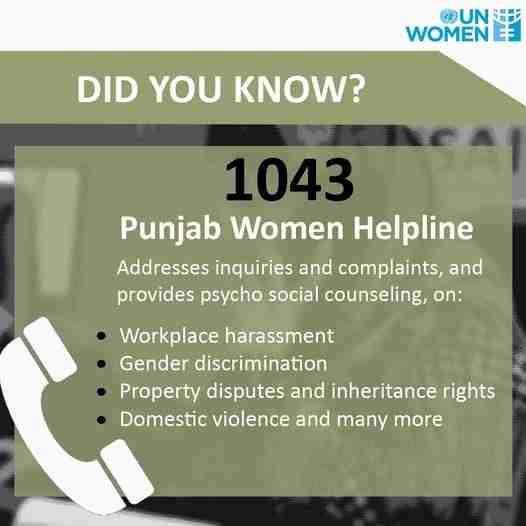
Call 1043 when you need:
- Legal advice about marriage, divorce, custody, or inheritance
- Counseling after experiencing trauma or violence
- Help filing a complaint against harassment or discrimination
- Information about women’s hostels, daycare centers, or government schemes
- Guidance when police refuse to register your FIR
- Referral to shelter homes or legal aid services
Call 1737 when you face:
- Immediate physical danger or threat to life
- Need for rescue from an abusive situation
- Requirement for emergency shelter placement
- Violence requiring police intervention
- Situations where you cannot safely stay in your current location
Call 15 when:
- You are in immediate physical danger
- A crime is in progress
- You need police to reach your location urgently
- You witness violence against someone else
Call 1000 for:
- Reporting harassment and violence
- Seeking guidance on women’s rights
- Accessing government welfare programs
- Filing complaints about government functionaries
Dar-ul-Aman Shelter Contact Information
Dar-ul-Aman shelters operate in every Punjab district. Here are contact details for major cities and all districts:
Central Punjab Districts:
| District | Dar-ul-Aman Contact Person | Contact Information | Location Details |
|---|---|---|---|
| Lahore | Rabia Usman | 042-99230058 | 148 A Block New Muslim Town |
| Faisalabad | Kanwal Shehzadi | Contact through DWPO | Islam Nagar, Riaz Shahid Chowk |
| Gujranwala | Shahida Waris | Contact through DWPO | 539-C Satellite Town near Nursery Chowk |
| Sialkot | Imran Ksana | Contact through DWPO | Social Welfare Complex, Aalam Chowk |
| Sheikhupura | Asma Dolat | Contact through DWPO | Tufail Shaheed Road near Ayesha Park |
| Kasur | Sidra Taj | Contact through DWPO | Social Welfare Complex Near Officer Colony |
| Okara | Rubina Shazadi | Contact through DWPO | New District Complex near DPS School |
| Nankana Sahib | Iram Baneen | 056-2874299 | 20-Z Housing Colony |
| Gujrat | Nasreen Chaudhary | Contact through DWPO | New Gulshen Colony, Street No. 2 |
Northern Punjab Districts:
| District | Dar-ul-Aman Contact Person | Contact Information | Location Details |
|---|---|---|---|
| Rawalpindi | Rizwana | 051-4920482 | Social Welfare Complex, Shamsabad |
| Jhelum | Sohail Nasir | 0544-230417 | Mohallah Abass Pura |
| Chakwal | Ayesha Khan | Contact through DWPO | Ashraf Town Pindi Road |
| Attock | Ayesha Kiran | 057-9316241 | Officer Colony Attock City |
| Khushab | Sadia Feroz Malik | 0454-920044 | House 5 Street 1 Sujra Colony Jauharabad |
| Mianwali | Zubaida Shaheen | 0459-920164 | Near Dar-ul-Aman Degree College Road |
| Bhakkar | Naseem Akhtar | 0453-9201214 | Kutchery/Civil Courts Road |
| Sargodha | Sana Rauf | 048-3210025 | New Setlitown Z Block |
Southern Punjab Districts:
| District | Dar-ul-Aman Contact Person | Contact Information | Location Details |
|---|---|---|---|
| Multan | Muneeza Manzoor Butt | 061-9220542-3 | Social Welfare Complex, Matital Road |
| Bahawalpur | Tayyaba Munir | 062-9330095 | House 44 Street 3 Yasrab Town |
| Dera Ghazi Khan | Surrayya Majeed Rana | 064-9260042 | Sanat Zaar Social Welfare Complex |
| Muzaffargarh | Hina Gondal | 066-9200020 | Social Welfare Complex, Jail Road |
| Rahim Yar Khan | Zobia Mughal | 068-9330086 | Madina Town, Street 2 House 5 |
| Bahawalnagar | Zill E Huma | 063-9240269 | Officer Colony Near DCO Office |
| Khanewal | Fozia Barkat | 065-9200282 | 3 Marla Scheme near Gujjar Chowk |
| Vehari | Munazza Kausar | 067-9201355 | Near Degree College for Women |
| Lodhran | Nazia Sharif | 0608-922173 | Railway Road Near Mosa Wali Masjid |
| Pakpattan | Attia Kashif | Contact through DWPO | Ketchary Road Opposite Girls College |
| Rajanpur | Saba Zahra | Contact through DWPO | Fateh Pur Road Near Social Welfare Complex |
Additional Support Helplines
Beyond government services, specialized organizations offer targeted assistance:
Rozan Counseling Helpline: 0304-111-1741
- Operating hours: Monday to Friday, 9:00 AM to 5:00 PM
- Languages: Urdu and English
- Services: Emotional support, trauma counseling, mental health referrals
Digital Rights Foundation Cyber Harassment Helpline: 0800-39393
- Operating hours: Monday to Friday, 9:00 AM to 5:00 PM
- Email: helpdesk@digitalrightsfoundation.pk
- Services: Technical support for online harassment, evidence preservation, legal guidance
Madadgaar Helpline for Women and Children: 1098
- Services: Telephone counseling, legal aid, referral services
Punjab Women Protection Authority Head Office:
- Address: Near Filter Hospital, Wahdat Colony, Wahdat Road, Lahore
- Phone: 042-99333817
Comprehensive Guide to Services Available Through Helplines
The 1043 helpline connects you to an extensive range of services addressing virtually every situation a woman might face.
Legal Services and Guidance
The helpline provides access to qualified legal advisors who specialize in family law, criminal law, and women’s rights. They offer guidance on:
Family Law Matters:
- Marriage registration and documentation requirements
- Divorce procedures including Khula and Talaq
- Child custody laws and visitation rights
- Maintenance (Nafqa) claims against husband
- Dowry disputes and recovery of dowry items
- Forced marriage prevention and legal remedies
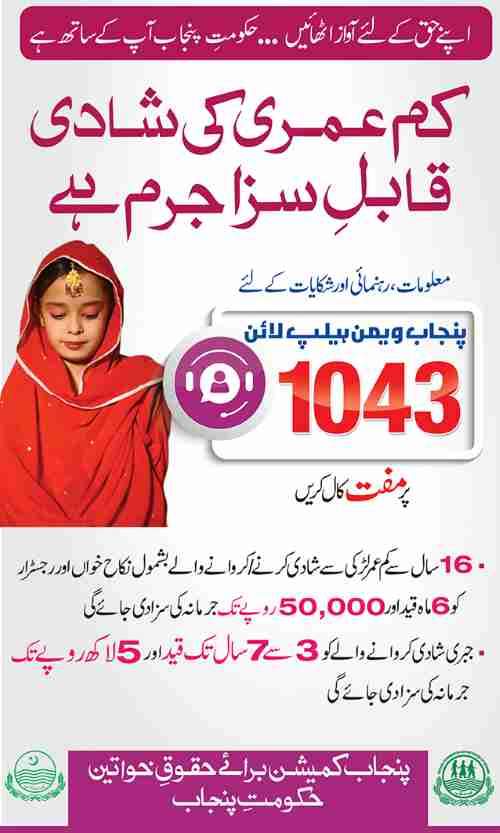
- Child marriage reporting under relevant acts
Inheritance and Property Rights:
- Legal share calculation under Islamic and Pakistani law
- Documentation required for claiming inherited property
- Procedures for filing claims in civil court
- Mediation approaches for family disputes
- Dealing with fraudulent property transfers
- Rights of widows and daughters in ancestral property
Criminal Law Support:
- FIR registration procedures when police refuse
- Evidence collection and preservation guidance
- Medical examination requirements for violence cases
- Court procedures and witness preparation
- Protection orders and restraining orders
- Bail and post-arrest legal processes
Psychosocial Counseling Services
Trained counselors provide emotional support through:
- Crisis counseling: Immediate intervention for women in acute distress
- Trauma recovery: Structured support for survivors of violence
- Suicide prevention: Emergency intervention for women feeling hopeless
- Family mediation: Facilitating communication with family members
- Stress management: Techniques for coping with ongoing abuse
- Children’s support: Counseling for children affected by domestic violence
- Referral services: Connecting women with long-term therapy options
Domestic Violence Support
When you report domestic violence, the helpline provides:
- Safety planning: Practical steps to protect yourself while remaining in your home
- Emergency escape planning: How to leave safely when necessary
- Evidence documentation: What to preserve for legal cases
- Medical assistance: Connecting you with hospitals for examination and treatment
- Police coordination: Ensuring FIR registration and perpetrator arrest
- Shelter placement: Arranging Dar-ul-Aman admission when home is unsafe
- Long-term follow-up: Regular check-ins to prevent relapse into abusive situations
Workplace Harassment Assistance
The helpline addresses workplace harassment through:
- Rights education: Explaining your protections under relevant laws
- Complaint procedures: Guiding you through filing internal complaints
- Evidence collection: What documentation strengthens your case
- Ombudsperson referral: Connecting you with the appropriate authority
- Employer accountability: Escalating complaints when employers fail to act
- Career protection: Advising on rights against retaliation for reporting
Cyber Harassment Support
For online harassment cases, the helpline provides:
- Evidence preservation: Step-by-step guidance on saving screenshots and messages
- Platform reporting: How to report abuse to social media companies
- FIA coordination: Connecting you with cybercrime wing for legal action
- Digital safety: Tips for protecting your online presence
- Emotional support: Counseling for the psychological impact of cyber harassment
Information and Referral Services
The helpline maintains current information about:
- Women’s hostels: Locations, admission criteria, fees, and contact details
- Daycare centers: Government and private options with subsidy information
- Vocational training: Skill development programs and enrollment procedures
- Employment services: Job placement assistance and women’s job quotas
- Health services: Women’s hospitals, reproductive health clinics, and mental health facilities
- Educational opportunities: Scholarships and admission quotas for women
- Financial assistance: Government welfare programs and eligibility requirements
Step-by-Step Complaint Registration Process
Understanding exactly how to register a complaint ensures you can access help efficiently without confusion.
Calling 1043: What to Expect
Follow these steps when you call 1043:
- Prepare before calling:
- Find a safe, private space where you cannot be overheard
- Keep your CNIC or identification document nearby
- Write down key details about the incident
- Note any witness names and contact information
- Gather any evidence you have
- During the call:
- An all-women call agent will answer
- State clearly that you want to register a complaint
- Provide your name and basic contact information
- Describe the incident chronologically and clearly
- Mention any previous attempts to seek help
- Answer questions patiently to ensure accurate documentation
- After providing information:
- Receive a complaint reference number
- Note this number for future follow-up
- Ask about expected response time
- Confirm how they will contact you
- Ask what you should do while waiting for response
Online Complaint Registration
For those who prefer digital submission or cannot speak freely:
- Visit the official PCSW website complaint portal
- Create an account or proceed as guest
- Fill the complaint form with:
- Your personal details
- Incident description
- Perpetrator information
- Upload supporting documents
- Submit and note the complaint reference number
- Check your email for acknowledgment and updates
- Log in to track complaint progress
Mobile App Registration
The Women Safety App offers convenient complaint filing:
- Download from official app stores
- Register with your mobile number
- Complete profile information
- Use the complaint feature to submit details
- Attach photos or videos as evidence
- Track status through the app dashboard
- Use emergency button for immediate alerts
What Happens After Registration
Once your complaint is registered, this process follows:
| Step | Action Taken | Timeline | Your Role |
|---|---|---|---|
| 1 | Complaint assigned to officer | Within 24 hours | Keep reference number safe |
| 2 | Initial assessment conducted | 1-2 days | Answer calls from unknown numbers |
| 3 | Legal advice provided if needed | 2-3 days | Note all advice given |
| 4 | Referral to relevant authority | 3-5 days | Provide additional information if requested |
| 5 | Authority takes action | Varies by case | Stay in contact with assigned officer |
| 6 | PCSW follows up for feedback | Regular intervals | Share updates honestly |
| 7 | Case closed upon satisfaction | When resolved | Confirm closure with helpline |
Dar-ul-Aman: Safe Shelters for Women in Crisis
Dar-ul-Aman facilities provide comprehensive shelter and rehabilitation services for women fleeing dangerous situations.
Who Can Seek Shelter at Dar-ul-Aman
Dar-ul-Aman accepts women facing:
- Domestic violence and physical abuse
- Threats to life or honor
- Forced marriage or conversion attempts
- Homelessness or extreme destitution
- Psychological trauma requiring safe environment
- Legal battles requiring secure accommodation
- Recovery period after violence or medical treatment
- No alternative safe housing options
Women may also bring their minor children, who receive separate accommodation and educational support within the facility.
Services Provided at Dar-ul-Aman Facilities
Each Dar-ul-Aman offers comprehensive services:
Accommodation Services:
- Separate rooms or dormitories with secure locking
- 24/7 security with female guards
- Clean bedding and basic furniture
- Proper sanitation and bathing facilities
- Nutritious meals provided three times daily
- Clothing and personal hygiene items
Healthcare Services:
- On-site medical officer or visiting doctor
- Emergency first aid and treatment
- Gynecological and reproductive health services
- Mental health counseling sessions
- Regular health check-ups
- Medicine provision at government rates
Legal Services:
- Free legal aid through empaneled lawyers
- Court representation for ongoing cases
- Documentation assistance for FIRs and court papers
- Guidance through legal procedures
- Coordination with police and prosecution
Rehabilitation Services:
- Vocational training in skills like sewing, embroidery, computer basics
- Literacy classes for women needing education
- Skill development for economic independence
- Job placement assistance after leaving shelter
- Financial literacy and budgeting education
- Confidence building and personality development
Child Support Services:
- Educational arrangements for school-age children
- Play areas and recreational activities
- Counseling for children affected by trauma
- School admission assistance
- Separate sleeping quarters for families
Duration of Stay and Reintegration Process
Women can stay at Dar-ul-Aman for varying periods:
| Stay Duration | Typical Circumstances | Services Provided |
|---|---|---|
| Short-term (days to weeks) | Immediate crisis, awaiting family mediation | Safety, counseling, legal advice |
| Medium-term (weeks to months) | Court cases in progress, skill development | Full rehabilitation services, legal support |
| Long-term (months to 1+ years) | No family support, severe trauma, complex cases | Complete rehabilitation, job training, reintegration planning |
The reintegration process includes:
- Family reconciliation attempts where safe and appropriate
- Job placement for economic independence
- Arranged marriage support for widows or divorcees wanting remarriage
- Housing assistance for independent living
- Follow-up monitoring after leaving shelter
Violence Against Women Centers (VAWCs): One-Stop Crisis Management
VAWCs provide comprehensive services under one roof for women immediately after violence.
Services Available at VAWCs
VAWCs integrate multiple services to minimize trauma from running between different offices:
| Service Type | What Happens | Why It Matters |
|---|---|---|
| Police reporting | Female police officer registers FIR on-site | Avoids repeated traumatic recounting at police station |
| Medical examination | Doctor conducts forensic exam and treatment | Evidence collection happens immediately |
| Legal counsel | Lawyer explains rights and procedures | Woman understands her legal options |
| Psychological support | Counselor provides crisis intervention | Emotional needs addressed immediately |
| Shelter referral | DWPO arranges Dar-ul-Aman placement | Safe accommodation secured before leaving |
| Evidence preservation | Forensic team collects and preserves evidence | Strengthens case for prosecution |
Location of VAWCs and Women Protection Centers
Current operational centers include:
Multan Violence Against Women Center:
- Location: Social Welfare Complex, Matital Road, Multan
- Contact: 061-9220542-3
- DWPO: Muneeza Manzoor Butt
- Services: Full-service VAWC with police, medical, legal, and counseling
Lahore Women Protection Center:
- Location: 148 A Block New Muslim Town, Lahore
- Contact: 042-99230058
- DWPO: Rabia Usman
- Services: Shaheed Benazir Bhutto Human Rights Center for Women
Rawalpindi Women Protection Center:
- Location: Social Welfare Complex, Shamsabad, Rawalpindi
- Contact: 051-4920482
- DWPO: Rizwana
- Services: Human rights center with comprehensive support
Bahawalpur Women Protection Center:
- Location: House 44 Street 3 Yasrab Town, near One Unit Chowk
- Contact: 062-9330095
- DWPO: Tayyaba Munir
- Services: Crisis intervention and legal support
Faisalabad Women Protection Center:
- Location: Islam Nagar, Riaz Shahid Chowk, near Iqbal Stadium
- DWPO: Kanwal Shehzadi
- Services: Human rights center with referral services
Sialkot Women Protection Center:
- Location: Social Welfare Complex, Aalam Chowk, Sialkot
- DWPO: Imran Ksana
- Services: Comprehensive women’s support services
Legal Framework Protecting Women in Punjab
Understanding the legal protections available helps women assert their rights confidently.
Key Legislation for Women’s Protection
| Law Name | Key Provisions | What It Means for Women |
|---|---|---|
| Protection of Women Against Violence Act 2016 | Defines domestic violence, provides protection orders, establishes response mechanisms | Legal recognition of domestic violence as crime with clear remedies |
| Punjab Women Protection Authority Act 2017 | Creates PWPA with enforcement powers, establishes VAWCs and DWPO system | Government agency dedicated to physical protection and shelter |
| PCSW Act 2014 | Establishes Commission with civil court powers for complaint redressal | Independent body to hear grievances and summon officials |
| Child Marriage Restraint Act | Sets minimum marriage age, recent amendments raise age to 18 for women | Protection from forced early marriage |
| Acid Control Bill 2025 | Regulates sale of caustic substances, enhances penalties for acid crimes | Prevents easy access to acid for attacks |
| Protection Against Harassment of Women at Workplace Act | Mandates inquiry committees in organizations, provides complaint mechanism | Workplace safety and accountability |
Protection Orders and Legal Remedies
Under the Protection of Women Against Violence Act, women can seek:
Protection Orders:
- Court orders prohibiting perpetrator from committing violence
- Restrictions on contacting or approaching the woman
- Temporary custody of children arrangements
- Exclusive use of shared residence rights
Residence Orders:
- Right to continue living in shared household
- Perpetrator removal from the home
- Alternative accommodation arrangements
Monetary Relief:
- Compensation for damages and medical expenses
- Maintenance during legal proceedings
- Financial support for children
Police and FIR Registration Rights
Every woman has these rights when approaching police:
- Right to have FIR registered for cognizable offenses
- Right to female officer assistance during statement recording
- Right to copy of FIR without charge
- Right to medical examination at government hospital
- Right to transfer to another station if not comfortable
- Right to complain to senior officers if FIR refused
If police refuse FIR registration:
- Contact 1043 immediately
- Provide police station details and officer name
- PCSW will contact senior police officials
- Alternative complaint can be filed with District Police Officer
- Judicial magistrate can order FIR registration
Privacy, Confidentiality, and Safety Protocols
Trust is essential when seeking help. The system prioritizes your privacy and safety.
Confidentiality Guarantees
The helpline and protection system guarantee:
- Your personal information stays within authorized personnel only
- Information shared only to extent necessary for your case
- No details revealed to family or perpetrator without consent
- Anonymous reporting option for third-party reporters
- Secure data storage with access controls
- Regular staff training on confidentiality requirements
All-Women Staffing
The 1043 helpline maintains all-women staffing:
- Female call agents handle all incoming calls
- Women supervisors manage call center operations
- Female legal advisors provide counsel
- Women counselors offer emotional support
- Female DWPOs handle district-level cases where possible
This ensures women feel comfortable sharing sensitive information without hesitation.
Safety Planning Guidance
When you report abuse, helpline staff help you develop a safety plan:
If staying in the home:
- Identify safest rooms with exits and phones
- Pack emergency bag with documents, money, essentials
- Establish code words with trusted neighbors
- Memorize emergency numbers
- Keep phone charged and accessible
- Document abuse incidents with dates and details
If planning to leave:
- Identify safe destination before leaving
- Arrange transportation in advance
- Take children only if legally permitted
- Carry identification documents for yourself and children
- Inform trusted person of your plans
- Contact helpline for shelter placement confirmation
Protection from Retaliation
The system takes complaints of retaliation seriously:
- Threats after reporting should be reported immediately
- PWPA can provide police protection
- Courts can issue restraining orders
- Perpetrator arrest for witness intimidation
- Emergency shelter available if safety compromised
Frequently Asked Questions
What is the CM Punjab Women Helpline number?
The CM Punjab Women Helpline number is 1043. It operates 24 hours daily, is toll-free from all networks, and connects you to the Punjab Commission on the Status of Women for complaints, legal advice, and counseling.
Is the 1043 helpline free to call from a mobile?
Yes, 1043 is completely free from all mobile networks including Jazz, Zong, Telenor, and Ufone, as well as from landlines across Pakistan. You will never be charged for calling this number.
What services does the PCSW 1043 helpline provide?
The helpline provides complaint registration for violence and harassment, legal advice from qualified lawyers, psychosocial counseling, information on women’s rights, referral to police and PWPA, and guidance on accessing Dar-ul-Aman shelters.
How can I report domestic violence in Punjab?
You can report domestic violence by calling 1043, using the online PCSW complaint portal, visiting any Women Protection Center in person, or calling 1737 for immediate police and protection assistance.
Is my identity kept confidential when I call 1043?
Yes, PCSW maintains strict confidentiality. Your personal information is only accessible to authorized personnel handling your case and is shared with other authorities only to the extent necessary for your protection and legal proceedings.
What is Dar-ul-Aman and how can I contact one?
Dar-ul-Aman is a government shelter home providing safe accommodation, food, medical care, legal aid, and vocational training for women in distress. You can access it by calling 1737, contacting your District Women Protection Officer, or getting a referral through the 1043 helpline.
Can I file a complaint on behalf of someone else?
Yes, you can file a third-party complaint if you know a woman who needs help but cannot report herself. The helpline will register the complaint and take appropriate action while maintaining confidentiality about the reporter’s identity if requested.
What is the difference between 1043 and 1737 helplines?
1043 is managed by PCSW for complaints, legal advice, and counseling referrals. 1737 is managed by PWPA for emergency response, police action, rescue operations, and shelter placement. Call 1043 for guidance and 1737 for immediate physical protection.
Can men call the 1043 helpline for assistance?
Yes, men can call 1043 to seek guidance on behalf of women in their family, report violence they witness, or ask for information about women’s rights and available services. The helpline welcomes all callers seeking to help women in need.
What information is required to register a complaint on 1043?
You will need to provide your full name, CNIC number, current address, contact number, details of the incident including date and location, information about the perpetrator if known, and any evidence you have such as messages, photos, or witness names.

Add a Comment