
Imagine harvesting a bumper wheat crop only to discover that middlemen offer you less than your production cost. That scenario is exactly what the official Gandum Rate in Pakistan aims to prevent. For the current season, the federal government has fixed the minimum support price at Rs 3,500 per 40 kg, creating a safety net for millions of farmers while stabilizing national food reserves.
What this comprehensive guide covers:
- The exact federal wheat support price and how it protects farmers.
- Province-by-province Gandum rates for Punjab, Sindh, KPK, and Balochistan.
- Government procurement process: step-by-step instructions.
- CM Punjab Wheat Support Program registration and benefits.
- Kissan Card impact on small farmers’ income.
- Open market vs. government rate: key differences explained.
- Daily updated wheat price sources for any city in Pakistan.
Key Takeaways
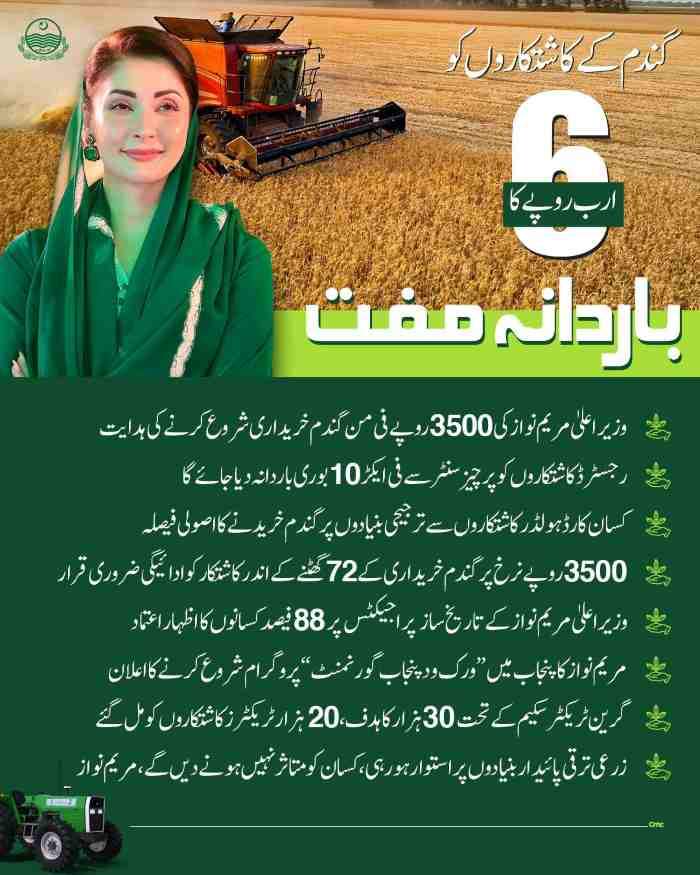
- Official Support Price: Rs 3,500 per 40 kg is the minimum guaranteed rate for farmers selling to government procurement centers.
- Provincial Variations: Actual farmer prices differ across Punjab, Sindh, KPK, and Balochistan due to logistics and local policies.
- Procurement Process: Selling at government centers requires meeting moisture standards (13-14%) and quality checks to avoid deductions.
- Financial Aid: CM Punjab Wheat Support Program offers Rs 5,000 per acre subsidy, plus interest-free loans via Kissan Card.
- Market Dynamics: Open market rates can drop below support price after harvest or spike during shortages, often exceeding Rs 5,000 per 40 kg.
- Read More: Today Wheat Price In Pakistan – Government Rate Per 40 Kg
- Read More: 40 kg Wheat Price In Pakistan Today (Wheat Rate per 40KG)
- Read More: Lost Documents Report Online (Punjab Police) | Loss Report – Step-By-Step
- Read More: Harassment Report Online | Cyber Crime Online Complaint Pakistan
Gandum Rate in Pakistan – Govt Wheat Rate Per 40 Kg
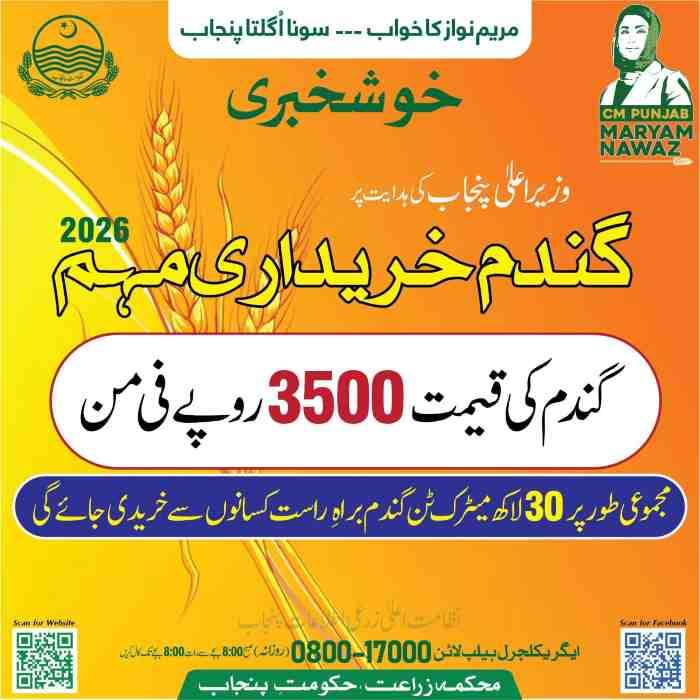
Table of Contents
What Is the Current Gandum Rate in Pakistan? Complete Federal Government Wheat Price per 40 kg
The official Gandum rate in Pakistan for the ongoing season stands at Rs 3,500 per 40 kg, established as the Minimum Support Price by the federal government. This rate applies to all procurement operations conducted by provincial food departments and PASSCO. The government has approved a massive procurement target of 6.5 million metric tons at this benchmark price, ensuring farmers receive fair compensation even when open market prices dip.
How Is the Rs 3,500 per 40 kg Rate Determined?
The federal government sets the support price after extensive consultations with provincial agriculture departments, farmer unions, and economic advisors. Key factors considered include:
- Production costs: Seeds, fertilizers, diesel, electricity, and labor expenses.
- Inflation rate: Current consumer price index adjustments.
- International market trends: Global wheat prices and import parity.
- Domestic demand: Estimated national consumption of 25-27 million tons annually.
- Strategic reserve needs: Requirement to maintain 2-3 months of buffer stocks.
What Does the Rs 3,500 Rate Mean for Different Stakeholders?

| Stakeholder | Impact of Rs 3,500 per 40 kg |
|---|---|
| Small farmer | Guaranteed minimum income, protection from post-harvest price crashes |
| Large farmer | Baseline for negotiations with private buyers |
| Flour mill | Reference for raw material costing; may pay premium for quality |
| Consumer | Indirectly affects flour prices; government releases subsidized wheat |
| Government | Controls inflation, ensures food security, manages buffer stocks |
What Is the Per-Kilogram Breakdown of the Government Wheat Rate?
The Rs 3,500 per 40 kg rate translates to Rs 87.5 per kilogram at the farm gate. However, the final price paid by consumers for wheat flour (atta) includes multiple layers:
- Raw grain cost: Rs 87.5 per kg
- Milling charges: Rs 5-8 per kg
- Transportation: Rs 3-5 per kg
- Packaging: Rs 2-3 per kg
- Retailer margin: Rs 10-15 per kg
Total consumer price range: Rs 107.5 to Rs 118.5 per kg for flour, explaining why a 20 kg atta bag costs between Rs 2,150 and Rs 2,370.
Why Do Gandum Rates Vary Across Pakistani Provinces? (Punjab, Sindh, KPK, Balochistan)
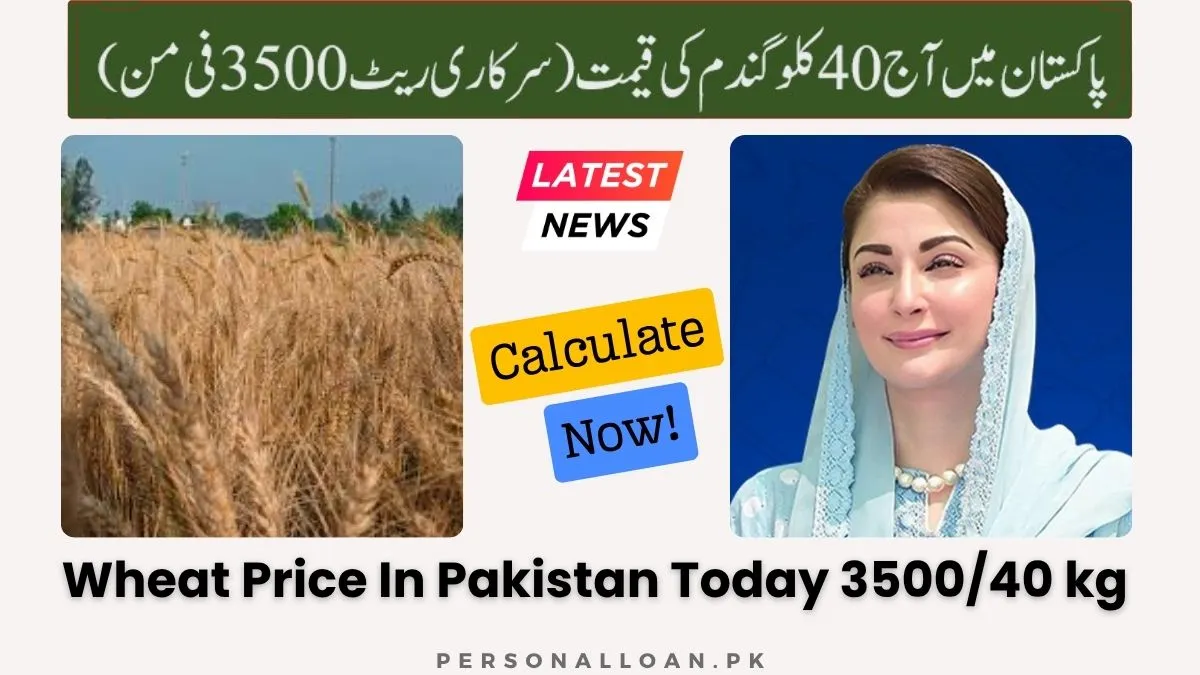
The Gandum rate is not uniform across all provinces due to logistical challenges, local supply-demand imbalances, and provincial procurement policies. While the federal government sets an indicative price of Rs 3,500 per 40 kg, the actual price a farmer receives can differ by hundreds of rupees.
What Is the Exact Gandum Rate in Punjab Today?
Punjab has officially adopted the federal support price of Rs 3,500 per 40 kg for government procurement. The provincial government aims to purchase 3 million metric tons through private aggregators. Key implementation details:
- Payment timeline: Farmers receive payment within 48 hours of delivery.
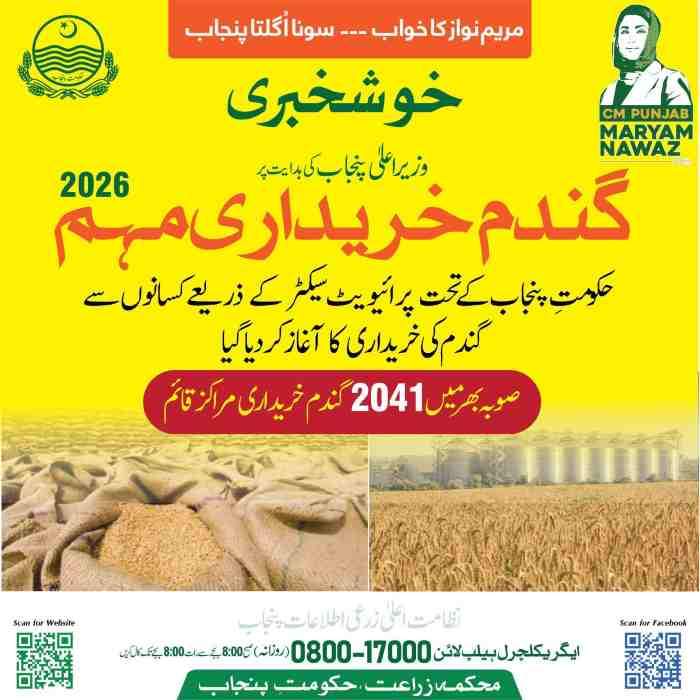
- Procurement centers: Over 200 locations across all 36 districts.
- Quality standards: Moisture content below 14%, minimal foreign matter.
- Registration: Online system via CM Punjab Wheat Support Program portal.
What Is the Gandum Rate in South Punjab (Multan, Bahawalpur, Rahim Yar Khan)?
South Punjab districts often experience lower open market rates immediately after harvest. Current observations:
- Multan: Open market rate Rs 2,700-3,200 per 40 kg; government centers pay Rs 3,500.
- Bahawalpur: Rates fluctuate between Rs 2,800-3,300; government procurement active.
- Rahim Yar Khan: Prices at Rs 2,750-3,150; farmers advised to use government centers.
- Dera Ghazi Khan: Rates around Rs 2,900-3,400; transport costs reduce net farmer income.
How Much Is the Sindh Government Paying for 40 kg Wheat?
The Sindh government has fixed its procurement price at Rs 3,500 per 40 kg, aligning with federal policy. Unique features of Sindh’s program:
- Procurement volume: 1 million metric tons target.
- Centers: 109 designated procurement points across the province.
- Eligibility: Restricted to registered Hari Card holders only.
- Start date: Procurement began April 1.
What Is the Current Open Market Gandum Rate in Karachi?
Karachi’s Jodia Bazaar reports highly variable rates:
- Low end: Rs 2,500 per 40 kg for lower quality grain.
- Average: Rs 3,200-3,600 per 40 kg for standard quality.
- Premium: Up to Rs 4,000 per 40 kg for superior varieties.
- Reason for variance: Dependence on inter-provincial supply, transport costs, and quality differences.
What Is the Wheat Support Price in Khyber Pakhtunkhwa (KPK)?
KPK has been directed to follow the federal illustrative price of Rs 3,500 per 40 kg. The provincial government is implementing procurement through:
- Local food departments: Managing center operations.
- Subsidized wheat release: Providing wheat to public at Rs 10,414 per 100 kg.
- Farmer registration: Simplified process at district agriculture offices.
What Is the Official Wheat Rate in Balochistan?
Balochistan faces unique challenges due to remote geography and limited infrastructure. Current rate situation:
- Official procurement price: Rs 3,500 per 40 kg (same as federal).
- Actual market price: Often exceeds Rs 4,000 due to transport costs.
- Implication: Farmers in accessible areas benefit from government centers; remote areas rely on private buyers.
Government Rate vs. Open Market Rate: Understanding the Critical Difference
The government rate (Rs 3,500/40kg) acts as a Minimum Support Price floor. The open market rate is determined purely by supply and demand. This creates two possible scenarios:
Scenario A: Open market rate falls below MSP
- Happens immediately after harvest (April-May).
- Reason: sudden supply glut, farmers lacking storage.
- Example: Rates drop to Rs 2,700-3,000.
Scenario B: Open market rate rises above MSP
- Occurs during off-season (October-March).
- Reason: stock depletion, hoarding, high demand.
- Example: Rates spike to Rs 4,500-5,100.
Why Does the Open Market Rate Sometimes Drop Below Rs 3,500?
Three primary factors drive open market rates below the government support price:
- Post-harvest supply surge: All farmers harvest simultaneously, flooding local markets.
- Storage limitations: Small farmers lack silos or warehouses; they must sell quickly.
- Transportation costs: Taking wheat to distant government centers costs time and fuel.
- Middlemen tactics: Intermediaries offer lower prices to desperate farmers.
- Quality deductions: Private buyers often apply stricter quality penalties.
Why Does the Open Market Rate Sometimes Exceed Rs 5,000 per 40 kg?
Open market prices can skyrocket due to:
- Supply shortages: Poor harvest or delayed government releases.
- Hoarding: Speculators hold stock expecting higher prices.
- Inflation: General price level increases across all commodities.
- Export demand: Illegal cross-border trade can reduce local supply.
- Flour mill competition: Mills bid against each other for limited grain.
Real example: In recent months, Lahore’s open market rate reached Rs 5,100 per 40 kg, far exceeding the government rate. This forced government intervention through subsidized wheat releases.
Read More: PEF Quality Assurance Test (QAT) (Syllabus & Test Date)
How to Sell Wheat at the Government Rate: Complete Procurement Guide for Farmers
Farmers can access the Rs 3,500 per 40 kg government rate by delivering their crop to official procurement centers. Follow this step-by-step process:
Step 1: Verify Your Eligibility
- Own agricultural land (or be a registered tenant).
- Possess valid CNIC and land ownership documents.
- In Sindh: Must hold a Hari Card.
Step 2: Locate the Nearest Procurement Center
- Contact your local Agriculture Department office.
- Check provincial food department websites.
- Ask at union council offices for center lists.
Step 3: Prepare Your Wheat for Quality Inspection
- Ensure moisture content below 14% (ideal: 12-13%).
- Remove stones, dirt, and broken grains.
- Dry wheat thoroughly before transport.
Step 4: Transport Wheat to the Center
- Arrange truck or tractor trolley.
- Keep delivery receipt and farmer registration documents.
Step 5: Undergo Quality Testing at the Center
- Center staff use moisture meters and visual inspection.
- If quality passes, wheat is weighed.
Step 6: Receive Payment
- Payment is made via bank transfer or cheque.
- Some centers offer on-spot cash payments.
- Deductions applied only if quality fails standards.
Where Are Government Wheat Procurement Centers Located?
Government centers are strategically placed in major agricultural tehsils:
| Province | Number of Centers | Key Districts Covered |
|---|---|---|
| Punjab | 200+ | All 36 districts including Lahore, Faisalabad, Multan, Bahawalpur |
| Sindh | 109 | Hyderabad, Sukkur, Mirpurkhas, Nawabshah, Larkana |
| KPK | 50+ | Peshawar, Mardan, Swat, Abbottabad, Dera Ismail Khan |
| Balochistan | 30+ | Quetta, Sibi, Naseerabad, Zhob |
What Are the Wheat Moisture Requirements for Government Procurement?
Moisture content is the most critical quality parameter. Government centers enforce:
- Maximum allowed: 14% moisture.
- Ideal range: 12-13% for safe storage.
- Testing method: Digital moisture meters at each center.
- Rejection threshold: Above 14% leads to immediate rejection or steep deductions.
Why moisture matters: High moisture wheat develops mold and aflatoxins within weeks, rendering entire storage silos unusable.
How Much Deduction Can a Farmer Face per 40 kg at Procurement Centers?
Deductions vary based on quality deviations:
| Quality Issue | Typical Deduction (per 40 kg) |
|---|---|
| Moisture 14-15% | Rs 50-80 |
| Moisture 15-16% | Rs 100-150 |
| Moisture above 16% | Rejection or Rs 200+ |
| Foreign matter (stones, dirt) | Rs 50-100 |
| Broken/kernel damage | Rs 30-70 |
| Multiple issues combined | Rs 150-300 |
Is There a Limit on How Much Wheat a Farmer Can Sell to the Government?
No official upper limit exists per farmer. However:
- Provincial procurement caps: Punjab targets 3 million tons total; Sindh 1 million tons.
- First-come, first-served: Centers close once provincial quota is met.
- Small farmer priority: Some centers give preference to farmers with under 12.5 acres.
How the CM Punjab Wheat Support Program 2026 Helps Farmers
The Chief Minister of Punjab launched a comprehensive Wheat Support Program alongside the Rs 3,500 per 40 kg rate. This program provides direct financial assistance to reduce input costs.
What Does the CM Punjab Wheat Support Program Offer?
- Subsidy amount: Rs 5,000 per acre.
- Total beneficiaries: Over 550,000 registered farmers.
- Total budget: Rs 2.75 billion.
- Payment method: Direct transfer to Kissan Card accounts.
How to Register for CM Punjab Wheat Support Program 2026 Online
Registration is completely digital. Follow these steps:
- Visit the official portal: growwheat
- Click “New Registration” button.
- Enter your CNIC number (without spaces).
- System auto-fetches land records from PLRA database.
- Verify your land ownership details.
- Enter your mobile number for SMS updates.
- Submit application and note the tracking ID.
Alternative registration method: Send your CNIC number via SMS to 8070. You will receive a confirmation message within 2 minutes.
What Is the Registration Deadline for CM Punjab Wheat Support Program?
The last date to register is May 15. Applications submitted after this date will not be processed. Farmers are advised to register immediately after harvest to avoid last-minute technical issues.
How Does the Kissan Card Work with the Wheat Support Program?
The Kissan Card is a digital wallet for farmers that integrates multiple benefits:
- Interest-free loans: Up to Rs 100 billion disbursed for seeds, fertilizers, and pesticides.
- Subsidy transfers: The Rs 5,000 per acre wheat support payment goes directly to this card.
- Purchase power: Farmers can buy inputs from registered agri-stores using the card.
- Loan repayment: Markup is paid by the government, making it effectively zero-interest.
Impact on wheat rates: By reducing input costs, the Kissan Card allows farmers to break even at lower wheat prices, reducing the pressure to accept below-MSP offers from middlemen.
Desi Gandum vs. Farm Gandum: Price Differences Explained
Not all wheat varieties fetch the same price. Two main categories exist in Pakistani markets:
Farm Gandum (Commercial Wheat)
- Grown on large farms using high-yield varieties.
- Lower protein content (10-11%).
- Price range: Rs 3,500-4,000 per 40 kg.
- Primary use: Industrial flour mills for general atta.
Desi Gandum (Traditional/Local Wheat)
- Grown on small plots using indigenous seeds.
- Higher protein content (12-14%).
- Better taste and texture for traditional breads (roti, naan).
- Price range: Rs 4,000-5,500 per 40 kg.
- Primary use: Premium bakeries, households, and specialty food makers.
Why Desi Gandum commands a premium: Consumers increasingly seek authentic taste and perceived health benefits. Desi wheat also stores better due to harder grain structure.
Why Are Farmers Protesting Against the Current Government Wheat Rate?
Despite the Rs 3,500 per 40 kg support price, farmer protests have erupted across Punjab and Sindh. The core complaint: production costs have risen faster than the support price.
Breakdown of Wheat Production Costs per Acre
| Input Item | Cost (Rs per acre) |
|---|---|
| Land preparation (plowing, leveling) | 8,000-10,000 |
| Seeds (40-50 kg) | 4,000-5,000 |
| Fertilizers (DAP, Urea, Potash) | 18,000-22,000 |
| Pesticides & herbicides | 3,000-5,000 |
| Irrigation (diesel/electricity) | 6,000-8,000 |
| Harvesting & threshing | 7,000-9,000 |
| Transportation | 3,000-4,000 |
| Total cost per acre | 49,000-63,000 |
Average yield per acre: 35-40 maunds (40 kg bags).
Break-even price per 40 kg: Rs 1,400-1,800.
At first glance, Rs 3,500 seems highly profitable. However, farmers argue that:
- Hidden costs (land rent, labor, tools) add Rs 500-800 per maund.
- Debt interest on agricultural loans consumes 10-15% of revenue.
- Inflation since the last price revision (from Rs 2,200 to Rs 3,500) has been outpaced by input cost inflation.
Farmer demand: Increase support price to Rs 4,000-4,500 per 40 kg to restore real incomes.
How Does the Wheat Production Target Affect the Gandum Rate?
The government sets an annual production target. For the current Rabi season, the target is 29.7 million tonnes. Actual production will determine price trends:
- If production meets or exceeds target: Supply sufficient, open market rates stable near MSP.
- If production falls short: Scarcity drives open market rates up, potentially exceeding Rs 5,000.
- Preliminary estimates: Punjab’s production may reach 21-21.5 million tonnes against a 22.5 million target, indicating a moderate shortfall.
What Is the Price of a 20 kg Flour Bag (Atta) According to the New Wheat Rate?
The consumer price for a 20 kg flour bag is calculated as follows:
- Raw wheat cost: Rs 3,500 per 40 kg → Rs 1,750 for 20 kg.
- Milling cost: Rs 5-8 per kg → Rs 100-160 for 20 kg.
- Transportation & logistics: Rs 50-80 per bag.
- Packaging (bag): Rs 30-50.
- Wholesaler margin: Rs 100-150.
- Retailer margin: Rs 150-250.
Total consumer price range: Rs 2,180 to Rs 2,440 per 20 kg bag.
City-specific examples:
- Rawalpindi: Rs 2,866 per 20 kg.
- Karachi: Rs 2,600 per 20 kg.
- Quetta: Rs 2,850 per 20 kg.
- Lahore: Rs 2,200-2,500 per 20 kg.
Has the Government Increased the Wheat Procurement Price for the Current Season?
Yes, the federal government has set the procurement price at Rs 3,500 per 40 kg for the ongoing 2025-26 season. This represents a significant increase from previous rates:
- Previous season: Rs 2,200-2,500 per 40 kg (highly variable).
- Current rate: Rs 3,500 fixed minimum.
- Percentage increase: Approximately 40-60% depending on region.
The government is also developing a long-term Wheat Policy for 2026-2030 to modernize the sector and reduce reliance on annual price negotiations.
Will Wheat Prices Decrease After the April Harvest?
Typically, wheat prices follow a seasonal pattern:
- April-May (immediate post-harvest): Prices decline due to fresh supply. Open market rates can drop 10-20% below MSP.
- June-September: Prices stabilize as government procurement absorbs surplus.
- October-March (off-season): Prices rise due to stock depletion, often exceeding MSP by 20-30%.
Current outlook: With strong government procurement at Rs 3,500, prices are unlikely to crash below Rs 3,000. Farmers selling at government centers will receive the full support price regardless of seasonal fluctuations.
Where Can You Find the Daily Updated Gandum Rate for Your City?
Reliable sources for daily wheat rates include:
Government sources:
- Provincial Agriculture Department websites.
- PASSCO official portal.
- Zarat Ghar (official agri-information platform).
Private platforms:
- Zeeshan Agro (daily updates across 50+ cities).
- Local mandi (wholesale market) boards.
- Farmer WhatsApp groups and agri-community forums.
How to interpret daily rates:
- Rate type: Wholesale (per 40 kg) vs. retail (per kg).
- Quality grade: Premium, standard, or lower grade.
- Location: City and specific market (e.g., Jodia Bazaar, Lahore Mandi).
- Trend: Upward, downward, or stable compared to previous day.
Pro tip: Always check multiple sources before selling. Government centers offer the MSP but may have quality deductions. Private buyers may pay slightly above MSP for premium quality but often underpay for standard grain.
Frequently Asked Questions (FAQs)
Q1: What is the official government rate of wheat per 40kg in Pakistan today?
The official Minimum Support Price is Rs 3,500 per 40 kg for the current 2025-26 season, applicable to all government procurement centers.
Q2: How can farmers register for wheat procurement at government centers?
Farmers must visit their nearest PASSCO or provincial food department center with CNIC and land documents. In Sindh, Hari Card registration is mandatory. Online registration is available for Punjab’s Wheat Support Program.
Q3: Is the government buying wheat from farmers at Rs 3,900 or Rs 3,500?
The confirmed official rate is Rs 3,500 per 40 kg. Any higher figures (Rs 3,900) are rumors or refer to premium quality special purchases.
Q4: What is the difference between the open market wheat rate and the government rate?
The government rate is a guaranteed minimum. The open market rate is determined by supply and demand, and can be lower (post-harvest) or higher (off-season) than the government rate.
Q5: Why is the open market rate sometimes lower than the government support price?
Post-harvest supply gluts, lack of farmer storage, transportation costs to distant centers, and middlemen tactics all push open market rates below the MSP.
Q6: How does the Kissan Card affect the wheat rate for small farmers?
The Kissan Card provides interest-free loans for inputs, reducing financial pressure and allowing small farmers to avoid selling at low post-harvest prices. It effectively strengthens their bargaining position.
Q7: What is the expected wheat production target for Pakistan?
The national production target for the Rabi season is 29.7 million tonnes. Actual production estimates range between 27-28 million tonnes, which may create moderate supply pressure.
Q8: What is the current retail price of wheat per kg in Lahore?
Retail wheat grain prices in Lahore range from Rs 90 to Rs 110 per kg. Flour (atta) prices are higher at Rs 110-140 per kg.
Q9: How much is the 50kg wheat bag price in Pakistan today?
Based on the Rs 3,500 per 40 kg rate, a 50 kg bag is Rs 4,375 at government centers. Open market rates for 50 kg bags range from Rs 3,700 to Rs 5,000.
Q10: Is the government importing wheat despite local production?
Yes, the government has approved imported wheat at reserve prices of Rs 3,800 per 40 kg to manage deficits and control flour inflation, even during local harvest seasons.

Add a Comment