
Every year, as rice harvesting concludes across Punjab’s vast agricultural plains, a familiar environmental crisis unfolds. Fields set ablaze release toxic smoke that blankets cities and villages, disrupting lives and damaging health for millions. The Punjab Super Seeder Scheme 2026, championed by Chief Minister Maryam Nawaz Sharif, offers a permanent solution to this annual predicament by providing farmers with heavily subsidized Super Seeder machines that eliminate stubble burning while simultaneously preparing fields for wheat cultivation. This definitive guide walks you through every aspect of the scheme, from understanding the technology and financial benefits to completing your online application and securing your machine, ensuring you can participate confidently in this transformative agricultural initiative.
Key Takeaways
- Rs. 800,000 Fixed Subsidy Available: The Punjab government provides a direct subsidy of Rs. 800,000 on each Super Seeder, reducing the farmer’s financial burden to approximately Rs. 500,000–600,000 from the total market price of Rs. 1.3–1.4 million.
- Mandatory Tractor Requirement: Applicants must own a tractor with minimum 65 horsepower to operate the Super Seeder effectively—this is a firm eligibility criterion verified during application processing.
- Five-Year Expansion Target: The government aims to increase Super Seeder numbers from 300 to 5,000 within five years, with an accelerated target of distributing 28,000 machines by 2028 under expanded agricultural mechanization programs.
- Zero-Profit Rental Service Coming: Every tehsil will soon offer Super Seeder rental services at zero profit, enabling farmers who cannot purchase machines to access this technology affordably.
- Green Credit Earning Potential: Super Seeder purchasers can earn green credits worth Rs. 10,000 each through the CM Punjab Green Credit Program, creating an additional revenue stream while contributing to environmental protection.
- Read More: Maryam Nawaz 3 Marla Scheme | Apni Zameen Apna Ghar 3 Marla Scheme
- Read More: CM Punjab All Schemes List | Maryam Nawaz Programs
- Read More: Punjab Livestock Scheme | CM Punjab Livestock Card
Punjab Super Seeder Subsidy Scheme Apply Now!
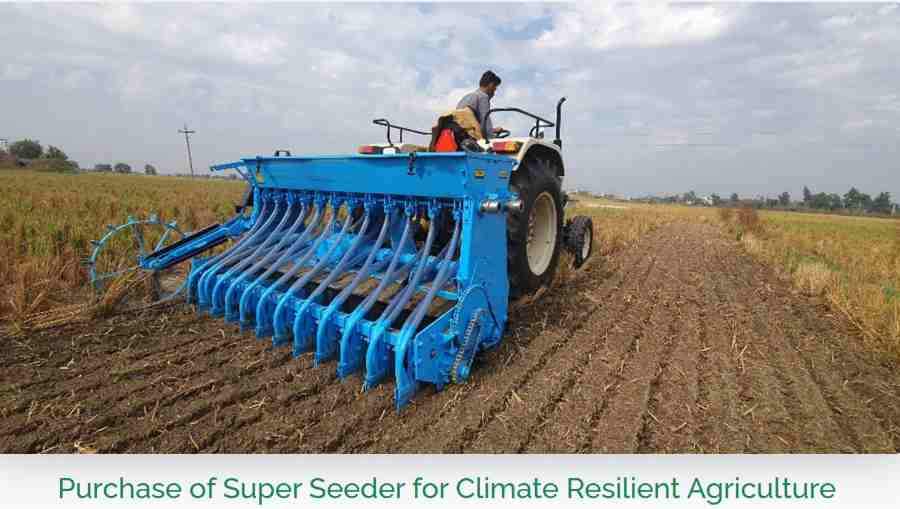
Table of Contents
Understanding the Punjab Super Seeder Subsidy Scheme
The Punjab Super Seeder Subsidy Scheme 2026 represents the provincial government’s flagship initiative to combat agricultural burning while promoting modern farming techniques. Chief Minister Maryam Nawaz Sharif officially launched this program at the Rice Research Institute in Kala Shah Kaku, marking the beginning of what officials describe as Punjab’s largest mechanized farming project to date. The scheme operates under the broader Punjab Clean Air Programme 2025–26 and integrates with multiple agricultural development initiatives aimed at transforming farming practices across the province.
When Was the Super Seeder Scheme Officially Launched?
Chief Minister Maryam Nawaz Sharif inaugurated the Super Seeder distribution project in October 2024 at the Rice Research Institute in Kala Shah Kaku, near Lahore. The launch ceremony brought together agricultural experts, government officials, and farmer representatives to witness the beginning of this ambitious initiative. Since then, the scheme has progressed through multiple phases, with the government releasing new tranches of machines to meet the overwhelming demand from farmers across Punjab’s rice-growing districts.
What Is the Official Subsidy Amount Provided by the Government?
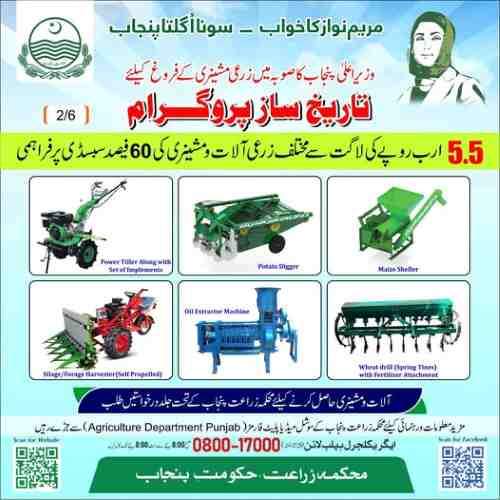
The Punjab government provides a fixed subsidy of Rs. 800,000 on each Super Seeder machine purchased through the scheme. This substantial financial support covers approximately 60 percent of the total machine cost, which typically ranges from Rs. 1.3 million to Rs. 1.4 million depending on the manufacturer, model specifications, and dealer pricing. The government has allocated significant funds for this initiative, with initial allocations of Rs. 250 million for specific districts and expanded funding for province-wide distribution.
What Are the Primary Objectives of This Initiative?
The Super Seeder scheme pursues multiple interconnected goals that address environmental, agricultural, and economic challenges facing Punjab. Environmentally, the program aims to eliminate the practice of burning approximately 15–20 million tons of rice stubble annually, which contributes up to 40 percent of winter smog in Punjab. Agriculturally, it promotes resource conservation by enabling farmers to sow wheat directly into standing stubble, preserving soil moisture, reducing irrigation requirements, and incorporating organic matter back into the soil. Economically, the program reduces farmers’ input costs by eliminating multiple tillage operations, saving on diesel, labor, and time while potentially increasing wheat yields through better soil health and timely sowing.
How Does the Scheme Contribute to Smog Reduction?
Stubble burning releases massive quantities of particulate matter, carbon monoxide, and other pollutants into the atmosphere, creating a toxic haze that affects millions across Punjab. The Super Seeder completely eliminates the need for burning by cutting the stubble, mixing it with soil, and sowing wheat in a single pass. Each machine can manage approximately 8–10 acres per day, meaning that the targeted distribution of thousands of machines will cover millions of acres, preventing the release of millions of tons of pollutants annually. The government has designated this scheme as a core component of its smog mitigation strategy, alongside other measures like monitoring brick kilns and controlling vehicular emissions.
How Does It Support the Punjab Clean Air Programme?
The Punjab Clean Air Programme 2025–26 includes specific targets for reducing agricultural burning through mechanized interventions. The Super Seeder scheme directly supports these targets by providing necessary equipment to farmers in smog-affected districts. The program also integrates with the CM Punjab Green Credit Program, which offers financial incentives of Rs. 10,000 per green credit for verified climate actions, including Super Seeder purchases and usage. This creates a dual incentive structure: farmers save money through reduced inputs while potentially earning additional income through green credits.
What Are the Government’s Distribution Targets for Super Seeders?
The Punjab government has set ambitious targets for Super Seeder distribution to maximize impact on stubble burning reduction. Initially, the scheme aimed to increase the number of Super Seeders from 300 to 5,000 over five years. However, expanded funding and accelerated implementation have led to even more aggressive targets. Recent announcements indicate the government plans to distribute 2,000 Super Seeders by March 2026 as part of ongoing phases. Furthermore, under the CM Punjab High-Tech Mechanisation Programme, a comprehensive target has been set to provide 28,000 Super Seeders by 2028, alongside thousands of other modern agricultural machines including harvesters, transplanters, and high-horsepower tractors.
Financial Breakdown: Understanding the Subsidy Structure
The financial architecture of the Super Seeder scheme is designed to maximize accessibility while ensuring responsible use of public funds. Understanding the complete financial picture helps farmers plan their participation and avoid unexpected costs.
How Much Does the Farmer Pay After the Rs. 800,000 Subsidy?
After deducting the government subsidy of Rs. 800,000, the farmer’s share typically ranges between Rs. 500,000 and Rs. 600,000, depending on the specific machine model and dealer pricing. For example, if a Super Seeder costs Rs. 1.34 million, the farmer pays approximately Rs. 540,000. If the machine costs Rs. 1.4 million, the farmer’s share becomes Rs. 600,000. This payment must be made in full to the authorized dealer within the specified timeframe—usually 30 days from allotment letter issuance—to confirm the purchase and take delivery.
Are There Additional Costs Beyond the Machine Price?
The quoted farmer’s share typically includes the ex-factory price and applicable taxes. However, farmers should budget for additional expenses such as transportation from the dealer to their farm, which varies by distance, and any nominal registration or documentation fees some dealers may charge. It is advisable to confirm the complete on-farm delivery cost with the authorized dealer before making the final payment to avoid unexpected expenses. Some manufacturers may also offer extended warranty packages or service contracts at additional cost, which could provide valuable peace of mind given the machine’s complexity.
How Does This Subsidy Compare to Other Agricultural Machinery Schemes?
The Super Seeder subsidy follows the pattern established by other successful agricultural machinery initiatives in Punjab. The Green Tractor Scheme offers subsidies up to Rs. 1 million depending on tractor horsepower, with recent increases raising the low-horsepower tractor subsidy from Rs. 500,000 to Rs. 700,000. The Laser Land Leveler Scheme provides Rs. 600,000 subsidy per unit. The Super Seeder subsidy of Rs. 800,000 is among the highest fixed subsidies offered for any single agricultural implement, reflecting the government’s priority on addressing stubble burning and smog. This compares favorably to subsidies on other equipment like zero tillage drills and happy seeders, which typically receive lower amounts due to their lower base prices.
Has the Subsidy Amount Changed Since the Scheme’s Inception?
The subsidy amount has remained consistent at Rs. 800,000 per machine since the scheme’s launch, maintaining strong farmer interest and participation. The government has focused on expanding the number of machines distributed rather than increasing per-unit subsidy, ensuring that more farmers benefit from available funds. However, total scheme allocations have increased significantly, with initial district-level funding of Rs. 250 million expanding to province-wide budgets supporting thousands of machines across multiple phases.
Environmental Imperative: Why Super Seeders Matter for Punjab
Beyond financial considerations, the Super Seeder scheme addresses critical environmental challenges that affect every Punjab resident. Understanding this broader context helps farmers appreciate their role in solving a pressing public health crisis.
How Do Super Seeders Prevent Smog and Air Pollution?
Super Seeders eliminate stubble burning by enabling farmers to manage rice residue without setting it on fire. The machine’s rotary tiller cuts standing stubble into small pieces and mixes it thoroughly with soil, while the seed planter simultaneously drills wheat seed at correct depth and spacing. This single-pass operation means farmers no longer need to burn residue to clear fields for the next crop. Given that a single acre of burning rice stubble releases approximately 13 kilograms of particulate matter, 60 kilograms of carbon monoxide, and 1,460 kilograms of carbon dioxide into the atmosphere, each Super Seeder preventing burning on 50–100 acres annually makes a significant contribution to air quality improvement. Recent data shows stubble fire incidents declined to 5,114 during the 2025 kharif season—almost half the 10,909 cases reported in 2024—demonstrating the impact of mechanization efforts.
Can Farmers Really Use Super Seeders Without Burning Stubble?
Absolutely—that is precisely what Super Seeders are designed for. The machine works effectively in fields with standing rice stubble up to 12–18 inches tall, cutting and incorporating residue into soil while creating a perfect seedbed for wheat. Thousands of farmers across Punjab and neighboring regions have successfully used Super Seeders as a burn-free alternative, reporting excellent germination and crop establishment. The technology has been extensively tested and refined over years, with machine designs evolving from earlier Happy Seeders to more efficient Smart Seeders and now Super Seeders that offer improved performance in heavy residue conditions.
What Is the Environmental Impact of Stubble Burning in Punjab?
Stubble burning releases millions of tons of pollutants annually, creating a public health emergency affecting over 100 million people across the region. The smoke contains fine particulate matter (PM2.5) that penetrates deep into lungs, causing respiratory illnesses, heart problems, and premature deaths. Schools close, flights are delayed, and daily life is disrupted for weeks each year. Beyond human health, burning destroys soil organic matter, kills beneficial microorganisms, and wastes valuable nutrients that could otherwise enrich the soil. The Super Seeder reverses all these negative impacts by converting crop residue from a waste product to be burned into a resource to be incorporated, building soil health while protecting air quality.
How Does the Green Credit Program Connect to Super Seeder Ownership?
The CM Punjab Green Credit Program recognizes Super Seeder purchase and use as a verified climate action eligible for green credits. Each green credit carries a monetary reward of Rs. 10,000, providing an additional financial incentive for farmers who adopt environmentally friendly technology. To claim green credits, farmers must register on the Punjab Green Credit Program web portal, submit details through the Measurement, Reporting, and Verification form, and provide proof of purchase along with GPS-tagged photographs of the machine. After verification by the program team and approval by the supervisory committee, green credits are issued directly to the farmer. This program transforms environmental stewardship into direct financial benefit, rewarding farmers for their contribution to cleaner air.
What Is the Difference Between Super Seeder and Earlier Machines Like Happy Seeder?
The Happy Seeder, developed earlier, cuts and lifts stubble, sows wheat seeds, and places cut stubble back on the sown area as surface mulch. While effective, this approach can sometimes lead to uneven emergence if stubble distribution is not uniform. The Super Seeder represents an evolution in design, featuring a rotary tiller that actively incorporates stubble into the topsoil layer, creating a mixed seedbed before sowing. This typically results in better seed-to-soil contact, more uniform germination, and faster decomposition of incorporated residue. Many farmers and agricultural experts consider the Super Seeder superior for heavy residue loads and soils with higher clay content. This technological evolution also addresses concerns about machine redundancy—officials note that the average lifespan of these machines is about five years, and rapid technological upgrades have rendered some older models obsolete, making it important to invest in current technology.
Eligibility Criteria: Who Can Apply for the Subsidy
The Punjab government has established clear eligibility requirements to ensure that subsidized machines reach genuine farmers who can utilize them effectively. Understanding these criteria before applying saves time and prevents disappointment.
What Are the Land Ownership Requirements?
Applicants must own agricultural land in Punjab, with requirements typically ranging from 5 to 25 acres depending on the specific phase and district allocations. The scheme prioritizes small and medium farmers who own land but may lack resources to purchase expensive machinery independently. Ownership is verified through official land records, specifically the Fard Malkiyat or Jamabandi, which must be submitted with the application. Farmers owning less than 5 acres may be eligible in some phases, particularly if they form groups to apply collectively, while those owning more than 25 acres may face lower priority or different subsidy structures.
Can Small Farmers with Limited Land Apply?
Small farmers with less than 5 acres can participate through several mechanisms. One option is forming a farmer group or cooperative that applies collectively for a single machine, which can then be shared among members according to agreed-upon schedules and maintenance arrangements. Alternatively, small farmers can benefit from the zero-profit rental service being established in every tehsil, allowing them to access Super Seeder technology without machine ownership. Some phases may also reserve a percentage of machines specifically for small farmers to ensure equitable distribution across landholding categories.
Is the Kisan Card Mandatory for Application?
Yes, the CM Punjab Kisan Card is mandatory for applying to the Super Seeder subsidy scheme. The Kisan Card serves as the primary identification for farmers in all government agricultural programs, containing verified information about land ownership, crop history, and previous benefits received. Farmers who do not already possess a Kisan Card must apply for one through the nearest agriculture office or Khidmat Markaz before submitting their Super Seeder application. The card can be obtained by providing CNIC, land ownership documents, and a mobile number registered in the farmer’s name. Recent government directives emphasize including more farmers in the Kisan Card scheme, with satisfaction reported over a 98 percent recovery rate on agricultural loans, demonstrating the program’s effectiveness.
How Can Farmers Without Land Ownership Documents Apply?
Tenant farmers and those without formal land ownership face challenges applying because the scheme requires proof of land ownership or valid tenancy agreements for machine allocation. However, tenants may be able to apply if they provide a registered lease agreement or a sworn affidavit from the landowner confirming their cultivation rights, along with the landowner’s No Objection Certificate. Some phases may specifically include provisions for tenant farmers, particularly in districts with high tenancy rates. Alternatively, tenant farmers can access Super Seeder technology through the rental service when it becomes operational in their area.
Are Women Farmers Eligible to Apply?
Women farmers are fully eligible and encouraged to apply for the Super Seeder subsidy. The Punjab government has introduced special quotas in various agricultural schemes to promote women’s participation in farming. Women who own agricultural land in their name or jointly with family members can apply on the same basis as male farmers. Documentation requirements remain the same, with CNIC and land records serving as primary proofs of identity and ownership. Agriculture extension offices provide additional support to women applicants to ensure their full participation in government schemes.
Who Is Disqualified from Applying?
Several categories of farmers are disqualified from Super Seeder subsidy applications. Those who have already received a subsidy for a Super Seeder or similar machinery under any government scheme in the previous three to five years are typically ineligible to prevent the same individuals from benefiting repeatedly. Farmers who are defaulters on agricultural loans from any bank or financial institution are also disqualified. Additionally, government employees and their immediate family members may be excluded to prevent conflicts of interest. Applicants must declare that they meet all eligibility criteria, and providing false information results in immediate disqualification and potential legal action. Past incidents of machine diversion—where thousands of subsidized machines were found missing during physical verification—have led to stricter verification protocols to ensure scheme integrity.
Required Documents: Complete Application Checklist
Preparing the correct documentation before starting your application ensures smooth processing and reduces rejection risk. The Punjab Agriculture Department requires specific documents to verify identity, land ownership, and eligibility.
Why Is a Certified CNIC Copy Essential?
The Computerized National Identity Card serves as the primary proof of identity for all applicants, linking the application to a verified individual in the national database. The CNIC number is used to check eligibility against previous scheme participation, loan default records, and other disqualifying factors. Applicants must provide a clear, certified copy of their CNIC, and the name on the CNIC must match the name on land ownership documents exactly. Any discrepancy in names, such as different spellings or missing father’s names, can lead to application rejection. The CNIC also provides age verification—applicants must be at least 18 years old, with some schemes requiring minimum age of 21.
How to Obtain and Submit the Fard Malkiyat?
The Fard Malkiyat, also known as Jamabandi or ownership deed, is the official land record document proving agricultural land ownership in Punjab. This document can be obtained from the Patwari circle office or the Arzi Rasad center in your tehsil for a nominal fee. The document must be recent—typically issued within the last three to six months—and clearly show the applicant’s name, father’s name, and total land area owned. A certified copy of the Fard Malkiyat must be uploaded with the online application or submitted at the agriculture office. For tenant farmers, a registered lease agreement or landowner affidavit may substitute for ownership documents.
Is Proof of Tractor Ownership Required?
Yes, proof of tractor ownership is mandatory because a Super Seeder requires a tractor with sufficient horsepower to operate effectively. Applicants must provide documents showing they own a tractor of at least 65 horsepower. Acceptable proofs include the tractor’s registration book showing the applicant as owner, a purchase invoice, or an affidavit if the tractor is jointly owned. The tractor’s engine number and registration number are typically recorded during application for verification purposes. Farmers without tractors may still qualify by demonstrating access to tractors through family arrangements or by indicating intent to purchase a tractor, though this may affect eligibility ranking.
What Additional Documents Should Farmers Prepare?
Beyond core documents, farmers should prepare several supplementary items. A recent passport-size photograph is required for identification purposes and may be attached to the application form or uploaded digitally. A mobile number registered in the applicant’s name is essential because all scheme communications—including selection notifications, payment instructions, and delivery details—are sent via SMS to this number. The mobile number must be active and under the applicant’s CNIC to prevent fraudulent applications. Some phases may require an affidavit on non-judicial stamp paper for specific situations, such as when addressing document discrepancies or applying on behalf of deceased family members.
Online Application Process: Step-by-Step Guide
The Punjab government has digitized the Super Seeder application process to ensure transparency, eliminate middlemen, and streamline processing. Farmers can apply from home, at agriculture offices with staff assistance, or at Khidmat Markaz centers across the province.
What Is the Official Website for Application?
The official website for all Punjab agricultural schemes, including the Super Seeder subsidy, is the Punjab Agriculture Department portal at agripunjab.gov.pk. Farmers should ensure they are on the official government website and not third-party sites that may charge fees or collect personal information fraudulently. The portal features a dedicated section for the Super Seeder scheme with application forms, eligibility criteria, and important announcements. All applications must be submitted through this portal during specified application periods.
How to Register on the Punjab Farmer Portal?
First-time users must complete registration on the Punjab Farmer Portal before applying. Visit agripunjab.gov.pk and click on “New Registration.” Enter your CNIC number, mobile number, and create a password. You will receive a verification code on your mobile to activate your account. Complete your profile by providing personal details, land information, and contact information. Once registered, you can log in using your CNIC as username and your chosen password. The portal may also offer login through one-time password sent to your mobile for added security.
Step-by-Step Guide to Completing the Super Seeder Application
The online application process follows a structured sequence designed to capture all necessary information accurately. Follow these steps carefully to ensure successful submission.
First, log in to your Punjab Farmer Portal account at agripunjab.gov.pk using your CNIC and password. Navigate to the “Schemes” section and locate the Super Seeder subsidy scheme from the list of active programs. Click on “Apply Now” or “New Application” for the scheme.
Second, read the scheme instructions, terms, and conditions carefully. Check the box confirming you have read and agree to all terms. Click “Proceed to Application” to begin filling the form.
Third, enter your personal details exactly as they appear on your CNIC: full name, father’s name, CNIC number, date of birth, and permanent address. Verify all entries for accuracy before proceeding.
Fourth, enter your land ownership details as per your Fard Malkiyat, including khasra numbers, total area, and district/tehsil where land is located. The system may verify this information against the land record database automatically, flagging any discrepancies.
Fifth, provide your tractor details, including make, model, horsepower, and registration number. Upload scanned copies of the registration book or ownership proof in the specified format, typically PDF or JPEG.
Sixth, upload scanned copies of all required documents: CNIC, Fard Malkiyat, tractor documents, and passport-size photograph. Ensure all documents are clear, legible, and within file size limits specified on the portal.
Seventh, review all entered information carefully. Use the preview function to check how your application appears. If any corrections are needed, use the edit option before final submission.
Eighth, submit the application. You will receive an acknowledgment receipt with a unique application number or tracking ID. Save this number and print the acknowledgment page for future reference. You can use this tracking ID to check application status later.
How to Apply Offline Without Internet Access?
Farmers without internet access or those uncomfortable with online applications can apply offline through designated government offices. Visit the office of the Assistant Director Agriculture in your tehsil or district headquarters. The staff there will provide the application form, assist in filling it out, and scan and upload documents to the online portal on your behalf. Similarly, Khidmat Markaz centers across Punjab offer application assistance services for government schemes. Farmers should bring all original documents and photocopies when visiting these offices. There is no fee for this service, and farmers should not pay anyone claiming to facilitate applications.
Is There an Application Fee for the Subsidy Scheme?
No, there is no application fee for the Punjab Super Seeder Subsidy Scheme. The application process is completely free of charge. Farmers should be wary of anyone demanding payment to process applications, guarantee selection, or expedite the process. All such demands are scams, and farmers should report them to the agriculture department helpline at 0800-17000 immediately. The only payment required is the farmer’s share of the machine cost, which is paid only after selection and official allotment.
Can Groups of Farmers Apply Collectively?
Yes, groups of farmers can apply collectively for a single Super Seeder, and the scheme includes provisions for group applications. This is particularly beneficial for small farmers who individually cannot justify owning a machine but can share it among group members. The group must register as a formal entity, such as a farmer producer organization or cooperative society, with documented rules for machine sharing and maintenance. One member is designated as the lead applicant, and all group members’ details and land ownership documents are submitted with the application. If selected, the machine is allocated to the group, and all members are jointly responsible for payment and proper use.
Selection and Balloting Process: How Winners Are Chosen
The Punjab Super Seeder scheme employs a transparent computerized balloting process to select successful applicants, ensuring fairness and eliminating human bias. Understanding this process helps farmers know what to expect after submitting applications.
When Does Balloting Take Place?
Balloting dates are announced by the Punjab Agriculture Department for each scheme phase and published on the official website and through public media. Typically, balloting occurs within two to four weeks after the application deadline closes, allowing time for application verification and compilation of eligible applicant lists. Farmers can check the scheme website or their registered mobile number for balloting schedule announcements. The actual balloting event may be held at district or provincial level, sometimes with media coverage to ensure transparency.
How Does Computerized Balloting Work?
The computerized balloting process uses random number generation software to select applicants from the pool of eligible candidates. Before balloting, all applications are verified against eligibility criteria, and ineligible applications are rejected with reasons communicated to applicants. The remaining eligible applications are entered into the balloting system. During the balloting event, conducted in the presence of government officials, farmer representatives, and sometimes media, the software randomly selects applicants equal to the number of machines available. A waiting list is also generated to fill any vacancies that may arise if selected applicants fail to complete the purchase. This transparent process, similar to that used in the Green Tractor Scheme, eliminates favoritism and ensures fairness for all applicants.
How Are Selected Applicants Notified?
Selected applicants receive notification through multiple channels to ensure they do not miss important deadlines. The primary notification is sent via SMS to the mobile number registered in the application. Additionally, the complete list of selected and waiting list applicants is published on the Punjab Agriculture Department website. Selected applicants may also receive notification through their Kisan Card linked mobile number and through announcements at local agriculture offices. It is the applicant’s responsibility to ensure their mobile number remains active and to check the website for updates. Selected farmers receive allotment letters mentioning machine specifications, dealer details, and payment deadlines.
How to Check Winners List Online?
To check the winners list online, visit agripunjab.gov.pk and navigate to the Super Seeder scheme section. Look for a link titled “Selected Applicants List,” “Balloting Result,” or “Scheme Winners.” You can search the list by CNIC number or by district and tehsil. The list is typically published as a PDF file that can be downloaded and searched. Farmers should verify their status using their application number or CNIC as soon as the list is published to avoid missing payment deadlines. The digital publication of results ensures transparency and saves farmers time and travel costs.
How to Check Application Status Using CNIC?
Application status can be checked online through the Punjab Farmer Portal by logging into your account and viewing your applications. The portal shows the current status—whether submitted, under verification, eligible, rejected, selected, or on the waiting list. Alternatively, farmers can send an SMS with their CNIC number to the designated short code announced by the agriculture department. Some phases may also offer a status check through the toll-free helpline at 0800-17000, where applicants can provide their CNIC and receive status information verbally.
What Happens If You Are on the Waiting List?
Being on the waiting list means you are next in line for a machine if any selected applicant fails to complete the purchase process. Selected applicants typically have 30 days to pay their share and take delivery. If some fail to do so, those machines are offered to waiting list applicants in order of their list position. Waiting list applicants should keep their funds ready and monitor their mobile phones and the website for any offer notification. If offered a machine, they must complete the payment within the specified timeframe, usually shorter than the original 30 days.
Post-Selection Process: From Allotment to Machine Delivery
Selection in the balloting is only the first step—successful applicants must complete several formalities to actually receive their subsidized Super Seeder. Understanding this post-approval process ensures you can secure your machine without delays.
How Long Do You Have to Pay After Receiving Allotment Letter?
Selected applicants are typically given 30 days from the date of the allotment letter issuance to deposit their share of the machine cost. The allotment letter, sent via SMS and available on the website, specifies the exact amount to be paid, the designated bank account or dealer details, and the last date for payment. It is crucial to make the payment within this period, as failure results in forfeiture of the allotment, and the machine is offered to the next applicant on the waiting list. Extensions are rarely granted and only in exceptional circumstances with documentary proof. This timeline aligns with practices in other agricultural schemes like the Laser Land Leveler program.
Do You Pay the Full Amount Upfront?
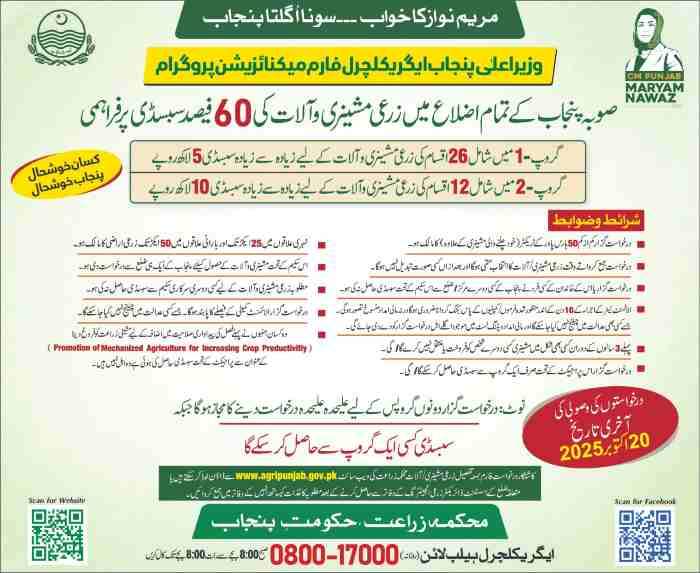
Yes, the full farmer’s share must be paid upfront to the designated dealer or into the specified government account as per allotment letter instructions. The payment is typically made through a bank draft, pay order, or direct bank transfer in favor of the authorized dealer. Cash payments are generally not accepted to maintain transparency and audit trails. After payment, the dealer issues a receipt, and the machine is released to the farmer. The government subsidy amount is paid directly to the dealer by the agriculture department, so the farmer only pays their share. Under the Hi-Tech Farm Mechanization Scheme, alternative financing options including interest-free loans up to Rs. 30 million are available for farmers who need additional support beyond the subsidy.
Which Companies Are Authorized to Supply Super Seeders?
The Punjab Agriculture Department maintains a list of authorized manufacturers and dealers whose Super Seeders are approved for supply under the subsidy scheme. These companies meet quality standards, provide warranty and after-sales service, and have been vetted by the department. The list typically includes major agricultural machinery manufacturers in Pakistan, with companies like those pre-qualified for other schemes—Al-Inyat & Sons, Crosfield Agro, Pioneer Agro, Millat Tractors, and others operating across Lahore, Multan, Okara, and Gujranwala. Selected applicants are usually allowed to choose from among these authorized dealers, though some phases may specify the dealer based on district allocation. Farmers should verify that the dealer they purchase from is on the authorized list to ensure the subsidy is applied correctly.
How Long Does Delivery Take After Payment?
Delivery time after payment varies depending on dealer stock and demand at the time. In many cases, dealers have machines in stock and can deliver within a few days of payment. During peak seasons when many farmers are taking delivery simultaneously, there may be delays of one to two weeks. The allotment letter typically specifies the dealer location and contact information, allowing farmers to coordinate delivery directly. Farmers should inspect the machine thoroughly upon delivery, ensure all components are present, and obtain the warranty card and user manual from the dealer. The dealer should also provide training on basic operation and maintenance.
What Documents Are Needed to Receive the Machine?
To receive the machine, the farmer must present the original CNIC, the allotment letter (printout or digital copy), and the payment receipt showing that the farmer’s share has been deposited. The dealer will prepare a delivery challan and may require the farmer to sign an acknowledgment of receipt. Farmers should also obtain the original invoice, warranty documents, and any other papers provided by the dealer. These documents are essential for future reference, for claiming green credits, and for proving ownership if required for any purpose. Farmers should also register their warranty with the manufacturer promptly to activate coverage.
Economic Benefits: How Super Seeders Improve Farm Profitability
Beyond environmental advantages, Super Seeders offer tangible economic benefits that directly impact a farmer’s bottom line. Understanding these benefits helps farmers appreciate why this technology represents a smart investment despite the initial cost.
How Much Diesel Can Farmers Save Using a Super Seeder?
A Super Seeder typically consumes 5–7 liters of diesel per hour, depending on soil conditions, residue load, and tractor efficiency. While this consumption is significant, the machine replaces multiple tillage operations that would otherwise consume far more fuel. Traditional wheat sowing after rice involves several passes with a rotavator, cultivator, and planking, consuming 15–20 liters per acre. The Super Seeder completes the entire process in one pass, consuming only 5–7 liters per acre. This translates to fuel savings of approximately 60–70 percent, which at current diesel prices means saving Rs. 1,500–2,000 per acre. For a farmer with 25 acres, this represents annual savings of Rs. 40,000–50,000 on fuel alone. Over the machine’s five-year lifespan, fuel savings can approach or exceed the farmer’s initial investment.
How Much Seed Can Be Saved Per Acre?
The Super Seeder’s precise seed metering system ensures uniform seed placement at correct depth and spacing, reducing seed waste compared to traditional broadcasting methods. Farmers typically use 50–60 kilograms of seed per acre with conventional sowing, but with a Super Seeder, this can be reduced to 40–45 kilograms per acre without compromising plant population. This seed saving of 10–15 kilograms per acre translates to additional savings of Rs. 500–750 per acre, depending on seed variety and market price. For farmers sowing multiple acres, these savings accumulate significantly over time.
Does Super Seeder Use Increase Wheat Yield?
Extensive farmer feedback and field trials indicate that Super Seeder-sown wheat performs at least as well as conventionally sown wheat, with many farmers reporting yield increases of 5–10 percent. The yield improvement stems from multiple factors: timely sowing (since the single-pass operation is faster), better soil moisture conservation, improved soil structure from incorporated organic matter, and reduced weed pressure. The incorporation of rice stubble adds organic matter to the soil, improving its water-holding capacity and nutrient content over time. Government surveys show high satisfaction rates among Super Seeder users, with over 93 percent reporting satisfaction with germination and crop establishment—key factors determining final yield.
How Much Labor Cost Can Be Saved?
Traditional wheat sowing after rice requires multiple field operations, each requiring labor for tractor driving, irrigation management, and other tasks. The Super Seeder’s single-pass operation reduces total labor hours required by 60–70 percent. Farmers report labor savings of approximately Rs. 100 per acre, which for larger landholdings adds up to substantial amounts. More importantly, the time saved allows farmers to complete sowing within the optimal window, ensuring better crop establishment and higher yields. The labor savings are particularly valuable in areas facing agricultural labor shortages, where finding workers for multiple tillage operations can be challenging.
How Does Soil Fertility Improve Compared to Burning?
Burning rice stubble destroys organic matter, kills beneficial soil microorganisms, and wastes nutrients that could otherwise enrich the soil. When stubble is burned, approximately 80 percent of its nitrogen, 25 percent of its phosphorus, and 20 percent of its potassium are lost to the atmosphere. The Super Seeder incorporates this stubble into the soil, where it decomposes and releases these nutrients gradually for the following wheat crop. Over multiple seasons, this practice builds soil organic matter, improves soil structure, enhances water infiltration, and increases the soil’s ability to hold nutrients and support healthy crop growth. Farmers who consistently use Super Seeders report improved soil health indicators, including better tilth, increased earthworm activity, and reduced fertilizer requirements over time.
Super Seeder Rental Service: Access Without Ownership
Recognizing that not all farmers can own a Super Seeder, the Punjab government has established a zero-profit rental service to ensure every farmer can access this technology regardless of financial capacity or landholding size.
How Can Farmers Without Super Seeders Benefit from Rental Service?
Farmers who do not own a Super Seeder—whether because they were not selected in the subsidy scheme, cannot afford investment, or have small landholdings—can access the machine through the government’s rental service. The service operates through agriculture departments at tehsil level, maintaining a fleet of Super Seeders that farmers can book for their fields. Farmers pay a nominal rental fee per acre, set at a zero-profit level to ensure affordability. The service aims to make Super Seeder technology accessible to all farmers, particularly small and marginal farmers who would otherwise be excluded from mechanized sowing. Chief Minister Maryam Nawaz announced that this rental service would begin in every tehsil within 60 days of scheme launch, with implementation progressing across the province.
What Is the Expected Rental Cost Per Acre?
The rental cost is deliberately kept low to encourage widespread adoption of this environmentally friendly technology. While exact rates may vary slightly by district, the rental is typically set between Rs. 1,500 and Rs. 2,000 per acre, which is comparable to or lower than the cost of traditional tillage and sowing operations. This pricing ensures that farmers save money compared to conventional methods while also contributing to smog reduction. The zero-profit nature of the service means that rental income only covers operational costs such as fuel, maintenance, and operator wages, with no profit margin added.
Which Tehsils Currently Offer the Rental Service?
The rental service is being rolled out across all tehsils of Punjab in phases, with priority given to districts most affected by smog and with highest rice cultivation areas. The government has committed to making the service available in every tehsil to ensure equitable access. Farmers can contact their local agriculture extension office to check if the rental service is operational in their tehsil and to learn the booking procedure. As the scheme expands, more machines are added to the rental fleet, reducing waiting times and increasing availability. The government’s target of distributing 28,000 Super Seeders by 2028 will significantly expand rental fleet capacity.
Can Subsidy Beneficiaries Rent Out Their Machines?
Subsidy beneficiaries are generally expected to use the machine on their own farm and may face restrictions on renting it out commercially, particularly during the initial lock-in period. However, the scheme encourages beneficiaries to share the machine with neighboring farmers, especially small farmers, to maximize technology reach and impact. Beneficiaries should review the terms and conditions of their subsidy agreement, as unauthorized commercial rental could violate scheme rules and potentially lead to penalties or recovery of the subsidy amount. The three-year rule common in agricultural schemes prohibits selling the machine but may allow limited sharing or rental with proper documentation and local agriculture office approval.
Super Seeder Versus Other Machinery: Making Informed Choices
Farmers have multiple options for mechanized wheat sowing, and understanding differences between available machines helps in making informed decisions about which technology best suits specific conditions.
What Is the Difference Between Super Seeder and Happy Seeder?
The Happy Seeder, developed earlier, cuts rice stubble, lifts it aside, sows wheat seeds, and places cut stubble back on the sown area as surface mulch. This approach works well in many conditions but can sometimes result in uneven germination if stubble distribution is patchy. The Super Seeder represents an evolved design with a rotary tiller that actively cuts and mixes stubble with topsoil before sowing. This creates a more uniform seedbed, ensures better seed-to-soil contact, and accelerates stubble decomposition. For heavy residue loads and soils with higher clay content, the Super Seeder often performs better, though the Happy Seeder may be preferred in some conservation agriculture systems where maximum surface mulch retention is desired. Agricultural officials note that machine technology has evolved rapidly—from Happy Seeder to Smart Seeder to now Super Seeder—with each generation offering improved performance.
Super Seeder Versus Smart Seeder: Which Is Better?
Smart Seeders are newer entrants to the market, often incorporating advanced features like variable seed rate adjustment, digital monitoring systems, and improved metering mechanisms. The choice between Super Seeder and Smart Seeder depends on your specific requirements, budget, and tractor compatibility. Super Seeders are proven, reliable machines with widespread dealer support and availability of spare parts. Smart Seeders may offer additional features but could have higher costs and less established service networks. Farmers should consider factors such as availability of local service, warranty terms, and specific residue conditions on their farm when making this choice. Both machine types accomplish the core objective of enabling wheat sowing without stubble burning.
Can Super Seeder Be Used for Other Crops?
While primarily designed for rice-wheat cropping systems, Super Seeders can be adapted for other crop sequences. After adjustments to seed metering plates and depth settings, the machine can sow various crops including barley, oats, and some pulses into crop residues. However, its primary design and optimal performance are for wheat sowing into rice stubble. Farmers interested in using the machine for other crops should consult the manufacturer or local agriculture experts for guidance on necessary modifications and settings. The government’s broader agricultural mechanization strategy includes support for various machinery types suited to different crops and regions.
What Tractor Horsepower Is Required?
A Super Seeder requires a tractor with at least 65 horsepower to operate effectively, particularly in fields with heavy rice stubble and when working at recommended speeds. Tractors with lower horsepower may struggle to maintain required rotor speed and forward motion, leading to poor stubble incorporation, uneven sowing, and excessive strain on the tractor. Most 65–85 horsepower tractors commonly used in Punjab are suitable, provided they are in good mechanical condition. The PTO horsepower, not just engine horsepower, is critical for operating the rotary tiller component. Farmers should verify their tractor’s specifications before applying to ensure compatibility.
Important Rules, Restrictions, and Warranties
The Super Seeder subsidy scheme includes specific rules that beneficiaries must follow to retain the machine and avoid penalties. Understanding these rules before applying ensures compliance and prevents future complications.
Is There a Lock-In Period for Subsidized Machines?
Yes, there is typically a lock-in period of three to five years during which the beneficiary cannot sell or transfer ownership of the subsidized Super Seeder. This rule ensures that the machine remains with the farmer for whom the subsidy was intended and that the government’s investment achieves its objective of increasing machine availability for stubble management. During this period, the machine should be used on the beneficiary’s farm or shared with neighboring farmers as permitted by scheme rules. Similar restrictions apply to other subsidized equipment like laser land levelers, where a three-year no-sale rule is standard.
What Happens If You Sell the Machine During Lock-In Period?
Selling the subsidized machine during the lock-in period without government permission is a violation of scheme terms and can result in serious consequences. The government may recover the full subsidy amount from the beneficiary, impose penalties, and disqualify them from future schemes. In some cases, legal action may be taken for fraud. Beneficiaries who genuinely need to transfer ownership due to exceptional circumstances should seek prior approval from the agriculture department, providing documented reasons for the request. Past incidents where thousands of machines were found missing during physical verification have led to stricter enforcement of these rules.
Is There a Warranty on Subsidized Super Seeders?
Yes, all Super Seeders purchased through the subsidy scheme come with a manufacturer’s warranty, typically covering defects in materials and workmanship for one to two years. The specific warranty terms vary by manufacturer and should be provided in writing at the time of purchase. Farmers should register their warranty with the manufacturer and retain all documentation, including the warranty card, invoice, and user manual. For warranty claims, farmers contact the dealer directly, who is responsible for after-sales service and support. Some manufacturers may offer extended warranty packages at additional cost, which could provide valuable protection given the machine’s complexity.
What Is the Average Lifespan of a Super Seeder?
A well-maintained Super Seeder has an average lifespan of five to seven years under normal farming conditions, capable of covering hundreds of acres each season. Regular maintenance, including greasing, blade replacement, and timely repairs, significantly extends machine life. The rotary tiller blades are wear items that require periodic replacement, typically after covering 100–150 acres. With proper care and storage during the off-season, many farmers use their Super Seeders for even longer periods, making the subsidized investment highly cost-effective over its lifetime. This five-year average lifespan aligns with official observations about machine durability and technological evolution.
Frequently Asked Questions
What Is the Last Date to Apply for the Super Seeder Scheme?
Application deadlines vary by phase and are announced by the Punjab Agriculture Department on its official website and through public media. Farmers should regularly check agripunjab.gov.pk and their registered mobile numbers for deadline announcements. Late applications are not accepted under any circumstances, so applying well before the deadline is strongly recommended. Different phases may have different timelines, with some aligned with specific crop seasons.
What Is the Government Helpline Number for Agricultural Machinery?
The Punjab Agriculture Department operates a toll-free helpline at 0800-17000 for farmer queries related to all agricultural schemes, including the Super Seeder subsidy. Farmers can call this number for information about application procedures, eligibility, scheme status, and to report any problems or fraudulent activities. The helpline operates during working hours, and staff are trained to assist with agricultural machinery queries. Additionally, local agriculture extension offices provide in-person support.
How Can I Check My Application Status?
Application status can be checked online by logging into your Punjab Farmer Portal account at agripunjab.gov.pk and viewing your submitted applications. The portal shows current status—submitted, under verification, eligible, rejected, selected, or waiting list. Alternatively, you can send an SMS with your CNIC number to the short code announced for the scheme, or call the helpline at 0800-17000 and provide your CNIC for status information. The winners list is also published on the website and can be searched by CNIC or name.
Are There Training Programs for Operating Super Seeders?
Yes, the agriculture department, in collaboration with authorized dealers and manufacturers, conducts training programs for farmers who receive Super Seeders under the subsidy scheme. These programs cover machine operation, maintenance, troubleshooting, and best practices for optimal results. Training schedules are announced through agriculture extension offices, and selected farmers are encouraged to attend to ensure they can use their machine effectively and safely. Under the Hi-Tech Farm Mechanization Scheme, training attendance is mandatory for beneficiaries to ensure proper machine use and maintenance.
Which Districts Are Prioritized for This Scheme?
All districts of Punjab are eligible for the Super Seeder scheme, but priority may be given to districts with high rice cultivation and severe smog problems. These include districts in central Punjab such as Lahore, Sheikhupura, Nankana Sahib, Gujranwala, Hafizabad, Sialkot, Narowal, and districts in southern Punjab like Bahawalnagar, Rahim Yar Khan, and others with significant rice-wheat cropping areas. Hotspot districts identified for priority attention include Tarn Taran, Sangrur, Ferozepur, Muktsar, Bathinda, Moga, Mansa, and Faridkot. District-wise allocations are announced for each phase based on factors such as rice acreage, smog levels, and previous scheme coverage.
What Is the Market Price of a Super Seeder Without Subsidy?
The market price of a Super Seeder in Pakistan typically ranges from Rs. 1.3 million to Rs. 1.5 million, depending on manufacturer, model, features, and dealer pricing. Basic models from reputable manufacturers start around Rs. 1.3 million, while machines with additional features or from premium brands may cost up to Rs. 1.5 million or more. The government subsidy of Rs. 800,000 significantly reduces this cost for selected farmers, making the machine accessible at approximately Rs. 500,000–600,000. Prices may vary slightly based on market conditions and import costs for components.
How Can I Verify If a Dealer Is Authorized?
The Punjab Agriculture Department publishes an official list of authorized dealers for each scheme phase on its website. Farmers should always check this list before making any payment to ensure the dealer is approved to supply subsidized machines. Authorized dealers display their authorization certificates and are listed in scheme documentation. If in doubt, farmers can call the helpline at 0800-17000 to verify a dealer’s authorization status. Dealing only with authorized dealers ensures subsidy application and warranty validity.
What Happens If My Application Is Rejected?
If your application is rejected, you will receive notification with the reason for rejection, which could include incomplete documentation, ineligibility, or discrepancies in information. Common rejection reasons include mismatched CNIC and land record names, unclear document copies, or failure to meet landholding requirements. You can review the rejection reason and, if you believe it was made in error, contact the agriculture department through the helpline or by visiting your local agriculture office. For future phases, you can submit a fresh application after correcting issues that led to rejection.
Can I Apply for Multiple Schemes Simultaneously?
Yes, farmers can generally apply for multiple agricultural schemes simultaneously, provided they meet eligibility criteria for each. However, receiving subsidies for multiple expensive machines in the same period may be restricted to ensure equitable distribution. Farmers should check scheme terms and conditions for any restrictions on multiple scheme participation. The government encourages farmers to take advantage of various schemes addressing different aspects of agricultural modernization—from tractor subsidies to laser land levelers to Super Seeders.

Add a Comment