
For decades, small farmers in Pakistan have been trapped in a cycle of informal borrowing from local moneylenders who charge crushing interest rates and demand personal guarantees. The Zarai Qarza Scheme, delivered through the 10 Lakh Zarkhez-e App, breaks this cycle by offering fully digital, collateral-free agricultural loans of up to Rs. 1 million directly to subsistence farmers.
This comprehensive guide will walk you through everything you need to know about the Zarkhez-e Asaan Digital Zarai Qarza. You will learn about eligibility requirements, step-by-step application procedures, loan disbursement structures, repayment terms, insurance coverage, and solutions to common technical problems.
Key Takeaways
- Collateral-Free Lending: You no longer need land ownership documents or property titles to secure an agricultural loan. Your farming capacity and digital verification determine your eligibility.
- Two-Tier Loan Limits: Landowners can access up to Rs. 1,000,000, while tenant farmers receive up to Rs. 500,000. Both categories receive Rs. 100,000 per cultivated acre.
- 75% In-Kind Disbursement: Most of your loan arrives as digital vouchers for seeds, fertilizers, pesticides, and diesel. Only 25% (or 15% for tenants) comes as cash.
- Government Risk Coverage: Banks receive a 10% first-loss guarantee from the government, making them more willing to lend to small and underserved farmers.
- Fully Digital Journey: You can complete registration, verification, application submission, and repayment entirely online without visiting a bank branch.
- Integrated Insurance: Life insurance and mandatory crop insurance are included in the loan package, protecting you and your family against unforeseen calamities.
- Read More: Zarkhez-e-Asaan Digital Zarai Qarza | 10 Lakh Agriculture Loan Scheme
- Read More: Excise Sindh Fuel Subsidy – People’s Motorcycle Fuel Subsidy Program
- Read More: Motorcycle Fuel Subsidy Program (By Sindh Govt Rs.2K)
Zarai Qarza Scheme – Farmer Loan Scheme (10 Lakh Zarkhez-e App)
Table of Contents
Introduction: Understanding the Zarai Qarza Scheme and the 10 Lakh Zarkhez-e App
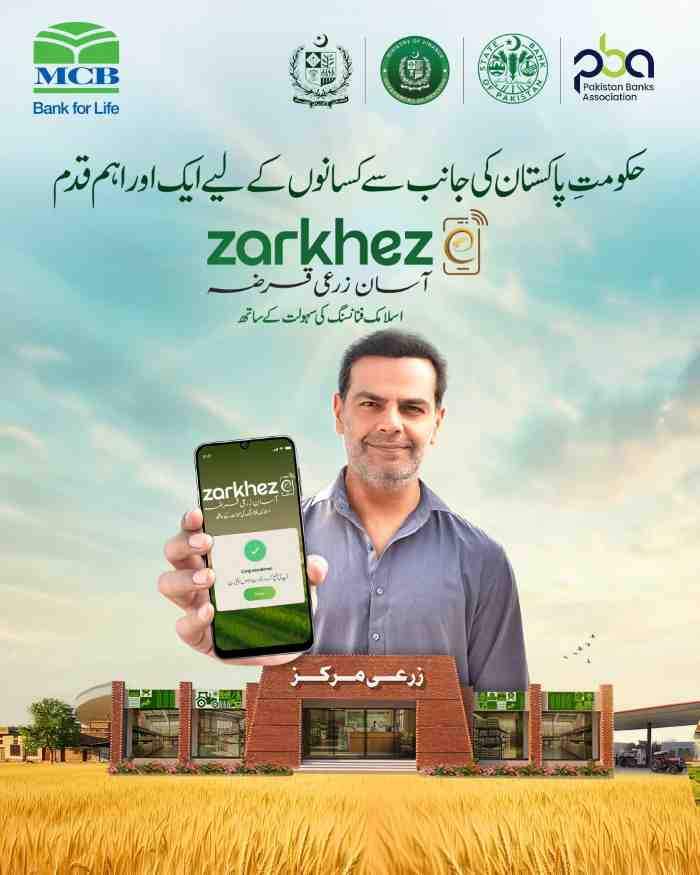
Imagine being able to apply for a substantial agricultural loan while sitting in your field, using only your mobile phone. That is exactly what the Zarkhez-e Asaan Digital Zarai Qarza delivers. This scheme represents the most significant shift in Pakistan’s agricultural credit landscape in a generation.
Why was this scheme created?
The State Bank of Pakistan recognized a painful reality. Less than 10% of small farmers had access to formal bank credit. The remaining 90% relied on informal moneylenders who charged interest rates as high as 60% to 100% per crop cycle. Landless tenants were almost completely excluded from the banking system because they could not offer land as collateral.
The Zarkhez-e scheme was designed to solve three specific problems. First, eliminate the collateral barrier by using digital verification instead of land documents. Second, reduce the cost of borrowing by offering subsidized markup rates. Third, ensure loan funds are actually used for farming by providing 75% of the loan as digital vouchers for verified agricultural inputs.
What makes Zarkhez-e different from previous agricultural loan schemes?
Previous schemes required farmers to visit bank branches, submit physical documents, wait weeks for approval, and then receive full cash disbursement. Cash often got diverted to household expenses, weddings, or debt repayment. Farmers then had no money left for quality seeds and fertilizers. The Zarkhez-e app changes this completely. The entire process is digital, fast, and structured to prevent misuse.
What you will learn from this guide
In the sections that follow, we will cover the exact loan amounts available to different categories of farmers. We will explain the eligibility criteria in detail, including the specific landholding limits for each province. We will provide a step-by-step walkthrough of the online application process. We will explain how digital vouchers work and where you can spend them. We will also address common problems like CNIC verification failures and SIM registration issues, along with their solutions.
Read More: Sindh Government Petrol Subsidy App (Rs. 2K Apply Online) | Sindh Fuel Relief App
1. Loan Amounts, Limits, and Disbursement Structure Under the Zarkhez-e Scheme
The Zarai Qarza Scheme uses a per-acre calculation method that ensures smaller farms are not disadvantaged. The loan amount is directly proportional to the land you cultivate, up to specified provincial maximums.
What is the maximum loan a landowning farmer can receive through the Zarkhez-e app?
Landowning farmers can borrow up to Rs. 100,000 per cultivated acre. The absolute maximum loan amount is Rs. 1,000,000 (10 Lakh). This maximum applies once you reach the provincial landholding limit.
Practical example: A landowner in Punjab with 5 acres can borrow Rs. 500,000 (5 acres × Rs. 100,000). A landowner with the full 12.5 acres can borrow the maximum Rs. 1,000,000 (calculated on 10 acres, as the per-acre rate applies only up to the provincial cap).
What is the maximum loan for a tenant farmer under the Zarai Qarza Scheme?
Tenant farmers receive the same per-acre rate of Rs. 100,000 but with a lower overall ceiling of Rs. 500,000. This means a tenant cultivating 5 acres can borrow Rs. 500,000. A tenant cultivating more than 5 acres still cannot exceed the Rs. 500,000 maximum.
Why is the tenant limit lower? Banks perceive tenant farmers as higher risk because they do not own the land they cultivate. The lower cap protects both the farmer (from unmanageable debt) and the bank (from excessive exposure).
Provincial landholding limits that determine your eligibility
The scheme sets different maximum landholding limits based on provincial agricultural realities. These limits determine whether you qualify for the scheme at all.
Punjab and Khyber Pakhtunkhwa: Maximum 12.5 acres
Sindh: Maximum 16 acres
Balochistan: Maximum 32 acres
Farmers with landholdings exceeding these limits are not eligible. The scheme targets subsistence farmers, not large commercial landowners.
How the loan is disbursed: The 75/25 split explained
This is the most critical feature of the Zarkhez-e scheme. You do not receive the entire loan in cash.
For landowning farmers:
- 75% of the loan amount is provided as digital vouchers
- 25% is disbursed in cash to your digital wallet or bank account
For tenant farmers:
- 85% of the loan amount is provided as digital vouchers
- 15% is disbursed in cash
Why this split exists? The State Bank analyzed decades of agricultural lending data and found that full cash disbursement led to significant loan diversion. Farmers would use loan money for medical emergencies, children’s school fees, weddings, or repaying other debts. By the time planting season arrived, they had no money left for quality inputs. The voucher system forces productive use of the majority of the loan.
What can you purchase with the digital vouchers?
The vouchers are restricted to four specific agricultural input categories:
- Certified seeds for your planned crop (wheat, rice, cotton, maize, sugarcane, etc.)
- Fertilizers including urea, DAP, NPK, and other soil nutrients
- Pesticides, herbicides, and fungicides for crop protection
- Diesel for farm machinery, tractors, and irrigation pumps
You cannot use vouchers for land purchase, livestock, poultry, construction, or any non-agricultural expense.
Can you use the loan for poultry, livestock, or dairy farming?
No. The Zarkhez-e loan is specifically designed for short-term crop production financing. The loan tenor of up to 12 months aligns with a single crop cycle. Poultry, livestock, and dairy farming require longer-term financing structures. Farmers seeking loans for these activities should explore other agricultural credit products offered by participating banks.
Repayment tenor and early repayment benefits
The standard loan repayment period is up to 12 months. You must repay the principal plus applicable markup/profit at the end of this period.
Early repayment advantage: You are permitted to repay the entire loan before the 12-month tenor ends. No prepayment penalty applies. Early repayment reduces your total markup cost and builds a positive credit history, making future loan applications easier and potentially cheaper.
2. Eligibility Criteria: Who Can Apply for the 10 Lakh Zarkhez-e Loan?
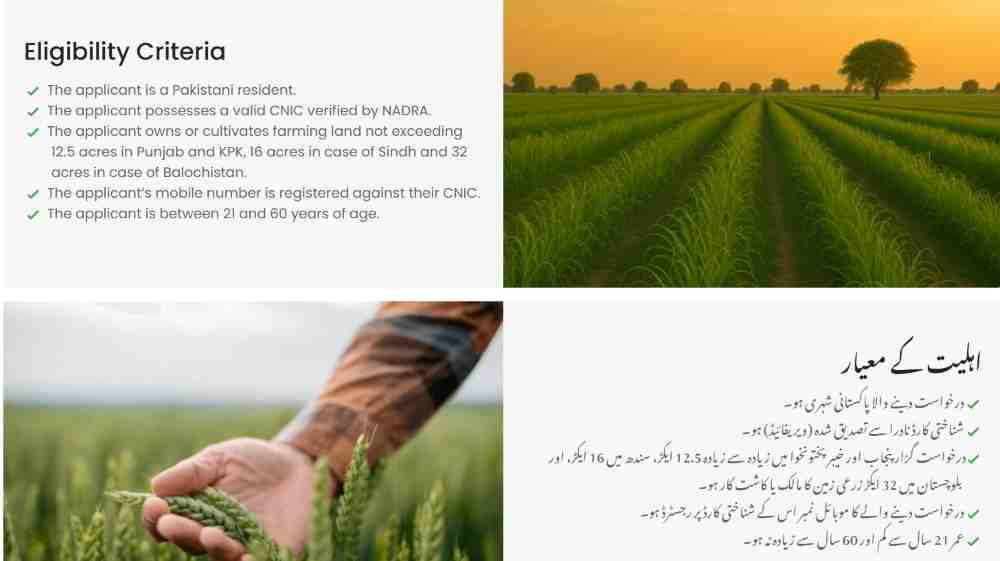
Eligibility for the Zarai Qarza Scheme is determined by a combination of personal characteristics, landholding status, and digital verification requirements. Meeting these criteria does not guarantee loan approval. Individual banks make the final lending decision based on their internal credit policies.
Age requirements for Zarkhez-e applicants
You must be between 21 and 60 years old at the time of application.
Why this age range? Farmers younger than 21 typically lack sufficient farming experience and credit history. Farmers older than 60 may have difficulty completing a full crop cycle and repayment within the 12-month tenor. The age limit ensures borrowers are within their productive farming years.
Landholding requirements by province
Your landholding size determines your eligibility. The limits are strictly enforced through LIMS satellite verification.
Quick reference table:
| Province or Territory | Maximum Landholding for Eligibility |
|---|---|
| Punjab | 12.5 acres |
| Khyber Pakhtunkhwa (KPK) | 12.5 acres |
| Sindh | 16 acres |
| Balochistan | 32 acres |
| Gilgit-Baltistan | Subject to per-acre calculation up to Rs. 1 million |
| Azad Jammu & Kashmir | Subject to per-acre calculation up to Rs. 1 million |
Do you need land documents or collateral?
No. The Zarkhez-e scheme is explicitly collateral-free. You do not need to provide land titles, property deeds, or any other asset as security.
How does this work without collateral? The scheme replaces physical collateral with digital verification. The system uses NADRA identity checks, PMD mobile SIM validation, LIMS land records, and satellite imagery to confirm your identity and farming activity. Your farming capacity becomes the basis for lending, not your land ownership.
CNIC and mobile SIM requirements

Two digital identity checks are mandatory:
Valid NADRA-verified CNIC: Your Computerized National Identity Card must be current, unexpired, and biometrically verified with NADRA. The system will cross-check your CNIC number against the national database.
Mobile SIM registered in your name: The mobile number you use for registration must be biometrically verified and registered with your CNIC at your mobile network operator. Family-shared SIMs or SIMs registered to a business are not accepted.
What happens if your SIM is not in your name? You must visit your mobile network operator’s franchise with your CNIC and complete biometric verification to transfer the SIM to your name. This process typically takes 24 to 48 hours.
Can tenant farmers and landless cultivators apply?
Yes. This is one of the most revolutionary aspects of the Zarkhez-e scheme. For the first time in Pakistan’s banking history, landless farmers can access formal agricultural credit.
Tenant farmers must provide information about the land they cultivate, including location, size, and the landowner’s details (if available). The LIMS system and satellite imagery can verify cultivation patterns even without formal tenancy documents. However, having a written tenancy agreement or rent receipt strengthens your application.
Can women farmers apply for the Zarkhez-e loan?
Absolutely. Women farmers are fully eligible under the same criteria as men. The scheme includes specific provisions to encourage female participation, including reserved quotas in some participating banks and targeted training programs for women farmers.
Practical advice for women farmers: Ensure your CNIC is valid and your mobile SIM is registered in your own name. Many married women have SIMs registered under their husband’s name. This must be corrected before applying.
Geographic availability: Which regions are covered?
The Zarkhez-e scheme is available to farmers in all four provinces of Pakistan, plus Gilgit-Baltistan and Azad Jammu & Kashmir.
Regional coverage details:
- Punjab: Full coverage, highest density of participating banks
- Sindh: Full coverage, including rural areas of Karachi, Hyderabad, Sukkur, and interior Sindh
- KPK: Full coverage, including remote districts like Chitral, Dir, and Kohistan
- Balochistan: Full coverage, though digital infrastructure may be limited in very remote areas
- Gilgit-Baltistan and AJK: Full coverage, farmers may need to visit bank branches for onboarding assistance
Who is automatically disqualified from the Zarkhez-e scheme?
Several categories of farmers cannot apply:
- Farmers whose landholdings exceed the provincial limits
- Individuals under 21 or over 60 years of age
- Non-Pakistani citizens or residents
- Farmers without a valid, NADRA-verified CNIC
- Farmers whose mobile SIM is not registered in their own name
- Applicants with existing loan overdues or write-offs on their ECIB credit report
- Farmers who have already availed a Zarkhez-e loan and not yet fully repaid it
- Farmers who have been flagged for fraudulent activity in previous applications
3. Step-by-Step Application Process: How to Get Your 10 Lakh Loan
The Zarkhez-e application process is fully digital and can be completed in less than 30 minutes if you have all required information ready. No bank branch visit is required at any stage.
How to download and access the Zarkhez-e application
For Android users: The official Zarkhez-e app is available on the Google Play Store. Search for “Zarkhez-e” or “BOP Zarkhez-e” to find the verified app. Look for the official logo and check the developer name (typically the State Bank of Pakistan or a participating bank).
For iPhone/iOS users: While a dedicated iOS app may not always be available, you can access the Zarkhez-e web portal through any browser on your iPhone. The portal offers the same functionality as the mobile app.
No smartphone? You can still apply by visiting any participating bank branch. Bank staff will assist you with digital onboarding using their systems.
Detailed step-by-step application walkthrough
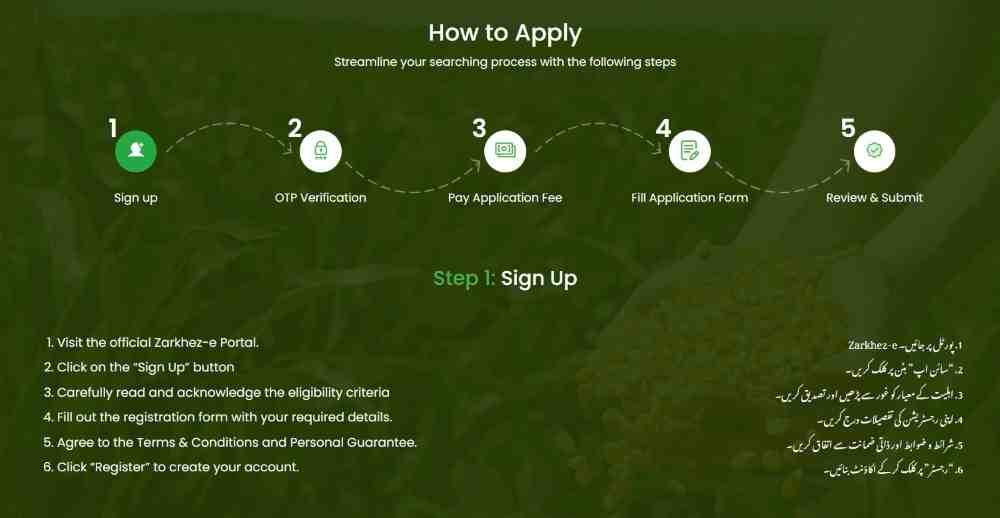
Step 1: Account creation on the Zarkhez-e portal
Visit the official Zarkhez-e website or open the mobile app. Click the “Sign Up” button. You will see a page listing the eligibility criteria. Read these carefully. Check each box to confirm you meet the requirements. Fill in your full name, CNIC number (without dashes), mobile number, and email address (if you have one). Create a strong password. Agree to the Terms & Conditions and the Personal Guarantee statement. Click “Register.” You will receive a confirmation SMS.
Step 2: OTP verification and NADRA validation
The system sends a One-Time Password (OTP) to your registered mobile number. Enter this OTP within the app or portal. The system then performs two real-time checks:
- NADRA Verisys confirms your CNIC number matches your name, father’s name, date of birth, and photograph.
- PMD database confirms your mobile SIM is biometrically verified and registered to the same CNIC.
What if OTP does not arrive? Wait 2 minutes and request a new OTP. Ensure your mobile has network coverage. If the problem persists, restart your phone and try again.
Step 3: Completing the loan application form
Log in to your account and select “New Loan Application.” You will be asked to provide:
Personal information section:
- Full name as per CNIC
- Date of birth
- Gender
- Marital status
- Number of dependents
Farming information section:
- Type of farming activity (owner-cultivator or tenant)
- Land location (province, district, tehsil, village)
- Land size in acres and kanals
- Crop you plan to grow (wheat, rice, cotton, maize, sugarcane, or others)
- Expected planting and harvest dates
- Estimated input requirements (seed quantity, fertilizer bags, etc.)
Bank selection section:
- Choose your preferred participating bank (ZTBL, BOP, HBL, MCB, or a microfinance bank)
- If unsure, select “Any” and the system will route your application to a bank with available capacity
Step 4: Paying the processing fee
The application processing fee is Rs. 1,200. This fee is mandatory and non-refundable. Payment options include:
- Debit card
- Credit card
- Mobile wallet (JazzCash, Easypaisa)
- Bank transfer
What does the processing fee cover? The fee pays for NADRA verification, PMD SIM validation, LIMS land record check, and satellite imagery analysis. Without this fee, the system cannot perform these automated checks.
Step 5: Review and final submission
Before submitting, review every field for accuracy. Common mistakes include:
- Misspelled names
- Incorrect CNIC digits
- Wrong land size or location
- Selecting the wrong crop type
Once you click “Submit,” you cannot edit the application. The system assigns a unique application tracking number. Save this number for future reference.
What documents are required for Zarkhez-e registration?
The document requirement is minimal compared to traditional bank loans:
- Clear photograph or scanned copy of your CNIC (front and back)
- Recent selfie or passport-style photograph of yourself
- Land record document (fard, jamabandi, or tenancy agreement) – a clear photo is sufficient
- Proof of address (utility bill or NADRA address verification) – optional in most cases
No physical document submission is required. You can take photos of your documents using your mobile phone camera and upload them directly.
How does the system verify your land information?
The Land Information Management System (LIMS) is a centralized database of digital land records and agronomic data. When you submit your application:
- LIMS cross-references your declared land location against official land records
- Satellite imagery confirms that agricultural activity is occurring on the declared land
- Historical satellite data shows previous crop patterns and productivity
- The system flags any inconsistencies between your declaration and the digital records
What happens if LIMS verification fails? You will receive a notification explaining the discrepancy. You may need to provide additional documentation or request a manual verification through your chosen bank.
How long does loan approval take?
The standard approval timeline is 7 to 10 working days from the date of complete application submission. The timeline breaks down as:
- Days 1-2: Automated digital verification (NADRA, PMD, LIMS)
- Days 3-5: Bank credit assessment and psychometric scoring
- Days 6-7: Final approval decision and notification
- Days 8-10: Disbursement to your digital wallet
Applications with complete, accurate information are processed faster. Incomplete applications or those requiring manual review take longer.
How to track your application status
You can monitor your application progress in real time through:
- The Zarkhez-e app dashboard (login and check “My Applications”)
- SMS notifications sent to your registered mobile number at each milestone
- The web portal’s status tracker (enter your CNIC and application number)
Status meanings:
- “Submitted” – Your application is in the queue for verification
- “Verification in Progress” – NADRA, PMD, and LIMS checks are running
- “Under Bank Review” – Your chosen bank is assessing your application
- “Approved” – Congratulations, funds will be disbursed shortly
- “Rejected” – A reason is provided; you can address the issue and reapply
Which banks participate in the Zarkhez-e scheme?
The list of participating banks continues to grow. Major participants include:
- Zarai Taraqiati Bank Limited (ZTBL) – the lead agricultural bank
- Bank of Punjab (BOP) – offers its own BOP Zarkhez-e branded app
- Habib Bank Limited (HBL) – through HBL Zarai Services Limited
- MCB Bank – integrated with the Zarkhez-e portal
- Multiple Microfinance Banks (MFBs) – including Khushhali Bank, Telenor Microfinance Bank, and others
Can you apply through ZTBL specifically? Yes. ZTBL is a major participant. During the application, simply select ZTBL as your preferred bank. Your application will be routed directly to ZTBL’s digital credit assessment team.
Can you apply without the mobile app?
Yes. The Zarkhez-e web portal offers the same functionality as the mobile app. You can access it from any computer, tablet, or smartphone browser. The web portal is particularly useful for farmers who prefer a larger screen or have limited mobile data.
4. Insurance, Advisory Services, and Risk Coverage Features
The Zarkhez-e scheme is not just a loan. It includes several protective features that traditional agricultural loans do not offer.
Life insurance coverage for all borrowers
Every farmer who receives a Zarkhez-e loan is automatically covered by group life insurance. The insurance amount equals the loan amount disbursed and outstanding.
How this works in practice: If you borrow Rs. 500,000 and pass away before repayment, the insurance company pays the outstanding loan balance directly to the bank. Your family inherits no debt. The insurance premium is included in the loan processing fee, so you do not pay anything extra.
Mandatory crop insurance for major crops
Crop Loan Insurance under the CLIS (Crop Loan Insurance Scheme) is mandatory for five major crops. This insurance protects you if your crop fails due to:
- Natural calamities (floods, droughts, hailstorms, cyclones)
- Pest infestations
- Disease outbreaks
- Fire or lightning
What does crop insurance pay? The insurance covers a portion of your input costs, not the full expected revenue. This ensures you are not left completely destitute after a crop failure.
Shariah-compliant options: For farmers who prefer Islamic banking, participating banks offer Takaful (Islamic insurance) arrangements that comply with Shariah principles.
Agri-advisory services (AAS) included with your loan
All Zarkhez-e borrowers receive access to digital agricultural advisory services. These services include:
- Personalized crop management recommendations based on your land’s satellite data
- Optimal fertilizer application schedules (how much, when, and where to apply)
- Water management advice to reduce waste and improve yields
- Pest and disease early warning alerts for your region
- Weather forecasts tailored to your farm location
- Best planting and harvest timing recommendations
How to access advisory services: The Zarkhez-e app includes a dedicated “Advisory” section. You can also receive SMS advisories if you prefer not to use the app.
Government risk coverage: The 10% first-loss guarantee
To encourage banks to lend to small farmers, the government provides a first-loss guarantee. If a farmer defaults, the government covers the first 10% of the loss the bank incurs.
What this means for you as a borrower: The guarantee does not absolve you of repayment responsibility. You are still legally obligated to repay your loan. However, the guarantee makes banks more willing to approve loans for farmers with limited credit history or smaller landholdings.
Operational cost subsidy for banks
Banks receive an operational cost subsidy of approximately Rs. 10,000 for each new borrower added to their portfolio above a baseline. This subsidy covers the additional costs of onboarding small farmers, including:
- Digital verification fees
- Merchant onboarding expenses
- Customer support resources
- Training and awareness programs
This subsidy has significantly increased bank participation in the scheme.
5. Digital Vouchers: How They Work and Where to Use Them
The digital voucher system is the operational heart of the Zarkhez-e scheme. Understanding how vouchers work is essential to using your loan effectively.
What are Zarkhez-e digital vouchers?
Digital vouchers are electronic credits that can only be spent at approved agricultural merchants. They function like prepaid cards but are restricted to specific input categories. You cannot withdraw voucher value as cash.
Voucher denominations: Vouchers are typically issued in smaller denominations (Rs. 5,000, Rs. 10,000, Rs. 25,000) to allow flexible purchasing. You can combine multiple vouchers for larger purchases.
How to find approved agri-merchants
The Zarkhez-e app includes a merchant locator feature. This tool shows:
- All approved merchants within a specified radius of your location
- The types of inputs each merchant sells (seeds, fertilizers, pesticides, diesel)
- Merchant ratings and reviews from other farmers
- Distance and directions to each merchant
Offline option: If you do not have smartphone access, you can call the Zarkhez-e helpline and request a list of approved merchants in your area. The helpline can send an SMS with merchant names and locations.
How to redeem digital vouchers at a merchant
The redemption process is simple:
- Visit an approved agri-merchant
- Select the inputs you wish to purchase (seeds, fertilizers, pesticides, or diesel)
- Open the Zarkhez-e app and navigate to “My Vouchers”
- Select the voucher you want to use
- The app generates a QR code or 6-digit code
- The merchant scans the code or enters the digits into their system
- The voucher value is deducted, and you receive your inputs
What if the merchant cannot scan the code? Most approved merchants have been trained on the voucher system. If they face technical issues, they can manually enter the voucher code into their Zarkhez-e merchant portal.
What happens to unused vouchers?
Vouchers have an expiry date, typically aligned with your crop planting season. Unused vouchers after the expiry date are forfeited. You cannot exchange vouchers for cash or transfer them to another farmer.
Practical advice: Plan your input purchases carefully. Request vouchers only for inputs you know you will use. Do not request vouchers for speculative purchases.
Can you get the entire loan in cash?
No. The scheme is specifically designed to prevent full cash disbursement. The minimum in-kind component is 75% for landowners and 85% for tenants. The cash component is limited to the remaining percentage.
Why can’t you get full cash? Historical data shows that full cash agricultural loans have high diversion rates. Farmers use loan money for non-farming purposes, then cannot afford quality inputs. The voucher system ensures the majority of loan funds are used productively.
6. Repayment, Markup Rates, and Consequences of Default
Repaying your Zarkhez-e loan on time is essential for maintaining a good credit history and accessing future loans.
How to repay your Zarkhez-e loan
You have several repayment options:
- Automatic debit: The system deducts the repayment amount from your linked bank account or digital wallet on the due date
- Manual transfer: You can transfer funds to your bank’s designated Zarkhez-e loan account using mobile banking or internet banking
- Over-the-counter: You can visit any branch of your lending bank and deposit cash or a cheque
- JazzCash/Easypaisa: Some participating banks accept repayments through mobile wallets
When is repayment due? Repayment of principal plus markup is due at the end of the 12-month tenor. You do not make monthly installments unless your specific bank requires them (check your loan agreement).
What is the markup rate on Zarkhez-e loans?
The markup rate is described as a “competitive market rate” that takes into account the affordability of small farmers. In practice, rates are subsidized by the State Bank and are significantly lower than informal moneylender rates (which can exceed 60% per crop cycle).
Rate variation by bank: Different banks may offer different markup rates. During the application process, you can compare rates across banks if multiple options are available in your area.
Is Zarkhez-e interest-free? No, it is not universally interest-free. However, some banks offer Shariah-compliant financing modes (Murabaha, Salam, Ijarah) where the charge is termed “profit” rather than “interest.” Farmers seeking Islamic financing should select a bank offering Islamic banking and confirm the mode of financing before approval.
Using the Zarkhez-e loan calculator
The Zarkhez-e portal includes a built-in loan calculator. To use it:
- Navigate to the “Loan Calculator” section
- Enter the requested loan amount
- Select the repayment period (3, 6, 9, or 12 months)
- The calculator shows:
- Estimated markup amount
- Total repayment amount
- Effective monthly cost (if spread across months)
The calculator is a useful tool for comparing loan scenarios before you apply.
What happens if you default on your Zarkhez-e loan?
Defaulting has serious and long-lasting consequences:
Immediate financial penalties:
- Late payment fees are added to your outstanding balance
- Additional markup accrues on the overdue amount
Credit bureau reporting:
- The default is reported to the Electronic Credit Information Bureau (ECIB)
- The default remains on your credit record for several years
- Any future loan applications (not just Zarkhez-e, but any bank loan) will likely be rejected
Legal action:
- The bank may initiate recovery proceedings as per its policies
- This could include legal notices, asset attachment (if you have other assets), or court proceedings
Loss of future access:
- You cannot apply for a second Zarkhez-e loan until the first is fully repaid
- Even after repayment, a default history makes future approval difficult
What if you cannot repay on time? Contact your bank immediately. Do not wait until the due date passes. Banks may offer restructuring options, such as extending the repayment period or converting to an installment plan. Early communication is always better than default.
Can you apply for a second Zarkhez-e loan after repaying the first?
Yes. Farmers who repay their first loan in full and on time are eligible to apply for a subsequent loan. Successful repayment:
- Builds a positive credit history
- May qualify you for higher loan amounts (subject to landholding limits)
- Often results in faster approval for subsequent applications
- May qualify you for lower markup rates
Waiting period: There is no mandatory waiting period between loans. Once your first loan is fully repaid, you can apply for a second loan immediately.
7. Troubleshooting Common Zarkhez-e Application Problems
Despite the digital design, you may encounter technical or verification issues. This section provides solutions to the most common problems.
CNIC verification failure
Possible causes:
- Typographical error in the CNIC number (one wrong digit)
- CNIC is expired (check the expiry date on your card)
- CNIC is blocked or reported lost
- NADRA database temporarily unavailable
Solutions:
- Double-check your CNIC number before submitting
- Visit any NADRA office to verify your CNIC status and renew if expired
- Wait 2 hours and try again (NADRA systems may have temporary issues)
- Contact the Zarkhez-e helpline for manual verification assistance
Mobile SIM not recognized or verified
Possible causes:
- SIM is registered to a different person (family member, friend)
- SIM was purchased without biometric verification
- SIM is a corporate or business connection
- You changed your SIM recently and the database is not updated
Solutions:
- Visit your mobile network operator’s franchise with your CNIC
- Request biometric verification and SIM ownership transfer to your name
- This process typically takes 24-48 hours
- After confirmation, wait 24 hours before reapplying on Zarkhez-e
Application rejected by the bank
Common rejection reasons:
- Poor credit history (previous defaults or overdues visible on ECIB)
- Negative psychometric assessment score
- Inconsistent information between your application and LIMS/satellite data
- Bank’s internal risk policies (some banks are more conservative than others)
- Processing fee payment failure
What to do after rejection:
- Read the rejection reason provided in the app or SMS
- Address the specific issue (e.g., improve credit score by repaying other debts)
- Correct any inaccurate information in your application
- Apply again through a different participating bank (each bank has different risk tolerance)
- If rejected by multiple banks, visit a bank branch for in-person guidance
Digital voucher not working at merchant
Possible causes:
- Merchant is no longer on the approved list (merchants can be delisted)
- Voucher has expired (check expiry date in the app)
- You are trying to buy an input not covered by the voucher (e.g., trying to buy a tractor with a seed voucher)
- Technical issue with the merchant’s POS system
Solutions:
- Check the merchant’s status in the app’s merchant locator
- Verify the voucher expiry date
- Confirm you are buying an approved input category
- Ask the merchant to restart their system or manually enter the voucher code
- If the problem persists, contact the Zarkhez-e helpline for voucher reissuance
Forgotten password or locked account
Solutions:
- Use the “Forgot Password” feature on the login screen
- Enter your CNIC and registered mobile number
- An OTP will be sent to your mobile for password reset
- If your account is locked after multiple failed attempts, wait 30 minutes and try again
- For persistent lockouts, contact the helpline for account unlocking
8. Advanced Insights and Future of Digital Agricultural Finance
The Zarkhez-e scheme is not a one-time initiative. It represents a fundamental shift in how agricultural credit is delivered in Pakistan. Understanding the broader context helps farmers and stakeholders appreciate its long-term significance.
How Zarkhez-e compares to traditional agricultural loans
| Feature | Zarkhez-e Digital Loan | Traditional Agricultural Loan |
|---|---|---|
| Collateral required | No | Yes (land or property) |
| Application method | Fully online | In-person at bank branch |
| Processing time | 7-10 days | 3-6 weeks |
| Disbursement | 75% vouchers, 25% cash | 100% cash |
| Advisory services | Included free | Not provided or paid separately |
| Insurance | Life + crop insurance included | Optional, extra cost |
| Target farmer | Small and subsistence farmers | Medium and large landowners |
| Government support | 10% first-loss guarantee, operational subsidy | Limited or none |
Integration with LIMS and satellite technology
The Land Information Management System (LIMS) is a game-changer for agricultural lending. LIMS integrates multiple data sources:
- Digital land records from provincial revenue departments
- High-resolution satellite imagery updated regularly
- Historical crop pattern data
- Soil health and productivity maps
- Weather and climate data
How LIMS benefits farmers: LIMS verification is objective and automated. A bank cannot reject your application based on subjective judgment. If LIMS confirms your land and crop information, your application moves forward. This reduces discrimination and bias in lending.
Alignment with national agricultural policy
The Zarkhez-e scheme operates under the National Subsistence Farmers Support Initiative (NSFSI). This initiative is part of a broader national strategy to:
- Increase agricultural productivity
- Reduce rural poverty
- Improve food security
- Formalize the informal rural economy
- Reduce migration from rural to urban areas
The Prime Minister’s Youth Business & Agriculture Loan is a related but separate initiative focusing on young entrepreneurs rather than subsistence farmers.
Future developments in digital agricultural finance
The State Bank has signaled that Zarkhez-e is just the beginning. Future developments include:
Expanded integration with fintechs and agri-tech firms: More private sector partners will integrate with the Zarkhez-e platform, offering additional services like precision agriculture tools and market linkages.
Enhanced crop insurance (CLIS+): The upgraded Crop Loan Insurance Scheme will use technology-based calamity assessment (satellite images, drone surveys) to speed up claim processing and reduce fraud.
Electronic Warehouse Receipt Financing (EWRF): Farmers will be able to store their harvest in accredited warehouses, receive a digital receipt, and use that receipt as collateral for post-harvest financing.
Complete land record digitization: Provincial governments are working to digitize all land records, which will further streamline Zarkhez-e verification.
Closed-loop ecosystems: Future iterations may link credit, input purchases, production advice, and market access into a single seamless digital experience.
Long-term impact on Pakistan’s agricultural sector
If fully scaled, the Zarkhez-e scheme could bring millions of small farmers into the formal financial system. This would:
- Increase agricultural credit disbursement by billions of rupees annually
- Improve crop yields through better input quality and advisory services
- Reduce rural poverty by breaking the cycle of expensive informal credit
- Generate formal credit histories for previously unbanked farmers
- Reduce the power of informal moneylenders in rural economies
Conclusion
The Zarai Qarza Scheme delivered through the 10 Lakh Zarkhez-e App is a transformative initiative for Pakistan’s small farmers. For the first time, collateral-free, fully digital agricultural credit is accessible to landowners and tenants alike.
Recap of core benefits:
- Collateral-free access removes the primary barrier that has excluded small farmers for decades
- Digital vouchers ensure the majority of loan funds are spent on quality agricultural inputs
- Integrated insurance protects farmers and their families from life and crop calamities
- Agri-advisory services help farmers improve yields and adopt modern practices
- Government risk coverage encourages banks to lend to previously underserved segments
Final checklist before you apply:
- Confirm your age is between 21 and 60
- Verify your landholding does not exceed provincial limits
- Ensure your CNIC is valid and NADRA-verified
- Check that your mobile SIM is registered in your own name
- Gather digital copies or photos of your CNIC and land/tenancy documents
- Have Rs. 1,200 available for the processing fee
- Understand that at least 75% of the loan will be digital vouchers, not cash
- Commit to repaying the loan within 12 months
How to stay informed about scheme updates:
- Enable push notifications on the Zarkhez-e app
- Regularly check the official Zarkhez-e portal for announcements
- Read SMS updates from your registered bank
- Visit your bank branch for in-person guidance when needed
The Zarkhez-e scheme is evolving. More banks are joining. More merchants are being onboarded. Digital infrastructure is expanding. For the small farmer who has long been ignored by the formal banking system, Zarkhez-e is not just a loan. It is a pathway to financial dignity, agricultural prosperity, and a better future.
Frequently Asked Questions (FAQs)
Q1: Is the Zarkhez-e app available for iPhone users?
The dedicated Zarkhez-e app is primarily available on the Google Play Store for Android devices. iPhone users can access the full functionality of the scheme through the Zarkhez-e web portal using any mobile browser (Safari, Chrome, etc.). The portal offers the same registration, application, and tracking features as the mobile app. Farmers without any smartphone can also apply by visiting a participating bank branch for assistance.
Q2: What is the non-refundable processing fee for Zarkhez-e applications?
The processing fee is Rs. 1,200 per application. This fee covers digital verification costs including NADRA identity validation, PMD mobile SIM cross-checking, LIMS land record verification, and satellite imagery analysis. The fee must be paid online through the app or portal before your application is forwarded to banks. The fee is non-refundable even if your application is rejected, as the verification services have already been performed.
Q3: Can I apply for the Zarai Qarza Scheme if I already have an existing loan from another bank?
Having an existing loan does not automatically disqualify you. However, the bank will check your debt-to-burden ratio (DBR) as part of its credit assessment. Your total monthly debt obligations (including the proposed Zarkhez-e loan) must not exceed an acceptable percentage of your estimated farming income. If your existing loan is in good standing with no overdues, and your DBR is within limits, you may still be approved.
Q4: Which specific crops are covered under the mandatory crop insurance?
The mandatory crop insurance applies to five major crops: wheat, rice, cotton, sugarcane, and maize. These are the staple and cash crops that form the backbone of Pakistan’s agriculture. The insurance covers crop loss due to natural calamities (floods, droughts, hailstorms), pest infestations, disease outbreaks, and fire. The upgraded CLIS+ framework may expand coverage to additional crops in the future.
Q5: How do I find approved agri-merchants who accept Zarkhez-e digital vouchers?
The Zarkhez-e app includes a built-in merchant locator feature. Open the app, go to the “Merchants” section, and allow location access. The app will display all approved merchants within your chosen radius, along with the input categories they sell, user ratings, and distance. You can also filter by input type (seeds only, fertilizers only, etc.). If you do not have smartphone access, call the Zarkhez-e helpline for an SMS list of merchants in your area.
Q6: What is the maximum loan amount for a landowner in Sindh province?
A landowner in Sindh can borrow up to Rs. 100,000 per cultivated acre, with an absolute maximum of Rs. 1,000,000 (10 Lakh). The landholding eligibility limit for Sindh is 16 acres. This means a landowner with 10 acres can borrow up to Rs. 1,000,000 (10 acres × Rs. 100,000). A landowner with 16 acres can also borrow Rs. 1,000,000 (calculated on 10 acres, as the per-acre rate applies only up to the provincial cap, but the per-acre benefit stops at the maximum loan limit).
Q7: Are women farmers eligible for the Zarkhez-e scheme, and are there any special provisions?
Yes, women farmers are fully eligible under the same criteria as male farmers. The scheme includes specific provisions to encourage female participation, including reserved quotas in some participating banks and targeted training programs. Women farmers must ensure their CNIC is valid and their mobile SIM is registered in their own name. Married women whose SIMs are registered under their husband’s name must transfer the SIM to their own name before applying.

Add a Comment