
Across the villages of Punjab, thousands of families wake up every morning with farming skills passed down through generations but without a single acre to call their own. They work as tenants or laborers, watching crops grow on land they will never own. The Apna Khet Apna Rozgar Scheme changes this reality by transforming landless laborers into independent farmers through direct access to state land, modern machinery, and interest-free credit. This comprehensive guide walks you through every aspect of the program, from understanding eligibility to completing your online registration successfully.
Key Takeaways
- Asset-Based Empowerment: Unlike cash handout programs, this scheme provides 3 to 5 acres of cultivable government land on long-term lease, creating permanent income streams rather than temporary relief.
- Integrated Support Package: Selected beneficiaries receive the CM Punjab Kisan Card for subsidized inputs, interest-free loans up to specified limits, and free technical training through Agriculture Department Centers of Excellence.
- Zero-Cost Application: Registration is completely free through both online and offline channels. Any individual or agent demanding money for application or guaranteed selection is attempting fraud.
- Strict Eligibility Enforcement: Government employees, existing large landowners, and loan defaulters are explicitly excluded. Priority targets landless Punjab residents with farming backgrounds.
- Read More: Punjab Solar Tubewell Scheme – Online Apply & Eligibility
- Read More: Clinic On Wheels: Free Medicines & Ambulance By CM Punjab
- Read More: Prime Minister Ramzan Package | 9999 Official Portal (For PKR 13K)
CM Punjab Apna Khet Apna Rozgar Scheme ( By CM Punjab Maryam Nawaz Apply Online)
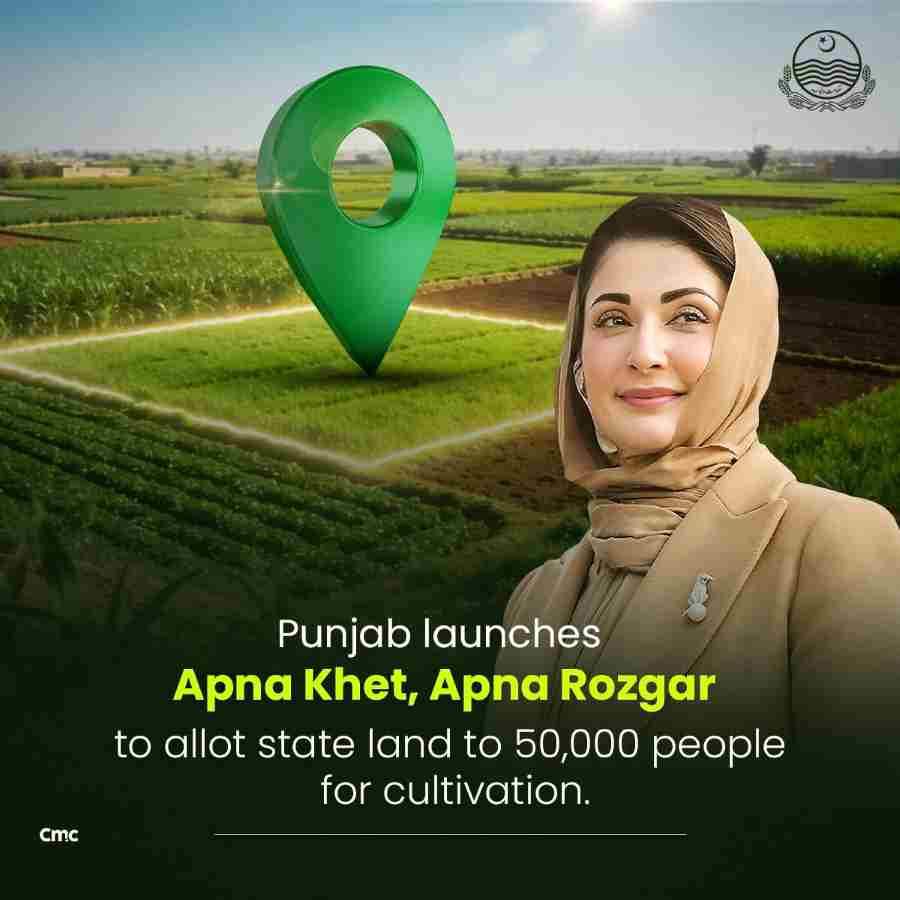
Table of Contents
Understanding the Apna Khet Apna Rozgar Scheme: Punjab’s Agricultural Revolution
The Apna Khet Apna Rozgar Scheme represents a fundamental shift in how the Punjab government approaches rural poverty and unemployment. Rather than offering temporary financial assistance that depletes quickly, this program transfers productive assets directly to those who need them most. The scheme identifies government-owned agricultural land across all 36 districts of Punjab and allocates it to landless farmers and unemployed rural youth for cultivation purposes.
What Makes This Scheme Different from Previous Agricultural Initiatives?
Previous government programs typically focused on input subsidies, tractor provision through separate schemes, or crop loan facilities that benefited existing landowners. The Apna Khet Apna Rozgar Scheme differs fundamentally because it addresses the root cause of rural poverty: lack of productive assets. By transferring cultivation rights of state land, the government creates new farmers rather than simply supporting existing ones.
The program operates on the principle that land ownership transforms economic behavior. When farmers cultivate their own land, they invest more effort, adopt better practices, and plan for long-term productivity rather than surviving season to season as laborers. This psychological shift from laborer to landholder creates dignity, stability, and sustainable income.
What Is the Total Land Being Distributed and How Much Does Each Person Get?
The Punjab government has identified thousands of acres of state land for distribution under this program. This land includes properties previously under the control of various government departments, including the Auqaf Department holdings, revenue department lands, and agriculture department properties across the province. Much of this land remained underutilized or completely unused for years, representing lost agricultural potential.
Each selected beneficiary receives between 3 to 5 acres of agricultural land, with the exact allocation depending on land availability in their specific district and the total number of qualified applicants in that area. The parcel size is calculated based on agricultural economic viability studies that determine how much land a family needs to generate sustainable income through farming. Five acres represents a viable economic unit that can support a family through crop cultivation, while three acres remains workable for households with additional off-farm income sources.
Is the Land Given Free or on Lease, and How Long Is the Lease Period?
Beneficiaries receive cultivation rights through a lease arrangement rather than outright ownership transfer. The government retains legal ownership of the land while transferring usage rights to selected farmers for agricultural purposes only. This structure prevents beneficiaries from selling the land and reverting to landlessness, ensuring the program’s benefits remain permanent.
The standard lease period extends for multiple years, providing beneficiaries with sufficient time to establish sustainable farming operations, invest in land improvement, implement crop rotation cycles, and develop agricultural infrastructure without fear of immediate lease termination. At the end of the lease period, the government evaluates compliance with terms and may renew the lease for deserving beneficiaries who have maintained productive cultivation.
Which Districts of Punjab Are Included in the Land Distribution?
All districts of Punjab are included in the scheme, with land distribution occurring wherever state-owned agricultural land is available for allocation. Major allocations are expected in districts with significant government land holdings, including southern Punjab regions where landless populations are concentrated. Rajanpur district received special attention during the scheme’s announcement, with the Chief Minister personally inaugurating related development projects there.
The government has committed to balanced development across the province, ensuring no district is neglected in the distribution process. District quotas ensure that land available in each area benefits local residents rather than being allocated to applicants from other districts.
Who Qualifies for the Apna Khet Apna Rozgar Scheme?
Eligibility for the Apna Khet Apna Rozgar Scheme follows strict criteria designed to ensure that only genuine landless farmers benefit from this limited opportunity. Understanding these requirements before applying saves time and prevents disappointment during the verification stage.
What Are the Official Eligibility Criteria for Applicants?
Applicants must be Pakistani citizens with permanent residence in Punjab and must possess valid Computerized National Identity Cards issued by NADRA with current biometric verification. They must demonstrate genuine farming capability through experience or training and fall within the specified age bracket determined by the government.
The scheme explicitly targets individuals from low-income rural backgrounds who possess agricultural skills but lack the land resources to apply them productively. This focus ensures that land goes to those who will actually cultivate it rather than to absentee applicants seeking speculative benefits.
Are Landless Farmers and Women Eligible to Apply?
Landless farmers form the primary target group for this scheme, receiving highest priority in the selection process. Applicants must not own any agricultural land in their name or in the name of any immediate family member. The government verifies land ownership claims through the Punjab Land Records Authority database, which contains comprehensive digital records of all land holdings in the province.
Women are fully eligible to apply and are actively encouraged to participate in the program. The government has reserved a specific quota for female applicants to ensure women farmers receive equitable access to land resources, recognizing the critical role women play in agricultural labor despite rarely owning land. This gender-inclusive approach represents significant progress in rural women’s economic empowerment.
Is There an Age Limit, and Can Agriculture Graduates Apply?
Applicants must fall within the working-age population bracket defined by the scheme guidelines. The lower age limit ensures applicants have the physical capability for demanding agricultural work, while the upper limit ensures beneficiaries can productively utilize the land for a reasonable period before retirement considerations arise. Specific age ranges are published in official scheme documentation.
Agriculture graduates receive priority consideration under the scheme and may qualify for additional support through the internship program component. The government recognizes that educated farmers can introduce modern techniques, better crop selection, and higher productivity to the allocated land. Agriculture graduates who complete internships may receive the enhanced monthly stipend announced for program participants, making this pathway particularly attractive for young agricultural professionals.
Who Is Strictly Ineligible for the Scheme?
Government employees at any level, regardless of their position or department, cannot apply for this scheme. This exclusion prevents those with stable government incomes from competing with genuinely landless individuals for limited land resources. Individuals with defaulted loans at any financial institution are also excluded, as the government aims to support those with clean financial records.
Anyone already owning substantial agricultural land is automatically disqualified. The definition of “substantial” follows guidelines established by the Agriculture Department to ensure only genuinely landless or near-landless individuals qualify. Overseas Pakistanis are not eligible because the scheme requires active physical cultivation by the beneficiary in their village of residence.
What Documents Are Required for Online Registration?
Document preparation is critical for successful registration. Incomplete or incorrect documentation leads to immediate rejection during the verification stage, wasting the applicant’s time and opportunity.
What Is the Complete Document Checklist for Application?
The complete application package includes the applicant’s original CNIC with copies, Punjab domicile certificate issued by the relevant district authority, landless affidavit executed before a notary public, recent passport-size photographs with white background, and any educational certificates relevant to agriculture for those applying under priority categories.
A mobile phone number registered with NADRA through biometric verification is absolutely essential for all communication. The government uses mobile numbers for application tracking, verification alerts, selection notifications, and allotment ceremony invitations. Numbers not registered to the applicant’s CNIC are rejected by the system.
How to Obtain an Affidavit Declaring Landless Status?
Applicants must obtain an affidavit from a notary public or oath commissioner declaring under oath that neither they nor their immediate family members own agricultural land. This affidavit must include specific language required by the Agriculture Department, including the applicant’s CNIC number, father’s name, permanent address, and a clear statement of landlessness.
The affidavit must be properly attested and stamped according to legal requirements. Applicants should obtain multiple copies as the verification process may require submission at different stages. Notary publics charge nominal fees for this service, typically much less than unofficial demands made by fraudulent agents.
Why Is a Mobile Number Registered with CNIC Necessary for Verification?
The government’s digital verification system cross-references all applicant information with NADRA databases. When an SMS is sent to verify the mobile number, the system checks whether that SIM card was issued against the same CNIC used for application. This verification prevents individuals from applying using others’ identities or using multiple mobile numbers for duplicate applications.
Throughout the application process, applicants receive SMS updates at every stage: application receipt acknowledgment, verification scheduling notifications, selection confirmation messages, and allotment ceremony invitations. Without a properly registered mobile number, applicants miss critical communications and may lose their opportunity.
Step-by-Step Online Application Process for Apna Khet Apna Rozgar
The online application system simplifies registration while ensuring data accuracy and preventing duplicate applications through CNIC-based unique identification.
What Is the Official Website and How to Access the Portal?
The official online portal is hosted on the Punjab Agriculture Department website at agripunjab.gov.pk. Applicants can access the registration page directly from the department’s homepage by clicking on the Apna Khet Apna Rozgar Scheme banner prominently displayed during active registration phases.
The portal is fully mobile-responsive, allowing registration through smartphones, which is essential for rural applicants with limited computer access. Applicants should ensure stable internet connectivity before starting the process to avoid timeouts and data loss.
Step 1: Creating an Account on the Punjab Agriculture Department Portal
Click the New Registration button and enter your CNIC number without dashes. The system instantly sends a verification code to your registered mobile number through SMS. Enter this code on the website to verify your identity and create your account. Create a secure password following the system’s strength requirements and store it safely for future login access.
Step 2: Filling the Online Registration Form with Personal Details
Complete all sections of the digital application form with accurate personal information matching your CNIC exactly. Include your full name as it appears on your CNIC without abbreviations, father’s name, date of birth in the required format, gender, marital status, and complete postal address with village, union council, tehsil, and district details.
The system validates information against NADRA records in real-time, so any discrepancies trigger immediate alerts requiring correction before proceeding.
Step 3: Uploading Required Documents
Scan or photograph all required documents clearly and upload them in the specified format. Documents must be completely legible with all text, photographs, and stamps visible. The system accepts common formats like PDF, JPG, and PNG with file size limits specified on the upload page.
Ensure your photograph meets specified dimensions and background requirements. Blurry, overexposed, or incorrectly sized photographs may cause application rejection.
Step 4: Submitting the Application and Obtaining Tracking Number
Review all entered information and uploaded documents for accuracy before final submission. Once satisfied, click the Submit button to complete your registration. The system generates a unique application tracking number immediately upon successful submission.
Save this tracking number in multiple places: write it down physically, save it in your mobile phone notes, and take a screenshot of the confirmation page. This number is your only way to check application status and communicate with officials about your application.
What If I Cannot Apply Online? Offline Application Method Available
For individuals without internet access or those uncomfortable with online systems, the government has established offline application facilities. Applicants can visit Assistant Commissioner offices in their district or Agriculture Department extension offices in every tehsil during working hours to collect paper forms or receive assistance with online registration from government staff.
At these offices, designated staff members verify documents, assist with form completion, and ensure applications are properly entered into the digital system. This approach ensures inclusivity for remote and underdeveloped areas where internet connectivity remains limited.
When Is the Last Date to Apply?
Application deadlines are announced when the government opens a new phase of registrations. The scheme operates in distinct phases to manage the verification workload effectively and ensure thorough processing of each application batch.
Does the Scheme Remain Open All Year or Operate in Specific Phases?
The scheme operates in designated phases rather than remaining open continuously. This phased approach allows the government to process applications systematically, conduct physical verifications efficiently, and distribute land in batches according to availability and departmental capacity.
Each phase has specific opening and closing dates announced through newspapers, television advertisements, official government social media channels, and SMS alerts to registered users. The deadline typically extends for several weeks to allow rural applicants sufficient time to prepare documents and complete the application process.
When Will Land Distribution Officially Start for Selected Beneficiaries?
Official distribution occurs at public ceremonies where successful beneficiaries receive their allotment letters from government representatives. These events are organized at the district level with participation from provincial ministers, agriculture department officials, and local representatives.
After receiving allotment letters, beneficiaries can take physical possession of their designated land parcels and begin preparation for the upcoming cultivation season. Agriculture department officials provide guidance on optimal timing for first cultivation based on local conditions and crop calendars.
What Additional Benefits Do Selected Beneficiaries Receive?
The Apna Khet Apna Rozgar Scheme provides comprehensive support extending well beyond simple land distribution, ensuring new farmers have every resource needed to succeed.
How Does the Kisan Card Link to This Scheme?
Selected beneficiaries automatically qualify for the CM Punjab Kisan Card, which provides access to subsidized agricultural inputs through a digital payment system. The card enables farmers to purchase certified seeds, chemical fertilizers, and quality pesticides at reduced rates from registered dealers across the province, with subsidies credited directly to their accounts.
The Kisan Card system has achieved an impressive recovery rate on loans extended to farmers, demonstrating the viability of agricultural credit when properly structured. New farmers benefit from this established system without needing separate applications.
Will the Government Provide Seeds, Fertilizers, and Interest-Free Loans?
The government provides initial support packages including certified seeds and balanced fertilizers for the first cropping season through the Kisan Card system. This ensures new farmers can begin cultivation immediately without arranging capital for basic inputs, removing the biggest barrier facing landless farmers transitioning to independent cultivation.
Interest-free loans are available to selected beneficiaries for purchasing agricultural machinery and inputs. These loans carry no markup and are repayable in easy installments after harvest seasons when farmers have cash in hand. Loan amounts are calculated to cover essential machinery needs and input costs for the first growing seasons.
Can Beneficiaries Get Tractors and Modern Equipment Through the Scheme?
The Green Tractor scheme operates alongside the Apna Khet Apna Rozgar Scheme, and beneficiaries may qualify for substantial tractor subsidies. The government has approved Phase IV of the CM Green Tractor Program, providing significant subsidies for both high-horsepower and low-horsepower tractors.
Subsidy amounts have been increased to make tractors more accessible to small farmers. High-horsepower tractors receive substantial per-unit subsidies, while low-horsepower tractor subsidies have been raised considerably from previous levels. This support ensures new farmers have access to modern mechanization rather than relying on traditional methods that limit productivity.
What Training Opportunities Exist for New Farmers?
The government established Agriculture Centers of Excellence in every tehsil to provide training and ongoing support to new farmers. These centers offer free training sessions on modern farming techniques, pest management, irrigation optimization, soil health maintenance, and financial management for agriculture operations.
All selected beneficiaries receive mandatory free training at these centers before taking possession of their land. Training covers modern agricultural practices, water conservation techniques through drip and sprinkler systems, high-yield crop variety selection, and sustainable farming methods that preserve soil productivity for future generations.
How Does the Selection and Land Allotment Process Work?
Understanding the selection process helps applicants know what to expect after submitting their registration forms and reduces anxiety during the waiting period.
How Will Beneficiaries Be Selected, and Is There Balloting?
Selection follows a transparent, merit-based process combining eligibility verification with prioritization criteria. Applications receive scores based on landlessness level, farming experience duration, age within eligible range, educational qualifications particularly in agriculture, and special category status including women and agriculture graduates.
When multiple qualified applicants compete for limited land in a particular district, a computerized balloting system ensures fair selection among equally qualified candidates. The balloting process is conducted publicly with observers from civil society and media present to ensure complete transparency and eliminate any possibility of manipulation.
What Is the Physical Verification Process?
After initial computer screening, verification teams visit applicants’ residences to physically confirm their claims. Teams include revenue department officials who verify residence and land ownership claims through local records, and agriculture department officers who assess farming capability through interviews and local inquiries.
Verification teams may consult neighbors, local elders, and village leaders to confirm the applicant’s background and genuine need. This ground-level verification ensures that only deserving individuals progress to the final selection stage.
How Can I Check My Application Status Online?
Applicants can check their status at any time by logging into the official portal using their CNIC and password. The personalized dashboard shows the current processing stage, verification status updates, any document deficiencies requiring attention, and final selection results when announced.
The system sends automatic SMS alerts at every significant status change, but regular online checking ensures applicants stay fully informed and can address any issues promptly.
Is There a Registration Fee for the Scheme?
There is absolutely no registration fee for the Apna Khet Apna Rozgar Scheme. The application process is completely free at all stages, from initial registration through verification to final allotment. The government bears all administrative costs as a service to citizens.
Any individual or agent demanding money for application processing, form procurement, guaranteed selection, or priority allocation is attempting fraud and should be reported immediately to the nearest Agriculture Department office or the official helpline numbers.
What Are the Rules and Conditions After Land Allotment?
Receiving land comes with specific responsibilities and conditions that beneficiaries must understand and accept before applying. These rules ensure the program achieves its objectives and benefits continue for future generations.
Can the Allocated Land Be Sold, Transferred, or Rented?
The allocated land cannot be sold, transferred, or mortgaged by the beneficiary under any circumstances. The government retains legal ownership, and cultivation rights are granted specifically and exclusively to the selected individual. Any attempt to transfer rights through sale, gift, or inheritance results in immediate cancellation of the allotment.
Beneficiaries must personally cultivate the land and cannot rent it to others. The program aims to create self-employed farmers, not absentee landlords or rent-seekers. Physical verification teams periodically inspect allocated land to confirm that the allottee is personally working the land.
What Crops Can Be Grown, and How Is Land Use Monitored?
Beneficiaries must follow the crop plan approved during their selection process. The government encourages food security crops including wheat, rice, maize, and pulses, as well as high-value agriculture where market conditions support better returns. Changing crop types without prior consultation with agriculture extension officers requires approval.
Agriculture department officers conduct regular inspections of allocated land parcels to verify cultivation activity, crop health, and compliance with approved plans. Satellite monitoring technology may also track land use patterns to identify non-cultivation or unauthorized use.
What Happens If Lease Terms Are Violated?
Violation of lease terms, including unauthorized transfer, non-cultivation for consecutive seasons, crop plan deviation without approval, or any illegal activity on the land, results in immediate lease cancellation. The government resumes possession of the land and reassigns it to waiting applicants from the same district.
In case the government requires the land for public infrastructure projects, alternative land may be provided where available, or compensation may be paid for improvements made by the farmer during their tenure.
Frequently Asked Questions
What is the Apna Khet Apna Rozgar Scheme?
It is a Punjab government flagship program providing state-owned agricultural land on long-term lease to landless farmers and unemployed rural youth for cultivation and livelihood generation.
Who is eligible to apply for the Apna Khet Apna Rozgar Scheme?
Pakistani citizens with Punjab domicile, aged within the specified bracket, who own no agricultural land and possess genuine farming capability are eligible to apply.
How much land will be provided to each beneficiary?
Each selected beneficiary receives between 3 to 5 acres of agricultural land, depending on availability in their district and the number of qualified applicants.
Is the land given for free or on a lease?
The land is provided on a long-term lease. The government retains ownership while beneficiaries receive exclusive cultivation rights for agricultural purposes.
How long is the lease period for the allocated land?
The lease extends for multiple years, providing sufficient time for beneficiaries to establish sustainable farming operations and invest in land improvement.
How can I apply online for the CM Apna Khet Apna Rozgar Scheme?
Visit the Punjab Agriculture Department website at agripunjab.gov.pk, create an account using your CNIC and mobile number, complete the application form accurately, and upload all required documents.
What documents are required for the application?
Required documents include CNIC, Punjab domicile, landless affidavit attested by a notary public, recent passport-size photographs, and agriculture degrees if applying under the graduate quota.
Are women eligible to apply for this scheme?
Yes, women are fully eligible and a reserved quota ensures female farmers receive equitable access to land resources.
What is the helpline for CM Punjab’s agriculture schemes?
The Agriculture Department operates helpline numbers 0800-15000 and 0800-29000 for queries related to all agriculture schemes, including land distribution programs.

Add a Comment