
The escalating cost of kitchen essentials during the holy month often places an immense strain on household budgets, forcing families to make difficult choices between quality and quantity. In response, the Government of Punjab has activated its largest-ever consumer relief network, transforming 74 permanent Sahulat Bazaars into fully operational Ramadan Bazaars and introducing a technology-driven Nigehban Card program to provide direct financial assistance. This comprehensive guide delivers everything you need to know—from locating the nearest bazaar and checking daily subsidized rates to registering for the Rs. 10,000 cash assistance via 8070 and utilizing the free home delivery service—ensuring your family maximizes savings during Ramadan 2026.
Key Takeaways
- 4.2 Million Families Benefitting: The Nigehban Ramzan Package reaches 4.2 million low-income households across Punjab, with each eligible family receiving Rs. 10,000 in cash assistance plus free ration supplies delivered to their doorsteps.
- Free Home Delivery Achieves Scale: The government’s doorstep delivery service has already fulfilled hundreds of thousands of orders across 35 cities, saving consumers an estimated Rs. 110 million in transportation costs and market price differentials.
- Verified Savings of 7-15%: Essential commodities at Ramadan Bazaars are priced 7-10% below official DC rates, with some items like flour and chicken available at even deeper discounts compared to open market rates.
- Multiple Registration Pathways: Eligible citizens can check their status instantly by sending their CNIC number to 8070 via SMS or by updating their household data on the official PSER portal before the February deadline.
- Zero-Tolerance Enforcement: Hundreds of shops have been sealed and numerous arrests made in major cities during the first days of Ramadan for profiteering, with a central control room monitoring 75 bazaars through extensive CCTV camera coverage 24/7.
- Read More: CM Punjab Rehmat Card (Apply Now) | 25K to 1 Lakh For Widow & orphans
- Read More: PEF Phase 3 School List PDF Download (All Punjab District Wise)
- Read More: Green Tractor Scheme Online Apply (by CM Punjab- Phase 4)
- Read More: Maryam Nawaz 3 Marla Scheme | Apni Zameen Apna Ghar 3 Marla Scheme
CM Punjab Ramzan Bazar: Free Home Delivery
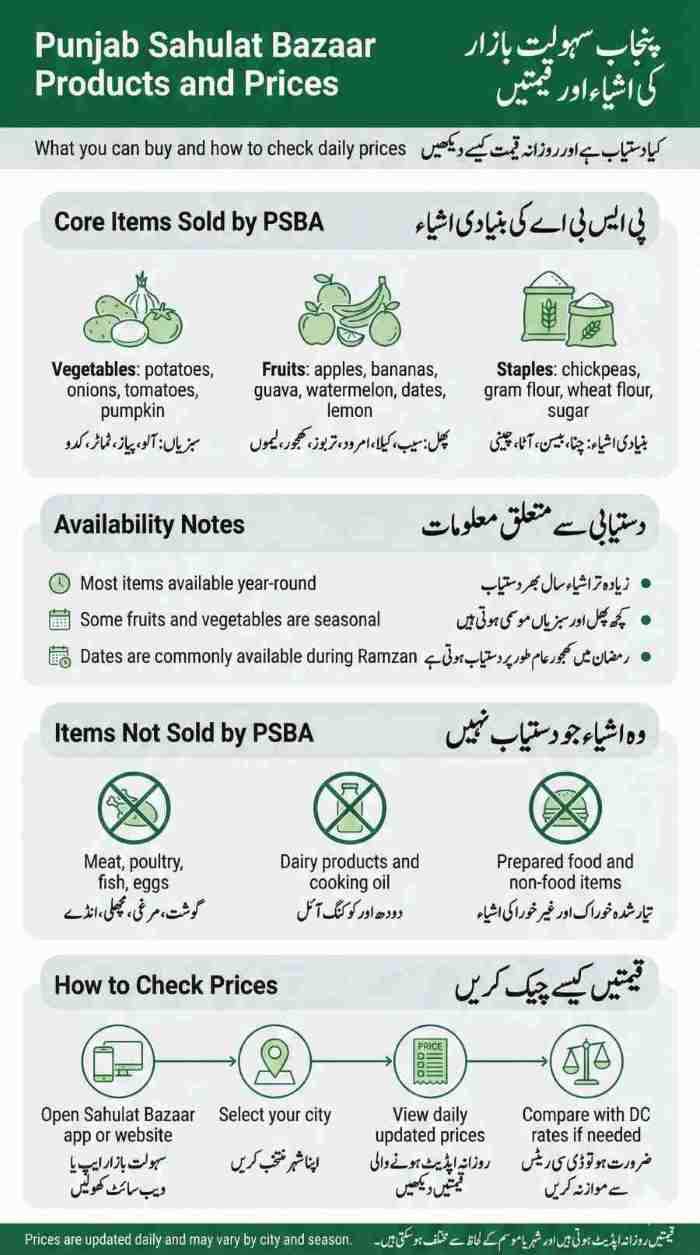
Table of Contents
Understanding the Punjab Ramadan Bazaar Initiative

The Punjab Ramadan Bazaar initiative represents a comprehensive government intervention designed to shield low-income families from inflationary pressures during the holy month. This program combines physical marketplaces, digital ordering platforms, and direct cash transfers to create a multi-layered safety net for consumers.
What Are Ramadan Bazaars and How Do They Function?
Ramadan Bazaars are government-subsidized markets established across Punjab to provide essential food items at rates significantly below prevailing open market prices. Unlike temporary seasonal setups, these bazaars leverage the existing infrastructure of the Punjab Sahulat Bazaars Authority (PSBA), which operates permanent markets throughout the province. When Ramadan begins, these 74 permanent locations receive additional stock, enhanced staffing, and extended hours to meet the surge in demand.
The operational model relies on direct procurement from producers and farmers, effectively eliminating layers of middlemen who typically inflate prices. By purchasing in bulk and distributing through a centralized system, the PSBA achieves economies of scale that translate directly into consumer savings. Each bazaar features multiple stalls selling vegetables, fruits, staples, and other essentials, all displaying official rate lists prominently to ensure price transparency.
The Strategic Importance of the Sahulat Bazaar Network
The Sahulat Bazaar network forms the backbone of the government’s consumer protection strategy. These permanent markets operate year-round, providing affordable essentials even outside Ramadan. During the holy month, their role expands significantly as they become the primary distribution points for subsidized commodities.
The network’s permanence offers distinct advantages over temporary setups. Supply chains are already established, vendor relationships are mature, and logistical systems function smoothly without the startup delays typical of pop-up markets. This readiness ensures that from the very first day of Ramadan, consumers find fully stocked shelves and operational services.
Scale and Reach of the 2026 Program
The 2026 iteration of the program demonstrates unprecedented scale. Over 100 dedicated Ramadan bazaars operate across Punjab’s 152 tehsils, supplemented by more than 1,200 “Maryam Ke Mehman” community kitchens serving free iftar and sehri meals daily. Major bazaars in cities like Lahore, Rawalpindi, and Multan routinely accommodate 6,000 to 8,000 shoppers daily, reflecting widespread public trust in the system.
Beyond the physical markets, the digital infrastructure supports online ordering and home delivery, extending the program’s reach to those who cannot visit bazaars in person. This hybrid physical-digital model ensures comprehensive coverage across demographic segments.
Locating Your Nearest Ramadan Sasta Bazaar
Finding the closest Ramadan Sasta Bazaar requires using the official tools provided by the Punjab government, including the Sahulat Bazaar mobile application, the interactive price dashboard website, and published location lists distributed through media channels.
Digital Tools for Location Discovery
The Sahulat Bazaar mobile application, available for download on both Android and iOS platforms, features an integrated bazaar locator function. After installing the app and granting location permissions, users can view nearby bazaars displayed on an interactive map, complete with directions, contact information, and current operational status. The app publisher is listed as “Punjab Model Bazaars Management Company,” providing authenticity verification.
For users preferring desktop access, the official price dashboard website includes a city selector that displays not only prices but also the addresses of active bazaars within each selected city. This web-based tool requires no download and functions on all devices with internet browsers.
Comprehensive City-Wise Location Directory
Lahore Division
Lahore hosts the highest concentration of Ramadan Bazaars, strategically positioned to serve all major residential sectors. Key locations include:
- Township Bazaar: Situated in the heart of Township, serving Model Town, Garden Town, and surrounding areas with over 50 stalls.
- Wahdat Road Model Bazaar: One of the largest facilities featuring dedicated sections for vegetables, fruits, and dry goods, plus ample parking.
- Johar Town Mian Plaza: Located in the rapidly expanding Johar Town commercial area, accessible from Canal Road and Main Boulevard.
- Madina Market Faisal Town: A high-traffic location serving Faisal Town and adjacent neighborhoods.
- Nishtar Colony Bazaar: Positioned to cover the southeastern quadrant of the city.
- Shahdara Bazaar: Serving the northern entry point and surrounding communities.
- Barki Bazaar: Catering to the eastern outskirts and rural-urban interface.
- Ferozewala Bazaar: Located beyond the city limits, serving industrial and residential populations.
Rawalpindi Division
Rawalpindi’s bazaar network includes permanent locations plus seven dedicated Nigehban Card facilitation camps. Primary locations encompass:
- Sadiqabad Bazaar: Serving the densely populated Sadiqabad sector.
- Chandni Chowk Area: Central location accessible from multiple routes.
- Commercial Market Satellite Town: Serving the middle-class residential sectors.
- Tench Bhatta Bazaar: Catering to the industrial labor population.
Multan Division
Multan’s primary Ramadan Bazaar operates at MDA Road Shamasabad Colony, a location with historical significance for government-subsidized markets. Additional locations include:
- Gulgasht Colony Bazaar: Serving the central residential areas.
- Shah Rukn-e-Alam Colony: Catering to the southern population centers.
Other Major Cities
The network extends comprehensively across Punjab:
- Faisalabad: Multiple bazaars including locations in Ghulam Muhammadabad and D-Type Colony.
- Gujranwala: Bazaars in Civil Lines and Satellite Town.
- Sargodha: Shaheen Chowk Bazaar serving the central city.
- Bahawalpur: Locations near Farid Gate and Model Town.
- Dera Ghazi Khan: Bazaars in the civil lines area.
- Sahiwal: Locations near the railway station and Farid Town.
Ramzan Bazar Rate List
| Category | Item | DC Price (Rs) | PSBA Price (Rs) |
|---|---|---|---|
| Vegetable | Garlic | 530 | 525 |
| Vegetable | Kaddu | 120 | 118 |
| Vegetable | Lemon | 65 | 60 |
| Vegetable | Onion | 50 | 48 |
| Vegetable | Potato | 20 | 18 |
| Vegetable | Tomato | 60 | 58 |
| Fruit | Apple | 420 | 415 |
| Fruit | Banana | 240 | 235 |
| Fruit | Dates | 490 | 480 |
| Fruit | Guava | 145 | 140 |
| Fruit | Melon | 160 | 155 |
| Grain | Atta 10 kg | 905 | 850 |
| Grain | Gram Flour (Besan) | 250 | 245 |
| Grain | Sugar | 155 | 140 |
| Meat & Eggs | Chicken | 490 | 475 |
| Meat & Eggs | Eggs | 200 | 190 |
| Pulse | Gram Pulse | 240 | 235 |
CM Sahulat Bazaar Rate List

The post you shared is an advertisement from CM Sahulat Bazaar (under the Punjab government’s Punjab Sahulat Bazaars Authority – PSBA initiative, led by Chief Minister Punjab Maryam Nawaz Sharif). It promotes a special Mehndi Stall (ہندی سٹال or mehndi application service) set up for Eid celebrations.
Key Details
- Event/Focus: “مینہی مینہی عیدیں کی عید کی بازار میں سہولت بازار” – It’s highlighting a festive mehndi (henna) service as part of the Eid bazaar activities in Sahulat Bazaar locations.
- Service Offered: Professional mehndi application (stunning traditional designs applied on hands, as shown in the image of intricate Arabic-style henna being applied with a cone).
- Starting Registration/Booking: Registration for the mehndi stall/service begins now (“مہندی کے سٹال کے لیے رجسٹریشن شروع”).
- Price: Starting from Rs. 5000 Fee.
- Additional Info: It’s marketed as a great opportunity for Eid preparations, especially for women/girls wanting beautiful mehndi for Eid (“عیدالفطر کے لیے مہندی لگوائیں”). The stall aims to provide high-quality, festive mehndi in a bazaar setting at controlled/affordable rates compared to private artists.
- Contact for Booking/Inquiry: Phone number 0327-6609993 (یہ نمبر رجسٹریشن اور تفصیلات کے لیے دیا گیا ہے؛ یہ Punjab Sahulat Bazaars سے منسلک لگتا ہے، جیسا کہ حالیہ ایونٹس میں بھی یہی نمبر استعمال ہوا ہے)۔
Understanding Model Bazaars vs. Regular Ramadan Bazaars
Model Bazaars represent a premium category within the PSBA network, featuring permanent structures, designated parking areas, and organized stall arrangements. These facilities typically offer a wider variety of goods and operate under enhanced management oversight. The Model Bazaar on Wahdat Road in Lahore exemplifies this category, with its multi-sector layout and dedicated areas for different commodity types.
Regular Ramadan Bazaars may occupy temporary spaces like parks or vacant lots, but they maintain the same pricing structures and quality standards as permanent locations. The distinction primarily affects physical infrastructure rather than the consumer experience regarding prices or product availability.
Mobile Ramadan Bazaars: Bringing Subsidies to Your Doorstep
Recognizing geographical coverage gaps, the government launched the “Sahulat on the Go” initiative deploying 15 mobile units across Punjab. These specially equipped trucks follow scheduled routes, visiting neighborhoods without permanent bazaars on designated days. Each mobile unit carries a curated selection of high-demand items including flour, sugar, ghee, potatoes, and onions, ensuring that even remote communities access subsidized essentials.
The mobile bazaar schedule is published weekly through local administration announcements, mosque loudspeakers, and social media channels. Residents in areas served by mobile units can plan their purchases according to the published visitation calendar.
Ramadan Bazaar Operational Hours and Best Visiting Times
Ramadan Bazaars operate on schedules designed to accommodate fasting routines, with morning and evening shifts ensuring accessibility for all segments of the population regardless of their daily commitments.
Standard Operating Hours Framework
Morning operations typically commence at 10:00 AM and continue until 5:00 PM, allowing shoppers to purchase items for the day’s iftar meal during daylight hours. This shift tends to attract fewer crowds, making it ideal for those who prefer a relaxed shopping experience.
Evening operations begin after Maghrib prayers, usually around 7:00 PM, and extend until midnight or 1:00 AM. This shift accommodates individuals who work during the day or prefer shopping after breaking their fast. The evening hours also serve those preparing for sehri meals.
Weekend and Holiday Operations
All Ramadan Bazaars operate seven days weekly throughout the holy month, including Fridays and Sundays. The government has mandated continuous operation to prevent shopping disruptions and ensure all citizens have equal access to subsidized goods. However, stock replenishment schedules may shift slightly on weekends, potentially affecting availability of certain items during late hours.
Strategic Timing for Optimal Shopping Experience
Data from bazaar administrations reveals distinct traffic patterns that can inform your visit timing. The two hours immediately preceding iftar witness the heaviest crowds, as last-minute shoppers rush to complete purchases. Similarly, the period immediately following Isha prayers sees high traffic as families shop after their evening meal.
For the most efficient experience, consider visiting between 11:00 AM and 1:00 PM on weekdays. During these hours, crowds are manageable, stocks are freshly replenished from morning deliveries, and stall operators have more time to assist customers. Early morning visits also offer the advantage of cooler temperatures during warmer Ramadan days.
Free Home Delivery Service: Ordering Online from Ramadan Bazaars
The Punjab government has revolutionized subsidy access through its free home delivery service, enabling citizens to order essential items online and receive them at their doorsteps without incurring delivery charges, provided they reside within a 5-kilometer radius of an operational bazaar.
Comprehensive Guide to the Online Ordering Process
Step 1: Platform Selection and Installation
Begin by downloading the official Sahulat Bazaar application from the Google Play Store or Apple App Store. Verify the publisher as “Punjab Model Bazaars Management Company” to ensure authenticity. Alternatively, access the web-based ordering system through the official price dashboard website, which requires no installation and works on all devices.
Step 2: City Selection and Location Verification
Upon opening the application, select your city from the dropdown menu. This action customizes the product catalog to display items available in your locality. The system will request location access to verify your address against the 5-kilometer delivery radius.
Step 3: Browsing and Adding Items
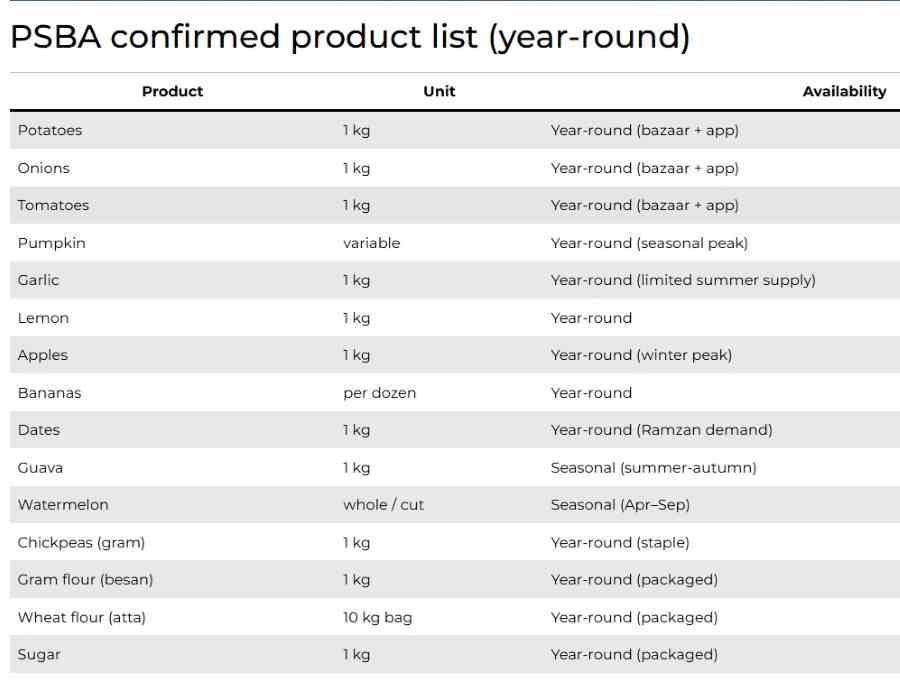
The application presents the complete PSBA product catalog organized by categories: vegetables, fruits, and staples. Each product listing displays the current subsidized price, unit size (kilogram, dozen, or bag), and real-time availability status. Seasonal items like watermelon carry availability indicators showing the expected season.
Step 4: Cart Review and Checkout
After selecting desired items, review your cart for accuracy. The system automatically calculates total savings compared to reference market rates. During checkout, the address verification runs again to confirm delivery eligibility.
Step 5: Order Confirmation and Tracking
Upon successful checkout, you receive an SMS confirmation containing your order number and estimated delivery window. The application provides real-time tracking showing when your order is picked, packed, and out for delivery.
Delivery Radius Verification and Coverage Area
The 5-kilometer free delivery radius is calculated using geographic information systems that map your address to the nearest active bazaar. If your location falls outside this radius, the application will display a notification indicating that delivery is unavailable. In such cases, you may still place orders for pickup at the bazaar, or check if a mobile bazaar unit serves your area.
Product Catalog Available for Online Ordering
The online catalog mirrors the physical bazaar inventory, including:
- Fresh Vegetables: Potatoes, onions, tomatoes, pumpkin (seasonal)
- Fresh Fruits: Apples, bananas, dates, lemons, seasonal watermelon and guava
- Staples: 10kg wheat flour bags, sugar, chickpeas, gram flour
- Other Essentials: Garlic (availability subject to season)
Items Excluded from Online Delivery
The PSBA online platform explicitly excludes certain categories to maintain operational focus and quality control:
- Meat, poultry, and fish products
- Eggs and all dairy items including milk, yogurt, and cheese
- Cooking oil in certain packaging formats
- Prepared foods and bakery items
- Non-food household goods
Delivery Performance and Reliability Metrics
The home delivery service has demonstrated impressive operational metrics since its launch. Order fulfillment rates exceed 98%, with average delivery times ranging from 2 to 6 hours depending on order volume and distance. The system includes quality checks at packing stations, ensuring that items like fresh produce meet visual inspection standards before dispatch.
Price Comparison: Understanding Your Savings at Ramadan Bazaars
The financial advantage of shopping at Ramadan Bazaars becomes evident through direct price comparisons with open market rates. The subsidy structure ensures savings between 7% and 15% on most items, with some commodities offering even greater relief.
Flour Pricing: The Flagship Subsidy
The 10kg wheat flour bag priced at Rs. 850 represents one of the program’s most significant interventions. Open market rates for equivalent quality flour frequently exceed Rs. 900, with branded varieties reaching even higher. This fixed price provides predictability for household budgeting and ensures that the staple food remains accessible to all income groups.
Sugar and Ghee Discounts Explained
Sugar is available at Rs. 140-150 per kg compared to open market rates exceeding Rs. 160. This discount is particularly valuable during Ramadan when sweet consumption traditionally increases. Ghee and cooking oil receive reductions of Rs. 20-30 per pack, translating to meaningful savings for families using these items daily.
Pulses and Legume Pricing
All varieties of pulses including chickpeas (chana), red lentils (masoor), and mung beans receive the standard 7-10% discount. Given that pulses form a primary protein source for many low-income families, these savings contribute significantly to nutritional adequacy during the fasting month.
Understanding the Reference Price System
The District Collector (DC) reference price serves as the benchmark against which bazaar prices are compared. This reference rate is determined through market surveys conducted by district administrations, reflecting wholesale procurement costs plus reasonable margins. By pricing goods below this reference, the government ensures that consumers pay less than the officially recognized fair price.
Daily Price Checking: Using the Sahulat Bazaar Dashboard
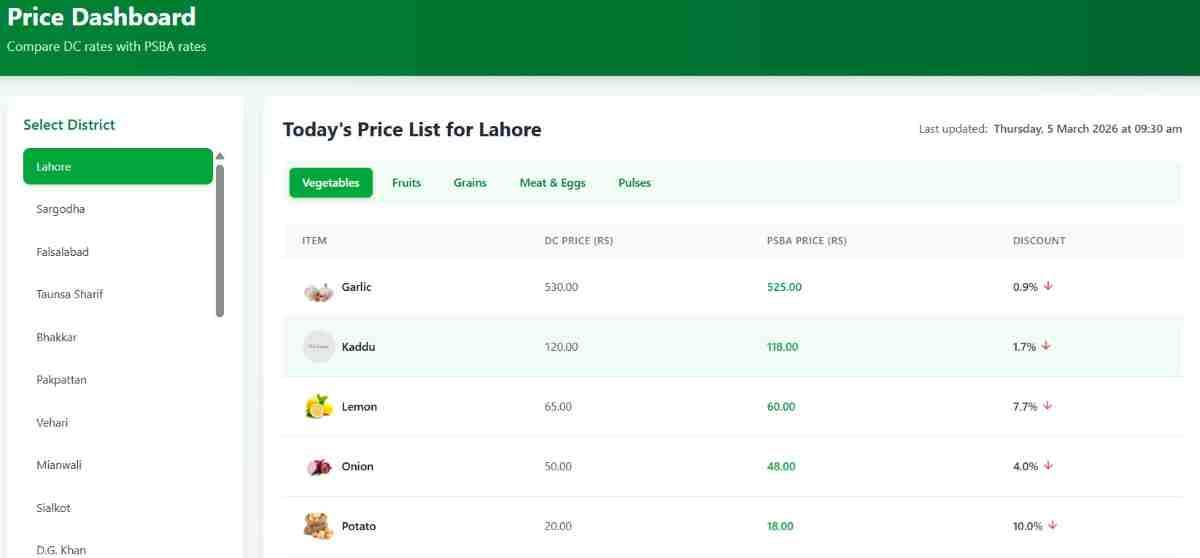
The Sahulat Bazaar Price Dashboard at sahulatbazar.com.pk/price-dashboard provides real-time access to current rates, enabling informed shopping decisions and price verification before visiting bazaars or placing online orders.
Dashboard Features and Functionality
City Selector Interface
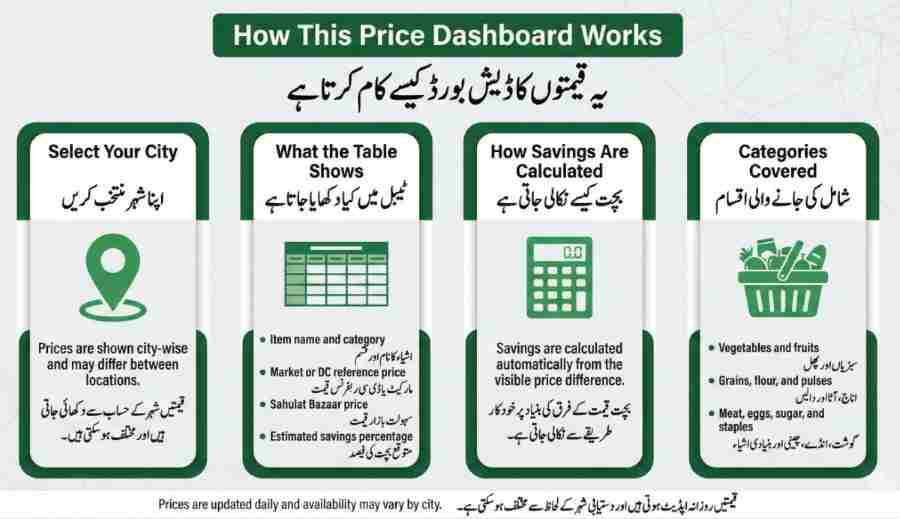
Upon accessing the dashboard, users encounter a prominent dropdown menu labeled “Select your city to view daily prices.” Choosing a city refreshes the entire data display to show rates specific to that location. This city-specific approach accounts for regional variations in supply chains and transportation costs.
Comprehensive Data Display
The resulting table presents five critical data columns:
- Item Name and Category: Clear identification with category tags (vegetable, fruit, staple)
- Market or DC Reference Price: The official benchmark rate for comparison
- Sahulat Bazaar Price: The actual selling price at government bazaars
- Estimated Savings Percentage: Automatically calculated based on the price differential
- Last Updated Timestamp: Verification of data freshness
Savings Calculation Methodology
The estimated savings percentage is derived from the formula: (Reference Price – Bazaar Price) / Reference Price × 100. For example, if tomatoes have a DC rate of Rs. 150 and a bazaar price of Rs. 135, the displayed savings would be 10%. Zero values indicate either price parity or temporary unavailability.
Understanding City-to-City Price Variations
Price variations between cities occur naturally due to legitimate factors including:
- Distance from agricultural production areas
- Local transportation fuel costs
- Wholesale market conditions unique to each district
- Availability of cold storage facilities
- Local taxes and municipal fees
Consequently, the same item may show different prices in Lahore versus Multan on the same day. The dashboard’s city-specific design ensures users always view the most relevant data for their location.
Update Frequency and Data Reliability
The dashboard refreshes daily, typically in the morning hours after district administrations publish their notified rates. Each data table includes a prominent “Last Updated” timestamp, allowing users to verify information currency. During peak Ramadan periods, some cities may update rates twice daily to reflect changing wholesale market conditions.
Mobile Accessibility and Alerts
The dashboard is fully responsive, functioning seamlessly on smartphones and tablets. Users can bookmark the site for quick access or enable browser notifications for price alerts on specific items. The mobile version prioritizes readability with larger text and touch-friendly navigation.
Nigehban Ramzan Package: Complete Registration and Eligibility Guide
The Nigehban Ramzan Package represents the government’s direct cash transfer initiative, providing Rs. 10,000 to eligible families alongside free ration supplies. Understanding the registration process and eligibility criteria ensures qualified citizens receive their entitled benefits.
Detailed Eligibility Criteria Explained
Eligibility determination employs a multi-factor assessment model prioritizing the most vulnerable households:
Residency Requirement
Applicants must be permanent residents of Punjab, with verification conducted through NADRA records and domicile documentation. Temporary residents or those without established Punjab domicile are ineligible.
Income Threshold
Monthly household income must fall below Rs. 60,000 for consideration. This threshold is verified through multiple data sources including tax records, utility bill consumption patterns, and employment verification where available.
Asset Ownership Assessment
Households owning vehicles, agricultural land exceeding specified limits, or having members with foreign travel in the preceding year are typically excluded. This ensures resources target families genuinely in need.
Utility Consumption Patterns
Electricity bill amounts serve as a proxy indicator of economic status. Households with consistently low consumption (below 200 units monthly) receive priority consideration, while those with high consumption face automatic exclusion.
Automatic Inclusion Categories
Certain vulnerable groups receive automatic eligibility without separate application:
- Registered widows in the Zakat system
- Existing Benazir Income Support Programme (BISP) beneficiaries
- Persons with disabilities registered with social welfare departments
- Transgender persons registered in government databases
Registration Methods: Step-by-Step Instructions
SMS Registration via 8070 (Fastest Method)
- Open your mobile phone’s messaging application
- Create a new message addressed to 8070
- Type your 13-digit CNIC number without spaces or hyphens
- Send the message and await response
- Within seconds, you receive a reply indicating eligibility status
The SMS method requires that your mobile SIM card be registered in your name with NADRA. Family members using SIMs registered to others may experience verification failures.
Online Registration via PSER Portal
- Visit the official Punjab Social and Economic Registry (PSER) portal at pser.punjab.gov.pk
- Click on “New Registration” or “Update Information”
- Enter your CNIC number for initial verification
- Complete the household survey form with accurate details
- Submit supporting documents as requested
- Note your application tracking number for future reference
Tehsil Office Assistance
For citizens without mobile phones or internet access, dedicated facilitation desks operate at all tehsil offices. Staff members assist with eligibility checks and registration completion during office hours.
Understanding Your 8070 Response Message
The automated response from 8070 conveys your status clearly:
“Eligible (Mubarak ho)”
This confirmation indicates you qualify for the full package. The message typically includes instructions on when and where to collect your Nigehban Card, along with information about the first cash disbursement schedule.
“Verification in Progress”
Your application is undergoing cross-verification with multiple databases. This status may persist for several days. No action is required unless you receive a request for additional information via SMS.
“Not Eligible”
Your profile does not meet current criteria. Common reasons include income above threshold, asset ownership exceeding limits, or data inconsistencies. The message may indicate specific disqualifying factors.
Common Reasons for Application Rejection
Mobile SIM Registration Mismatch
The most frequent cause of SMS verification failure occurs when the mobile number used is not registered in the applicant’s name. Always send the SMS from the SIM card registered to your CNIC.
Outdated NADRA Records
Marital status changes, address updates, or family composition changes not reflected in NADRA records can cause verification failures. Visit a NADRA center for record updates before reapplying.
Utility Bill Threshold Exceeded
Recent electricity bills exceeding the program’s consumption threshold trigger automatic rejection. This applies even if current income has decreased, as the system relies on historical consumption data.
Duplicate Applications
Multiple applications from the same CNIC create confusion in the system. Submit only one application through your preferred channel.
Cash Disbursement Channels and Procedures
Eligible families receive their Rs. 10,000 through multiple convenient channels:
Nigehban Debit Card
Qualified individuals receive a personalized debit card usable at all ATMs displaying the 1LINK logo. The card arrives with PIN instructions and can be activated at any Bank of Punjab branch.
Bank of Punjab Branch Withdrawal
Visit any Bank of Punjab branch with your CNIC and thumb verification. Teller-assisted withdrawals require biometric verification, eliminating the need for cards or PINs.
Branchless Banking Agents
Over 2,400 authorized agents across Punjab facilitate cash withdrawals through biometric verification. Agents display official signage and charge no fees for Nigehban transactions.
Ration Bag Contents and Distribution
In addition to cash assistance, eligible families receive a comprehensive ration bag containing:
- 10 kilograms of premium wheat flour (atta)
- 2 kilograms of refined sugar
- 2 kilograms of premium ghee or cooking oil
- 2 kilograms of basmati rice
- 1 kilogram of high-quality chickpeas (chana)
Distribution occurs through designated points, with home delivery available for elderly or disabled beneficiaries who cannot visit collection centers.
Quality Assurance and Price Monitoring Mechanisms
The Punjab government maintains rigorous quality control and price monitoring systems to protect consumers from exploitation and ensure subsidized goods meet acceptable standards.
Centralized Control Room Operations
A state-of-the-art central control room functions as the nerve center for bazaar monitoring. Equipped with live feeds from over 1,400 CCTV cameras installed across 75 bazaars, the facility enables real-time observation of crowd management, vendor behavior, and product displays. Trained monitors watch for irregularities and immediately alert field staff when issues arise.
The Chief Minister has personally utilized this facility to conduct live, unannounced inspections, calling citizens directly to inquire about their shopping experiences and price satisfaction. These high-visibility interventions reinforce accountability throughout the system.
Price Control Magistrate Presence
Every major Ramadan Bazaar hosts at least one Price Control Magistrate during operational hours. These judicial officers possess authority to:
- Receive and adjudicate consumer complaints on the spot
- Order immediate refunds for overcharged amounts
- Impose fines on profiteering vendors
- Seal stalls found violating price regulations
- Initiate legal proceedings against repeat offenders
Punjab Food Authority Inspections
The Punjab Food Authority deploys mobile laboratory units to conduct random sampling of food items sold at bazaars. Tests check for:
- Adulteration in ghee and cooking oil
- Contamination in flour and grains
- Pesticide residues on fresh produce
- Spoilage indicators in perishable items
Items failing quality tests result in immediate vendor suspension and product seizure, with legal action following.
Consumer Complaint Channels
Multiple reporting channels ensure every consumer can voice concerns:
PSBA Helpline: +92-42-99001000
For bazaar-specific complaints regarding pricing, vendor behavior, or product quality.
Nigehban Helpline: 0800-02345
For issues related to card distribution, cash disbursement, or ration delivery.
SMS Complaint to 8070
Text your CNIC followed by your complaint details to report Nigehban program issues.
In-Person Complaint Desks
Every bazaar features a designated complaint desk where consumers can register grievances verbally or in writing.
Maryam Ke Mehman: Community Kitchen Initiative
The Maryam Ke Mehman program extends relief beyond groceries to provide free, nutritious meals through a network of community kitchens across Punjab.
Program Overview and Scale
Over 1,200 Dastarkhwans operate throughout the province, serving freshly prepared iftar and sehri meals daily. Each location follows standardized recipes ensuring nutritional adequacy and food safety. The program serves hundreds of thousands of meals daily, with major locations preparing over 1,000 meals per serving.
Location Strategy and Accessibility
Dastarkhwans are strategically positioned at:
- Major public hospitals to serve patients’ families
- Bus terminals and railway stations for travelers
- Industrial areas for labor populations
- Public parks in low-income neighborhoods
- University campuses for students
Food Quality and Hygiene Standards
Each Dastarkhwan operates under Punjab Food Authority supervision, with:
- Licensed food handlers
- Regular health inspections
- Temperature-controlled food storage
- HACCP-compliant preparation protocols
- Biodegradable serving materials
Practical Shopping Guidelines for Consumers
Maximizing the benefits of Ramadan Bazaars requires understanding certain practical aspects of the system.
Card Requirements for Different Services
General Shopping at Bazaars
No card or registration is required for purchasing items at physical bazaars. All citizens can access subsidized prices regardless of income level or program enrollment status.
Nigehban Package Access
The Nigehban Card or SMS confirmation is mandatory for receiving cash assistance or the free ration bag. This targeted benefit is reserved for eligible households only.
Purchase Limits and Fair Distribution
While the PSBA has not published official per-customer purchase limits, bazaar administrations may implement informal quantity restrictions during peak demand periods. These measures prevent hoarding and ensure equitable access for all shoppers.
Senior Citizen and Women’s Facilities
Progressive bazaars have introduced dedicated counters and separate queues for senior citizens and women shoppers. These facilities reduce waiting times and create a more dignified shopping experience for vulnerable populations. Look for signage indicating “Women’s Counter” or “Senior Citizens Facilitation Desk.”
Parking and Transportation Considerations
Major bazaars typically offer free parking in designated areas. However, temporary bazaars in congested locations may have limited parking. Consider visiting during off-peak hours or using motorcycle transport for easier access.
Complaint Filing: Complete Procedures and Contact Information
Knowing how to file effective complaints ensures prompt resolution of any issues encountered.
Step-by-Step Complaint Process
Document the Issue
Before filing, gather:
- Photographs of the problem (overpriced tags, poor quality items)
- Vendor stall number and location
- Date and time of incident
- Your contact information
Choose Your Channel
Select the most appropriate reporting method based on issue type:
- Bazaar pricing/vendor issues: PSBA Helpline
- Nigehban card problems: Nigehban Helpline
- Food quality concerns: Punjab Food Authority
Provide Complete Information
When contacting helplines, clearly state:
- Your name and CNIC
- Bazaar name and location
- Vendor details if applicable
- Nature of complaint
- Desired resolution
Follow Up
Note your complaint reference number and follow up if resolution delays beyond 48 hours.
Escalation Pathways for Unresolved Complaints
If initial complaint channels fail to resolve your issue:
- Contact the Deputy Commissioner’s office in your district
- Visit the Chief Minister’s complaint cell website
- Utilize the Pakistan Citizen’s Portal mobile application
- Contact local elected representatives for intervention
Comparative Analysis: Ramadan Bazaars vs. Alternative Shopping Options
Understanding how government bazaars compare to other options helps optimize your shopping strategy.
Sahulat Bazaars vs. Utility Stores Corporation
Key Differences
- No mandatory cross-purchasing at Sahulat Bazaars (buy only what you need)
- More rigorous weight verification at bazaars
- Fresher produce due to direct farmer procurement
- Wider variety of fresh vegetables and fruits
Utility Store Advantages
- Nationwide presence including smaller towns
- Established supply chains for packaged goods
- Credit payment options in some locations
Private Sector Participation
Major retail chains including Imtiaz, Al-Fatah, and Carrefour participate in Ramadan relief through:
- Displaying official rate boards
- Offering limited-time discounts
- Extended evening hours
- Special Ramadan product bundles
However, government bazaars consistently offer lower prices on staples, making them the preferred choice for essential commodities.
Frequently Asked Questions (FAQs)
How can I check if I am eligible for the Nigehban Card?
Send your 13-digit CNIC number via SMS to 8070. You will receive an immediate response indicating your eligibility status. This is the fastest and most reliable verification method.
What items can I order for free home delivery?
You can order all PSBA core items including potatoes, onions, tomatoes, flour, sugar, pulses, and seasonal fruits. Meat, eggs, dairy products, and cooking oil are not available for delivery.
Is there any delivery charge for online orders?
No, delivery is completely free for addresses within the 5-kilometer radius of any operational bazaar. The system automatically verifies your location during checkout.
Can I visit any Ramadan Bazaar without registration?
Yes, all citizens can shop at any Ramadan Bazaar without prior registration or special cards. The subsidized prices are available to everyone.
What should I do if a vendor overcharges me?
Immediately report the incident to the on-site Price Control Magistrate or call the PSBA helpline at +92-42-99001000. Provide the stall number and details for prompt action.
How often are bazaar prices updated?
Prices are reviewed and updated daily based on wholesale market rates and government notifications. The price dashboard reflects these daily changes.
Are Ramadan Bazaars open on the first day of Eid?
Most bazaars close on the first day of Eid but reopen the following day. Some locations may transition to Eid bazaars during the last ten days of Ramadan.
Can I use my Nigehban Card at private stores?
No, the Nigehban Card is specifically for use at government-designated distribution points, Bank of Punjab branches, and authorized branchless banking agents only.
What happens if my online delivery is incorrect?
You may refuse incorrect items at delivery. Take photographs and report the issue to the PSBA helpline immediately for resolution and possible refund.
Are widows automatically eligible for assistance?
Widows registered in government databases, particularly those receiving Zakat or BISP benefits, are typically automatically included in the eligible list without separate application.

Add a Comment