
Kidney failure transforms life into a relentless cycle of hospital visits, physical exhaustion, and financial devastation. A single dialysis session in Pakistan costs between PKR 3,000 and PKR 6,000, and patients typically require two to three sessions every single week, meaning monthly expenses can exceed PKR 72,000, a sum completely out of reach for millions of Punjabi families.
The CM Punjab Dialysis Card, launched under the visionary leadership of Chief Minister Maryam Nawaz Sharif, eliminates this impossible burden entirely by providing completely free, cashless dialysis treatment to registered kidney patients across the province. This definitive guide walks you through every aspect of the program: eligibility requirements, step-by-step application procedures, complete hospital lists, coverage details, and answers to the most frequently asked questions.
Key Takeaways
- Comprehensive Financial Coverage: Each registered patient receives PKR 1,000,000 in annual coverage—PKR 850,000 specifically for dialysis sessions and PKR 150,000 for essential allied treatments including AV Fistula surgeries and medications.
- Universal Access with Priority Focus: All permanent Punjab residents with confirmed kidney disease qualify, with expedited processing for families already registered in BISP or the National Socio-Economic Registry.
- Simple Application Process: Registration requires only a visit to any major government hospital with your CNIC and medical reports—no complex paperwork or advance payments needed.
- Expanding Healthcare Network: Over 215 public and private hospitals across all 36 Punjab districts now accept the card, with additional facilities joining regularly to ensure geographic accessibility.
- Zero Out-of-Pocket Expense: Patients receive treatment at empaneled hospitals without paying anything—hospitals bill the Punjab Health Initiative Management Company directly for all covered services.
- Read More: Maryam Nawaz Insulin Program | Free Insulin Scheme (By Insulin Card)
- Read More: CM Punjab Climate Internship Program (PKR 60K Apply Online)
- Read More: Hunarmand Punjab Scholarship Card (Apply Before Last Date)
CM Punjab Free Dialysis Scheme | CM Punjab Dialysis Card
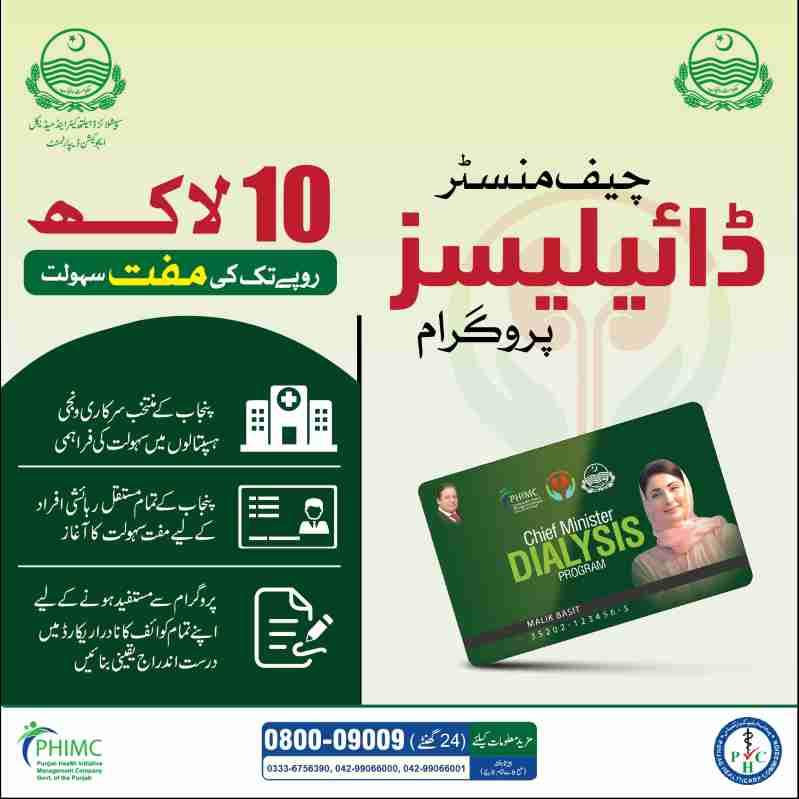
Table of Contents
What Exactly Is the CM Punjab Dialysis Card Program?

The CM Punjab Dialysis Card represents a fundamental shift in how the province approaches chronic kidney disease care. Rather than treating dialysis as an insurmountable personal expense, the government has assumed full financial responsibility for every registered patient, transforming a death sentence for the poor into manageable, ongoing treatment.
Understanding the Core Concept
The program functions as a government-funded health entitlement specifically designed for patients diagnosed with chronic kidney disease requiring regular hemodialysis. When a patient receives their card—either as a physical document or a digital record linked to their CNIC—they gain access to completely free treatment at any empaneled hospital within the Punjab network. The Punjab Health Initiative Management Company serves as the implementing agency, managing registrations, monitoring treatment quality, and ensuring transparent fund utilization across the entire system.
The Public Health Crisis That Demanded Action
Pakistan faces an escalating epidemic of kidney disease. Health data from the Pakistan Society of Nephrology reveals that approximately 25,000 new patients enter end-stage renal failure every single year, with Punjab bearing a disproportionate share of this burden due to its large population. Chronic kidney disease has emerged as the 12th leading cause of death nationwide, yet treatment costs have historically placed dialysis far beyond reach for ordinary citizens.
Multiple interconnected factors drive this crisis. Contaminated drinking water sources, particularly across South Punjab, expose millions to arsenic and heavy metals that slowly destroy kidney function over years. Uncontrolled diabetes and hypertension—both rampant across the province—serve as primary drivers of kidney damage. The widespread, unregulated use of painkillers and traditional herbal remedies causes additional nephrotoxicity. Late diagnosis compounds every other problem, as limited awareness means most patients only discover their condition at stage 4 or 5, when dialysis becomes the only viable option.
How This Program Differs From Previous Government Health Initiatives

Earlier health schemes, while valuable, approached healthcare through a hospitalization lens—covering acute events but ill-suited to chronic, recurring needs. The Sehat Sahulat Card, for instance, provides excellent coverage for surgeries, accidents, and inpatient care, but dialysis requires ongoing, predictable access rather than one-time intervention.
The CM Punjab Dialysis Card fills this critical gap through specialized, dedicated coverage. The Rs. 1 million annual limit specifically allocates funds between session costs and supportive care, recognizing that effective dialysis requires more than just the procedure itself. This targeted approach ensures patients receive comprehensive treatment rather than partial coverage that still leaves families struggling with ancillary expenses.
The Role of PHIMC in Program Implementation
The Punjab Health Initiative Management Company brings professional management expertise to the program. PHIMC maintains the hospital network, processes registrations through integrated digital systems, monitors treatment quality against established standards, ensures transparent fund flow from government to healthcare providers, and maintains complete electronic medical records for every enrolled patient. This institutional infrastructure transforms what could be a chaotic rollout into a smoothly functioning healthcare delivery system.
Why Kidney Disease Has Reached Epidemic Proportions in Punjab
Understanding the scale of the kidney disease crisis requires examining the unique factors affecting Punjab’s population. This context explains why the dialysis card program has become not merely helpful but absolutely essential.
Environmental Factors Driving Kidney Damage
Water quality across large swaths of Punjab poses serious health risks. In districts across South Punjab including Muzaffargarh, Rajanpur, and Rahim Yar Khan, groundwater contains arsenic and heavy metal concentrations far exceeding World Health Organization safety guidelines. People living in these areas consume contaminated water daily for years, with kidney damage accumulating silently until symptoms finally appear at advanced stages.
Agricultural practices contribute additional risks. Pesticide and fertilizer runoff contaminates water sources in rural communities, while industrial waste affects waterways near manufacturing centers. Communities lacking access to clean filtered water face chronic exposure to multiple nephrotoxic substances.
Lifestyle and Disease Patterns Driving Kidney Failure
Diabetes has reached epidemic proportions across Punjab, with urban areas showing particularly high prevalence rates. Uncontrolled diabetes damages the tiny blood vessels within kidneys, gradually reducing their filtering capacity until they fail completely. Hypertension follows similar patterns—chronically high blood pressure stresses kidney structures until they can no longer function.
Both conditions share troubling characteristics: they develop silently over years, they disproportionately affect lower-income populations with limited healthcare access, and they respond poorly to late intervention. By the time many patients receive diagnosis, significant kidney damage has already occurred.
Healthcare Access Barriers That Compound the Problem
Rural communities face particular challenges accessing preventive care. District headquarters hospitals exist throughout Punjab, but specialist nephrology services concentrate in major cities. Patients in remote areas may travel hours for consultation, making regular monitoring impractical. Transportation costs alone discourage follow-up visits, allowing disease progression to continue unchecked.
Health literacy gaps compound access problems. Many patients fail to recognize early warning signs—fatigue, swelling, changes in urination—as indicators of kidney problems. Traditional healers often provide initial treatment, delaying proper medical evaluation until irreversible damage has occurred.
The Economic Reality of Dialysis Without Government Support
Without government intervention, dialysis creates impossible choices for affected families. Consider a laborer earning PKR 20,000 monthly who requires twice-weekly dialysis. Even at lower-cost public facilities, session expenses consume 30 to 40 percent of household income before accounting for medications, transportation, and lost work time. Families sell assets, borrow from relatives, and eventually abandon treatment entirely when resources run out.
This economic reality explains why the dialysis card has generated such profound relief among affected communities. For the first time, kidney failure patients can access treatment without bankrupting their families in the process.
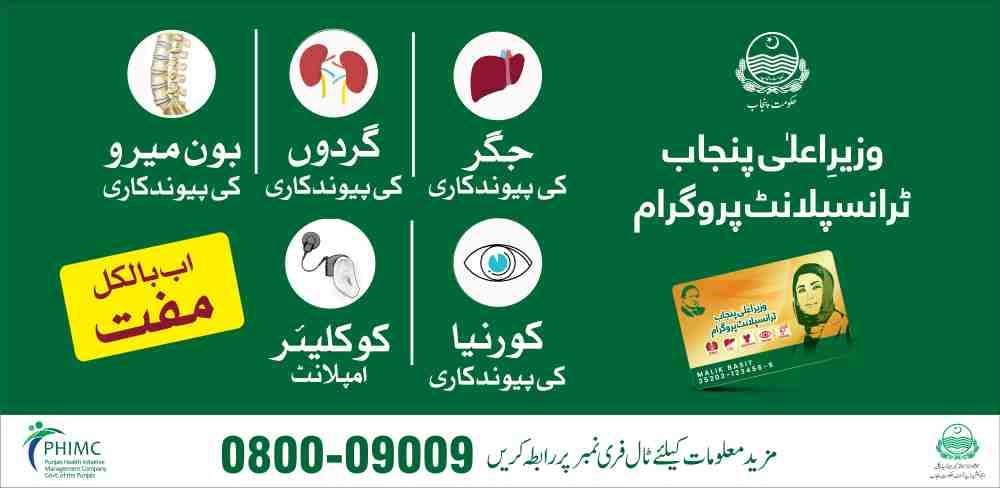
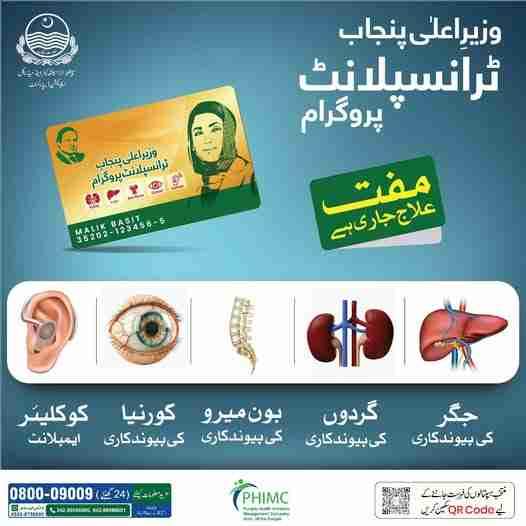
CM Punjab Transplant Program Hospital List
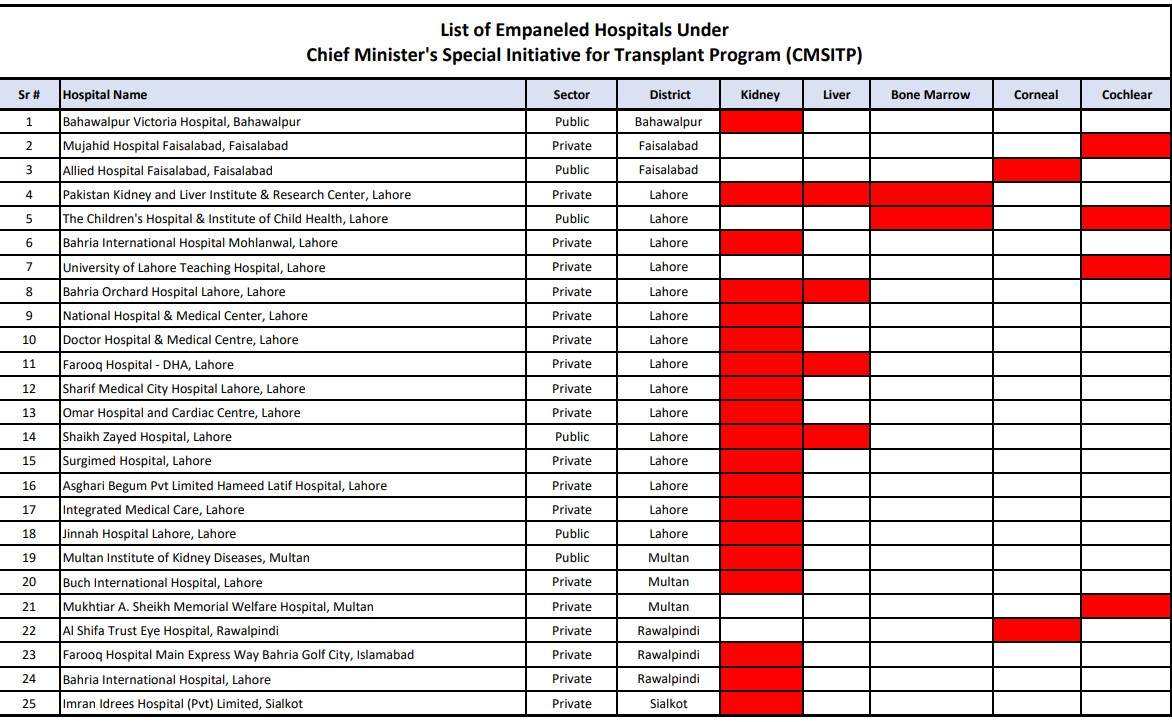
| Sr # | Hospital Name | Sector | District | Kidney | Liver | Bone Marrow | Corneal | Cochlear |
|---|---|---|---|---|---|---|---|---|
| 1 | Bahawalpur Victoria Hospital | Public | Bahawalpur | Yes | No | No | No | No |
| 2 | Mujahid Hospital Faisalabad | Private | Faisalabad | No | No | No | Yes | Yes |
| 3 | Allied Hospital Faisalabad | Public | Faisalabad | No | No | Yes | No | No |
| 4 | Pakistan Kidney and Liver Institute & Research Center | Private | Lahore | Yes | Yes | Yes | No | No |
| 5 | The Children’s Hospital & Institute of Child Health | Public | Lahore | No | No | Yes | Yes | Yes |
| 6 | Bahria International Hospital Mohlanwal | Private | Lahore | Yes | No | No | No | No |
| 7 | University of Lahore Teaching Hospital | Private | Lahore | No | No | No | Yes | Yes |
| 8 | Bahria Orchard Hospital Lahore | Private | Lahore | Yes | Yes | No | No | No |
| 9 | National Hospital & Medical Center | Private | Lahore | Yes | No | No | No | No |
| 10 | Doctor Hospital & Medical Centre | Private | Lahore | Yes | No | No | No | No |
| 11 | Farooq Hospital – DHA | Private | Lahore | Yes | Yes | No | No | No |
| 12 | Sharif Medical City Hospital Lahore | Private | Lahore | Yes | No | No | No | No |
| 13 | Omar Hospital and Cardiac Centre | Private | Lahore | Yes | No | No | No | No |
| 14 | Shaikh Zayed Hospital | Public | Lahore | Yes | Yes | No | No | No |
| 15 | Surgimed Hospital | Private | Lahore | Yes | No | No | No | No |
| 16 | Asghari Begum Pvt Limited Hameed Latif Hospital | Private | Lahore | Yes | No | No | No | No |
| 17 | Integrated Medical Care | Private | Lahore | Yes | No | No | No | No |
| 18 | Jinnah Hospital Lahore | Public | Lahore | Yes | No | No | No | No |
| 19 | Multan Institute of Kidney Diseases | Public | Multan | Yes | No | No | No | No |
| 20 | Buch International Hospital | Private | Multan | Yes | No | No | No | Yes |
| 21 | Mukhtiar A. Sheikh Memorial Welfare Hospital | Private | Multan | No | No | No | Yes | Yes |
| 22 | Al Shifa Trust Eye Hospital | Private | Rawalpindi | No | No | No | Yes | No |
| 23 | Farooq Hospital Main Express Way Bahria Golf City | Private | Rawalpindi | Yes | No | No | No | No |
| 24 | Bahria International Hospital | Private | Rawalpindi | Yes | No | No | No | No |
| 25 | Imran Idrees Hospital (Pvt) Limited | Private | Sialkot | Yes | No | No | No | No |
Public / Government Hospitals Empaneled Under CM Punjab Transplant Program
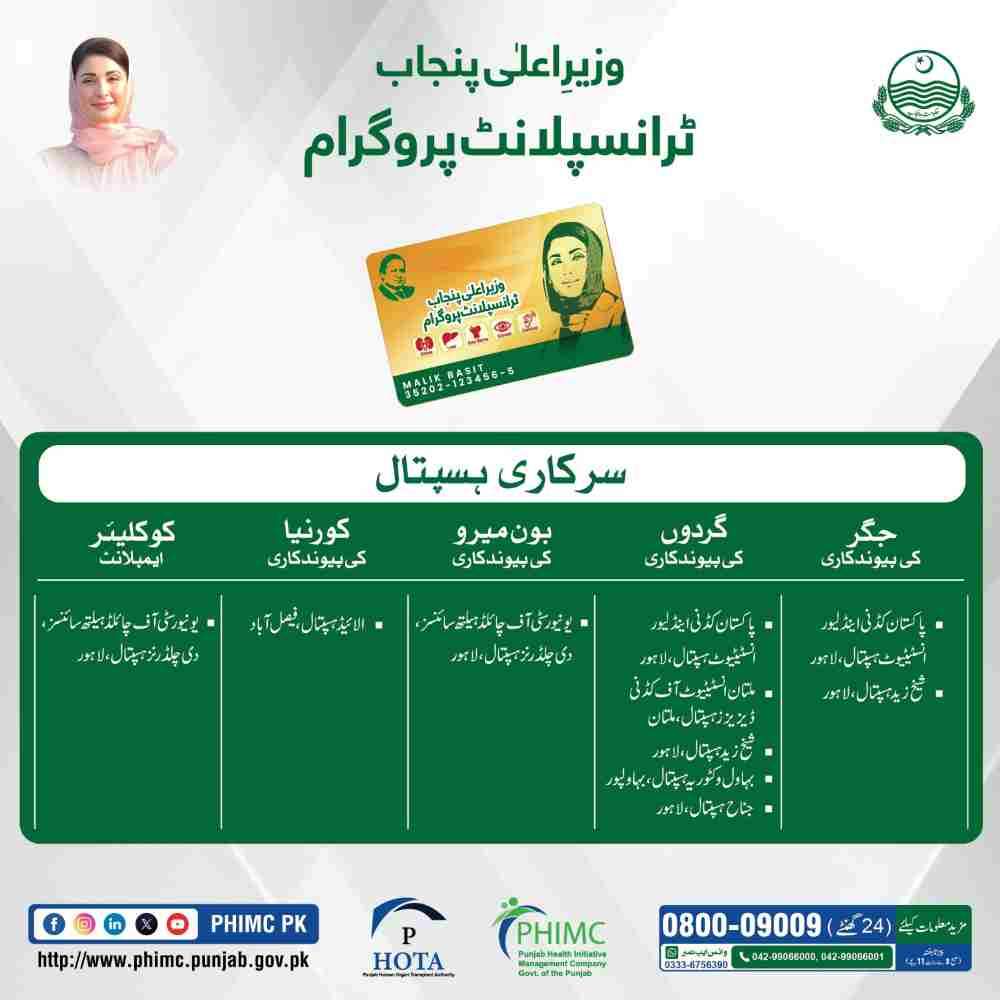
| Sr # | Hospital Name | District | Kidney | Liver | Bone Marrow | Corneal | Cochlear |
|---|---|---|---|---|---|---|---|
| 1 | Bahawalpur Victoria Hospital, Bahawalpur | Bahawalpur | Yes | No | No | No | No |
| 2 | Allied Hospital Faisalabad | Faisalabad | No | No | Yes | No | No |
| 3 | The Children’s Hospital & Institute of Child Health, Lahore | Lahore | No | No | Yes | Yes | Yes |
| 4 | Shaikh Zayed Hospital, Lahore | Lahore | Yes | Yes | No | No | No |
| 5 | Jinnah Hospital Lahore | Lahore | Yes | No | No | No | No |
| 6 | Multan Institute of Kidney Diseases | Multan | Yes | No | No | No | No |
Total Public Hospitals: 6 Key Observation: Public hospitals tend to focus more on kidney, bone marrow, corneal, and cochlear procedures, with strong pediatric and specialized institute presence (e.g., Children’s Hospital Lahore and Shaikh Zayed).
Private Hospitals Empaneled Under CM Punjab Transplant Program
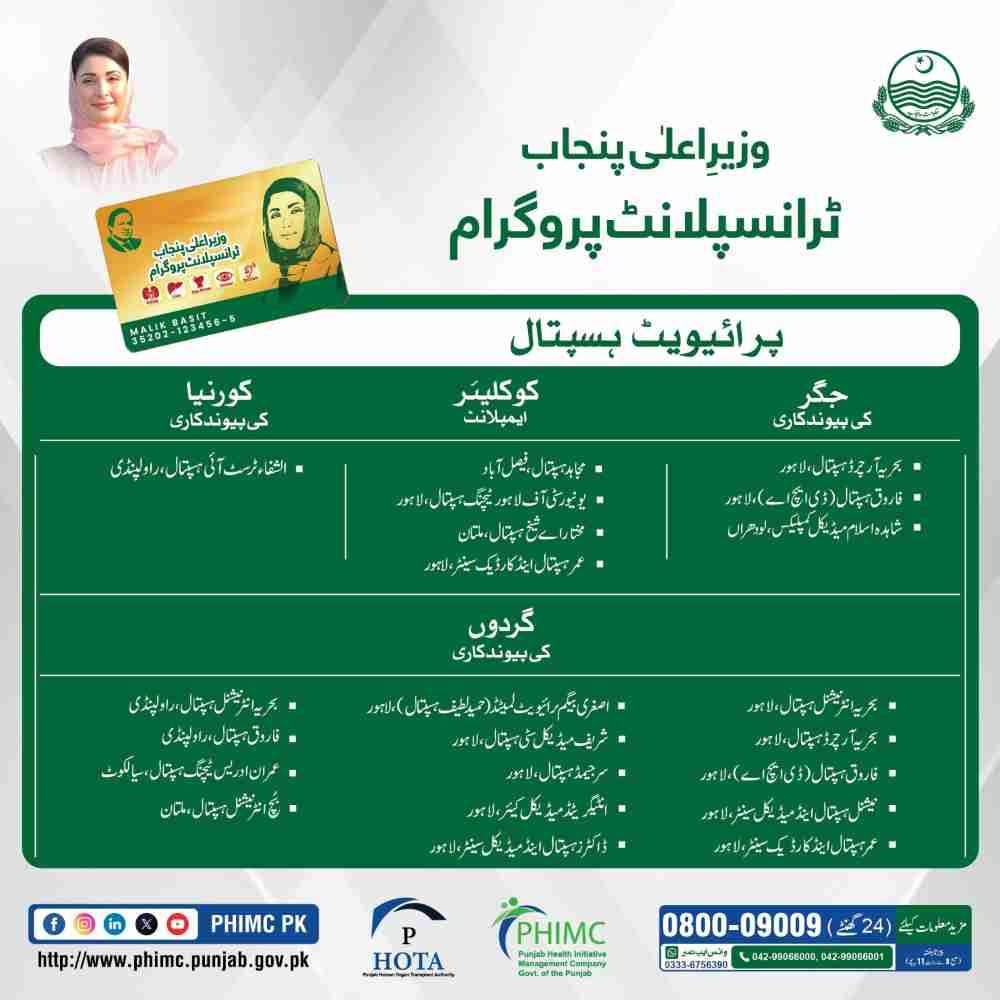
| Sr # | Hospital Name | District | Kidney | Liver | Bone Marrow | Corneal | Cochlear |
|---|---|---|---|---|---|---|---|
| 1 | Mujahid Hospital Faisalabad | Faisalabad | No | No | No | Yes | Yes |
| 2 | Pakistan Kidney and Liver Institute & Research Center, Lahore | Lahore | Yes | Yes | Yes | No | No |
| 3 | Bahria International Hospital Mohlanwal, Lahore | Lahore | Yes | No | No | No | No |
| 4 | University of Lahore Teaching Hospital, Lahore | Lahore | No | No | No | Yes | Yes |
| 5 | Bahria Orchard Hospital Lahore | Lahore | Yes | Yes | No | No | No |
| 6 | National Hospital & Medical Center, Lahore | Lahore | Yes | No | No | No | No |
| 7 | Doctor Hospital & Medical Centre, Lahore | Lahore | Yes | No | No | No | No |
| 8 | Farooq Hospital – DHA, Lahore | Lahore | Yes | Yes | No | No | No |
| 9 | Sharif Medical City Hospital Lahore | Lahore | Yes | No | No | No | No |
| 10 | Omar Hospital and Cardiac Centre, Lahore | Lahore | Yes | No | No | No | No |
| 11 | Surgimed Hospital, Lahore | Lahore | Yes | No | No | No | No |
| 12 | Asghari Begum Pvt Limited Hameed Latif Hospital | Lahore | Yes | No | No | No | No |
| 13 | Integrated Medical Care, Lahore | Lahore | Yes | No | No | No | No |
| 14 | Buch International Hospital | Multan | Yes | No | No | No | Yes |
| 15 | Mukhtiar A. Sheikh Memorial Welfare Hospital | Multan | No | No | No | Yes | Yes |
| 16 | Al Shifa Trust Eye Hospital | Rawalpindi | No | No | No | Yes | No |
| 17 | Farooq Hospital Main Express Way Bahria Golf City | Rawalpindi | Yes | No | No | No | No |
| 18 | Bahria International Hospital | Rawalpindi | Yes | No | No | No | No |
| 19 | Imran Idrees Hospital (Pvt) Limited | Sialkot | Yes | No | No | No | No |
Total Private Hospitals: 19 Key Observation: Private hospitals dominate the list (especially in Lahore), providing the majority of kidney, liver, corneal, and cochlear services. This public-private partnership significantly expands capacity and geographic reach under the free transplant scheme.
Complete Breakdown of Financial Coverage and Benefits
The CM Punjab Dialysis Card provides remarkably comprehensive coverage designed to address every aspect of dialysis care. Understanding exactly what the card covers helps patients plan their treatment and avoid unexpected expenses.
The PKR 1,000,000 Annual Coverage Package Explained
Every registered patient receives total coverage of PKR 1,000,000 per year. This amount refreshes annually for patients who continue to require dialysis, ensuring uninterrupted lifelong care without requiring reapplication. The government structured this limit after careful analysis of actual treatment costs, ensuring it adequately covers recommended treatment protocols.
Detailed Allocation: PKR 850,000 for Dialysis Sessions
The majority of coverage—PKR 850,000—applies specifically to dialysis sessions themselves. This allocation covers:
- The dialysis procedure performed by trained nursing staff
- Use of dialysis machines and monitoring equipment
- Dialysis filters (dialyzers) for each session
- Bloodlines and tubing sets required for treatment
- Sterile supplies and disposable materials
- Facility overhead and operational costs
This comprehensive session coverage eliminates the hidden costs that often accumulate in healthcare settings. Patients never receive surprise bills for supplies or facility fees—everything required for the actual dialysis session falls under this allocation.
PKR 150,000 for Allied Treatments and Supportive Care
The remaining PKR 150,000 addresses everything beyond the session itself that patients need for effective dialysis:
Vascular Access Procedures:
AV Fistula creation surgery receives full coverage under this allocation. This procedure creates the vascular access point essential for hemodialysis, connecting an artery to a vein in the arm to enable repeated needle insertion. Without this surgery, dialysis cannot proceed. Double Lumen Catheter insertion, used for patients requiring immediate dialysis before fistula maturation, also falls under this coverage.
Laboratory Monitoring:
Regular blood tests receive full coverage, including:
- Monthly kidney function tests measuring urea and creatinine
- Complete blood counts monitoring for anemia
- Electrolyte panels tracking potassium and sodium levels
- Hepatitis B and C screening required for dialysis center safety
- Additional tests ordered by treating nephrologists
Essential Medications:
Injectable and oral medications prescribed specifically for dialysis patients qualify for coverage. Erythropoietin injections stimulate red blood cell production, addressing the anemia universal among dialysis patients. Heparin prevents blood clotting during dialysis sessions. Iron supplements and vitamin D preparations maintain nutritional status. Blood pressure medications help manage the cardiovascular stress of kidney failure.
Emergency Care Coverage
If complications arise during dialysis at an empaneled hospital—allergic reactions, blood pressure crashes, cardiac events—the management of these acute complications receives immediate coverage. Patients do not face separate bills for emergency interventions required due to their dialysis treatment.
What the Card Does NOT Cover
Understanding coverage boundaries prevents confusion. The card specifically excludes:
- Kidney transplant surgery (though covered under separate transplant programs)
- Treatment for conditions unrelated to kidney disease
- Cosmetic procedures
- Outpatient medications for non-kidney conditions
- Transportation to and from dialysis centers
- Accommodation for family members accompanying patients
Who Qualifies for the CM Punjab Dialysis Card?
Eligibility requirements balance accessibility with responsible program management. Understanding these criteria helps applicants determine their qualification status before beginning the registration process.
Residency Requirements: Proving Punjab Domicile
The program serves permanent residents of Punjab exclusively. Residency verification occurs through CNIC address verification—if your CNIC shows a Punjab address, you automatically satisfy this requirement. For individuals whose CNIC shows another province but who currently reside in Punjab, additional documentation may be required, though priority processing favors those with established Punjab CNIC records.
Medical Criteria: Documented Kidney Disease Diagnosis
Applicants must present confirmed medical evidence of chronic kidney disease requiring regular dialysis. Acceptable documentation includes:
- Written diagnosis from a registered nephrologist
- Laboratory reports showing kidney function parameters
- Hospital records documenting previous dialysis treatment
- Referral notes from government hospital dialysis units
Patients already receiving dialysis at government hospitals receive expedited processing, as their medical records already exist within the system.
Financial Targeting: Priority for Low-Income Households
While the program ultimately aims to serve all citizens in need, current implementation prioritizes households facing greatest economic vulnerability:
Automatic Priority Groups:
- Families registered with Benazir Income Support Programme
- Households included in National Socio-Economic Registry with poverty scores below designated thresholds
- Patients already receiving free treatment at government hospitals
- Individuals with documented disability certifications
General Population Applicants:
Families above poverty thresholds may still qualify, particularly if dialysis costs would create documented financial hardship. District health authorities exercise discretion in approving such applications based on individual circumstances.
Read More: How To Get Rs10,000 Through Nigehban Ramadan Package
Age Requirements: No Upper Limit
The program imposes no maximum age restrictions. Elderly patients qualify equally with younger applicants, reflecting recognition that seniors face particular vulnerability given fixed incomes and limited employment options. Children and adolescents also qualify when diagnosed with kidney failure requiring dialysis.
Who Typically Gets Rejected
Understanding rejection reasons helps applicants address potential issues before applying:
- Non-residents of Punjab lacking valid CNIC with Punjab address
- Patients without confirmed medical diagnosis requiring dialysis
- Individuals whose acute kidney injury may resolve without ongoing dialysis
- Households with documented ability to afford private treatment (rare)
- Applications with incomplete or contradictory documentation
Step-by-Step Application Process for the Dialysis Card
The registration process balances accessibility with necessary verification steps. Following this guide ensures smooth application processing.
Initial Step: Obtain Medical Certification
Before approaching registration counters, secure proper medical documentation. Visit the nephrology department at any major government hospital—District Headquarters hospitals work well for this purpose. Request a complete evaluation including:
- Clinical assessment by qualified nephrologist
- Laboratory testing confirming kidney function status
- Written certification documenting need for regular dialysis
- Referral to dialysis unit within the hospital network
This documentation serves as the foundation for your entire application, so ensure completeness before proceeding.
Document Preparation: What to Bring
Gather these materials before visiting enrollment centers:
Identity Documents:
- Original CNIC with clear photocopy
- B-Form for applicants under 18 years
- Additional identification for verification purposes
Medical Records:
- Nephrologist certification of kidney disease diagnosis
- Laboratory reports confirming dialysis necessity
- Previous dialysis records if applicable
- Doctor’s prescription or referral note
Supporting Documentation:
- Recent passport-sized photographs (two copies)
- BISP registration proof if applicable
- NSER documentation if available
- Mobile phone number registered in applicant’s name
Where to Apply: Registration Locations
Several options exist for submitting applications:
Government Hospital Registration Desks:
Most District Headquarters hospitals maintain dedicated CM Punjab Health Card registration counters. Staff at these locations receive training specifically for dialysis card enrollment and can guide applicants through the process.
District Health Authority Offices:
Each district maintains health authority offices where residents can complete registration. These locations prove particularly useful for applicants living far from major hospitals.
Tehsil Headquarters Hospitals:
Expanding network of Tehsil facilities now offers registration services, bringing enrollment closer to rural populations.
Mobile Registration Camps:
Health authorities periodically organize registration camps in underserved areas. Local announcements and community health workers provide information about camp schedules.
Biometric Verification Process
At registration centers, applicants undergo biometric verification through NADRA systems. This step:
- Confirms identity matches CNIC records
- Verifies Punjab residency through address data
- Prevents duplicate registrations
- Creates permanent digital record linking patient to program
Biometric verification typically takes five to ten minutes and requires no additional documentation.
Processing Timeline and Follow-Up
After submission, applications undergo review by PHIMC officials. Standard processing requires 7 to 15 working days. During this period:
- Verification teams may contact applicants for clarification
- Medical records undergo confirmation with issuing hospitals
- Eligibility determinations receive final approval
Upon approval, applicants receive SMS confirmation on their registered mobile number. The digital card becomes active immediately, enabling treatment access even before physical card delivery.
Complete Hospital Network Accepting the Dialysis Card
Accessing treatment requires knowing which facilities participate in the program. The network continues expanding, but current coverage already spans the entire province.
Major Government Hospitals in Lahore
Lahore patients enjoy access to multiple facilities:
- Mayo Hospital: Historic teaching hospital with extensive dialysis capacity
- Jinnah Hospital: Large tertiary facility serving central Lahore
- Services Hospital: Major referral center with dedicated nephrology unit
- Punjab Kidney and Liver Institute: Specialized facility focused specifically on kidney care
- Ganga Ram Hospital: Well-established hospital with dialysis services
- Shaikh Zayed Hospital: Teaching hospital with comprehensive nephrology
- General Hospital Lahore: Accessible option for eastern Lahore residents
Rawalpindi Division Facilities
Rawalpindi patients can access:
- Holy Family Hospital: Major teaching hospital with dialysis services
- Benazir Bhutto Hospital: Large facility serving Rawalpindi residents
- District Headquarters Hospital Rawalpindi: Accessible option for district residents
- Rawalpindi Institute of Cardiology: Provides dialysis for cardiac patients requiring integrated care
Faisalabad Division Hospitals
Faisalabad offers multiple treatment locations:
- Allied Hospital Faisalabad: Primary teaching hospital with dialysis unit
- District Headquarters Hospital Faisalabad: Serves district residents
- Faisalabad Institute of Cardiology Renal Unit: Specialized facility for cardiac-kidney patients
- Independent University Hospital: Private sector partner offering dialysis services
Multan Division Treatment Centers
South Punjab patients access care at:
- Nishtar Hospital Multan: Major teaching hospital serving extensive region
- District Headquarters Hospital Multan: Local access for Multan residents
- Kidney Center Multan: Specialized facility focused on renal care
- Chaudhary Pervaiz Elahi Institute of Cardiology: Integrated cardiac-kidney services
Gujranwala Division Options
Gujranwala region patients can visit:
- District Headquarters Hospital Gujranwala: Central facility for division residents
- Government Kidney Dialysis Unit Gujranwala: Specialized dialysis center
- Wazirabad Institute of Cardiology: Serves northern division areas
- Fatima Bashir Hospital Gakhar: Private partner facility
Bahawalpur and South Punjab Access
Southern districts access treatment at:
- Bahawal Victoria Hospital Bahawalpur: Major teaching hospital for region
- Civil Hospital Bahawalpur: Additional capacity for Bahawalpur residents
- Bahawalpur Institute of Nuclear Oncology: Serves cancer patients requiring dialysis
- Sheikh Zayed Hospital Rahim Yar Khan: Covers southernmost districts
- District Headquarters Hospital DG Khan: Serves western Punjab areas
Private Sector Partners
Selected private hospitals participate through partnership agreements:
- Kidney Centre (multiple locations)
- Indus Hospital Network dialysis centers
- Shalimar Hospital Lahore
- Mukhtar A. Sheikh Memorial Welfare Hospital Multan
- Al-Shifa Clinic Bahawalpur
How to Verify Hospital Participation
Before visiting unfamiliar facilities, confirm current participation through:
- PHIMC website hospital locator tool
- Helpline 0800-09009 operator assistance
- Local District Health Authority confirmation
- Direct inquiry with hospital administration
How to Use the Dialysis Card Effectively
Once registered, understanding proper card usage ensures smooth treatment access without complications.
First Visit Protocol
When visiting an empaneled hospital for the first time:
- Proceed to the dialysis unit reception desk
- Present your CNIC and explain you are a CM Punjab Dialysis Card holder
- Staff will verify your registration in the PHIMC system
- Complete any facility-specific registration forms
- Meet with unit nephrologist for treatment planning
- Schedule your regular dialysis sessions
The Hospital Facilitation Officer assigned to each facility can assist with any registration or access issues.
Scheduling Regular Sessions
Most patients require dialysis two to three times weekly. Work with hospital staff to establish a consistent schedule that accommodates:
- Your medical needs as determined by your nephrologist
- Hospital capacity and available appointment slots
- Your transportation and work schedule considerations
- Emergency backup options if sessions must be rescheduled
Maintaining consistent attendance improves health outcomes significantly compared to irregular treatment.
What to Bring to Each Session
For every dialysis appointment, bring:
- Original CNIC for verification
- Your dialysis card (physical or digital)
- List of current medications
- Insurance or program information card
- Emergency contact details
Hospital staff will verify your eligibility before each session, though regular patients often establish streamlined check-in procedures.
Managing Treatment Across Multiple Hospitals
If you need to transfer between facilities temporarily or permanently:
- Inform your current hospital before leaving
- Obtain complete medical records and discharge summary
- Contact the new hospital’s dialysis unit to confirm acceptance
- Register at the new facility with your card and documents
- Your digital record enables seamless continuation
Temporary transfers for travel or family visits follow the same general process, though shorter absences may not require full reregistration.
Handling Emergency Situations
If dialysis-related emergencies arise:
- For acute problems during scheduled dialysis, hospital staff manage emergencies on-site with full coverage
- For emergencies occurring between sessions, proceed to the nearest empaneled hospital emergency department
- Inform emergency staff about your dialysis card status immediately
- Once stabilized, coordinate with regular dialysis unit for follow-up
Treatment at non-empaneled hospitals during genuine emergencies may require subsequent coordination with PHIMC for reimbursement consideration.
Common Challenges and Practical Solutions
Despite program strengths, patients occasionally encounter difficulties. Knowing how to address common problems ensures uninterrupted treatment.
Hospital Capacity Constraints
Popular centers in major cities sometimes face overwhelming demand, causing scheduling delays. Solutions include:
- Inquire about early morning or evening sessions when demand may be lower
- Consider alternative empaneled hospitals with available capacity
- Discuss urgent medical needs with nephrologists who can prioritize high-risk patients
- Check whether nearby Tehsil hospitals offer available appointments
Supply Shortages
Occasional consumable shortages affect government hospitals nationwide. When supplies run low:
- Ask staff about expected restock timing
- Inquire whether partner hospitals in your area have available supplies
- Discuss temporary schedule adjustments with your nephrologist
- Report persistent shortages to helpline for escalation
Documentation Problems
If your CNIC fails verification or records show discrepancies:
- Verify your NADRA record is current and accurate
- Visit NADRA offices to correct any data errors
- Obtain updated CNIC if your original has expired
- Request assistance from hospital facilitation officers who can escalate verification issues
Card Activation Delays
If approved but still awaiting active status:
- Confirm your SMS confirmation was received
- Check status online through PHIMC portal
- Call helpline with your CNIC for status update
- Visit registration center for in-person assistance
Hospital Refusal to Accept Card
If a facility refuses treatment to cardholders:
- Remain calm and request to speak with hospital administration
- Ask for specific reasons for refusal
- Call helpline 0800-09009 immediately while at the facility
- Report complete details including hospital name, date, and staff names
- Seek alternative empaneled hospital for immediate treatment needs
Program Impact and Future Developments
Understanding the program’s broader context helps patients appreciate its significance while anticipating future improvements.
Lives Transformed: Patient Stories
Real experiences illustrate the program’s profound impact. Rashida Bibi from Bahawalpur spent three years watching her husband sink into debt paying for her dialysis. After card enrollment, her treatment became completely free. “Now my husband doesn’t cry at night anymore,” she shared with local media. “We are not rich, but we are not dying either.”
Muhammad Akbar from Gujranwala, a young father of three, was skipping dialysis sessions every other week due to cost constraints. His health deteriorated rapidly until card enrollment restored regular treatment. He now maintains stable health and continues supporting his family. “I can watch my children grow up,” he said. “That’s everything.”
These stories represent thousands of families whose economic and physical survival now depends on uninterrupted program operation.
Current Program Statistics
Within months of launch, the program achieved significant milestones:
- Over 45,000 dialysis sessions delivered free of charge
- More than 215 hospitals actively participating across Punjab
- All 36 districts covered by at least one empaneled facility
- Thousands of families removed from dialysis-related debt
Planned Expansions and Improvements
Government announcements indicate several upcoming developments:
- Additional dialysis units in underserved districts, particularly South Punjab
- Expanded private hospital partnerships to reduce public facility burden
- Enhanced digital systems for faster registration and verification
- Telemedicine integration enabling remote nephrology consultations
- Continued consumable supply chain improvements
Integration With Broader Health Initiatives
The dialysis card operates alongside complementary programs:
- Sehat Sahulat Card: Covers hospitalization and surgery for non-dialysis needs
- Transplant Programme: Addresses kidney transplantation for eligible patients
- Free Medicines Initiative: Provides essential medications through government pharmacies
- Telemedicine Services: Enables remote specialist consultation for rural patients
Frequently Asked Questions
Q1: What exactly is the CM Punjab Dialysis Card?
It is a government-issued health entitlement providing completely free dialysis treatment to registered kidney patients across Punjab. The card covers PKR 1 million annually, including dialysis sessions, lab tests, essential medicines, and AV Fistula surgeries at empaneled hospitals.
Q2: How do I know if I qualify for the card?
You qualify if you are a permanent Punjab resident with a valid CNIC showing Punjab address, have a confirmed medical diagnosis of chronic kidney disease requiring regular dialysis, and belong to a low-income household (with BISP/NSER registration providing priority processing).
Q3: How many dialysis sessions does the card cover monthly?
There is no fixed monthly limit. The PKR 850,000 allocated for dialysis sessions covers approximately three sessions weekly throughout the year, aligning with standard medical recommendations for chronic kidney disease management.
Q4: Which hospitals accept the dialysis card in my city?
Major government hospitals in every district accept the card, including DHQ hospitals, teaching hospitals, and selected private partners. For specific locations, visit the PHIMC website hospital locator or call helpline 0800-09009 for personalized assistance.
Q5: How long does registration take after applying?
Standard processing requires 7 to 15 working days following complete application submission. You will receive SMS confirmation on your registered mobile number once approved, after which your digital card becomes immediately active.
Q6: What documents must I bring when applying?
Bring your original CNIC with photocopy, medical reports confirming kidney disease diagnosis, nephrologist certification recommending dialysis, recent photographs, and any BISP/NSER registration proof if available.
Q7: Is the dialysis card completely free with no hidden costs?
Yes, absolutely. The card is issued free of charge, and all covered treatment at empaneled hospitals involves no out-of-pocket payments whatsoever. If any facility demands payment, report them immediately to the helpline.
Q8: Does the card cover kidney transplant surgery?
No, the dialysis card specifically covers dialysis and related supportive care. Transplant surgery falls under separate programs, though AV Fistula creation—necessary before transplantation—is covered under allied treatment allocations.
Q9: Can I transfer between hospitals if I move or prefer another facility?
Yes, you can transfer by informing your current hospital, obtaining medical records, and registering at your chosen new empaneled facility. Your digital record enables seamless continuation without restarting the entire application process.
Q10: What should I do if a hospital refuses to accept my card?
Call the official helpline 0800-09009 immediately while at the facility. Report the hospital name, date, and staff involved. The helpline team will intervene and guide you to an alternative facility for immediate treatment needs.

Add a Comment