
Online harassment has become a pervasive threat affecting millions of Pakistanis across all demographics, causing severe psychological distress, social isolation, and even physical safety concerns. The Government of Pakistan has established the National Cyber Crime Investigation Agency (NCCIA) as the sole authority to handle cyber crime online complaint Pakistan processes, operating a 24/7 helpline 1799 and a dedicated complaint portal to protect citizens from digital abuse, blackmail, hacking, and identity theft. This comprehensive guide provides everything you need to know about filing a harassment report online, from legal frameworks and evidence requirements to specialized support services for vulnerable groups.
Key Takeaways
- New NCCIA Authority: The National Cyber Crime Investigation Agency (NCCIA) is now the sole autonomous body handling all cyber crime complaints, replacing the FIA Cyber Crime Wing entirely.
- Immediate Help Available: Call 1799 (24/7 toll-free) for urgent cyber harassment cases or visit complaint.nccia.gov.pk to file your complaint online.
- Stronger Legal Protection: PECA 2025 amendments introduced Section 26-A, criminalizing online harassment with penalties up to seven years imprisonment and Rs1 million fine.
- Critical Evidence Checklist: Screenshots, CNIC copy, written application, and perpetrator details are mandatory for a successful harassment report online.
- Free Support Services: Women and vulnerable groups can access confidential help via Digital Rights Foundation (0800-39393), Punjab Women Helpline (1043), and FOSPAH (03444 367 367).
- Read More: PEF Quality Assurance Test (QAT) (Syllabus & Test Date)
- Read More: PEF Phase 3 School List PDF Download (All Punjab District Wise)
- Read More: PEF Phase 3 Online Apply | School List, Last Date to Apply
- Read More: Kisan Card – Payment Update April (Kisan Card Bill Payment)
Harassment Report Online | Cyber Crime Online Complaint Pakistan
Table of Contents
Your Legal Rights Under PECA: Understanding Pakistan’s Cyber Harassment Laws
The Prevention of Electronic Crimes Act (PECA) of 2016, along with its 2025 amendments, provides the complete legal framework for prosecuting online harassment in Pakistan. Under this law, any form of digital abuse, including cyber stalking, blackmail, identity theft, and non-consensual sharing of intimate images, is a criminal offense punishable by imprisonment and fines. The NCCIA is empowered under PECA to investigate, arrest, and prosecute offenders, ensuring victims receive justice through the legal system.
What Is the PECA Law and How Does It Protect Harassment Victims?

PECA (Prevention of Electronic Crimes Act) 2016 is Pakistan’s primary cybercrime legislation that specifically criminalizes online harassment, stalking, and digital abuse. The law provides victims of online harassment with legal recourse by defining specific offenses, establishing investigation procedures, and setting clear punishments for perpetrators. Section 24 of the original PECA Act criminalizes cyber stalking with penalties up to three years imprisonment, while Section 21 addresses offenses against the modesty of a natural person.
Key PECA provisions that protect harassment victims:
- Section 24: Cyber stalking – Up to three years imprisonment for repeated online monitoring or contacting with intent to harass.
- Section 21: Offences against modesty – Covers distribution of intimate images without consent, voyeurism, and cyber harassment targeting personal dignity.
- Section 20: Unauthorized access – Applicable when someone hacks your social media or email accounts, with penalties up to three years.
- Section 13: Malicious code – Covers sending viruses, spyware, or other harmful code to compromise your devices.
- The law applies to all digital platforms including Facebook, WhatsApp, Instagram, TikTok, Twitter, email, and any other online communication channel.
How the 2025 PECA Amendments Strengthen Your Harassment Report Online

The 2025 amendments to PECA introduced Section 26-A, which specifically criminalizes the use of digital means to harass, intimidate, defame, or threaten any individual. This amendment was introduced to strengthen legal protection against online abuse and ensure accountability for malicious digital conduct. Under Section 26-A, any person found guilty faces imprisonment for up to five years or a fine up to Rs1 million, with aggravated cases involving psychological trauma or targeting women and journalists extending to seven years.
Major changes under PECA 2025 amendments for cyber crime online complaint Pakistan:
- Section 26-A created as a standalone offense for online harassment, intimidation, and defamation.
- Removal of several outdated provisions from the original 2016 act to streamline legal proceedings.
- Expanded definitions of cyber harassment and defamation to cover emerging threats including AI-generated abuse.
- Enhanced authority for regulators to block illegal private information and remove harmful content.
- The offense is cognizable and non-bailable, meaning police can arrest without warrant and bail is not automatic.
- Offences under Section 26-A are investigated by the FIA Cyber Crime Wing (now transitioned to NCCIA).
What Specific PECA Sections Apply to Different Types of Online Harassment?
Different forms of online harassment fall under different sections of PECA, allowing victims to file a precise harassment report online based on their specific experience. Understanding these sections helps you describe your complaint accurately and enables the NCCIA to apply the correct legal provisions for investigation.
PECA sections relevant to various harassment scenarios:
| Type of Harassment | Relevant PECA Section | Potential Punishment |
|---|---|---|
| Cyber stalking (repeated unwanted contact) | Section 24 | Up to 3 years imprisonment |
| Non-consensual sharing of intimate images | Section 21 | 3 to 5 years imprisonment |
| Hacking and unauthorized account access | Section 20 | 6 months to 3 years imprisonment |
| Online blackmail and threats | Section 26-A (2025 amendment) | Up to 5 years imprisonment, up to Rs1 million fine |
| Sending malicious code or spyware | Section 13 | Up to 3 years imprisonment |
| Aggravated harassment (psychological trauma, targeting women/children) | Section 26-A (aggravated circumstances) | Up to 7 years imprisonment |
What Is the Difference Between FIA and NCCIA for Cyber Crime Reporting?
The National Cyber Crime Investigation Agency (NCCIA) is now the exclusive, independent authority responsible for all cyber crime investigations in Pakistan, having formally replaced the FIA’s Cyber Crime Wing. Previously operating as a wing of the Federal Investigation Agency (FIA), the cybercrime unit was elevated to an autonomous body in light of increasing incidents of online fraud, harassment, digital blackmail, identity theft, fake websites, and social media crimes. The FIA no longer deals with any cybercrime matters whatsoever.
Critical distinctions between NCCIA and FIA for harassment report online:
| Aspect | NCCIA (Current) | FIA (Legacy) |
|---|---|---|
| Jurisdiction | Sole authority over all cyber crimes nationwide | No longer handles cyber crime matters |
| Status | Independent autonomous agency | FIA Cyber Crime Wing formally dissolved |
| Reporting channels | Helpline 1799, portal complaint.nccia.gov.pk | Legacy channels redirected to NCCIA |
| Contact information | 051-9106691, helpdesk@nr3c.gov.pk | No longer accepts cyber complaints |
| Legal proceedings | All cyber crime investigations now under NCCIA mandate | FIA handles only non-cyber federal crimes |
Is There a Fee for Filing a Cyber Crime Online Complaint Pakistan?

No, filing a cyber crime complaint with the NCCIA is completely free of charge at every stage of the reporting and investigation process. The NCCIA helpline 1799 is toll-free, the online portal requires no payment, and in-person verification at Cybercrime Reporting Centres is also free. Be extremely cautious of any individual or website demanding payment for filing a harassment report online, as official channels never charge for complaint registration.
Free services available for cyber crime online complaint Pakistan:
- Online complaint submission via NCCIA portal (complaint.nccia.gov.pk)
- 24/7 helpline assistance at 1799 (toll-free across Pakistan)
- In-person verification at any Cybercrime Reporting Centre
- Status tracking of your complaint via portal or helpline
- Legal proceedings initiated by NCCIA without cost to victim
- Digital Rights Foundation helpline (0800-39393) for legal guidance
What Are the Punishments for Online Harassment Under Pakistani Law?
Under PECA and its 2025 amendments, punishments for online harassment range from imprisonment to substantial fines, with severity increasing based on the nature and repetition of the offense. According to PECA 2016, cybercrime offenders can face up to three years in prison and fines reaching Rs2 million. Under Section 26-A, any person found guilty of committing the offence shall be punishable with imprisonment for a term which may extend to five years, or with a fine which may extend to one million rupees, or with both. In aggravated circumstances where the act causes serious psychological trauma or affects a woman, child, or journalist, the punishment may extend to seven years.
Complete punishment structure for harassment report online violations:
| Offense | Maximum Imprisonment | Maximum Fine |
|---|---|---|
| Cyber stalking (Section 24) | 3 years | Variable |
| Offences against modesty (Section 21) | 5 years | Significant |
| Dissemination of false information (PECA 2025) | 3 years | Rs2 million |
| Hacking and unauthorized access (Section 20) | 3 years | Variable |
| Online harassment (Section 26-A) | 5 years (7 years aggravated) | Rs1 million |
Can I Report Someone Harassing Me From Outside Pakistan?
Yes, Pakistani law enforcement agencies including the NCCIA can investigate and pursue legal action against individuals residing outside Pakistan through international cooperation mechanisms. The NCCIA can utilize Mutual Legal Assistance Treaties (MLATs) with other countries to gather evidence, request data from foreign social media platforms, and seek cooperation in prosecuting cross-border cyber harassment cases.
Process for international harassment report online:
- File your complete complaint through standard NCCIA channels (portal or helpline 1799).
- Provide as much identifying information about the perpetrator as possible, including IP addresses if available.
- Include details of the foreign platform or country where the harasser is based.
- NCCIA will assess if international cooperation is feasible through existing treaties.
- The agency may coordinate with Interpol or other international law enforcement bodies.
- Legal action depends on existing MLATs with the perpetrator’s country of residence.
Complete Guide to Filing a Harassment Report Online via NCCIA
This section provides the complete, actionable process for filing a harassment report online in Pakistan, covering every official channel, required documentation, and step-by-step procedures from initial complaint to case resolution.
What Is the Official NCCIA Website for Cybercrime Reporting?
The official NCCIA website is nccia.gov.pk, which serves as the centralized platform for cyber crime awareness, public services, and incident reporting across Pakistan. The website provides comprehensive information about the agency’s functions, reporting procedures, educational resources about digital safety, and updates on cyber crime trends. The NCCIA has officially launched its new website, providing a centralized platform for the public to access information, report cyber incidents, and learn about the agency’s ongoing efforts in tackling digital threats across Pakistan.
Key features of the NCCIA website for harassment report online:
- Access to the official complaint registration portal (complaint.nccia.gov.pk).
- Information about Cybercrime Reporting Centres nationwide with contact details.
- Educational resources about digital safety and prevention tips.
- Contact details for all regional offices and helpline information.
- Updates on cyber crime trends and agency activities.
How to File a Cybercrime Complaint Online in Pakistan Via NCCIA Portal
You can file a cybercrime complaint online by visiting the dedicated NCCIA complaint portal at complaint.nccia.gov.pk and following the complete registration process. The online system guides you through each step, from providing your personal information to uploading digital evidence and submitting your formal complaint.
Step-by-step process for cyber crime online complaint Pakistan:
Step 1: Access the portal. Open your web browser and navigate to complaint.nccia.gov.pk. Ensure you have a stable internet connection before starting.
Step 2: Begin complaint registration. Click on the “Register Complaint” or “File Complaint” button prominently displayed on the homepage.
Step 3: Enter your personal information. Fill in the online form with your full name as it appears on your CNIC, your complete CNIC number, active email address, and working cell phone number.
Step 4: Describe the harassment incident. In the complaint description field, provide a detailed, chronological narrative including:
- The date and time when harassment first began
- Specific dates and times of each significant incident
- The nature of harassment (threats, blackmail, defamation, stalking, etc.)
- The platform where it occurred (Facebook, WhatsApp, Instagram, TikTok, email, etc.)
- The perpetrator’s identifying information (profile URL, username, email address, phone number)
Step 5: Upload all evidence. Attach all your collected digital evidence including screenshots, chat logs, call recordings, and any other relevant files. Ensure each file is clearly labeled for easy identification.
Step 6: Review and submit. Carefully review all entered information for accuracy, agree to the terms and conditions, and submit your complaint.
Step 7: Save your tracking number. After submission, you will receive an SMS and email containing your unique complaint tracking number. Save this number for all future follow-up.
What Is the NCCIA Helpline Number 1799 and How Does It Work?
The NCCIA helpline 1799 is a fully operational, 24/7 toll-free hotline that allows citizens to immediately report cybercrimes, receive guidance, and get urgent assistance for hacking, online harassment, financial fraud, and other digital threats. The helpline was inaugurated by Interior Minister Mohsin Naqvi during his visit to the NCCIA headquarters in Islamabad, and he announced that the helpline is now fully operational, urging citizens to report any cybercrime by simply dialing 1799. When you call 1799, trained NCCIA representatives document your complaint details, provide immediate advice on preserving evidence, and direct you to the appropriate next steps.
What to expect when calling the 1799 helpline for harassment report online:
- Immediate connection to a trained NCCIA representative.
- Guidance on what evidence to collect and how to preserve it.
- Instructions for filing a formal online complaint.
- Urgent response for cases involving immediate threats or child exploitation.
- Referral to the nearest Cybercrime Reporting Centre if in-person verification is needed.
What Is the NCCIA Email Address for Submitting Complaints?
You can email your complaint with all supporting details and evidence to helpdesk@nccia.gov.pk, which serves as the official email channel for the NCCIA Helpdesk. When submitting via email, include your full name, CNIC number, a detailed description of the harassment, and attach all relevant screenshots and documents as separate files.
Best practices for email-based cyber crime online complaint Pakistan:
- Use a clear subject line such as “Harassment Complaint – [Your Name] – [Date]”.
- Write your complaint in the email body as well as attaching a document.
- Scan your CNIC and attach it as a PDF file.
- Compress large files if necessary to meet attachment size limits.
- Follow up with a phone call to 1799 if you do not receive acknowledgment within 48 hours.
Do I Need to Visit a Cybercrime Reporting Centre (CCRC) in Person?
Yes, for final verification of your complaint and to formally register a case with the NCCIA, you are required to visit the nearest Cybercrime Reporting Centre (CCRC) in person. This in-person visit serves as the official verification step where NCCIA officers confirm your identity, review your evidence, take your formal statement, and officially register your case for investigation.
What happens during your CCRC visit for harassment report online:
- NCCIA officer verifies your CNIC against the information provided online.
- You provide your formal written application addressed to the In-charge CCRC.
- The officer reviews all digital evidence you have submitted.
- You sign official documentation acknowledging the complaint.
- Your case receives formal registration and is assigned to an investigating officer.
What Are the Regional NCCIA Cybercrime Reporting Centres in Pakistan?
The NCCIA operates Cybercrime Reporting Centres (CCRCs) in all major cities across Pakistan, ensuring accessible in-person complaint verification for citizens nationwide. Each centre is staffed with trained cyber crime investigation officers who handle complaint verification, evidence collection, and case registration.
Complete list of NCCIA Cybercrime Reporting Centres:
| City | Phone Number | Email Address |
|---|---|---|
| Islamabad | 051-9262106 | incharge.ccrc.ict@nccia.gov.pk |
| Lahore | 042-99268527 | incharge.ccrc.lhr@nccia.gov.pk |
| Karachi | 021-99333950 | incharge.ccrc.khi@nccia.gov.pk |
| Peshawar | 091-9216251 | incharge.ccrc.psh@nccia.gov.pk |
| Quetta | 081-9330001 | incharge.ccrc.qta@nccia.gov.pk |
| Rawalpindi | 051-9330719 | incharge.ccrc.rwp@nccia.gov.pk |
| Faisalabad | 041-9330865 | incharge.ccrc.fsl@nccia.gov.pk |
| Multan | 061-9330999 | incharge.ccrc.mtn@nccia.gov.pk |
Can I File a Preliminary Report (PIR) at a Local Police Station for Cyber Harassment?
While you can file a Preliminary Information Report (PIR) at your local police station, cyber crimes are a specialized domain, and it is strongly advised to report them directly to the NCCIA for proper and effective investigation. Local police stations may lack the technical expertise and resources to properly investigate cyber crimes, potentially causing delays or incomplete case handling.
Why NCCIA is preferred over local police stations for cyber crime online complaint Pakistan:
- NCCIA officers receive specialized training in digital forensics and cyber crime investigation.
- The agency has dedicated equipment and software for evidence extraction.
- NCCIA maintains direct relationships with social media platforms for data requests.
- Cyber crime cases are exclusively under NCCIA jurisdiction as per government notification.
- Local police stations may transfer your case to NCCIA anyway, causing additional delays.
Is There a Cyber Crime WhatsApp Number in Pakistan for Filing Complaints?
Currently, the NCCIA’s primary channels for filing complaints are its 1799 helpline, online portal, email, and in-person visits to Cybercrime Reporting Centres. There is no official, publicized WhatsApp number for filing complaints. Always use only the verified channels on the official NCCIA website to avoid scams and fraudulent activities.
Official NCCIA channels for harassment report online:
| Channel | Contact Information |
|---|---|
| Online portal | complaint.nccia.gov.pk |
| Helpline | 1799 (24/7 toll-free) |
| helpdesk@nccia.gov.pk | |
| In-person | Nearest Cybercrime Reporting Centre |
What Is the Difference Between NR3C and NCCIA?
The National Response Centre for Cyber Crime (NR3C) was formerly the operational arm of the FIA’s Cyber Crime Wing, but with the establishment of the NCCIA as an autonomous body, the NR3C’s functions and resources have been absorbed into the new agency. The email helpdesk@nr3c.gov.pk remains active as a contact point, but all cyber crime matters now fall under NCCIA jurisdiction.
Evolution of cyber crime reporting in Pakistan:
| Period | Authority | Status |
|---|---|---|
| Pre-2025 | FIA Cyber Crime Wing operated NR3C as primary response centre | Part of FIA |
| 2025 Transition | Government established NCCIA as independent authority | New autonomous agency |
| Current | NCCIA exclusively handles all cyber crime investigations | Fully operational |
| Active contact | helpdesk@nr3c.gov.pk | Forwards to NCCIA systems |
| Key change | FIA no longer deals with any cyber crime matters whatsoever | Official dissolution |
Essential Evidence Checklist for a Successful Harassment Report Online
Proper evidence collection is the single most critical factor in ensuring your harassment report online leads to successful investigation and prosecution. Without complete, verifiable evidence, NCCIA officers may be unable to proceed with your case.
What Evidence Is Required for a Valid Harassment Report?
To ensure your complaint is actionable, you must provide a complete set of evidence including your CNIC, a written application, and all relevant digital proof that clearly demonstrates the harassment occurred. The NCCIA requires this evidence to establish jurisdiction, verify your identity, and build a legally admissible case.
Required evidence components for cyber crime online complaint Pakistan:
| Evidence Type | Description |
|---|---|
| CNIC copy | Clear, legible copy of both front and back of your Computerised National Identity Card |
| Written application | Detailed account addressed to In-charge CCRC with chronology of events |
| Digital evidence | Screenshots, chat logs, call recordings, emails, profile URLs |
| Perpetrator details | Username, profile URL, phone number, email address |
| Timeline | Dates and times of each incident |
Is a Copy of My CNIC Mandatory for Filing a Cyber Crime Report?
Yes, providing a copy of your original Computerised National Identity Card (CNIC) is mandatory for the NCCIA to register and process your complaint. This requirement ensures that the agency can verify your identity, prevent fraudulent complaints, and properly document your case in the official legal system.
CNIC requirements for harassment report online:
- Clear, legible copy of both front and back of your CNIC.
- The CNIC must be valid and not expired.
- For minors, a parent or guardian’s CNIC is required along with the child’s B-Form.
- Foreign nationals can provide their passport copy along with valid visa documentation.
Are Screenshots Considered Valid Evidence in Pakistani Courts?
Yes, clear, unaltered screenshots of harassing messages, comments, posts, or emails are considered primary and valid digital evidence in Pakistani courts under PECA law. However, the court may require authentication of the screenshots to ensure they have not been tampered with or fabricated.
Best practices for screenshot evidence in cyber crime online complaint Pakistan:
- Capture full-screen screenshots including the perpetrator’s profile picture, username, and the date/time stamp.
- Do not edit or alter screenshots in any way.
- Capture multiple screenshots showing the entire conversation thread.
- Include the URL of the social media profile or webpage.
- Also capture any replies or reactions to the harassing content.
- For mobile apps, capture the entire screen including phone status bar showing date and time.
What Details Should I Include in a Written Application for Cybercrime Complaint?
Your written application is the formal document that initiates your harassment report online and must contain specific information to be accepted by the NCCIA. The application should be typed or clearly handwritten and addressed to the In-charge of the Cybercrime Reporting Centre in your jurisdiction.
Complete written application structure for cyber crime online complaint Pakistan:
- Your full legal name and CNIC number.
- Your complete contact details including cell phone number and email address.
- Current residential address.
- A chronological, factual account of the incident including:
- Date and time when harassment first began
- Specific dates and times of each significant incident
- The platform where harassment occurred (Facebook, WhatsApp, Instagram, email, etc.)
- The perpetrator’s identifying information (profile URL, username, email address, phone number)
- A detailed description of the nature of harassment (threats, blackmail, defamation, stalking, etc.)
- A complete list of all evidence attached (number of screenshots, files, etc.)
- The specific relief or action you are seeking from the NCCIA.
- Your signature and date.
How to Report a Fake Social Media Profile Made in My Name to the NCCIA?
To report a fake profile, you must provide the URL of the fake account, clear screenshots showing it is impersonating you, and a copy of your CNIC as proof of your real identity. The NCCIA will then contact the social media platform to request removal of the fake profile and, if possible, identify the individual who created it.
Additional steps for fake profile harassment report online:
- Also report the fake profile directly to the social media platform using their reporting tools.
- Save all evidence including the fake profile URL before it gets deleted.
- Document any posts or messages the fake profile has sent to others.
- Inform friends and family about the fake profile to prevent further spread.
Should I Delete Harassing Messages After Reporting Them?
Absolutely not. Deleting any harassing messages, chat logs, or emails will destroy critical evidence that the NCCIA needs to build your case. Always preserve the original communication exactly as it appears on the platform, without any editing or deletion.
Evidence preservation guidelines for cyber crime online complaint Pakistan:
- Do not delete any messages, even if they are offensive or distressing.
- Do not block the harasser until you have captured all necessary screenshots.
- Do not delete the conversation thread from any platform.
- Do not edit or crop screenshots in any way.
- Maintain original files exactly as captured.
Can I Report Harassment That Happened on WhatsApp or Telegram?
Yes, the NCCIA accepts complaints regarding harassment on any digital platform, including WhatsApp, Telegram, Instagram, Facebook, Twitter (X), TikTok, Snapchat, and any other messaging or social media application. End-to-end encryption on platforms like WhatsApp does not prevent the NCCIA from investigating, as they can request metadata and other information from the platform provider.
Special evidence considerations for encrypted platforms:
- Capture screenshots showing the perpetrator’s phone number or username.
- Document the date and time stamp of each message.
- If possible, capture video screen recording showing the conversation.
- Note that deleted messages may not be recoverable, so capture evidence immediately.
What Is the Best Way to Capture Evidence of Online Blackmail?
The best way to capture evidence of online blackmail is to take full-screen screenshots showing the blackmailer’s profile, the conversation, and the time/date stamp, and to avoid engaging with the blackmailer beyond preserving evidence. Blackmail is a serious crime under PECA, and the NCCIA prioritizes these cases due to their severe psychological impact on victims.
Evidence capture protocol for blackmail cases:
- Do not pay any money or send any additional images to the blackmailer.
- Take immediate screenshots of all blackmail demands.
- Record the blackmailer’s profile URL, username, and any contact information.
- Document any threats of sharing images or information with others.
- Do not delete or alter the original messages for any reason.
Specialized Support for Women, Minors, and Vulnerable Groups
Pakistan has established dedicated support systems for women, minors, and vulnerable groups facing online harassment, recognizing that these groups may need additional protections and confidential assistance.
How Can a Woman File a Harassment Complaint Online in Pakistan?
Women can file harassment complaints through several secure channels, with the most direct being the NCCIA portal for cyber harassment. For other forms of harassment, the Punjab Women’s Helpline (1043), the Federal Ombudsperson (FOSPAH), and the Online Women Police Station (1815) provide specialized support.
Women-specific reporting channels for harassment report online:
- NCCIA portal (complaint.nccia.gov.pk): For all cyber harassment cases including social media abuse, blackmail, and hacking.
- Punjab Women Helpline (1043): 24/7 legal advice and complaint handling for women in Punjab.
- FOSPAH (03444 367 367): Workplace harassment complaints at the federal level.
- Online Women Police Station (1815): For domestic abuse, gender-based violence, and other crimes.
- Digital Rights Foundation (0800-39393): Confidential gender-sensitive support for cyber harassment victims.
Is There a Dedicated Helpline for Women Facing Online Abuse?
Yes, the Digital Rights Foundation (DRF) operates Pakistan’s first dedicated, toll-free helpline (0800-39393) for victims of online harassment and violence, providing gender-sensitive legal, psycho-social, and digital security support. The helpline, accessible via toll-free number and email, has expanded its services to combat sophisticated digital threats, assisting users from 25 countries while providing psychosocial support and legal guidance. The DRF helpline has recorded over 20,000 complaints of technology-facilitated gender-based violence since its launch in 2016.
Services provided by DRF helpline for women:
- Free and confidential legal advice from trained lawyers.
- Psycho-social counseling to help victims cope with trauma.
- Digital security guidance to protect devices and accounts.
- Assistance in filing formal complaints with NCCIA.
- Referral services to other support organizations.
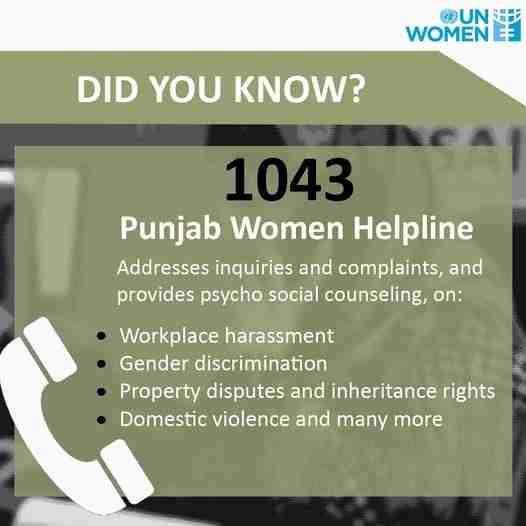
What Is the Punjab Women Helpline Number 1043 and How Does It Help?
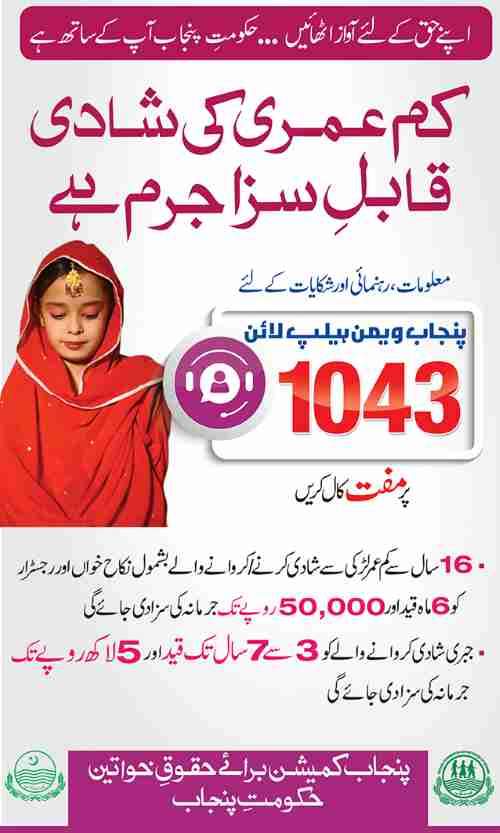
The Punjab Women Helpline (operated by the Punjab Commission on the Status of Women) is available 24/7 at 1043, offering free legal advice, psychosocial counseling, and support for women facing gender-based violence, discrimination, and workplace harassment. This helpline is one of its kind in Pakistan and provides 24/7 legal advice and addresses complaints and inquiries of women in Punjab. Thousands of women have reached out for assistance with harassment issues and incidents of violence and torture, receiving legal guidance and referral services.
What happens when you call 1043 for harassment report online assistance:
- Trained operators document your complaint details.
- Legal advisors provide guidance on your rights under Pakistani law.
- The helpline coordinates with relevant authorities including NCCIA for cyber cases.
- Counseling support is available for emotional distress.
- Follow-up calls are made to ensure your complaint is addressed.
Can a Minor File a Cybercrime Complaint Independently in Pakistan?
Yes, a minor can file a complaint, but it is typically filed by a parent or guardian on their behalf. The NCCIA and other helplines have procedures to handle cases involving minors with utmost sensitivity and confidentiality.
Process for minor harassment report online:
- A parent or legal guardian must accompany the minor to the CCRC for verification.
- The guardian provides their CNIC along with the minor’s B-Form.
- The complaint describes the harassment and identifies the minor as the victim.
- The NCCIA takes extra precautions to protect the minor’s identity throughout the investigation.
- Special protocols are followed for cases involving child sexual abuse material.
How to Report Workplace Harassment to FOSPAH in Pakistan?
You can report workplace harassment to the Federal Ombudsperson Secretariat for Protection Against Harassment (FOSPAH) by calling their helpline at 03444 367 367, emailing complaints@fospah.gov.pk, or filing an online complaint via their website. FOSPAH operates under the Protection Against Harassment at Workplace Act, ensuring legal remedies for victims of workplace harassment.
FOSPAH complaint process for workplace harassment report online:
- Submit your complaint through any of the available channels.
- FOSPAH reviews the complaint for jurisdiction and merit.
- The secretariat may conduct an inquiry into the allegations.
- Legal action can be taken against the harasser and employer if found liable.
- FOSPAH has regional offices for nationwide coverage.
What Is the 1099 Human Rights Helpline and How Can It Help with Harassment?
The 1099 helpline, run by the Ministry of Human Rights, is a nationwide toll-free number for reporting all forms of human rights violations, including violence against women and harassment. When you call 1099, trained operators document your complaint and connect you with appropriate legal and support services.
Services available through 1099 helpline:
- 24/7 toll-free access to human rights support.
- Documentation of human rights violations including harassment.
- Referral to specialized agencies like NCCIA for cyber cases.
- Legal guidance on human rights protections under Pakistani law.
- Follow-up on complaint status and resolution.
Is There a Helpline for Transgender Individuals Facing Online Harassment?
Yes, the Digital Rights Foundation’s helpline (0800-39393) explicitly caters to transgender individuals and other vulnerable groups, providing specialized, confidential support for online harassment cases. The helpline is designed to be safe and accessible for all gender identities and expressions.
Support available for transgender individuals:
- Gender-sensitive legal advice from trained professionals.
- Confidential counseling without judgment.
- Assistance with filing harassment report online with NCCIA.
- Digital security guidance to protect online presence.
- Referral to transgender-friendly legal and medical resources.
What Support Does the Citizens-Police Liaison Committee (CPLC) Offer?
The Citizens-Police Liaison Committee (CPLC) in Karachi operates a women’s complaint cell for reporting harassment and other issues, providing an alternative channel for victims who may be hesitant to approach regular police stations. The CPLC can be contacted at 021-35662222 or 021-35682222.
CPLC services for harassment report online:
- Women’s complaint cell with female staff members.
- Assistance in filing complaints against police inaction.
- Liaison with NCCIA for cyber harassment cases.
- Follow-up on complaint progress with relevant authorities.
- Free and accessible service for Karachi residents.
After You File: What to Expect from the NCCIA
Understanding what happens after you file your harassment report online helps you manage expectations and follow up effectively with the NCCIA.
How to Track the Status of Your Online Harassment Report?
You can track the status of your complaint using the unique tracking number provided after your submission by logging into the NCCIA complaint portal or by calling the 1799 helpline. Regular tracking ensures you are aware of any updates or additional requirements.
Status tracking methods for cyber crime online complaint Pakistan:
| Method | Instructions |
|---|---|
| Online tracking | Log into complaint.nccia.gov.pk and enter your tracking number |
| Helpline tracking | Call 1799 and provide your tracking number to the representative |
| SMS updates | The NCCIA sends automated SMS updates to your registered number |
| Email updates | Check your email for status notifications |
| In-person inquiry | Visit the CCRC where you filed your complaint |
How Long Does the NCCIA Take to Act on a Complaint?
The response time varies based on the urgency and complexity of your case. Urgent cases, such as immediate threats of violence, child exploitation, or ongoing blackmail, may receive a response within 24 hours. Standard cases may take several weeks for initial review and investigation.
Estimated timelines for harassment report online cases:
- Urgent cases (immediate threat): Response within 24 hours.
- Standard cases: Initial acknowledgment within 48 hours.
- Case review and verification: 1 to 2 weeks.
- Formal investigation launch: 2 to 4 weeks.
- Case resolution: Varies significantly based on complexity.
What Happens After I Submit My Online Complaint?
After you submit your online complaint, the NCCIA follows a structured process from acknowledgment through potential resolution, ensuring your case receives proper attention at each stage.
Complete post-submission process for cyber crime online complaint Pakistan:
Acknowledgment stage: You receive an automated acknowledgment with your unique tracking number via SMS and email within minutes of submission.
Review stage: An NCCIA officer reviews your complaint and evidence for completeness. The officer may contact you for additional information if anything is missing or unclear.
Verification stage: You are contacted to visit the nearest CCRC for in-person verification. During this visit, you provide your formal statement and original documents for verification.
Investigation stage: If a crime is established, a formal investigation is launched. An FIR may be registered at this point. The investigating officer collects additional evidence, contacts the platform for data, and attempts to identify and locate the perpetrator.
Legal action stage: Based on investigation findings, the NCCIA may arrest the perpetrator, block content, freeze accounts, or refer the case for prosecution in court.
Resolution stage: The case is closed with appropriate legal action taken or, if insufficient evidence exists, the case may be closed with explanation.
Can I Report a Hacker Who Has Taken Over My Social Media Account?
Yes, account hacking is a clear violation of PECA Section 20 (Unauthorized access). You should immediately file a complaint with the NCCIA, providing evidence of the unauthorized access and the hacker’s activities on your account.
Steps for hacked account harassment report online:
- Document all evidence of the hack including the date and time you lost access.
- Capture screenshots of any posts or messages the hacker sent from your account.
- Report the hack to the platform (Instagram, Facebook, etc.) immediately.
- File your NCCIA complaint with all collected evidence.
- The NCCIA can request platform data to trace the hacker’s IP address and identity.
Do I Need a Lawyer to File a Cybercrime Complaint?
No, you do not need a lawyer to file the initial complaint with the NCCIA. The process is designed for citizens to file directly without legal representation. However, if your case goes to court for prosecution, you may choose to hire a lawyer for legal representation.
When you might need a lawyer for cyber crime online complaint Pakistan:
- The case proceeds to criminal trial in court.
- You wish to file a civil lawsuit for damages in addition to criminal charges.
- The case involves complex legal issues or multiple jurisdictions.
- You need assistance responding to legal notices or court summons.
How to Protect Your Digital Privacy During an NCCIA Investigation?
Protecting your digital privacy during an NCCIA investigation requires careful attention to your online behavior and communication with the agency. The NCCIA and support helplines are bound by confidentiality, but maintaining your own digital hygiene is essential.
Digital privacy protection guidelines for harassment report online:
- Use a secure, private internet connection when communicating with the NCCIA.
- Avoid discussing your case details on unsecured platforms like public Wi-Fi.
- Use strong, unique passwords for all your online accounts.
- Enable two-factor authentication on social media and email accounts.
- Do not share your complaint tracking number with anyone outside the NCCIA.
- Be cautious of anyone claiming to be from NCCIA contacting you via unofficial channels.
Alternative Reporting Channels and Escalation Avenues
If you face difficulties with the primary NCCIA channels, several alternative reporting options and escalation avenues are available.
How to File an Online Complaint with the CM Punjab for Harassment Issues?
You can file a complaint with the Chief Minister’s Complaint Cell in Punjab through their online portal (cmcomplaint.punjab.gov.pk), their mobile app, or by calling their toll-free helpline at 0800-02345. This channel is typically used for escalating unresolved complaints against government departments, including issues related to law enforcement response.
CM Punjab complaint process for harassment report online:
- Visit cmcomplaint.punjab.gov.pk or download the Punjab CM Complaint Cell app.
- Register your complaint with details of the harassment and any previous NCCIA complaint.
- The CM Complaint Cell coordinates with relevant departments to ensure resolution.
- Track your complaint status through the portal or helpline.
What Is the CM Punjab Complaint Cell Contact Number?
While the primary helpline is 0800-02345, the CM Complaint Cell system is available through multiple channels including a mobile app, website, and toll-free calling. The service is used to escalate unresolved complaints against government departments, including issues related to law enforcement inaction on harassment cases.
CM Punjab Complaint Cell contact options:
| Channel | Contact Information |
|---|---|
| Toll-free helpline | 0800-02345 (24/7) |
| Online portal | cmcomplaint.punjab.gov.pk |
| Mobile app | Punjab CM Complaint Cell (Android and iOS) |
| info@cm.punjab.gov.pk |
Is There a Cyber Crime Online Complaint Portal Specific to Punjab Province?
The NCCIA is a federal agency and handles all cyber crimes across Pakistan, including Punjab. There is no separate cyber crime portal specific to Punjab province. While the CM Punjab cell can address administrative lapses, the official channel for cyber harassment remains the NCCIA.
Federal vs. provincial jurisdiction for cyber crime online complaint Pakistan:
- NCCIA (federal): Exclusive authority over all cyber crime investigations nationwide.
- CM Punjab Complaint Cell (provincial): Addresses complaints against government departments, including police inaction.
- Punjab Women Helpline (provincial): Provides support and referral services, not direct cyber crime investigation.
How to File a Female Harassment Complaint Online in Lahore or Punjab?
For online harassment, the NCCIA portal (complaint.nccia.gov.pk) is the correct channel regardless of your location in Punjab. For other forms of harassment, the Punjab Women Helpline (1043) is a key resource. You can also file a complaint with the local police via their online system or in person, but cyber cases should go to NCCIA.
Lahore-specific harassment report online options:
- NCCIA portal (complaint.nccia.gov.pk) for all cyber harassment.
- Lahore CCRC (042-99268527) for in-person verification.
- Punjab Women Helpline (1043) for support and guidance.
- Online Women Police Station (1815) for domestic and gender-based violence.
What Is the Role of the Digital Rights Foundation (DRF) in Supporting Victims?
The Digital Rights Foundation’s Cyber Harassment Helpline (0800-39393) provides free, confidential, and holistic support services including legal advice, digital security guidance, and psycho-social counseling. The DRF helps victims navigate the formal complaint process with the NCCIA and other authorities.
DRF services for harassment report online:
- Legal advice on your rights under PECA and other laws.
- Guidance on evidence collection and preservation.
- Assistance in drafting your written complaint.
- Referral to pro-bono legal representation if needed.
- Emotional and psychological support during the legal process.
- Digital security training to prevent future harassment.
How to Report Harassment from Rural Areas with No NCCIA Office?
Even if you live in a rural area with no physical NCCIA office, you can still file your complaint online via the NCCIA portal or by calling 1799. The helpline can guide you on the necessary steps and may arrange for remote verification if travel to a CCRC is not feasible.
Rural area reporting solutions for cyber crime online complaint Pakistan:
- File your complete complaint online at complaint.nccia.gov.pk.
- Call 1799 for guidance on evidence collection.
- The NCCIA may accept digital verification for remote cases.
- DRF helpline (0800-39393) provides additional support for rural victims.
- You may need to travel to the nearest CCRC for formal verification.
What Is the 8787 IG Khuli Kachehri Helpline for Police Complaints?
The IG Khuli Kachehri helpline (8787) is a Punjab police complaint cell accessible via SMS, email, and phone that can be used to file complaints against police officers for inaction or misconduct regarding your harassment case. This is an escalation channel, not a direct reporting channel for cyber crime.
When to use 8787 for harassment report online issues:
- Your NCCIA complaint is not being addressed in a timely manner.
- Local police have refused to take your complaint or assist with NCCIA referral.
- You have experienced misconduct from law enforcement related to your harassment case.
Mental Health Impact of Online Harassment and Available Support
Online harassment can have devastating psychological effects, including anxiety, depression, post-traumatic stress disorder (PTSD), and even suicidal ideation. Recognizing these impacts and seeking appropriate mental health support is as important as filing a harassment report online. The psychological trauma of persistent digital abuse can affect sleep patterns, appetite, concentration, and overall quality of life.
Common Psychological Effects of Cyber Harassment
Victims of online harassment frequently experience a range of mental health symptoms that require professional attention. Understanding these effects helps validate your experience and encourages seeking appropriate care.
Psychological impacts reported by harassment victims:
- Chronic anxiety and hypervigilance when using digital devices.
- Depression characterized by persistent sadness, loss of interest, and social withdrawal.
- Sleep disturbances including insomnia or nightmares related to the harassment.
- Difficulty concentrating on work, studies, or daily responsibilities.
- Low self-esteem and negative self-perception.
- Social isolation and fear of public interaction.
- Post-traumatic stress symptoms including flashbacks and avoidance behaviors.
Where to Access Mental Health Support for Harassment Victims
Several organizations in Pakistan provide free or low-cost mental health support specifically for harassment victims. The Digital Rights Foundation helpline (0800-39393) offers psycho-social counseling as part of its services. Additionally, the Punjab Women Helpline (1043) can connect victims with counseling resources.
Mental health support resources for harassment report online victims:
- Digital Rights Foundation Helpline (0800-39393): Psycho-social counseling available 9 AM to 5 PM daily.
- Punjab Women Helpline (1043): Can provide referral to counseling services.
- University psychology departments: Many offer low-cost community counseling.
- Private psychologists: Some offer sliding scale fees based on income.
Self-Care Strategies While Pursuing a Harassment Report Online
While pursuing legal action through NCCIA channels, maintaining your mental well-being is crucial. Implement self-care strategies to manage stress and preserve your emotional health throughout the complaint process.
Self-care guidelines for harassment victims:
- Limit exposure to the harasser’s content by blocking or muting accounts after evidence capture.
- Take regular breaks from social media and digital devices.
- Practice grounding techniques when feeling overwhelmed.
- Maintain connection with trusted friends and family members.
- Consider joining support groups for harassment survivors.
- Prioritize sleep, nutrition, and physical activity.
Frequently Asked Questions (FAQs)
Will my family be notified if I file a harassment report?
The NCCIA and other helplines treat complaints with strict confidentiality. Your family will not be notified unless you choose to involve them or if you are a minor, in which case a parent or guardian may need to be involved in the verification process.
Can I file an anonymous cyber crime complaint in Pakistan?
No, the NCCIA does not accept anonymous reports. You must provide your valid CNIC and contact information to file a formal complaint. This requirement ensures accountability and prevents false complaints.
What is the punishment for fake news under PECA and how is it related to harassment?
The PECA 2025 amendments criminalize the intentional dissemination of false information to create fear or unrest, with penalties of up to three years imprisonment and Rs2 million fine. While this is a distinct offense from personal harassment, if fake news is used as a tool to harass or defame an individual, it can be reported as harassment under Section 26-A.
Is there a time limit for filing an online harassment complaint in Pakistan?
There is no strict statute of limitations for reporting most cybercrimes, but it is always best to report the incident as soon as possible while the evidence is fresh and easily accessible. Delayed reporting may make evidence collection more difficult.
Can I file a cyber crime complaint on behalf of someone else?
Yes, a family member, guardian, or legal representative can file a complaint on behalf of a victim who is a minor or is otherwise unable to do so themselves. The representative must provide their own CNIC along with the victim’s identification.
What should I do if the NCCIA is not responding to my complaint?
If you have not received a response within a reasonable timeframe, you can call the 1799 helpline to inquire about your case status, escalate the matter through the CM Punjab Complaint Cell (0800-02345), or seek legal advice from organizations like the DRF (0800-39393).
What is the role of the National Commission on the Status of Women (NCSW)?
The NCSW deals with policies and complaints regarding women’s rights at the federal level. They can provide guidance and advocacy but are not an investigation agency like the NCCIA. The NCSW has launched a multi-channel Gender-Based Violence complaint system including an online portal.
What is the Online Women Police Station helpline 1815?
The Online Women Police Station, established by Islamabad Police, operates a dedicated helpline (1815) for women to report domestic abuse, gender-based violence, and other crimes without physically visiting a police station. The service includes video calling and online chat capabilities.
How common is cyber harassment in Pakistan?
Cybercrime incidents in Pakistan have surged significantly, with 142,272 complaints recorded in a recent year. Online harassment, blackmail, and threats are becoming more common, especially for women and young girls. The Digital Rights Foundation helpline has received over 20,000 complaints of technology-facilitated gender-based violence since its launch.
What are the long-term consequences of online harassment for victims?
Long-term consequences can include chronic mental health conditions such as anxiety disorders, depression, and PTSD. Victims may also experience career disruption, social isolation, financial loss (in blackmail cases), and diminished quality of life. Seeking both legal recourse and mental health support is essential for recovery.
Disclaimer
This guide provides general information about filing harassment reports in Pakistan and does not constitute legal or medical advice. Laws and procedures may change; always verify current information with official NCCIA channels and consult qualified professionals for legal or mental health concerns.

Add a Comment