
The CM Punjab Free Bone Marrow Transplant Program is a fully government-funded healthcare initiative that provides life-saving bone marrow transplants completely free of cost to low-income and underprivileged residents across Punjab, Pakistan. This program, officially known as the Chief Minister’s Special Initiative for Transplant Program (CMSITP), represents the most comprehensive transplantation initiative in Pakistan’s history, covering five major transplant procedures including bone marrow, liver, kidney, cornea, and cochlear implants for children.
What you will learn from this guide:
- Complete list of hospitals offering free bone marrow transplants under the CM Punjab program
- Step-by-step registration process through PHOTA and eligibility requirements
- Success rates, costs covered, and how to apply for the CM Punjab Transplant Card
Key Takeaways
- Over 1,944 Transplants Completed: The program has successfully performed 1,944 transplant procedures, including 40 bone marrow transplants, 311 liver transplants, and 960 kidney transplants, all provided completely free of charge.
- Success Rate Exceeds 89%: Children’s Hospital Lahore, the first public institution in Pakistan to perform bone marrow transplants, has achieved a success rate exceeding 89%, matching international standards.
- PHOTA Registration Is Mandatory: Every patient must register with the Punjab Human Organ Transplantation Authority (PHOTA) to access free transplant services, ensuring ethical and legal compliance.
- Completely Free Treatment: The government covers all costs including surgery, hospital stay, donor evaluation, and one year of post-transplant immunosuppressant medications, with each bone marrow transplant costing over Rs. 4.2 million.
- 24/7 Helpline Available: Citizens can call the toll-free helpline at 0800-09009 anytime for guidance on eligibility, required documents, and finding the nearest empaneled hospital.
- Read More: CM Punjab Children Heart Surgery Program (1Million/Patient)
- Read More: CM Punjab Apni Chhat Mehfooz Chhat Program (10 Lakh Loan)
CM Punjab Free Bone Marrow Transplant Program (Hospitals List)
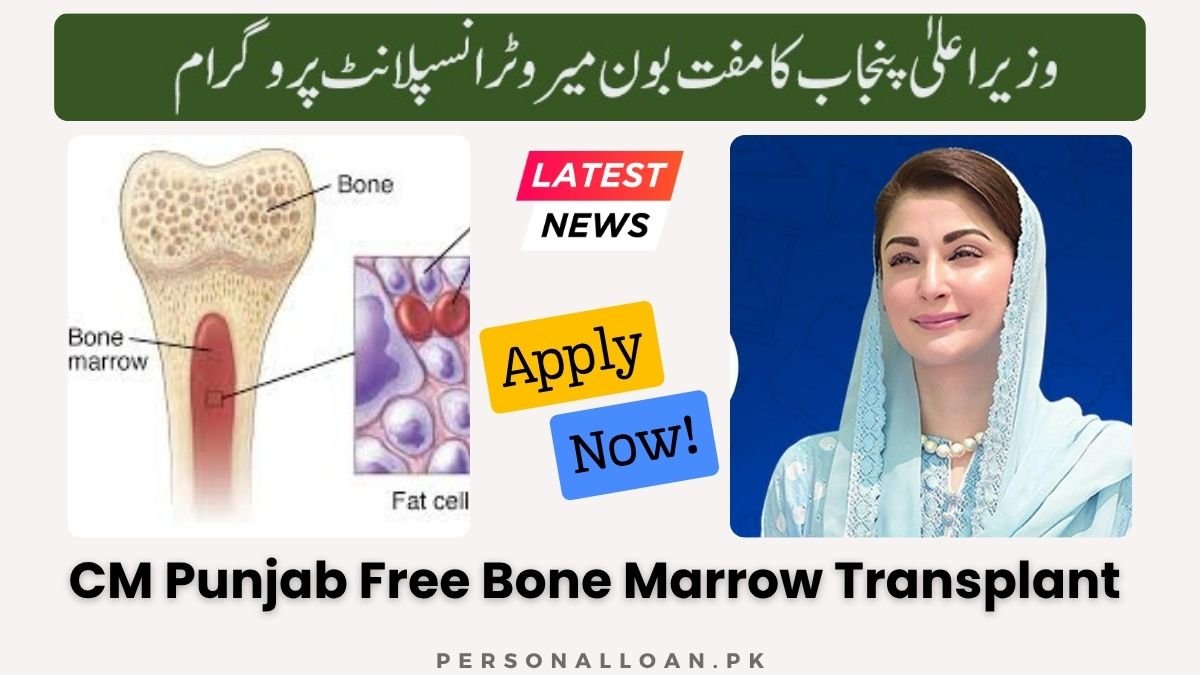
Table of Contents
1. What Is the CM Punjab Free Bone Marrow Transplant Program and Why Was It Launch
The CM Punjab Free Bone Marrow Transplant Program is a fully government-funded healthcare initiative launched under the leadership of Chief Minister Maryam Nawaz Sharif that provides free bone marrow transplants to low-income and underprivileged residents across Punjab. This program is officially part of the Chief Minister’s Special Initiative for Transplant Program (CMSITP). Launched in February, the initiative represents the most comprehensive transplantation program in Pakistan’s history, covering five major transplant procedures: kidney, liver, bone marrow, cornea, and cochlear implants for children born with hearing impairments.
1.1 Why did the Punjab government launch this free transplant initiative?
The Punjab government launched this initiative because organ transplants, particularly bone marrow transplants, are prohibitively expensive for ordinary Pakistani families. Organ transplants in Pakistan typically cost between Rs. 1 to 2 million, a price beyond the reach of most families. Before this program, countless patients suffering from life-threatening blood disorders like leukemia, thalassemia, and aplastic anemia died because they could not afford treatment. The government recognized that healthcare is a fundamental right and that no citizen should die because of financial constraints. Chief Minister Maryam Nawaz Sharif stated during the launch that no resident of Punjab should be denied medical care due to financial hardship, a promise that defines the program’s vision.
1.2 What makes the CM Punjab Transplant Program different from previous health schemes?
Previous healthcare schemes often provided partial coverage or required patients to navigate complex reimbursement processes. This program eliminates those barriers entirely by offering completely cashless treatment. When a patient is registered and approved, the government pays the hospital directly for all covered services. The patient never sees a bill, never submits a reimbursement claim, and never faces the stress of arranging funds for life-saving surgery.
Another distinguishing feature is the program’s comprehensive scope. Rather than focusing on a single procedure, it covers five distinct types of transplants, addressing a wide range of medical conditions from kidney failure to congenital deafness. This breadth reflects a sophisticated understanding of the province’s healthcare needs and a commitment to serving patients across multiple disease categories.
1.3 Who launched the CM Punjab Free Bone Marrow Transplant Program and when?
Chief Minister Maryam Nawaz Sharif launched the Chief Minister Punjab Transplant Program. The provincial health minister formally announced that the Chief Minister’s Special Initiative for Transplant Programme would commence, providing free treatment to patients suffering from life-threatening illnesses. The initiative was termed the most comprehensive transplant program in Pakistan’s history.
1.4 How does the CM Punjab Transplant Program address the growing demand for bone marrow transplants?
The program addresses growing demand by establishing specialized centers and partnering with both public and private hospitals. Lahore’s Children’s Hospital has become Pakistan’s first public institution to conduct bone marrow transplants, successfully performing 150 operations within a year. However, demand continues to outpace available facilities. Official data shows that 1,944 transplant procedures have been completed under the program, including 40 bone marrow transplants, but many patients still face lengthy waiting periods.
1.5 What is the official name and administrative structure of the program?
The official name is the Chief Minister’s Special Initiative for Transplant Program (CMSITP). The program operates under the administrative umbrella of the Punjab Health Initiative Management Company (PHIMC), which handles financial management, hospital empanelment, and quality monitoring. Clinical services are delivered through a network of accredited public and private hospitals that have met stringent infrastructure and expertise requirements. The Punjab Human Organ Transplantation Authority (PHOTA) provides essential regulatory oversight, ensuring every transplant conducted under the program adheres to the highest ethical and legal standards.
1.6 How many transplants have been completed under this program so far?
Official figures show that 1,944 transplant procedures have been completed under the CM transplant program. These include 311 liver transplants, 960 kidney transplants, 601 cochlear implant procedures, 40 bone marrow transplants, and 40 corneal transplants. Earlier data indicated 2,001 registered patients with 1,574 successful transplant procedures completed. The numbers continue to grow as the program expands.
1.7 What is the total budget and expenditure for this transplant initiative?
According to official documents, around Rs. 2.5 billion was initially earmarked for the transplant initiative. However, the total cost of procedures carried out under the program has already crossed Rs. 4.87 billion, underlining the high expense involved in advanced organ replacement treatment. Each liver transplant costs approximately Rs. 6.5 million, while each bone marrow transplant exceeds Rs. 4.2 million.
1.8 Which Chief Minister of Punjab has the free transplant program?
Chief Minister Maryam Nawaz Sharif launched and oversees the free transplant program. She has been personally involved in reviewing the program’s progress and has announced additional initiatives such as the Bone Marrow Transplant Card to further facilitate treatment for patients.
2. Complete Hospitals List for CM Punjab Free Bone Marrow Transplant Program
The CM Punjab Transplant Program collaborates with several government and private hospitals across Punjab equipped with expert surgeons, modern equipment, and proper facilities to handle transplants safely. Major participating hospitals include institutions in Lahore, Rawalpindi, Faisalabad, Multan, and other large cities of Punjab.
2.1 Which hospital in Lahore performs bone marrow transplants under this program?
Bone marrow transplant cases are largely being managed at the Children’s Hospital Lahore. Lahore Children’s Hospital has become the first public institution in Pakistan to conduct bone marrow transplants, successfully performing 150 operations within a year. The hospital’s bone marrow transplant success rate exceeds 89%, aligning with international standards. The hospital serves patients not only from Punjab but also from Khyber Pakhtunkhwa, Balochistan, and even Afghanistan.
2.2 What other hospitals in Lahore participate in the transplant program?
Kidney transplant services are available at Jinnah Hospital and Lahore General Hospital. Lahore General Hospital is a major participating institution. The Pakistan Kidney and Liver Institute (PKLI) performs most liver and kidney transplant surgeries in Lahore. Several private hospitals are also participating in the program. Bahria International Hospital in Lahore is a fully approved CM Punjab Transplant Program panel member.
2.3 What hospitals in Rawalpindi participate in the program?
The Combined Military Hospital (CMH) Rawalpindi has a dedicated Armed Forces Bone Marrow Transplant Centre. Bahria International Hospital in Rawalpindi is also a panel member of the CM Punjab Transplant Program. These institutions provide transplant services to eligible patients under the government initiative.
2.4 What hospitals in Faisalabad and other cities participate?
Mujahid Hospital in Faisalabad is listed as a participating private hospital. Bahawalpur Victoria Hospital is a public hospital in Bahawalpur that participates in the program. The program continues to expand its network across Punjab, with hospitals in Multan and other large cities being added.
2.5 How does the hospital empanelment process work?
A hospital must meet strict criteria to participate in the CM Punjab Transplant Program. These include holding a PHOTA license for solid organ transplantation and having a dedicated transplant unit with appropriate infrastructure. PHIMC handles hospital empanelment and quality monitoring. The public-private partnership model leverages existing infrastructure and expertise, significantly expanding capacity without requiring the government to build new facilities from scratch.
2.6 Where can I find the official and updated CM Punjab Transplant Program hospital list?
The official and updated hospital list can be obtained by:
- Calling the toll-free helpline at 0800-09009
- Contacting PHIMC via email at info@phimc.punjab.gov.pk
- Visiting the official PHIMC portal
- Checking with PHOTA for the latest empaneled hospitals
2.7 Which hospital is best for bone marrow transplant in Pakistan under this program?
Children’s Hospital Lahore is considered the premier public facility for bone marrow transplants under the CM Punjab program. It is Pakistan’s first public institution to perform bone marrow transplants and has achieved a success rate exceeding 89%, matching international standards. The hospital has performed 150 successful bone marrow transplants. PKLI has also performed bone marrow transplants. The best hospital depends on the patient’s specific condition, age, and medical requirements.
3. CM Punjab Free Bone Marrow Transplant Program – Complete Registration Process
Registration with PHOTA is mandatory for all patients seeking to benefit from the CM Punjab Transplant Program. The registration process is designed to be accessible while ensuring ethical and legal compliance.
3.1 How to register for the CM Punjab Transplant Program online?
To register for the program:
- Visit the official PHIMC portal
- Create an account by filling out basic information including name, CNIC, contact details, and health history
- Upload required medical documents, including diagnostic reports confirming organ failure
- Submit the form and receive confirmation through email or SMS
3.2 What is the PHOTA registration process for bone marrow transplant?
The registration process always begins at a PHOTA-approved hospital, never directly with the authority. The steps include:
- Step 1: First visit to a paneled hospital for initial consultation
- Step 2: Complete medical workup for both recipient and donor
- Step 3: Hospital submits the case to PHOTA for review
- Step 4: PHOTA evaluates the case for ethical and legal compliance
- Step 5: Upon approval, transplant is scheduled
3.3 What documents are required for CM Punjab Transplant Program registration?
Required documents include:
- Computerized National Identity Card (CNIC)
- Domicile certificate proving Punjab residency
- Complete medical diagnostic reports confirming end-stage organ failure
- Income proof to establish financial eligibility
- Donor documents if a living donor is involved
- Recent passport-sized photographs
3.4 What is the CM Punjab Transplant Program online registration helpline?
A toll-free helpline 0800-09009 has been made functional for organ transplantation assistance. Citizens can call anytime for guidance on eligibility, required documents, and finding the nearest empaneled hospital. An additional helpline number has also been set up.
3.5 Where can I download the PHOTA application form PDF?
The PHOTA application form can be downloaded from the official PHOTA website. Forms and checklists are available in both hard and soft copies. For transplant patient registration, the process begins at a paneled hospital where the hospital provides the necessary forms.
3.6 How long does the CM Punjab Transplant Program registration and approval take?
Patients often spend months waiting for appointments, assessments, and formal approval before surgery can take place. The timeline varies depending on:
- Completeness of documentation
- Medical evaluation complexity
- Availability of donor
- PHOTA review queue
- Hospital capacity
3.7 What happens after PHOTA registration is complete?
After successful verification, the program locates a transplant center and arranges the surgery date. Transplant-related expenses are paid directly to hospitals by the State Life Insurance Corporation under the government-backed health financing mechanism. Patients receive one year of free immunosuppressant medications following the transplant.
4. Eligibility Criteria – Who Can Receive Free Bone Marrow Transplant?
The CM Punjab Transplant Program has specific eligibility criteria to ensure that the most deserving patients benefit from this initiative.
4.1 Who is eligible for the CM Punjab free bone marrow transplant?
Eligible patients must meet the following criteria:
- Residency: Must be a permanent resident of Punjab
- Medical condition: Diagnosed with end-stage organ failure requiring transplant
- Financial status: Low-income and underprivileged residents
- Registration: Must be registered with PHOTA
4.2 What is the age limit for bone marrow transplant under this program?
The program generally accepts patients aged 18 to 60 years. However, the program specifically covers cochlear implants for young children born deaf, and children are a major focus of the bone marrow transplant initiative. Pediatric bone marrow transplants are performed at Children’s Hospital Lahore.
4.3 What medical conditions qualify for free bone marrow transplant?
Bone marrow transplants are provided for patients with:
- Blood cancer (leukemia)
- Thalassemia
- Aplastic anemia
- Lymphoma
- Other severe blood disorders
- Immune deficiencies
4.4 Are patients from other provinces eligible for the CM Punjab program?
The program is primarily for permanent residents of Punjab. However, patients from Sindh, Balochistan, and other provinces have received treatment at Children’s Hospital Lahore. Children not only from KP and other provinces but also from Afghanistan are among those who have undergone free bone marrow transplantation. Punjab’s hospitals are providing treatment to people from other provinces.
4.5 What is the financial eligibility criteria for the program?
The program targets low-income and underprivileged residents who cannot afford expensive medical procedures. Financial eligibility is assessed during the registration process. Patients approved under the program pay zero rupees for surgery, hospital stay, donor evaluation, and one year of immunosuppressants. The government bears costs up to millions of rupees per patient.
4.6 Can patients with prior transplants apply again?
The program is designed for first-time transplants for patients with end-stage organ failure. Patients with failed previous transplants may be considered on a case-by-case basis depending on medical evaluation and program capacity.
5. Understanding Bone Marrow Transplant – What You Need to Know
A bone marrow transplant (BMT) is a complex medical procedure that replaces damaged or diseased bone marrow with healthy stem cells. Understanding the procedure helps patients and families make informed decisions.
5.1 What is a bone marrow transplant and how does it work?
A bone marrow transplant is a procedure that infuses healthy blood-forming stem cells into the body to replace damaged or diseased bone marrow. The bone marrow is the spongy tissue inside bones where blood cells are produced. When bone marrow is damaged by disease, infection, or chemotherapy, it cannot produce enough healthy blood cells. A transplant introduces healthy stem cells that travel to the bone marrow and begin producing new, healthy blood cells.
5.2 What are the different types of bone marrow transplants?
There are two main types of bone marrow transplants:
- Autologous transplant: Uses the patient’s own stem cells, collected before treatment
- Allogeneic transplant: Uses stem cells from a donor (family member or unrelated matched donor)
5.3 What happens to a person if they donate bone marrow?
Bone marrow donation is generally safe. Donors undergo a procedure where stem cells are collected either through a surgical procedure or peripheral blood stem cell collection. Donors may experience temporary discomfort, fatigue, or bone pain but typically recover fully within a few weeks. The body replaces the donated cells within 4-6 weeks.
5.4 Does bone marrow grow back after a transplant?
Yes, bone marrow grows back after a transplant. For donors, the body regenerates the donated cells within 4-6 weeks. For recipients, the transplanted stem cells engraft in the bone marrow and begin producing new blood cells. The process of engraftment typically takes 2-4 weeks.
5.5 What foods help bone marrow production?
Foods that support bone marrow health and blood cell production include:
- Iron-rich foods (spinach, red meat, legumes)
- Vitamin B12 sources (eggs, dairy, fish)
- Folate-rich foods (leafy greens, citrus fruits)
- Protein-rich foods (chicken, fish, beans)
- Vitamin C sources (citrus fruits, bell peppers) for iron absorption
5.6 What is the age limit for bone marrow donors?
Bone marrow donors typically need to be between 18 and 60 years old, though some registries accept donors up to age 60. Donors must be in good general health and free from certain medical conditions. The program prioritizes family donors when possible.
5.7 How much chemo do you need before a bone marrow transplant?
Patients typically receive conditioning chemotherapy or radiation therapy 5-10 days before the transplant. This treatment:
- Destroys diseased bone marrow cells
- Suppresses the immune system to prevent rejection
- Creates space in the bone marrow for new cells
5.8 What happens 100 days after a bone marrow transplant?
Day 100 post-transplant is a significant milestone. By this time:
- Engraftment should be confirmed
- The new immune system begins functioning
- Risk of complications decreases
- Patients transition from intensive monitoring to regular follow-up
- Quality of life typically improves significantly
5.9 How many times can a bone marrow transplant be done?
A bone marrow transplant can sometimes be performed more than once if the first transplant fails or the disease recurs. However, repeat transplants carry higher risks and are more complex. Each case is evaluated individually by the medical team.
5.10 How many bone marrow transplants are successful?
Under the CM Punjab program, Children’s Hospital Lahore has achieved a success rate exceeding 89%, aligning with international standards. Success rates vary depending on:
- Patient’s age and overall health
- Type and stage of disease
- Donor match quality
- Post-transplant care quality
- Presence of complications
5.11 What is the hardest transplant to recover from?
Bone marrow transplants are among the most challenging transplants to recover from due to:
- Intensive conditioning chemotherapy/radiation beforehand
- Risk of graft-versus-host disease (GVHD)
- Prolonged immune suppression
- Extended hospitalization (typically 4-6 weeks)
- Long recovery period (6-12 months or more)
- Need for strict infection prevention measures
6. Bone Marrow Transplant Success Rate, Risks, and Survival
Understanding the success rates, risks, and survival outcomes helps patients and families prepare for the transplant journey.
6.1 Is bone marrow transplant 100% successful?
No transplant is 100% successful. Success depends on multiple factors including the patient’s condition, donor match, and post-transplant care. Under the CM Punjab program, Children’s Hospital Lahore has achieved a success rate exceeding 89%. While this is excellent by international standards, patients should understand that there are always risks involved.
6.2 How long can you survive after a bone marrow transplant?
Many patients survive long-term after a successful bone marrow transplant. Survival outcomes depend on:
- Underlying disease
- Age at transplant
- Donor match quality
- Complications during recovery
- Post-transplant care quality
With successful engraftment and proper follow-up care, many patients go on to live normal, healthy lives.
6.3 What is the quality of life after a bone marrow transplant?
Quality of life typically improves significantly after a successful bone marrow transplant. Patients who were suffering from severe blood disorders can:
- Return to normal activities
- No longer require frequent blood transfusions
- Have improved energy levels
- Live without the constant threat of their disease
However, recovery takes time. Patients typically need 6-12 months to fully recover and may require ongoing medical monitoring.
6.4 What are the risks of bone marrow transplant?
Risks of bone marrow transplant include:
- Graft-versus-host disease (GVHD) – donor cells attack recipient’s body
- Infections due to suppressed immune system
- Bleeding and anemia
- Organ damage from conditioning therapy
- Graft failure (transplanted cells don’t grow)
- Secondary cancers (rare)
- Infertility
6.5 How successful is bone marrow transplant for thalassemia?
Bone marrow transplant is the only curative treatment for thalassemia. Success rates for thalassemia patients are generally good, especially in younger patients and those with matched sibling donors. The CM Punjab program has performed bone marrow transplants for thalassemia patients.
6.6 How successful is bone marrow transplant for leukemia?
Bone marrow transplant offers the best chance of cure for many leukemia patients. Success depends on:
- Type of leukemia (acute vs. chronic)
- Stage at transplant (remission vs. active disease)
- Patient age
- Donor match
The program’s success rate exceeding 89% covers all conditions treated.
7. Bone Marrow Transplant Cost – How Much Does It Cost and Who Pays?
Understanding the costs associated with bone marrow transplant helps patients appreciate the value of this free program.
7.1 How much does a bone marrow transplant cost in Pakistan?
The estimated cost of bone marrow transplant surgery in Pakistan ranges from Rs. 1.5 million to Rs. 5 million. This includes:
- Surgery costs
- Hospital stay and supportive care
- Conditioning chemotherapy
- Laboratory tests
- Medications
Additional charges may apply for complications or extended hospital stays. The government covers costs exceeding PKR 4.2 million per procedure.
7.2 How much does a bone marrow transplant cost at CMH Rawalpindi?
The Armed Forces Bone Marrow Transplant Centre at CMH Rawalpindi provides transplant services. Under the CM Punjab program, eligible patients receive treatment completely free of cost, with the government covering all expenses. The specific cost at CMH Rawalpindi would be covered by the government financing mechanism.
7.3 Who pays for the bone marrow transplant under this program?
The Punjab government fully funds each bone marrow transplant. The government pays hospitals directly through the State Life Insurance Corporation under the government-backed health financing mechanism. Patients pay absolutely nothing – no surgery costs, no hospital stay costs, no donor evaluation costs, and no medication costs for one year post-transplant.
7.4 How much does the government spend per bone marrow transplant?
The Punjab government is covering over PKR 4.2 million per bone marrow transplant procedure. This is in addition to the costs of pre-transplant evaluation, conditioning therapy, and one year of post-transplant immunosuppressant medications.
7.5 How does the cost compare to liver and kidney transplants?
- Liver transplant: Approximately Rs. 6.5 million per procedure
- Kidney transplant: Covered under the program, exact cost varies
- Bone marrow transplant: Exceeds Rs. 4.2 million per procedure
- Cochlear implant: Covered under the program
7.6 Is the CM Punjab transplant program completely free for patients?
Yes, the program is completely free for eligible patients. Approved patients pay:
- Zero rupees for surgery
- Zero rupees for hospital stay
- Zero rupees for donor evaluation
- Zero rupees for one year of immunosuppressants
The patient never sees a bill, never submits a reimbursement claim, and never faces the stress of arranging funds.
8. CM Punjab Transplant Card – Your Gateway to Free Treatment
The Bone Marrow Transplant Card is a revolutionary initiative announced by Chief Minister Maryam Nawaz Sharif to further facilitate patients.
8.1 What is the CM Punjab Transplant Card?
The Bone Marrow Transplant Card is a special card announced by Chief Minister Maryam Nawaz Sharif to facilitate free treatment for patients. The card will relieve parents from the financial burden of treatment costs. “Every child is more precious to me than my own. After getting the card, the parents of ailing children will be free from expenses,” the CM stated.
8.2 When will the CM Punjab Transplant Card be launched?
Chief Minister Maryam Nawaz announced the imminent launch of the bone marrow transplant card. The card is expected to be rolled out soon to further streamline access to free treatment.
8.3 How does the CM Punjab Transplant Card work?
The transplant card will allow patients to access free treatment without going through lengthy approval processes each time. Card holders will be able to receive treatment at empaneled hospitals without worrying about payments. The card represents a commitment that “There will be no compromise on children’s health, and we will allocate all necessary resources.”
8.4 How many transplants have been performed through the Transplant Card system?
For the first time in Punjab, 800 kidney transplants and 200 bone marrow transplants were conducted through a transplant card system. The card system has significantly expanded access to transplant services.
8.5 Who can get the CM Punjab Transplant Card?
The card is primarily for children suffering from bone marrow diseases. Eligibility is based on:
- Medical need for bone marrow transplant
- Punjab residency
- Financial eligibility (low-income status)
- Registration with PHOTA
9. PHOTA – The Regulatory Authority Behind the Program
The Punjab Human Organ Transplantation Authority (PHOTA) plays a crucial role in ensuring ethical and legal transplant practices.
9.1 What is PHOTA and what does it do?
PHOTA is the Punjab Human Organ Transplantation Authority, established under the Punjab Transplantation of Human Organs and Tissues (Amendment) Act, 2012. PHOTA ensures that organ transplantation in the province is performed within well-defined ethical and legal frameworks. The authority monitors transplants and enforces standards for recognized medical institutions and hospitals.
9.2 Why is PHOTA registration mandatory for the transplant program?
PHOTA registration is mandatory to:
- Ensure ethical compliance and prevent organ trafficking
- Verify that transplants meet legal standards
- Maintain a registry of end-stage organ failure patients
- Investigate any breach of the Transplantation Act
- Ensure quality treatment and care
9.3 What is the PHOTA Act 2012?
The Punjab Transplantation of Human Organs and Tissues (Amendment) Act, 2012 established PHOTA. Key provisions include:
- Illegal kidney transplantation (excluding blood relationship) is an offence punishable with 10 years of imprisonment and a fine of up to Rs. 10 million
- PHOTA can monitor transplants and enforce standards
- PHOTA can investigate allegations of any breach of the Act
9.4 Where is the PHOTA office and how to contact them?
PHOTA’s official website is phota.punjab.gov.pk. The authority is headquartered in Lahore. Contact can be made through:
- Official website
- Helpline numbers
- Empaneled hospitals (first point of contact for patients)
9.5 Can I register as an organ donor with PHOTA?
Yes, citizens wishing to contribute can register as donors by filling out a form or visiting the PHOTA website. PHOTA maintains a registry of donors and coordinates with transplant centers. PHOTA offers donor registration, facilitates family consent, and operates dedicated Organ Procurement Cells (OPCs) to enable legal and ethical organ retrieval.
10. Islamic and Ethical Perspectives on Bone Marrow Transplant
Understanding the religious and ethical dimensions of transplantation is important for many Pakistani families.
10.1 Is bone marrow transplant allowed in Islam?
Yes, bone marrow transplant is generally considered permissible in Islam. Islamic scholars have issued fatwas permitting organ and tissue transplantation when it saves a life, provided certain conditions are met:
- The procedure must be necessary to save life
- Consent must be obtained
- No harm should come to the donor
- The procedure must not involve prohibited substances
10.2 Is transplant surgery haram?
Organ transplant surgery is not haram when performed to save a life under proper ethical guidelines. The PHOTA Act 2012 provides the legal framework to ensure transplants are conducted ethically and legally. The program operates under strict Islamic and ethical guidelines.
10.3 Is it risky to donate bone marrow in Islam?
Bone marrow donation is considered a noble act of saving a life in Islam. Medical evidence shows donation is safe, with donors recovering fully within weeks. The Islamic principle of saving one life being equivalent to saving all of humanity supports organ donation.
10.4 What are the ethical guidelines for transplantation under this program?
Ethical guidelines include:
- Strict prohibition of organ trafficking
- Mandatory PHOTA registration for all transplants
- Consent requirements
- No financial transactions for organs
- Priority for medically urgent cases
- Fair and transparent selection process
11. Common Questions and Answers About the CM Punjab Free Bone Marrow Transplant Program
This section addresses frequently asked questions to provide quick answers for patients and families.
11.1 Which hospital is best for bone marrow transplant in Pakistan?
Children’s Hospital Lahore is widely considered the best public facility, with a success rate exceeding 89%. It is Pakistan’s first public institution to perform bone marrow transplants.
11.2 Which Chief Minister of Punjab has the free transplant program?
Chief Minister Maryam Nawaz Sharif launched this program.
11.3 Is bone marrow transplant 100% successful?
No transplant is 100% successful. The program’s success rate exceeds 89%, which is excellent by international standards.
11.4 How much does a bone marrow transplant cost in PKR?
Costs range from Rs. 1.5 million to Rs. 5 million. The government covers costs exceeding Rs. 4.2 million.
11.5 Who is the best doctor for bone marrow transplant?
The program works with leading hematologists and transplant specialists at empaneled hospitals. Patients are referred to appropriate specialists based on their condition.
11.6 Is bone marrow transplant allowed in Islam?
Yes, it is generally considered permissible when performed to save a life with proper consent and ethical guidelines.
11.7 Is it risky to donate bone marrow?
Donation is generally safe with temporary side effects. Donors recover fully within weeks.
11.8 Is transplant surgery haram?
No, when performed to save a life under ethical guidelines.
11.9 What happens to a person if they donate bone marrow?
Donors experience temporary discomfort but recover fully. The body replaces donated cells within 4-6 weeks.
11.10 Can I live without my bone marrow?
No, bone marrow is essential for producing blood cells. A transplant replaces diseased marrow with healthy cells.
11.11 What happens 100 days after a bone marrow transplant?
Engraftment is confirmed, immune function begins恢复, and patients transition to regular follow-up.
11.12 What foods help bone marrow production?
Iron-rich foods, vitamin B12, folate, protein, and vitamin C support bone marrow health.
11.13 What is the age limit for bone marrow donors?
Typically 18-60 years.
11.14 What are the risks of bone marrow transplant?
Risks include GVHD, infections, bleeding, graft failure, and organ damage.
11.15 How long can you survive after a bone marrow transplant?
Many patients survive long-term with good quality of life.
11.16 What is the quality of life after a bone marrow transplant?
Quality of life typically improves significantly, with recovery taking 6-12 months.
11.17 Does bone marrow grow back after a transplant?
Yes, the body regenerates bone marrow cells.
11.18 How many times can a bone marrow transplant be done?
Sometimes more than once if needed, but each case is evaluated individually.
11.19 How many bone marrow transplants are successful?
The program’s success rate exceeds 89%.
11.20 What is the hardest transplant to recover from?
Bone marrow transplants are among the most challenging due to conditioning therapy, GVHD risk, and prolonged recovery.
11.21 How much chemo do you need before a bone marrow transplant?
5-10 days of conditioning therapy is typically required.
11.22 How to apply for CM Punjab Transplant Program?
Register with PHOTA through a paneled hospital or the PHIMC portal.
11.23 What is the CM Punjab Transplant Program hospital list?
Hospitals include Children’s Hospital Lahore, PKLI, Jinnah Hospital, Lahore General Hospital, CMH Rawalpindi, Bahria International Hospitals, and others across Punjab.
11.24 What is the CM Punjab Transplant Card?
A special card announced by CM Maryam Nawaz to facilitate free bone marrow transplant treatment.
11.25 What is free bone marrow transplant in Pakistan?
A government-funded program providing no-cost bone marrow transplants to eligible patients.
11.26 What is the Chief Minister Transplant Program?
The CMSITP covers liver, kidney, bone marrow, cornea, and cochlear implants free of cost.
11.27 What is the PHOTA registration form?
The form required for registration with PHOTA, available at phota.punjab.gov.pk.
11.28 What is the PHOTA Act 2012?
The law establishing PHOTA to regulate organ transplants in Punjab.
12. Challenges, Future Plans, and How to Get Help
12.1 What are the current challenges facing the CM Punjab Transplant Program?
Despite its success, the program faces challenges including:
- Limited transplant facilities struggling to keep pace with growing demand
- Patients waiting months for appointments and approval
- Only a small number of hospitals equipped to perform transplants
- Funding concerns – major CM health initiatives received limited allocations
12.2 What are the future expansion plans for the program?
Future plans include:
- Establishment of a Bone Marrow Transplant Center and state-of-the-art trauma center modeled after European standards
- Setup of a specialized children’s hospital and cardiology hospital in Lahore
- Construction of a 1,000-bed children’s hospital
- Expansion of the hospital network across Punjab
12.3 How to contact the CM Punjab Transplant Program for help?
Patients can seek help through:
- Toll-free helpline: 0800-09009 (24/7 assistance)
- Email: info@phimc.punjab.gov.pk
- Website: PHIMC official portal
- PHOTA website: phota.punjab.gov.pk
12.4 How to stay updated on the latest program developments?
To stay updated:
- Follow official Punjab government announcements
- Check the PHIMC and PHOTA websites regularly
- Call the helpline for the latest information
- Visit empaneled hospitals for program updates
13. Summary and Key Takeaways
The CM Punjab Free Bone Marrow Transplant Program represents a historic commitment to providing life-saving healthcare to those who cannot afford it.
13.1 What are the most important things to know about this program?
- Completely free: All costs covered by the Punjab government
- PHOTA registration mandatory: Every patient must register with PHOTA
- Leading hospital: Children’s Hospital Lahore is the primary BMT center with 89%+ success rate
- Multiple procedures covered: Bone marrow, liver, kidney, cornea, and cochlear implants
- Helpline available: Call 0800-09009 for assistance
13.2 What should patients do to access this program?
- Visit a PHOTA-approved hospital for initial consultation
- Complete medical workup and documentation
- Register with PHOTA through the hospital
- Await approval and scheduling
- Receive treatment completely free of cost
13.3 Why is this program a game-changer for Pakistan’s healthcare?
This program removes the financial barriers that have historically prevented low-income families from accessing organ transplantation. It transforms what was once a privilege of the wealthy into a right for every deserving citizen. With over 1,944 transplants completed and growing, the program is saving lives that would otherwise be lost.
13.4 What is the vision behind the CM Punjab Transplant Program?
Chief Minister Maryam Nawaz Sharif’s vision is clear: “Free treatment is the right of every patient, and the state will fulfil its duty.” The program ensures that no patient is deprived of essential treatment due to financial constraints. It represents “a message of new hope and a new vision, aimed at improving the healthcare standards of Punjab’s citizens.”
Disclaimer: This article is for informational purposes only and does not constitute medical advice. Patients should consult with qualified healthcare professionals and verify program details through official government channels. Program details, hospital lists, and eligibility criteria may change over time. Always confirm current information through official sources.
Frequently Asked Questions
1. Which hospital is best for bone marrow transplant in Pakistan?
Children’s Hospital Lahore is considered the premier public facility, being Pakistan’s first public institution to perform bone marrow transplants with a success rate exceeding 89%, matching international standards.
2. How much does a bone marrow transplant cost under the CM Punjab program?
The program covers all costs completely. Each bone marrow transplant costs over Rs. 4.2 million, which is fully borne by the Punjab government. Patients pay nothing for surgery, hospital stay, donor evaluation, or post-transplant medications.
3. Who is eligible for the free bone marrow transplant program?
Permanent residents of Punjab diagnosed with conditions like leukemia, thalassemia, or aplastic anemia who meet the low-income criteria and register with PHOTA are eligible for the program.
4. How do I apply for the CM Punjab Transplant Program?
Visit a PHOTA-approved hospital for initial consultation, complete medical workup, register with PHOTA through the hospital, and await approval. You can also call the helpline 0800-09009 for guidance.
5. What is the CM Punjab Transplant Card?
The Bone Marrow Transplant Card is a special card announced by CM Maryam Nawaz to facilitate free treatment, relieving families from financial burdens. The card system has already facilitated 200 bone marrow transplants.
6. Is bone marrow transplant allowed in Islam?
Yes, bone marrow transplant is generally considered permissible in Islam when performed to save a life with proper consent and ethical guidelines, provided no harm comes to the donor.
7. What are the risks of bone marrow transplant?
Risks include graft-versus-host disease (GVHD), infections, bleeding, graft failure, organ damage from conditioning therapy, and in rare cases, secondary cancers. The program’s success rate exceeds 89%.

Add a Comment