
The cost of a 50kg bag of DAP (Di-Ammonium Phosphate) has crossed Rs.14,600 across all major brands in Pakistan as of mid-April 2026, putting immense pressure on wheat, rice, and sugarcane farmers preparing for the Kharif season. Understanding the exact price per brand, the reasons behind the surge, and the subsidy mechanisms available can save you thousands of rupees per acre.
This comprehensive guide provides up-to-the-market pricing for FFC Sona, Engro, Sarsabz, Fatima, and imported DAP, along with city-wise variations, government subsidy details, and a clear forecast of whether prices will drop in the coming months.
Key Takeaways
- Record High Prices Continue: A single 50kg Sona DAP bag now costs Rs.14,740–14,800, which is 15–18% higher than the same period last year.
- Subsidies Can Cut Costs by Rs.500–1,000: The Punjab Kisan Card provides Rs.500 per bag, and other targeted programs offer up to Rs.1,000 per bag for small farmers.
- Global Factors Dominate Local Rates: International phosphate prices, the USD/PKR exchange rate, and Middle East supply disruptions directly dictate what you pay at the dealer.
- Prices Vary by City – Up to Rs.500 Difference: Multan and Faisalabad often have lower prices than Karachi, Peshawar, or remote districts due to freight and competition.
- A 5–7% Price Drop Is Likely by June 2026: Global DAP prices are forecast to decline approximately 8%, which should reduce local retail rates if the rupee stabilizes.
- Boron-Enriched DAP Costs More but Pays Off: Sona Boron DAP is priced Rs.500–600 higher (Rs.15,250–15,300) but can increase wheat yields by 10–15% in boron-deficient soils.
- Read More: Canola Seed Price in Pakistan (2kg, 5kg, 40kg) – All Variants
- Read More: Pumpkin Seed Price In Pakistan (Per Kg) – Uses & Benefits
- Read More: Bitter Gourd Karela – Price, Uses, & Benefits
- Read More: Epsom Salt Price In Pakistan (Per Kg) – Uses & Benefits
DAP Price In Pakistan (DAP 50KG) – FFC, Sona, Engro DAP
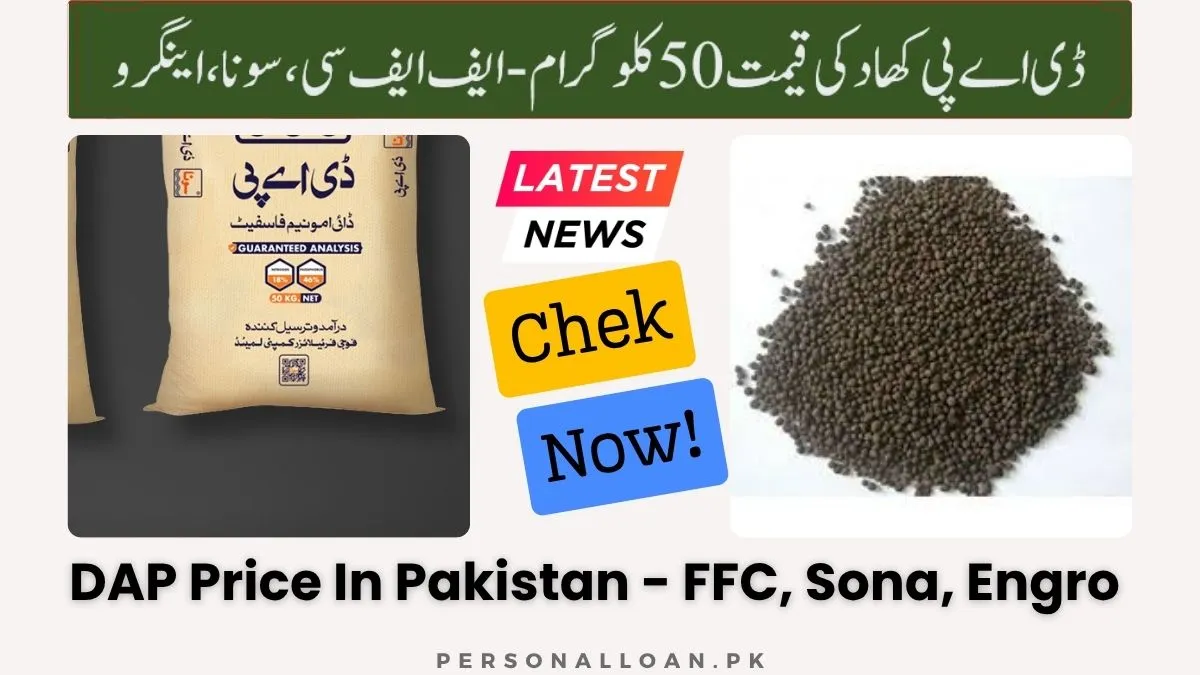
Table of Contents
Current Market Prices for DAP 50kg by Brand
What is the exact price of Sona DAP (FFC) for a 50kg bag today?
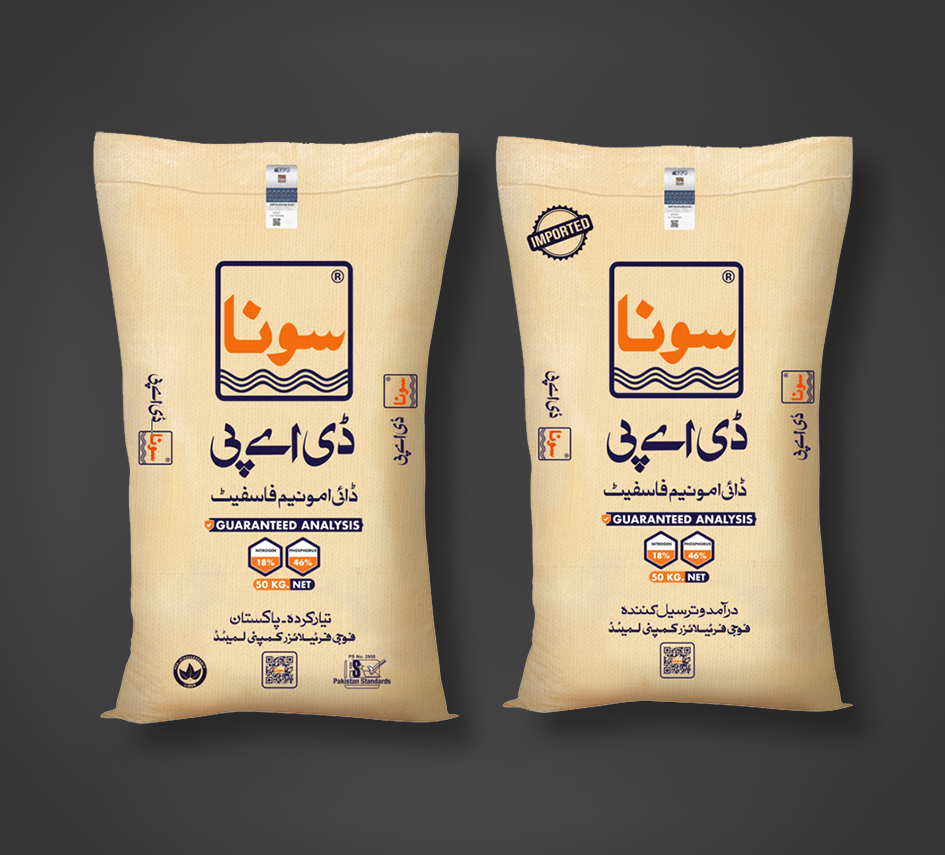
Sona DAP from Fauji Fertilizer Company currently sells for Rs.14,740 to Rs.14,800 per 50kg bag in the open market, while the government’s recommended retail price (RRP) is Rs.14,633 – a figure rarely honored by dealers.
Why Sona DAP costs more than competitors:
- FFC operates the largest rural distribution network, ensuring availability even in remote villages
- The brand has built decades of trust for consistent nutrient content (exactly 18% N and 46% P2O5)
- Dealers earn higher margins on Sona, giving them incentive to stock and promote it
- Farmers perceive lower risk of adulteration compared to lesser-known brands
Regional pricing for Sona DAP (50kg):
- Central Punjab (Lahore, Multan, Faisalabad): Rs.14,700–14,780
- Southern Punjab (Rahim Yar Khan, Bahawalpur): Rs.14,720–14,800
- Sindh (Karachi, Hyderabad, Sukkur): Rs.14,800–14,950
- Khyber Pakhtunkhwa (Peshawar, Mardan, Abbottabad): Rs.14,800–14,900
- Balochistan (Quetta, Sibi): Rs.14,900–15,100
Kisan Card impact on effective price: Registered Kisan Card holders in Punjab receive a direct Rs.500 per bag subsidy, bringing their net payment down to Rs.14,240–14,300 – the lowest achievable price for Sona DAP.
How much does Engro DAP 50kg cost right now?
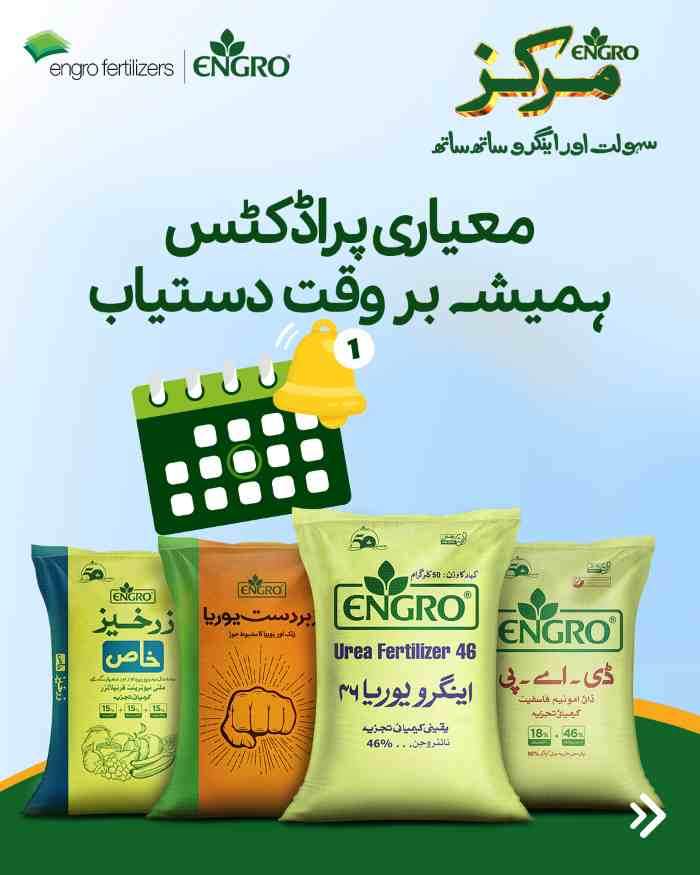
Engro DAP is priced at Rs.14,650 to Rs.14,750 per 50kg bag, making it Rs.50–100 cheaper than Sona DAP while offering identical NP ratios.
Engro DAP bulk purchase discounts:
- Single bag retail: Rs.14,650–14,750
- Purchase of 5–10 bags: Rs.14,600–14,700 per bag
- Purchase of 50+ bags (farm gate delivery): Rs.14,500–14,600 per bag plus a 2% cash discount (approximately Rs.290 per bag)
Comparing Engro DAP with other Engro fertilizers:
- Engro Urea: Rs.4,436 per 50kg bag
- Engro Zingro (zinc-fortified urea): Rs.4,800–4,900 per bag
- Engro NP (20:20 blend): Rs.9,200–9,500 per bag
Which crops suit Engro DAP best? Rice farmers in Sindh and southern Punjab prefer Engro DAP because it dissolves more readily in flooded field conditions. For dry-sown wheat or maize, both Engro and Sona perform identically.
What is the current price of Sarsabz DAP 50kg?
Sarsabz DAP sells for Rs.14,600 to Rs.14,680 per 50kg bag, making it the most affordable locally manufactured DAP brand in Pakistan.
Sarsabz DAP price by region:
- Central Punjab: Rs.14,600–14,650
- Sindh (rural districts): Rs.14,650–14,700
- Khyber Pakhtunkhwa: Rs.14,680–14,750
Who makes Sarsabz DAP? Sarsabz is the fertilizer brand of Fatima Fertilizer Company, which has rapidly expanded market share by offering competitive pricing and aggressive dealer incentives.
Does lower price mean lower quality? Extensive field trials across Punjab show no measurable difference in crop yield between Sarsabz DAP and premium brands. The Rs.100–200 price difference reflects branding and distribution margins, not nutrient quality.
What is the price of Fatima Fertilizer DAP 50kg?
Fatima DAP is priced identically to Sarsabz at Rs.14,600–14,700 per 50kg bag, as Fatima is the parent company of the Sarsabz brand.
Key features of Fatima DAP:
- Same 18:46 NP ratio as all standard DAP
- Available through Fatima’s expanding network of retail outlets
- Often bundled with Fatima’s certified seeds and pesticides
How much does 7 Star DAP cost in Pakistan?
7 Star DAP – an imported brand typically sourced from China or Russia – retails for Rs.14,500 to Rs.14,600 per 50kg bag, making it the cheapest DAP option on the market.
Risks of buying 7 Star DAP:
- Inconsistent nutrient content (some batches test below 16% P2O5 instead of the claimed 18%)
- Higher risk of adulteration or mixing with lower-grade phosphate rock
- No local manufacturer warranty or quality guarantee
- Difficult to return or claim compensation for poor product
When does imported DAP make sense? Only for farmers who have access to soil testing labs and can verify nutrient content before purchase. For most smallholders, the Rs.500–700 savings do not justify the quality risk.
What is Barkat DAP price in Pakistan?
Barkat DAP, another imported option, sells for Rs.14,550 to Rs.14,650 per 50kg bag, positioning it between 7 Star and Sarsabz in both price and perceived quality.
Price comparison table – All DAP brands (50kg bag):
| Brand | Price Range (PKR) | Source | Quality Consistency |
|---|---|---|---|
| 7 Star DAP | 14,500–14,600 | Imported (China/Russia) | Poor to variable |
| Barkat DAP | 14,550–14,650 | Imported | Variable |
| Sarsabz DAP | 14,600–14,680 | Local (Fatima) | Consistent |
| Fatima DAP | 14,600–14,700 | Local | Consistent |
| Engro DAP | 14,650–14,750 | Local | Highly consistent |
| Sona DAP (FFC) | 14,740–14,800 | Local | Highly consistent |
Specialized DAP Variants – Sona Boron DAP and Others
Is there a price difference between standard Sona DAP and Sona Boron DAP?
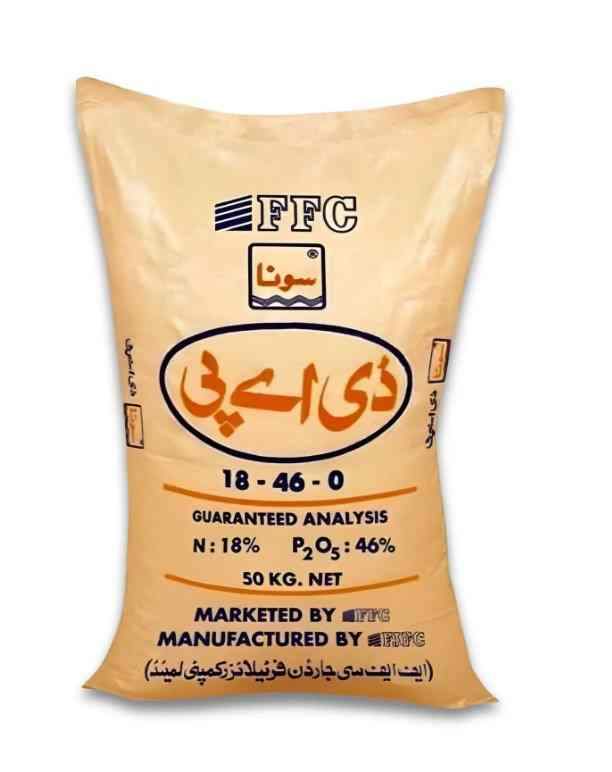
Yes. Sona Boron DAP, which includes the micronutrient boron, costs Rs.15,250 to Rs.15,300 per 50kg bag – a premium of Rs.500–600 over standard Sona DAP.
What agronomic benefit does boron provide that justifies this premium?
Boron is essential for:
- Pollen tube growth and successful seed set in wheat and rice
- Cell wall formation and sugar transport within the plant
- Preventing common deficiency symptoms: hollow stems, poor grain filling, cracked fruit, and reduced root growth
In boron-deficient soils – common in rainfed areas of Punjab (Chakwal, Attock, Jhelum) and parts of KP – applying boron-enriched DAP can increase wheat yields by 10–15% and rice yields by 8–12%. The Rs.600 premium is recovered through higher per-acre output.
Where can you find Sona Boron DAP?
- Major agricultural districts of Punjab (Sheikhupura, Gujranwala, Sialkot, Narowal)
- Rice-growing areas of Sindh (Badin, Thatta, Sujawal)
- Available primarily through larger FFC dealers and Model Farm Service Centers
Are there other boron-enriched DAP options?
- Engro does not currently offer a dedicated boron DAP variant
- Sarsabz has a limited-release boron-enhanced DAP in select districts (check with local dealers)
- A cheaper alternative: Mix standard DAP with separate boron fertilizer (borax) at a ratio of 10kg borax per 50kg DAP, costing approximately Rs.200–300 extra
Should you pay more for Sona Boron DAP? Only if a soil test confirms available boron below 0.5 ppm. For soils with adequate boron, or for crops like sugarcane that are less boron-responsive, the premium is wasted. A soil test costing Rs.500–1,000 can determine the right choice.
Why DAP Prices Are Rising – The Complete Analysis
What are the primary drivers of DAP price increases in Pakistan?
Three interconnected factors push DAP prices upward: rising international phosphate rock prices, a depreciating Pakistani Rupee against the US Dollar, and higher domestic fuel costs that increase production and transport expenses.
The three-factor model explained:
Factor 1: International DAP prices
- Pakistan imports approximately 40% of its DAP raw materials (phosphate rock, phosphoric acid) and finished DAP
- Global DAP prices increased 5.1% in March 2026 alone
- Gulf FOB DAP contracts rose $40 per ton (6%) from late February to April 2026
- Chinese DAP export prices reached $825–842 per ton FOB
- Egyptian DAP increased $32–35 per ton, reaching the high-$740s per ton FOB
Factor 2: USD/PKR exchange rate
- International DAP is priced in US Dollars ($640–730 per ton CFR)
- A 1 Rupee depreciation adds approximately Rs.50–70 per 50kg bag
- Example: If the exchange rate moves from Rs.300 to Rs.305 per USD (1.67% depreciation), a $700/ton DAP shipment costs an additional Rs.3,500 per ton, or Rs.175 per 50kg bag
Factor 3: Domestic logistics and fuel costs
- Diesel price increases directly affect transport from production facilities to villages
- The April 2026 fuel price adjustment added an estimated Rs.50–100 per bag to retail prices
- DAP manufacturing requires natural gas and electricity, both affected by fuel costs
How does the international market impact local DAP prices?
Global DAP price movements reach Pakistani farmers within 4–6 weeks through a predictable chain: international contract prices rise → importers pay more for raw materials → local manufacturers raise wholesale prices → dealers increase retail prices.
Recent international price movements:
- Global DAP prices increased 5.1% in March 2026 alone
- Gulf FOB DAP contracts rose $40 per ton (6%) from late February to April 2026
- Chinese DAP export prices reached $825–842 per ton FOB
- Egyptian DAP increased $32–35 per ton, reaching the high-$740s per ton FOB
The World Bank forecast: Global DAP prices are projected to decline approximately 8% as new production capacity comes online and supply pressures ease, though the market remains structurally tight.
What role does the USD to PKR exchange rate play?
The exchange rate is the second most important factor after international prices. Every 1 Rupee depreciation against the US Dollar increases DAP import cost by approximately Rs.50–70 per 50kg bag.
The exchange rate transmission mechanism:
- Importers purchase DAP or raw materials in US Dollars
- They convert PKR to USD at the prevailing exchange rate
- A weaker PKR means more Rupees per Dollar, raising landed costs
- Traders add approximately 14% for insurance, transport, and bagging
- The final cost is passed to farmers
Real-world example: In early 2025, the PKR was around Rs.280 per USD. Today it is near Rs.300. This 7% depreciation alone adds Rs.350–500 per DAP bag, regardless of international prices.
How do fuel costs affect DAP prices?
Diesel price increases have a direct and immediate impact because DAP must travel from production facilities (Karachi, Lahore, Multan) to every village in Pakistan.
Fuel cost impact breakdown:
- Production: DAP manufacturing requires natural gas and electricity – both prices rose after the April 2026 adjustment
- Transport: Trucks carry 500–1,000 bags per load; a Rs.10/liter diesel increase adds Rs.5–10 per bag
- Dealer delivery: Last-mile delivery from village dealer to farm adds another Rs.10–20 per bag
How do supply chain disruptions affect DAP availability and price?
Supply chain disruptions create artificial scarcity, which dealers exploit by raising prices Rs.200–500 above normal levels.
Recent disruption examples:
- Middle East tensions in March 2026 raised concerns about DAP availability, triggering preemptive buying
- Port congestion at Karachi can delay shipments by 2–3 weeks, creating local shortages
- Seasonal demand peaks (October–November for Rabi, April–May for Kharif) overwhelm logistics networks
- Rail freight bottlenecks between Karachi and Punjab can slow inland distribution
What was the DAP price last year compared to now?
In April 2025, Sona DAP cost Rs.12,500–12,800 per 50kg bag. Today, it is Rs.14,740–14,800 – a 15–18% year-on-year increase.
Historical price trajectory (Sona DAP, 50kg bag):
- 2021: Rs.5,650–7,500 (pre-surge baseline)
- 2022: Rs.12,000–12,500 (first major spike, driven by global post-pandemic chaos)
- 2023: Rs.12,600–13,200 (stabilization after a peak of Rs.15,500 in July)
- 2024: Rs.12,800–13,500 (gradual increase)
- 2025: Rs.12,500–13,800 (volatile year with summer dip and winter peak)
- 2026: Rs.14,600–15,100 (record highs as of April)
Key insight: DAP prices have more than doubled since 2021, while wheat support prices have increased only 30–40%. This ratio – how many maunds of wheat are needed to buy one DAP bag – has worsened from 5–6 maunds in 2021 to 13–14 maunds today.
Government Subsidies and Official Rates – What Farmers Need to Know
What is the official government rate for DAP fertilizer 50kg?
The government’s recommended retail price (RRP) for Sona DAP is Rs.14,633 per 50kg bag. However, this rate is rarely enforced, and open market prices range from Rs.14,740 to Rs.15,100.
Why the RRP is ignored by dealers:
- No legal mechanism exists to penalize dealers who charge above RRP
- Manufacturers provide “suggested” prices, not mandatory ones
- Dealers justify higher prices with credit risk, transport costs, and storage expenses
- Seasonal demand spikes allow dealers to charge what the market will bear
- Enforcement is weak, especially in remote districts
How much subsidy is available on DAP in Punjab?
For the 2026 cropping season, the Punjab government offers a flat subsidy of Rs.500 per bag on Sona DAP to registered farmers via the Kisan Card. Additional targeted subsidies of up to Rs.1,000 per bag are available for small farmers under specific programs.
Subsidy breakdown by program:
- Kisan Card (Punjab): Rs.500 per bag on DAP and urea (up to 10 bags per season)
- Wheat Support Program: Rs.3,000 per bag (limited to 12 acres, total Rs.36,000 maximum)
- Punjab Agriculture Department Subsidy 2026: 30% discount on DAP for registered farmers (equivalent to approximately Rs.4,400 per bag, but this is for select districts only)
- DAP Subsidy Scheme (Punjab): Rs.500–1,000 per bag depending on farmer category (small farmers get higher rates)
Subsidy registration requirement: Farmers must register through the provincial agriculture department or Kisan Card portal. Unregistered farmers pay full market price with no subsidy.
Can you get a DAP subsidy through the Kisan Card?
Yes. Kisan Card holders in Punjab can claim Rs.500 per bag subsidy on up to 10 bags of Sona or Engro DAP per season, with funds credited directly to the cardholder’s account – no middleman involvement.
Kisan Card subsidy claim process:
- Register for Kisan Card through the Punjab agriculture department (online or at designated centers)
- Purchase DAP from an authorized dealer at the full price
- Submit proof of purchase through the Kisan Card mobile app or dealer portal
- Receive Rs.500 per bag credit within 7–14 days directly to your linked account
Kisan Card coverage: The program targets small and medium farmers with landholdings up to 25 acres. Over 1.5 million farmers are expected to benefit in 2026.
What is the current tax (GST) on a 50kg bag of DAP?
DAP is taxed at a reduced GST rate of 5% (down from the standard 17%) to support agriculture. At current prices, this adds roughly Rs.700–750 per 50kg bag to the final retail price.
Tax breakdown on a Rs.14,800 Sona DAP bag:
- Product cost (excluding tax): Rs.14,095
- 5% GST: Rs.705
- Final retail price: Rs.14,800
Why GST matters for farmers: A return to the standard 17% GST rate would add another Rs.1,700 per bag, making DAP unaffordable for most smallholders. Agricultural lobby groups actively advocate for maintaining the reduced rate.
Why do dealers charge more than the recommended retail price?
Dealers cite high transportation costs, credit recovery risks, and artificial scarcity created by hoarding as reasons for charging Rs.200–500 above RRP.
Dealer cost and margin breakdown (per bag, estimated):
- Wholesale purchase price: Rs.13,800–14,000
- Transport from city to village: Rs.100–200
- Dealer margin (standard): Rs.200–300
- Credit risk premium (for sales on credit, repaid after harvest): Rs.100–200
- Storage and handling: Rs.50–100
- Total dealer cost: Rs.14,250–14,800
- Selling price to farmer: Rs.14,600–15,200
Hoarding as a price driver: During seasonal demand peaks, some dealers withhold stock to create artificial scarcity, then release it at inflated prices. This practice is illegal under the Punjab Agriculture Produce Markets Act but is difficult to enforce.
Is the government considering a DAP price cap for Kharif 2026?
The federal government has held negotiations with fertilizer producers and announced a price of Rs.11,250 per bag for DAP under a mega Kissan Package, though implementation details remain unclear.
What the announced package includes:
- Subsidized loans worth Rs.1,800 billion for farmers
- Negotiated DAP price of Rs.11,250 per bag (subject to verification – this is well below current market rates)
- Direct subsidy disbursement through BISP and Hari cards
Reality check for farmers: The Rs.11,250 price is significantly below current market rates (Rs.14,600–15,100). Farmers should verify implementation before relying on this rate. As of April 20, 2026, no official notification has been issued, and dealers continue to charge market rates.
Regional Price Variations Across Pakistan
Does DAP price vary by city within the same province?
Yes. DAP prices in major agricultural hubs like Multan and Faisalabad are typically Rs.100–200 lower per bag than in remote villages or large cities like Karachi due to freight costs and dealer competition.
City-wise DAP price comparison (Sona DAP, 50kg bag):
- Multan: Rs.14,700–14,750 (central hub with high dealer density)
- Faisalabad: Rs.14,720–14,770 (competitive market with many options)
- Lahore: Rs.14,740–14,800 (higher due to urban dealer margins and rent costs)
- Rahim Yar Khan: Rs.14,730–14,780 (moderate freight costs)
- Karachi: Rs.14,800–14,950 (highest due to port-to-farm transport and lower agricultural density)
- Hyderabad: Rs.14,780–14,850
- Sukkur: Rs.14,790–14,880
- Peshawar: Rs.14,800–14,900
- Quetta: Rs.14,900–15,100 (highest due to distance and security costs)
Why do rural villages pay more than cities?
- Village dealers often operate as monopolies or duopolies – no competitive pressure to lower prices
- Transport from city wholesalers adds Rs.50–100 per bag
- Credit sales (common in villages) add another Rs.100–200 per bag in implicit interest
- Dealers in remote areas have higher storage costs due to electricity for security
What is the current price of DAP in Peshawar and KP regions?
In Peshawar, Sona DAP is approximately Rs.14,800–14,900 per 50kg bag due to higher transportation costs from FFC’s production facilities (mostly in Punjab) and lower dealer competition compared to Punjab.
KP regional breakdown:
- Peshawar city: Rs.14,800–14,850
- Mardan: Rs.14,820–14,880
- Abbottabad: Rs.14,900–15,000 (mountain freight costs)
- Swat: Rs.14,950–15,050
- Dera Ismail Khan: Rs.14,850–14,950
Is DAP price higher in Sindh compared to Punjab?
Yes. Sindh’s DAP prices are often Rs.200–300 higher per bag than Punjab’s due to dealer monopolies, lower subsidy pass-through (the Kisan Card is Punjab-specific), and the fact that most DAP is produced in Punjab.
Sindh vs. Punjab price difference drivers:
- Weaker enforcement of recommended retail prices in Sindh
- Fewer farmers registered for subsidies (Sindh has its own programs, but they are less generous)
- Higher transport costs from Punjab-based warehouses
- Dealer cartels in districts like Ghotki, Sukkur, and Khairpur
- Lower overall agricultural density in parts of Sindh, leading to higher per-unit logistics costs
Why do remote districts experience extreme price spikes?
Remote districts face three compounding factors: limited dealer competition (often only 1–2 dealers for an entire tehsil), high transport costs (poor roads, long distances), and seasonal demand spikes that dealers exploit by raising prices Rs.300–500 above urban levels.
Examples of remote district price spikes:
- Tharparkar (Sindh): Sona DAP can reach Rs.15,200–15,400 during peak sowing – the highest in the country
- Chitral (KP): Prices exceed Rs.15,000 due to mountain transport costs and limited road access
- Zhob (Balochistan): Rs.15,100–15,300 with limited availability
- Rajanpur (Punjab): Rs.15,000–15,200 due to poor road infrastructure
How to Buy DAP at the Lowest Price – Practical Strategies
How can you check the latest FFC Sona DAP price online?
Check real-time DAP prices through official fertilizer company websites, agricultural apps, and dealer price transparency portals.
Online price verification methods:
- Fauji Fertilizer Company website (look for the “price transparency” or “dealer price” section)
- Kisan App (available for Android and iOS – free download)
- Zarat Ghar and Kissan Shop (aggregator platforms that list dealer prices)
- Provincial agriculture department portals (Punjab, Sindh, KP each have online price dashboards)
What to look for online:
- The official recommended retail price (RRP)
- Dealer-specific prices in your area (some platforms list by district)
- Any active subsidy programs you may qualify for
- Price trends over the past 30 days to identify seasonal patterns
Where can you buy DAP at the official company rate?
Only at designated “Model Farm Service Centers” operated by FFC or Engro. These centers are limited to 1–2 per district and offer company-controlled pricing that closely follows the RRP.
How to find a Model Farm Service Center:
- Check the fertilizer company’s website for a dealer locator tool
- Call the company helpline for the nearest authorized center
- Ask other farmers in your area who have purchased at company rates
- Visit the district agriculture office – they maintain a list of authorized centers
Limitations of Model Farm Service Centers:
- Purchase limits (5–10 bags per farmer) to prevent resale
- Require advance registration or Kisan Card
- May have limited stock during peak demand
- Often located in district headquarters, not villages
Are there discounts on bulk purchases of Engro DAP?
Yes. For purchases of 50+ bags, Engro offers a 2% cash discount (approximately Rs.290 per bag) through authorized distributors. Additional discounts may be available for cooperative or farmer organization purchases.
Bulk purchase discount tiers:
- 10–49 bags: 0.5–1% discount (ask the dealer specifically – not always advertised)
- 50–99 bags: 2% cash discount (standard Engro policy)
- 100+ bags: 2% cash discount plus free delivery to your farm gate
How to access bulk discounts:
- Form a farmer cooperative with 10–20 neighbors
- Collect orders and payment in advance
- Approach an authorized Engro distributor directly (not a village dealer)
- Negotiate the discount before confirming the purchase
How to avoid overpaying – red flags for dealer price gouging
Watch for these warning signs that a dealer is charging more than the fair market price.
Red flags to watch for:
- Price more than Rs.200 above the nearest city’s prevailing rate
- Refusal to provide a written receipt with price, quantity, and date
- Claims of “limited stock” or “last few bags” without evidence
- Pressure to pay cash (to avoid a payment trail)
- No price display board (required by law in many districts)
- Inconsistent pricing – different prices for different farmers
What to do if you suspect price gouging:
- Document the dealer’s name, location, and offered price
- Take a photo of the price display board (if present) or get a written quote
- Call the FFC or Engro helpline to report the dealer
- Report to the provincial agriculture department’s price monitoring cell
- Share the information with other farmers in your area to avoid the dealer
Can you buy DAP online in Pakistan?
Yes. Several platforms offer DAP delivery to your farm, though availability and delivery times vary by region.
Online DAP purchasing options:
- Zarat Ghar – Largest agricultural e-commerce platform with nationwide delivery
- Kissan Shop – Focus on rural delivery, often with better prices than local dealers
- Daraz (selected sellers) – Limited to major cities, buyer beware of counterfeit products
- Individual company portals (FFC, Engro, Fatima) – Some offer direct sales in pilot districts
Online purchase considerations:
- Delivery may take 3–7 days (not suitable for immediate sowing needs)
- Delivery fees add Rs.100–300 per bag for remote areas
- Verify seller authenticity by checking reviews and company authorization
- Online prices are often higher than local dealer prices (due to delivery costs)
- Returns are difficult or impossible for agricultural inputs
Agricultural Application – How Much DAP Per Crop and Why It Matters
How many bags of DAP are recommended per acre for wheat?
For wheat in Punjab and Sindh, the standard recommendation from agricultural extension departments is 1 bag (50kg) of DAP per acre at sowing time, applied as basal fertilizer before or at planting.
Wheat DAP application guide:
- Recommended rate: 50kg DAP per acre (provides 23kg P2O5 and 9kg N)
- Application timing: At sowing, placed 2–3 inches below and 2 inches to the side of the seed (avoid direct seed contact)
- Alternative if DAP is unaffordable: Use single super phosphate (SSP) at 100–125kg per acre, which costs less per kg of P2O5 but requires more labor to apply
Yield impact of reducing DAP:
- Reduce to 0.5 bag per acre: 15–20% yield loss
- Reduce to 0.25 bag per acre: 25–30% yield loss
- Apply no DAP: 40–50% yield loss
Yield impact of increasing DAP:
- Apply 1.5 bags per acre: 8–10% yield increase in phosphorus-deficient soils
- Apply 2 bags per acre: No additional benefit (phosphorus becomes locked in soil)
Is Sona DAP better than Engro DAP for rice crops?
For rice, Engro DAP has a slight edge due to better solubility in flooded conditions, but Sona DAP performs equally well in dry sowing (direct-seeded rice).
Comparative performance in rice:
- Flooded rice (transplanted into standing water): Engro DAP dissolves faster, making phosphorus available sooner
- Dry-sown rice (direct-seeded into dry soil): Both brands perform identically
- Sona Boron DAP: Significant advantage in boron-deficient rice soils (common in Sindh)
Farmer consensus: Both brands produce comparable yields when applied correctly. The choice often comes down to availability and dealer relationships rather than agronomic differences.
DAP usage for sugarcane – how many bags per acre?
Sugarcane requires 1.5 bags (75kg) of DAP per acre at planting, with an additional 0.5 bag (25kg) at first earthing up (2–3 months after planting).
Sugarcane DAP application schedule:
- At planting (February–March for autumn cane, September–October for spring cane): 1.5 bags per acre
- First earthing up (2–3 months after planting): 0.5 bag per acre
- Total per acre: 2 bags (100kg) DAP
Cost per acre for sugarcane DAP: At Rs.14,800 per bag, sugarcane DAP cost is Rs.29,600 per acre, representing 25–30% of total cultivation costs for sugarcane.
How to calculate DAP cost per acre based on current prices
Use this simple formula: (Recommended bags per acre) × (current DAP price per bag) = DAP cost per acre.
Examples at current prices (Sona DAP Rs.14,800/bag):
- Wheat (1 bag): Rs.14,800 per acre
- Rice (1 bag): Rs.14,800 per acre
- Maize (1 bag): Rs.14,800 per acre
- Cotton (0.5–1 bag): Rs.7,400–14,800 per acre
- Sugarcane (2 bags): Rs.29,600 per acre
What happens if you apply less than the recommended DAP?
Applying less than the recommended DAP reduces yields, delays crop maturity, and increases susceptibility to pests and diseases due to weaker root systems.
Yield reduction estimates (based on Punjab field trials):
- 0% DAP (none applied): 40–50% yield loss
- 25% of recommended (0.25 bag per acre): 25–30% yield loss
- 50% of recommended (0.5 bag per acre): 15–20% yield loss
- 75% of recommended (0.75 bag per acre): 8–12% yield loss
- 100% of recommended (1 bag per acre): Baseline yield
- 125% of recommended (1.25 bags per acre): 3–5% yield increase (only in deficient soils)
The economic trade-off: Reducing DAP saves money upfront but costs more in lost revenue at harvest. For wheat at current prices (Rs.14,800 per bag DAP, wheat at Rs.4,000 per maund), skipping DAP saves Rs.14,800 per acre but costs Rs.25,000–35,000 in lost yield (approximately 6–9 maunds of wheat).
Future Price Outlook – Should You Buy Now or Wait?
Are DAP prices expected to decrease in the next month?
Based on current futures, global phosphate prices, and the World Bank’s 8% decline forecast, analysts predict a 5–7% price reduction by June 2026 if the PKR stabilizes and monsoon demand is moderate.
Factors supporting a price drop:
- New global DAP production capacity coming online in 2026 (new plants in Saudi Arabia and Morocco)
- World Bank projection of 8% price decline for phosphate fertilizers
- Normalization of Middle East supply chains after early 2026 tensions
- End of Rabi season demand peak (demand drops significantly in May–June)
Factors that could delay or prevent the drop:
- Further PKR depreciation against USD (currently volatile)
- New supply disruptions from China (export restrictions) or Morocco (mine issues)
- Stronger-than-expected Kharif demand due to a good monsoon forecast
- Diesel price increases (fuel costs affect both production and transport)
Recommendation for farmers:
- If you need DAP for early May sowing (cotton, early rice): Buy now. Waiting risks missing the sowing window.
- If you can wait until late June (wheat stubble rice, maize): A 5–7% price reduction is likely, saving Rs.750–1,000 per bag.
What are the latest Urea and DAP price trends for the 2026 Kharif season?
Urea prices have remained flat while DAP has risen sharply, shifting farmers toward more nitrogen-heavy applications that may reduce yields in phosphorus-sensitive crops.
Comparative trend (October 2025 to April 2026):
- Urea: Stable at Rs.4,300–4,500 per bag (local production meets demand, less import dependence)
- DAP: Up 15–18% to Rs.14,600–15,100 per bag (import-dependent, global price surge)
- NPK blends: Up 8–10% (tracking DAP prices)
What this means for your farm:
- The DAP-urea price ratio has widened significantly (from 3:1 to nearly 3.5:1)
- There is an economic incentive to reduce DAP and increase urea
- However, reducing DAP below recommended levels will lower yields by 10–20%
- For phosphorus-deficient soils, DAP is not optional – it’s essential
How will the 2026 monsoon forecast affect DAP demand and pricing?
An above-normal monsoon forecast (expected for 2026) typically increases Kharif crop acreage, which increases DAP demand and can push prices higher by Rs.200–400 per bag in July–August.
Monsoon impact mechanism:
- Good monsoon → higher rice and cotton planting → higher DAP demand → upward price pressure
- Poor monsoon → reduced planting → lower DAP demand → potential price softening
- Timing matters: A delayed monsoon shifts demand later, concentrating purchases and potentially spiking prices
Will new imported DAP shipments in July 2026 lower local prices?
New shipments arriving in July 2026 could lower prices by Rs.300–500 per bag if international prices have declined as forecast, but the benefit may not reach farmers if importers maintain high margins.
Import dynamics to understand:
- Pakistan typically imports 40–50% of its DAP needs (roughly 500,000–600,000 tons annually)
- New shipments are priced at prevailing international rates (plus freight and exchange)
- If international prices drop 8%, local wholesale prices should follow within 4–6 weeks
- However, local dealers may delay passing on the reduction to maintain margins
Long-term price prediction – will DAP cross Rs.16,000 by December 2026?
Unlikely. The World Bank forecast of 8% price decline and increased global production capacity suggest prices will stabilize or moderately decline in the second half of 2026. However, prolonged PKR depreciation or a new Middle East conflict could push prices above Rs.16,000.
Long-term outlook (12–18 months):
- Best case: Rs.13,500–14,000 per bag (if PKR strengthens to Rs.280–290 and global prices fall)
- Base case: Rs.14,500–15,000 per bag (moderate decline from current levels, stable exchange rate)
- Worst case: Rs.16,000–17,000 per bag (PKR crisis to Rs.320+ or major supply disruption)
Final advice for farmers: Monitor the USD/PKR exchange rate weekly. If the rupee strengthens, buy. If it weakens further, buy immediately. The exchange rate is the most actionable leading indicator for DAP prices.
Frequently Asked Questions (FAQ)
What is the current price of Sona DAP 50kg in Pakistan today?
Sona DAP 50kg is currently retailing at Rs.14,740 to Rs.14,800 per bag, with a recommended retail price of Rs.14,633.
What is the price of Engro DAP 50kg in Pakistan today?
Engro DAP is priced at Rs.14,650 to Rs.14,750 per 50kg bag, slightly below Sona DAP.
What is Sarsabz DAP price in Pakistan today?
Sarsabz DAP costs Rs.14,600 to Rs.14,680 per 50kg bag, making it the most affordable local brand.
Why is Sona DAP more expensive than Engro?
Sona DAP commands a premium due to FFC’s brand strength, extensive rural distribution network, and higher dealer margins.
What is the subsidy on DAP per bag in Punjab?
The Kisan Card provides Rs.500 per bag subsidy on DAP for registered farmers, with additional programs offering up to Rs.1,000 per bag.
How does the USD to PKR rate affect DAP price?
A 1 Rupee depreciation against the USD adds approximately Rs.50–70 per 50kg bag to the final retail price.
Is DAP price expected to drop in June 2026?
Yes, analysts forecast a 5–7% price reduction by June 2026 based on global price trends and end of Rabi season demand.
What is the contact number for FFC price complaints?
FFC’s helpline for price complaints is 0800-33222 (toll-free) for Punjab and Sindh.
How many DAP bags per acre for wheat?
The standard recommendation is 1 bag (50kg) of DAP per acre for wheat at sowing time.
What is the price of Sona Boron DAP?
Sona Boron DAP costs Rs.15,250 to Rs.15,300 per 50kg bag, approximately Rs.500 higher than standard Sona DAP.
Which DAP brand is best for rice?
Engro DAP has slightly better solubility in flooded rice conditions, but Sona and Sarsabz perform equally well in dry-sown rice.
Can I get DAP subsidy through the Kisan Card?
Yes, Kisan Card holders in Punjab receive Rs.500 per bag subsidy on up to 10 bags of DAP per season.
What is the price of imported DAP vs. local DAP?
Imported Chinese DAP costs Rs.14,000–14,200 per bag but has lower phosphorus content (16%) compared to local DAP (18%).
Why do dealers charge above the recommended retail price?
Dealers cite transport costs, credit recovery risks, and artificial scarcity from hoarding as reasons for charging Rs.200–500 above RRP.
What is the price of 7 Star DAP in Pakistan?
7 Star DAP (imported) retails for Rs.14,500–14,600 per 50kg bag, the cheapest option available.
Disclaimer: The DAP prices provided in this article are market averages as of April 20, 2026. Actual prices may vary by city, dealer, and time of purchase. Always verify current rates with multiple sources before making a purchase decision. Subsidy programs are subject to government approval and may change without notice.

Add a Comment