
Childhood malnutrition remains one of Pakistan’s most pressing public health crises, with nearly half of all children in Punjab suffering from some form of undernutrition that permanently stunts their physical and cognitive development. The CM Punjab School Nutrition Program 2026 represents the province’s most ambitious response to this crisis—a comprehensive school-based feeding initiative that delivers free, nutritious meals to over 1.1 million students daily across thousands of government schools. This guide provides complete, up-to-date information on eligibility criteria, participating schools, the application process, program benefits, job opportunities, and everything else you need to know about this transformative initiative.
What you will learn from this guide:
- Complete eligibility criteria and the full list of districts covered under the program
- How the program operates, including the food items provided and the recycling initiative
- Step-by-step guidance on the application process and how to check school participation
- Program budget, funding details, employment opportunities, and measurable impact on education
Key Takeaways
- Largest School Feeding Initiative: The program currently provides nutritious meals to over 1.1 million students across 13 districts at a cost of Rs. 7 billion, with an additional Rs. 4 billion allocated for expansion.
- No Application Required: Students enrolled in eligible government schools are automatically covered—parents do not need to submit any individual applications or documentation.
- 28% Enrollment Surge: Since the program’s launch, student enrollment has increased by 28 percent, with 24,740 additional children now attending school.
- Innovative Recycling Model: Used milk packs are collected and recycled into furniture, notebooks, and pencils, with proceeds reinvested in school development.
- Expansion Roadmap: Phase-II currently covers 36 schools serving 14,100 students, with plans to include 73 additional Labour Welfare schools.
- Read More: CM Punjab Green Industrial Zone Initiative (18K New Jobs)
- Read More: Apna Khet Apna Rozgar Scheme: How to Apply Online?
- Read More: CM Punjab Bio Mass Steam Plant Initiative (How It Works & Benefits)
CM Punjab School Nutrition Program 2026 (Eligibility & School List)
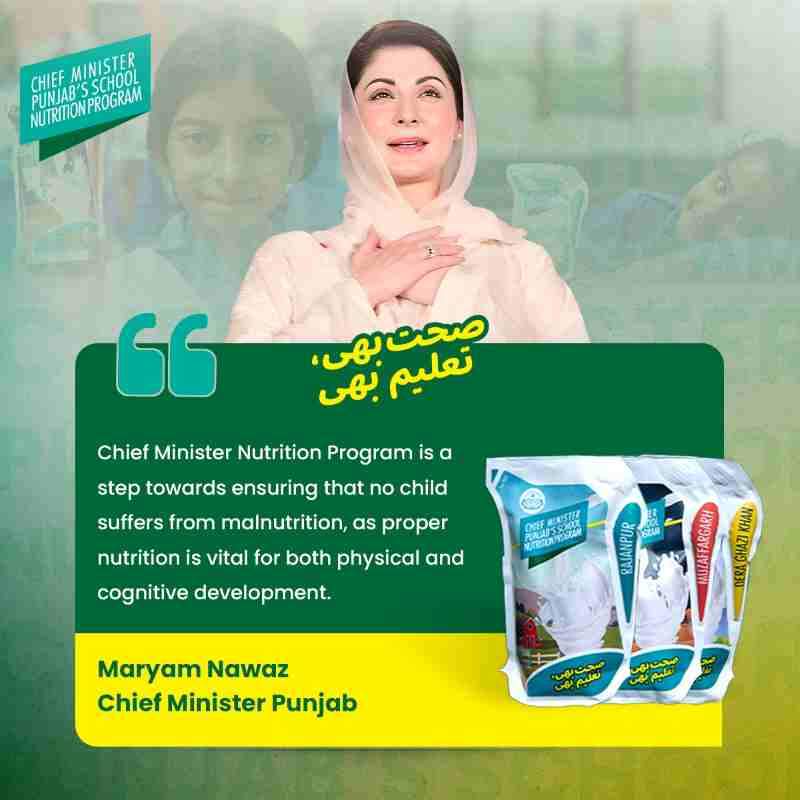
Table of Contents
Understanding the CM Punjab School Nutrition Program
The CM Punjab School Nutrition Program is a government-funded, school-based feeding initiative launched under the leadership of Chief Minister Maryam Nawaz Sharif to combat the alarmingly high rates of malnutrition among primary school children in Punjab. Unlike cash transfer programs or food subsidy schemes, this initiative delivers nutrition directly to children during school hours, ensuring that meals are consumed and benefits are realized without diversion or misuse.
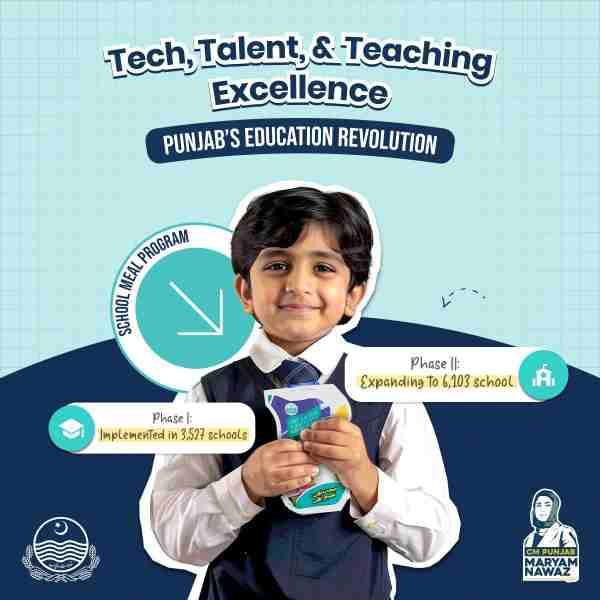
The program operates as a large-scale pilot project that has rapidly expanded since its inception. It initially launched in three districts—Dera Ghazi Khan, Rajanpur, and Muzaffargarh—serving approximately 400,000 undernourished students across 3,527 government schools. The program has since grown to cover 13 districts with 8,319 schools currently participating, reaching over 1.1 million students. The Punjab government has proposed an allocation of Rs. 4 billion for the program in the upcoming fiscal year, demonstrating its sustained commitment to combating child malnutrition.
Core Objectives of the Program
The program pursues multiple interconnected objectives that address both immediate nutritional needs and long-term educational outcomes. These objectives include:
- Combating child malnutrition by providing essential nutrients during critical developmental years
- Improving school attendance by creating a powerful incentive for parents to enroll their children
- Enhancing learning outcomes by ensuring students have the energy and focus needed for academic success
- Reducing dropout rates by removing hunger as a barrier to education
- Promoting health awareness by educating children about balanced diets and proper nutrition
Target Beneficiaries and Coverage
The program specifically targets undernourished students from nursery to class five who are enrolled in government primary schools and worker welfare schools across eligible districts. Children from low-income families who do not receive complete nutritional requirements at home are the primary beneficiaries. The program’s school-based approach ensures that all eligible students in participating institutions are automatically covered, eliminating barriers to access.
Program Scale and Reach
Key statistics demonstrating the program’s scale include:
- 1.1 million+ students currently receiving daily meals
- 8,319 schools participating across 13 districts
- 33.7 million milk packs distributed to date
- 12.2 million biscuit packets distributed to date
- Rs. 7 billion total program cost
- Rs. 4 billion allocated for future expansion
These figures establish the CM Punjab School Nutrition Program as the largest school feeding initiative in Pakistan and one of the most comprehensive in South Asia.
CM Punjab School Nutrition Program Eligibility Criteria
The CM Punjab School Nutrition Program eligibility criteria focus on identifying and reaching the most vulnerable and undernourished students across Punjab. The program’s eligibility framework is deliberately designed to be inclusive and accessible, removing bureaucratic barriers that might prevent deserving children from receiving benefits. Eligibility is determined primarily by school enrollment rather than individual application, ensuring automatic coverage for all qualifying students.
Who Is Eligible to Receive Benefits?
Students enrolled in government primary schools within the program’s operational districts automatically qualify for benefits. The program specifically targets:
- Children from nursery to class five who are undernourished
- Students from underprivileged and low-income backgrounds
- Children attending government primary schools in eligible districts
- Students enrolled in worker welfare schools
- Children suffering from malnutrition who need essential nutrients for growth and cognitive development
Private school students are not eligible, as the program is exclusively designed for government school students. This targeted approach ensures that resources are directed to children who would otherwise lack access to adequate nutrition.
Which Districts Are Covered Under the Program?
The CM Punjab School Nutrition Program currently operates across 13 districts of Punjab. The complete list includes:
- Bahawalnagar
- Bhakkar
- Chiniot
- Dera Ghazi Khan
- Kot Addu
- Layyah
- Lodhran
- Mianwali
- Muzaffargarh
- Rahim Yar Khan
- Rajanpur
- Taunsa
- Vehari
The selection of these districts prioritizes rural and underprivileged areas with the highest rates of malnutrition and food insecurity. The government has announced plans to further expand the program to additional districts in the coming months.
What Are the Grade-Level Requirements?
The program covers students from nursery through class five. This grade-level targeting is strategically important for several reasons:
- Primary school years represent a critical period for physical growth and cognitive development
- Early intervention can prevent stunting and other long-term effects of malnutrition
- Younger children are most vulnerable to the effects of food insecurity
- Targeting primary grades creates a foundation for lifelong health and learning
Students beyond class five are not currently covered, though the government may consider expanding to higher grades in the future.
Are Private School Students Included?
Private school students are not eligible for the CM Punjab School Nutrition Program. The program is exclusively designed for:
- Government primary school students
- Worker welfare school students
- Labour welfare school students (proposed expansion)
This exclusion reflects the program’s mission to support underprivileged children who would otherwise lack access to adequate nutrition. Private school students are expected to have access to nutrition through other means, making the program’s resources better directed toward the most vulnerable populations.
How to Apply for the CM Punjab School Nutrition Program
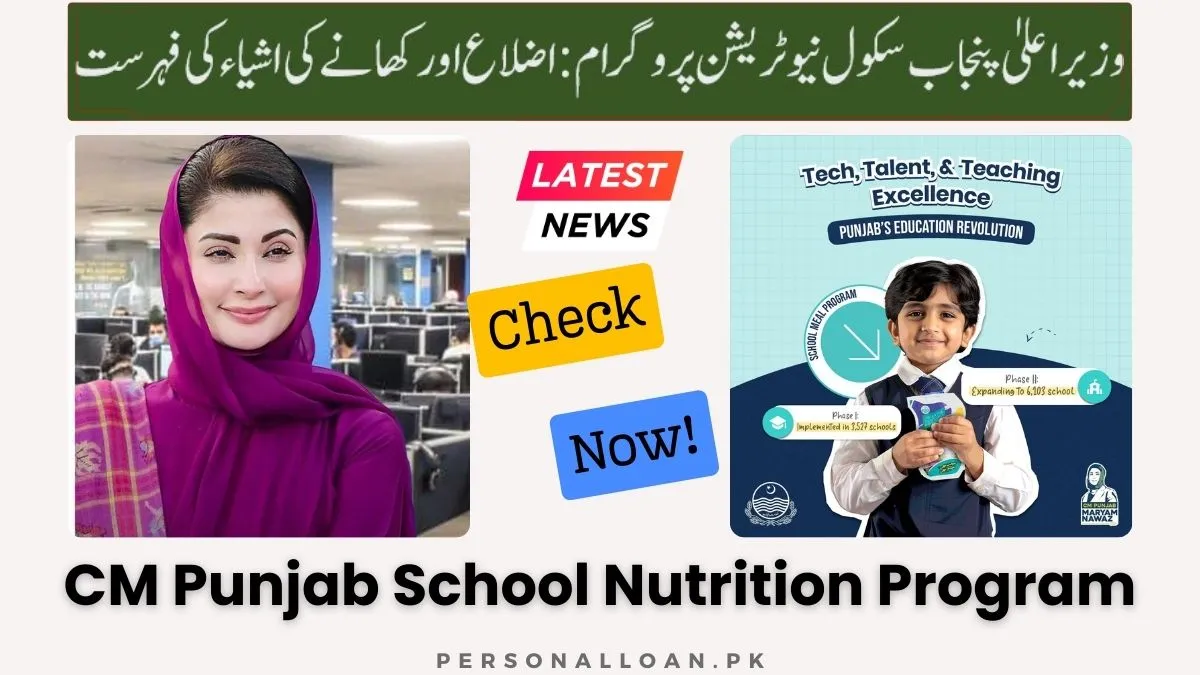
The CM Punjab School Nutrition Program does not require individual applications from parents or students. Instead, enrollment is automatic based on school attendance. This approach eliminates barriers to access and ensures that all eligible children receive benefits without complex procedures that might exclude those who need the program most.
Do Parents Need to Submit an Application?
Parents do not need to submit individual applications for their children to benefit. The program operates on an automatic enrollment basis:
- All students in eligible government schools are automatically covered
- No documentation or registration is required from parents
- Children are enrolled simply by attending school
- Benefits begin as soon as the program is implemented in their school
This automatic enrollment approach ensures that the most vulnerable children are reached without requiring complex application procedures that might exclude those who need the program most.
How Can Schools Participate in the Program?
Schools are selected based on their location in eligible districts and their status as government primary schools. The selection process includes:
- Targeting rural and underprivileged areas with high malnutrition rates
- Including schools that cater to economically disadvantaged students
- Phased implementation based on district-level planning
- Inclusion of Worker Welfare and Labour Welfare schools in the expansion
Schools do not need to individually register for the program. Instead, the Punjab government and Punjab Food Authority determine which schools will be included based on district-level planning and program priorities.
What Is the Complaint and Grievance Mechanism?
The Punjab government has established a complaint portal to ensure transparency and accountability. The system allows users to:
- Register complaints about food quality
- Report distribution delays or issues
- Raise concerns about program implementation
- Submit feedback for program improvement
District authorities regularly monitor food quality and meal delivery, while Nutrition Coordination Committees in every participating school ensure effective monitoring and implementation. These mechanisms help maintain the program’s integrity and address issues promptly.
How to Check School Participation
Parents and community members can check school participation through multiple channels:
- Visit the Punjab Food Authority’s website for program information
- Access the CM Punjab Complaint Portal for school lists
- Contact local district education offices for information
- Inquire directly at their children’s schools
Since all government primary schools in eligible districts are automatically included, any government primary school in these districts should be participating in the program.
Food Items and Nutritional Standards
The CM Punjab School Nutrition Program provides carefully selected food items designed to meet children’s nutritional needs. The program’s menu is developed in consultation with nutritionists to ensure balanced nutrition that supports both physical growth and cognitive development.
What Food Items Are Provided?
Each student receives a daily pack containing:
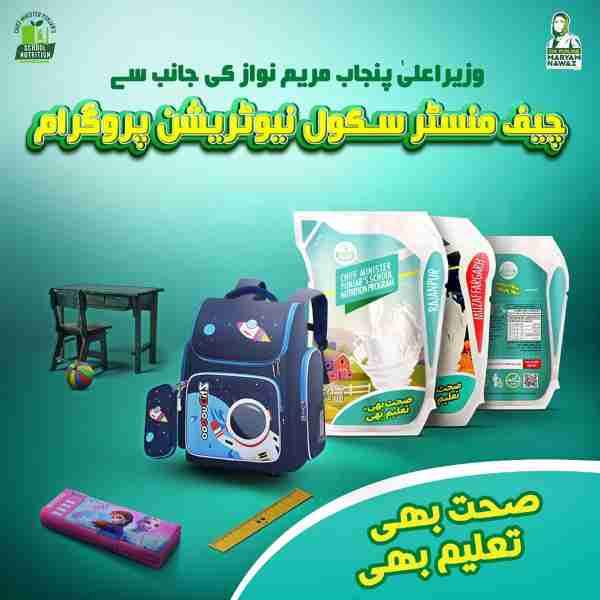
- Milk: 175 milliliters per student daily
- Fortified biscuits: Providing essential carbohydrates and micronutrients
- Expanded menu items: Phase-II includes meat, pulses, vegetables, and fruits
The program has distributed 33.7 million milk packs and 12.2 million biscuit packets across participating schools. Phase-II has expanded the menu to focus on a balanced diet comprising diverse food groups that provide complete nutrition.
Nutritional Value and Balance
The meals are designed to provide:
- Essential proteins for growth and tissue repair
- Carbohydrates for energy and brain function
- Vitamins and minerals for immune function and development
- Calcium for bone health and growth
- Iron for cognitive function and prevention of anemia
Nutritionists are actively involved in meal planning to ensure each meal meets children’s dietary needs. The Punjab Food Authority emphasizes a comprehensive policy focusing on food nutrition to combat malnutrition effectively.
Food Quality and Safety Measures
Food quality and safety are ensured through multiple mechanisms:
- Punjab Food Authority oversight: Oversees preparation and distribution
- Centralized kitchen preparation: Ensures consistent quality standards
- School administration supervision: Monitors distribution process
- District authority monitoring: Regular inspections and quality checks
- Nutrition Coordination Committees: School-level monitoring and oversight
The Punjab Food Authority emphasizes food safety principles from “Farm to Fork” and conducts awareness seminars on nutrition and food safety, including topics such as anemia and dehydration prevention.
Pre and Post Health Monitoring
The program includes systematic health monitoring:
- Pre-program health assessments to establish baseline data
- Post-program health monitoring to measure impact
- Regular health checks to identify students needing additional support
- Data collection to evaluate program effectiveness
This monitoring helps assess the program’s impact on child health and informs future improvements.
Funding and Budget Allocation
The CM Punjab School Nutrition Program is funded through the Punjab government’s provincial education budget. The government’s substantial financial commitment reflects the priority placed on child nutrition and education in the province.
Program Budget and Expenditure
Key budget figures include:
- Total program cost: Rs. 7 billion
- Students covered: 1.12 million across 13 districts
- Proposed allocation: Rs. 4 billion for next fiscal year
- Education budget overall: Rs. 750 billion for fiscal year 2026-27
- Released funds: Significant amounts already disbursed
The funds are utilized for procurement, packaging, transportation of milk, and monitoring at the school level. The program’s budget allocation represents one of the largest investments in child nutrition in Pakistan’s history.
Funding Sources
The program is funded through:
- Provincial government budget allocations
- Education budget funding
- Punjab Finance Department disbursements
- Revenue generated from the recycling initiative
The program’s funding is part of the government’s broader commitment to improving education and health outcomes. The recycling initiative generates additional revenue, creating a sustainable funding model that benefits both children and schools.
Financial Management and Accountability
Financial management includes:
- Transparent procurement processes
- Regular audits and financial reviews
- District-level budget management
- School-level monitoring of resource utilization
- Public reporting on program expenditure
These mechanisms ensure that program funds are utilized effectively and transparently.
Recycling Initiative: Used Milk Packs for School Development
The CM Punjab School Nutrition Program includes an innovative recycling initiative that transforms waste into valuable resources. This initiative not only promotes environmental sustainability but also generates additional resources for school development.
How the Recycling Program Works
The recycling program operates through a simple yet effective process:
- Students submit empty milk cartons at their schools
- Cartons are collected and sent for recycling
- Revenue generated is reinvested in school development
- Products made from recycled materials are used in schools
More than 200,000 empty milk packs have been recycled to date, demonstrating the program’s significant environmental and economic impact.
Products Made from Recycled Milk Packs
Recycled milk packs are transformed into useful products:
- Furniture: Desks and chairs that withstand extreme conditions
- Notebooks: Recycled paper products for student use
- Pencils: Writing instruments made from recycled materials
Furniture made from recycled milk cartons has been shown to withstand rain and temperatures of up to 100 degrees Celsius and remain usable for up to 40 years. The Chief Minister expressed satisfaction over desks made from recycled milk cartons during school visits.
Environmental and Economic Benefits
The recycling initiative provides multiple benefits:
- Environmental sustainability: Reduces waste and promotes recycling
- Economic benefits: Generates revenue for school development
- Educational value: Teaches children about environmental responsibility
- Circular economy: Creates a sustainable resource cycle
- Resource optimization: Transforms waste into valuable products
This initiative creates a circular economy where waste is transformed into valuable resources for schools, demonstrating the government’s commitment to sustainability while addressing children’s nutritional needs.
Employment Opportunities with the Program
The Punjab School Education Department has announced 52 contract-based vacancies for the Chief Minister Punjab Schools Meal Programme. These positions offer professionals the opportunity to contribute to one of Pakistan’s largest nutrition initiatives.
Available Positions
The 52 contract-based vacancies include:
- Program Coordinator (1 position)
- Data Analyst (1 position)
- Assistant Manager Finance (1 position)
- Program Associates (2 positions)
- IT Associates (2 positions)
- District Coordinators (13 positions)
- Tehsil Coordinators (28 positions)
- Complaint Handling Agent (1 position)
- Office Boys (3 positions)
Job Requirements
Professional positions typically require:
- At least 16 years of education in a relevant field
- Minimum of two years of relevant work experience
- Specific qualifications for specialized roles
- Computer proficiency and relevant technical skills
The Data Analyst position requires a degree in Computer Science, Data Science, Statistics, or a related subject, along with practical knowledge of Microsoft Excel, SQL, R or Python, and experience using data visualization tools. Senior-level positions require more experience, with the Program Coordinator requiring at least six years and the Assistant Manager Finance requiring five years.
How to Apply
Interested candidates must submit applications through the official online recruitment portal:
- Upload CV, CNIC, educational certificates, and experience documents
- Submit applications online only—hand or courier submissions not accepted
- Contracts offered for periods ranging from eight to 11 months
- Appointments on a contractual basis with no permanent employment rights
Selected candidates will be posted according to the program’s operational needs across Lahore and selected districts.
Who Should Apply
The recruitment drive offers opportunities for professionals with qualifications in:
- Management and administration
- Accounting and finance
- Information technology
- Data analysis and monitoring
- Field coordination and implementation
These positions offer professionals the opportunity to contribute to a transformative program addressing child malnutrition and improving educational outcomes.
Program Impact and Benefits
The CM Punjab School Nutrition Program has demonstrated significant positive impact on student enrollment, attendance, learning outcomes, and community health since its launch. These measurable results demonstrate the program’s effectiveness and justify continued investment.
Impact on Student Enrollment
The program has led to a significant increase in student enrollment:
- 28 percent increase in student enrollment since program launch
- 24,740 additional students now attending school
- Particularly significant increase in girls’ enrollment
- Reduced dropout rates among low-income families
- Increased school attendance rates
These enrollment increases demonstrate the program’s effectiveness in encouraging parents to send their children to school, knowing that their nutritional needs will be met.
Health Benefits for Students
The health benefits of the program are substantial:
- Combats malnutrition in underprivileged areas
- Prevents stunting and other consequences of undernutrition
- Promotes growth and development during critical years
- Improves immune function and disease resistance
- Supports cognitive development and learning capacity
Research shows that well-nourished children are healthier, more focused, and perform better academically. The program’s health benefits extend beyond individual children to their families and communities.
Impact on Learning Outcomes
The program significantly improves learning outcomes:
- Well-fed children are more focused and perform better in school
- Reduced absenteeism and improved class engagement
- Better concentration and information retention
- Improved academic performance and achievement
- Development of healthier habits and practices
By providing meals during school hours, the program ensures students have the energy and concentration needed to succeed in their education. The connection between nutrition and cognitive development makes this program a critical investment in Punjab’s future human capital.
Community Benefits
The program provides broader community benefits:
- Creates awareness about nutrition and healthy eating
- Supports community health and development
- Generates employment opportunities
- Promotes environmental sustainability through recycling
- Reduces the burden on healthcare systems
These community benefits demonstrate the program’s positive ripple effects beyond individual schools and students.
Challenges and Solutions
The program faces several implementation challenges:
- Ensuring consistent food quality across thousands of schools
- Reaching all eligible students in remote areas
- Maintaining program sustainability with continued funding
- Monitoring and evaluating program impact
The government has implemented multiple solutions:
- Nutrition Coordination Committees in every school
- District authority monitoring of food quality
- Punjab Food Authority oversight and regulation
- Pre and post health monitoring of students
- Online portal for program information
- Recycling initiative for additional revenue
These comprehensive measures demonstrate the government’s commitment to overcoming challenges and ensuring program success.
Frequently Asked Questions
What is the CM Punjab School Nutrition Program?
The CM Punjab School Nutrition Program is a government-funded initiative that provides free, nutritious meals to undernourished students in government primary schools across Punjab. It delivers daily packs of milk and biscuits to over 1.1 million students across 13 districts.
Who is eligible for the program?
Students enrolled in government primary schools and worker welfare schools from nursery to class five in eligible districts are automatically covered. Private school students are not eligible.
How do I apply for the program?
No individual application is required. Students in eligible government schools are automatically enrolled. Parents can access program information through the Punjab Food Authority’s website.
Which districts are covered?
The program currently operates in 13 districts: Bahawalnagar, Bhakkar, Chiniot, Dera Ghazi Khan, Kot Addu, Layyah, Lodhran, Mianwali, Muzaffargarh, Rahim Yar Khan, Rajanpur, Taunsa, and Vehari.
What food items are provided?
Each student receives a daily pack containing 175 milliliters of milk and fortified biscuits. Phase-II has expanded the menu to include meat, pulses, vegetables, and fruits.
How is food quality ensured?
The Punjab Food Authority oversees preparation and distribution, with centralized kitchen preparation, school administration supervision, and district authority monitoring. Nutrition Coordination Committees provide school-level oversight.
What are the program’s objectives?
The program aims to combat child malnutrition, improve school attendance, enhance learning outcomes, reduce dropout rates, and promote better health and hygiene practices.
How is the program funded?
The program is funded through the Punjab government’s provincial education budget, with significant allocations for procurement, packaging, transportation, and monitoring.
What is the recycling initiative?
Used milk packs are collected and recycled into furniture, notebooks, and pencils. Revenue generated is reinvested in school development, promoting environmental sustainability while generating additional resources for schools.
Are there job opportunities with the program?
Yes, 52 contract-based vacancies have been announced, including positions for Program Coordinator, Data Analyst, District Coordinators, and various other roles. Applications must be submitted online through the official recruitment portal.
How can I check if my child’s school is participating?
Parents can check the Punjab Food Authority’s website, access the CM Punjab Complaint Portal, contact local district education offices, or inquire directly at their children’s schools.
What impact has the program had?
Since launch, student enrollment has increased by 28 percent, with 24,740 additional students now attending school. The program has distributed 33.7 million milk packs and 12.2 million biscuit packets.
Conclusion: A Transformative Investment in Punjab’s Future
The CM Punjab School Nutrition Program represents a landmark investment in Punjab’s children and the province’s future. By addressing the critical link between nutrition and education, the program tackles two of the most significant barriers to human development simultaneously. With over 1.1 million students already benefiting and expansion plans underway, the program is poised to make an even greater impact in the coming years.
The program’s success in increasing student enrollment by 28 percent and distributing millions of nutritious meals demonstrates its effectiveness in achieving both educational and health outcomes. The innovative recycling initiative adds environmental sustainability to the program’s benefits, creating a comprehensive approach that addresses multiple dimensions of child welfare.
The government’s significant financial commitment and the program’s strong monitoring mechanisms ensure its continued success and sustainability. As the program expands to more districts and schools, it has the potential to transform the lives of millions of children across Punjab.
The CM Punjab School Nutrition Program serves as a model for other provinces and countries seeking to address child malnutrition through school-based interventions. By investing in children’s nutrition today, the program is building a healthier, more educated, and more prosperous future for Punjab.
Disclaimer: This article provides general information about the CM Punjab School Nutrition Program. Program details, including eligibility criteria, school lists, and application procedures, are subject to change. Readers are advised to verify all information through official government channels before making any decisions based on this content.

Add a Comment