
The CM Punjab Clean Drinking Water Project is a landmark initiative by the Punjab government that provides free, safe bottled drinking water to millions of citizens across the province, tackling the critical challenge of unsafe water that has plagued communities for decades.
What you will learn from this guide:
- How the free water bottles distribution system works and who benefits from it
- The complete details of filtration plants, bottling facilities, and PSPA governance
- How to apply for PSPA jobs and access clean water services in your district
Key Takeaways
- Project Scale and Reach: The initiative includes over 5,600 filtration plants and multiple bottling facilities, benefiting more than 27 million people across 18 districts of Punjab.
- Free Bottled Water Delivery: Purified water is filled into 19‑liter bottles and distributed free of cost to remote and water‑deficient areas through dedicated delivery trucks.
- AI‑Driven Monitoring: The Punjab Saaf Pani Authority is leveraging Artificial Intelligence for real‑time water quality monitoring, ensuring every drop meets international safety standards.
- Community Participation: Water User Committees with mandatory women representation are being established at each filtration plant to ensure local ownership and sustainability.
- Employment Opportunities: PSPA regularly announces career opportunities, with applications accepted online through the Punjab Job Portal.
- Read More: CM Punjab School Nutrition Program 2026 (Eligibility & School List)
- Read More:CM Punjab Green Industrial Zone Initiative (18K New Jobs)
CM Punjab Clean Drinking Water Project (Free Water Bottles)
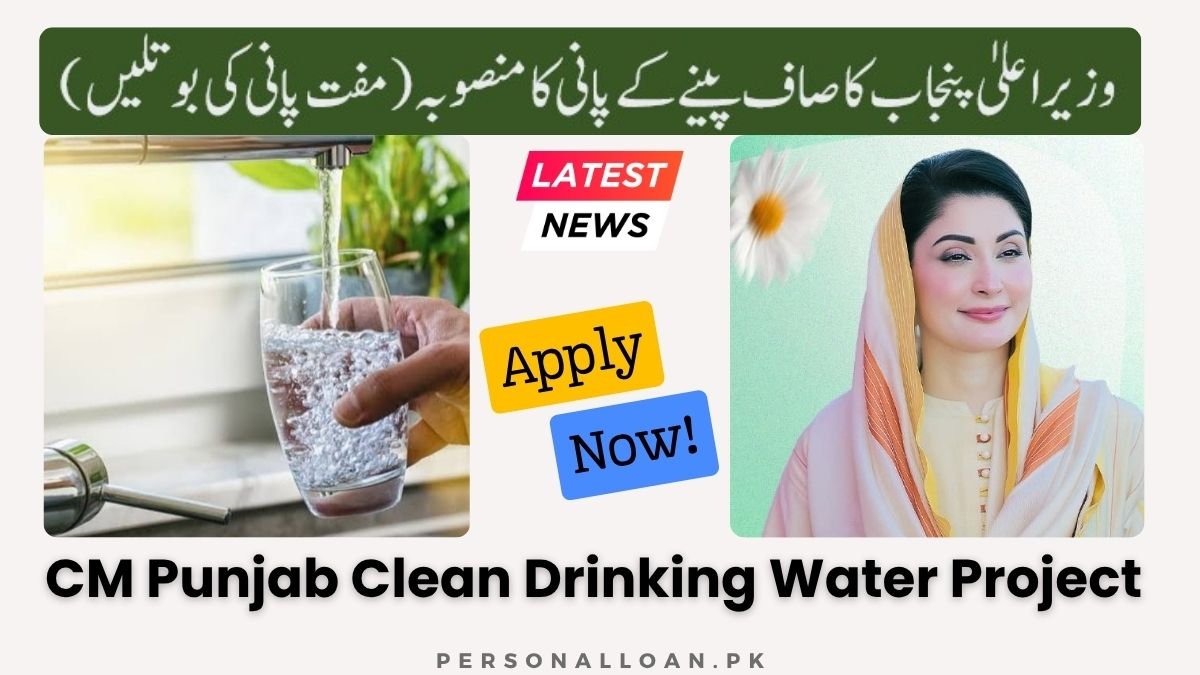
Table of Contents
Understanding the CM Punjab Clean Drinking Water Project: An Overview
What is the CM Punjab Clean Drinking Water Project (Free Water Bottles)?
The CM Punjab Clean Drinking Water Project is a flagship initiative of the Punjab government designed to provide free, safe bottled drinking water to citizens across the province. This project addresses the critical challenge of unsafe drinking water that affects millions of Punjabis, particularly in rural and water‑scarce regions.
The project represents a fundamental shift from merely installing filtration plants to actively delivering clean water to people’s doorsteps. Purified water is filled into 19‑liter bottles and distributed to citizens free of cost, with dedicated delivery trucks transporting bottled water to remote and water‑deficient areas. This system is particularly transformative for families who previously had to travel several kilometers daily to fetch water or were forced to consume contaminated water.
When Was the CM Punjab Clean Drinking Water Project Launched and What Is Its Status?
The project gained significant momentum under the leadership of Chief Minister Maryam Nawaz Sharif, who accelerated its implementation across the province. By mid‑year, the project had already established operational bottling plants with substantial production capacities in multiple districts. The government is set to complete and commission 2,750 new water filtration plants by September under Phase‑I of the Chief Minister Saaf Pani Programme.
The project is being implemented in phases, with Phase‑I covering installation of filtration plants in districts including Rahim Yar Khan, Rajanpur, Bahawalpur, Bahawalnagar, Rawalpindi, Attock, Jhelum, Chakwal, Talagang and Murree. The remaining 1,996 plants under phase‑I will be installed in Khushab, Bhakkar, Mianwali, Dera Ghazi Khan, Layyah, Kot Addu, Muzaffargarh and Taunsa districts.
Why Did the Punjab Government Launch This Free Water Bottles Initiative?
The initiative was born from a recognition that millions of Punjabis lack access to safe drinking water. For decades, residents in Southern Punjab, Cholistan, Thal, and the foothills of Koh‑e‑Suleman have been forced to consume groundwater containing levels of salts, arsenic, fluoride, and other hazardous contaminants far exceeding international safety limits.
The government committed to providing filtered and bottled water to citizens, particularly in remote and water‑deficient areas. Chief Minister Maryam Nawaz emphasized that access to clean drinking water is a basic right of every citizen and directed all departments to expedite implementation of the clean water initiative. The project represents a vital public health, social welfare, and human dignity initiative aimed at bringing clean water to regions that have lacked this basic facility for years.
Who Is Implementing the CM Punjab Clean Drinking Water Project?
The project is implemented through the Punjab Saaf Pani Authority (PSPA), established under the Punjab Saaf Pani Authority Act. The PSPA develops need‑based safe drinking water projects across Punjab through rigorous field surveys and transparent processes. The Authority is the sole mandated body for the planning, installation, operation and maintenance of water filtration plants across Punjab.
The PSPA operates under the leadership of Chairman Chaudhry Zahid Akram and Chief Executive Officer Captain (R) Syed Ali Asghar. Following a bureaucratic reshuffle, Zulfiqar Ahmed Bhon was appointed as Chief Executive Officer of the Punjab Saaf Pani Authority. The Authority’s headquarters is located at 4th Floor EFU‑House 6‑D Main Gulberg Jail Road Lahore.
How Does the Free Water Bottles Distribution System Work?
Purified water is filled into 19‑liter bottles and distributed to citizens free of cost. Dedicated delivery trucks transport bottled water to remote and water‑deficient areas. The Khushab bottling plant has the capacity to produce 50,000 bottles of water per hour. Water bottling plants are operational in Khushab, Dera Ghazi Khan, Bahawalpur and Rahim Yar Khan.
Key Features and Components of the Clean Drinking Water Project
What Are the Major Components of the CM Punjab Clean Drinking Water Project?
Water Filtration Plants: How Many Will Be Established?
Under the project, thousands of filtration plants are being established across the province. Officials informed that 2,258 water filtration plants would be installed across Punjab as part of the government’s clean water initiative. Under the broader Saaf Pani Programme, more than 5,600 water filtration plants will be installed so that clean drinking water is accessible to the public.
The government is set to complete and commission 2,750 new water filtration plants by September under Phase‑I of the Chief Minister Saaf Pani Programme. Phase‑II of the project plans to install approximately 9,000 more water filtration plants, extending the benefit to over 47 million citizens.
Water Bottling Plants: Where Are They Located and What Is Their Capacity?
Modern water bottling plants have been made operational in Khushab, Dera Ghazi Khan, Bahawalpur and Rahim Yar Khan. The Khushab bottling plant has the capacity to produce 50,000 bottles of water per hour. In a major decision, the meeting approved the establishment of four additional bottling plants under the CM Punjab Clean Drinking Water Project to further strengthen the province’s drinking water infrastructure.
Each plant features an advanced multi‑stage purification system combined with rigorous laboratory testing to ensure that every drop delivered meets World Health Organisation (WHO) standards. A single plant has the capacity to fill approximately 150 bottles per hour, and operating for just ten hours a day, one plant can cater to thousands of families daily.
What Is the Scope of the Saaf Pani Programme?
The Saaf Pani Programme is being implemented across 18 districts of Punjab at a cost of Rs. 45 billion to ensure the provision of clean and safe drinking water. Under this project, more than 5,600 water filtration plants will be installed. All plants across Punjab will be digitally geo‑tagged to enhance monitoring and transparency.
The Punjab government allocated Rs. 507 billion under development and non‑development expenditures for the fiscal year, including Rs. 187.10 billion for development expenditures for provision of clean drinking water and sanitation facilities to the public.
What Is the Role of the Punjab Saaf Pani Authority in This Project?
What Is the Punjab Saaf Pani Authority and What Does It Do?
The Punjab Saaf Pani Authority (PSPA) is the primary implementing body for clean drinking water projects across Punjab. The Authority is committed to providing safe drinking water to the people of Punjab through customized sustainable solutions. The PSPA develops need‑based safe drinking water projects across Punjab through rigorous field surveys and transparent processes.
The Authority is responsible for the planning, installation, operation and maintenance of water filtration plants across Punjab. It also ensures that all filtration plants meet quality standards and that water quality is regularly monitored. The PSPA works closely with district administrations, community organizations, and other stakeholders to ensure the project’s success.
Who Is the Current Chairman of the Punjab Saaf Pani Authority?
Chaudhry Zahid Akram serves as the Chairman of the Punjab Saaf Pani Authority. The Chief Executive Officer is Captain (R) Syed Ali Asghar. The Authority’s leadership is committed to delivering clean water to every household in Punjab and has been actively involved in accelerating the project’s implementation.
What Is the Punjab Saaf Pani Authority Contact Number and Official Website?
The official website is www.saafpani.com.pk. The headquarters is located at 4th Floor EFU‑House 6‑D Main Gulberg Jail Road Lahore. Contact numbers include 042‑99263021 and 042‑35786893‑94‑95‑96. A dedicated helpline provides round‑the‑clock public support for complaints, queries, and information about the project.
What Is the Difference Between Punjab Saaf Pani Authority and Punjab Saaf Pani Company?
The Punjab Saaf Pani Companies (North and South) were merged into the Punjab Saaf Pani Authority. Following the merger, all assets were transferred to the authority. The Punjab Saaf Pani Company South was established with a mandate to develop, design, plan and execute projects for providing safe drinking water solutions, prioritizing underserved areas, especially in rural and peri‑urban areas. The merger streamlined operations and created a single, unified body for clean water initiatives.
Project Implementation and Infrastructure
How Is the Clean Drinking Water Infrastructure Being Developed?
What Is the Timeline for Completing Filtration and Bottling Plants?
Chief Minister Maryam Nawaz Sharif instructed that the construction and rehabilitation of water bottling plants and filtration plants be completed by June 30. The government is set to complete and commission 2,750 new water filtration plants by September under Phase‑I of the Chief Minister Saaf Pani Programme. This aggressive timeline reflects the government’s commitment to delivering clean water as quickly as possible.
What Is the Status of the Khushab Bottling Plant?
The Khushab bottling plant has the capacity to produce 50,000 bottles of water per hour. A digital report on the Khushab bottling plant was presented to officials, showcasing its operational readiness. Commissioner Ashfaq Ahmed Chaudhry visited the water bottling plant established near Daraahma and reviewed construction quality, machinery installation, and overall arrangements, confirming that the plant is fully functional.
Which Districts Will Receive Clean Drinking Water First?
Residents of Dera Ghazi Khan, Khushab, Rahim Yar Khan, and Bahawalpur will be provided clean drinking water at their doorsteps. These districts were prioritized due to their high levels of water contamination and scarcity. The project will gradually expand to cover all 18 districts.
What Is the Total Budget Allocated for This Project?
The Punjab government allocated Rs. 507 billion for urban facilities, including water supply and sanitation. A major portion of the development budget supports the provision of safe drinking water and sanitation facilities. The Saaf Pani Programme itself involves projects worth Rs. 45 billion, with nine clean water schemes worth Rs. 49 billion approved, benefiting more than 27 million people.
What Technology Is Being Used in the Filtration and Bottling Plants?
What Type of Filtration Technology Is Being Deployed?
Ultrafiltration water plants have been installed, such as the one inaugurated in Chiniot that provides safe drinking water to more than 10,000 residents. These state‑of‑the‑art filtration plants are installed at easy‑to‑access places in villages. The technology removes contaminants, bacteria, and viruses while retaining essential minerals, ensuring the water is both safe and healthy.
How Is AI Being Used to Monitor Water Quality?
Advisor to the Chief Minister Punjab on AI & Special Initiatives, Ali Dar, visited the Punjab Saaf Pani Authority headquarters and stressed AI‑driven monitoring of water quality. This represents a significant technological advancement in ensuring water safety. AI systems continuously analyze water quality data from filtration plants, detecting anomalies and alerting authorities in real time, thereby enabling rapid corrective actions.
What Is the Process for Purifying and Bottling Water?
Water is purified through advanced filtration systems that include sedimentation, ultrafiltration, reverse osmosis, and UV treatment. After purification, the water is filled into 19‑liter bottles under hygienic conditions. The bottled water is then distributed to citizens free of cost through dedicated delivery trucks. The entire process is monitored to maintain quality and consistency.
Benefits and Impact on Public Health
How Will This Project Improve Public Health in Punjab?
What Are the Health Risks of Unsafe Drinking Water in Punjab?
Millions of Punjabis currently consume contaminated water, leading to waterborne diseases such as diarrhea, cholera, typhoid, and hepatitis. These diseases disproportionately affect children and the elderly, causing significant morbidity and mortality. The project aims to eliminate these health risks by providing safe, filtered drinking water, thereby reducing the burden on healthcare systems.
How Many People Will Benefit from This Project?
The completion of the program will benefit more than 27 million people in Punjab. The Saaf Pani Programme covers 18 districts. Over 350,000 people in South Punjab villages have already received safe drinking water through installed filtration plants. Phase‑II of the project will extend benefits to over 47 million citizens.
What Are the Expected Health Outcomes?
Access to clean drinking water will significantly reduce waterborne diseases, improve child health outcomes, enhance overall quality of life, and increase productivity. Studies indicate that safe drinking water can reduce diarrheal diseases by up to 50%. The project is expected to save thousands of lives annually and contribute to better nutritional outcomes for children.
How Does Free Water Distribution Benefit Remote Communities?
What Challenges Do Remote Communities Face in Accessing Clean Water?
Families in remote areas previously had to travel several kilometers daily to fetch water or were forced to consume contaminated water. Women and children often bear the burden of water collection, spending hours each day on this task. The free water bottles initiative eliminates this burden, freeing up time for education, work, and other productive activities.
How Will the Distribution System Work in Rural Areas?
Bottled water produced at facilities will be transported to remote and water‑deficient areas through dedicated delivery trucks. Filtration plants are installed at easy‑to‑access places in villages for the benefit of local communities. The distribution system is designed to ensure that even the most inaccessible villages receive regular supplies of clean water.
Punjab Saaf Pani Authority: Governance and Operations
What Is the Legal Framework Governing the Punjab Saaf Pani Authority?
What Is the Punjab Saaf Pani Authority Act?
The Punjab Saaf Pani Authority Act establishes the comprehensive legal and institutional framework governing the Authority’s mandate. The Act ensures safe drinking water provision across Punjab. It defines the Authority’s powers, functions, and responsibilities, and provides for the establishment of Water User Committees and complaint mechanisms.
What Are the Key Functions of the Authority?
The Authority develops need‑based safe drinking water projects across Punjab through rigorous field surveys and transparent processes. It aims to come up with customized sustainable solutions to facilitate domestic consumers with safe and healthy drinking water. Key functions include planning, installation, operation, maintenance, and quality monitoring of filtration plants.
What Are the Administrative and Enforcement Mechanisms?
What Is the Role of the Admin & Enforcement Wing?
The Admin & Enforcement Wing ensures the smooth administrative functioning of Punjab Saaf Pani Authority by overseeing compliance, human resource management, and internal governance. It promotes accountability, transparency, and good governance practices across the Authority. The wing handles disciplinary matters, ensures adherence to policies, and maintains service records of employees.
How Does the Authority Ensure Transparency?
A live public dashboard has been announced to enhance transparency and public facilitation. The dashboard will display real‑time data on water quality, plant performance, and complaint resolution. The Authority promotes accountability and transparency through various governance mechanisms, including regular audits, public hearings, and community engagement.
What Are the Career and Employment Opportunities at PSPA?
What Are the Current Punjab Saaf Pani Authority Jobs?
Punjab Saaf Pani Authority announced numerous positions in recent months. Vacant positions include Chief Engineer / DG Projects (M‑II) and Chief Engineer / DG O&M (M‑II). Other positions include DG Admin & Enforcement. The Authority regularly publishes job advertisements in newspapers and on its official website.
How to Apply for Punjab Saaf Pani Authority Jobs Online?
Interested candidates should apply online through the Punjab Job Portal website (www.jobs.punjab.gov.pk). The application process is entirely online, and candidates must submit their qualifications, experience, and supporting documents. The Authority ensures a transparent and merit‑based selection process.
What Are the Qualification Requirements for PSPA Jobs?
Qualifications required include 18/16 Years Degree for Chief Engineer positions. Age requirements range from 40‑55 years. Experience of 10‑15 years is typically required. For other positions, qualifications vary, but the Authority seeks experienced professionals with a strong background in water management, engineering, administration, or finance.
Tenders, Procurement, and Financial Management
What Are the Tender Opportunities Under This Project?
What Is the Tender for Warehouse in Punjab Pakistan?
The Authority issues various tenders for procurement and infrastructure development. These include procurement of equipment and establishment of facilities. For instance, tenders for warehouse construction, supply of machinery, and installation of filtration plants are regularly advertised.
How Can Businesses Participate in PSPA Tenders?
E‑bids are submitted on the e‑PADS system. Interested parties must follow the Authority’s procurement guidelines and deadlines. The Authority ensures a transparent and competitive bidding process, and all interested vendors are encouraged to register on the e‑PADS portal to receive tender notifications.
How Is the Project Financed and Managed?
What Is the Role of the Department of Finance?
The Department of Finance oversees all financial operations of Punjab Saaf Pani Authority, ensuring sound fiscal management, regulatory compliance, and the effective allocation of public and donor resources. It manages financial resources across the Annual Development Programme (ADP), donor‑funded initiatives, and non‑development funds.
What Is the Total Investment in the Clean Drinking Water Project?
The Saaf Pani Programme involves projects worth Rs. 45 billion. Nine clean water schemes worth Rs. 49 billion were approved. The total investment in water supply and sanitation under the broader development budget is Rs. 507 billion, demonstrating the government’s strong financial commitment.
Community Engagement and Water User Committees
What Are Water User Committees and Why Are They Important?
What Is the Role of Water User Committees (WUCs)?
Punjab Saaf Pani Authority approved the establishment of water user committees for filtration plants across Punjab. These committees ensure community participation in the management and maintenance of filtration plants. They are responsible for oversight of plant operations, water quality monitoring, and ensuring that plants remain functional.
What Are the SOPs for Water User Committees?
Standard Operating Procedures (SOPs) for WUCs were approved by the governing body of PSPA under the chairmanship of Chairman Chaudhry Zahid Akram. The SOPs define the composition, roles, responsibilities, and reporting mechanisms for WUCs. They also include provisions for mandatory representation of women to ensure inclusive participation.
How Does the Public Provide Feedback and Complaints?
What Is the PSPA Helpline and Complaint System?
PSPA is committed to providing prompt, accessible, and round‑the‑clock public support through dedicated helplines, WhatsApp, and an online complaint registration system. Complaint centers will be set up in the Saaf Pani Authority complex and districts. Citizens can lodge complaints about water quality, plant breakdowns, or distribution issues through any of these channels.
How Are Complaints About Filtration Plants Addressed?
The Saaf Pani Authority has been given time till June 30 to rehabilitate more than 5,000 water filtration plants. Complaint centers ensure timely resolution of public grievances. Once a complaint is received, the Authority deploys maintenance teams to address the issue within a stipulated timeframe. Citizens receive feedback on their complaints through the system.
Progress Updates and Future Expansion Plans
What Is the Current Status of the Project?
What Progress Has Been Made on Filtration Plants?
By May, the government was set to complete and commission 2,750 new water filtration plants by September under Phase‑I. The Authority received a deadline of June 30 to rehabilitate more than 5,000 water filtration plants. Work is progressing rapidly across all districts, with many plants already operational.
What Are the Latest Developments?
Commissioner Ashfaq Ahmed Chaudhry visited the water bottling plant near Daraahma. CM Maryam Nawaz ordered a province‑wide survey of unsafe drinking water. The meeting approved four additional bottling plants. These developments signal the government’s determination to accelerate the project and expand its scope.
What Are the Future Expansion Plans?
How Many Additional Bottling Plants Will Be Established?
Four additional bottling plants were approved under the CM Punjab Clean Drinking Water Project to further strengthen the province’s drinking water infrastructure. These plants will be strategically located to serve more districts and increase the coverage of free water distribution.
What Is the Long‑Term Vision for Clean Water in Punjab?
The provincial administration’s plan includes the installation of filtration plants in Punjab’s urban centers and the supply of bottled clean water to rural areas. The government has announced a multi‑pronged strategy to tackle water scarcity and improve the supply of clean drinking water. The vision is to ensure that every citizen, regardless of location, has access to safe and affordable drinking water.
How Will the Project Address Water Scarcity?
The plan includes the construction of small dams and the provision of filtered and bottled water to citizens. This comprehensive approach addresses both water scarcity and water quality issues. By combining surface water storage, groundwater recharge, and purification technologies, the project aims to create a sustainable water supply system.
Comparison with Other Water Projects in Pakistan
How Does This Project Compare with Other Water Projects in Pakistan?
What Are the Major Water Projects in Pakistan?
Various water projects have been initiated across Pakistan, including the Khadam‑e‑Punjab Saaf Pani Programme. However, the CM Punjab Clean Drinking Water Project is unique in its focus on free bottled water distribution. Other projects often focus solely on filtration plant installation without active delivery to households.
What Is the Saaf Punjab Initiative?
Saaf Punjab is the broader cleanliness and water quality initiative under which this project operates. It represents the government’s commitment to improving environmental and water quality standards. The CM Punjab Clean Drinking Water Project is a key pillar of Saaf Punjab, focusing specifically on drinking water provision.
How Does the CM Punjab Clean Drinking Water Project Differ from Previous Initiatives?
Unlike previous initiatives that focused primarily on installing filtration plants, this project actively delivers bottled water to people’s doorsteps. The integration of AI‑driven monitoring and the establishment of dedicated bottling plants represent significant advancements. The project also emphasizes community participation through Water User Committees, ensuring long‑term sustainability.
Challenges and Solutions
What Challenges Does the Project Face?
What Are the Infrastructure Challenges?
Establishing and maintaining thousands of filtration plants across diverse geographical areas presents significant logistical challenges. The rehabilitation of more than 5,000 filtration plants by June 30 demonstrates the scale of the maintenance challenge. Remote areas with poor road networks make plant installation and regular servicing difficult.
How Is Water Quality Being Monitored and Ensured?
AI‑driven monitoring of water quality is being implemented. The Authority conducts rigorous field surveys and employs transparent processes. Regular laboratory testing is carried out to ensure compliance with WHO standards. Any deviations are immediately addressed.
What Are the Solutions Being Implemented?
The establishment of four additional bottling plants, the deployment of AI for monitoring, and the creation of complaint centers are key solutions. The merger of Saaf Pani Companies into a single Authority has streamlined operations. The use of Water User Committees ensures local oversight and reduces maintenance delays.
How Is the Project Ensuring Sustainability?
What Is the Plan for Long‑Term Maintenance of Filtration Plants?
Water user committees ensure community participation in maintenance. The Authority has been given specific deadlines for rehabilitation work. Regular training is provided to WUC members on basic maintenance and troubleshooting. Spare parts and maintenance funds are allocated to each plant.
How Will the Project Be Financially Sustainable?
The project is funded through the Annual Development Programme (ADP), donor‑funded initiatives, and non‑development funds. The Rs. 507 billion allocation for urban facilities demonstrates strong government commitment. Additionally, the Authority is exploring public‑private partnerships and innovative financing mechanisms.
How to Access the Free Water Bottles
Who Is Eligible for Free Water Bottles?
Which Areas Will Receive Free Water Bottles?
Residents of Dera Ghazi Khan, Khushab, Rahim Yar Khan, and Bahawalpur are among the first to receive clean drinking water at their doorsteps. The program will eventually cover all 18 districts. Eligibility is based on geographic location, with priority given to water‑deficient and contamination‑affected areas.
How Will Citizens Receive the Free Water Bottles?
Bottled water will be transported through dedicated delivery trucks to remote and water‑deficient areas. Filtration plants are installed at easy‑to‑access places in villages. Citizens can collect bottles from designated distribution points, or in some areas, water is delivered to homes.
How Can Citizens Stay Informed About the Project?
Where Can Citizens Find Official Information?
The official PSPA website (www.saafpani.com.pk) provides information about the project. The helpline and WhatsApp support offer direct assistance. The Authority also uses social media, public announcements, and community meetings to disseminate information.
How Can Citizens Report Issues or Complaints?
Citizens can use the helpline, WhatsApp, or online complaint registration system. Complaint centers are being established in the Authority complex and districts. The Authority ensures that all complaints are acknowledged and resolved within a reasonable timeframe.
Conclusion and Key Takeaways
Why Is the CM Punjab Clean Drinking Water Project a Game‑Changer for Punjab?
The CM Punjab Clean Drinking Water Project represents a transformative approach to addressing Pakistan’s water crisis. By combining large‑scale filtration infrastructure with active bottled water delivery, the project ensures that even the most remote communities have access to safe drinking water. The establishment of 2,258 filtration plants and multiple bottling plants with capacities of 50,000 bottles per hour demonstrates the project’s massive scale. With a budget exceeding Rs. 45 billion and benefiting over 27 million people, this initiative stands as one of the most ambitious public health projects in Punjab’s history.
The project not only improves health outcomes but also empowers communities, creates jobs, and fosters sustainable water management. It serves as a model for other provinces and countries facing similar challenges.
What Does the Future Hold for Clean Water Access in Punjab?
With four additional bottling plants approved and AI‑driven monitoring being implemented, the project is poised for continued expansion. The integration of technology, community participation through water user committees, and transparent governance through the Punjab Saaf Pani Authority ensure sustainable, long‑term impact. As the project reaches full implementation, it will serve as a model for other provinces and countries facing similar water quality challenges.
How Can Citizens and Stakeholders Support the Project?
Citizens can support the project by utilizing the clean water provided, reporting issues through official channels, and participating in water user committees. Stakeholders can engage with PSPA through tenders, partnerships, and community outreach programs. The success of this project depends on collective effort—from government commitment to community participation.
Disclaimer: This article is for informational purposes only. All information is based on publicly available sources and is subject to change. Please refer to the official Punjab Saaf Pani Authority website for the most current details.
Frequently Asked Questions (FAQ)
What is the CM Punjab Clean Drinking Water Project?
It is a flagship initiative providing free bottled drinking water to citizens across Punjab through filtration plants and bottling facilities.
How many filtration plants will be established?
A total of 2,258 filtration plants will be established across the province, with more than 5,600 planned under the broader program.
What is the Punjab Saaf Pani Authority?
PSPA is the government body responsible for implementing clean drinking water projects across Punjab, established under the Punjab Saaf Pani Authority Act.
Where is the Punjab Saaf Pani Authority located?
The headquarters is at 4th Floor EFU‑House 6‑D Main Gulberg Jail Road Lahore.
What is the PSPA contact number?
Contact numbers include 042‑99263021 and 042‑35786893‑94‑95‑96.
What is the official PSPA website?
www.saafpani.com.pk.
How can I apply for Punjab Saaf Pani Authority jobs?
Applications are submitted online through the Punjab Job Portal (www.jobs.punjab.gov.pk).
Which districts will receive clean drinking water first?
Dera Ghazi Khan, Khushab, Rahim Yar Khan, and Bahawalpur.
What is the capacity of the Khushab bottling plant?
50,000 bottles of water per hour.
How many people will benefit from this project?
More than 27 million people across Punjab.

Add a Comment