
Farming in Punjab has long faced challenges: expensive credit, outdated equipment, and exploitative middlemen eating farmers’ profits. The provincial government launched the Kisan Dost Vision to break these barriers with a massive Rs. 400 billion agricultural transformation package. This complete guide explains everything about the Muhammad Nawaz Sharif Kisan Card, Green Tractor subsidies, Super Seeder distribution, Model Agriculture Malls, and all related farmer support programs.
What this guide covers:
- How to register for Kisan Card via SMS and online portal
- Exact subsidy amounts for tractors and high-tech machinery
- Environmental benefits of Super Seeder for rice farmers
- Complete list of Model Agri Mall locations across Punjab
- Step-by-step solar tube well conversion process
- Land allotment under Apna Khet Apna Rozgar scheme
Key Takeaways
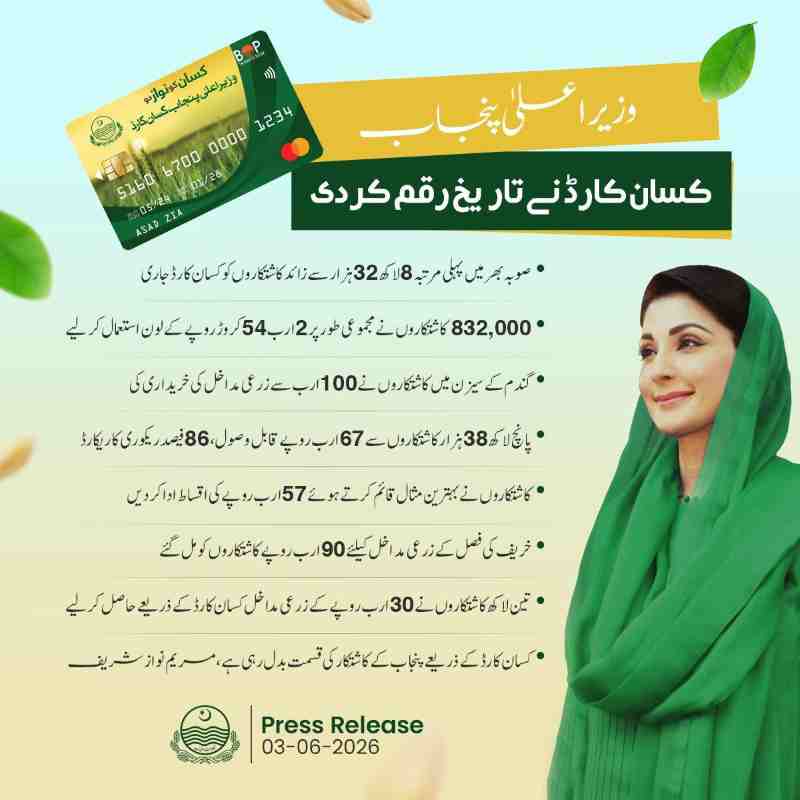
- Massive Financial Support: Over 832,000 farmers hold Kisan Cards accessing Rs. 150 billion interest-free loan pool with 86% successful repayment rate.
- Tractor Subsidy Scale: 19,000 tractors already delivered; next phase targets 20,000 additional units with subsidies reaching Rs. 1.5 million each.
- Smog Reduction Achievement: 9,500 Super Seeders distributed covering 1.4 million acres, eliminating crop residue burning across rice-wheat zones.
- Agri Mall Expansion: Four Model Agriculture Malls operational in Multan, Bahawalpur, Sahiwal, Sargodha; ten more districts approved for phase two.
- Landless Farmer Support: Apna Khet Apna Rozgar provides 5 acres of agricultural land plus Rs. 50,000 per acre development grant.
- Read More: CM Punjab Transplant Program (Free Liver, Kidney, & Heart Transplant)
- Read More: PEF Phase 3 Online Apply | School List, Last Date to Apply
- Read More: Green Tractor Scheme Online Apply (by CM Punjab- Phase 4)
- Read More: Maryam Nawaz 3 Marla Scheme | Apni Zameen Apna Ghar 3 Marla Scheme
CM Punjab Maryam Nawaz Kisan Dost Vision 2026
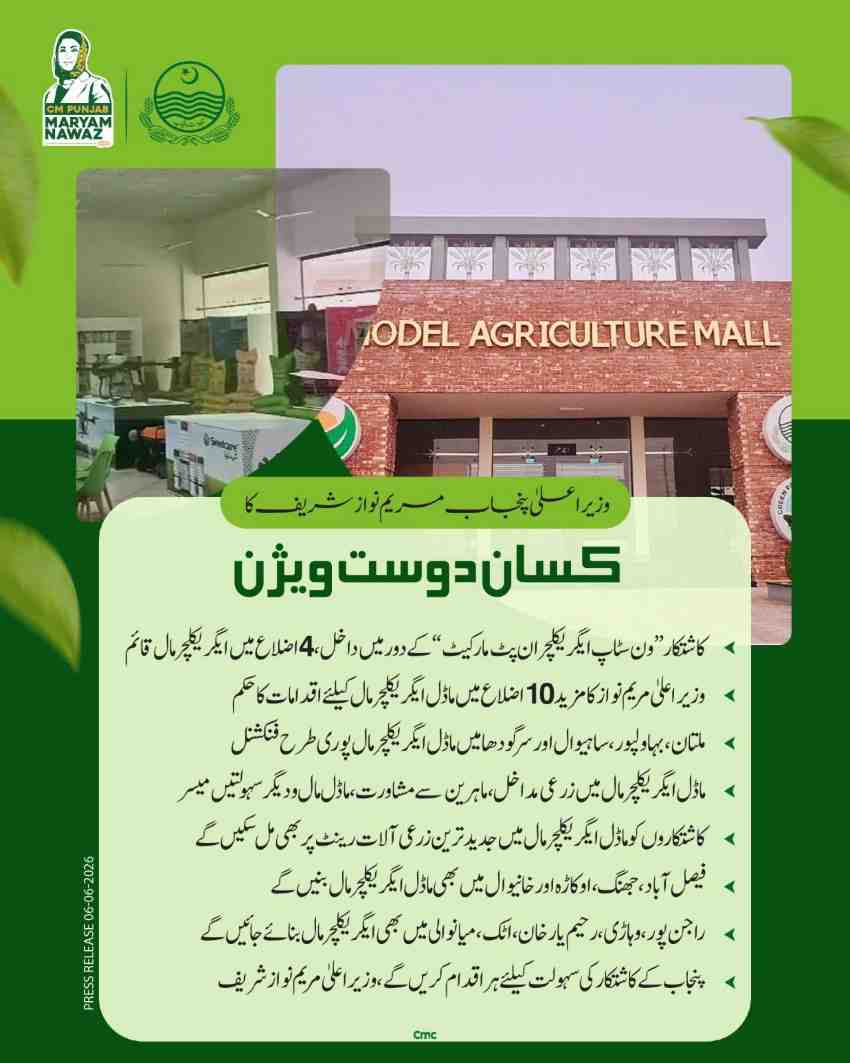
Table of Contents
Understanding the CM Punjab Maryam Nawaz Kisan Dost Vision

The Kisan Dost Vision represents a fundamental shift in how Punjab supports its agricultural sector. Chief Minister Maryam Nawaz Sharif designed this initiative to empower small and medium farmers through digital financial inclusion, heavy machinery subsidies, direct market access, and systematic elimination of exploitative middlemen.
Four transformative goals of the vision:
- Provide interest-free credit to every small farmer
- Replace traditional farming tools with high-tech machinery
- Create direct government-to-farmer input supply chains
- Convert barren lands into productive agricultural zones
The vision operates through five interconnected pillars that reinforce each other. The Muhammad Nawaz Sharif Kisan Card serves as the financial backbone. The Green Tractor Scheme and High-Tech Machinery program provide mechanization. The Super Seeder initiative addresses environmental concerns. Model Agriculture Malls offer one-stop input access. Solarization and land development schemes tackle long-term sustainability.
Scale of implementation (key metrics):
| Indicator | Achievement |
|---|---|
| Total investment | Rs. 400 billion |
| Interest-free loan pool | Rs. 150 billion |
| Kisan Cards issued | 832,000+ |
| Input purchases completed | Rs. 100 billion |
| Loan recovery amount | Rs. 57 billion |
| Recovery rate | 86% |
Farmers no longer depend on commission agents for credit or inputs. The digital system ensures transparent pricing, timely delivery, and fair market access. This transformation has restored farmer confidence across Punjab’s rural landscape.
How the Kisan Dost Vision Removes Middlemen from Agriculture
The vision eliminates middlemen by creating a fully digitized agricultural input supply chain. Farmers use their Kisan Card to purchase certified seeds, fertilizers, and pesticides directly from government-authorized dealers.
Mechanisms that cut out intermediaries:
- Digital payment system records every transaction
- Authorized dealer network (3,000+ outlets) covers all districts
- Direct government procurement from farmers at support prices
- No cash handling – all payments through Kisan Card
- Real-time price discovery without commission deductions
Traditional aarhtis charged farmers 10-15% commission plus high interest rates for credit. The Kisan Card system provides zero-interest loans and eliminates all commission payments. Farmers now save substantial amounts on every crop cycle.
Impact on farmer profitability:
| Cost Component | Before Kisan Dost | After Kisan Dost |
|---|---|---|
| Fertilizer markup | 8-12% | 0% (at MRP) |
| Seed markup | 10-15% | 0% (at MRP) |
| Credit interest | 24-36% per year | 0% |
| Commission on produce | 5-10% | 0% |
Total Budget Allocation for Punjab’s Kisan Dost Vision
The Punjab government allocated over Rs. 400 billion for complete implementation across all five strategic pillars. This represents the largest agricultural investment in the province’s history.
Budget breakdown by component:
| Component | Allocated Amount |
|---|---|
| Interest-free loans (Kisan Card) | Rs. 150 billion |
| Green Tractor subsidies | Rs. 25 billion |
| High-Tech Machinery loans | Rs. 30 billion |
| Model Agri Malls infrastructure | Rs. 10 billion |
| Super Seeder distribution | Rs. 8 billion |
| Solar tube well conversion | Rs. 7 billion |
| Barren land development | Rs. 5 billion |
| Administrative and digital systems | Remaining amount |
The budget prioritizes small farmers owning 1 to 12.5 acres. Over 70% of funds directly reach farmers through subsidies, loans, and input support. Administrative costs remain under 5% of total allocation.
Complete List of Sub-Schemes in Maryam Nawaz’s Agricultural Relief Package

The agricultural relief package contains eight major sub-schemes covering every farming stage from pre-planting to post-harvest marketing.
Eight sub-schemes with their primary benefits:
- Muhammad Nawaz Sharif Kisan Card – Interest-free credit for seeds, fertilizers, pesticides
- Green Tractor Scheme – Rs. 500,000 to Rs. 1.5 million subsidy per tractor
- Super Seeder Program – 60% subsidy on crop residue management equipment
- Model Agriculture Malls – One-stop input shops with expert consultation
- Apna Khet Apna Rozgar – 5 acres land plus Rs. 50,000 per acre grant for landless
- Solarization of Tube Wells – 60% subsidy on solar conversion for irrigation
- Wheat Policy – Minimum support price of Rs. 3,500 per maund
- High-Tech Machinery Scheme – Interest-free loans up to Rs. 30 million for advanced equipment
Each sub-scheme has independent eligibility criteria and application processes. Farmers can apply for multiple schemes if they meet the requirements.
Muhammad Nawaz Sharif Kisan Card: The Financial Heart of the Vision
The Muhammad Nawaz Sharif Kisan Card functions as a digital debit card that gives small farmers direct access to interest-free agricultural credit. Farmers use it to purchase certified seeds, fertilizers, and pesticides through a transparent government-regulated dealer network.
Kisan Card core statistics at a glance:
| Metric | Figure |
|---|---|
| Total cards issued | 832,000+ |
| Interest-free loan pool | Rs. 150 billion |
| Total input purchases made | Rs. 100 billion |
| Kharif season loans utilized | Rs. 90 billion |
| Rabi (wheat) season loans | Rs. 30 billion |
| Amount repaid by farmers | Rs. 57 billion |
| Recovery rate achieved | 86% |
Farmers have demonstrated remarkable repayment discipline. The 86% recovery rate exceeds expectations for any agricultural credit program in Pakistan’s history.
Eligibility Criteria for Kisan Card in Punjab
Farmers qualify for Kisan Card if they hold 1 to 12.5 acres of cultivable land verified through the Punjab Land Record Management System. Priority goes to actively cultivating farmers with clean credit history.
Complete eligibility checklist:
- Landholding size between 1 and 12.5 acres (inclusive)
- Valid Computerized National Identity Card (CNIC)
- Land record (Fard) matching CNIC or valid tenancy agreement
- Active cultivation proof from last two crop seasons
- No outstanding default on previous government loans
- Registered mobile number in applicant’s name
Can female farmers apply for Kisan Card benefits?
Yes. The scheme has no gender discrimination. Female farmers who own land or have legal tenancy rights can apply through the same process. Special facilitation desks at Agriculture Help Centers assist women applicants.
How do landless farmers benefit without owning land?
Landless farmers cannot directly get Kisan Card. However, they become eligible after receiving land through the Apna Khet Apna Rozgar scheme, which allots 5 acres to eligible rural youth. Once land is allotted, they can apply for Kisan Card.
How to Apply for the Nawaz Sharif Kisan Card
Farmers have three application channels for Kisan Card: SMS service (send CNIC to 8070), online portal, or physical visit to nearest Agriculture Help Center.
Step-by-step application process:
| Step | Action Required |
|---|---|
| 1 | Send CNIC number (without spaces) via SMS to 8070 |
| 2 | Receive automated reply with application status |
| 3 | If eligible, visit nearest Agriculture Help Center |
| 4 | Complete biometric verification (fingerprint scan) |
| 5 | Submit land record document (Fard or tenancy agreement) |
| 6 | Receive Kisan Card within 7-10 working days |
| 7 | Activate card at any authorized dealer outlet |
Is there a helpline number for Punjab Kisan Card registration?
Yes. The dedicated Kisan Card helpline is 0800-17000. Hours: 9 AM to 9 PM daily, including weekends. Operators speak Punjabi, Urdu, and English.
What documents are required for Punjab agricultural subsidies?
Required documents checklist:
- Copy of CNIC (front and back)
- Land ownership record (Fard/Jamabandi) from Patwari
- For tenants: registered tenancy agreement (3+ years)
- Two recent passport-size photographs
- Mobile number registered in applicant’s name
- Bank account statement (if available)
How can farmers check Kisan Card application status online?
Visit the official CM Punjab Kisan Portal. Enter CNIC number on the status check page. System displays current stage: submitted, under verification, approved, card printed, or dispatched. Status also sent via SMS.
Loan Amount Available Through Kisan Card
Farmers receive interest-free loans up to Rs. 30,000 per acre of verified cultivable land. Maximum total loan depends on landholding size up to 12.5 acres (maximum Rs. 375,000 per farmer).
Loan structure details:
| Parameter | Value |
|---|---|
| Per-acre credit limit | Rs. 30,000 |
| Maximum land considered | 12.5 acres |
| Maximum loan per farmer | Rs. 375,000 |
| Interest rate | 0% |
| Repayment period | One crop cycle (6-8 months) |
| Late payment penalty | None for first 30 days |
| Grace period | Extension available for natural calamities |
How do small farmers get interest-free loans under Kisan Dost program?
Farmers simply swipe their Kisan Card at any authorized dealer. The dealer enters the purchase amount (seeds, fertilizers, pesticides). The system deducts the amount from the farmer’s credit line. No interest accrues. No cash changes hands.
Which banks partner with Punjab government for interest-free agricultural loans?
Partner banks include:
- Bank of Punjab (lead partner)
- National Bank of Pakistan
- Zarai Taraqiati Bank Limited (ZTBL)
- Three major microfinance banks operating in Punjab
Kisan Card Repayment Rate and Recovery Status
Farmers have set an exceptional repayment example. Out of Rs. 67 billion recoverable from wheat season loans, farmers repaid Rs. 57 billion – achieving an 86% recovery rate.
Season-wise repayment performance:
| Crop Season | Total Disbursed | Amount Repaid | Recovery Rate |
|---|---|---|---|
| Wheat season (complete) | Rs. 67 billion | Rs. 57 billion | 86% |
| Kharif season (ongoing) | Rs. 90 billion | In progress | – |
How many farmers utilized Kharif season loans through Kisan Card?
Three hundred thousand (300,000) farmers accessed Rs. 30 billion worth of agricultural inputs during the Kharif season alone. This covered cotton, rice, maize, and sugarcane crops.
Green Tractor Scheme and High-Tech Machinery Subsidies
The government provides tractor subsidies ranging from Rs. 500,000 to Rs. 1.5 million depending on horsepower. Additionally, farmers can access interest-free loans up to Rs. 30 million for purchasing any of 12 categories of high-tech agricultural machinery.
Green Tractor Scheme distribution summary:
| Tractor Category | Horsepower | Subsidy Amount | Units Distributed |
|---|---|---|---|
| High-power | 85+ HP | Rs. 1 million | 9,500 |
| Medium-power | 50-85 HP | Rs. 500,000 | 9,500 |
| Next phase (all) | All categories | Up to Rs. 1.5 million | 20,000 planned |
Subsidy Amount for Tractors Under Green Tractor Scheme
The subsidy amount varies by tractor horsepower. Medium tractors (50-85 hp) receive Rs. 500,000. High-horsepower tractors (85+ hp) receive Rs. 1 million. The next phase increases subsidies to Rs. 1.5 million for all eligible tractors.
How many tractors are being distributed under Green Tractor Scheme?
First two phases distributed 19,000 tractors. The next phase will distribute an additional 20,000 tractors. Total distribution reaches 39,000 subsidized tractors.
Eligibility criteria for Punjab Green Tractor Scheme:
- Landholding between 12.5 and 50 acres
- Active farmer cultivating the land
- No previous government tractor subsidy received
- Valid land record documentation
- CNIC and mobile number registered
How can a farmer apply for the tractor lottery?
Application process:
- Obtain form from tehsil agriculture office
- Attach CNIC copy and land record (Fard)
- Pay processing fee of Rs. 1,000 (non-refundable)
- Receive lottery number and acknowledgment slip
- Balloting date announced via SMS to registered numbers
- Winners list displayed at tehsil office and website
- Selected farmers submit subsidy claim form
- Tractor delivered at subsidized price within 30 days
Loan Amount for High-Tech Agricultural Machinery
Farmers can access interest-free loans up to Rs. 30 million to purchase any of 12 categories of advanced machinery.
12 machinery categories covered:
| Machinery Type | Primary Use |
|---|---|
| Combine harvester | Mechanical harvesting of wheat, rice, maize |
| Laser land leveler | Precision field leveling for water efficiency |
| Potato planter | Automated planting for uniform spacing |
| Sugarcane harvester | Mechanical harvesting of sugarcane |
| Rice transplanter | Efficient paddy planting |
| Maize sheller | Post-harvest kernel separation |
| Wheat thresher | Threshing operations |
| Cotton picker | Mechanical cotton harvesting |
| Drill machine | Direct seeding without tillage |
| Boom sprayer | Large-scale pesticide application |
| Fertilizer spreader | Even nutrient distribution |
| Chaff cutter | Fodder processing for livestock |
What agricultural machinery can be rented at Tehsil Machinery Hubs?
Tehsil Machinery Hubs offer rental access to:
- Combine harvesters – Rs. 8,000 per day
- Laser land levelers – Rs. 3,000 per day
- Rice transplanters – Rs. 2,000 per day
- Boom sprayers – Rs. 1,500 per day
- Threshers – Rs. 2,500 per day
Small farmers receive 50% discount on rental rates for landholdings under 5 acres.
Apna Khet Apna Rozgar Scheme for Landless Youth
Apna Khet Apna Rozgar allots up to 5 acres of agricultural land to landless rural youth. Each beneficiary also receives a Rs. 50,000 per acre development grant to begin farming operations.
Scheme benefits summary:
| Benefit | Amount |
|---|---|
| Land allotment | Up to 5 acres per family |
| Development grant | Rs. 50,000 per acre |
| Free extension services | Yes |
| Kisan Card priority access | Yes |
| Machinery rental priority | Yes |
| Land transfer moratorium | 5 years (no sale allowed) |
How can landless youth get 5 acres of agricultural land in Punjab?
Application process:
- Apply through Punjab Land Records Authority office
- Eligibility verification: rural residence, age 18-40, zero land ownership
- Priority to agricultural labor families
- Balloting conducted at district level
- Selected applicants receive land allotment order
- Development grant disbursed in two installments
What is the development grant amount under Apna Khet scheme?
Rs. 50,000 per acre provided directly to the farmer’s bank account. First installment (Rs. 30,000) for land preparation and seed purchase. Second installment (Rs. 20,000) for fertilizer and irrigation setup.
Super Seeder Scheme and Environmental Smog Control
The Kisan Dost Vision distributes Super Seeders at heavily subsidized rates to rice farmers. This equipment allows wheat sowing directly into rice stubble without burning, eliminating crop residue fires that cause severe smog.
Super Seeder environmental impact data:
| Metric | Achievement |
|---|---|
| Super Seeders distributed | 9,500 units |
| Area covered (rice-wheat zone) | 1.4 million acres |
| Crop residue burning incidents | Reduced by 70% |
| Smog severity (Lahore, Multan) | Significantly decreased |
| CO2 emissions reduced | Estimated 500,000 tons |
Benefits of the Super Seeder Scheme for Rice Farmers
Super Seeder provides multiple benefits to rice farmers beyond environmental protection. It enables direct wheat sowing into standing rice stubble, saving time, water, and fertilizer.
Farmer-specific benefits list:
- No burning required – saves labor and legal penalties
- Soil moisture retention increases by 20-30%
- Fertilizer requirement reduces by 15-20%
- Wheat germination rate improves by 10%
- One pass completes sowing (no multiple tillage)
- Fuel consumption reduced by 60%
How does Kisan Dost Vision address environmental pollution and smog?
The vision tackles smog through three interventions:
- Super Seeder distribution – 9,500 units at 60% subsidy, covering all major rice districts
- Crop residue management training – Workshops for 50,000 farmers on zero-burning techniques
- Enforcement and incentives – Fines for burning (Rs. 50,000) plus bonus for residue incorporation (Rs. 5,000 per acre)
Super Seeders Distributed So Far
Over 9,500 Super Seeders have been distributed to rice farmers across Punjab. The next phase plans an additional 5,000 units specifically for the rice-wheat cropping zone covering Sheikhupura, Gujranwala, and Nankana Sahib districts.
What is the subsidy percentage on a Super Seeder?
The government provides 60% subsidy on Super Seeder units. Market price: approximately Rs. 800,000. Farmer pays: Rs. 320,000 (40% of market price). The remaining Rs. 480,000 covered by government subsidy.
Modern Irrigation Methods Introduced in the Thal Region
The Thal region (districts: Bhakkar, Khushab, Layyah, Muzaffargarh) faces severe water scarcity. The Kisan Dost Vision transitions 10,000 acres to modern drip and sprinkler irrigation systems.
Irrigation modernization targets by method:
| Irrigation Method | Area Targeted | Water Saving Compared to Flood |
|---|---|---|
| Drip irrigation | 6,000 acres | 50-70% |
| Sprinkler systems | 4,000 acres | 40-60% |
| Solar-powered pumps | 2,000 tube wells | 100% fuel saving |
Farmers adopting drip irrigation receive 80% subsidy on system cost. Sprinkler systems receive 60% subsidy. Solar pumps receive 60% subsidy with easy installments.
Model Agriculture Malls: One-Stop Solution for Farmers
Model Agriculture Malls (Model Agri Malls) are government-established one-stop shops providing certified agricultural inputs, machinery rental, soil testing, and expert agronomist consultation under one roof.
Phase 1 Model Agri Mall locations (fully operational):
| District | Status | Facilities Available |
|---|---|---|
| Multan | Fully operational | All services |
| Bahawalpur | Fully operational | All services |
| Sahiwal | Fully operational | All services |
| Sargodha | Fully operational | All services |
Facilities Available at Model Agriculture Malls
Each Model Agri Mall offers the following facilities:
Input supply section:
- Certified wheat, rice, maize, cotton seeds
- Approved pesticides and herbicides
- High-quality DAP, Urea, Potash fertilizers
- Soil conditioners and micronutrients
Service section:
- Laser land leveler rental
- Combine harvester rental
- Rice transplanter rental
- Soil and water testing laboratory
- Agronomist on-site consultation (free)
- Farmer training workshops (weekly)
Market linkage section:
- Direct produce purchase center
- Real-time price display board
- Linkages with flour mills and rice exporters
Which districts are getting Model Agri Malls in Phase 2?
Phase 2 approved districts:
- Faisalabad
- Chiniot
- Okara
- Khanewal
- Rajanpur
- Vehari
- Rahim Yar Khan
- Attock
- Mianwali
- Sheikhupura
Renting Modern Agricultural Tools from Agri Malls
Farmers can rent modern tools at affordable rates designed for small farmers. Rental requires valid CNIC and refundable security deposit (20% of equipment value).
Rental rates structure:
| Equipment | Daily Rate | Small farmer rate (under 5 acres) |
|---|---|---|
| Laser land leveler | Rs. 3,000 | Rs. 1,500 |
| Combine harvester | Rs. 8,000 | Rs. 4,000 |
| Potato planter | Rs. 1,500 | Rs. 750 |
| Rice transplanter | Rs. 2,000 | Rs. 1,000 |
| Boom sprayer | Rs. 1,500 | Rs. 750 |
Wheat Policy and Price Support Mechanism
The Wheat Policy establishes a structured framework maintaining strategic wheat reserves while protecting farmers through price stabilization. The minimum support price is set at Rs. 3,500 per 40 kg maund.
Current Wheat Support Price per Maund Under the 2026 Policy
The government fixed the minimum support price at Rs. 3,500 per 40 kg maund (approximately 80 kg per maund in some regions; standard is 40 kg). This ensures farmers receive fair compensation while keeping flour affordable for consumers.
Wheat policy key features:
| Feature | Detail |
|---|---|
| Minimum support price | Rs. 3,500 per 40 kg maund |
| Government procurement target | 3 million metric tons |
| Procurement period | April 15 to June 30 annually |
| Payment timeline to farmers | Within 7 days of delivery |
| Storage facility | Government silos and warehouses |
How Kisan Card Helps Farmers Buy Fertilizer and Seeds for Wheat
During wheat season, Kisan Card enables farmers to purchase inputs directly from authorized dealers using the Rs. 30,000 per acre credit line.
Wheat season input coverage per acre:
- DAP fertilizer: 2 bags (50 kg each) – fully covered
- Urea fertilizer: 1 bag (50 kg) – fully covered
- Certified wheat seed: 40 kg – fully covered
- Pesticides and herbicides: Full coverage as needed
Farmers simply swipe their Kisan Card at any authorized dealer. The system deducts the input cost from their credit line. No cash required.
Solarization of Tube Wells and Energy Security
The vision includes converting over 7,100 agricultural tube wells to solar power. This drastically reduces farmers’ energy costs and eliminates dependence on expensive diesel or unreliable grid electricity.
How Farmers Convert Their Tube Wells to Solar Power
Farmers apply through the Punjab Energy Department for subsidized solar systems. The process requires no upfront payment – farmers pay through easy installments deducted from future crop earnings.
Solar conversion step-by-step:
| Step | Action |
|---|---|
| 1 | Visit Punjab Energy Department district office |
| 2 | Submit tube well registration certificate |
| 3 | Submit land documents and CNIC |
| 4 | Receive solar feasibility assessment (free) |
| 5 | Sign installment agreement (20% down, 8 monthly installments) |
| 6 | System installation within 30 days |
| 7 | Start saving on fuel/electricity immediately |
Subsidy for Switching from Diesel to Solar
The government provides 60% subsidy on complete solar tube well systems. Farmers pay only 40% through easy installments. Diesel tube well owners receive priority processing.
Financial comparison before and after solar conversion:
| Energy Source | Monthly Operating Cost | Annual Cost | 5-Year Cost |
|---|---|---|---|
| Diesel | Rs. 25,000-30,000 | Rs. 300,000-360,000 | Rs. 1.5-1.8 million |
| Grid electricity | Rs. 15,000-20,000 | Rs. 180,000-240,000 | Rs. 0.9-1.2 million |
| Solar (after subsidy) | Rs. 2,000-3,000 (maintenance only) | Rs. 24,000-36,000 | Rs. 120,000-180,000 |
Farmers recover their 40% investment within 12-18 months through fuel savings.
Barren Land Development and Regional Focus
The government reclaims 4,500 acres of barren land in the Potohar region for olive cultivation. Additionally, 10,000 acres in the Thal area transition to modern irrigation methods.
Steps to Develop Barren Land in the Potohar Region
Potohar region (Rawalpindi, Attock, Jhelum, Chakwal districts) faces rocky, low-fertility land. Development includes:
Potohar development targets:
| Activity | Target |
|---|---|
| Barren land reclamation | 4,500 acres |
| Olive trees planted | 200,000 saplings |
| Farmers covered | 3,500 families |
| Subsidy per farmer | Rs. 500,000 |
| Irrigation structures | 500 water ponds |
What is the “Banyan Tree” initiative in Potohar?
The Banyan Tree initiative supports olive cultivation with:
- High-value olive tree planting (200 trees per acre)
- Technical training on olive cultivation
- Guaranteed buyback of olive produce at support prices
- Processing facilities for olive oil extraction
Farmers receive Rs. 500,000 over three years to cover saplings, irrigation, and maintenance.
Application Process and Registration Steps
Farmers can register for all Kisan Dost Vision schemes through online portal, SMS service, and physical agriculture department offices.
Step-by-Step Online Registration for Kisan Card
- Visit official CM Punjab Kisan Portal website
- Click “New Registration” button on homepage
- Enter CNIC number and registered mobile number
- Receive OTP verification code via SMS
- Enter OTP to verify mobile number
- Input land record information (Fard number from Patwari)
- Upload scanned documents (CNIC, land record, photo)
- Submit application and receive tracking ID
- Visit nearest Agriculture Help Center for biometric verification
- Kisan Card delivered within 7-10 working days
Step-by-Step Registration for Green Tractor Balloting
- Obtain application form from tehsil agriculture office (free)
- Attach CNIC copy and land record (Fard)
- Pay processing fee of Rs. 1,000 at government treasury
- Receive lottery number and acknowledgment slip
- Balloting date announced via SMS to all applicants
- Winners list displayed at tehsil office and official website
- Selected farmers submit subsidy claim form within 15 days
- Tractor dealer contacts farmer for delivery at subsidized price
How to Check Your Name in the Subsidy List via SMS 8070
Send your CNIC number (without spaces) to 8070. Example: Send “1234567890123” to 8070.
Instant reply shows:
- Whether eligible for Kisan Card
- Whether name appears in Green Tractor balloting list
- Whether Super Seeder subsidy approved
- Current status of any pending application
Required Documents List for All Schemes
For Kisan Card:
- CNIC copy
- Land ownership record (Fard) or tenancy agreement
- Two passport-size photographs
- Mobile number registered in applicant’s name
For Green Tractor Scheme:
- CNIC copy
- Land record (Fard showing 12.5-50 acres)
- No previous tractor subsidy declaration
- Processing fee receipt
For Super Seeder subsidy:
- CNIC copy
- Land record (rice-growing area)
- Undertaking not to burn crop residue
For Solar Tube Well conversion:
- CNIC copy
- Tube well registration certificate
- Land record
- Electricity connection bill (if grid connected)
Frequently Asked Questions
What is the main objective of Maryam Nawaz’s Kisan Dost Vision?
The main objective is empowering small and medium farmers through interest-free credit, heavy machinery subsidies, direct market access, and elimination of exploitative middlemen across Punjab.
How many farmers will benefit from the Kisan Dost Vision?
Over 1 million farmers will directly benefit. Currently 832,000 farmers have received Kisan Cards, and the program continues expanding to cover all eligible small farmers.
Can a tenant farmer apply for the Green Tractor Scheme?
Yes. Tenant farmers with a registered tenancy agreement (minimum 3 years) and proof of active cultivation can apply. The landowner must provide no-objection certificate.
What is the interest rate for the High-Tech Machinery loan?
The interest rate is 0% – completely interest-free for all high-tech machinery loans up to Rs. 30 million. No hidden fees or processing charges apply.
Where are the Tehsil Machinery Hubs located?
Tehsil Machinery Hubs operate in all 36 districts of Punjab, with at least one hub per tehsil. Major hubs in Lahore, Faisalabad, Multan, Gujranwala, Sialkot, and Rahim Yar Khan.
Contact number for Punjab Kisan Card helpline?
The Punjab Kisan Card helpline is 0800-17000, available 9 AM to 9 PM daily, including Sundays and public holidays.
Can a farmer get both Kisan Card and Green Tractor subsidy?
Yes. Eligible farmers can receive both benefits as they are separate schemes with independent eligibility criteria and funding sources.
What is the maximum landholding to qualify for Kisan Card?
The maximum landholding for Kisan Card is 12.5 acres. Farmers with larger holdings are not eligible as the scheme prioritizes small and medium farmers.
How long does Kisan Card approval take?
Approval takes 7 to 10 working days from complete application submission including biometric verification and document verification.
Is there any fee for Kisan Card registration?
No. Kisan Card registration is completely free. No application fee, processing fee, or annual fee is charged to farmers.
Disclaimer: This guide provides general information about Punjab government agricultural schemes. Farmers should verify current details with official government sources and local agriculture department offices as schemes may be updated.

Add a Comment