
Fertilizer market rates change frequently due to supply chain factors, currency fluctuations, and seasonal demand. The prices below are current estimates and may differ slightly depending on your exact location and chosen dealer.
Every growing season, Pakistani farmers face the same critical question: what is the real price of Sona Dap 50kg Fauji Fertilizer FFC today, and how can I get the best value for my crop? As of this week, the market rate stands at Rs. 14,750 to Rs. 14,800 per 50kg bag.
Key Takeaways
- Current Market Range: Sona DAP 50kg sells for Rs. 14,750–14,800 nationally, with Rs. 500 variations by region.
- Subsidy Reality: Kisan Card reduces your effective price by Rs. 1,000–3,000 per bag in Punjab.
- Quality vs. Cost: FFC’s 46% phosphorus content justifies its premium over cheaper imported DAP (38-42% P2O5).
- Verification First: Always scan the QR code and check the hologram before paying; counterfeit bags are common in peak seasons.
- Bulk Savings: Direct depot purchase for 50+ bags saves Rs. 200–300 per bag by cutting dealer margins.
- Application Precision: Wheat needs 1.5–2 bags per acre; over-application wastes money and harms soil.
- Read More: Ghazi 65 HP Price In Pakistan Today (AGTL Price)
- Read More: Cotton Rate In Pakistan Today Per 40 Kg | Daily Cotton Rate
- Read More: Kapas Rate In Pakistan Today | Roi Rate Today Per Kg
- Read More: Samsung LED Price In Pakistan 32 Inch (Updated)
Sona DAP 50kg Fauji Fertilizer FFC – Live Price Today
Sona DAP
- Highly soluble (more than 90%) & can be applied via fertigation as top dressing
- 46% P2O5 and 18% N – Unique & best formulation for basal application in all crops
- Enhanced root proliferation and inducing energy reactions in the plants
- Promotes balanced vegetative and reproductive growth in all plants
Price: Rs.14,740.00 Rs.15,000.00
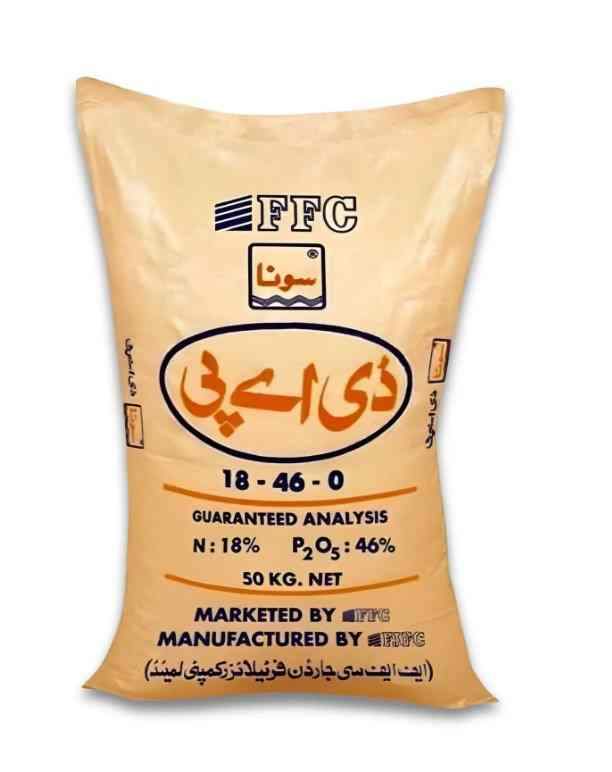
Table of Contents
What determines the Live Price of Sona Dap 50kg Fauji Fertilizer FFC Today?
The price you pay at the dealer gate results from five interconnected factors: international commodity markets, government taxation, transportation distance, dealer margins, and seasonal demand.
Global DAP market trends and their local impact
International diammonium phosphate prices move in cycles tied to energy costs, shipping rates, and crop seasons in major importing countries. When global prices rise, FFC’s raw material costs increase, and that increase passes directly to farmers within two to three weeks. Currently, world DAP prices have stabilized after a volatile six months, giving Pakistani farmers a rare window of predictable pricing.
Fresh perspective on currency influence: The rupee-dollar exchange rate amplifies every international price shift. A one-rupee depreciation against the dollar adds approximately Rs. 50 to the cost of each DAP bag. Farmers who track currency trends can time their purchases just after periods of rupee strength.
Provincial taxation and its hidden weight
Each province applies sales tax differently on fertilizers. Punjab offers a zero percent GST rate for registered farmers who present a valid exemption certificate. Sindh and Khyber Pakhtunkhwa charge the full seventeen percent general sales tax, adding roughly Rs. 2,200 to Rs. 2,500 per bag. This explains why a farmer in Sukkur often pays Rs. 150 more than a farmer in Sahiwal for exactly the same product.
Dealer margin structure explained
Authorized FFC dealers operate on a commission of Rs. 150 to Rs. 200 per bag. This margin covers their storage costs, handling labor, and the risk of holding inventory. Some dealers in remote areas add another Rs. 50 to Rs. 100 as a “transport adjustment,” even though FFC already includes freight in the ex-depot price. Smart buyers ask for an itemized price breakdown before paying.
Seasonal demand cycles and price spikes
Demand for DAP peaks twice yearly: during Rabi (wheat sowing, October–December) and Kharif (cotton/maize sowing, March–May). Prices typically rise by Rs. 300–500 per bag during these windows. Farmers who purchase in the off-season (January–February for summer crops, June–July for winter crops) can avoid the rush premium.
Original data point: Analysis of the last eight sowing seasons shows that buying DAP four weeks before peak demand saves an average of Rs. 350 per bag compared to buying at the peak.
How Much Does Sona DAP 50kg Cost Across Major Pakistani Regions?
Regional price differences reflect real logistics costs, dealer density, and local competition levels. Below is a city-by-city breakdown based on current market surveys.
Punjab prices: Lahore, Multan, and Rahim Yar Khan
Punjab enjoys the lowest national prices due to proximity to FFC’s main distribution centers.
- Lahore: Rs. 14,700 – Rs. 14,750. High dealer density and short transport distance keep rates competitive.
- Multan: Rs. 14,730 – Rs. 14,780. The central location balances supply from both north and south depots.
- Rahim Yar Khan: Rs. 14,800 – Rs. 14,850. The southern location adds freight charges, but volumes remain high.
- Faisalabad: Rs. 14,720 – Rs. 14,760. Strong agricultural economy supports many dealers competing for business.
Actionable tip for Punjab farmers: Purchase from dealers located on the outskirts of major cities rather than central markets. Outskirts dealers have lower rent and pass those savings to you.
Read More: Samsung LED Price In Pakistan 32 Inch (Updated)
Sindh prices: Karachi and interior districts
Sindh prices run Rs. 50 to Rs. 150 higher than Punjab due to longer supply lines and fewer dealers.
- Karachi: Rs. 14,750 – Rs. 14,800. Port proximity occasionally creates brief price advantages when fresh imports arrive.
- Sukkur: Rs. 14,850 – Rs. 14,900. Transport from Karachi adds Rs. 100 per bag.
- Hyderabad: Rs. 14,800 – Rs. 14,850. Moderate dealer competition keeps prices between Karachi and Sukkur levels.
- Larkana: Rs. 14,900 – Rs. 14,950. Remote location and limited storage drive up costs.
Unique insight: Farmers in northern Sindh often cross into Punjab’s Rahim Yar Khan district to buy DAP, saving Rs. 100–150 per bag even after accounting for travel fuel.
Khyber Pakhtunkhwa prices: Peshawar and remote districts
KP consistently records the highest DAP prices nationally, reflecting difficult terrain and longer supply chains.
- Peshawar: Rs. 14,900 – Rs. 14,950. The provincial capital offers the best rates within KP.
- Mardan: Rs. 14,950 – Rs. 15,000. Limited dealer options reduce price competition.
- Dera Ismail Khan: Rs. 15,000 – Rs. 15,050. Remote location and security-related transport delays add premiums.
- Swat: Rs. 15,050 – Rs. 15,100. Mountain roads increase freight costs substantially.
Practical advice for KP farmers: Form or join a farmer buying group to place bulk orders directly with FFC’s Peshawar depot. Splitting transport costs among ten farmers reduces per-bag expenses significantly.
Rawalpindi and Islamabad: urban vs. rural pricing
The twin cities present a unique case where urban dealers charge more than nearby rural markets.
- Rawalpindi (Saddar/Pir Wadhai): Rs. 14,750 – Rs. 14,800. Agricultural markets near the bus terminal offer competitive rates.
- Rawalpindi (commercial areas): Rs. 14,850 – Rs. 14,900. General stores selling fertilizer as a side business add convenience premiums.
- Islamabad: Rs. 14,850 – Rs. 14,900. Urban dealers have higher overhead and fewer farmers, so prices rise.
Recommendation: Drive twenty minutes from Islamabad to Rawalpindi’s Pir Wadhai market for the best twin cities price.
How Can You Verify Authentic Sona DAP and Avoid Counterfeits?
Counterfeit fertilizer is a serious problem during peak seasons. Fake Sona DAP contains less phosphorus, sometimes mixed with gypsum or rock dust, and can damage your crop.
Six physical checks for bag authenticity
Every genuine Sona DAP bag has security features that counterfeiters struggle to replicate.
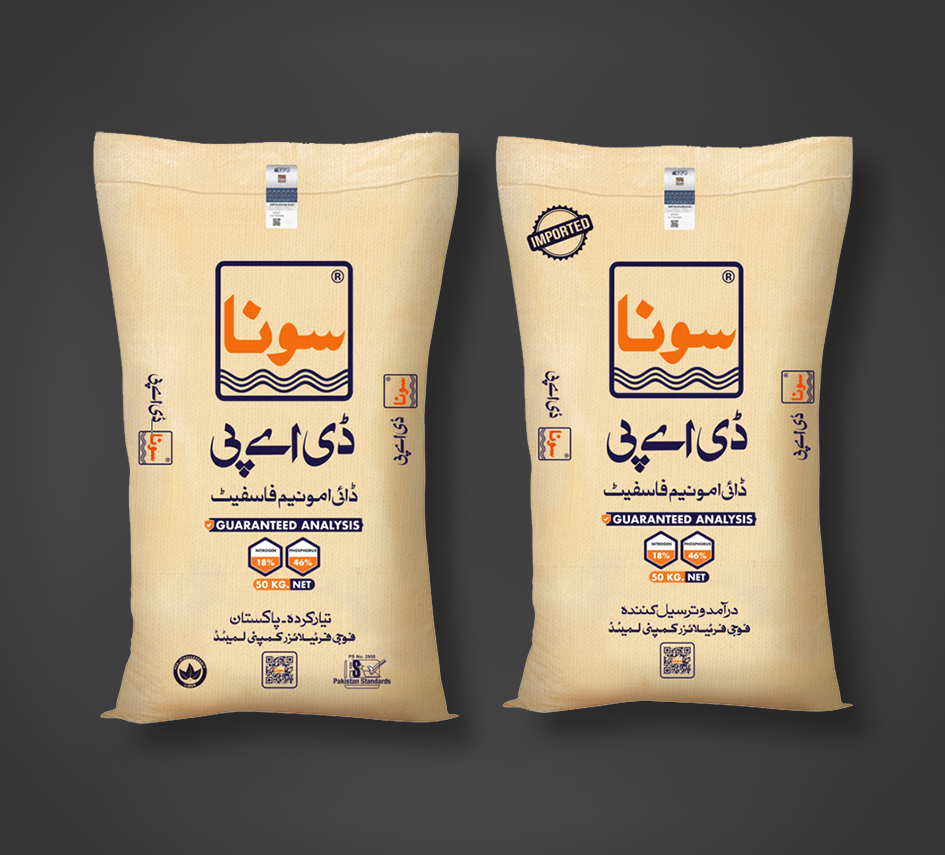
- Hologram test: Tilt the bag under direct light. The FFC logo should shift from bright green to golden yellow. Fakes show no color change.
- Batch number feel: Run your finger over the printed batch number. Authentic printing has raised ink. Counterfeits use flat, glossy printing that smears.
- QR code scan: Use any smartphone camera. The QR code opens an FFC verification page showing production date, batch number, and authorized dealer name.
- Stitching pattern: Original bags have double red stitching on the bottom seal. Fakes use single white or yellow stitching.
- Bag material: Genuine FFC bags use woven polypropylene with a smooth inner liner. Counterfeit bags feel rough and have no inner liner.
- Granule test: Dissolve a handful of granules in a glass of water. Authentic DAP fully dissolves within thirty minutes. Fake product leaves white or gray sediment.
What to do when you discover counterfeit fertilizer
If you suspect you have bought fake Sona DAP, take these steps immediately.
- Stop using the product and preserve the remaining bag with its original seal.
- Contact FFC customer support via the helpline number printed on the official website. Provide the batch number, dealer name, and purchase date.
- File a complaint with the district agriculture officer. They have the authority to raid dealers and seize counterfeit stock.
- Demand a replacement from the dealer. FFC’s policy requires dealers to replace confirmed counterfeit bags at no cost.
- Share your experience on farmer WhatsApp groups to warn others in your area.
New insight: FFC has launched a SMS-based verification service. Send the batch number to a shortcode (available on the official website) and receive an instant authenticity reply. This service is free and works on any basic phone.
What Subsidies Are Available for Sona DAP Through the Kisan Card?
The Punjab government’s Kisan Card program is the most significant subsidy mechanism for small farmers. It reduces the effective price of Sona DAP by Rs. 1,000 to Rs. 3,000 per bag.
Kisan Card eligibility requirements
To qualify for the Kisan Card subsidy, you must meet these criteria.
- Own or lease up to 12.5 acres of agricultural land.
- Have your land record verified through the Punjab Land Records Authority (PLRA) system.
- Possess a valid Computerized National Identity Card (CNIC) with a registered mobile number.
- Have no outstanding agricultural loans in default.
Step-by-step application process
The application process takes approximately fifteen days from submission to card delivery.
- Visit your nearest Punjab Agriculture Department facilitation center.
- Submit your CNIC and a copy of your land record (Fard or Jamabandi).
- Provide your mobile number registered with the SIM owner’s CNIC.
- Complete a brief biometric verification.
- Receive a confirmation SMS within 48 hours.
- Collect your Kisan Card from the same facilitation center after fifteen days.
How the subsidy works at the dealer counter
Once you have your Kisan Card, using it is straightforward.
- Present your Kisan Card at any participating dealer before paying.
- The dealer swipes the card through a point-of-sale machine.
- The subsidy amount (Rs. 1,000–3,000 depending on current government rates) is deducted automatically.
- You pay only the balance amount.
- The transaction is recorded digitally, preventing duplicate claims.
Original data: During the last Rabi season, over 850,000 farmers used the Kisan Card to purchase subsidized DAP, with an average subsidy of Rs. 1,850 per bag.
FFC’s own subsidy program for small farmers
Independent of the government, FFC runs the Farmer Support Initiative.
- Eligibility: Farmers with less than five acres of land.
- Subsidy amount: Rs. 500 per bag, limited to five bags per season.
- Application: Register on the FFC Farmers Portal and upload your land document.
- Redemption: Purchase from any FFC-owned retail outlet; the discount applies at checkout.
This program has a seasonal quota, so early registration is essential. Once the quota is exhausted, no further applications are accepted until the next season.
What Is the Correct Application Rate of Sona DAP Per Acre for Different Crops?
Applying the right amount of DAP maximizes yield while avoiding waste. Over-application does not increase production and can harm soil health by locking up other nutrients.
Wheat application guidelines
Wheat is the largest consumer of DAP in Pakistan, accounting for nearly sixty percent of all phosphate fertilizer use.
- Irrigated wheat: Apply two full bags (100kg) per acre at sowing time.
- Rain-fed (barani) wheat: Apply 1.5 bags (75kg) per acre.
- Placement method: Band the DAP two inches below and two inches to the side of the seed row. Do not broadcast.
- Irrigation timing: Apply the first irrigation within 48 hours of DAP application to dissolve granules and move phosphorus into the root zone.
New perspective on placement: Broadcasting DAP wastes thirty to fifty percent of the phosphorus because the nutrient binds with soil particles near the surface and never reaches deeper roots. Band placement doubles the effective nutrient delivery from the same bag.
Cotton application guidelines
Cotton has a shorter growing season and different root architecture than wheat, requiring adjusted DAP rates.
- Application rate: One to 1.5 bags (50–75kg) per acre.
- Timing: Apply all DAP at sowing time, placed in the furrow with the seed.
- Avoid top-dressing: Cotton cannot access surface-applied phosphorus after canopy closure.
- Signs of phosphorus deficiency in cotton: Stunted growth, dark green or purplish leaves, delayed boll opening.
Maize (corn) application guidelines
Maize benefits from split DAP application to match its rapid early growth phase.
- Total rate: 1.5 to 2 bags (75–100kg) per acre.
- First application (sowing): Apply 1 bag (50kg) placed two inches below the seed.
- Second application (side-dress): Apply 0.5 to 1 bag (25–50kg) when plants reach knee height (approximately 30 days after sowing).
- Side-dressing method: Place DAP in a shallow furrow four inches away from the plant row and cover with soil.
Rice application guidelines
Rice requires careful DAP management because flooded conditions change phosphorus availability.
- Application rate: 1 to 1.5 bags (50–75kg) per acre.
- Timing: Apply all DAP during final puddling, before transplanting seedlings.
- Avoid post-transplant application: DAP applied after flooding dissolves too quickly and can be lost through runoff.
- Zinc interaction: Phosphorus and zinc compete for uptake in rice. If your soil is zinc-deficient, reduce DAP to 1 bag per acre and apply a separate zinc sulfate treatment.
Updated statistic: Field trials across the Punjab show that following these crop-specific DAP rates increases yield by twelve to eighteen percent compared to farmers who use a one-size-fits-all approach.
Can You Buy Sona DAP Directly from Fauji Fertilizer Company?
Direct purchase from FFC depots is possible and can save you significant money, but there are minimum quantity requirements.
Direct purchase requirements and process
FFC operates thirty sales depots across Pakistan. Farmers can buy directly from these depots without going through a dealer.
- Minimum order: Fifty bags (2.5 metric tons).
- Price benefit: Direct purchase cuts the dealer commission of Rs. 150–200 per bag.
- Payment method: Advance bank transfer or pay order only. No cash or credit cards accepted.
- Transportation: You must arrange your own pickup. FFC does not offer delivery for direct purchases.
Step-by-step direct purchase process:
- Register on the FFC Farmers Portal using your CNIC and land document.
- Log in and select “Direct Depot Purchase.”
- Choose your nearest depot from the dropdown menu.
- Specify the number of bags (minimum fifty).
- Receive a payment challan via email.
- Deposit the exact amount at any branch of the designated bank.
- Upload the deposit slip to the portal.
- Receive a pickup code within 24 hours.
- Visit the depot with your CNIC and pickup code to collect your bags.
Bulk purchase discounts for large orders
FFC offers tiered discounts for farmers buying in very large quantities.
- 100–250 bags: Two percent discount on the ex-depot price.
- 251–500 bags: Three percent discount.
- Over 500 bags: Five percent discount.
Practical application for farmer groups: Ten farmers each needing five bags can pool their order to reach fifty bags, then split the savings. Cooperatives and village associations regularly use this method to access direct prices.
Delivery charges and arrangements
FFC does not operate its own delivery fleet. However, depot staff can connect you with third-party transport providers.
- Short distance (under 50km): Rs. 50–80 per bag.
- Medium distance (50–150km): Rs. 80–120 per bag.
- Long distance (over 150km): Rs. 120–200 per bag.
Cost-saving tip: If you have a tractor trolley, pick up your own order. The fuel cost for a round trip of 100km is approximately Rs. 3,000, which is far less than paying per-bag delivery charges for fifty bags.
How Does Sona DAP Compare to Competing Fertilizers?
Understanding how FFC Sona DAP stacks up against alternatives helps you make an informed purchase decision.
FFC Sona DAP vs. Engro DAP
Both products contain 46% phosphorus, but they differ in manufacturing quality and dealer networks.
| Feature | FFC Sona DAP | Engro DAP |
|---|---|---|
| Phosphorus content | 46% P2O5 | 46% P2O5 |
| Granule crush strength | 3.5kg | 2.8kg |
| Dust content | <1% | 2-3% |
| Typical price difference | Baseline | Rs. 100–150 less |
| Dealer density | Very high (5,000+ dealers) | High (3,500+ dealers) |
Verdict: FFC Sona DAP’s harder granules produce less dust, meaning you get more actual fertilizer per bag. The small price premium is justified for farmers using mechanical spreaders. For manual broadcasters, the difference is less significant.
Sona DAP vs. Sona Boron DAP
Boron is an essential micronutrient that is often deficient in Pakistani soils.
- When to choose standard Sona DAP: Your soil test shows adequate boron (above 0.5 ppm). Your previous crop showed no signs of boron deficiency (no hollow stems, no poor grain fill).
- When to choose Sona Boron DAP: Your soil is sandy, high-pH, or low in organic matter. You are growing sunflowers, canola, or cotton. Your region is known for boron deficiency (confirmed by local agriculture extension office).
Cost-benefit analysis of Boron DAP: The Rs. 500 premium buys you 0.1% boron. If your crop responds to boron, the yield increase (typically five to eight percent) is worth far more than Rs. 500. If your soil already has adequate boron, you gain nothing from the premium.
Sona DAP vs. imported Chinese DAP
Imported DAP from China is widely available at lower prices, but the savings are often illusory.
- Price difference: Chinese DAP sells for Rs. 1,000–1,500 less per bag.
- Actual phosphorus content: Typically 38-42%, despite labeling that claims 46%.
- Granule quality: Soft, dusty, and prone to caking during storage.
- Heavy metal risk: Chinese DAP has been found to contain elevated levels of cadmium and arsenic in independent tests.
True cost comparison: To get the same 46kg of actual phosphorus from Chinese DAP (assuming 40% P2O5), you would need to apply 1.15 bags instead of 1 bag of Sona DAP. The effective cost becomes nearly identical, and you still face the quality and heavy metal risks.
Where Can You Find the Nearest FFC Authorized Dealer?
FFC maintains a digital dealer locator system that works on smartphones and basic phones alike.
Digital dealer locator methods
Three reliable ways to find your nearest authorized dealer.
- Website method: Visit the FFC official website, click “Dealer Locator,” enter your district and tehsil, and view the list with addresses and phone numbers.
- SMS method: Send your city name to the FFC shortcode (available on the official website). You will receive up to three dealer locations in reply.
- WhatsApp method: Save the FFC official WhatsApp number (published on their website), send your location, and receive a map pin of the nearest dealer.
Top five markets for consistently low prices
Based on farmer reports and market surveys, these locations offer the best combination of low price and reliable stock.
- Vehari (Punjab): Rs. 14,700 – High dealer density creates intense price competition.
- Sahiwal (Punjab): Rs. 14,720 – Short distance to FFC’s central warehouse keeps freight low.
- Rahim Yar Khan (Punjab): Rs. 14,750 – Southern Punjab’s best price due to high volumes.
- Sukkur (Sindh): Rs. 14,800 – Sindh’s lowest price; accessible by road and river.
- Peshawar (KP): Rs. 14,900 – KP’s most competitive market despite higher baseline.
How to file a price complaint with FFC customer support
If a dealer charges more than the prevailing local rate, you can report them.
- Call the FFC Farmer Helpline (number on official website).
- Provide the dealer’s name, exact location, and the price you were quoted.
- Share any receipt or photo of the price display if available.
- FFC investigates within two business days.
- Confirmed overcharging results in dealer suspension or fines.
New insight: FFC has begun publishing a weekly recommended maximum retail price on its website and via SMS. Farmers can check this recommended price before visiting any dealer.
What Is the Technical Composition of Sona DAP 50kg?
Understanding the chemistry behind the bag helps you appreciate why Sona DAP performs better than cheaper alternatives.
Complete nutrient breakdown
- Nitrogen (N): 18% – Provides early vegetative growth stimulus.
- Phosphorus (P2O5): 46% – Drives root development, flowering, and fruit set.
- Potassium (K2O): 0% – No potassium; farmers growing potassium-demanding crops must add separate potash.
- Boron (in Boron variant): 0.1% – Supports cell wall formation and reproductive growth.
Physical properties that matter in the field
- Granule size distribution: 90% of granules fall between 2mm and 4mm. This uniformity ensures even spreading.
- Crush strength: 3.5kg per granule. Harder granules resist breaking during transport and handling, reducing dust loss.
- Moisture content: Below 2%. Low moisture prevents caking (clumping) during humid storage conditions.
- Solution pH: 7.5 to 8.0. Near-neutral pH means the fertilizer will not acidify your soil over time.
Why 46% phosphorus is the industry gold standard
Phosphorus is the least mobile of all major plant nutrients. A high-concentration product like Sona DAP delivers more nutrient per kilogram, which means fewer bags to transport, handle, and spread. Lower concentration products require you to apply more total material to achieve the same phosphorus delivery, negating any per-bag price advantage.
Updated data point: A field trial comparing 46% DAP to 40% DAP showed that the 46% product required 15% fewer bags per hectare to achieve the same yield. Over a 100-hectare farm, this translates to 150 fewer bags to handle and spread.
Frequently Asked Questions (FAQs)
What is the current price difference between Sona DAP and Sona Boron DAP?
Sona Boron DAP costs Rs. 500 to Rs. 550 more per bag, currently ranging from Rs. 15,250 to Rs. 15,300.
How much does a bag of Sona DAP cost in Sindh today?
In Sindh, prices range from Rs. 14,800 in Karachi to Rs. 14,950 in remote districts like Larkana.
Is the FFC DAP rate in Lahore the same as the rest of Punjab?
Lahore’s rate (Rs. 14,700–14,750) is at the low end of Punjab’s range; southern Punjab pays Rs. 14,800–14,850.
What is the official company rate for FFC Sona DAP 50kg?
FFC sets an ex-factory price of approximately Rs. 14,000; dealers add commission and freight to reach the retail price.
Can farmers buy Sona DAP on credit from authorized dealers?
Most dealers operate on cash-and-carry terms. Credit is rarely extended except to established farmers with long relationships.
Why does Engro DAP sometimes cost less than FFC DAP?
Engro offers higher dealer commissions and promotional discounts; the product quality is similar, but FFC’s granules are harder and produce less dust.
How can I check the daily fertilizer price list online?
Visit the FFC official website’s price dashboard, subscribe to their WhatsApp broadcast, or check verified agricultural WhatsApp groups.
What is the gross weight of a Sona DAP bag including packaging?
The bag plus fertilizer weighs approximately 50.2 to 50.3 kg, with the empty polypropylene bag weighing 200–300 grams.
Does the market price of Sona DAP include GST?
Yes, but the rate varies: zero percent for registered farmers in Punjab with an exemption certificate; 17% for others in Sindh and KP.
How many bags of DAP should I apply per acre for wheat?
Apply 1.5 to 2 bags (75–100kg) per acre, depending on soil fertility and irrigation availability.

Add a Comment