
Imagine living in a village where clean water flows from every tap, streets are paved with colored tiles, underground drainage ends the stench of open sewers, and children play in solar-lit parks after sunset. This is not a distant dream for rural Punjab—it is the promise of the CM Punjab Model Villages Program, also called the Misali Gaon initiative, launched by Chief Minister Maryam Nawaz to transform over 2,000 villages across the province with urban-style amenities. This guide delivers everything you need to know: how to find if your village is selected, what facilities you will receive, how contractors can bid on tenders, and when the project will reach your doorstep.
Key Takeaways
- No Master PDF Exists: The government has not released a single static list of all 2,000 villages. Selection happens in rolling phases, and the most reliable data comes from PRMSC tender documents and division-wise official announcements.
- Massive Budget Commitment: Phase I alone carries a price tag exceeding Rs59 billion for 485 villages. The provincial government has approved expansion to 7,500 villages in Phase II, making this the largest rural infrastructure push in Punjab‘s history.
- Five Core Facility Clusters: Every model village receives (1) solar-powered water supply and filtration, (2) covered underground sewerage with livestock waste treatment, (3) concrete or tuff-tile paved streets, (4) solar streetlights, and (5) children‘s parks plus restored village ponds.
- Verification Process Takes Five Steps: Residents can confirm inclusion by checking their district and tehsil against published division-wise numbers, searching the PRMSC e-procurement portal, and contacting their Union Council office.
- Contractors Have Clear Pathways: Tenders are available exclusively through the eproc.punjab.gov.pk portal. PRMSC has already awarded work for 357 villages, with active construction in 302 villages as of the latest update.
- Read More: Suthra Punjab Grand Cleanliness Operation For Eid-ul-Adha (By Maryam Nawaz)
- Read More: PEF Phase 3 School List PDF Download (All Punjab District Wise)
- Read More: CM Punjab Transplant Program (Free Liver, Kidney, & Heart Transplant)
- Read More: PEF Phase 3 Online Apply | School List, Last Date to Apply
CM Punjab Model Villages Program (2,000 Model Villages List)

Table of Contents
Understanding the CM Punjab Model Villages Program: Origins and Purpose
The CM Punjab Model Villages Program represents a fundamental shift in how rural infrastructure is delivered across the province. Rather than piecemeal upgrades, the initiative delivers a complete civic overhaul to selected settlements.
What exactly is the Misali Gaon initiative?
The Misali Gaon (Model Village) initiative is a comprehensive rural development program that applies urban planning standards to village settings. It originated from the recognition that Punjab‘s rural population—approximately 60% of the province‘s 127 million people—has historically received inadequate infrastructure investment.
Key driving factors behind the program:
- Persistent health issues caused by contaminated drinking water
- Open drainage systems breeding disease vectors
- Unpaved streets becoming impassable during monsoon rains
- Lack of basic recreation spaces for rural children
- Deterioration of traditional village ponds (chhappar) into stagnant waste pools
Who launched the program and why does it matter?
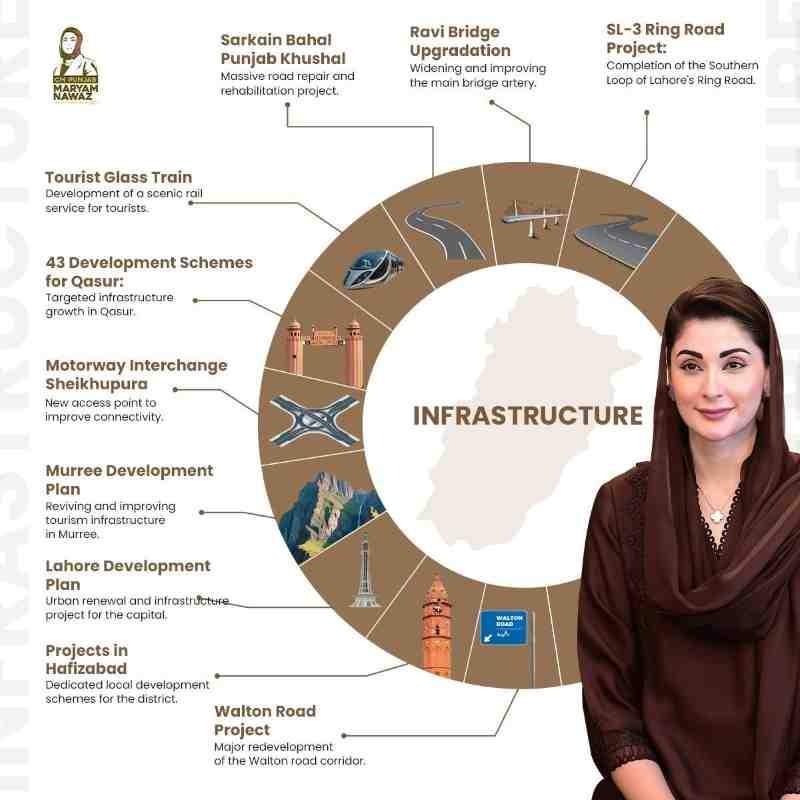
Chief Minister Maryam Nawaz personally inaugurated the program as the centerpiece of her “Sohna Punjab” (Beautiful Punjab) vision. The political significance lies in delivering tangible, visible improvements to rural constituencies ahead of electoral cycles.
The program matters for three critical reasons:
First, scale: Targeting 2,000 villages initially and 7,500 eventually means nearly one-third of Punjab‘s 22,986 villages will receive complete infrastructure renewal.
Second, comprehensiveness: Unlike previous schemes that focused on single amenities (e.g., just roads or just water), this program bundles seven facility categories into a single implementation package.
Third, sustainability: Solar-powered systems eliminate recurring electricity costs, and treatment plants designed for livestock waste ensure long-term environmental protection.
Which government body executes the program?
The Punjab Rural Municipal Services Company (PRMSC) serves as the designated executing agency. PRMSC‘s mandate includes:
- Conducting baseline surveys of village infrastructure
- Preparing master plans and scheme designs
- Issuing tenders and awarding contracts
- Monitoring progress through a dedicated dashboard
- Maintaining the official registry of selected villages
PRMSC operates under the administrative oversight of the Local Government Department, with Minister Zeeshan Rafique providing policy direction and CEO Khurram Pervez handling day-to-day implementation.
How does this program differ from earlier model village schemes?
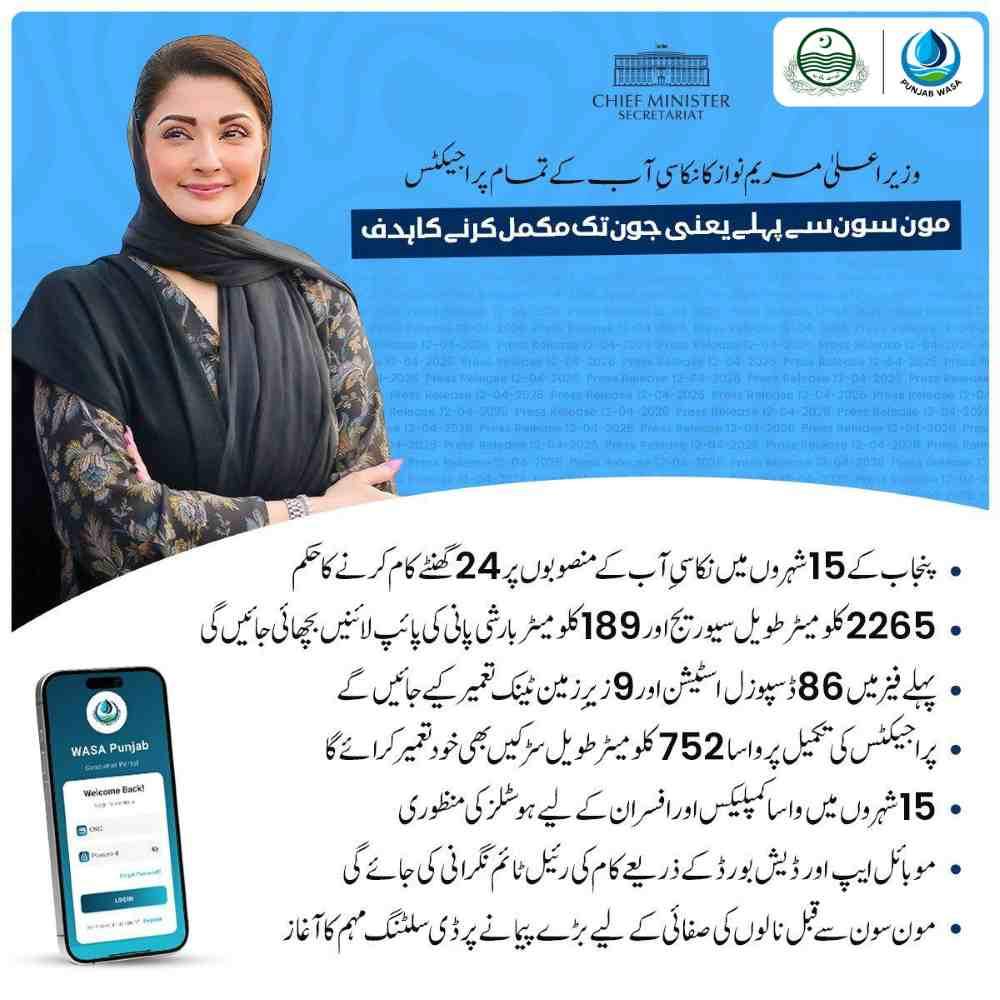
Previous model village initiatives (such as those implemented by PDMA after the 2012 floods) were reactive, limited in scope, and focused on disaster rehabilitation. They typically provided basic housing and water hand pumps to displaced populations.
The current program differs in five fundamental ways:
| Feature | Old PDMA Model Villages | Current CM Program |
|---|---|---|
| Trigger | Disaster response | Proactive development |
| Coverage | 10-20 villages | 2,000+ scaling to 7,500 |
| Water system | Hand pumps | Solar-powered tube wells + filtration |
| Sewerage | None (open drainage) | Covered underground + treatment plants |
| Recreation | Not included | Parks + restored ponds |
How to Find the 2,000 Model Villages List: A Practical Guide
One of the most common questions from rural residents is whether their village has been selected. This section provides actionable methods to get that answer.
Why hasn‘t the government released a single PDF with all 2,000 names?
The government has deliberately avoided publishing a static master list because the program operates on a rolling selection model. Villages are added in phases based on:
- Completion of baseline surveys by PRMSC
- Availability of funds allocated in quarterly tranches
- Contractor capacity to execute schemes simultaneously
- Administrative approvals from District Development Committees
This phased approach allows course corrections based on lessons learned from earlier villages. Publishing a fixed list would lock the government into selections that might need adjustment based on ground realities.
Where can I find the most reliable, up-to-date village information?

Three official sources provide verifiable data:
Source 1: PRMSC E-Procurement Portal (eproc.punjab.gov.pk)
- Search for “Model Villages (Misali Gao) Program” tenders
- Each tender‘s technical documents list specific villages by name
- As of the latest data, tenders cover 359 villages
Source 2: District Development Committee Notifications
- Each district publishes approved scheme lists
- 464 villages have received formal approval at this level
- Contact your Deputy Commissioner‘s office for the district list
Source 3: Official Press Releases
- The Associated Press of Pakistan (APP) and major dailies publish division-wise breakdowns
- These releases are considered authoritative government communication
What is the exact division-wise breakdown of selected villages?
Based on the latest official announcements, Phase I allocation across Punjab‘s 10 divisions is as follows:
Rawalpindi Division: 64 villages
- Rawalpindi district: 14 villages
- Attock district: 6 villages
- Chakwal district: 4 villages
- Jhelum district: 4 villages
- Murree tehsil: 3 villages
Lahore Division: 51 villages (Sheikhupura district accounts for 47 of these)
Gujranwala Division: 64 villages
Gujrat Division: 53 villages
Sahiwal Division: 49 villages
Dera Ghazi Khan Division: 51 villages
Bahawalpur Division: 61 villages
Faisalabad Division: 37 villages
Sargodha Division: 45 villages
Multan Division: 75 villages (including 20 in Khanewal district)
Which specific villages have been named in official announcements?
Several villages have been publicly confirmed through tenders or press releases:
Rawalpindi Division named villages:
- Changa Bangial (Gujar Khan tehsil)
- Salamabad (Kallar Syedan)
- Jawa village (Kahuta, Union Council Jawa)
- Lehtrar Bala (Kotli Sattian)
- Santh Anwali Kohati (Kotli Sattian)
- Sultani Dhoke
- Chak Baqar Shah
- Khokhar Zar
- Dhoke Daraz Dhakali
- Sadwal Langa Bhain
- Bilalabad
- Waryal
- Niragi
- Jand Awan
- Basharat village
Gujranwala Division named village:
- Manzoorabad (Wazirabad tehsil)
Multan Division:
- 20 villages in Khanewal district (specific names available through the district office)
How can a resident verify inclusion in five simple steps?
Follow this verification checklist:
Step 1 – Identify your district and tehsil.
Write down your full administrative hierarchy: province > division > district > tehsil > union council.
Step 2 – Compare with the division-wise numbers above.
If your division has a quota (e.g., Rawalpindi with 64 villages), your village has a realistic chance.
Step 3 – Visit the PRMSC e-procurement portal.
Use the search term “Model Village” plus your district name. Review open and closed tender documents.
Step 4 – Call or visit your Union Council office.
Union Council secretaries receive formal notifications of selected villages within their jurisdiction.
Step 5 – Check with the District Development Committee.
Each DDC maintains minutes of meetings where scheme approvals are recorded. These are public documents.
Read More: Green Tractor Scheme Online Apply (by CM Punjab- Phase 4)
Facilities Provided in Every Model Village: The Complete Amenities Checklist
The CM Punjab Model Villages Program is not a single-project initiative. It delivers seven integrated facility clusters that collectively transform rural living conditions.
What water and sanitation infrastructure is being installed?
24/7 Solar-Powered Clean Water Supply
- Solar-powered tube wells draw groundwater without grid electricity
- Filtration plants remove contaminants including arsenic and bacteria
- Storage tanks ensure water availability during cloudy periods
- Distribution network reaches every household
Implementation status: The chief minister has directed that all non-functional water filtration plants be repaired immediately. Helpline 1336 is operational for fault reporting.
Covered Underground Sewerage Networks
- Open drainage channels are permanently eliminated
- Pipes carry wastewater to treatment facilities
- Septic tanks function as natural filtration systems (deadline: August 31)
Livestock Waste Treatment Plants
- Specifically designed for rural areas where animal waste is a major pollutant
- Treated water can be reused for irrigation
- Desilting of ponds allows healthy aquaculture
What road and street infrastructure is being built?
Concrete and Tuff Tile Paving
- All remaining dirt streets receive permanent surfaces
- Colored tuff tiles are the approved material for durability
- The minister has stated that no street will remain unpaved in any model village
Farm-to-Market Road Connectivity
- Village access roads are upgraded to all-weather standards
- This enables farmers to transport produce during monsoon season
Solar-Powered Street Lighting
- LED streetlights powered by photovoltaic panels
- No electricity bills for the village
- Improved safety for evening activities and night travel
What community and environmental features are included?
Children‘s Parks
- Every model village receives at least one dedicated children‘s park
- Equipment includes slides, swings, and seating areas
Village Pond Restoration
- Traditional chhappar (ponds) are cleaned of accumulated waste
- Encroachments are removed from pond land
- Water treatment plants enable fish farming and recreation
Solid Waste Management
- Collection points and disposal systems prevent litter accumulation
- The “Suthra Punjab” initiative maintains cleanliness standards
Tree Plantation Drives
- Massive planting campaigns accompany every development scheme
- Native species selected for shade and environmental benefits
Budget and Financial Allocation: How Much Is Being Spent?
Understanding the financial scale helps appreciate the program‘s ambition and provides transparency for taxpayers.
What is the total budget for Phase I?
Phase I, covering 485 villages, carries a total estimated cost exceeding Rs59 billion. This figure breaks down as follows:
- Water supply systems: Approximately Rs22 billion
- Sewerage and drainage: Approximately Rs18 billion
- Road paving and streetlights: Approximately Rs12 billion
- Parks and pond restoration: Approximately Rs4 billion
- Project management and contingencies: Approximately Rs3 billion
The complete Model Village Phase-I has been estimated at Rs555 billion when including all 550 villages plus associated infrastructure.
How is the budget distributed across districts?
Using Rawalpindi division as an example, district-level allocations are:
| District | Number of Villages | Allocated Budget |
|---|---|---|
| Rawalpindi | 14 | Rs1.36 billion |
| Attock | 6 | Rs712 million |
| Chakwal | 4 | Rs535 million |
| Jhelum | 4 | Rs494 million |
| Murree | 3 | Rs280 million |
| Total | 31 | Rs3.38 billion |
Similar district breakdowns exist for other divisions but have not been published uniformly.
What is the annual budget commitment?
The government has indicated it will allocate approximately Rs150 billion in the upcoming fiscal year specifically for the Model Village Initiative. This represents roughly 8% of the provincial development budget.
Who bears the cost? Do villagers pay anything?
Villagers pay nothing directly. The program is 100% government-funded through:
- Provincial development budget allocations
- World Bank loans for specific components (16 backward tehsils are supported through this mechanism)
- Potential public-private partnerships for certain amenities
Progress Tracking and Completion Status
Knowing which villages are complete and which are under construction helps manage expectations.
How many villages have active work?
As of the latest published data:
- Work awarded to contractors: 357 villages
- Active construction: 302 villages
- Scheme approval completed: 464 villages
- Tenders issued: 359 villages
- Preliminary work started: 224 villages
What are the key deadlines?
The program operates on a strict timeline with specific milestones:
June 30 deadline: Cleaning of stagnant wastewater ponds (chhappar) in all selected villages
August 31 deadline: Completion of septic tanks (natural water filtration systems)
18 months from start: Phase I completion target for all 485 villages
How is progress monitored?
Three monitoring mechanisms ensure accountability:
Digital Dashboard: PRMSC has created a dedicated dashboard showing real-time progress for each village, each scheme, and each contractor.
Weekly Video-Link Reviews: The chief minister personally chairs meetings with district officials to review pending work and resolve bottlenecks.
Before-and-After Documentation: Every project requires photographic evidence of transformation. The CM has mandated comparative videos for each village.
What happens if a contractor is late?
The contract terms include penalty clauses for delays. The monitoring dashboard flags late-running schemes for immediate administrative action.
How Contractors Can Participate: Tender and Bidding Process
For construction firms and individual contractors, the Model Villages Program represents a massive business opportunity.
Where are tenders published?
All tenders are published exclusively on the official e-procurement portal: eproc.punjab.gov.pk
No paper-based tenders are accepted. This ensures transparency and widest possible competition.
What is the step-by-step bidding process?
Step 1 – Registration
- Visit eproc.punjab.gov.pk
- Complete company registration with NTN, GST, and SECP certificates
- Upload proof of past work experience
- Pay registration fee (varies by company size)
Step 2 – Search for relevant tenders
- Use search term: “PRMSC Model Villages (Misali Gao) Program”
- Filter by division, district, or scheme type (water, sewerage, roads, etc.)
- Review estimated costs and bid deadlines
Step 3 – Download documents
- Technical specifications
- Bill of Quantities (BOQ)
- Terms of Reference
- Drawings and scheme layouts
Step 4 – Prepare and submit electronic bid
- Complete all required forms online
- Upload supporting documents
- Submit before the deadline (no extensions)
Step 5 – Bid opening and evaluation
- Bids are opened electronically at the specified time
- Technical and financial evaluation follows standard PPRA rules
- Contracts awarded to the lowest evaluated responsive bidder
What types of schemes are available for bidding?
Tender categories include:
- Water supply schemes (solar tube wells + filtration plants)
- Sewerage schemes (underground networks + treatment plants)
- Road paving schemes (tuff tile streets + farm-to-market roads)
- Streetlight schemes (solar-powered systems)
- Park development schemes
- Pond restoration schemes
What is the contact information for PRMSC?
Physical address: 5th Floor, KD Plaza, MM Alam Road, Lahore
Email: Available on the PRMSC website under “Contact Us”
Helpline: 1336 (for water filtration plant faults)
Employment Opportunities Under the Model Villages Program
Beyond construction contracts, the program generates permanent jobs.
What permanent positions are available at PRMSC?
Current and recurring vacancies include:
- Infrastructure Engineer (PPS-9)
- Manager Human Resources (PPS-8)
- Assistant Manager Media Management (PPS-7)
- Manager Procurement
- Tehsil Manager
- MIS Officer
- Research Analyst
How can job seekers apply?
- Visit www.prmsc.punjab.gov.pk
- Download the application form for the relevant position
- Submit complete application before the deadline mentioned in the job advertisement
- Shortlisted candidates are called for tests and interviews
What temporary construction jobs are available?
With active work in 302 villages, contractors are hiring:
- Masons and construction workers
- Plumbers and pipe fitters
- Electricians and solar panel installers
- Heavy machinery operators
- Site supervisors
Residents of selected villages receive hiring preference for local work.
Future Expansion: From 2,000 to 7,500 Villages
The program‘s scope is not static. The chief minister has approved a massive expansion.
What is Phase II?
Phase II has received in-principle approval to transform 7,500 villages into model villages. This represents approximately one-third of all Punjab villages.
The expansion will prioritize:
- Remaining villages in the 16 backward tehsils
- Constituencies that received fewer than 50 villages in Phase I
- Villages adjacent to economic zones and major roads
What is the long-term target?
The government has stated its goal of ensuring at least 50 villages from each provincial constituency benefit from the program. With 297 provincial constituencies, this implies approximately 15,000 villages eventually—but that figure remains aspirational.
How can currently unselected villages get included?
While villages cannot directly apply, community advocacy works:
- Contact your MPA (Member of Provincial Assembly)
- Request your Union Council to submit a formal application to the DDC
- Document your village‘s infrastructure deficiencies (photos, community signatures)
- Raise the issue in public forums and through local media
Frequently Asked Questions (FAQs)
Q1: Is there any way to download a complete PDF list of all 2,000 model villages?
No. The government does not maintain a single static PDF. Village selection is progressive, and the most reliable data comes from tender documents and division-wise official announcements.
Q2: How much does a village need to contribute financially to be selected?
Zero. The program is 100% government-funded. Villagers pay nothing for water connections, sewerage hookups, or street paving.
Q3: What should I do if my village‘s water filtration plant is not working?
Call helpline 1336 immediately. The chief minister has ordered that all non-functional plants be repaired promptly, and this helpline is the designated complaint channel.
Q4: Can a contractor from outside Punjab bid on model village tenders?
Yes. The e-procurement portal is open to all registered contractors nationwide, provided they meet the eligibility criteria and technical requirements.
Q5: Will model villages receive internet connectivity and Wi-Fi?
Not in Phase I. The current focus is on water, sewerage, roads, and recreation. Internet may be considered in future phases under the Digital Punjab initiative.
Q6: How are villages selected? Is it political?
Selection is based on a data-driven needs assessment using PRMSC census data (41,000 ponds identified across 22,986 villages). However, constituency representation (50 villages per constituency) does involve political consideration.
Q7: When will Phase II begin?
An official start date has not been announced. Phase I must reach substantial completion (likely 80%+) before Phase II tenders are issued. Based on the 18-month timeline for Phase I, Phase II is expected to begin after that period.
Disclaimer: This guide is based on publicly available government announcements, press releases, and official documents. Village selections, budgets, and timelines may change as the program evolves. Readers should verify specific information through official PRMSC channels before making decisions.

Add a Comment