
Imagine a family struggling to afford a proper home, a person with disabilities unable to access financial support, or a widow wondering how to feed her children. These are not isolated stories across Punjab. In response, the Punjab government under Chief Minister Maryam Nawaz has launched over 15 social welfare schemes covering housing, disability aid, food security, marriage assistance, student support, farmer relief, and doorstep services. This guide provides the complete Maryam Nawaz All Scheme List with updated eligibility criteria, step-by-step application methods, PSER registration requirements, and latest 2026 program expansions.
What this comprehensive guide covers:
- Complete list of all CM Punjab welfare schemes with financial benefits
- Eligibility conditions for each program including PMT score thresholds
- Online and offline application processes with required documents
- PSER registration steps and its role in scheme access
- Latest 2026 updates including Rehmat Card and Free Livestock Program
- Comparison between current and previous administration schemes
- Common application mistakes and how to avoid rejection
Key Takeaways
- 15+ Active Schemes: Housing, disability, food, marriage, student, farmer, and doorstep service programs operate under a unified digital system.
- PSER Is Mandatory: Without Punjab Socio-Economic Registry registration, no scheme application will be processed or approved.
- Himmat Card Benefits: Special persons receive Rs10,500 quarterly plus free travel on Orange Line Metro and Metro Bus.
- Apni Chhat Interest-Free Loan: Up to Rs1.5 million with government covering 60% of construction costs, repayable in easy installments.
- Dhee Rani Program Scale: 5,000 mass weddings completed with Rs200,000 Salami Card per bride plus full wedding expenses.
- Rehmat Card New Launch: 2026 initiative provides Rs25,000 each to over 40,000 widows and orphaned children.
- Digital Application Only: All schemes require online submission via scheme-specific portals or SMS to 8070.
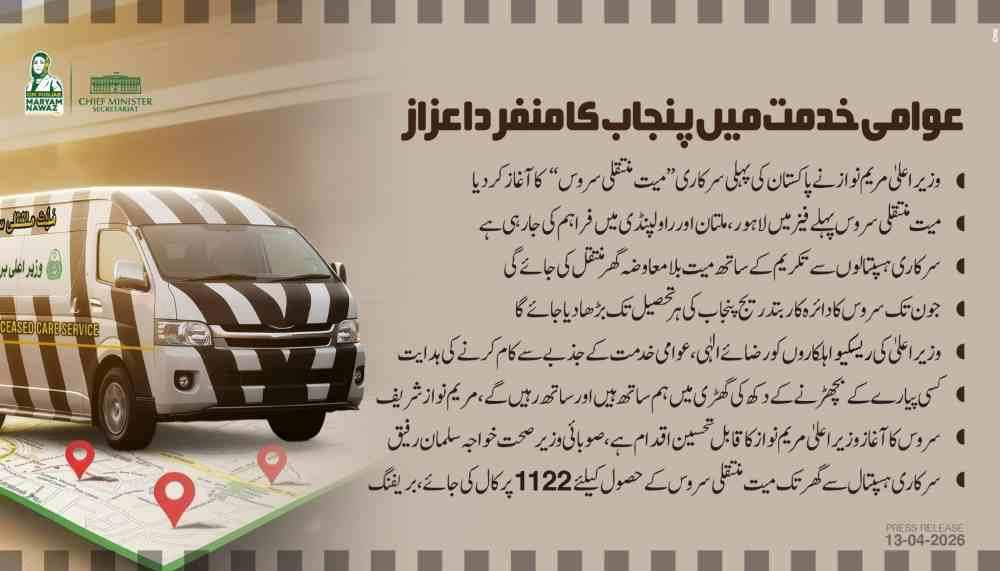
- Read More: Deceased Care Service Punjab | سرکاری ہسپتال سے گھر تک میت منتقلی سروس
- Read More: Wheat Price In Pakistan | 100Kg Wheat Rate In Pakistan
- Read More: 50 Kg Wheat Price In Pakistan Today – Gandum Rates Today
- Read More: Gandum Rate in Pakistan – Govt Wheat Rate Per 40 Kg
Maryam Nawaz All Scheme List – (Social Welfare Schemes)
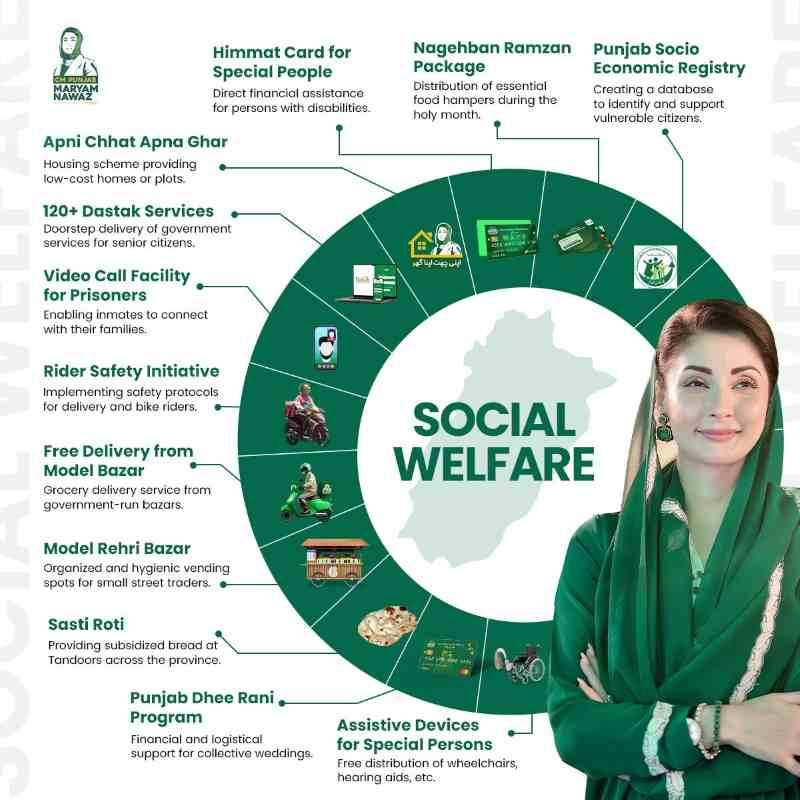
Table of Contents
What Are All the Social Welfare Schemes Launched by Maryam Nawaz in Punjab?
The Punjab government has introduced 15 major social welfare initiatives under Chief Minister Maryam Nawaz. These programs target poverty alleviation, social protection, and economic empowerment across multiple beneficiary categories including persons with disabilities, low-income families, widows, orphans, students, farmers, senior citizens, and street vendors.
Complete Scheme List with Financial Benefits
| Scheme Name | Target Group | Primary Benefit | Application Channel |
|---|---|---|---|
| Himmat Card | Persons with disabilities | Rs10,500 quarterly + free metro travel | Online/PSPA portal |
| Apni Chhat Apna Ghar | Low-income landowners | Interest-free loan up to Rs1.5M | ACAG portal |
| Nigehban Ramzan Package | Poor families | Rs10,000 cash + ration hampers | SMS 8070/PSER |
| Punjab Dhee Rani Program | Brides from poor families | Rs200,000 Salami Card + wedding costs | cmp.punjab.gov.pk |
| Rehmat Card | Widows and orphans | Rs25,000 financial assistance | Mobile app/web |
| 120+ Dastak Services | Senior citizens (120+ years) | Doorstep government services | Maryam Ki Dastak App |
| Assistive Devices Program | Special persons | Free wheelchairs, hearing aids, crutches | Social Welfare office |
| Model Rehri Bazar | Street vendors | Organized vending spots with facilities | Local municipal office |
| Sasti Roti Scheme | General public | Subsidized roti at Rs4-5 | Walk-in at tandoors |
| Video Call for Prisoners | Inmates and families | Free video calls with prisoners | Jail superintendent office |
| Rider Safety Initiative | Delivery riders, bikers | Free safety kits, helmets | Traffic police office |
| Free Delivery Model Bazar | Senior citizens, disabled | Doorstep grocery delivery | Helpline/App |
| CM Ration Card | Workers, laborers | Rs3,000 monthly subsidy | Bank account transfer |
| CM Student Bike Scheme | College/university students | Zero-interest bikes | bikes.punjab.gov.pk |
| CM Solar Panel Scheme | Low-electricity households | Free 1-3kW solar systems | cmsolarscheme.punjab.gov.pk |
| CM Kissan Card | Farmers | Subsidized agricultural loans | Agriculture department |
Himmat Card: Financial Support for Special Persons

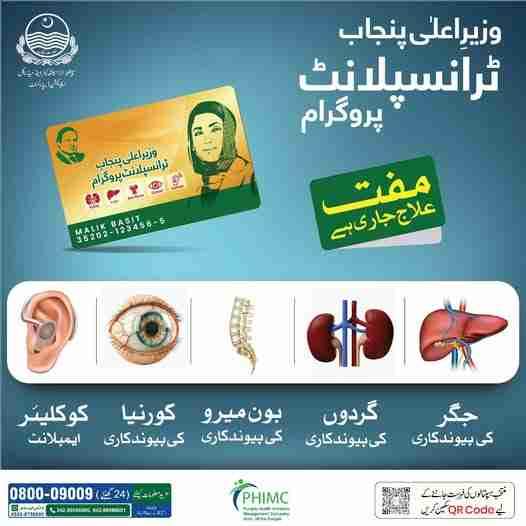
The Himmat Card functions as a specialized ATM card for registered persons with disabilities in Punjab. Cardholders receive quarterly financial assistance of Rs10,500, free travel on Orange Line Metro and Metro Bus services, and priority access to government health, education, and skill development programs.
Who Qualifies for the Himmat Card?
Four eligibility conditions determine qualification for the Himmat Card:
- Punjab Residency: Applicant must hold a valid CNIC or B-Form showing permanent residence in any district of Punjab province.
- Disability Certification: A NADRA-verified disability certificate issued by a government-recognized medical board is mandatory. The certificate must specify the type and percentage of disability.
- PMT Score Requirement: The Poverty Means Test score must be 45 or below as recorded in PSER or NSER data. This score reflects household poverty level based on income, assets, and living conditions.
- Employment Status: Applicant must be declared unfit for work by the medical board and must not hold any government or private sector employment.
Which Disabilities Are Covered Under Himmat Card?
Seven disability categories qualify for the Himmat Card:
- Physical disabilities affecting mobility
- Visual impairments including blindness and low vision
- Hearing impairments including deafness and hard of hearing
- Intellectual or developmental disabilities
- Multiple disabilities (two or more types)
- Mental disabilities certified by a psychiatrist
- Speech impairments affecting communication
Financial and Non-Financial Benefits
The Himmat Card provides three distinct benefit categories:
Quarterly Stipend: Rs10,500 every three months deposited directly into the beneficiary’s ATM card account. The amount is automatically credited at the start of each quarter.
Free Travel Privilege: Cardholders can travel at no cost on the Orange Line Metro Train and Metro Bus services across Lahore and other operational routes. Simply present the Himmat Card at the ticket counter or to the conductor.
Health and Rehabilitation Access: Free consultations at government hospitals, discounted medicines, and priority appointments. Cardholders also receive referrals for physiotherapy, speech therapy, and vocational training.
Required Documents for Himmat Card Application
Gather these eight documents before starting your application:
- Valid CNIC (for adults) or B-Form (for minor children)
- NADRA-verified disability certificate with medical board stamp
- Two recent passport-sized photographs with white background
- Proof of Punjab residence (domicile certificate or utility bill)
- Income certificate from local council or employer (if applicable)
- Active mobile number registered in applicant’s name
- PSER registration confirmation printout
- Bank account details for ATM card delivery (account must be in applicant’s name)
Step-by-Step Online Registration Process
Follow these six steps to apply for the Himmat Card online:
- Visit the official Social Welfare Department portal or PSPA (Punjab Social Protection Authority) website.
- Click on “Himmat Card Registration” and create an account using your CNIC number as username.
- Complete the online application form with accurate personal information, disability details, and contact information.
- Upload scanned copies of all eight required documents in PDF or JPEG format. Ensure each file is clear and readable.
- Review all entered information for errors. Submit the application and note the tracking number sent via SMS.
- Track application status using your CNIC number on the portal. Approval typically takes 30-45 days.
Offline Application Process for Citizens Without Internet Access
Citizens without internet access can apply through these steps:
- Locate the nearest Social Welfare Department office in your district headquarters.
- Request the physical Himmat Card application form from the front desk.
- Fill out the form using block letters. Attach photocopies of all required documents.
- Submit the completed form to the designated officer. Obtain a receipt with submission date and tracking number.
- Wait for an approval SMS on your registered mobile number. The card will be delivered to your home address.
How to Check Himmat Card Application Status
Three methods allow you to track your application:
Online Portal Method: Visit the PSPA portal, enter your CNIC number in the tracking section, and view current status (submitted, under review, approved, or rejected).
SMS Method: Type your CNIC number without dashes and send to the designated shortcode displayed on the portal. You will receive an automated reply with status.
Helpline Method: Call the Social Welfare Department helpline, provide your CNIC number and tracking ID, and receive status update from a customer service representative.
Latest Himmat Card Updates
Phase 3 of the Himmat Card program has been launched, expanding coverage to all districts of Punjab. The program now serves approximately 65,000 persons with disabilities. Alongside the Himmat Card, the government introduced the Minority Card Scheme providing Rs10,500 every three months to around 75,000 low-income minority households with PMT score of 45 or less.
Apni Chhat Apna Ghar: Interest-Free Housing Loans
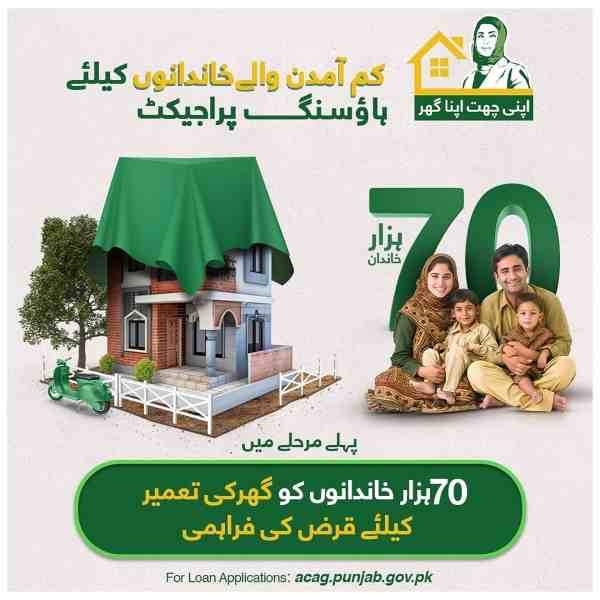
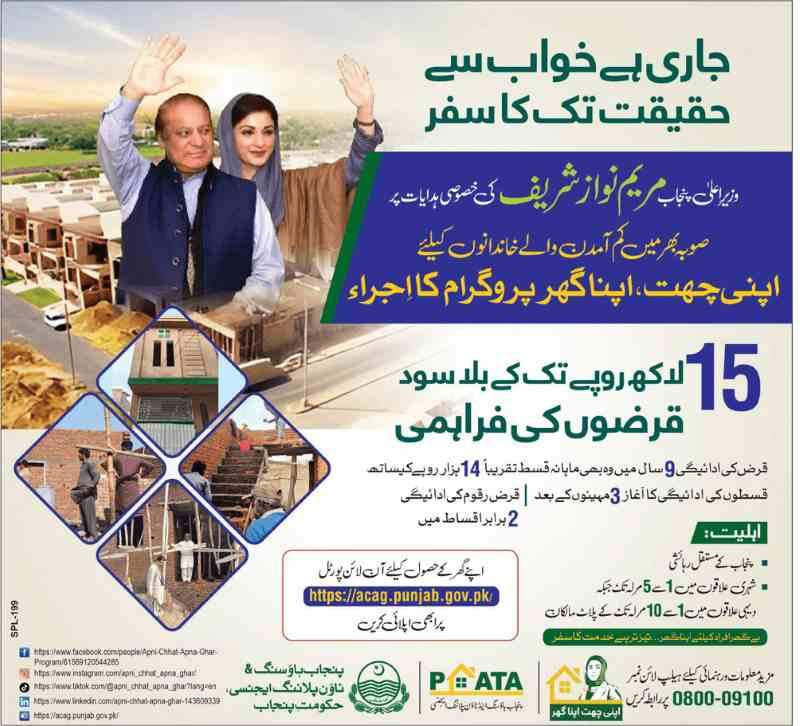
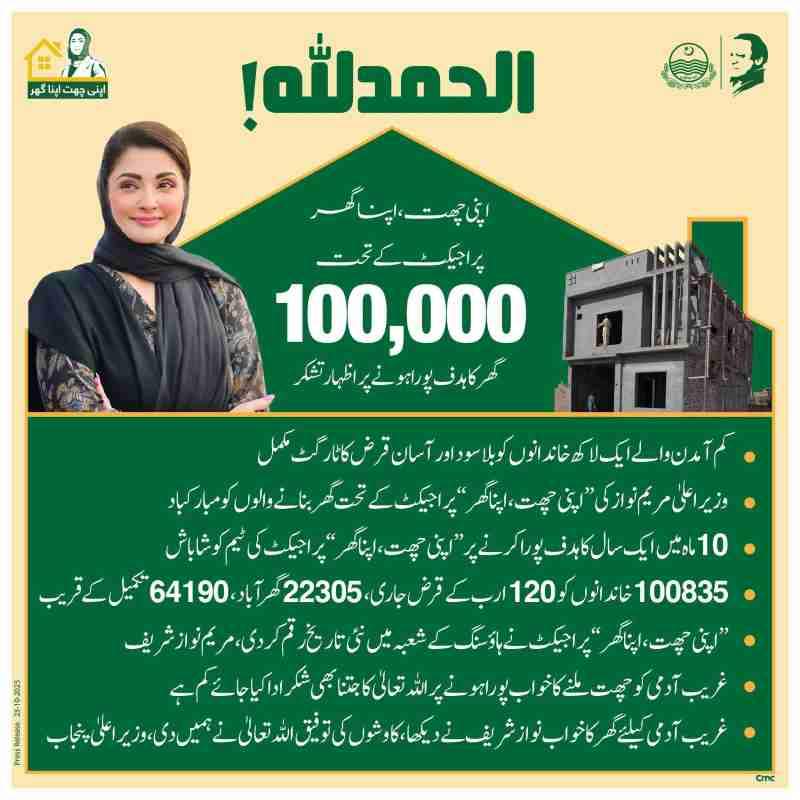
The Apni Chhat Apna Ghar Scheme provides interest-free housing loans up to Rs1.5 million to low-income and lower-middle-income families who own a small plot of land but cannot afford construction costs. The Punjab government covers approximately 60 percent of the total housing cost, making homeownership achievable for working-class families.
Core Objectives of the Housing Scheme
Three primary objectives drive the Apni Chhat Apna Ghar Scheme:
- Reduce Homelessness: Enable families living in rented accommodations or unsafe makeshift shelters to build permanent homes on their own land.
- Support Poor Families: Provide affordable housing solutions to working-class families who earn too much for charity but too little for commercial bank loans.
- Eliminate Bank Interest: Remove commercial bank involvement and interest charges completely, following Islamic financing principles.
Eligibility Criteria for Apni Chhat Apna Ghar
Seven conditions must be met for scheme qualification:
- Punjab Residency: Applicant must be a permanent resident of Punjab province as verified by CNIC or domicile certificate.
- Age Requirement: Applicant must be at least 18 years old at the time of application. No upper age limit applies.
- Land Ownership: Applicant must own a residential plot of up to 5 marla in urban areas or up to 10 marla in rural areas. Land must be registered in applicant’s name.
- No Existing House: Applicant must not already own a constructed house anywhere in Pakistan. Living in a rented or inherited house does not disqualify.
- Low/Middle Income: Monthly household income must fall within the low or lower-middle income bracket as defined by the government (currently under Rs50,000 per month).
- NSER Registration: Applicant must be registered in the National Socio-Economic Registry with a PMT score of 60 or below.
- Clean Record: No criminal record, no history of bank loan default, and no outstanding government dues.
Can Women Apply Independently?
Yes, women applicants can apply for the Apni Chhat Apna Ghar scheme without requiring a male guardian as co-applicant. The 2026 update specifically allows women to apply independently. Widows, laborers, and low-income earners receive priority in the selection process. Joint family applicants (brothers, cousins, or unrelated individuals) are also clearly allowed under the updated eligibility rules.
Financial Benefits Breakdown
The scheme offers five distinct financial advantages:
- Interest-Free Loan: Complete elimination of markup or bank interest. The loan amount never increases beyond the principal.
- Loan Amount: Up to Rs1.5 million per eligible family, disbursed in phases based on construction progress.
- Government Subsidy: The Punjab government covers 60 percent of the total housing cost. The beneficiary pays only 40 percent.
- Easy Installments: Monthly installments are approximately Rs26,000 over a five-year repayment period. Installments are deducted automatically from the beneficiary’s bank account.
- Early Repayment Incentive: Discounts and rebates are offered for clearing the entire loan amount before the five-year term ends.
How the Interest-Free Loan Disbursement Works
The loan is released in phases linked to construction milestones:
- Phase 1 (Foundation): 20 percent of the loan amount after foundation completion and inspection approval.
- Phase 2 (Walls and Roof): 30 percent after wall construction and roof casting verification.
- Phase 3 (Finishing): 30 percent after plastering, flooring, and basic finishing work.
- Phase 4 (Completion): 20 percent after final inspection and occupancy certification.
Each phase requires a government engineer’s inspection report before the next disbursement. The beneficiary contributes their 40 percent share alongside each government installment.
Step-by-Step Online Application Process
Follow these eight steps to apply for Apni Chhat Apna Ghar online:
- Visit the official Apni Chhat Apna Ghar portal (acag.punjab.gov.pk).
- Click on “Apply Online” and register using your 13-digit CNIC number.
- Create an account with your mobile number. Verify the number through OTP sent via SMS.
- Fill out the online application form with family details, income information, and land ownership data.
- Upload scanned copies of land ownership documents (fard, registry, or allotment letter).
- Submit your NSER or PSER registration details including PMT score.
- Review all information carefully before final submission. Errors cause rejection.
- Receive a confirmation SMS containing your application tracking number. Save this number.
Housing Target Under the Scheme
The government has increased the housing target to more than 160,000 houses planned across multiple districts of Punjab. Priority districts include Lahore, Faisalabad, Rawalpindi, Multan, Gujranwala, Sialkot, and Bahawalpur. Construction is being executed through three models:
- State Land Development: Government provides land and infrastructure, beneficiaries build homes.
- Private Housing Scheme Partnership: Government partners with private developers to create affordable housing colonies.
- Interest-Free Construction Loan Model: Beneficiaries build on their own land using government loans.
Difference Between Apni Chhat and Apni Zameen Apna Ghar
The Apni Chhat Apna Ghar scheme focuses on families who already own land but cannot afford construction costs. The Apni Zameen Apna Ghar scheme, by contrast, provides both land and housing to landless families. The former is a construction loan program while the latter is a full housing provision scheme. Apni Zameen Apna Ghar is currently in pilot phase in select districts.
PSER: The Gateway to All Welfare Schemes
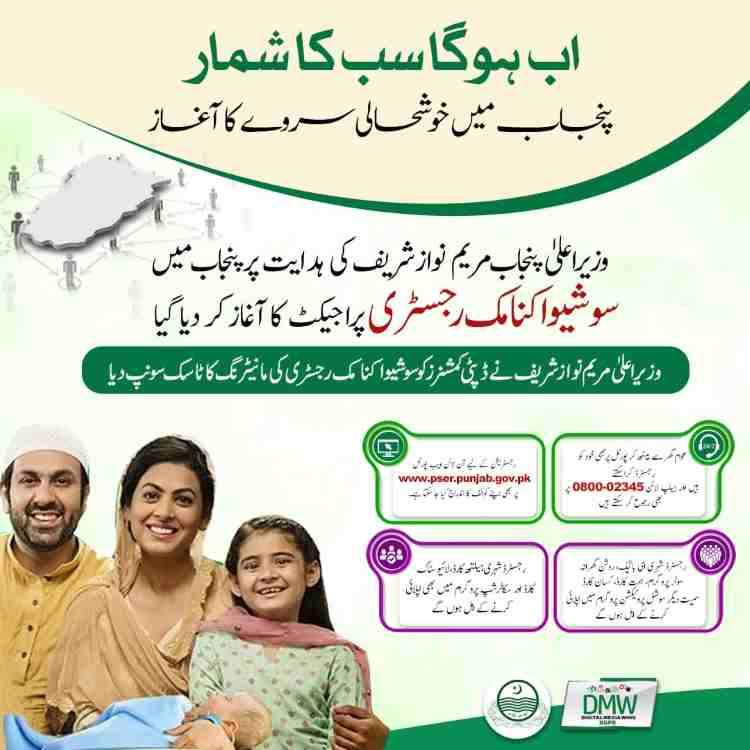
The Punjab Socio-Economic Registry (PSER) is a centralized digital database that captures detailed household information including income, family size, housing conditions, employment status, health, education, and asset ownership. PSER serves as the single source of truth for eligibility verification across all social welfare schemes in Punjab. Without PSER registration, no application for any scheme will be processed.
PSER Online Registration Process
Families who have not yet been visited by survey teams can register online through these steps:
- Visit the official PSER portal at pser.punjab.gov.pk.
- Enter your CNIC number, active mobile number, district, and tehsil.
- Create an account and log in using the credentials sent to your mobile.
- Complete the household survey form carefully. Answer all questions truthfully.
- Provide information on family members including their CNICs, relationships, and ages.
- Report income sources, monthly earnings, and bank account details.
- Disclose asset ownership including property, livestock, vehicles, and agricultural land.
- Submit the form for verification. You will receive a confirmation SMS within 48 hours.
PSER Helpline Number
The helpline 08000-2345 is available Monday through Saturday from 9 AM to 5 PM. Citizens can call for assistance with PSER registration, updating incorrect information, checking registration status, or reporting survey team fraud.
Information Required for the PSER Survey
Ten categories of household information are collected during the PSER survey:
- Personal Information: CNIC number, date of birth, gender, marital status, and relationship to household head.
- Health and Disability Status: Chronic diseases, physical disabilities, mental health conditions, visual or hearing impairments.
- Education: Literacy level, highest degree attained, current enrollment status of children.
- Employment and Income: Primary occupation, secondary occupation, monthly household income, bank account ownership.
- Assets: Property ownership (land, house, shop), livestock (cows, buffaloes, goats, chickens), vehicles (car, motorcycle, tractor).
- Housing Conditions: Cooking fuel type (gas, wood, kerosene), water source (tap, well, hand pump), electricity connection, sanitation facility.
- Agriculture: Land ownership (owned or rented), cultivation type (irrigated or rain-fed), farm size in acres.
- Past Aid Received: Any government assistance received in the last two years (BISP, Zakat, Himmat Card, etc.).
- Disaster Impact: Damage or displacement caused by floods, earthquakes, or other natural disasters.
- Communication: Mobile phone ownership, internet access, television availability.
Household Target for PSER Survey
The PSER survey targets over 30 lakh households across all districts of Punjab. Survey teams equipped with digital tablets and mobile applications conduct door-to-door data collection. Officers wear official green jackets and carry government-issued ID cards for verification. Citizens should never share information with unverified individuals claiming to be PSER staff.
Door-to-Door Survey Process
During the door-to-door visit, PSER teams perform the following actions:
- Scan CNICs of all adult household members (18 years and above) using a portable scanner.
- Record family composition, income details, and education levels in the digital tablet.
- Assess household facilities including electricity connection, water source, sanitation type, and cooking arrangements.
- Enter all data digitally in real time for immediate verification and upload to the central server.
- Complete the entire process in approximately 20-30 minutes per household.
What Is the PMT Score and How Does It Work?
The Proxy Means Test (PMT) score is calculated automatically by the PSER system based on household data. The calculation considers:
- Income: Monthly earnings from all sources divided by number of household members.
- Assets: Value of property, livestock, vehicles, and agricultural land.
- Housing Conditions: Quality of construction, number of rooms, availability of utilities.
- Education Levels: Literacy and educational attainment of adult members.
- Employment Status: Number of employed members vs dependents.
A lower PMT score indicates higher poverty levels. Most welfare schemes require a PMT score of 45 or 60 or below for eligibility. The score is automatically generated after data submission and cannot be manually altered.
Why PSER Registration Is Mandatory
PSER registration is mandatory for four critical reasons:
- Single Registration System: Families only need one verified PSER profile instead of applying separately for every new scheme. The same profile works for Himmat Card, Apni Chhat, Dhee Rani, Rehmat Card, and all other programs.
- Digital Verification: PSER links directly with CNIC records through NADRA verification, eliminating document forgery and fake applications.
- Transparent Selection: Beneficiary selection is based on verified data rather than manual lists, political recommendations, or personal connections.
- Fair Ranking: Households are ranked by need using objective PMT scores. The poorest families receive priority automatically.
Which Schemes Use PSER Data?
All major social welfare schemes use PSER data for eligibility verification and beneficiary selection:
- Himmat Card for special persons
- Apni Chhat Apna Ghar housing scheme
- Nigehban Ramzan Package
- CM Ration Card for workers
- Rehmat Card for widows and orphans
- Dhee Rani Program for mass weddings
- Assistive Devices Program
- Student Bike Scheme
- Solar Panel Scheme
- Green Tractor Scheme
- Kissan Card for farmers
Difference Between BISP NSER and Punjab PSER
BISP NSER (National Socio-Economic Registry) is a federal database managed by the Benazir Income Support Programme for national-level welfare programs. Punjab PSER is a provincial database specifically for Punjab government schemes. While both collect similar household data, PSER is more detailed and Punjab-specific. Families should register in both databases to access all available schemes at both federal and provincial levels.
Nigehban Ramzan Package 2026: Relief During Ramadan
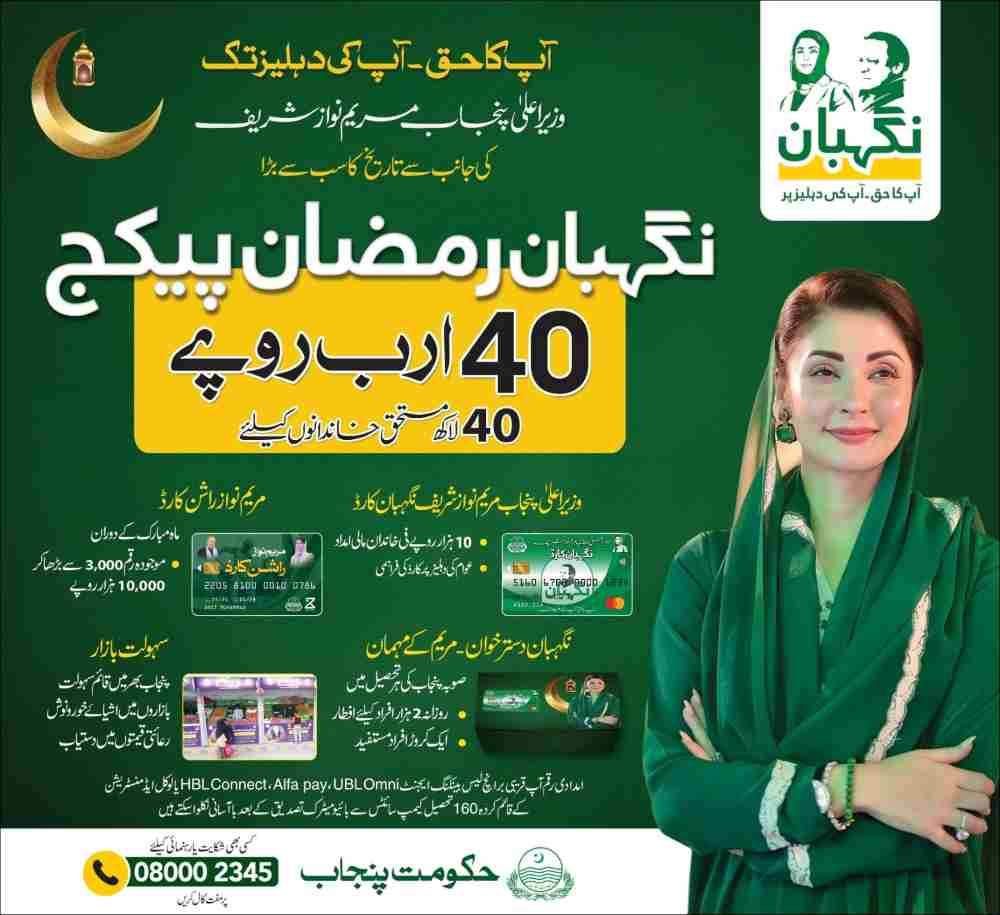
The Nigehban Ramzan Package 2026 was Punjab’s largest Ramadan relief initiative, providing financial assistance and ration support to 4.5 million families, benefiting nearly 25 million individuals across the province. The package included Rs10,000 cash distributed to 45,000 families under the ‘Maryam Ki Sunain’ initiative and free Iftar meals served to 4 million people at 422 Nigahban Dastarkhwans.
Package Components
The Nigehban Ramzan Package consisted of four major components:
- Financial Assistance: Rs10,000 cash distributed to 45,000 families through the ‘Maryam Ki Sunain’ initiative.
- Ration Support: Essential food hampers containing flour, rice, cooking oil, sugar, pulses, and tea for low-income families.
- Iftar Dastarkhwans: Free Iftar meals served daily at 422 locations across Punjab, feeding approximately 4 million people during the month.
- Price Control: Stability in essential commodity prices with 550,000 daily shoppers at 75 Ramzan bazaars offering subsidized goods.
Eligibility Criteria for Nigehban Ramzan Package
Five conditions determined qualification for the package:
- Punjab Residency: Applicant must be a permanent resident of Punjab province.
- Income Threshold: Monthly household income of Rs45,000 or less as verified by PSER data.
- PSER Registration: Must be registered in the Punjab Socio-Economic Registry with an active profile.
- Low-Income Status: Must belong to a financially struggling family as indicated by PMT score of 45 or below.
- One Card Per Household: Only one relief card is issued per eligible family. Duplicate applications are automatically rejected.
SMS Registration Method (8070)
The SMS registration method is the fastest option for the Nigehban Ramzan Package:
- Open the SMS application on your mobile phone.
- Type your 13-digit CNIC number without any dashes or spaces.
- Send the message to the shortcode 8070.
- Within 30 seconds, you will receive a reply SMS confirming your eligibility or providing update instructions.
- If eligible, visit the nearest designated distribution center to collect your ration hamper or cash.
PSER Portal Registration Method
If your data is incomplete or outdated in PSER, update it online:
- Visit the official PSER portal at pser.punjab.gov.pk.
- Log in using your CNIC number and registered mobile number.
- Navigate to “Update Household Information” and complete or verify all survey details.
- Ensure your address, mobile number, and family composition are correct.
- Submit for review. The updated data will be available for scheme verification within 72 hours.
Distribution Process
The entire registration and distribution process was fully digital, managed by PITB (Punjab Information Technology Board) to ensure accountability at every step. Beneficiaries could visit 160 dedicated centers established by district administrations at every tehsil or more than 20,000 designated collection points. The helpline 08000-2345 was available for information and complaint registration.
Punjab Dhee Rani Program: Mass Marriage Support
The Punjab Dhee Rani Program is a mass marriage initiative that has conducted 5,000 collective weddings across Punjab. The Social Welfare Department bears all wedding expenses and provides each bride with a Rs200,000 Salami Card as financial assistance, plus essential furniture and clothing gifts.
Benefits Provided Under Dhee Rani Program
The program provides six specific benefits to each registered bride:
- Salami Card: Rs200,000 financial assistance accessible through an ATM card in the bride’s name.
- Wedding Expenses: All costs of the collective marriage ceremony borne entirely by the government.
- Meal Provision: Free meals for the bride, groom, and up to 20 close relatives on the wedding day.
- Furniture Gift: Essential furniture items including a bed, cupboard, dining table, and chairs for the new household.
- Clothing Gift: Necessary clothes for the bride and groom including wedding attire and casual wear.
- ATM Card Disbursement: The Salami amount is loaded onto an ATM card that the bride can use at any bank machine.
Eligibility Criteria for Dhee Rani Program
Four conditions determine qualification for the Dhee Rani Program:
- Punjab Residency: The bride must be a permanent resident of Punjab province as verified by CNIC.
- Low-Income Family: The bride’s family must belong to a low-income household with PMT score of 45 or below.
- Valid Identification: The bride must have a valid CNIC (if 18 years or older) or B-Form (if under 18).
- Religious Inclusion: Open to deserving families from all religious communities including Muslims, Hindus, and Christians.
Age Limit for the Program
The bride must meet the legal marriage age requirement of 18 years. There is no upper age limit, making the program accessible to widows and divorced women seeking remarriage as well. The groom must also meet the legal marriage age of 18 years.
Registration Process
Two registration methods are available for the Dhee Rani Program:
Online Portal Method:
- Visit cmp.punjab.gov.pk.
- Click on “Dhee Rani Program Registration.”
- Fill out the online form with complete family details including CNIC numbers of bride, groom, and guardians.
- Upload scanned copies of CNICs, proof of residence, and income certificate.
- Submit the application and note the tracking number.
In-Person Method:
- Visit the nearest Social Welfare and Bait-ul-Maal office in your district.
- Request assistance from the officer for the Dhee Rani Program application.
- Submit hard copies of all required documents.
- Obtain a receipt with submission date and tracking number.
Required Documents
Five essential documents are required for registration:
- Bride’s CNIC or B-Form
- Groom’s CNIC
- Guardian’s CNIC (father, mother, or legal guardian)
- Proof of residence in Punjab (domicile or utility bill)
- Income certificate from local council or employer
Number of Collective Marriages Completed
The program has completed 5,000 collective marriages across Punjab:
- Phase 1: 1,960 marriages conducted in the first phase covering 12 districts.
- Phase 2: 3,040 marriages conducted between February 3 and February 16 covering 25 districts.
- Phase 3 Registration: Registration for Phase 3 containing additional mass weddings has now begun. The annual target has been increased from 3,000 to 5,000 couples.
District-Wise Schedule
Mass weddings have been organized across multiple districts including:
| District | Number of Weddings |
|---|---|
| Faisalabad | 150 |
| Toba Tek Singh | 70 |
| Hafizabad | 130 |
| Mandi Bahauddin | 130 |
| Lahore | 170 |
| Narowal | 100 |
| Sialkot | 100 |
| Muzaffargarh | 200 |
| Layyah | 370 |
| Mianwali | 250 |
| Khushab | 200 |
| Sargodha | 200 |
Additional weddings have been held in Bahawalnagar, Pakpattan, Rajanpur, and Rahim Yar Khan.
Helpline for Dhee Rani Program
A dedicated helpline 1312 has been established for providing guidance regarding the program. Applicants can call for information about registration, document requirements, upcoming mass wedding events, and status checking.
How to Apply Online for CM Punjab All Schemes: Unified Guide
The Punjab government has unified the application process for most social welfare schemes through two central digital portals: the CM Punjab Scheme Portal for scheme-specific applications and the PSER portal for household registration that serves as the eligibility foundation for all schemes.
Official Portals for Each Scheme
Access each scheme through its dedicated portal:
| Scheme | Official Portal |
|---|---|
| Himmat Card | Social Welfare Department portal |
| Apni Chhat Apna Ghar | ACAG portal (acag.punjab.gov.pk) |
| Student Bike Scheme | bikes.punjab.gov.pk |
| Solar Panel Scheme | cmsolarscheme.punjab.gov.pk |
| Dhee Rani Program | cmp.punjab.gov.pk |
| Rehmat Card | punjab.gov.pk/rehmat-card |
| PSER Registration | pser.punjab.gov.pk |
Step-by-Step Registration on CM Punjab Scheme Portal
Follow these steps to register on any scheme portal:
- Visit the official portal of the scheme you wish to apply for.
- Click on “Register” or “Apply Online” button on the homepage.
- Enter your 13-digit CNIC number exactly as printed on your ID card.
- Enter your active mobile number. An OTP (one-time password) will be sent via SMS.
- Complete the OTP verification by entering the code received.
- Create a strong password for your account (minimum 8 characters with letters and numbers).
- Log in using your CNIC number and newly created password.
How to Check Application Status
Application status can be checked through three methods:
Online Portal Method:
- Log in to the scheme portal using your CNIC and password.
- Navigate to the “Application Status” or “Track Application” section.
- View current status: submitted, under review, approved, rejected, or disbursed.
SMS Method:
- Type your CNIC number without dashes.
- Send to the scheme-specific shortcode (displayed on the portal).
- Receive automated reply with current status and any next steps.
Helpline Method:
- Call the scheme’s dedicated helpline number.
- Provide your CNIC number and tracking ID to the representative.
- Receive status update verbally or via SMS.
Common Documents Required Across All Schemes
Nine documents are commonly required across all Maryam Nawaz welfare schemes:
- Valid CNIC (original for verification, copy for submission)
- NADRA-verified disability certificate (for disability-related schemes)
- Proof of Punjab residency (domicile certificate or utility bill)
- PSER registration confirmation printout
- Income certificate or PMT score printout from PSER
- Recent passport-sized photographs (2-4 copies)
- Active mobile number registered in applicant’s name
- Bank account details (account title, number, and IBAN)
- Land ownership documents (for housing schemes only)
Common Reasons for Application Rejection and How to Avoid Them
Seven common reasons cause application rejection:
| Rejection Reason | Prevention Tip |
|---|---|
| Missing PSER Registration | Complete PSER registration before applying for any scheme. Check status online. |
| Outdated or Invalid CNIC | Ensure CNIC is valid, not expired, and has no data entry errors. Get corrections done at NADRA first. |
| Incorrect PMT Score | Verify your PMT score through PSER portal before applying. If score is too high, you may not qualify. |
| Duplicate Applications | Submit only one application per household. Multiple applications cause automatic rejection. |
| Missing Documents | Attach all required documents in clear, readable scanned copies. Missing documents stop processing. |
| Incorrect or Inactive Mobile Number | Provide an active mobile number registered in your name. The number is used for OTP and status updates. |
| Failure to Meet Income Criteria | Check scheme income thresholds before applying. If your income exceeds the limit, you will not qualify. |
Contact Number for Complaints
The central helpline for Maryam Nawaz welfare schemes complaints is 08000-2345. Additionally, each scheme has dedicated complaint handling through its portal. Citizens can also register complaints through the Punjab Chief Minister’s Complaint Cell by calling 0800-12345 or visiting the CM Office website.
Latest 2026 Scheme Updates
Several new initiatives and scheme expansions have been announced in 2026, including the Rehmat Card for widows and orphans, completion of the Nigehban Ramzan Package serving 4.5 million families, opening of Phase 3 Himmat Card registration, launch of Phase 2 Dhee Rani Program registration for 1,500 mass weddings, and announcement of new schemes including Free Livestock Program, Student Bike Scheme Phase 2, and Solar Panel Scheme.
CM Punjab Free Livestock Program for Widows
The Free Livestock Program provides cows or buffaloes to widows and rural women, enabling them to generate sustainable income through dairy production. The program includes training on animal husbandry, veterinary support, and linkage to milk collection centers for market access.
Eligibility for Free Livestock Program:
- Widows registered with the Social Welfare Department
- Rural women from low-income households with PMT score below 45
- Women who have completed PSER registration
- Priority given to households with no existing livestock assets
How to Apply for Free Livestock:
- Visit the Livestock Department portal or the nearest district livestock office.
- Submit application with CNIC, widow certificate (if applicable), PSER registration confirmation, and proof of rural residence.
- Wait for verification visit by livestock department staff.
- Upon approval, receive the animal along with initial feed and veterinary care.
Rehmat Card Scheme for Widows and Orphans
The Rehmat Card is a new 2026 initiative providing financial assistance of Rs25,000 to over 40,000 widows and orphaned children deprived of parental care. In its first phase, more than 40,000 deserving families are expected to benefit. The project was launched immediately after Eid.
Financial Assistance Amount:
- Up to Rs100,000 available under the Rehmat Card programme
- Widows receive Rs25,000 each
- Orphaned children receive Rs25,000 each
- The scheme aims to help widowed women move towards self-employment and financial independence
Registration Channels for Rehmat Card:
- Mobile application (download from official app stores)
- Web portal (punjab.gov.pk/rehmat-card)
- Call centre (08000-2345)
- Zakat office in your district
CM Punjab Student Bike Scheme
The CM Punjab Student Bike Scheme provides zero-interest electric and petrol bikes to college and university students. One lakh electric bikes will be distributed with special priority for female students and those from low-income families.
Application Process for Student Bike Scheme:
- Visit the official website bikes.punjab.gov.pk.
- Click on ‘Apply for CM Punjab Bike Scheme’.
- Fill out the application form with personal and academic details.
- Upload CNIC, student ID card, and enrollment proof from your educational institution.
- Submit the application and note the tracking number.
- Shortlisted students will be notified via SMS for bike collection.
CM Punjab Free Solar Panel Scheme (Roshan Gharana Program)
The Roshan Gharana Program provides free or subsidized solar systems to eligible households. Households using under 200 units of electricity per month get free 1-3kW systems.
Application Portal: cmsolarscheme.punjab.gov.pk
Eligibility for Solar Panel Scheme:
- Punjab residency
- Monthly electricity consumption under 200 units
- PSER registration with PMT score of 45 or below
- No existing solar system installed
CM Punjab Ration Card Programme for Workers
The government has opened bank accounts for 1.2 million workers under the Ration Card Programme, with Rs22 billion transferred to beneficiaries. Registered workers receive a monthly subsidy of Rs3,000 directly into their bank accounts.
Worker Eligibility:
- Registered with the Labour Department as a worker
- Employed in any industrial or commercial establishment in Punjab
- Monthly income below Rs30,000
- Active bank account in a designated bank
Disclaimer
This guide is based on publicly available government announcements and official scheme documentation. Scheme details, eligibility criteria, application deadlines, and financial benefits are subject to change at the discretion of the Punjab government. Readers should verify current information through official government portals before submitting any application.
Frequently Asked Questions (FAQs)
Q1: How to apply for Himmat Card for Special People in Punjab?
Apply online through the Social Welfare Department portal by creating an account with CNIC, uploading disability certificate and required documents, and submitting the application. Offline applications are accepted at district Social Welfare offices.
Q2: What is the eligibility criteria for Apni Chhat Apna Ghar scheme?
Punjab residency, age 18 years or older, land ownership (up to 5 marla urban or 10 marla rural), no existing constructed house, low-income status, and NSER/PSER registration with PMT score of 60 or below.
Q3: How can I get Sasti Roti in Punjab?
Visit any designated tandoor displaying the Sasti Roti scheme signboard during breakfast hours (7-9 AM) or dinner hours (6-9 PM). Each roti costs Rs4-5.
Q4: What benefits does Punjab Dhee Rani Program provide?
Rs200,000 Salami Card per bride, all wedding expenses covered by the Social Welfare Department, free meals for the bride, groom and relatives, plus essential furniture and clothing gifts.
Q5: How to register for free grocery delivery from Model Bazar?
Call the Model Bazar helpline, provide your CNIC for verification, share your address and contact details, place your grocery order, and receive delivery confirmation.
Q6: What is Nigehban Ramzan Package and how to get it?
A Ramzan relief package providing Rs10,000 cash and ration support. Register via SMS to 8070 with your CNIC or online through the PSER portal.
Q7: Documents required for Himmat Card?
CNIC or B-Form, NADRA-verified disability certificate, passport-sized photographs, proof of residence, income certificate, registered mobile number, PSER registration, and bank account details.
Q8: How much financial assistance is given under Himmat Card?
Rs10,500 every three months plus free travel on Orange Line Metro and Metro Bus services.
Q9: Punjab Socio Economic Registry online registration process?
Visit pser.punjab.gov.pk, enter your CNIC and mobile number, create an account, complete the household survey form, and submit for verification.
Q10: How to check application status of Maryam Nawaz schemes?
Log into the scheme portal and navigate to ‘Application Status’, or send your CNIC to the scheme’s SMS shortcode, or call the scheme helpline.
Q11: Contact number for Maryam Nawaz welfare schemes complaints?
Central helpline: 08000-2345. The Dhee Rani Program has a dedicated helpline: 1312.
Q12: Can women apply for Apni Chhat Apna Ghar scheme?
Yes, women can apply independently without requiring a male guardian as co-applicant. Widows, laborers, and low-income earners receive priority.
Q13: What is the latest update on Maryam Nawaz social welfare schemes?
Rehmat Card for widows and orphans launched, Nigehban Ramzan Package completed serving 4.5 million families, Phase 3 Himmat Card registration open, and Phase 2 Dhee Rani Program registration active.

Add a Comment